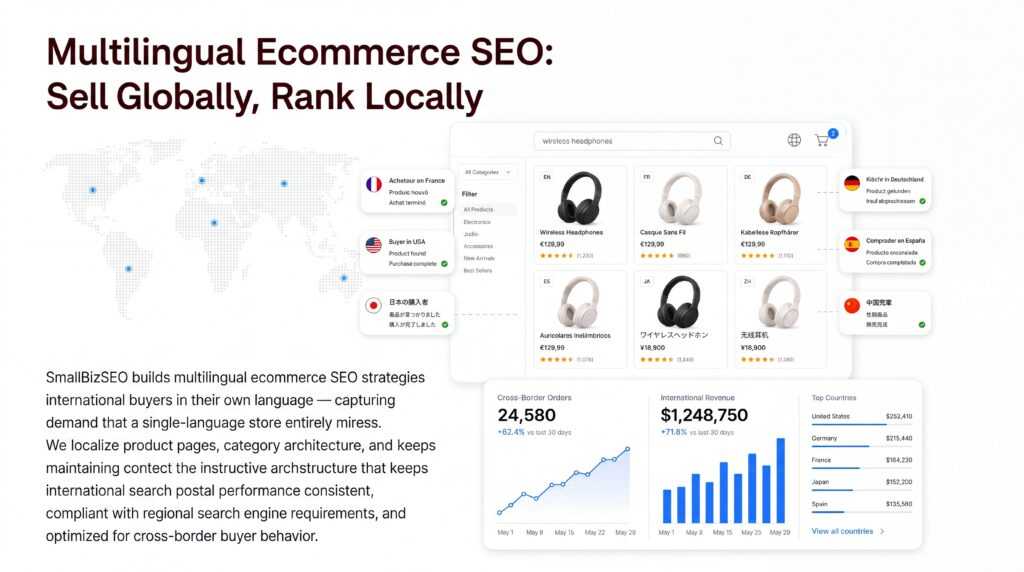
Connect language choices, product availability and buyer terminology in a coherent shopping experience.
A translated product title alone does not explain how a regional shopper names the item, which range is available to them or where the language switch should lead. We organize multilingual ecommerce SEO around those decisions. The work begins with actual markets, product scope and publishing responsibilities, then connects localized content and technical review without assuming every language or regional operation is supported.
Search intent & content
Separate language needs from market differences
Connect local product terminology with the assortment each regional storefront offers. We map category pages, item information and language-switching paths around real market differences, giving shoppers a coherent route through the catalog in their preferred language.
Localized category discovery
Research how target-market customers describe the product categories the store sells. Build locally reviewed category copy around those terms and the available range instead of translating navigation labels without considering how people shop.
Example searchproduct category in the shopper’s preferred language
Regional product information
Map which product details differ by market and which remain shared, such as identifiers or approved specifications. Keep localized item pages tied to the actual regional offering rather than imply the same assortment is available everywhere.
Example searchproduct specifications for a regional storefront
Language and country navigation
Review how shoppers move between language or market versions and where they land after switching. A useful journey preserves relevant product context where possible and makes unavailable equivalents understandable instead of creating a confusing detour.
Example searchstore in a preferred language and country
Localized buying questions
Identify the product and purchase questions each market’s content should answer using approved business information. Keep the SEO scope clear rather than imply that content work includes payment, shipping, tax or legal operations.
Example searchregional store product availability information
Website priorities
Build useful pages around real customer decisions
Create a market-by-page inventory
Map categories and products across the actual language and regional versions. This reveals missing equivalents, intentionally different ranges and ownership questions before new translations multiply across the store.
Review technical relationships deliberately
Check language annotations, canonical choices and internal links against the planned page relationships. Technical implementation should follow the real storefront structure rather than rely on an assumed universal configuration.
Give localization an editorial owner
Define who approves terminology, product facts and later updates for each market. A review process helps keep localized pages coherent when the base catalog or brand language changes.
Measure markets separately
Review search and shopping activity by relevant market and page type where tracking supports it. Combined totals can hide a strong category journey in one language and an incomplete product path in another.
Our approach
A practical plan for your website
We start with your actual markets, catalog variations and content owners. Then we prioritize localized categories, product information and technical relationships, with clear review responsibilities instead of a promise to translate and publish every page automatically.
Review the foundations
Check crawlability, existing pages, customer needs, and the services your business actually offers.
Map services to demand
Connect customer questions to useful service pages and supporting content without duplicating search intent.
Build, measure, improve
Publish useful pages and refine them using search visibility and separately configured inquiry analytics.
- Localized copy receives review appropriate to the language and product context.
- Market pages reflect actual regional catalog and service information.
- Language links and technical annotations follow a documented page map.
- SEO deliverables remain distinct from cross-border operational or compliance services.
Frequently asked questions
Questions about your industry SEO strategy
Is translating the main store enough for multilingual SEO?
Translation is one part of the work. The strategy also needs to consider buyer terminology, available products, page relationships and who maintains each version as the catalog changes.
Should every market have identical product pages?
Not necessarily. Map actual assortment and information differences first. Equivalent pages can share a structure, while market-specific availability or content needs should be handled intentionally rather than copied blindly.
How do language annotations fit into the project?
They belong in a technical review of the real language and regional page relationships. Plan and verify the implementation alongside canonical choices and internal links rather than treat annotations as an isolated guarantee of visibility.
How do we measure whether SEO is helping?
Use Google Search Console for search visibility and page performance. Measure calls, inquiries, and lead quality separately through analytics and intake tracking where configured.
Can you guarantee rankings or new customers?
No. We focus on the work within our control: technical foundations, useful content, clear navigation, and measurement. Search outcomes depend on competition and other factors.
Build a clearer path from search to inquiry
Share your current storefront languages, markets and catalog structure. We can build a focused localization and SEO plan that helps regional shoppers reach relevant product information.
Search rankings & AI visibility — AI SEO / AEO
- Google AI Mode
- ChatGPT
- Claude
- Gemini
- Perplexity


Related services & strategies