What Is SEO Content Marketing? How Content and SEO Work Together

What Is SEO Content Marketing?
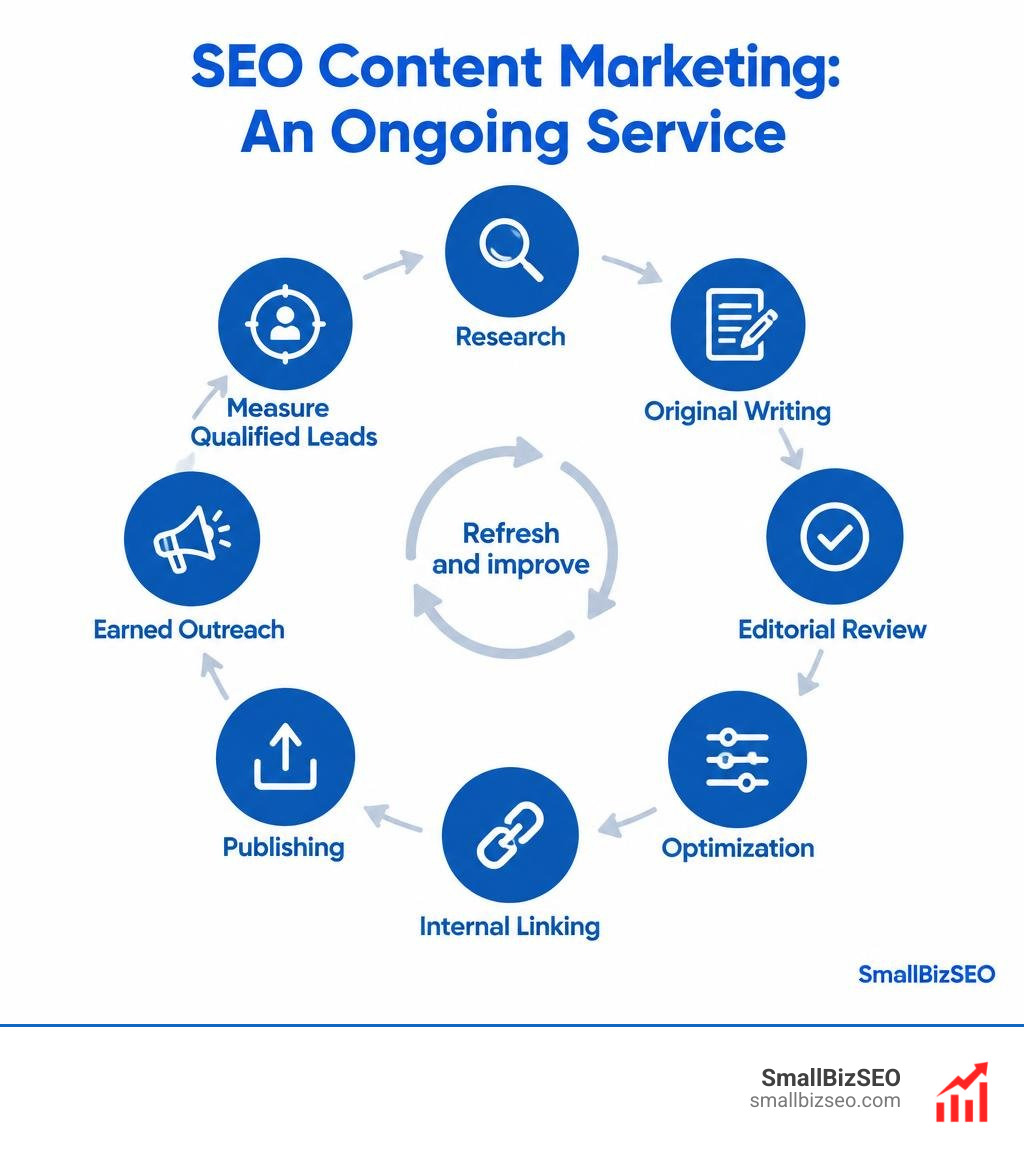
SEO content marketing is the ongoing practice of creating genuinely useful content around customer search needs, then improving its relevance, technical accessibility, internal connections, and distribution so the right audience can find and use it.
| Discipline | Primary job | How it supports the other |
|---|---|---|
| Content marketing | Educates, earns trust, and helps prospects make decisions | Supplies useful pages, examples, and expertise |
| SEO | Helps search engines discover, understand, and surface relevant pages | Brings search intent, structure, and technical context |
| SEO content marketing | Runs both disciplines as one recurring system | Turns helpful content into a durable search asset |
The distinction matters. Content marketing can reach people through email, social, partnerships, or direct outreach. SEO can improve the discoverability of any important page. SEO content marketing joins those efforts so a business publishes helpful material for real questions and maintains it as search behavior, offers, and site priorities change.
For a small business, this is not a one-time setup task. It is a continuing service that connects audience research, original writing, editorial review, on-page optimization, internal linking, earned outreach, and measurement. Google’s guidance emphasizes people-first content that demonstrates real experience and adds value beyond what is already available. Google’s helpful-content guidance is a useful primary reference for that standard.
This page explains the practical difference between content marketing and SEO, plus a repeatable way to run them together without unsupported traffic or ranking promises.
Content Marketing vs. SEO: What Is the Difference?
Short answer: Content marketing gives people useful information. SEO helps the right pages become understandable and discoverable in search. SEO content marketing uses both disciplines in one ongoing program.
What does content marketing do?
Content marketing creates resources that help an audience solve problems, compare options, or make confident decisions. It can include service pages, guides, case studies, newsletters, and original research. Its value comes from clarity, credibility, and relevance to the reader.
What does SEO do?
For a practical comparison of the two disciplines, see this SEO and content marketing overview.
SEO improves how search engines can crawl, interpret, and evaluate a site’s pages. That involves matching a page to search intent, using descriptive page elements, maintaining a logical site structure, and making important pages easy to reach through crawlable links.
How do they work together?
SEO should inform what the business creates and how it is connected, while content marketing should give searchers a complete, useful answer once they arrive. Neither replaces the other.
| If the business only does this | Common limitation | What the combined approach adds |
|---|---|---|
| Content marketing | Helpful resources may not match the questions people search for | Intent research, page structure, and internal connections |
| SEO | Pages can be technically sound but thin or unconvincing | Original expertise, examples, and a useful editorial point of view |
| SEO content marketing | A recurring program | Research, writing, review, optimization, outreach, learning from results, and SEO Content Services |
Hypothetical small-business example
Hypothetical: A home-services company notices that prospective customers repeatedly ask how to choose the right service before they request an estimate. The team researches the language used in those searches, interviews its service lead for practical details, writes a clear guide, reviews it for accuracy, and links it to the relevant service page. After publication, the team earns relevant editorial mentions where appropriate, tracks qualified inquiries from the page, and refreshes the guide when customer questions or service details change.
That is SEO content marketing in practice: useful content managed as an evolving business asset, not a blog post left alone after publication.
The Ongoing SEO Content Marketing Workflow
A durable program follows a recurring cycle rather than a single publish-and-forget checklist. Each stage should leave behind evidence that the next stage can use.
1. Research the audience and search intent
Start with the questions, comparisons, and service needs that matter to prospective customers. Use Search Console query data, sales conversations, site-search data when available, and the current search results to select an angle.
2. Create original, useful writing
Turn the research into a page with a clear answer, real examples, and a perspective that reflects the business. Originality does not require novelty for its own sake; it means adding experience, specificity, or decision-helping context that searchers can use. Google’s SEO Starter Guide is a practical primary source for the foundational elements that help readers and search engines understand a page.
3. Review before optimization and publication
Editorial review checks accuracy, clarity, duplication risk, source quality, and whether the page actually answers the intended question. Optimization then makes the topic and relationships clearer through descriptive titles, headings, image alt text, and contextual internal links.
4. Connect the page to the rest of the site
A helpful article should point readers to the next relevant decision or service, not force them to start a new search. For SmallBizSEO, that can include SEO content services for ongoing content execution, broader SEO services for technical and on-page work, and link-building services when relevant editorial outreach can help strengthen a useful resource.
5. Publish, earn outreach opportunities, measure, and refresh
Publication is the start of the learning cycle. Monitor whether the page appears for relevant queries, whether it brings qualified leads, and whether its information still reflects the business. Earned outreach should focus on genuinely relevant editorial opportunities, not link volume. Then refresh the page when the evidence shows that the answer, examples, or connections need improvement. A focused keyword gap analysis can help identify related questions worth addressing.
Editorial brief worksheet
| Brief element | Working question | Evidence to collect |
|---|---|---|
| Audience need | What decision or problem is the reader trying to solve? | Search queries, sales questions, support themes |
| Search intent | Is the reader learning, comparing, or ready to contact a provider? | Current result patterns and query wording |
| Original contribution | What can this business explain better or more specifically? | Subject-matter review, examples, How to Optimize Your Content for E-E-A-T and Build Real Search Trust, and Optimize E-E-A-T Signals Today |
| Page goal | What should a qualified reader do next? | Relevant service page, consultation, package, or booking path |
| Internal connections | Which existing pages help the reader continue? | Contextual links and related service pages |
How SmallBizSEO Runs SEO Content as an Ongoing Service
SmallBizSEO treats content as part of an integrated search program, not a stand-alone deliverable. The work moves through research, original writing, editorial review, optimization and internal linking, publication, earned outreach, lead measurement, and refresh decisions.
Research and prioritization
The team uses search demand, intent, site opportunities, and business priorities to decide which pages deserve attention. A practical priority is not simply a high-volume keyword; it is a topic that matches a real customer need and has a clear role in the site’s service journey. For a practical research workflow, see this Ahrefs keyword research guide.
Original writing and editorial review
Writing should answer the question in natural language, use examples where they help, and avoid generic filler. Editorial review then checks that claims are supportable, links serve the reader, and the page reflects the brand’s actual services.
Optimization and internal linking
Optimization makes the page easier to understand and use. That includes descriptive metadata, a logical heading structure, accessible image descriptions, and internal links that lead to the next useful resource. It does not mean forcing keywords into every paragraph or relying on rigid formulas. For additional on-page methods, see Beyond Content Optimization.
Publication and earned outreach
Once a page is ready, publication connects it to the wider content and service ecosystem. When a resource has real editorial value, relevant outreach can help introduce it to publishers and audiences who may find it useful. SmallBizSEO’s link-building services support that part of an integrated program.
Measure qualified leads and choose the next refresh
Rankings and traffic can be useful signals, but they are not the only outcome. Review qualified inquiries, engaged visits, assisted conversions, and the questions the page attracts. This evidence guides the next revision, new supporting article, or outreach opportunity. The service planning resource offers additional context for planning that work.
Monthly content and outreach review
| Owner | Evidence reviewed | Next action |
|---|---|---|
| Content lead | Search Console query themes, content brief status, editorial notes | Prioritize the next topic or update |
| Subject-matter reviewer | Accuracy notes, examples, service changes | Approve, clarify, or replace claims |
| SEO lead | Page indexing, internal-link context, intent alignment | Improve page connections and technical discoverability |
| Outreach lead | Relevance of editorial opportunities and earned-placement outcomes | Pursue, pause, or refine outreach targets |
| Business lead | Qualified lead quality and sales feedback | Confirm which topics support the right customers |
Businesses that want this coordinated program can review SmallBizSEO packages and book a consultation when they are ready to discuss priorities.
Frequently Asked Questions About SEO Content Marketing
How long does SEO content marketing take to show value?
The timeline varies with the site’s existing visibility, the competitiveness of the topic, the usefulness of the page, and the work needed around it. Rather than promise a ranking date, review leading signals such as indexing, relevant impressions, reader engagement, qualified inquiries, and the quality of supporting internal links and outreach opportunities.
Can content marketing work without SEO?
Yes. Content can reach people through email, communities, partnerships, sales enablement, and social channels. SEO adds a durable discovery channel by helping search engines understand where a page is useful for a searcher’s question.
Can SEO work without strong content?
SEO can improve the accessibility and structure of a page, but it cannot substitute for a useful answer. Pages need clear information, sound evidence, and a reason for the reader to trust the business.
How should a business use AI in an SEO content process?
AI can help teams organize ideas or identify gaps, but editorial responsibility remains with people. Review every claim, add real business expertise, and make sure the final page is accurate and genuinely useful. Publishing automatically generated text without that review is not a reliable content strategy.
Build a Content System That Keeps Improving
SEO content marketing works best as a repeatable learning system: research the questions that matter, create a useful original answer, review it carefully, optimize and connect it, publish it, pursue relevant earned outreach, measure qualified lead quality, and refresh the work based on evidence. Data Into Traffic outlines the same evidence-led focus.
SmallBizSEO brings those pieces together through ongoing SEO content services, SEO services, and link-building services. To compare ongoing support options, explore SEO packages or start a conversation.