A Practical Guide to Establishing a Repeatable AI Visibility Baseline

How Do You Build a Repeatable AI Visibility Baseline?
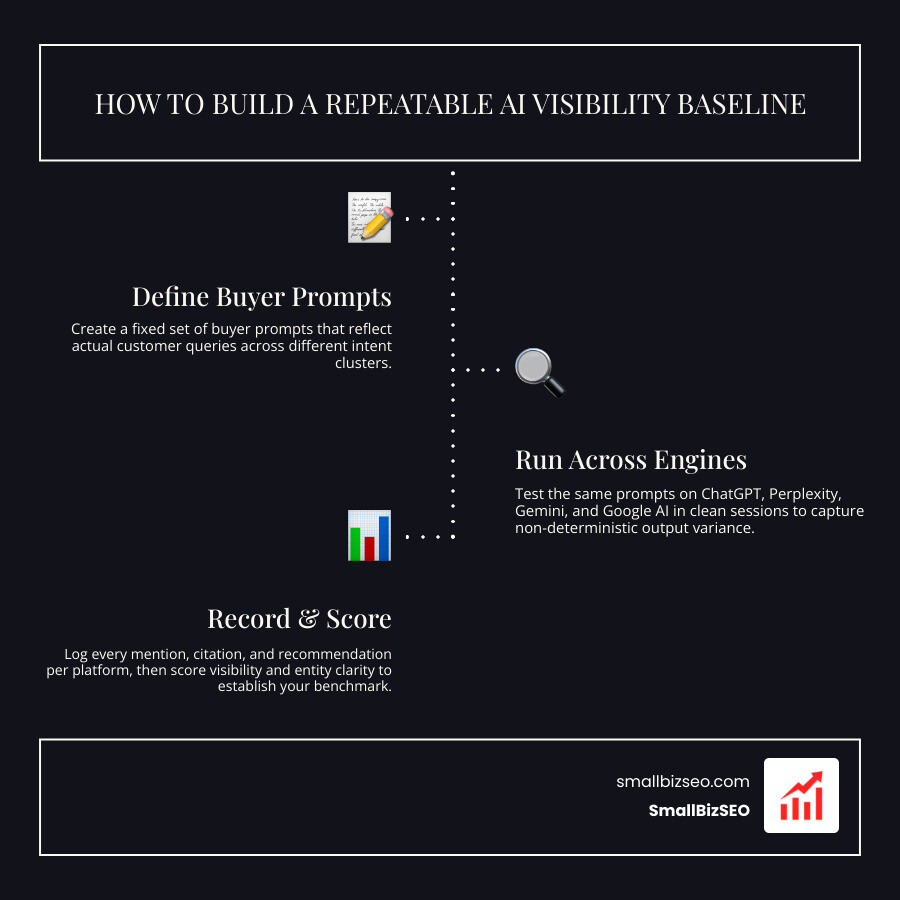
To build a repeatable AI visibility baseline, freeze a panel of 30 to 60 real buyer prompts, test each prompt three to five times across ChatGPT, Gemini, Perplexity, and Google AI Overviews using clean browser sessions, and log every mention, linked citation, and competitor appearance in a dedicated ledger. This structured, documented benchmark shows how often, where, and in what context generative answer engines surface your business before you implement any Generative Engine Optimization (GEO).
As search experiences shift toward zero-click AI answers, users frequently read synthesized summaries rather than clicking through ten blue links. If an engine misrepresents your pricing, omits your core features, or fails to mention you entirely when prospective buyers ask for recommendations, your brand loses business before the prospect even reaches your website.
Because large language models generate probabilistic, non-deterministic answers, a single chatbot query is merely a sighting—not a strategy. A reliable baseline maps buyer prompts across multiple engines, tracks cited sources, measures entity clarity, and records presence across repeated tests.
Why Does Learning How to Build a Repeatable AI Visibility Baseline Protect Your Brand?
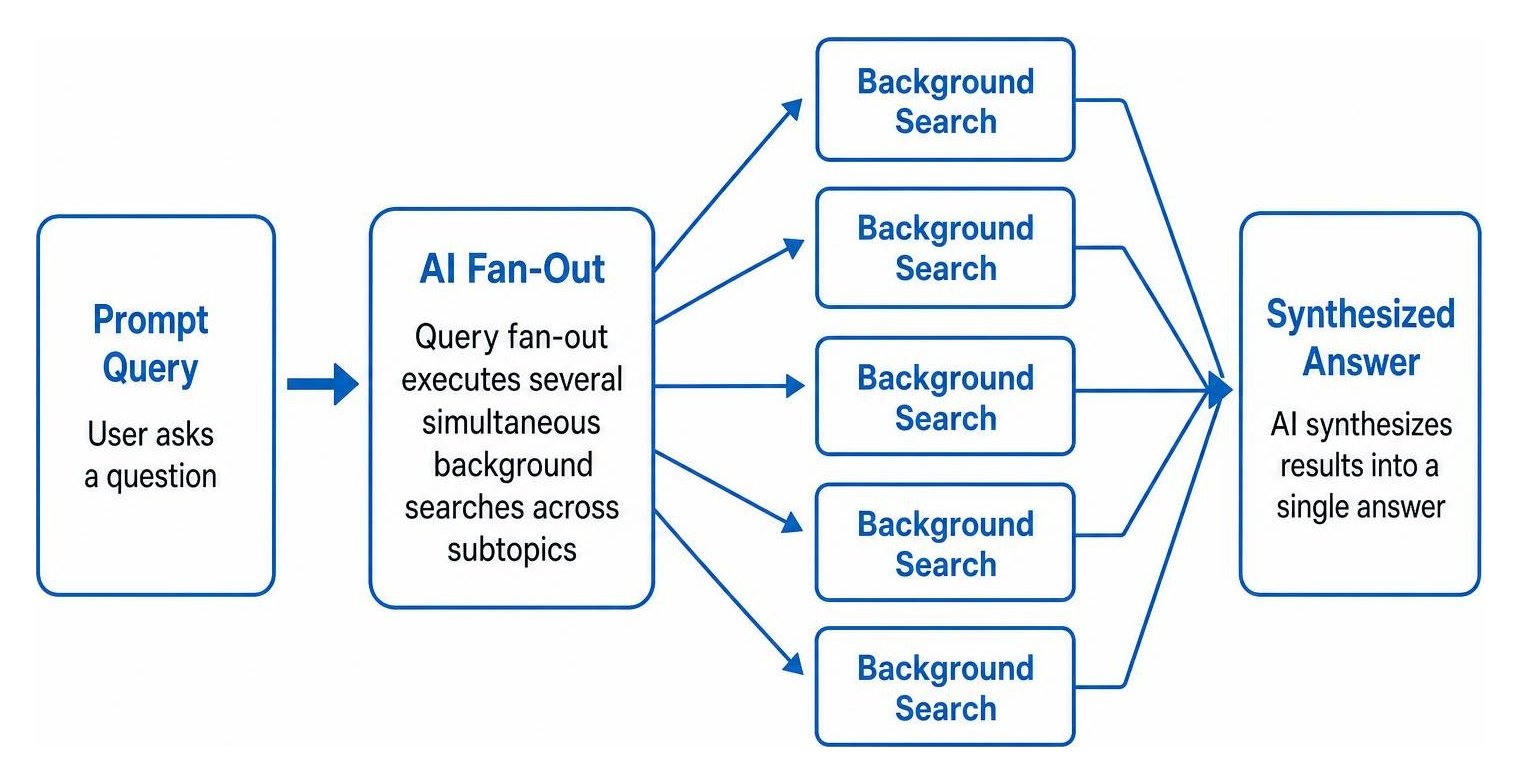
Learning how to build a repeatable ai visibility baseline protects your marketing team from chasing phantom algorithm shifts or relying on false confidence. Generative engines utilize query fan-out—executing several simultaneous background searches across subtopics before synthesizing an answer.
When you evaluate brand discovery within optimizing for generative AI search, you must account for natural observation variance and ongoing model drift. Without a controlled measurement protocol, you cannot determine whether a sudden drop in visibility stems from your recent website edits or standard model updates. Establishing a scientific methodology ensures you evaluate genuine visibility trends rather than isolated answers.
What Are You Measuring: Mentions, Citations, or Recommendations?
An effective baseline evaluates three distinct tiers of visibility:
- Brand Mentions: The AI model names your company, product, or service in the text of the response.
- AI Citations: The engine provides an explicit, clickable link to your domain as a reference. Knowing how to earn verified AI citations ensures your owned pages serve as primary source material.
- Explicit Recommendations: The engine names your brand as a top choice for a specific buyer scenario, rather than listing you neutrally.
Tracking positioning fidelity and sentiment scoring reveals whether an engine recommends you favorably or categorizes you incorrectly. A structured recommendation gap analysis often highlights that challenger brands face greater omissions during discovery-phase queries than established competitors.
Rigorous research on Generative Engine Optimization demonstrates that optimizing for authoritative citations and specific technical signals can lift visibility by 30% to 40%. Achieving these gains requires structured execution discipline and repeatable audit protocols.
What Core Requirements Help You Build a Repeatable AI Visibility Baseline Across Platforms?
Maintaining audit integrity requires standardizing your testing environment so future quarterly reviews remain directly comparable:
- Frozen Buyer Prompt Panel: Group 30 to 60 prompts into balanced intent clusters (Category Discovery, Competitor Comparison, Problem Solving, and Branded Validation) using our buyer prompt framework.
- Platform Selection: Test across ChatGPT, Perplexity, Google Gemini, and Google AI Overviews to capture major market touchpoints.
- Independent Test Iterations: Run each prompt-platform pair at least three times in freshly initiated sessions to account for model variance without conversation history leaking into subsequent runs.
- Environment Documentation: Record the date, device type, geographic location, and login state for every test run.
| Audit Parameter | ChatGPT | Perplexity | Google Gemini | Google AI Overviews |
|---|---|---|---|---|
| Primary Retrieval Mode | Web Search / Pretrained Weights | Live Web Search & Indexing | Google Search Grounding | Multi-Query Fan-Out Search |
| Citation Style | In-text Footnotes & Sidebar | Numbered Source Cards | Grounding Links & Chips | Carousel & Markdown Citations |
| Recommended Iterations | 3 Fresh Runs | 3 Fresh Runs | 3 Fresh Runs | 3 Fresh Runs |
| Default Logging Status | Logged Out / Incognito | Clean Web Session | Clean Web Session | Clean Search Session |
How Do You Build a Structured Source Ledger to Track Citations?
AI engines rely heavily on third-party verification to support their claims. Maintaining accurate source attribution requires creating a centralized source ledger that logs every URL the engines cite when answering your core prompt panel.
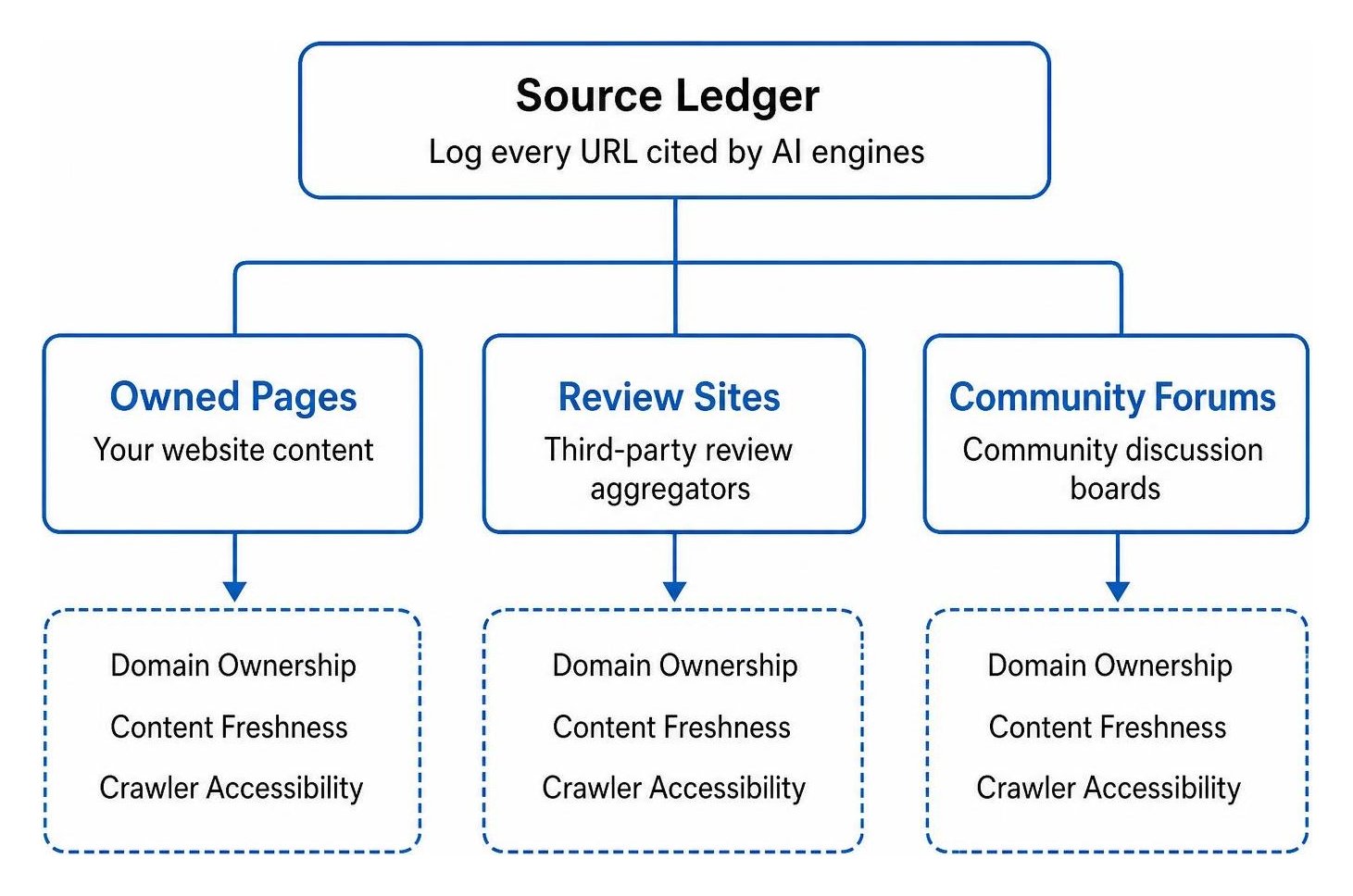
When auditing cited sources, classify each entry according to these quality criteria:
- Domain Ownership: Is the source an owned page, a third-party review aggregator, an editorial publication, or a community discussion board?
- Content Freshness: Has the cited URL received an update within the past 12 months? Stale resources are frequently replaced by more recent analyses.
- Crawler Accessibility: Can search crawlers render the page content in static HTML without encountering robots.txt blocks or heavy client-side JavaScript hurdles?
- Factual Positioning: Does the third-party source describe your current product capabilities and pricing accurately?
How Do You Score Visibility, Prioritize Gaps, and Build a GEO Roadmap?
To turn baseline findings into a clear strategy, calculate your core visibility percentages, pinpoint high-intent commercial prompts where competitors appear and your brand is absent, and prioritize fixes across technical crawler access, on-page direct-answer formatting, and third-party authority building.

Which KPIs Track AI Search Visibility and Share of Voice?
To build an actionable reporting baseline, translate raw audit observations into five core metrics:
- Mention Rate: The percentage of evaluated answers that name your brand. Calculate this by dividing the total number of answers mentioning your brand by the total number of evaluated answers, then multiplying by 100.
- Citation Presence: The percentage of answers containing a direct link to your domain. Divide answers citing an owned URL by total evaluated answers, multiplied by 100.
- Entity Share of Voice: Your brand mentions divided by the total brand mentions across all competitors in that prompt cluster, multiplied by 100.
- Citation Share of Voice: The number of links pointing to your domain divided by total citations across all sources, multiplied by 100.
- Positioning Fidelity Score: The percentage of mentions that describe your products, pricing, and features accurately without hallucinations or negative sentiment.
How Do You Translate Baseline Discrepancies Into an Actionable Strategy?
At SmallBizSEO, we use our data-driven Velocity framework to turn baseline discoveries into structured, E-E-A-T-compliant roadmaps. When evaluating your baseline audit data, organize issues into a clear hierarchy of action:
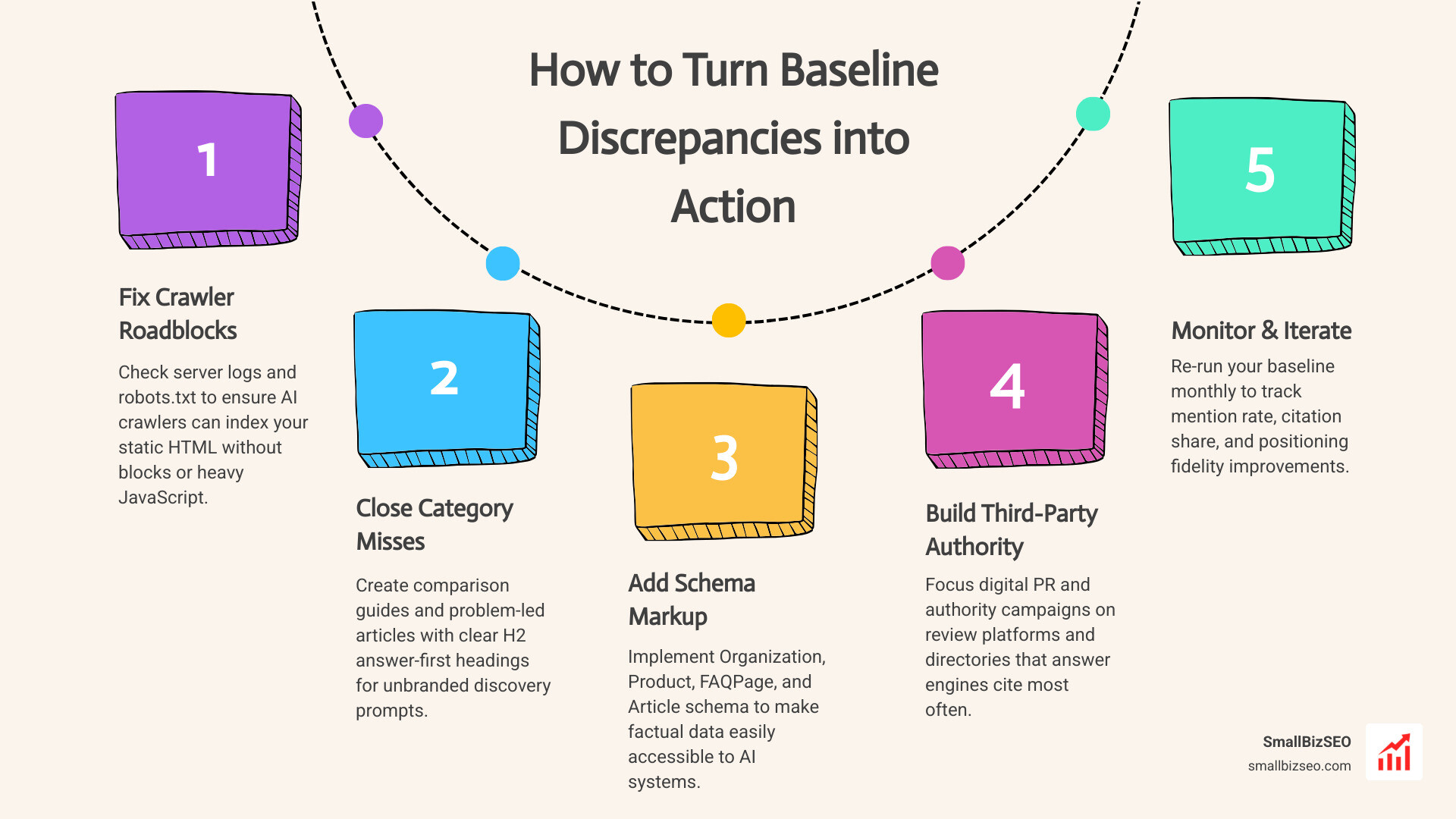
- Resolve Technical Crawler Roadblocks: Check server logs and robots.txt configurations to confirm AI crawlers are not blocked from indexing your site's static HTML.
- Close Unbranded Category Misses: If competitors dominate discovery prompts (e.g., "best software for X"), create dedicated comparison guides and problem-led articles structured with clear H2 answer-first headings and concise summaries.
- Implement Structured Schema Markup: Add comprehensive Organization, Product, FAQPage, and Article schema to make your factual data easily accessible to AI systems.
- Build Third-Party Ecosystem Authority: When answer engines rely on review platforms or industry directories, focus digital PR and authority campaigns on those specific domains to ensure your brand is cited consistently.
Review your baseline metrics quarterly to verify that your optimizations are expanding your brand's footprint across AI search environments.
Moving Forward With a Proven AI Visibility Plan
Building a verifiable baseline replaces guesswork with actionable data. By establishing a fixed prompt panel, documenting testing conditions, logging citation sources, and tracking your mention rates across platforms, you gain a clear blueprint for sustainable growth.
Ready to discover how generative search engines currently see your business? Contact us today to explore our custom AI visibility solutions and build a repeatable baseline for your brand.