Steer Your Driving School to Page One: Practical SEO for Defensive Driving

How Can Defensive Driving Schools Get Found in Local Search?
SEO for defensive driving starts with the reason a student needs a course. Create separate pages for ticket dismissal, court-ordered classes, and insurance discounts. On each page, explain who the course is for, where it is accepted, what it costs, and how to enroll. If you teach in person, keep your Google Business Profile accurate and make your location and class schedule easy to find.
The next steps depend on whether you serve nearby classroom students, online students across a state, or both. This guide shows how to build pages and local search signals around those different needs.
I’m Clayton Johnson, founder of SmallBizSEO. My work in technical SEO, content strategy, and link building informs this approach to SEO for defensive driving: answer students’ questions clearly and make enrollment easy.
Introduction to SEO for Defensive Driving Programs
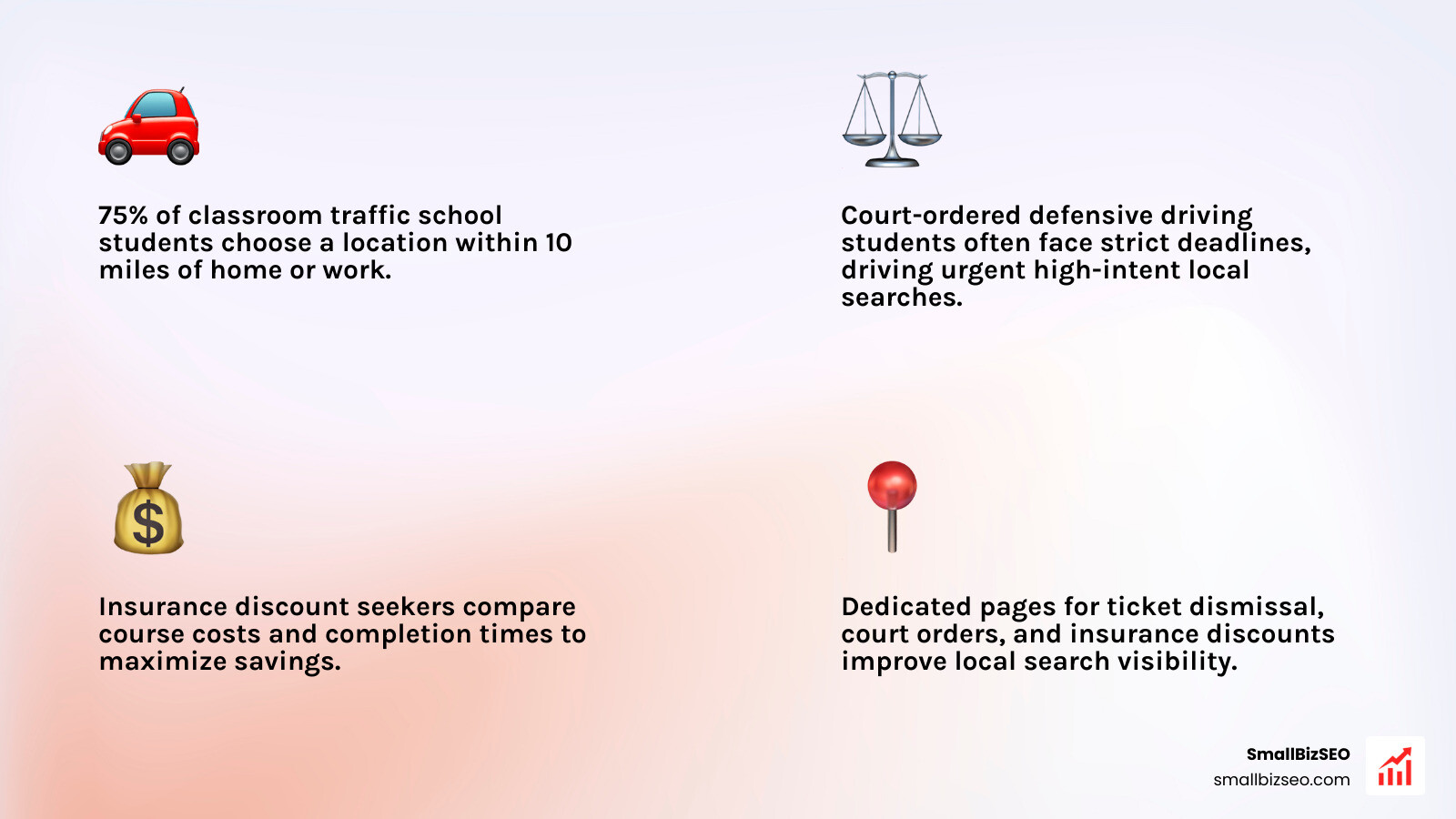
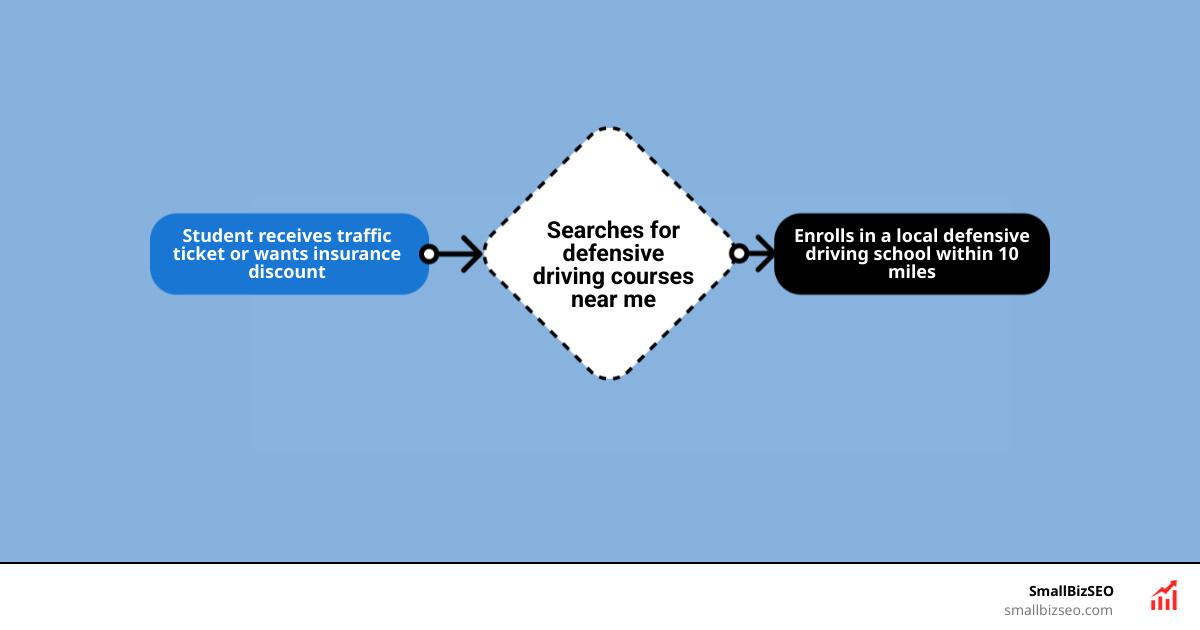
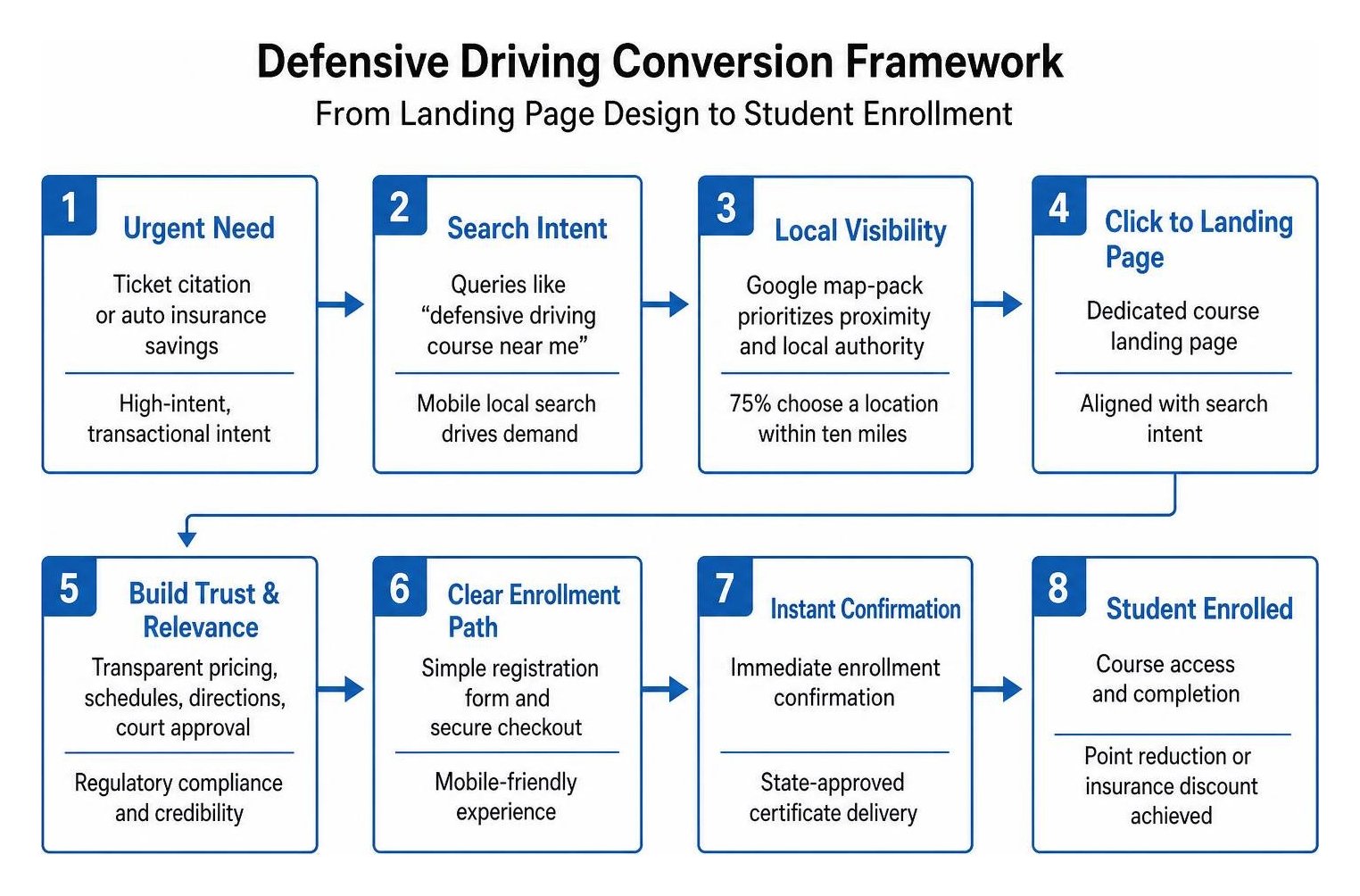
When a motorist receives a traffic citation or wants to lower their auto insurance rates, their search journey begins with urgent, transactional intent. Unlike general education shoppers who browse leisurely, defensive driving students need immediate solutions to dismiss violations or meet strict judicial deadlines. In fact, research demonstrates that roughly 75% of classroom traffic school students choose a location within ten miles of their residence or workplace.
Capturing this high-intent demand requires a structured digital strategy that connects user motivation directly to course registration.
Why Is Local Search Dominant for Defensive Driving Schools?
Local search dominance occurs because search engines prioritize proximity signals, localized authority, and real-time availability whenever users search for driver safety training. When someone queries "defensive driving course near me" on a mobile device, Google surfaces the local map-pack above organic listings.
Classroom-based schools depend heavily on this geographical footprint. Search engines evaluate the distance between the searcher and the school facility, matching user queries with established municipal court districts. If your driving school lacks localized prominence within that critical 10-mile radius, prospective learners will simply book with the nearest competitor featured in the top three map results.
How Does SEO for Defensive Driving Differ from General Driver Education?
SEO for defensive driving focuses on urgent compliance and financial incentives, whereas general driver education targets teen licensing and beginner fundamentals. Driver education programs cater to parents planning months ahead for their teenagers. In contrast, defensive driving addresses sudden point reduction needs, seasonal ticketing surges around holiday travel periods, and mandated court orders.
These programs require strict regulatory compliance, often aligning with state initiatives such as an Approved Point and Insurance Reduction Program (PIRP) to guarantee credit validity. Because the motivations differ fundamentally, your organic strategy must reflect these distinctions.
| SEO Dimension | Local Classroom Traffic School | Statewide Online Defensive Driving |
|---|---|---|
| Primary Audience | Nearby ticketed drivers, court-mandated attendees | Remote commuters, voluntary insurance discount seekers |
| Search Intent | Immediate physical proximity ("near me", local address) | Convenience, pacing ("fast online point reduction") |
| Core Ranking Asset | Google Business Profile, localized citations | Deep state-level authority pages, high-authority links |
| Content Focus | Physical schedules, directions, parking, court approval | State licensing compliance, mobile device support, instant certificate delivery |
To capture both segments effectively, many institutions partner with a specialized driving schools SEO company to build scalable content funnels.
Proven Strategies to Optimize Local Search and Driving Course Landing Pages
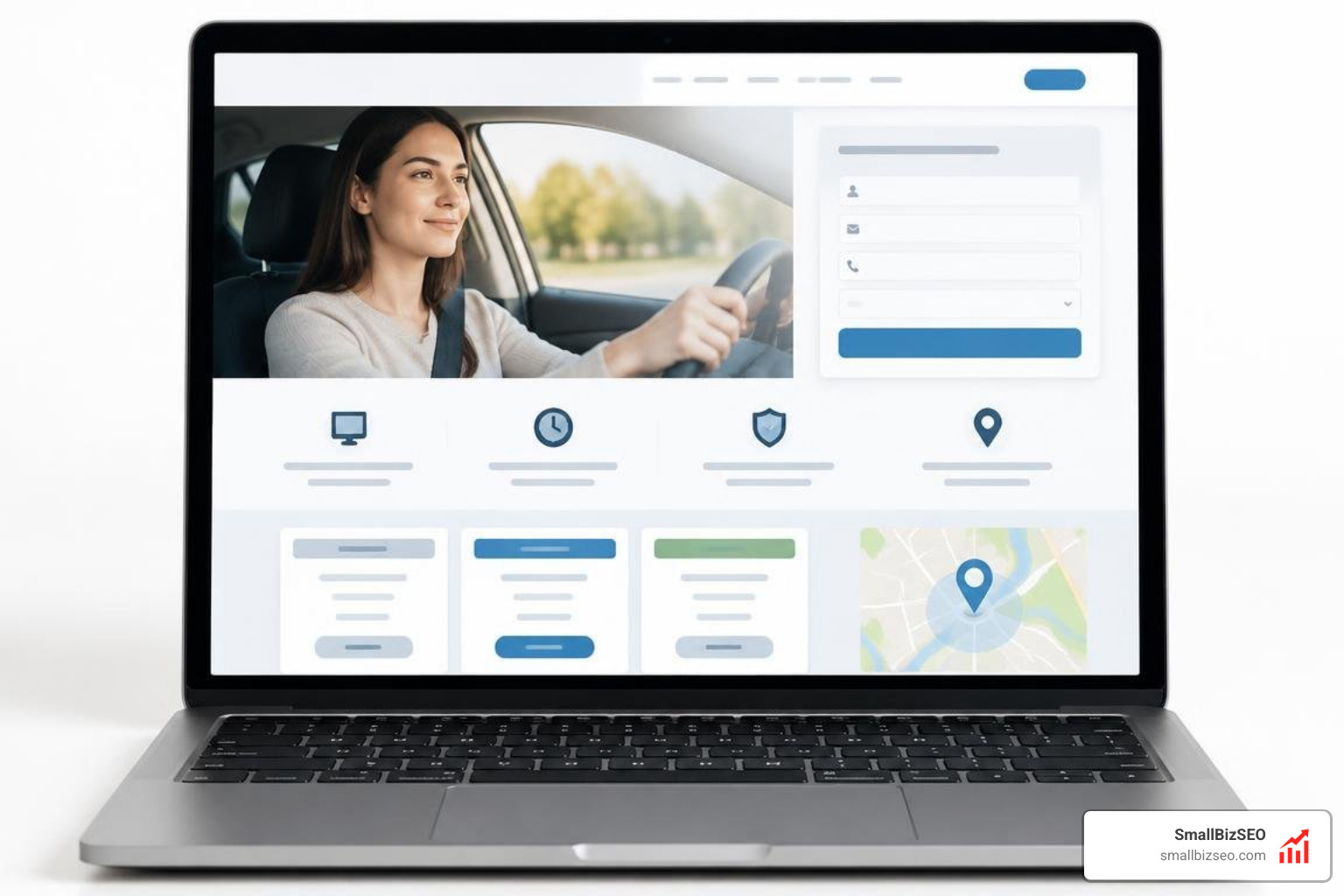
Optimizing driving course pages requires aligning on-page content with explicit user search intent. Search engines penalize generic, one-size-fits-all course hubs. Instead, you need dedicated landing pages tailored to specific program offerings and service communities.
How Should You Structure High-Converting Course Pages?
High-converting course landing pages combine total regulatory clarity with friction-free registration pathways. A visitor dealing with a traffic violation should understand within five seconds whether your program fulfills their specific legal or insurance requirements.
To maximize enrollments, incorporate these essential page elements:
- Above-the-Fold Action: Place a prominent registration button and class selector directly in the hero banner.
- Transparent Pricing: Clearly display all fees upfront. Hiding state reporting costs or certificate processing charges increases bounce rates.
- Accreditation Badges: Feature official licensing logos, state approvals, and court acceptance badges.
- Mobile-First Registration: Simplify checkout fields to allow rapid registration from smartphones.
- Syllabus and Delivery Timing: Outline curriculum modules and state exactly how fast completion certificates are processed and delivered.
What Are the Best Practices in Local SEO for Defensive Driving Providers?
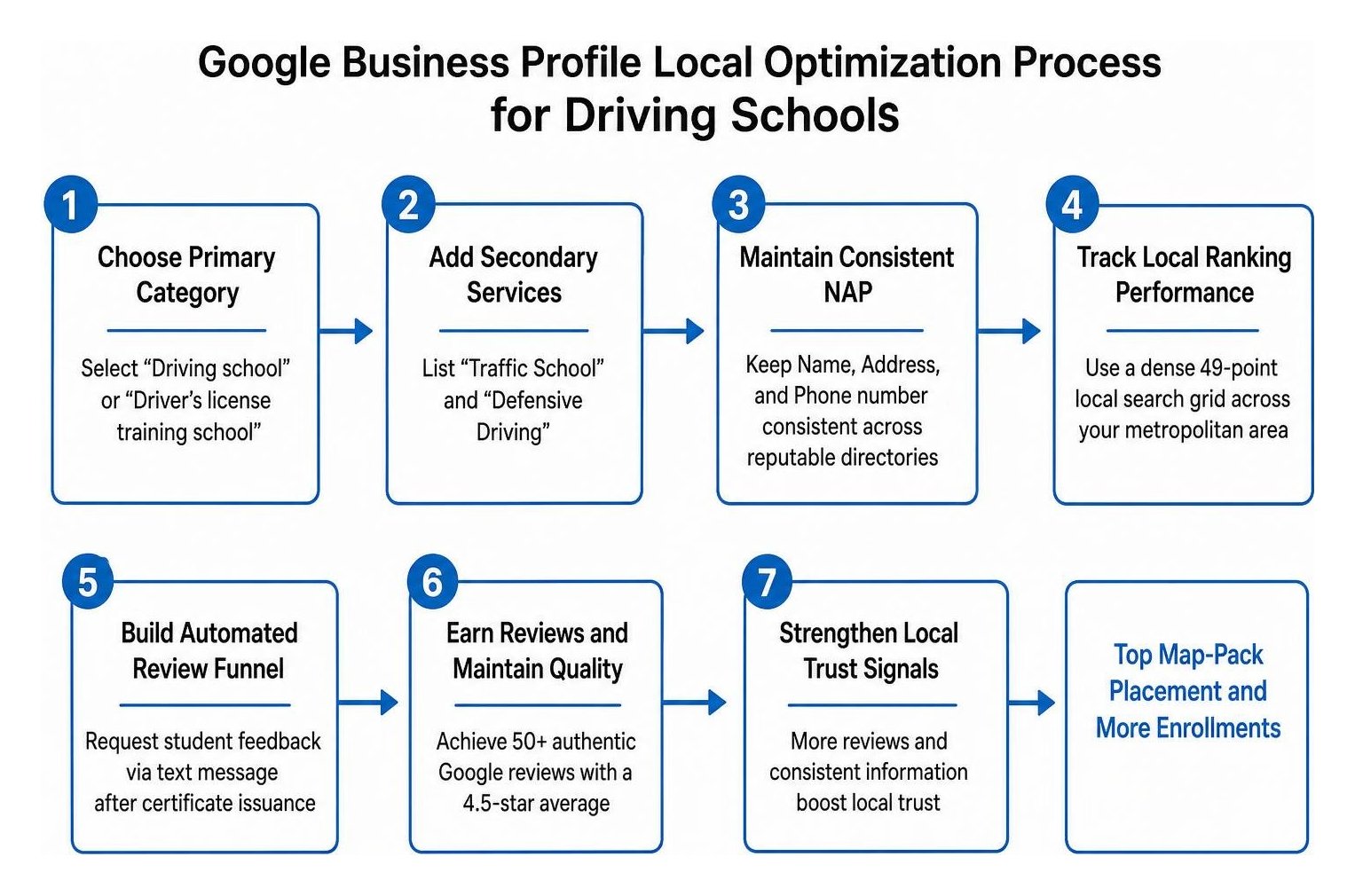
Dominating local search rankings requires optimizing your Google Business Profile (GBP) and reinforcing localized trust signals across the web. Start by selecting "Driving school" or "Driver's license training school" as your primary GBP category, while listing secondary services like "Traffic School" and "Defensive Driving".
Maintain a strict, consistent Name, Address, and Phone number (NAP) profile across reputable automotive, legal, and local business directories. Using a comprehensive local SEO guide will help ensure your foundational business citations are error-free.
Furthermore, track your ranking performance using a dense 49-point local search grid across your metropolitan area. This reveals hidden geographical blind spots where competitors outrank you.
Finally, build an automated review funnel that requests student feedback via text message immediately following certificate issuance. Achieving a benchmark of 50 or more authentic Google reviews with a 4.5-star average provides the social proof required to maintain top map-pack placement.
Overcoming Technical Challenges and Scaling Driving School Enrollments
Technical SEO provides the infrastructure that enables search engines to crawl, index, and rank your educational offerings. If your site suffers from slow load speeds or missing structured data, search algorithms cannot properly parse your regulatory accreditations.
A dependable local SEO company routinely resolves several recurring technical mistakes found on driver safety sites:
- Missing Course Schema: Failing to mark up lesson duration, pricing, and provider details using structured schema data.
- Slow Mobile Performance: Unoptimized image assets and heavy scripts that degrade Core Web Vitals on mobile devices.
- Cannibalized Internal Links: Using generic anchors like "click here" rather than keyword-rich pathways to distinct course types.
- Unstructured Service Architecture: Burying classroom and online options within a single generic page instead of maintaining clear internal linking funnels.
How Can Driving Schools Fix Common Technical SEO and E-E-A-T Issues?
Search engines evaluate Experience, Expertise, Authoritativeness, and Trustworthiness (E-E-A-T) strictly when assessing legal and driver safety content. Enhance your site's authority by showcasing detailed instructor bios, state certifications, and active memberships in national safety councils.
Implement structured Course and FAQ schema on every distinct curriculum page. This structured code helps search engines display rich snippets—such as pricing, star ratings, and module FAQs—directly within search results.
Case studies in driver education reveal that combining technical fixes with targeted content optimization can generate a 137% increase in revenue from organic search. Reinforce these on-page improvements with strategic link-building outreach to road safety blogs, municipal reference sites, and regional legal associations.
What Timeline Should Schools Expect for SEO Results and Lead Growth?
SEO outcomes develop through distinct phases as search engines register localized authority and technical improvements:
- Days 1 to 60: Technical audits, schema deployment, GBP profile optimization, and landing page restructuring. Initial map-pack movements typically appear within 60 to 90 days.
- Months 3 to 6: Authority gains take hold as local citation consistency, automated reviews, and targeted internal linking begin boosting organic impressions.
- Months 6 to 12: Compounding ranking growth lifts competitive keywords into top search positions, driving sustained organic traffic and consistent student enrollments.
Ready to Accelerate Your Driving School Enrollments?
Capturing local market share in the driver safety space requires balancing technical site health, local visibility, and transparent course landing pages. By addressing specific student motivations—from ticket dismissal to voluntary insurance reduction—your driving school can build an organic lead engine that fills classes year-round.
At SmallBizSEO, we implement our data-driven Velocity framework to help education providers secure prominent search rankings through clear, measurable reporting. Request your custom growth roadmap today with our free SEO visibility audit and discover how simple it is to expand your student base.