A Quick Start Guide to Free SEO Basics for Small Biz
A Quick Start Guide to Free SEO Basics for Small Biz
Introduction: What Is Search Optimization and Why Does It Matter for Small Businesses?
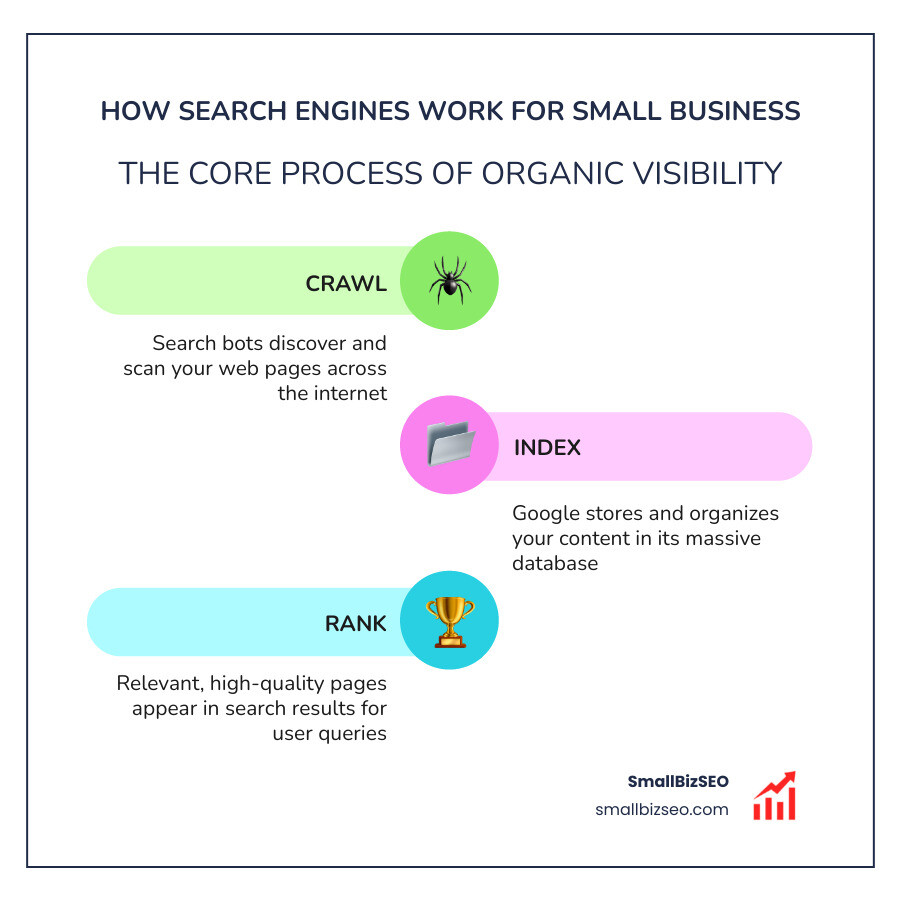
Executing small biz SEO free of cost starts with three actions: claim your Google Business Profile, fix your page titles and meta descriptions, and publish content that directly answers customer questions. Use free tools like Google Search Console to find the queries you already rank for, then improve those pages first. This approach works because search engine optimization (SEO) is the process of improving your website so search engines can easily find, understand, and rank your content in organic search results. It matters because roughly 89% of consumers use search engines to gather information before making a buying decision.
When people search online, about 94% of clicks go directly to organic listings rather than paid ads. Search engines drive 68% of all trackable online experiences, and organic search delivers 53% of all web traffic while contributing 44% of revenue across industries. Because around 75% of users never scroll past the first page of search results, earning visibility on page one connects your brand with active buyers without ongoing advertising costs. In fact, organic search leads average a 14.6% close rate compared to just 1.7% for traditional outbound marketing.
The Core Framework: How to Execute Small Biz SEO Free of Cost
A successful zero-cost SEO framework focuses on matching customer search intent, fixing technical indexation barriers, and providing a clean mobile experience. Since 96.55% of web pages receive zero organic traffic from Google, standing out requires targeting specific problems your customers want solved rather than guessing what search engines want.
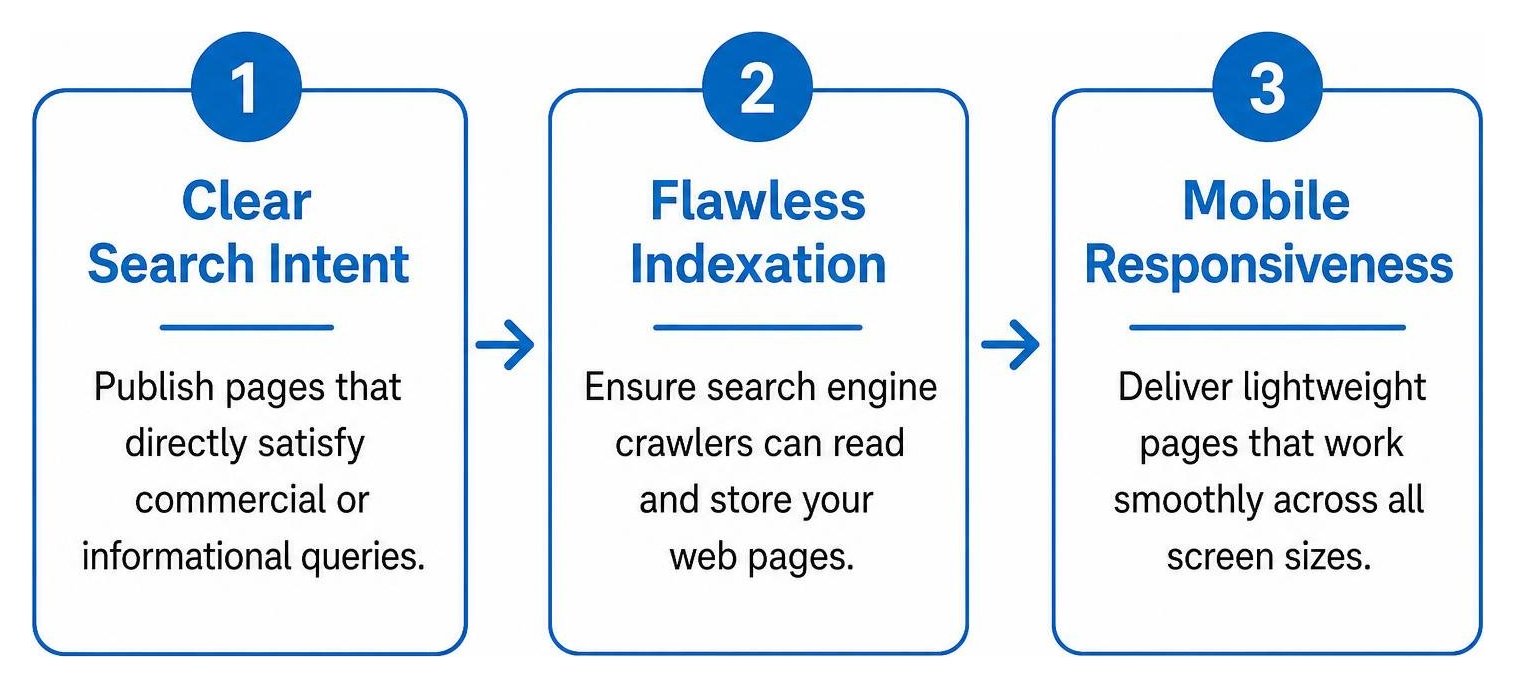
To make the most of small biz SEO free strategies, structure your efforts around three pillars:
- Clear Search Intent: Publish pages that directly satisfy commercial or informational queries.
- Flawless Indexation: Ensure search engine crawlers can read and store your web pages.
- Mobile Responsiveness: Deliver lightweight pages that work smoothly across all screen sizes.
What Are the Best Free Tools to Manage Small Biz SEO for Free?
The most effective free tools for small business SEO are Google Search Console, Google Analytics 4, Google Keyword Planner, AnswerThePublic, and Screaming Frog. These platforms provide direct insights into search performance, site health, and audience demand without requiring paid software.
- Google Search Console (GSC): Tracks impressions, average ranking positions, and click-through rates. Reviewing your non-branded queries in GSC reveals high-impression pages where small title tag improvements can quickly boost traffic.
- Google Analytics 4 (GA4): Measures user behavior, session engagement, and conversion actions on your site.
- Google Keyword Planner: Uncovers relevant search phrases, estimated search volumes, and related industry terms.
- AnswerThePublic: Generates visual maps of real user questions and comparison queries to inspire helpful FAQ content.
- Screaming Frog SEO Spider: Audits up to 500 URLs for free to find broken links, missing meta tags, and duplicate content.
For additional foundational guidance, explore our SEO basics survival guide for small business. Owners looking for broader enterprise support can also consult NYC Small Business Services (SBS) for free operational and business programs.
How Do You Optimize On-Page Elements and Site Speed for Small Biz SEO for Free?
On-page optimization involves refining your title tags, meta descriptions, headings, images, and page loading speed so users and crawlers immediately grasp your page topic. If a website takes longer than three seconds to load, around 53% of mobile visitors will leave immediately.
To maximize your organic performance:
- Title Tags and Meta Descriptions: Write unique title tags under 60 characters with your primary service and city. Keep meta descriptions between 150 and 160 characters with a clear call to action.
- Heading Structure: Use a single H1 tag for the main topic, followed by logical H2 and H3 subheadings organized around user questions.
- Image Compression and Alt Text: Compress images before uploading and write descriptive alt text so visually impaired users and search bots understand the media.
- Internal Linking: Link related service pages, helpful articles, and primary conversion pages together.
| On-Page Element | Primary Action Required | Technical Health Check |
|---|---|---|
| Title Tag | Keep under 60 characters with target keyword | Check for missing or duplicate tags |
| Meta Description | Write 150–160 character persuasive summary | Verify presence across all live URLs |
| Heading Structure | Maintain one clear H1 and sequential H2/H3s | Ensure headings reflect user intent |
| Site Speed | Compress media and remove unused scripts | Maintain sub-3-second load times |
| Internal Links | Connect related topics with descriptive anchors | Fix 404 broken links immediately |
For step-by-step techniques on structuring content, review our guide to on-page SEO.
How Does Local SEO Differ from Traditional SEO for Physical Businesses?
Local SEO focuses on optimizing your presence for geo-specific searches within a distinct service area, whereas traditional SEO targets broad regional or national queries regardless of physical location. Almost half of all Google searches have local intent, and 72% of consumers who run a local search visit a store within five miles of their location.
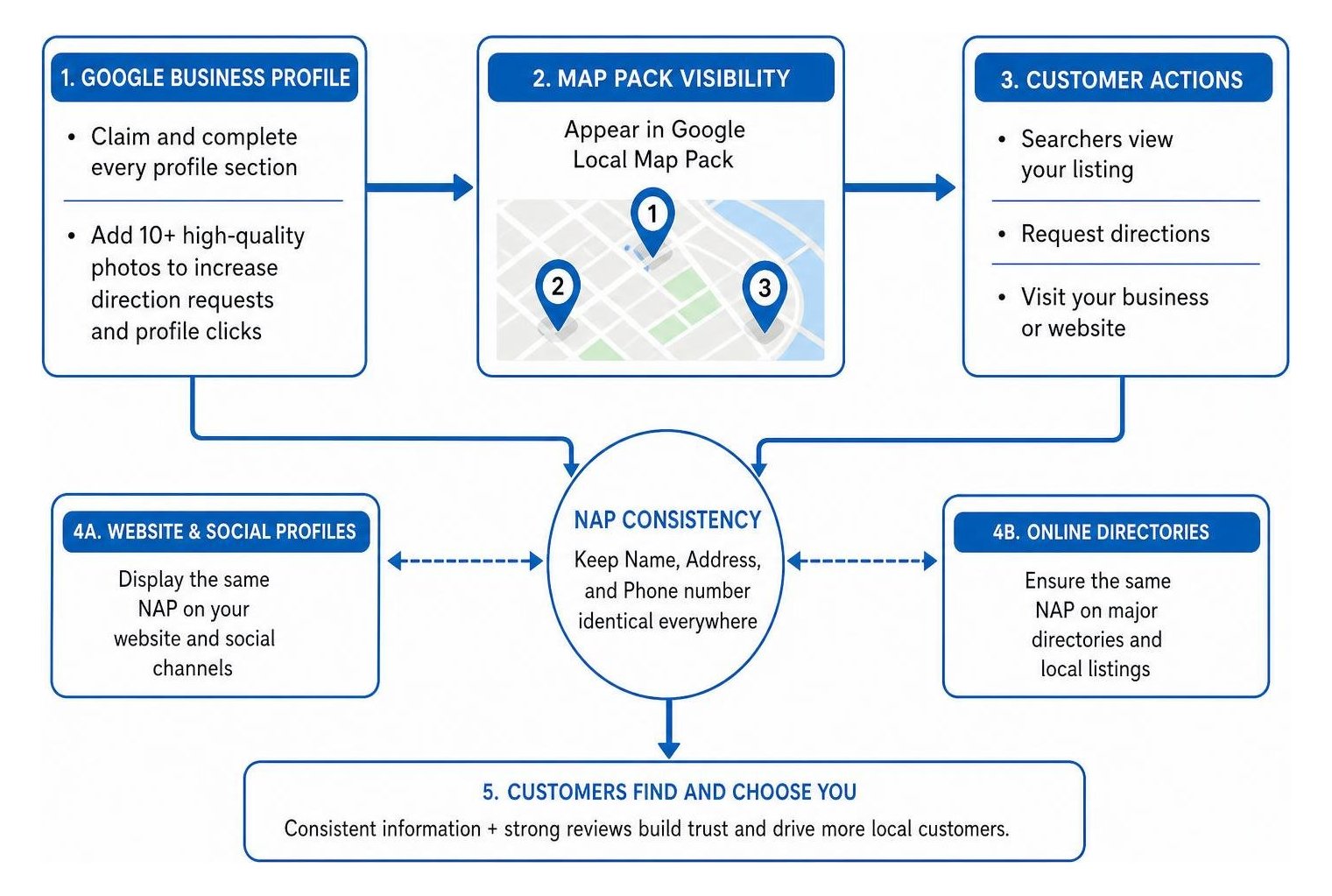
Physical businesses should prioritize:
- Google Business Profile (GBP): Claim and complete every profile section. Adding ten or more high-quality photos can significantly increase direction requests and profile clicks.
- NAP Consistency: Ensure your Name, Address, and Phone number are identical across your website, GBP, social channels, and major directories.
- Customer Reviews: Ask satisfied customers for honest feedback and reply promptly to all reviews.
- Dedicated Location Pages: If you serve multiple neighborhoods or cities, build unique landing pages featuring local testimonials, clear services, and neighborhood details.
To dive deeper into local optimization tactics, consult our local SEO guide.
How Can Helpful Content and Free Backlinks Drive Sustainable Rankings?
Publishing content that answers common customer questions builds search authority, while earning free backlinks acts as a digital vote of confidence from other trusted sites. Small businesses that maintain an active blog are 23% more likely to see a positive return on investment.
Search engines prioritize content demonstrating Experience, Expertise, Authoritativeness, and Trustworthiness (E-E-A-T). Focus on answering practical questions your customers ask every day.
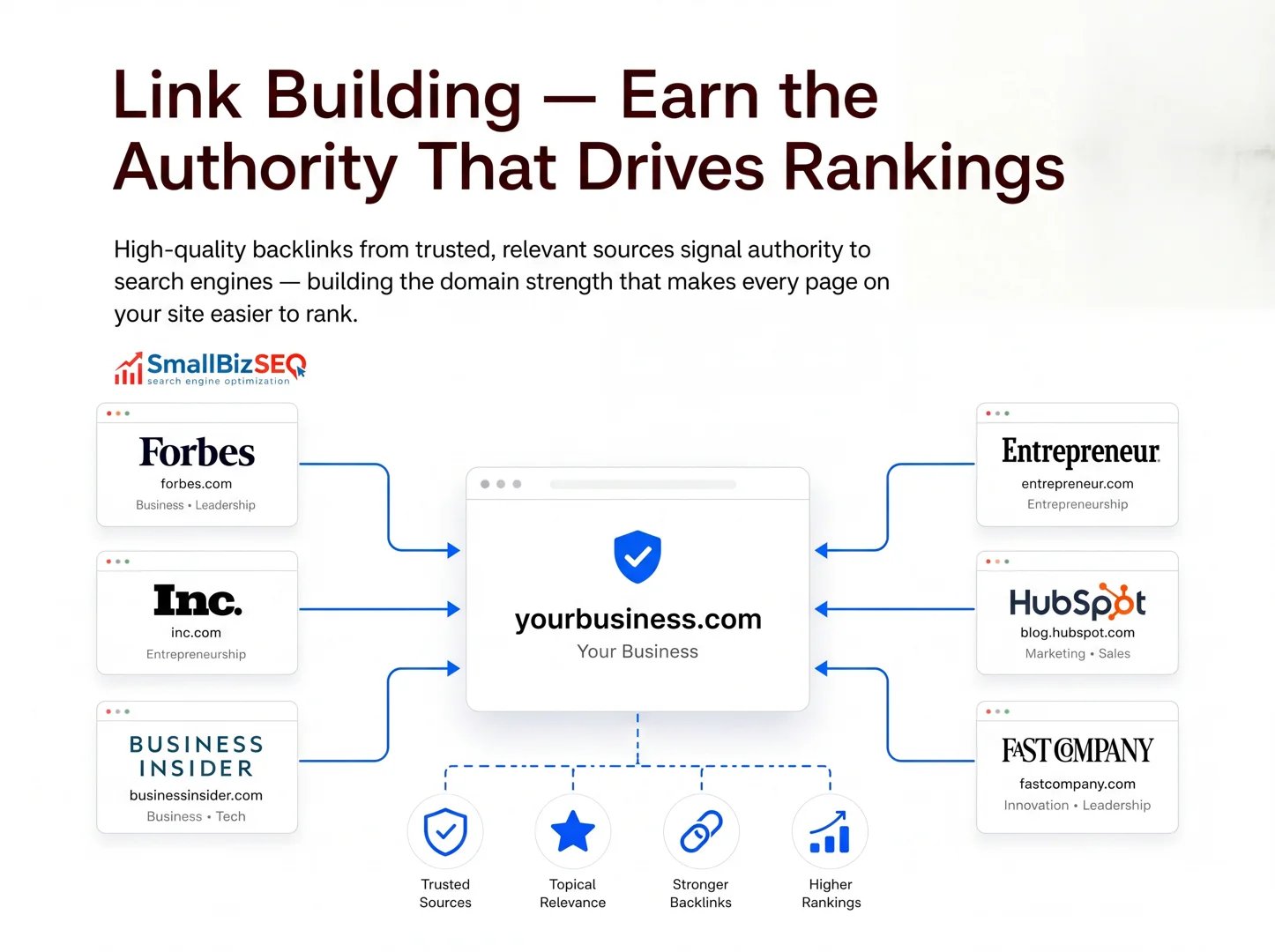
To earn quality backlinks for free:
- Supplier and Vendor Testimonials: Provide positive testimonials to the software vendors or suppliers you use in exchange for a partner link.
- Local Community Involvements: Partner with community events, neighborhood associations, or local business groups that maintain member resource pages.
- Original Insights: Publish practical checklists, pricing guides, or case studies that industry bloggers can reference.
To scale off-page visibility, check out our link building services.
What Are the Biggest Beginner Mistakes and Realistic Timelines for DIY SEO?
The most common beginner mistakes include targeting overly competitive keywords, keyword stuffing, neglecting page speed, and expecting instant overnight rankings. Realistically, meaningful organic ranking growth takes 3 to 6 months of steady optimization.
Avoid these common traps:
- Targeting High-Difficulty Keywords: Focus on specific, long-tail search phrases rather than broad, competitive terms.
- Thin or Duplicate Pages: Make sure every page delivers unique, substantive value.
- Inconsistent Directory Information: Mismatched phone numbers or addresses confuse search engines.
While business owners can manage fundamental fixes on their own, growing businesses often choose professional support to accelerate growth. If you are comparing strategy options, explore our guide to affordable SEO for small business.
Taking Action: When Should You Expand Your Organic Strategy?
The best time to expand beyond basic DIY optimization is when your free strategies produce steady traffic and you need to scale lead flow, fix advanced technical issues, or outrank aggressive competitors.
Start with a simple 30-day action plan: audit your pages using Google Search Console during week one, optimize your core service metadata during week two, enhance your Google Business Profile during week three, and publish two helpful customer guides during week four.
When you are ready to scale, our team applies our proprietary, data-driven "Velocity" framework to deliver fast, sustainable search visibility and E-E-A-T compliance with fully transparent reporting. Explore our comprehensive SEO services to discover how we help growing businesses dominate organic search.