Beyond the Hype: Unlocking the True AI SEO Advantage

Beyond the Hype: Unlocking the True AI SEO Advantage
What is the AI SEO Advantage?
The AI SEO advantage is real — and it's reshaping how small businesses get found online. But most business owners don't yet know what it means for them, or what to do about it.
Here's the short version:
| What It Means | Why It Matters |
|---|---|
| AI tools now answer search queries directly | Users get answers without clicking any link |
| AI cites specific pages, not just #1 rankings | Your content must be structured to be extracted |
| ChatGPT, Perplexity, and Google AI Overviews are now major discovery channels | Ranking on Google alone is no longer enough |
| AI rewards authority, structure, and clarity | The same signals that build trust with Google build trust with AI |
| Small businesses can compete by optimizing for citations | You don't need a huge budget — you need the right approach |
Search has quietly split into two lanes. There's the traditional Google results page you've always known. And now there's a second lane — AI-generated answers from tools like ChatGPT, Google's AI Overviews, and Perplexity — where 77% of US ChatGPT users now treat it as their primary search engine.
The businesses showing up in those AI answers aren't necessarily the biggest brands. They're the ones whose content is structured, factual, and easy for an AI system to extract and trust.
That's a genuine opportunity for small businesses willing to adapt.
I'm Clayton Johnson, a digital PR and SEO specialist focused on building search visibility through content and authority strategies — including helping businesses unlock the AI SEO advantage before their competitors do. In this guide, I'll walk you through exactly what's changed, what it means for your business, and the practical steps you can take starting today.
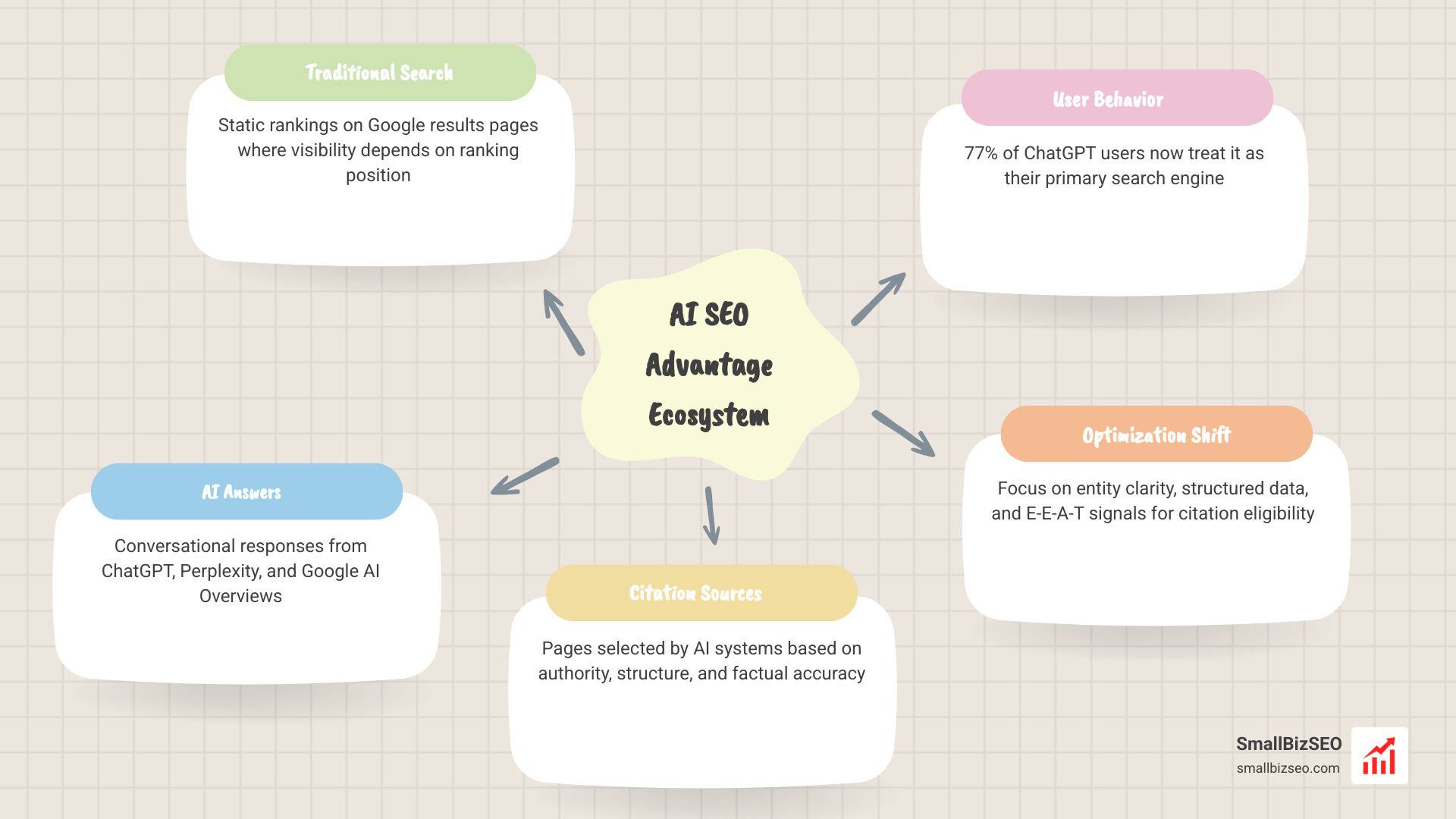
The AI SEO advantage is the strategic edge gained by optimizing your digital footprint so that artificial intelligence search systems retrieve, synthesize, and cite your brand. Unlike traditional SEO, which focuses heavily on ranking a specific URL at the top of a static list of links, AI-driven optimization focuses on becoming the trusted source that large language models (LLMs) package for the user.
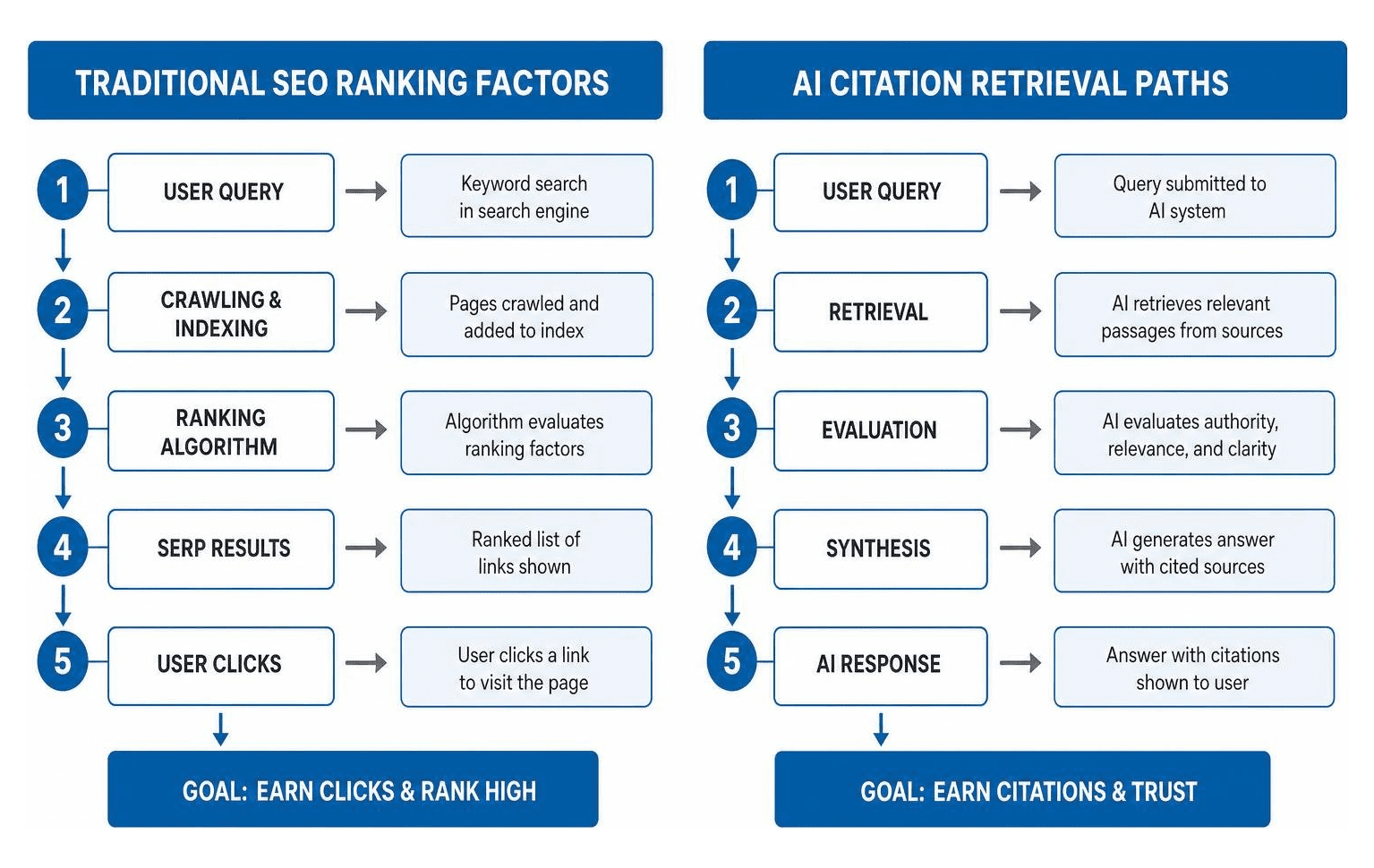
To understand why this is a game-changer, we have to look at how the core search process has evolved.
| Optimization Element | Traditional SEO | AI SEO |
|---|---|---|
| Primary Target | Search engine results page (SERP) rankings | AI citation slots and synthesized answers |
| Core Metric | Click-through rate (CTR) and organic rank | Share of voice, citation frequency, and brand mentions |
| Winning Content | Long-form keyword-optimized articles | Highly structured, extractable passage-level data |
| Authority Signal | Backlink quantity and domain rating | Entity clarity, primary data, and expert credentials |
| Measurement Tool | Rank trackers and organic click reports | AI visibility scoring and prompt trackers |
Traditional search relies on keyword matching and domain authority to display a list of blue links. AI SEO, on the other hand, relies on semantic retrieval. The AI engine searches the web to answer a highly specific user query, extracts the best informational passages, and cites them. If your content is not structured for easy machine retrieval, your page becomes invisible to these systems.
Understanding this split is the first step toward building a modern visibility strategy. For a deeper breakdown of this paradigm shift, explore this Traditional SEO vs AI SEO Comparison.
How AI Search Engines and LLMs Change Discovery
The way users interact with information has fundamentally changed. Instead of typing fragmented keywords like "best local plumber," users now enter conversational prompts like, "My kitchen sink is leaking from the pipe joint, who is a highly rated local plumber who can fix this quickly, and what questions should I ask them?"
When users treat search engines like personal assistants, the traditional results page changes. AI Overviews now trigger in at least 60% of searches in most markets—and as high as 90% in some specific categories. For complex, problem-solving searches, that number climbs to 74%.
This conversational shift has accelerated the rise of zero-click searches. When an LLM provides a comprehensive, synthesized answer directly on the screen, users rarely feel the need to click through to a website. To survive in this ecosystem, your brand must be the cited source within that synthesized answer.
Why Ranking Number One No Longer Guarantees Visibility
In the past, securing the absolute top spot on Google guaranteed a flood of organic traffic. Today, that correlation is broken.
Data shows that ChatGPT frequently cites pages ranking in traditional organic positions 21 or worse nearly 90% of the time. AI engines do not care about your homepage's overall domain authority; they care about passage-level selection. They crawl deep into nested pages to find the exact paragraph that answers the user's specific prompt. In fact, 82.5% of AI Overview citations link to deeply nested pages rather than homepages.
Furthermore, AI search results are highly dynamic. Around 70% of AI Overview sources change within a two-to-three-month window. This means that maintaining visibility requires a continuous commitment to structured information and real-time content freshness.
The Core Pillars of AI Search Optimization
To claim your AI SEO advantage, you must align your website with the four core pillars of AI search optimization: entity clarity, structured content, topical depth, and flawless technical foundations.
Entity Clarity and Structured Data
AI systems do not read your website the way humans do. They view the web as a massive web of connected concepts, known as entities. If an AI engine cannot clearly identify what your business does, who your experts are, and what products you offer, it will not cite you.
Using schema markup is the most effective way to build this machine-readable clarity. By implementing Schema.org markup—such as Article, FAQ, Product, and Organization schemas—you explicitly define your business entities for search crawlers. To establish this baseline trust, you can Optimize E-E-A-T Signals Today to ensure search engines recognize your real-world authority and credentials.
Content Formats and Structures for AI Citations
AI engines prioritize content that is formatted for rapid retrieval. To increase your citation probability, structure your pages with these specific formats:
- Quick Answer Blocks: Place a 40-to-70-word summary directly beneath your main headings. This serves as an "answer capsule" that LLMs can easily copy and paste.
- Semantic HTML Tables: Instead of plain text or markdown lists, use clean HTML tables. Systems like Microsoft Copilot heavily favor tables for comparison queries, often citing pages that present data in this format.
- Listicles with Clear Winners: For comparison queries, use a structured listicle format. Listicles are cited at 2.1x the rate of standard essay-style content.
- Speakable Schema: Use SpeakableSpecification schema markup to tell AI assistants exactly which part of your page is best suited for voice and conversational answers.
For a comprehensive guide on bridging the gap between traditional search optimization and answer engines, read our SEO vs AEO Guide.
How to Optimize for Both Traditional Search and AI Citations
You do not have to choose between ranking on Google and being cited by ChatGPT. The two strategies are complementary. The same high-quality, authoritative content that ranks well in traditional search serves as the raw material AI systems use for their answers.
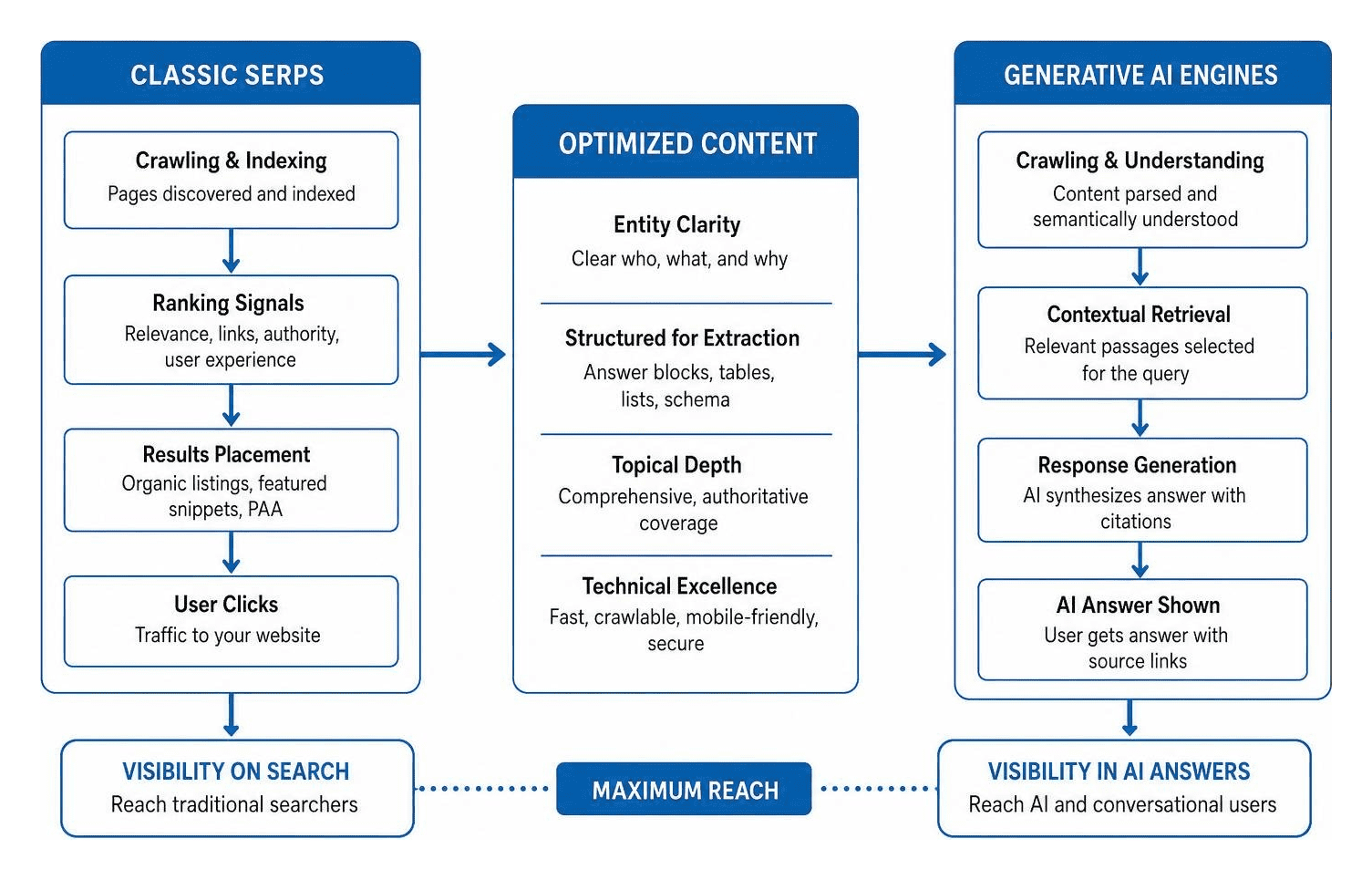
The Dual-Surface Strategy for Maximum Reach
A dual-surface strategy ensures your business captures traffic from both traditional searchers and conversational AI users. While you continue to optimize your site speed, earn high-quality backlinks, and target standard keywords, you must simultaneously structure your pages for passage-level extraction.
This dual approach requires you to write for both human readers and machine comprehension. Lead every section with a direct, factual answer, and then follow up with the deep-dive analysis, personal anecdotes, and case studies that human readers crave. To see this in action, learn more about How to optimize for AI search results.
Query Fanout and Conversational Search Strategy
When a user asks an AI engine a complex question, the system performs "query fanout." It breaks down a single conversational prompt into dozens of underlying sub-queries, retrieves information from various sources, and stitches them together.
To capture these multi-layered searches, your content strategy must move away from isolated keyword targeting and focus on comprehensive topic clusters.

By building a web of interlinked pages that cover every angle of a topic, you ensure that no matter how a conversational query fans out, your site has the answer. Our specialized SEO Content Services are designed to help you map, write, and structure these highly effective topic clusters.
Leveraging AI Tools for Modern SEO Workflows
Unlocking the AI SEO advantage does not mean doing more manual labor. In fact, modern AI tools allow small, resource-constrained teams to automate repetitive tasks and scale their search visibility faster than ever.
Streamlining Keyword Research and Content Strategy
AI excels at pattern recognition and big data analysis. You can use LLMs to analyze competitor content gaps, cluster thousands of keywords in seconds, and generate highly detailed content briefs.
Instead of guessing what questions your audience is asking, you can feed search data into AI tools to identify conversational prompts that traditional keyword tools miss. This workflow allows your team to focus on what matters most: injecting real human expertise and original data into your content. Discover how to take your strategy Beyond Content Optimization using automated workflows.
Measuring Success and Tracking AI SEO Advantage Metrics
Traditional rank tracking only tells part of the story. To measure your success in an AI-powered search environment, you must track modern metrics:
- AI Visibility Score: Your overall presence and citation rate across platforms like ChatGPT, Perplexity, and Google AI Overviews.
- Citation Frequency: How often AI engines link back to your site when answering questions in your niche.
- Share of Voice: Your brand's share of mentions within AI-synthesized shortlists and product recommendations.
- Passage Extractability: How cleanly AI crawlers can pull direct answers from your content.
By shifting your focus to these modern KPIs, you can turn raw Data Into Traffic and accurately measure your true digital footprint.
Practical Steps for Resource-Constrained Teams
You do not need an enterprise budget to win the AI citation game. By focusing on high-impact, low-cost tactics, small businesses can easily outmaneuver larger competitors.
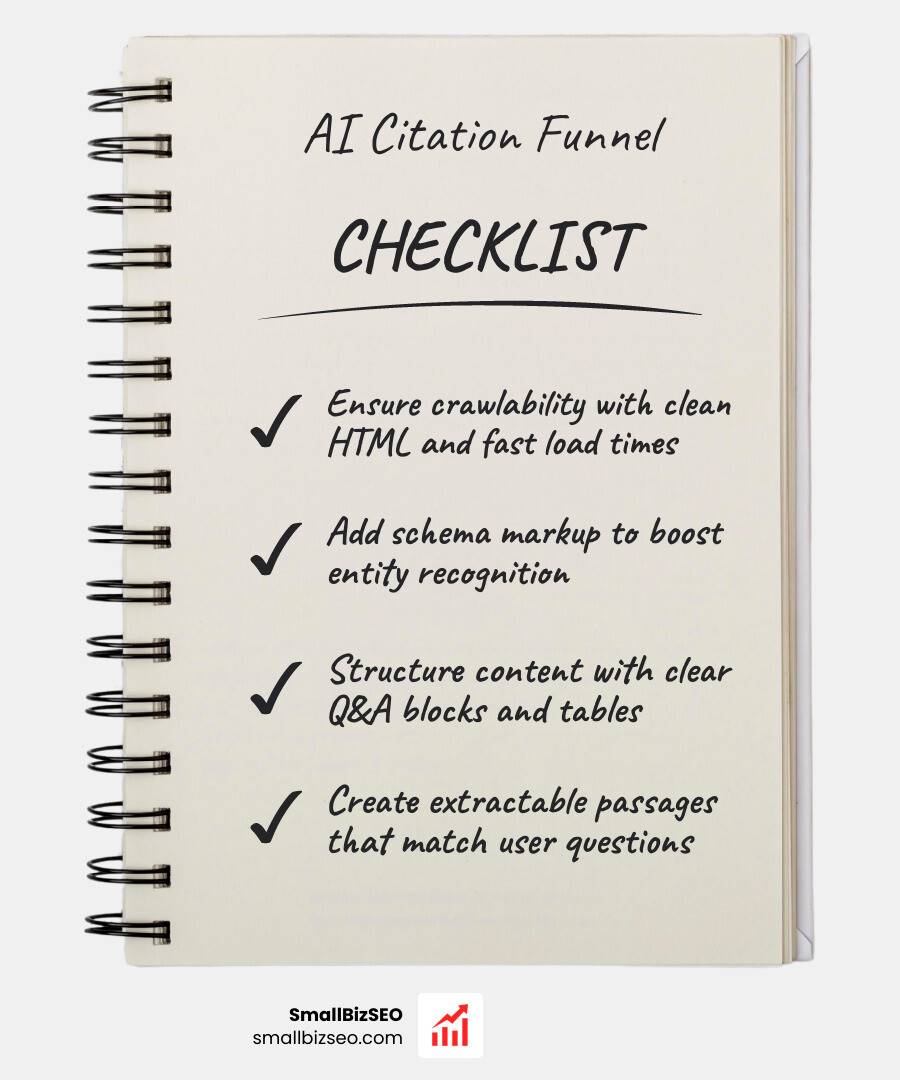
Prioritizing High-Impact AI SEO Advantage Tactics
If you only have a few hours a week to dedicate to AI SEO, focus on these three high-impact steps:
- Add FAQ Blocks with Schema: Identify the top 5 questions your customers ask, write clear 50-word answers, and add them to your key product or service pages with FAQPage JSON-LD schema.
- Verify Crawler Access: Check your
robots.txtfile to ensure you are not accidentally blocking AI crawlers like GPTBot or PerplexityBot from reading your site. - Embed Expert Quotes and Statistics: AI engines love hard numbers and verified sources. Add specific statistics, case study results, and quotes from your internal experts to make your content highly quotable.
For a complete blueprint on building this level of authority, check out our guide on How to Optimize Your Content for E-E-A-T and Build Real Search Trust.
Frequently Asked Questions about AI SEO
What is the difference between traditional SEO and AI SEO?
Traditional SEO focuses on optimizing your website to rank as high as possible in standard search engine results pages. AI SEO focuses on structuring and optimizing your content so that AI engines, chat interfaces, and LLMs retrieve, synthesize, and cite your brand as a trusted source.
How do AI search engines choose which sources to cite?
AI search engines prioritize sources that offer direct, factual answers, structured formatting (like tables and lists), clear schema markup, and strong entity authority. They also heavily favor fresh content that has been updated recently and carries verifiable E-E-A-T signals.
Can pure AI-generated content rank well in search engines?
Raw, unedited AI content rarely ranks well over the long term because it lacks original insights, personal experience, and unique data. However, AI-assisted content that is thoroughly reviewed, fact-checked, and enhanced by human experts consistently outperforms raw output, earning higher rankings and more citations.
Conclusion
The search landscape is changing, but the fundamental goal remains the same: putting your business in front of the people who need your services. By embracing the AI SEO advantage, you ensure your brand is not left behind as users transition to conversational, AI-driven discovery.
At SmallBizSEO, we help small businesses navigate this new era of search. Our data-driven Velocity framework delivers fast rankings and E-E-A-T-compliant growth through transparent, automated reporting. We handle the technical complexities of schema markup, structured content formatting, and entity authority so you can focus on running your business.
Ready to claim your spot in the future of search? Explore our AI SEO Services today, and let's build a search strategy that wins on every surface.