How to Build a Winning HVAC SEO Strategy from Scratch
How to Build a Winning HVAC SEO Strategy from Scratch
Dominating the Local Map Pack and Google Business Profile
An HVAC SEO strategy is a specialized search engine optimization framework designed to increase local search visibility, rank in the Google Map Pack, and drive high-intent emergency repair and installation leads. It focuses on Google Business Profile optimization, targeted keyword mapping, hyper-local service page architecture, mobile site speed, structured schema markup, and steady review generation. When an air conditioner cuts out during a heatwave, homeowners rarely browse past the top map results. Approximately 93% of local searches display the Local Pack, and this Map Pack captures between 65% and 75% of all clicks on high-intent local queries. Because 60% of search users contact a business directly from search results, your local profile acts as your primary digital storefront. To understand how foundational local search mechanisms operate across industries, explore The Ultimate Guide to Local Search Optimization Basics.
Primary Categories, NAP Consistency, and Geospatial Signals
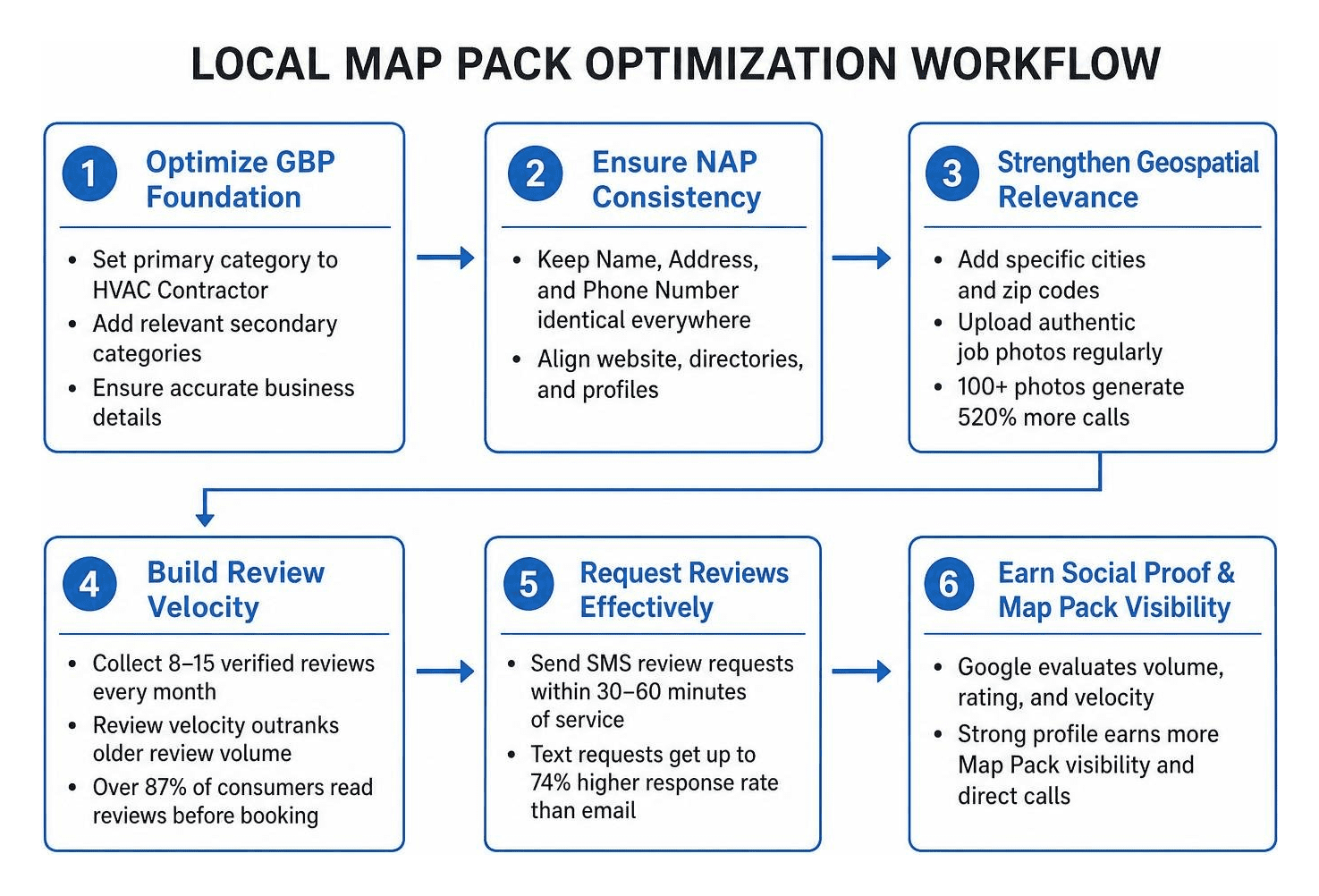
Your primary category selection in Google Business Profile (GBP) is one of the heaviest local ranking factors. Set your primary category strictly to HVAC Contractor. Add specific secondary categories that reflect your service lines:
- Air Conditioning Contractor
- Heating Contractor
- Furnace Repair Service
- Air Conditioning Repair Service
Maintain identical Name, Address, and Phone Number (NAP) formatting across every digital asset. Inconsistencies between your website footer, directory listings, and local profiles dilute search engine trust. Configure your service territory by adding explicit cities and zip codes rather than a single sprawling radius.
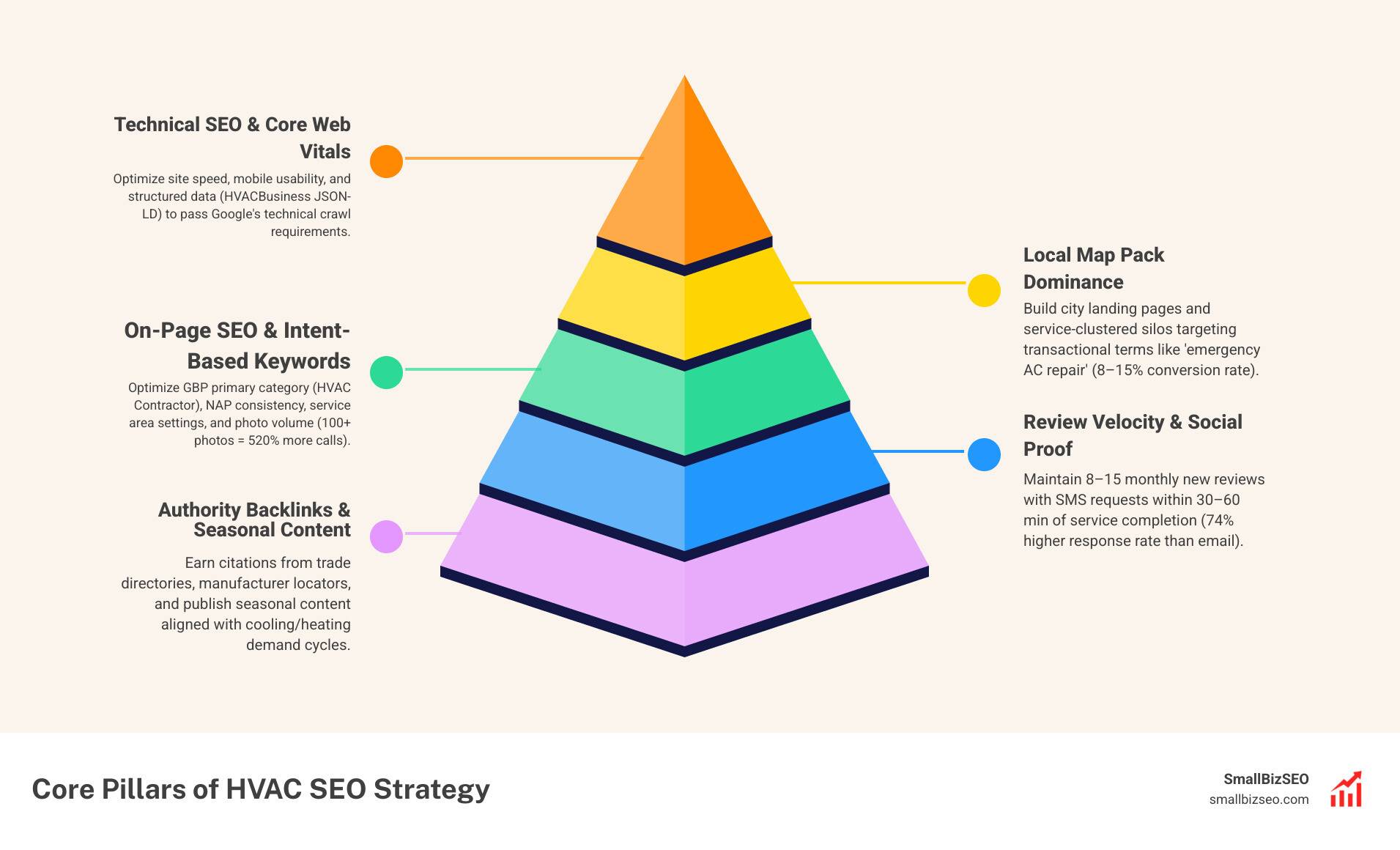
To reinforce local geographical relevance, upload authentic job photos regularly. Field technicians can capture real installations, branded vans, and diagnostic work. Listings with 100+ photos generate 520% more calls than average listings. For contractors seeking end-to-end local map positioning, working alongside a professional local SEO company ensures consistent technical alignment.
Building Sustained Review Velocity and Social Proof
Over 87% of consumers read online reviews before booking local services, making your reputation an active ranking driver. Google evaluates three core review elements: total volume, average star rating, and review velocity.
Review velocity—the consistent intake of fresh feedback—often outweighs older historical review counts. An HVAC business collecting 8 to 15 verified reviews every month outranks legacy competitors whose profiles have sat dormant. Text message review requests achieve up to a 74% higher response rate than email requests. Send automated SMS review requests within 30 to 60 minutes of service completion while customer relief is peak.
Respond to 100% of reviews. When replying, naturally reference the specific service performed and general neighborhood to reinforce local consumer trust and search relevance.
Core Pillars of a Winning HVAC SEO Strategy
Executing comprehensive on-page SEO means organizing your site so search engines understand your exact services and locations. Consolidating twelve services onto a single generic page confuses search crawlers and limits keyword relevance. Instead, build a structured URL architecture matching specific search intent across all heating and cooling service categories.
Mapping Keywords to Your HVAC SEO Strategy
Target high-intent keywords that signal an immediate need for service before branching into top-of-funnel topics.
- Emergency & Repair Terms: Searches like "emergency AC repair" or "furnace blowing cold air" carry commercial intent and convert at 8% to 15%.
- High-Ticket Replacement Keywords: Queries such as "heat pump installation cost" or "commercial rooftop unit replacement" connect with buyers preparing for major capital investments.
- Maintenance Searches: Keywords around seasonal tune-ups and system inspections build recurring service agreements.
To uncover localized long-tail variations, read our breakdown on how to use Ahrefs for keyword research without losing your mind.
Hub-and-Spoke Service Architecture and Hyper-Local Pages
Structure your site using a clean hub-and-spoke hierarchy. A parent page (such as Cooling Services) connects directly to dedicated child pages for AC Repair, AC Maintenance, Ductless Mini-Splits, and Commercial Chiller Services.
For multi-city contractors, create dedicated location pages containing genuine local details. Avoid shallow copy-paste templates with only the city name changed. Include specific local housing stock details, common regional system stresses, localized customer reviews, and clear links back to your core service hubs. Check out our comprehensive local SEO guide for more structural frameworks.
Technical Optimization, Core Web Vitals, and Structured Data
Over 60% of all search queries and more than 75% of emergency service searches happen on mobile devices. If a homeowner's furnace stops during freezing temperatures, a slow-loading mobile site will send them straight to a competitor. About 53% of mobile users abandon a site if it takes longer than 3 seconds to load.
Mobile Performance, Core Web Vitals, and Emergency Conversion
Audit your website performance against Google's standard Core Web Vitals:
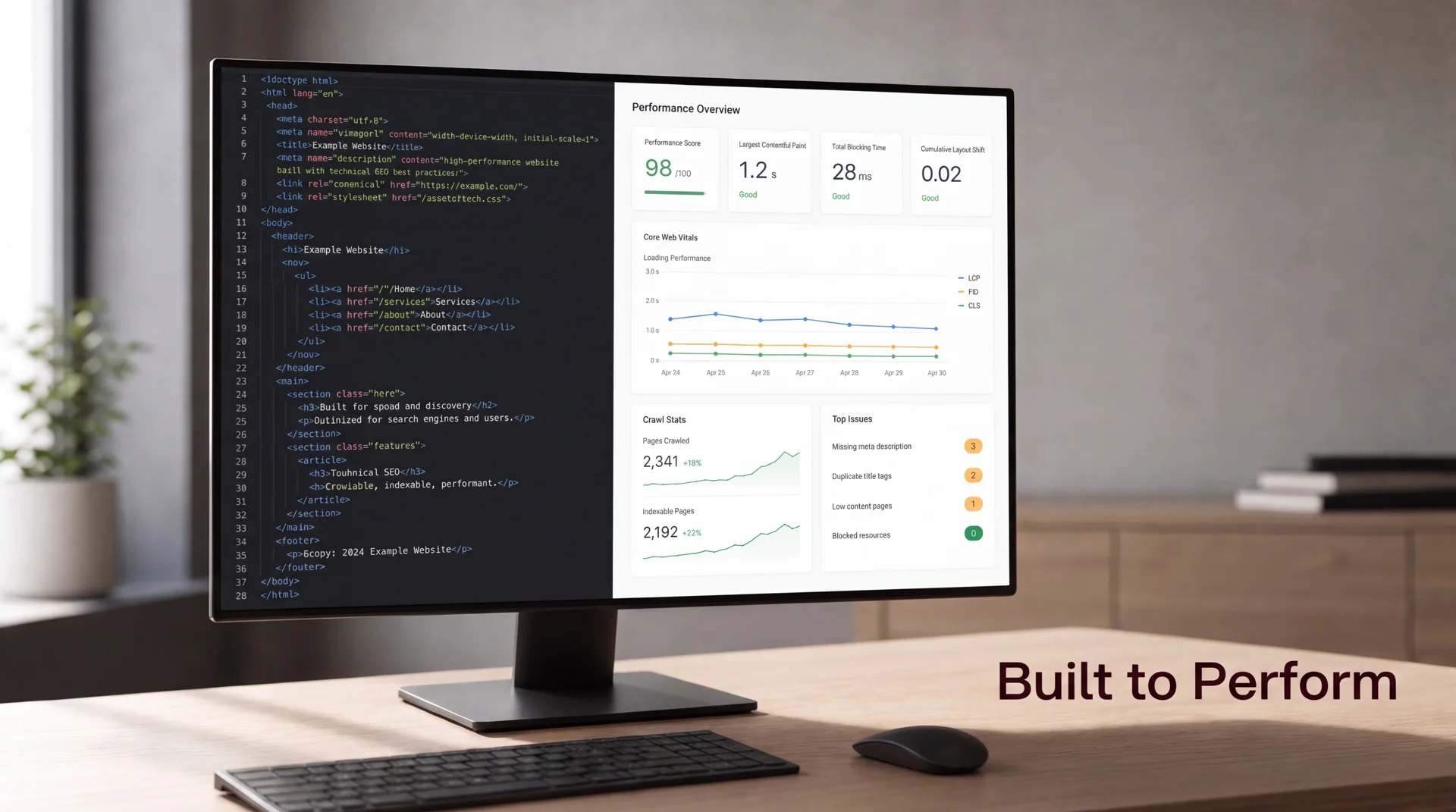
- Largest Contentful Paint (LCP): Under 2.5 seconds. Compress heavy hero graphics and implement browser caching.
- Interaction to Next Paint (INP): Under 200 milliseconds. Minimize render-blocking JavaScript.
- Cumulative Layout Shift (CLS): Under 0.1. Reserve explicit dimensions on banners and review widgets.
Place prominent, tappable click-to-call buttons above the fold on every mobile page. Keep contact forms minimal: name, phone number, and a simple dropdown for the needed service.
HVACBusiness Schema Markup and AI Overview Readiness
Structured data provides search crawlers with unambiguous details about your trade credentials, pricing, and service coverage. Implementing schema markup can increase organic click-through rates by 25% to 35%.
Key JSON-LD schema types to deploy based on Schema.org specifications:
- HVACBusiness Schema: Defines your business entity, operating hours, accepted payments, phone number, and official license numbers.
- Service Schema: Outlines specific offerings, service areas, and diagnostic scopes on individual service pages.
- FAQPage Schema: Delivers direct answers to common customer questions.
- Offer and PriceSpecification Schema: Clarifies diagnostic fees, seasonal tune-up specials, and rebate eligibility.
To optimize for AI search features and AI Overviews, format informational headers as direct questions followed immediately by a concise, factual answer of 50 to 150 words before elaborating.
Executing Seasonal Keyword Campaigns and Authority Building
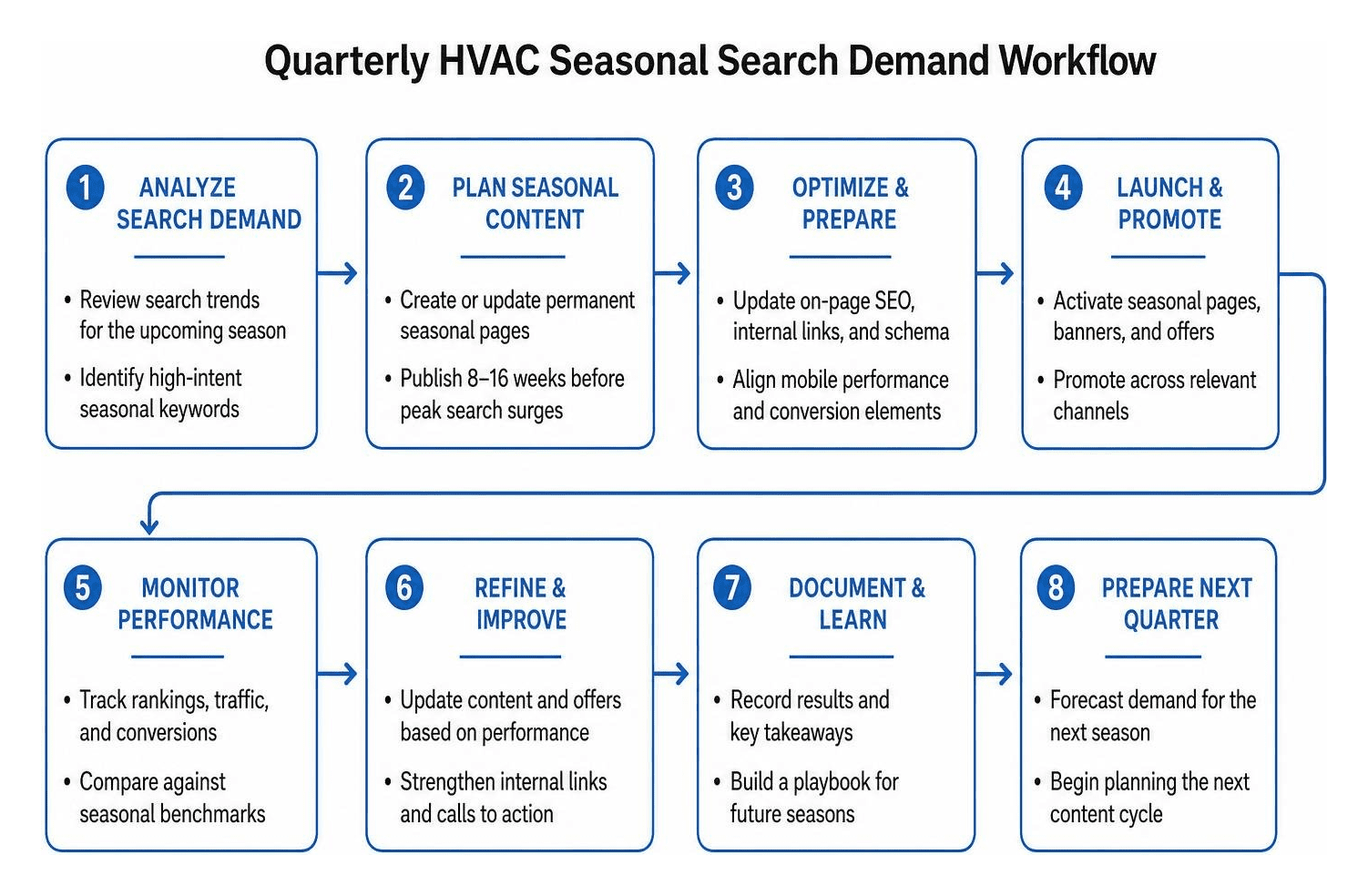
HVAC search volume fluctuates alongside weather patterns. Running the exact same marketing promotions all year ignores real search behavior. Build a dynamic library of permanent seasonal pages, adjusting navigation, banners, and internal links ahead of peak weather cycles.
Seasonal Demand Calendars and Content Planning
Publish seasonal content 8 to 16 weeks prior to peak search surges so search engines index and rank the material in time:
- Spring: Launch AC precision tune-up checklists, refrigerant phase-out guides, and early cooling preparation content.
- Summer: Prioritize emergency AC repair hubs, capacitor troubleshooting, and sizing calculators.
- Fall: Roll out furnace safety inspection guides, heat pump rebate tutorials, and heating startup FAQs.
- Winter: Highlight 24/7 emergency heating restoration, heat exchanger safety, and frozen condenser diagnostics.
Informational content addressing modern efficiency regulations, equipment sizing, and smart thermostats positions your business as an authority while capturing customers before system breakdowns occur.
Local Citations and High-Authority Industry Backlinks
Backlinks from reputable regional and trade websites confirm domain authority. Focus on building meaningful local and industry-specific links:
- Local business associations and regional trade directories.
- Community sponsorships for youth athletics, non-profit events, and neighborhood civic groups.
- Official dealer locators from major equipment manufacturers (such as Carrier, Trane, or Lennox).
- Content features in home improvement, architecture, or regional lifestyle publications.
A single link from an established local organization or trade group passes far more relevant ranking authority than dozens of low-grade generic directories.
Tracking Results, Conversion Economics, and Common Pitfalls
Rankings are helpful indicators, but closed revenue and cost per booked job measure real campaign success. Track organic traffic, keyword positions, and phone calls using call tracking software with dynamic number insertion (DNI).
| Marketing Metric | Organic SEO | Non-Branded Google Ads | Shared Lead Brokers |
|---|---|---|---|
| Average Cost Per Lead (CPL) | $10 – $30 | $140 – $160 | $50 – $90 |
| Average Cost Per Booked Job | $25 – $75 | $400 – $1,000 | $150 – $300 |
| Lead-to-Customer Close Rate | ~50% | ~45% | ~15% – 25% |
| Average Multi-Year ROI | 14.5x – 27x | 2.5x – 4.5x | 1.5x – 3.0x |
| Lead Exclusivity | 100% Exclusive | 100% Exclusive | Shared with 3–5 Competitors |
Measuring ROI and Tracking HVAC SEO Strategy Performance
Roughly 95% of organic home-service leads convert via phone calls rather than contact forms. Connecting call tracking data to your CRM attributes every booked job to its organic keyword or local map listing.
Every $1 invested in specialized SEO management returns an average of $14.50 in closed revenue across home service contractors. To review comprehensive support tiers for your company, browse our home services SEO packages.
Cost-per-Lead Metrics and Overcoming Ranking Mistakes
Avoid the common execution traps that undermine organic rankings:
- Thin or Duplicate Content: Publishing cookie-cutter city pages with identical text triggers quality filters. Customize each landing page with localized housing data and unique project details.
- Missing Local Verification: Leaving profile categories incomplete or ignoring regular photo updates reduces Map Pack presence.
- Keyword Stuffing: Cramming town names and keywords unnaturally into headers damages user experience and violates search guidelines. Review our guide on 5 local SEO mistakes killing your visibility to keep your foundation sound.
Frequently Asked Questions About HVAC SEO
How long does it take to see results from HVAC SEO?
Initial visibility improvements, such as rising impressions and secondary keyword movements, generally appear within 60 to 90 days. Generating substantial, predictable inbound calls typically requires 6 to 9 months of consistent technical optimization, content expansion, and review generation. Highly competitive metro markets may require 9 to 12 months for top Map Pack positions.
How many Google reviews do HVAC contractors need to rank in the Map Pack?
While baseline visibility often begins around 50 reviews, top-ranking competitors in moderately competitive markets usually maintain 150 to 300+ reviews with a 4.7+ star rating. Steady review velocity—earning 10 to 20 new reviews each month—signals active, reliable service and strongly influences local search rankings.
Why is Google Business Profile more critical than standard organic listings for HVAC leads?
Google Business Profile accounts for over 90% of total closed organic revenue for trade contractors. When heating or cooling systems fail, homeowners prioritize proximity, ratings, and immediate tap-to-call buttons found in the Local 3-Pack over standard web listings.
Turning Local Search Visibility into Booked Service Calls
An effective SEO framework creates a reliable inbound lead channel that compounds in value over time. By optimizing your Google Business Profile, creating helpful service pages, maintaining mobile site speed, generating steady reviews, and planning for seasonal demand, you build an owned asset that lowers your customer acquisition costs.
Executing this strategy requires consistent attention across technical performance, content creation, and local optimization. Partnering with a dedicated HVAC SEO company gives you the data-driven systems needed to dominate your local market, outrank regional competitors, and keep your technicians dispatched year-round.