Improve Your City Recreation Department Web Presence Through Search

How can residents find your parks and programs online?
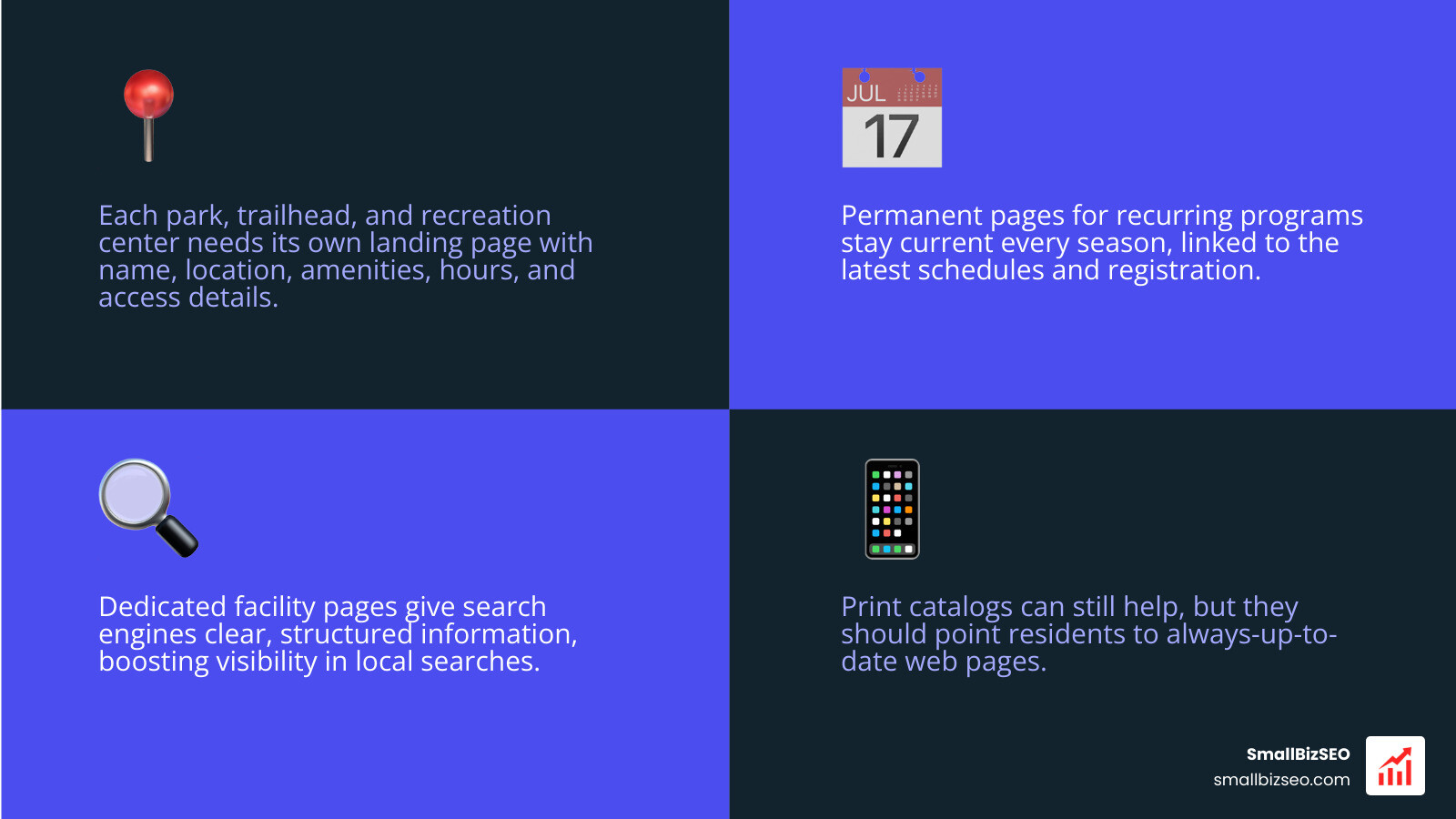
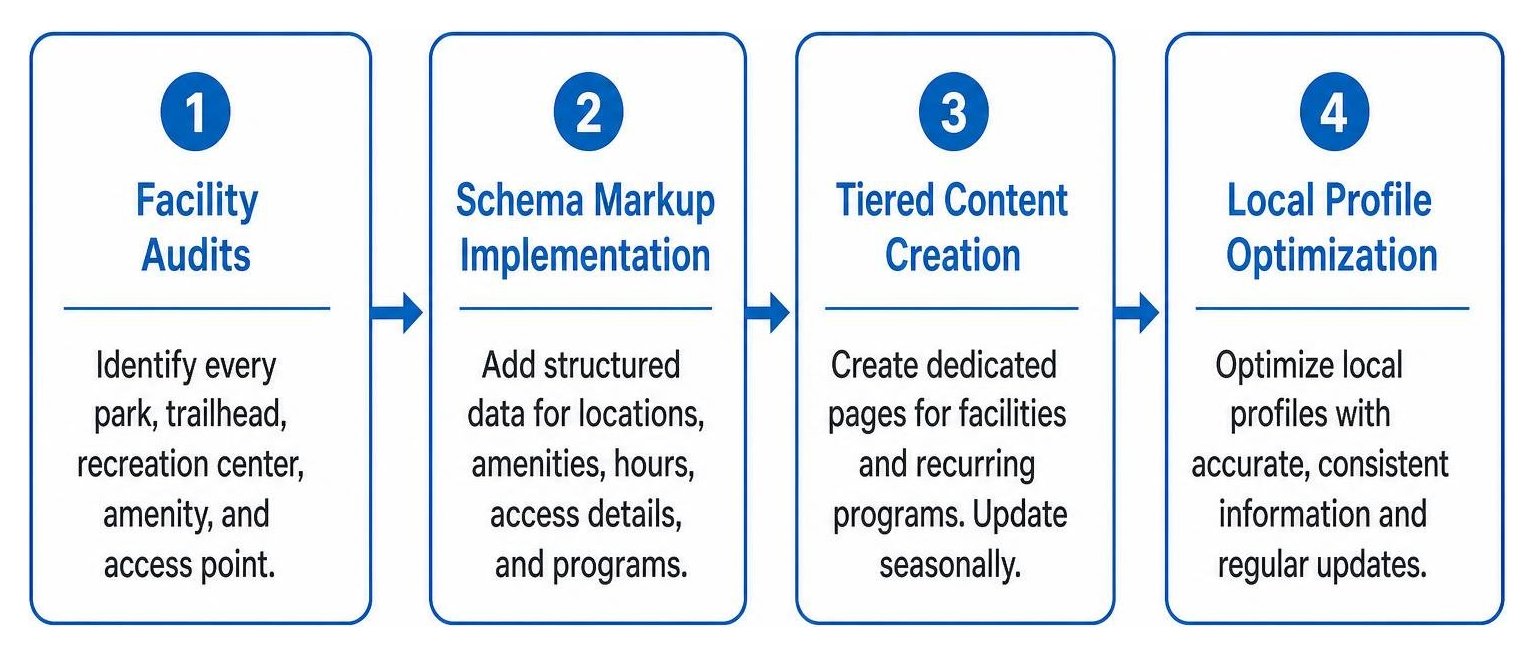
To improve SEO for public parks & recreation, give each park, trailhead, and recreation center its own page with a clear name, location, amenities, hours, and access details. Keep a permanent page for each recurring program, update it every season, and link it to the current schedule and registration page. These pages give search engines useful information and give residents a direct answer.
A print catalog can still help residents, but it should point to web pages that stay current after the catalog is mailed.
I'm Clayton Johnson, founder of SmallBizSEO. My work in technical SEO, content strategy, and search visibility informs this guide to SEO for public parks & recreation.
Comprehensive Strategies for SEO for Public Parks & Recreation
Parks and recreation departments build stronger web visibility when they treat their digital assets as living community hubs rather than static municipal archives. Achieving top search placement requires structuring your online presence so that search engines clearly understand every physical asset, recurring program, and seasonal event you manage.
By aligning your website with how modern search engines index geographic and organizational information, you ensure that families, athletes, and visitors easily find everything from trail networks to youth sports registrations.
Why SEO for Public Parks & Recreation Requires Dedicated Facility Landing Pages
Every physical amenity under your department's care—including standalone parking lots, public tennis courts, boat launches, dog runs, and trailhead access points—should have its own dedicated landing page.
When recreation agencies bundle multiple facilities onto a single, cluttered directory page, search engines struggle to extract specific location signals. If someone asks their voice assistant for parking near a greenway or looks up an outdoor court on mobile maps, an unindexed or buried facility simply will not appear.
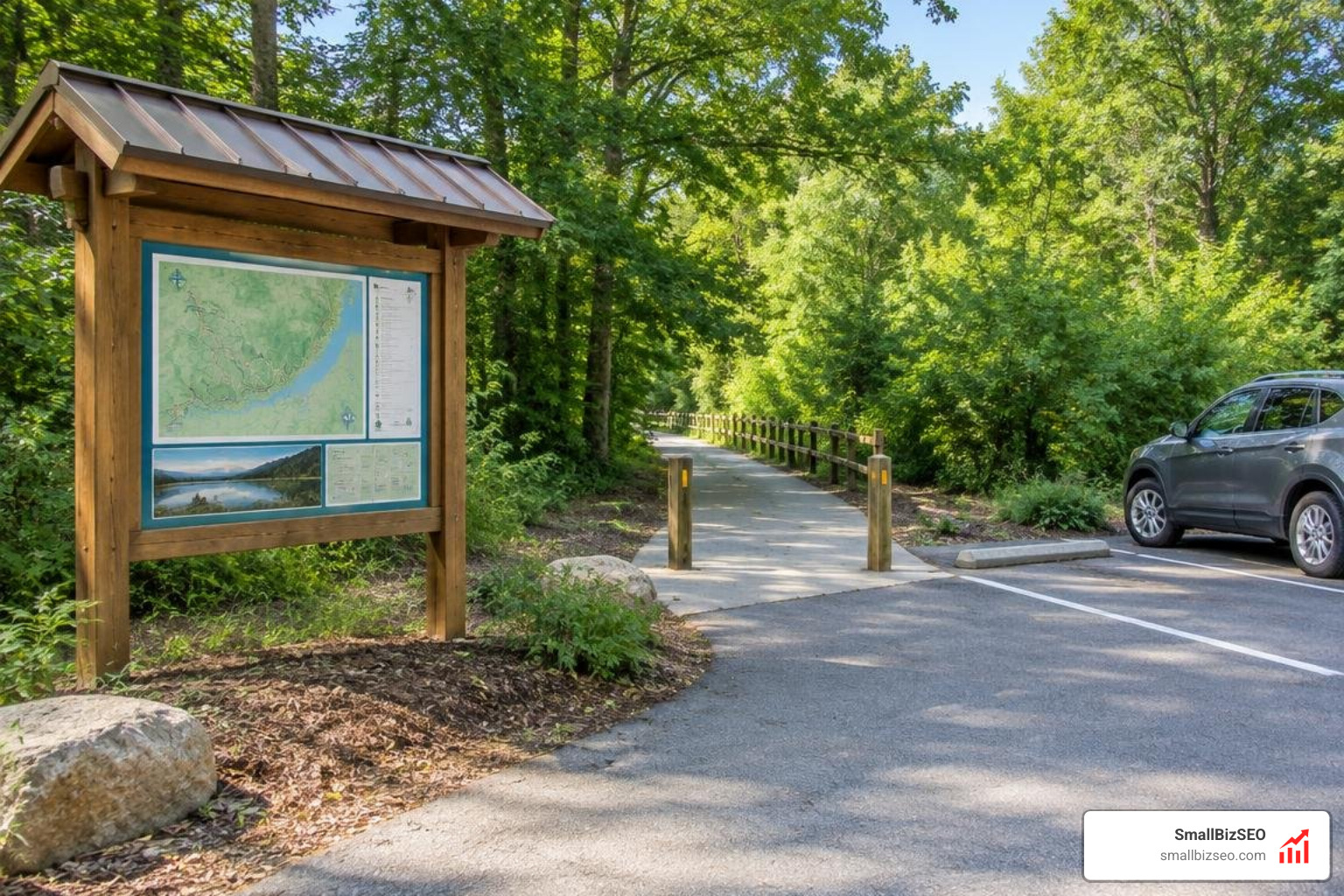
Creating standalone URLs for each facility allows search bots to index the exact physical coordinates, street address, operating hours, ADA accessibility details, and available amenities. Leading municipal agencies, such as the New York City Department of Parks & Recreation, showcase the value of detailed, individual listings that help millions of visitors navigate public assets seamlessly.
To maximize local discovery, apply structured data—specifically Schema.org types like CivicStructure, Park, or ParkingFacility—to these individual pages. This code clarifies attributes such as:
- Exact latitude and longitude coordinates
- Daily opening and closing times
- Restroom availability and lighting status
- Fee structures or permit requirements
- Direct navigation directions
When individual facilities are marked up with structured data and submitted to mapping services, voice search assistants and mapping platforms can accurately direct visitors right to the correct gate or parking lot.
How to Structure Tiered Content and Permanent Program Hubs in SEO for Public Parks & Recreation
A common hurdle for municipal recreation departments is the seasonal "disappearing page" problem. When agencies publish registration links inside temporary PDFs or delete web pages as soon as registration closes, they wipe out the authority that those pages earned in search engines.
Instead, build a permanent tiered content hierarchy that steadily builds local relevance over time.
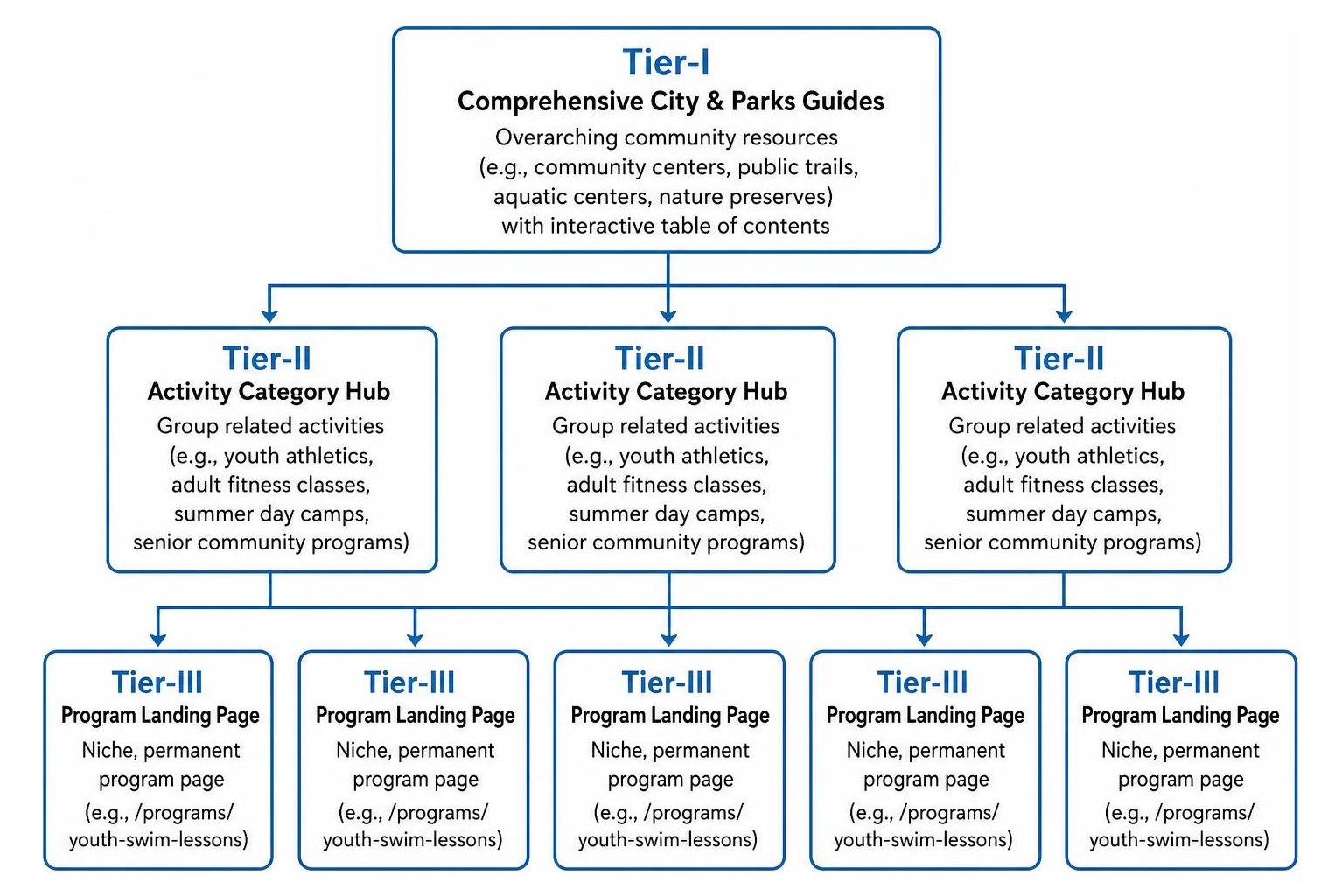
This structure organizes your offerings into three clear tiers:
- Tier-I: Comprehensive City & Parks Guides. These pillar pages serve as overarching community resources covering major outdoor categories (such as community centers, public trails, aquatic centers, and nature preserves) complete with an interactive table of contents.
- Tier-II: Descriptive Activity Category Hubs. These pages group related activities, such as youth athletics, adult fitness classes, summer day camps, or senior community programs.
- Tier-III: Niche, Permanent Program Landing Pages. Every recurring program—like youth swim lessons or spring soccer—lives on a permanent, static URL (such as
/programs/youth-swim-lessons).
When registration ends for the season, never delete the page or allow it to return a broken link. As highlighted in ACTIVE Network SEO Best Practices, maintaining stable URLs preserves valuable search ranking equity.
Keep the page live year-round, update the messaging to announce upcoming seasonal dates, and offer an email notification signup. When the next registration cycle opens, simply update the page schedule and registration button.
How Can Parks Optimize Event Schedules, Sports Leagues, and Local Map Profiles?
To make dynamic community schedules and sports leagues discoverable, recreation departments must combine on-page event structured data with fully claimed map profiles.
Event pages should use Event schema markup containing start dates, end dates, registration deadlines, and venue locations. This enables search engines to display your 5K fun runs, holiday festivals, and movies in the park directly within interactive search event carousels.
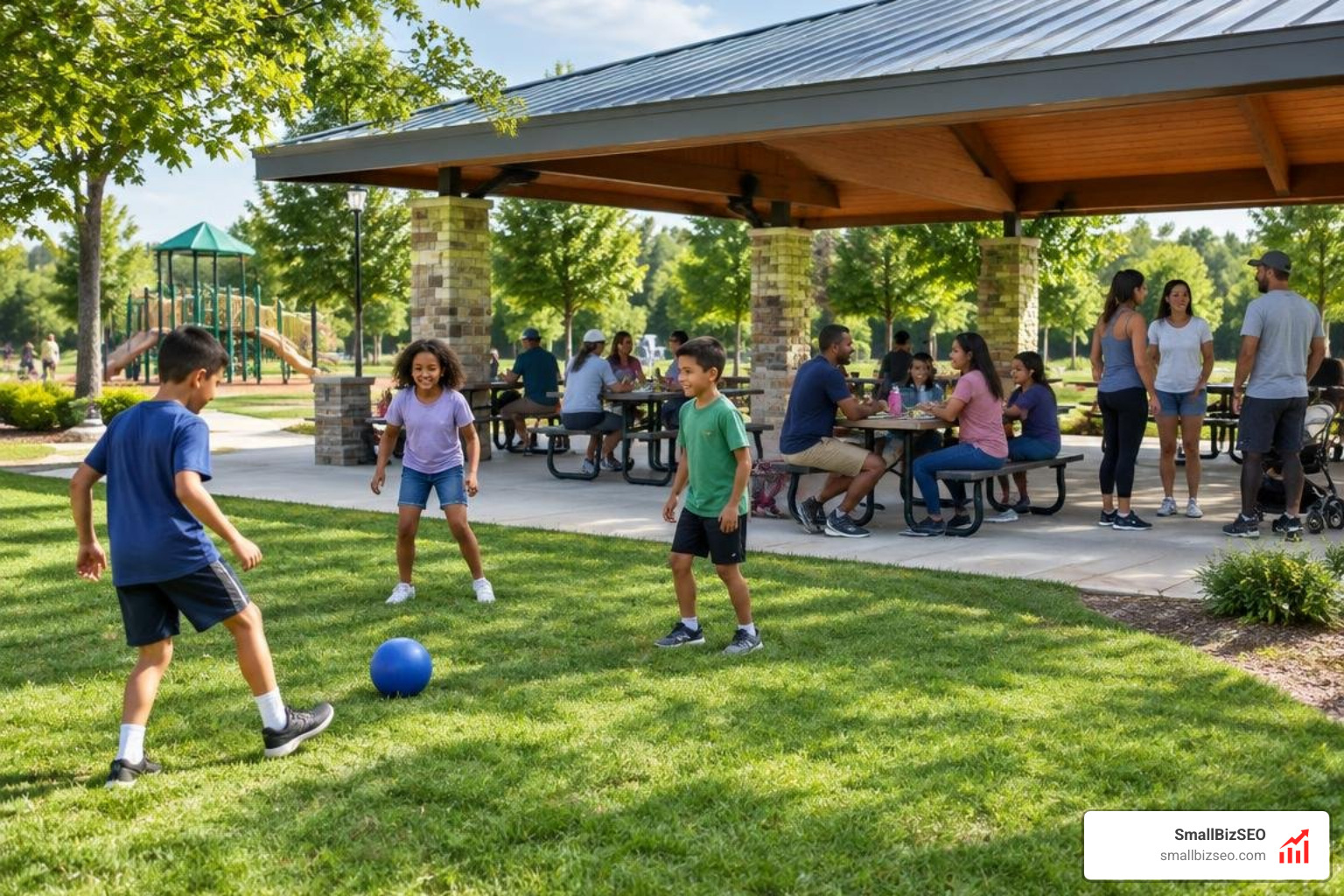
For local map visibility, every major park, community center, and sports complex should have an active Google Business Profile. Claiming and optimizing these listings gives your department strong positioning within the local pack, capturing high-intent searches from residents seeking nearby recreation.
Municipalities managing dozens of venues can use bulk verification spreadsheets, as outlined in the LTA Google My Business Guide, to streamline listings across multiple sites.
To boost your profile's prominence in map search:
- Maintain strictly consistent contact details and physical addresses across all directories.
- Upload fresh, high-resolution photos of playgrounds, fields, and amenities every quarter.
- Publish regular updates about open registration windows, seasonal hours, or field closures.
- Encourage visitors to share reviews, check-ins, and photos of their park experiences, and respond promptly to community questions.
Measuring ROI and Maintaining Content Accuracy Across Municipal Portals
Transitioning from a print-first catalog strategy to an SEO-focused digital model delivers measurable financial savings and stronger community engagement.
| Channel / Strategy | Typical Production Cost | Longevity & Freshness | Search Discoverability | Tracking & Measurable ROI |
|---|---|---|---|---|
| Traditional Print Catalog | High printing and mailing expenses | Fixed; outdated within months | Buried inside unindexed PDFs | Limited to general coupon or survey tracking |
| Dedicated SEO Landing Pages | Low digital publishing overhead | Permanent URLs updated seasonally | High visibility for local and voice queries | Real-time analytics, clicks, and sign-ups |
SEO is a compounding investment where consistent improvements show meaningful traction within six months of deployment. By keeping your digital portal current with quarterly audits—verifying field maintenance schedules, updating park rules, and refreshing seasonal program hours—you build lasting credibility with both search engines and your residents.
If you are ready to modernize your department's digital infrastructure, we can help. You can schedule a comprehensive SEO visibility audit with our team at SmallBizSEO to identify technical gaps, streamline your program architecture, and ensure your public amenities get the visibility they deserve.
Powering Your Community's Digital Front Door
Modern search optimization turns your recreation department's website into a reliable, easy-to-use community guide. By providing dedicated landing pages for every park amenity, organizing programs with permanent URLs, implementing structured data, and actively maintaining local map listings, you remove friction for residents seeking healthy, active lifestyles. Investing in clear, searchable digital assets ensures your community spaces remain vibrant, accessible, and well-utilized for generations to come.