In Depth Guide to Improving Local SEO Tactics
In Depth Guide to Improving Local SEO Tactics
How can you improve local SEO and reach nearby customers?
Start with the basics: Verify your Google Business Profile, choose the right business category, and keep your hours, address, and phone number accurate. Then make your website easy to use on a phone, create useful pages for the places you serve, and ask customers for honest reviews. These steps help nearby people find you in Google Search and Maps when they need what you offer.
Google weighs relevance, distance, and prominence in local results. You cannot change where a searcher is, but you can make your services clearer and build trust through reviews and links from relevant local sites.
I'm Clayton Johnson, founder of SmallBizSEO, where I connect SEO, content, and digital PR to help small businesses attract qualified leads. My approach to improving local SEO starts with clear answers, accurate business details, and a website that helps visitors take the next step.
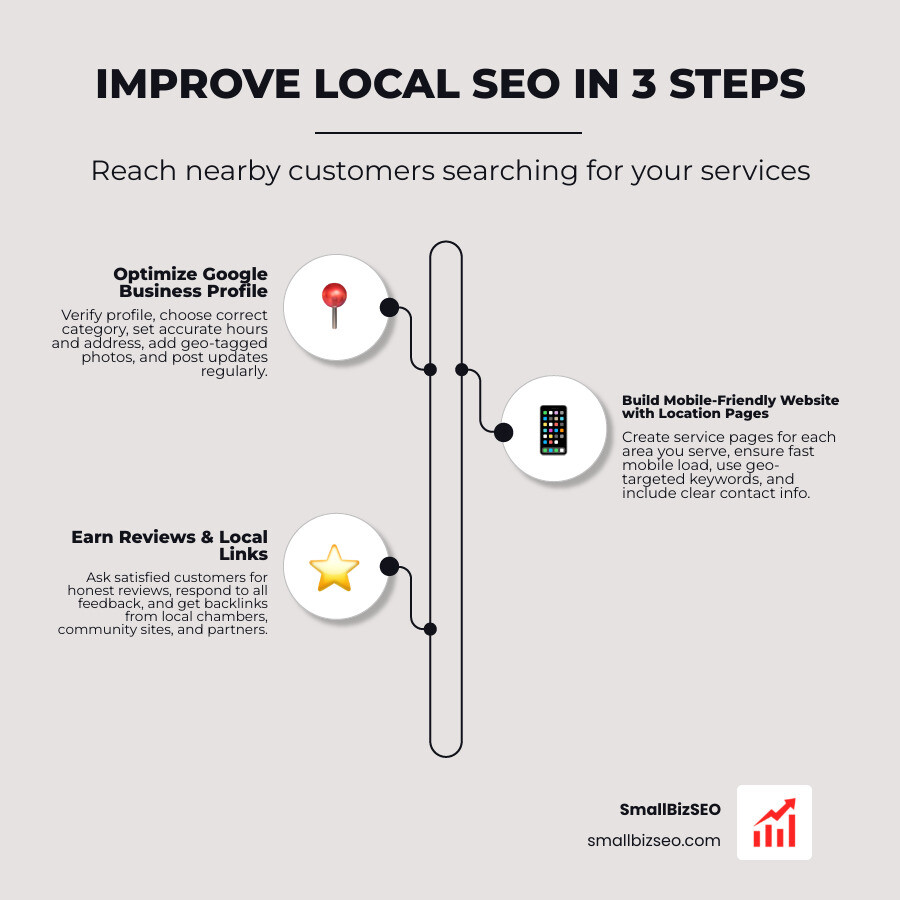
Simple improving local SEO glossary:
Foundational Strategies for Improving Local SEO
To succeed in local search, you must align your web presence with the three core pillars of Google's local algorithm: relevance, distance, and prominence.
Relevance measures how well your business listing matches what a person searches for. Distance considers how far your physical storefront or verified service area is from the searcher's physical location. Prominence reflects how well-known and reputable your business is across the web, drawing on review counts, backlinks, citations, and overall engagement.
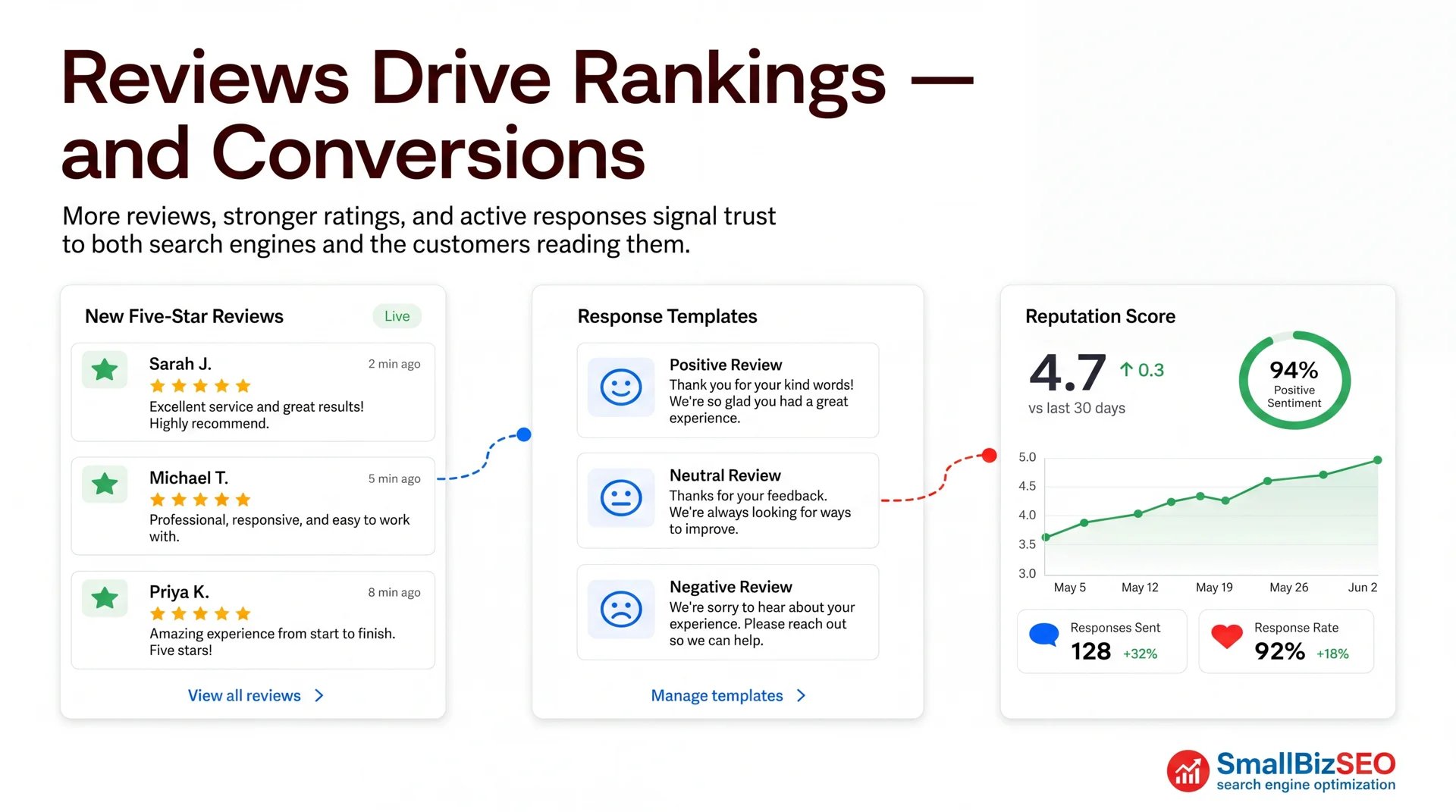
When Google evaluates local intent, it balances these three signals to present the most helpful results in the map pack and traditional organic listings. Understanding this interplay helps businesses avoid costly mistakes and prioritize high-impact optimizations.
| Ranking Factor | Core Focus | Key Optimization Actions | Primary Algorithm Goal |
|---|---|---|---|
| Relevance | Accuracy and topical match | Complete GBP fields, add primary and secondary categories, optimize on-page content | Ensure the business provides what the user is actively seeking |
| Distance | Geographic proximity | Verify accurate physical coordinates, define clear service areas | Connect the user with the most convenient local provider |
| Prominence | Authority, reputation, and brand trust | Generate customer reviews, earn local editorial backlinks, maintain citations | Surface established, trustworthy businesses with proven customer satisfaction |
Learning a practical guide to local SEO map visibility allows you to focus resources on the signals that move the needle fastest.
How Does Google Business Profile Optimization Impact Improving Local SEO?
Optimizing your Google Business Profile (GBP) directly boosts your local visibility by providing search engines with verified data about your business. A fully completed profile acts as the primary data source for Google Maps and the 3-pack search snippet.
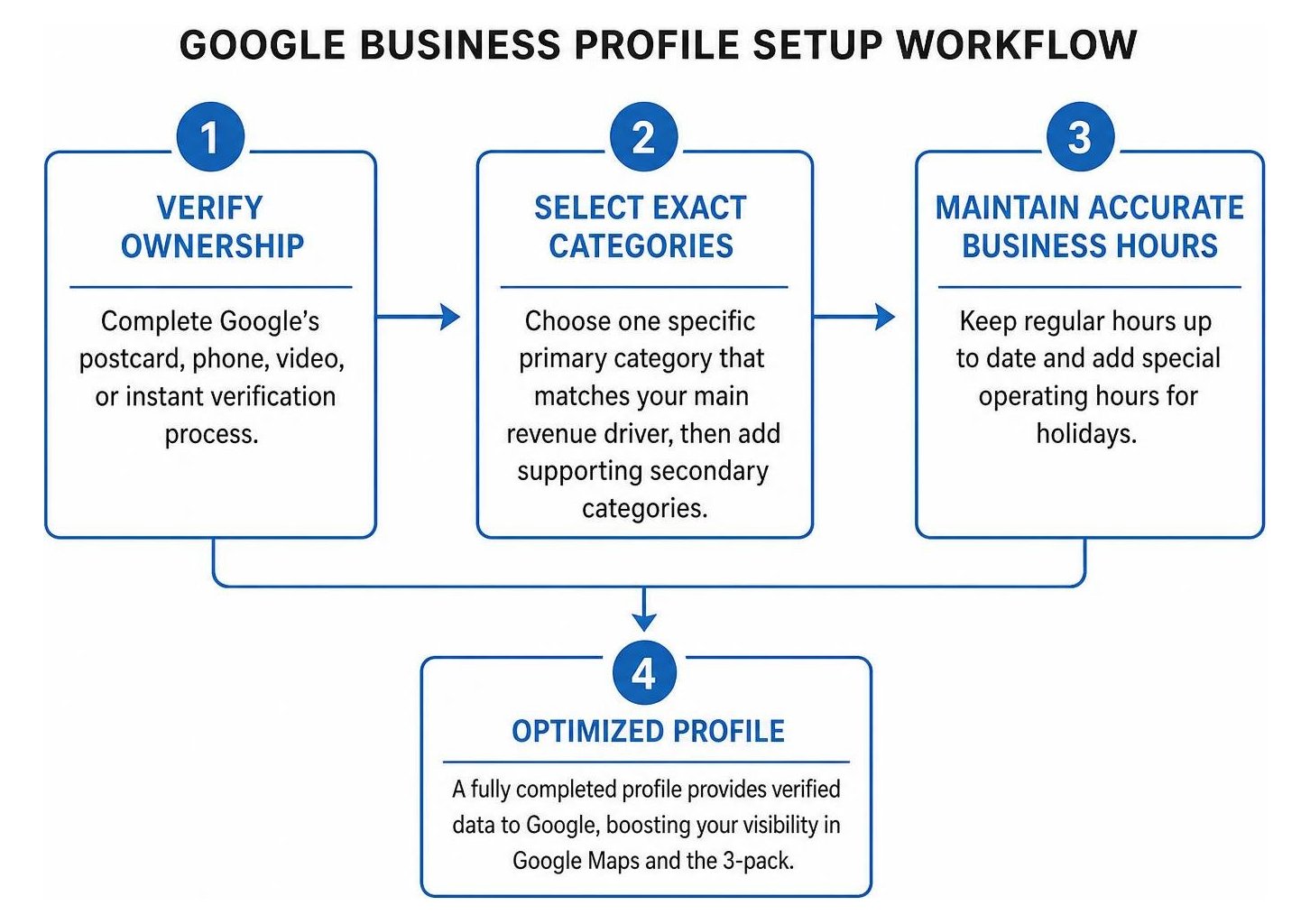
To maximize your profile's performance, follow these key steps:
- Complete the verification process: Finish Google's postcard, phone, video, or instant verification method to secure ownership of your listing.
- Select exact categories: Choose one specific primary category that mirrors your main revenue driver, then add supporting secondary categories to capture related searches.
- Maintain accurate business hours: Keep regular hours up to date and add special operating hours for holidays to prevent misleading potential customers.
- Upload high-resolution photos: Regularly publish authentic interior, exterior, team, and work photos to encourage interaction and build trust.
- Publish regular Google Posts: Share promotional offers, new product arrivals, and company updates weekly to keep your profile active.
For practical guidance on Google Business Profile details, reviews and location-based tracking, see our guide to local SEO map visibility.
How Do NAP Consistency and Local Citations Validate Business Legitimacy?
Name, Address, and Phone number (NAP) consistency validates your business legitimacy by providing search engine crawlers with uniform contact information across directories. When search engines find matching records across major platforms, confidence in your business location increases.
Citations generally fall into two categories:
- Structured Citations: Formal directory listings on platforms like Yelp, Apple Maps, YellowPages, and industry-specific portals where NAP data follows a standard format.
- Unstructured Citations: Mentions of your business name, address, or phone number in local news articles, neighborhood blogs, or sponsorship pages.
Managing your presence across primary data aggregators prevents fragmented data from hurting your rankings. Discovering 5 local SEO mistakes killing your visibility highlights how duplicate listings or outdated phone numbers confuse search algorithms and degrade local ranking power. You can also explore how to improve local SEO through structured citation cleanup and proactive directory management.
How Can Online Reviews and Local Business Schema Accelerate Improving Local SEO?
Customer reviews and structured schema markup accelerate local rankings by supplying real-world sentiment signals and machine-readable data directly to search engine bots. Review volume, star ratings, and steady review velocity demonstrate business activity and customer trust.
To build a sustainable reputation system:
- Request reviews systematically: Provide short review links or in-person QR codes to satisfied clients immediately following completed work.
- Respond to every review: Reply promptly and professionally to both positive and negative feedback within 24 to 48 hours.
- Encourage detailed feedback: Specific customer mentions of services and neighborhoods create natural keyword justifications in search results.
On the technical side, adding LocalBusiness schema via JSON-LD markup helps search engines parse your exact operating hours, geographical coordinates, physical address, and review aggregate data.
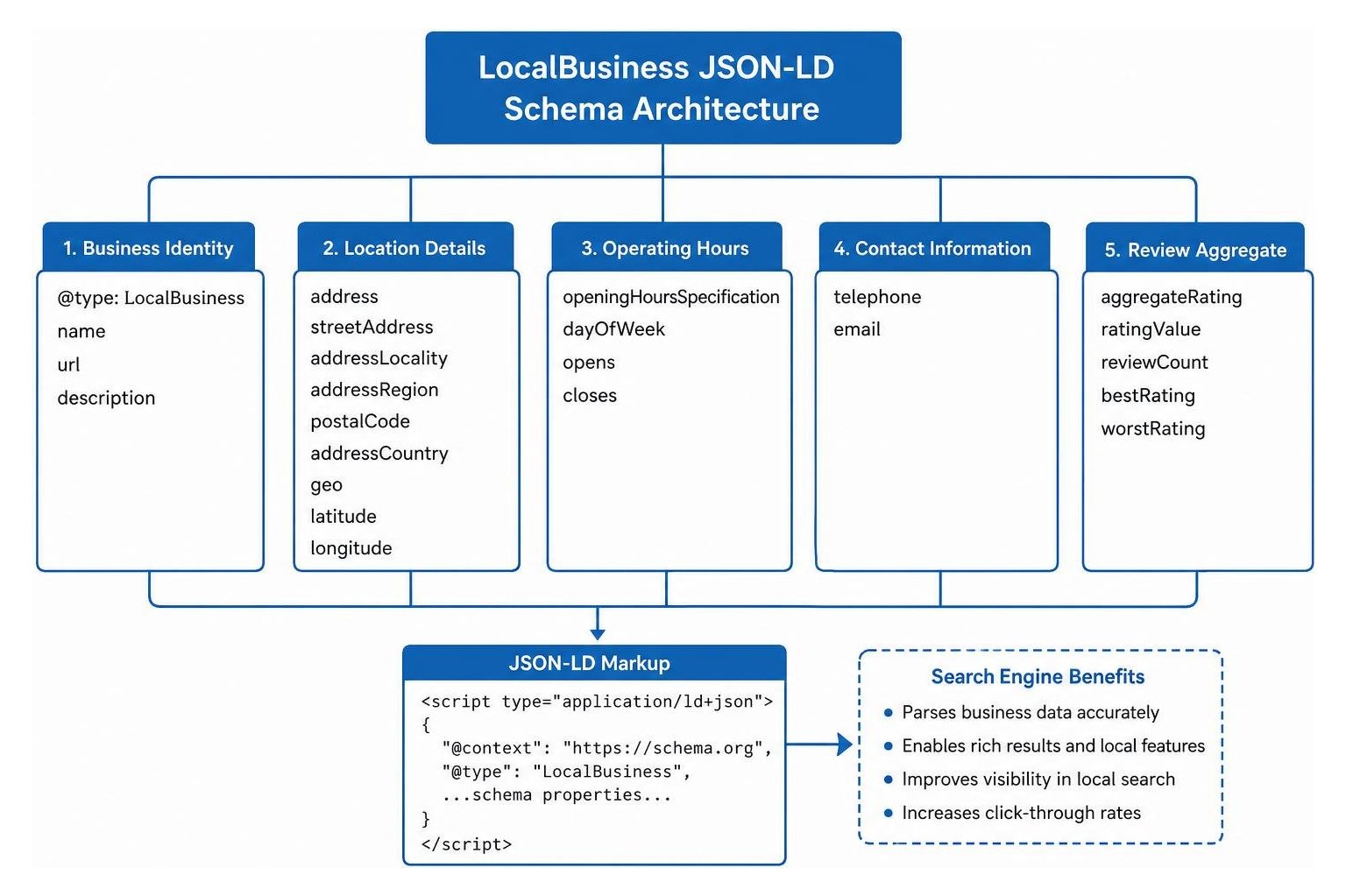
Implementing structured data enhances topical relevance, unlocking rich snippets that increase click-through rates. To dive deeper into semantic concepts, read how semantics and topical authority improve local SEO across competitive niches.
What Are the Best Practices for Location Pages and Proximity Backlinks?
The best approach for multi-location or service-area websites is creating dedicated landing pages optimized for specific geographic terms while earning relevant local backlinks.
When building localized landing pages, avoid shallow, cookie-cutter templates. Ensure every city or neighborhood page features:
- Unique service descriptions tailored to that specific community
- Embedded Google Maps showcasing your service boundary
- Authentic local client testimonials and project photo galleries
- Localized metadata, unique H1 headings, and natural neighborhood landmark mentions
Applying the Query Deserves a Page (QDP) framework ensures you only build dedicated location pages for areas with genuine search demand, preventing index bloat and keyword cannibalization.
Pair these on-page efforts with proximity backlinks. Sponsoring community sports teams, joining local chambers of commerce, and partnering with neighboring, non-competing businesses yields high-trust local links that generic websites cannot replicate. For service businesses, learning to master local home services SEO and outrank nearby competitors fast combines on-page geographic targeting with localized outreach.
Measuring Success and Scaling Your Local Search Visibility
Measuring local search performance requires tracking location-specific metrics that reflect real business growth. Instead of relying solely on national rank tracking tools, focus on localized rank grids that display how your business ranks block-by-block across your community.
Key local performance indicators to monitor include:
- Google Business Profile Interactions: Track phone call clicks, direction requests, and website visits inside profile analytics.
- Localized Organic Traffic: Monitor landing page visitors originating from targeted geographic search queries in Google Search Console.
- Local Rank Distribution: Evaluate map pack placements across various latitude and longitude coordinates in your service territory.
- Conversion Metrics: Measure form submissions, quote requests, and scheduled consultations generated from local landing pages.
Take the Next Step Toward Dominating Local Search
Achieving consistent visibility in local search results requires combining technical accuracy, proactive reputation management, and high-quality local content. As search experiences incorporate more conversational AI and map-based results, businesses that provide accurate, verified information will continue to capture high-intent leads.
If you are ready to identify gaps in your local strategy, request a comprehensive SEO visibility audit from SmallBizSEO to uncover actionable opportunities and drive predictable, local growth.