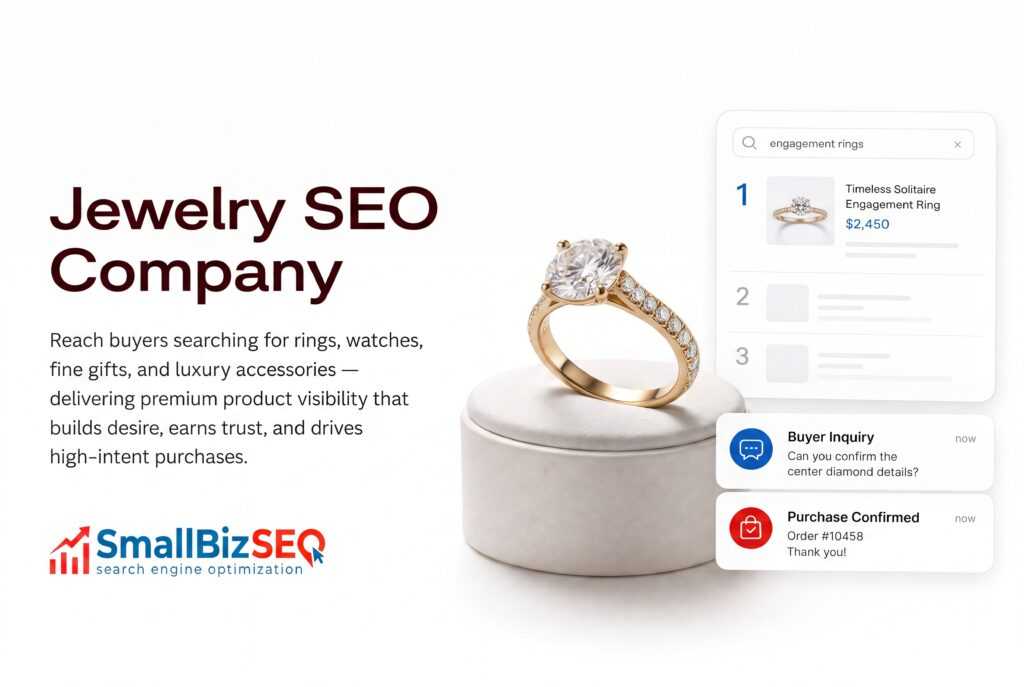
Help shoppers move from an occasion or design preference to the details that matter.
An engagement-ring shopper, a customer comparing metal options and someone researching a custom commission do not need the same page. We organize jewelry SEO around those decisions. Your site should connect genuine collections, accurate item specifications and clear purchase or appointment paths, while keeping retail discovery distinct from repair services and avoiding unsupported claims about provenance or future value.
Search intent & content
Follow the shopper from category to specification
Connect collection browsing with the materials, gemstones and item details shoppers want to compare. Give ready-to-purchase pieces, custom commissions and showroom appointments their own clear next steps within the jewelry business’s actual offering.
Collection and occasion discovery
Organize real product ranges around useful categories, such as rings, necklaces or a relevant occasion edit. Give each collection a clear purpose and a route to individual pieces rather than padding it with generic luxury language.
Example searchengagement ring collection
Metal and gemstone comparisons
Use verified product attributes to help shoppers compare the actual selection. Explain metal, stone and sizing information at the appropriate level without treating every specification as a certification or making unsupported authenticity claims.
Example searchgold gemstone ring options
Custom jewelry inquiries
Where custom design is offered, explain the consultation process and what the customer can bring to a brief. Separate commissioned work from ready-to-purchase inventory so shoppers understand the next step for each.
Example searchcustom jewelry design appointment
Showroom and product appointments
Make location, contact and appointment arrangements easy to find for customers who want to discuss a piece in person. Explain how to ask about availability rather than imply every online item is present in the showroom.
Example searchjewelry showroom appointment
Website priorities
Build useful pages around real customer decisions
Build a deliberate filter strategy
Review how metal, gemstone, size and price filters help shoppers navigate the catalog. Decide which combinations merit useful landing pages rather than assume every filtered URL needs separate search-facing copy.
Make product details complete
Connect images, dimensions, materials and relevant purchase information on the item page. A customer comparing two pieces should not need to infer their differences from photographs alone.
Keep custom and stock journeys distinct
A commission needs a brief and consultation; an available item needs accurate selection and purchase information. Navigation and calls to action should make that difference clear.
Use the brand story as evidence
Share documented design processes or provenance where available and relevant. Brand narrative can support a product decision without inventing heritage, exclusivity, affiliations or investment value.
Our approach
A practical plan for your website
We review your catalog, product attributes and showroom or custom-design process. Then we connect collections and item pages through a clear hierarchy that supports browsing, specification comparison and the right purchase or inquiry action.
Review the foundations
Check crawlability, existing pages, customer needs, and the services your business actually offers.
Map services to demand
Connect customer questions to useful service pages and supporting content without duplicating search intent.
Build, measure, improve
Publish useful pages and refine them using search visibility and separately configured inquiry analytics.
- Item descriptions use verified materials, dimensions and product attributes.
- Provenance and certification language is supported by actual documentation.
- Custom commissions are distinguished from available retail inventory.
- Showroom information explains how product availability and appointments are confirmed.
Frequently asked questions
Questions about your industry SEO strategy
Should every gemstone or metal filter become an SEO page?
Not automatically. Prioritize combinations with a clear shopping purpose and enough useful product information. Other filters can support navigation without creating a large set of thin, overlapping pages.
How should custom jewelry differ from product pages?
Custom content should explain the brief, design process and consultation route. Product pages should describe the actual item and purchase options, so customers do not confuse an example commission with available stock.
Can jewelry SEO include provenance and craftsmanship stories?
Yes, when the business can substantiate the details. Connect documented material or design information to relevant pieces rather than use broad authenticity, heritage or value claims as decorative marketing language.
How do we measure whether SEO is helping?
Use Google Search Console for search visibility and page performance. Measure calls, inquiries, and lead quality separately through analytics and intake tracking where configured.
Can you guarantee rankings or new customers?
No. We focus on the work within our control: technical foundations, useful content, clear navigation, and measurement. Search outcomes depend on competition and other factors.
Build a clearer path from search to inquiry
Share your jewelry collections and the way customers buy or commission pieces. We can build clearer search journeys from discovery to product comparison and a relevant appointment or purchase path.
Related services & strategies