Organic CTR Benchmarks Reveal What AI Overviews Mean for Publisher Traffic
How Do Google AI Overviews Affect Organic Clicks?
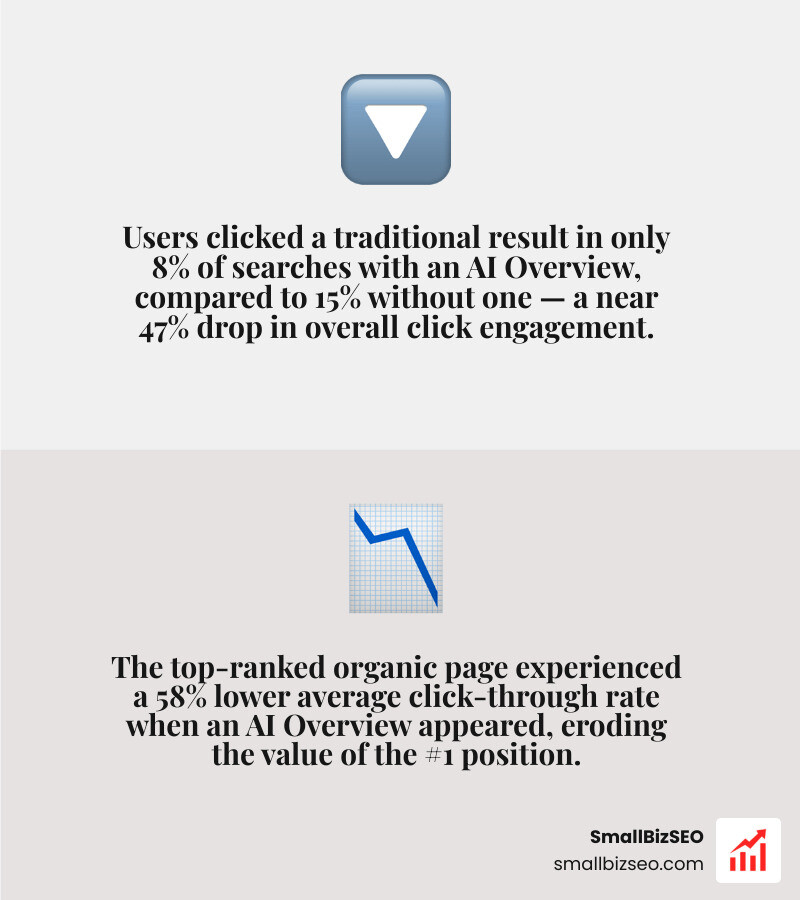
AI Overviews are linked to fewer clicks on traditional search results. Research on Google AI Overview click-through rates, organic traffic, and search performance statistics found that users clicked a traditional result in 8% of searches with an AI Overview, compared with 15% without one. Another analysis found a 58% lower average click-through rate for the top-ranked page when an Overview appeared. These figures come from different studies, so they are benchmarks, not a forecast for every site.
For publishers, the risk is clear: a page can keep its ranking while losing clicks. The statistics below show where losses are greatest and why being cited in an Overview matters.
I'm Clayton Johnson, founder of SmallBizSEO, where I help small businesses connect SEO, content, and authority building with qualified leads. My work on Google AI Overview Click-Through Rates: Organic Traffic and Search Performance Statistics focuses on making these changes easier to measure and act on.
Related content about Google AI Overview Click-Through Rates: Organic Traffic and Search Performance Statistics:
- AI Search Traffic Statistics: How Much Website Traffic Comes From AI Assistants?
- AI Search vs. Traditional Search: Traffic, Clicks, and Conversion Benchmarks
- The Most Cited Content Categories Across Leading AI Platforms
Google AI Overview Click-Through Rates: Organic Traffic and Search Performance Statistics Across SERP Positions and Intent
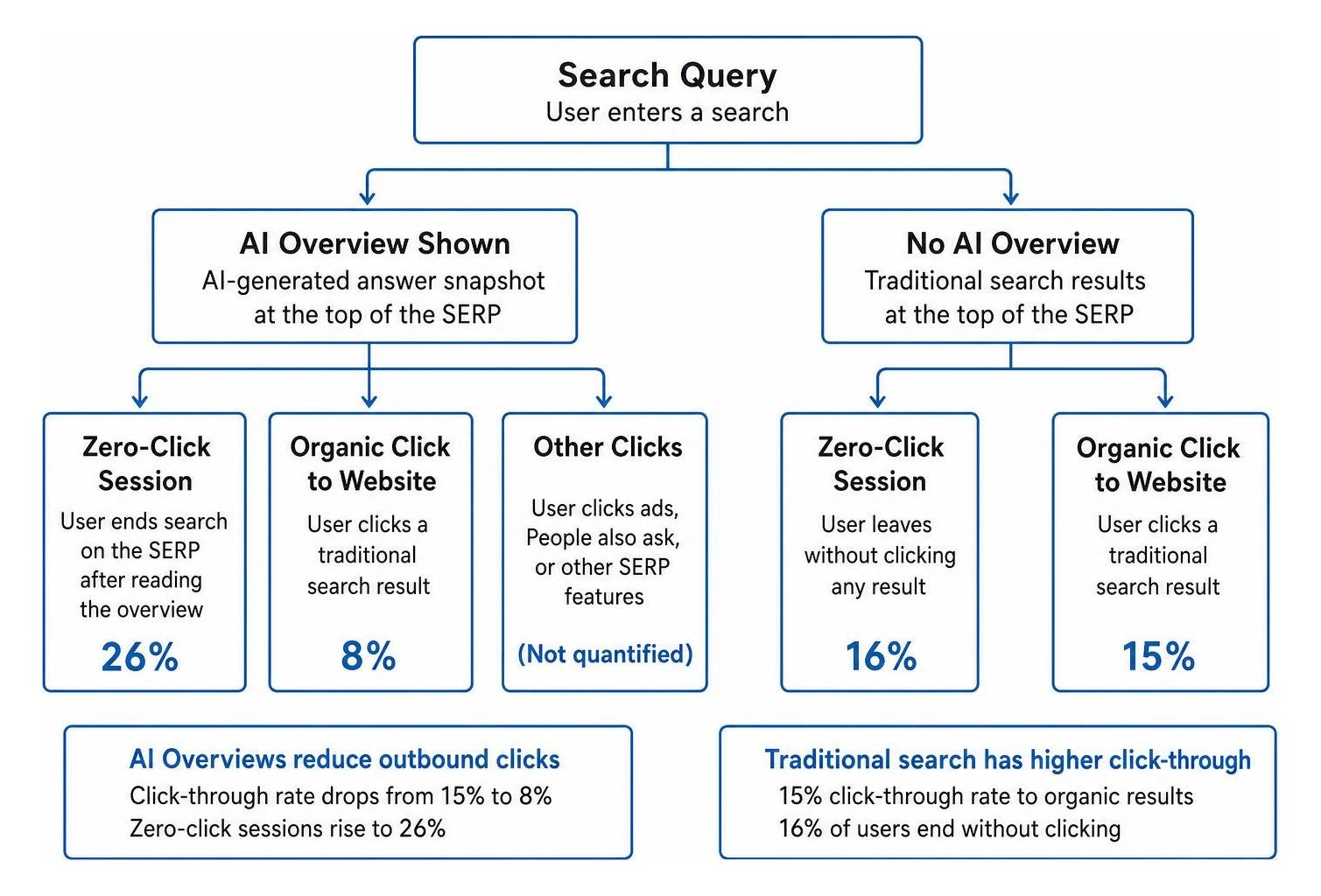
Google AI Overviews reduce overall outbound search clicks by roughly 40% while pushing zero-click sessions to record highs. When an AI-generated answer snapshot occupies the top of the search engine results page (SERP), it fulfills user intent immediately. This fundamental shift reduces traditional web click behavior from 15% down to just 8% of searches.
With Google's generative summaries reaching over 1.5 billion monthly users globally, search engines are transitioning from discovery portals into direct answer engines. As a result, roughly 26% of users end their search journey right on the SERP after reading an overview, compared to only 16% who bounce or leave without clicking on traditional layouts.
What Do Google AI Overview Click-Through Rates, Organic Traffic, and Search Performance Statistics Reveal by Query Intent?
Informational search queries face the sharpest drop in organic click-through rates, whereas branded searches experience a measurable traffic lift. Because generative snapshots prioritize quick definitions, how-to summaries, and conceptual breakdowns, purely informational queries suffer a massive 61% CTR decline. Non-branded search queries show an average 20% drop, and general search queries with automated summaries see a 46.7% decline. Even when an overview overlaps with a classic featured snippet, organic click-through rates still decrease by 37%.
Conversely, branded search queries represent a clear bright spot. Branded searches triggering an overview experience an 18.7% CTR increase. When searchers look for specific companies or software products, the AI block compiles business hours, features, and official navigation links, encouraging users to click through directly. Commercial and transactional queries also demonstrate resilience because buyers require full product catalogs, pricing checkouts, and customer reviews before making purchasing decisions.
| Query Intent Category | Average CTR Impact with AI Overview | Key Behavioral Driver |
|---|---|---|
| Informational & Educational | -61.0% | Complete answers provided directly within the SERP snapshot |
| General Search (AI Summary) | -46.7% | Quick factual lookups satisfy search intent immediately |
| Featured Snippet Overlap | -37.0% | Double-stacked answer blocks push organic listings below the fold |
| Non-Branded Broad Search | -20.0% | Searchers explore conversational refinements within AI Mode |
| Branded Search Queries | +18.7% | Rich entity snapshots and direct brand links boost authority clicks |
Rigorous scientific research on zero-click search behavior and AI Overviews demonstrates that informational query traffic loss is a permanent structural change rather than a temporary trend. Understanding these baseline benchmarks for traffic and conversions from generative search helps publishers reallocate resources toward high-intent pages.
How Do Search Positions 1 Through 10 Perform When AI Overviews Are Triggered?
Top-ranking organic search results suffer the heaviest percentage loss in click-through rate when an AI Overview is present. The traditional number-one organic ranking position drops by an average of 58.0% in CTR, losing its historical monopoly on search attention. Position 2 experiences a 50.8% reduction, position 3 drops by 46.4%, and mid-tier placements (positions 4 through 9) see declines hovering around 30%. By position 10, the negative impact softens to a 19.4% drop, largely because bottom-page results already received lower click volume.

Device types also dictate the severity of organic traffic losses. Desktop searches exhibit an average 47.5% CTR drop, whereas mobile devices show a 37.7% decline. Because mobile screens display full-width link carousels and expandable cards, smartphone users frequently interact with citation bubbles. According to an industry report on publisher clickthrough rate losses, publishers must monitor their placement distributions continuously. As highlighted in our analysis of the rising share of website traffic generated by AI assistants, ranking first on traditional blue links no longer guarantees steady traffic.
What Is the Difference in Organic Performance for Cited Brands vs. Uncited Results?
Earning a direct link citation within an AI Overview nearly doubles your organic click-through rate compared to ranking uncited below the fold. Pages featured as interactive source cards inside the overview achieve an average 1.08% CTR, compared to just 0.60% for uncited competitors positioned further down the page. This citation bonus yields a 35% higher organic CTR and a 91% lift for paired search advertising campaigns.
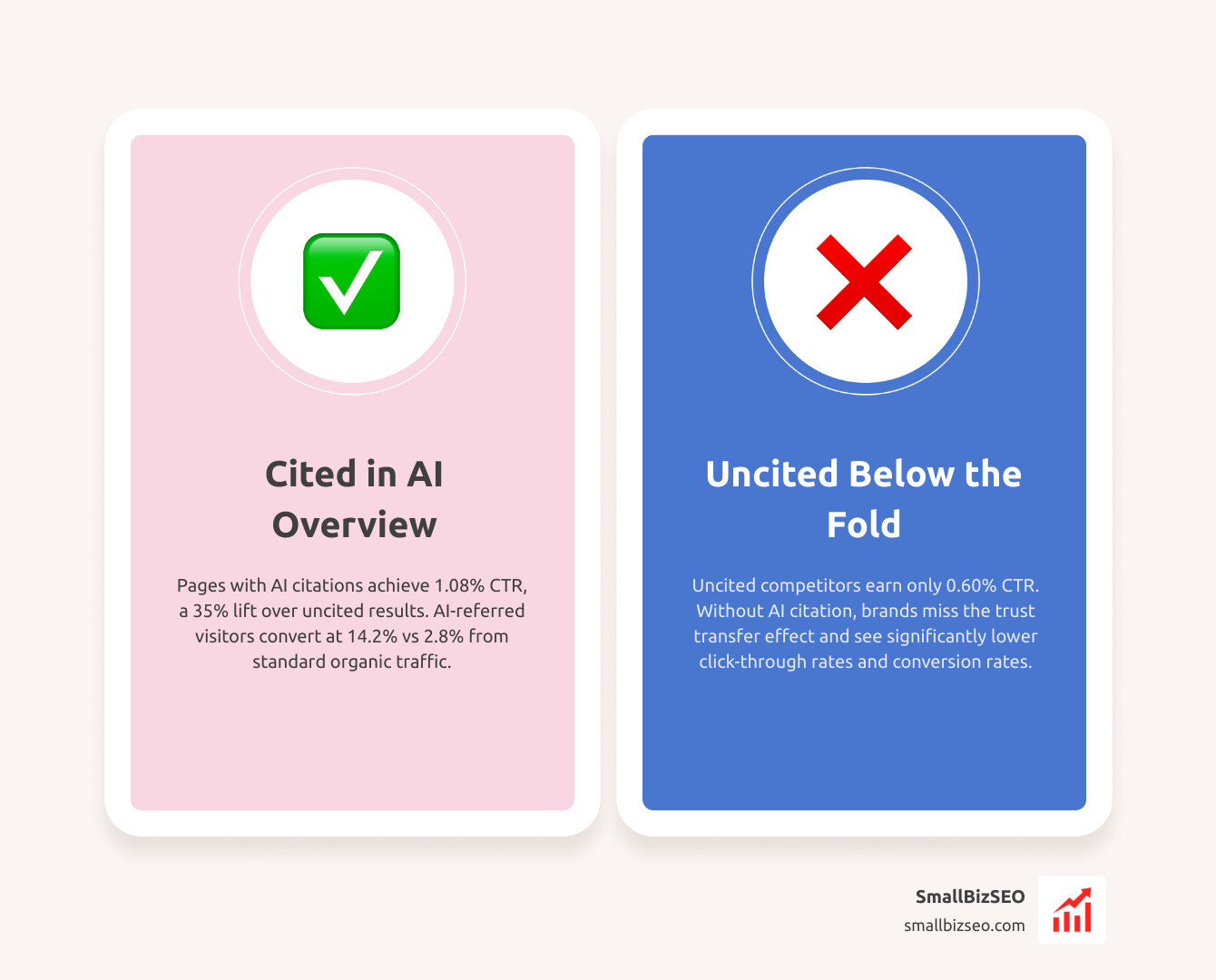
Beyond raw click volume, traffic referred directly from generative answers exhibits superior commercial engagement. Visitors who click an AI citation card arrive with high intent because the model has already validated their context. AI-referred visitors convert at an impressive 14.2%, compared to standard organic conversion rates of approximately 2.8%. Brands with strong domain trust and structured content capture the lion's share of these citations. Exploring research on evaluating content categories cited by AI platforms confirms that authoritative data formats earn maximum algorithmic citations.
How Publishers and Brands Must Adapt Their Content and Measurement Strategies for AI Mode
To protect traffic and maintain sustainable growth, businesses must pivot from traditional ranking tactics to Generative Engine Optimization (GEO). Modern SEO requires structuring content so that large language models can parse, synthesize, and cite key takeaways effortlessly.
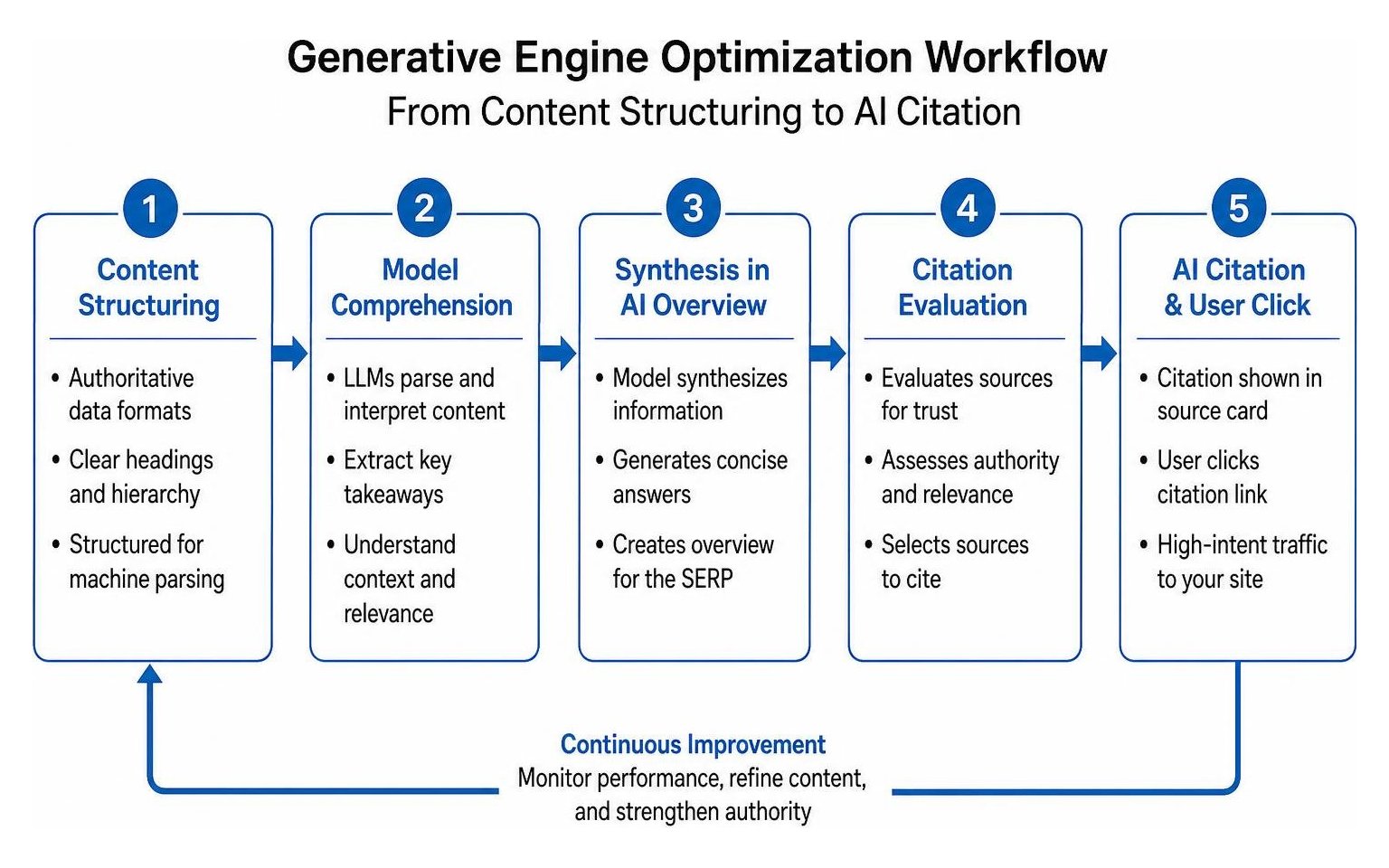
How to Track Traffic and Visibility in Google Search Console
Google Search Console allows publishers to segment AI performance by filtering Search Type data for AI Overviews and conversational AI experiences. This specialized filtering separates standard web clicks from generative interactions, revealing where search impressions are rising while clicks decline.
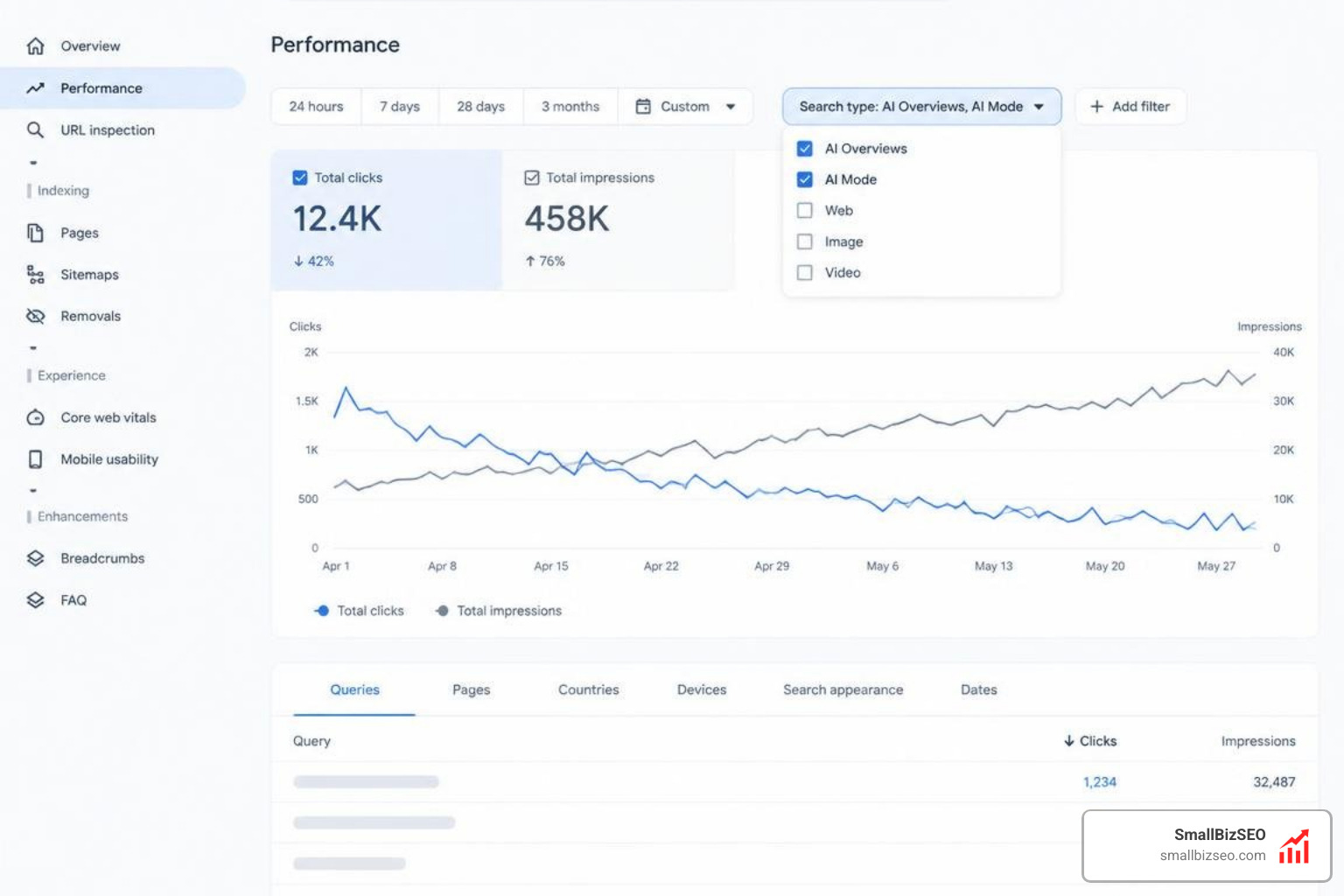
When analyzing your performance data, watch for key patterns:
- Impression Inflation vs. Click Drops: If impressions surge while click-through rates decline sharply, your primary keywords are likely triggering generative overviews that solve user intent immediately.
- Conversational Query Expansion: Search queries triggering generative responses are frequently 2 to 3 times longer than standard keyword lookups, reflecting natural human phrasing.
- Looker Studio Custom Dashboards: Connect your Search Console data stream directly to Looker Studio to track weekly citation volatility and organic search position shifts.
To stay competitive, webmasters should implement modern tracking visibility tools across LLMs and search engines to capture full audience reach across multiple generative platforms.
Which Generative Engine Optimization (GEO) Frameworks Increase AI Overview Citation Rates?
Formatting content using the CSQAF framework—Citations, Statistics, Quotations, Authoritativeness, and Fluency—maximizes your chances of being chosen as a primary source. Over 78% of Google's generative snapshots use bulleted lists, structured comparison tables, or step-by-step instructions.
Follow these proven content optimization practices to improve your citation frequency:
- Lead with Bottom Line Up Front (BLUF): Open every major article section with a concise, direct answer of 50 to 70 words that defines the core concept.
- Embed Fresh, Attributed Statistics: Include verifiable, up-to-date data points and original research across your key paragraphs.
- Incorporate Structured Data Markup: Deploy comprehensive Organization, FAQ, Article, and Product schema across your entire site architecture.
- Demonstrate Deep E-E-A-T Signals: Showcase clear author credentials, verifiable experience, and transparent editorial policies.
Establishing strong trust signals is essential, and building E-E-A-T authority for small business survival in AI search ensures your content remains an algorithmic source of truth.
Beyond Traditional CTR: Which AI Visibility Metrics Matter Most for Future Organic Growth?
Modern search success requires prioritizing brand visibility, AI Share of Voice (AI SOV), and pipeline value over simple organic click volume. Traditional rank tracking fails to capture how frequently your business is recommended within generative answer blocks.
To properly measure your brand presence across modern search interfaces, evaluate these core performance indicators:
- AI Share of Voice (AI SOV): The percentage of relevant conversational prompts and target queries where your brand is actively cited among the top 3 to 5 source cards.
- Citation Frequency Rate: The ratio of target keyword searches triggering an AI Overview that feature your website as an authoritative source link.
- Brand Search Velocity: Tracking organic branded search volume increases driven by users seeing your brand highlighted across zero-click answer blocks.
- View-Through Pipeline Attribution: Measuring downstream multi-touch conversions and direct inbound inquiries originating from AI overview brand impressions.
Turning Generative Search Challenges into Long-Term Growth
Generative search has fundamentally altered how users discover information, evaluate products, and interact with digital brands. While traditional informational click-through rates have declined, high-intent visibility and citation authority offer unprecedented opportunities for forward-thinking businesses. By optimizing for citation extraction, targeting commercial-intent queries, and implementing authoritative content frameworks, you can turn search algorithm shifts into a sustainable competitive advantage.
At SmallBizSEO, we help businesses navigate this evolving search environment through our data-driven Velocity framework. We deliver technical SEO, content strategy, and high-impact link building designed to maximize traditional rankings and generative engine visibility. Ready to strengthen your search performance and capture high-converting search visibility? Explore our tailored AI SEO services and schedule your comprehensive visibility audit with us today.