Powerful Real Estate SEO Tactics to Outrank Competing Brokerages
How Can SEO for Real Estate Bring in More Qualified Leads?
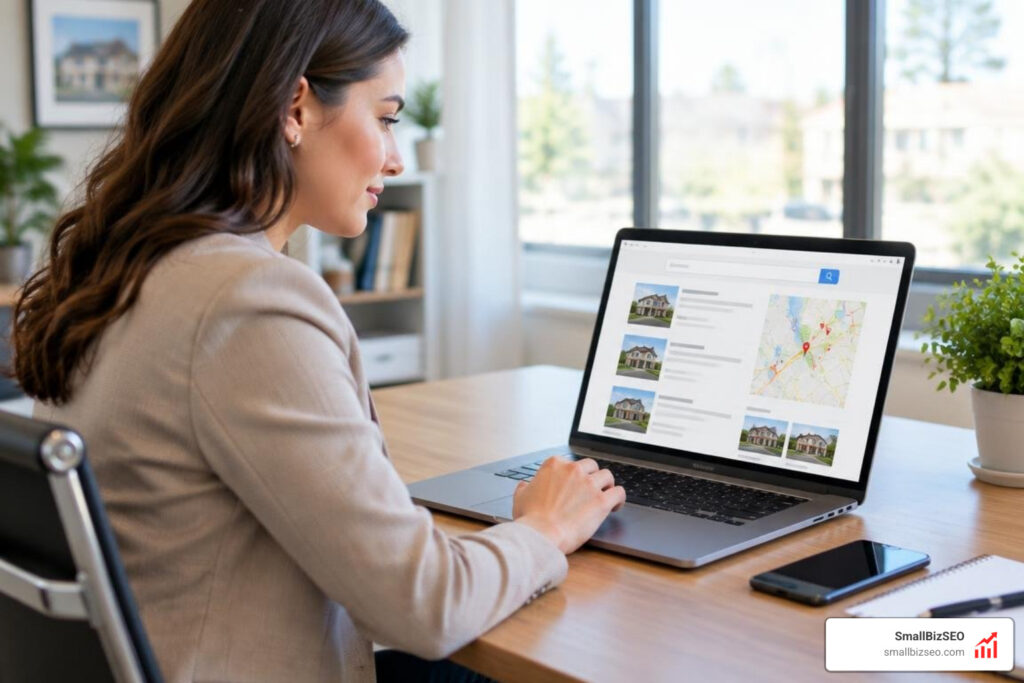
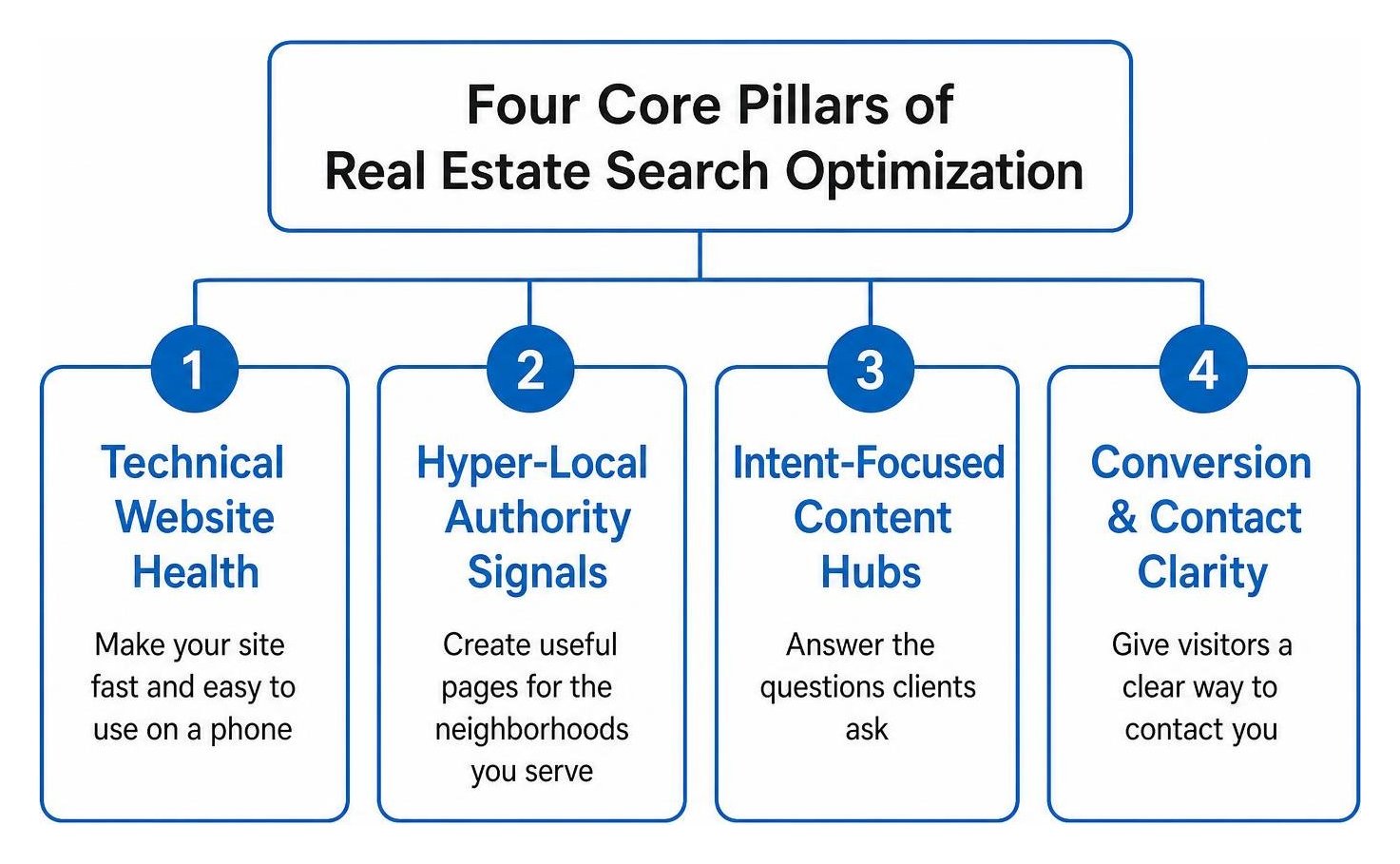
SEO for real estate starts with the searches your buyers and sellers make. Create useful pages for the neighborhoods you serve and the questions clients ask. Keep your Google Business Profile accurate, make your site fast and easy to use on a phone, and give visitors a clear way to contact you. These steps help the right people find you before they choose a competing brokerage.
I’m Clayton Johnson, founder of SmallBizSEO. My work on SEO for real estate draws on my experience connecting technical SEO, content strategy, and link building to help small businesses earn visibility and qualified leads.
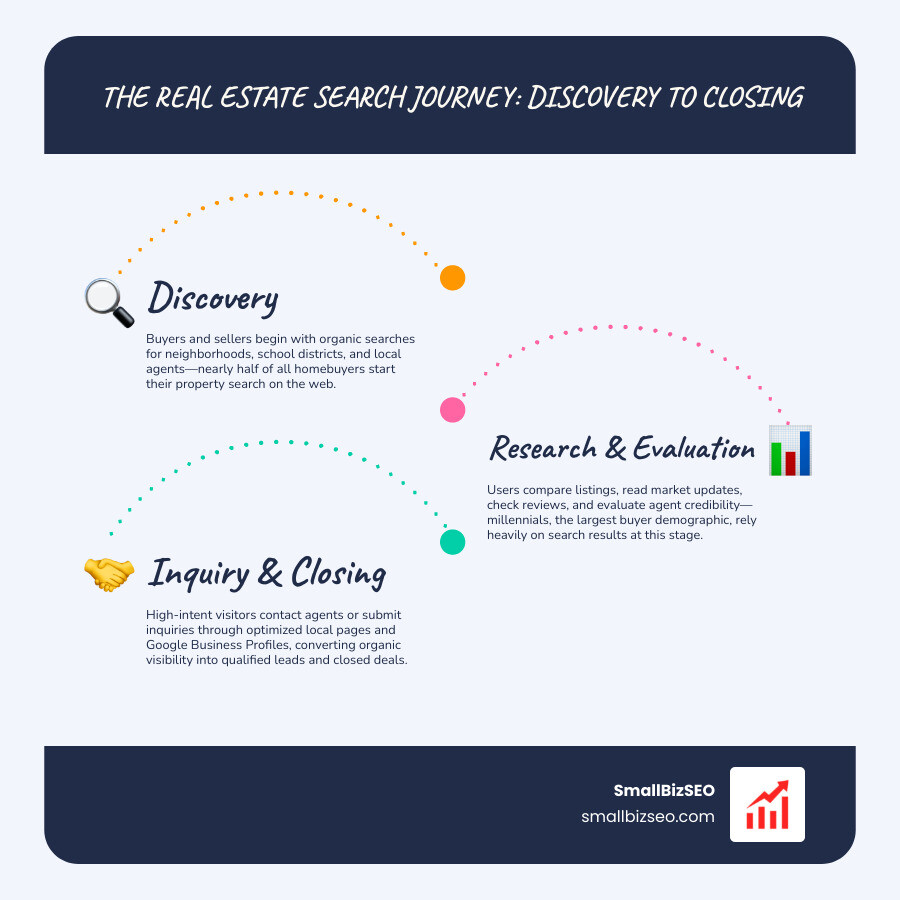
Organic search drives 300% more traffic than social media channels, and 49% of marketers report that organic search yields the highest ROI of any digital marketing strategy. With nearly half of all homebuyers starting their property search on the web, modern digital marketing requires direct visibility on search engines. Millennial buyers make up the largest share of today's home purchasing demographic, relying heavily on search engines to find properties, evaluate local school systems, and research trusted agents.
Core Pillars of SEO for Real Estate to Drive High-Intent Leads
A successful real estate search campaign relies on three primary pillars: technical website health, hyper-local authority signals, and intent-focused content hubs.
By categorizing search intent into discovery, evaluation, and transaction stages, brokerages can create specific conversion funnels. Rather than targeting broad terms like "homes for sale," top-performing real estate sites build topical authority by grouping related keywords into distinct topic clusters that guide buyers and sellers toward booking consultations.
How Does SEO for Real Estate Differ from Other Industries and AISO?
Real estate SEO differs from standard search marketing because inventory changes rapidly, search intent is strictly localized, and search engines now rely heavily on AI-driven answer engines.
Traditional search focuses on ranking blue links for static queries. Today, AI Search Optimization (AISO) requires optimizing your brokerage's digital footprint so conversational engines like ChatGPT, Gemini, and Google AI Overviews cite your website directly as an authoritative source. As documented in industry reporting on how luxury real estate brokers are using SEO to sell homes, forward-thinking agencies use natural-language answers and structured data to capture zero-click searches and conversational queries.
These advanced entity-matching principles also form the backbone of strategies developed by a commercial real estate brokers SEO company targeting corporate tenants and institutional investors.
| Feature | Traditional Real Estate SEO | AI Search Optimization (AISO) |
|---|---|---|
| Primary Goal | Rank individual web pages in the top 10 search results | Become the cited entity in AI Overviews and chat answers |
| Query Format | Short-tail and geo-modified keywords | Conversational, multi-sentence questions |
| Content Focus | Static landing pages and standard listing copy | Direct, factual answers with clear semantic context |
| Key Ranking Signals | Page backlinks, meta tags, and exact-match keywords | Structured schema data, entity authority, and brand citations |
How Can Agents and Investors Master Local SEO and Google Business Profile?
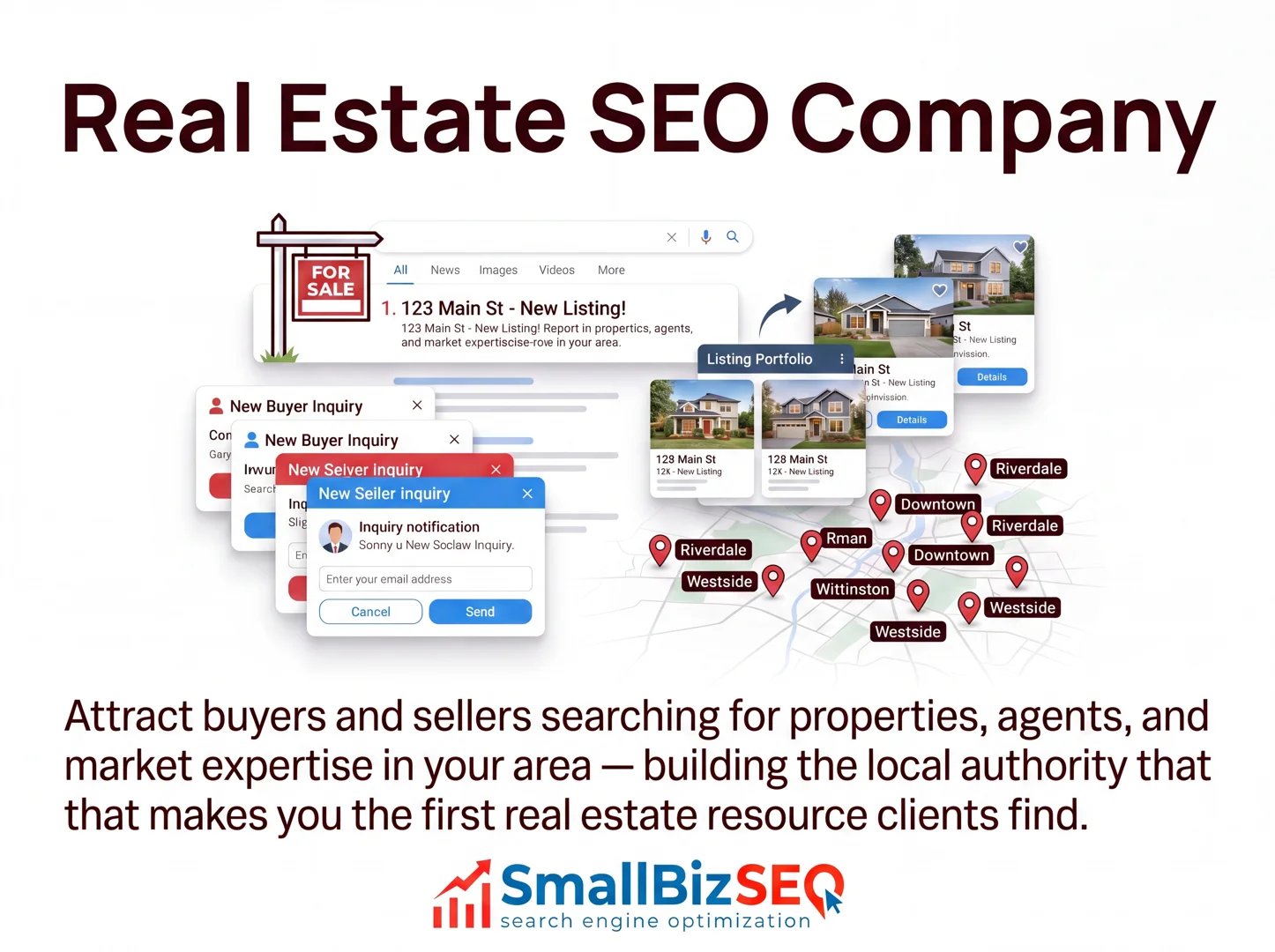
To master local search, real estate professionals must maintain a complete, active Google Business Profile (GBP) paired with consistent Name, Address, and Phone (NAP) citations across the web.

Your GBP profile serves as the primary gateway for local map pack rankings. Consistency across business directories builds trust with search algorithms. Encourage satisfied clients to leave reviews mentioning specific neighborhoods and transaction types, as high review velocity directly improves local visibility.
For investors targeting motivated seller keywords such as "sell my house fast" or "cash home buyers," building dedicated location landing pages is vital. Partnering with an experienced local SEO company ensures citation networks remain synchronized. Similar geo-targeted frameworks are deployed by a residential property managers SEO company seeking property owners within specific subdivisions.
What Technical SEO and Schema Markup Do Property Websites Need?
Property websites require fast server-side rendering, clear semantic URL structures, and JSON-LD structured data on every page to help search engines crawl dynamic listings efficiently.

Because real estate websites handle high volumes of dynamic IDX inventory, clean technical foundations prevent crawl errors and indexation bloat. Applying RealEstateListing, RealEstateAgent, and BreadcrumbList schema markup allows search bots to interpret property values, addresses, and agent credentials without confusion.
Listing URLs should use descriptive semantic slugs instead of database query strings. For example, well-structured property pages rely on clear hierarchy to preserve crawl equity.
Fast performance is equally critical. Meeting Google's Core Web Vitals targets—including a Largest Contentful Paint (LCP) under 2.5 seconds—ensures high mobile conversion rates. These robust technical standards mirror the digital architectures built by a real estate title search and abstract services SEO company and support client portals designed by a mortgage broker SEO company.
What Content and Link Tactics Accelerate SEO for Real Estate Success?
The most effective content strategy combines comprehensive neighborhood guides, detailed market updates, and digital PR campaigns that earn authoritative local backlinks.
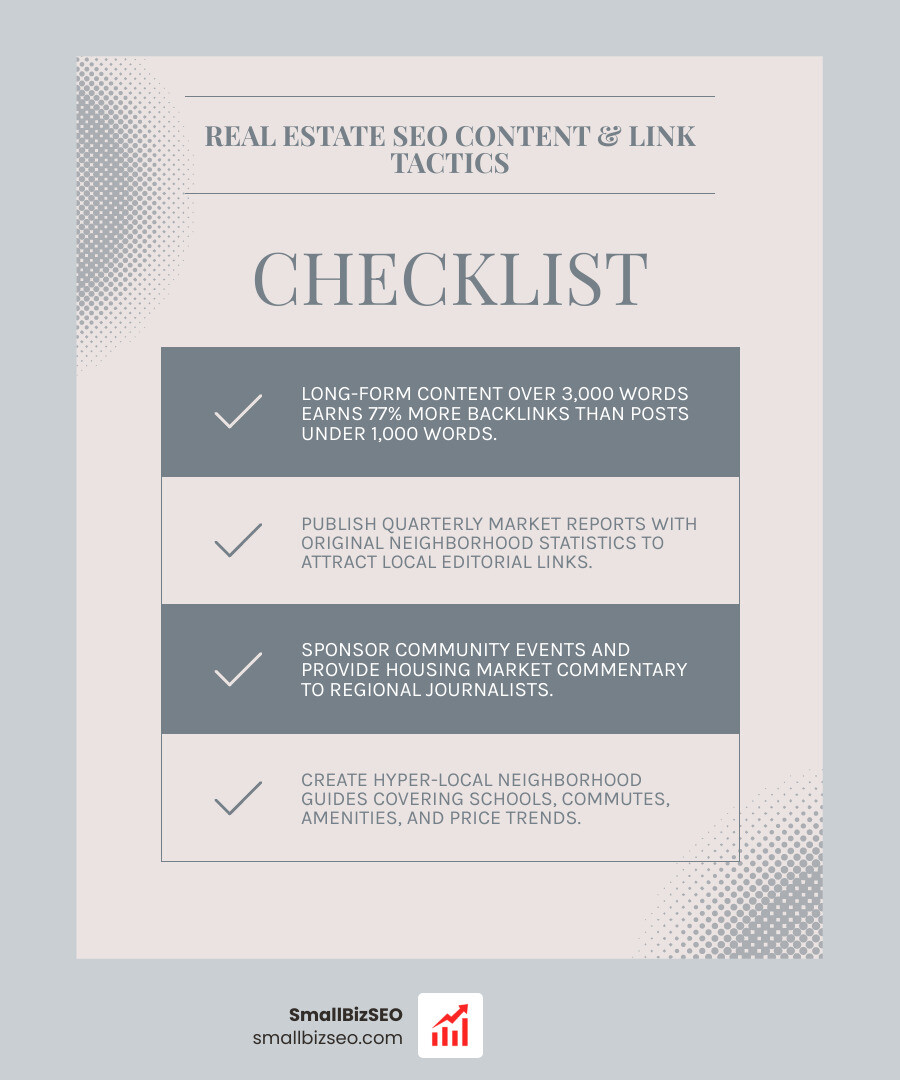
Publishing long-form content yields substantial authority: research shows that long-form content over 3,000 words earns 77% more backlinks than short posts under 1,000 words. Real estate professionals should create localized pillar pages that cover school districts, commute times, local amenities, and property price trends.
To build website authority, focus on high-quality, local link acquisition rather than generic directories:
- Provide local housing market commentary to regional journalists and news outlets.
- Sponsor community sports teams, charity runs, and civic events for local editorial mentions.
- Publish quarterly real estate market reports featuring original neighborhood statistics.
- Partner with local small businesses for reciprocal resource guides and community interviews.
These educational assets drive client acquisitions for a property management SEO company while supporting transactional resources crafted by a real estate closing attorneys SEO company.
High-Converting Content Formats for Property Websites
- Hyper-Local Neighborhood Guides: In-depth community breakdowns detailing lifestyle, dining, parks, and real estate pricing.
- First-Time Homebuyer Walkthroughs: Step-by-step guides covering financing, inspections, escrow, and closing procedures.
- Investor ROI and Cap Rate Analyses: Data-rich articles evaluating rental yields, tenant demographics, and property taxes across local sub-markets.
- Relocation Guides: Comprehensive resource kits designed for professionals and families moving into the region.
Executing Your Strategy and Measuring Results
To outrank competing brokerages, implement a data-driven system that measures key performance indicators like organic traffic growth, keyword ranking distributions, and form inquiries. Tracking user engagement allows you to continuously refine underperforming pages.
If you are ready to scale your organic lead generation, schedule a comprehensive SEO visibility audit with SmallBizSEO. We apply our data-driven Velocity framework to optimize technical architecture, expand local visibility, and build sustainable inbound lead channels.
How Long Does It Take to See Organic Leads and Avoid Costly Mistakes?
Real estate search optimization typically shows initial local map improvements within 3 to 6 months, while highly competitive neighborhood rankings develop over 6 to 12 months.
Building organic search authority takes time, but it produces a durable asset that continues to deliver leads without ongoing ad spend. Avoiding common technical and strategic pitfalls is essential for consistent progress:
- Avoid Thin Neighborhood Pages: Do not publish 200-word area overviews that only list active MLS feeds; provide real local insight and resident perspectives.
- Fix Broken Listing URLs: When a property sells or an MLS feed expires, implement 301 redirects pointing visitors to the relevant neighborhood or community category page.
- Stop Keyword Stuffing: Write naturally for human buyers rather than repeating awkward geo-modified phrases in every paragraph.
- Manage Duplicate Listing Data: Use canonical tags across syndicated MLS listing descriptions to prevent duplicate content penalties.
| Timeline Milestone | Primary Focus Areas | Expected Lead Generation Performance |
|---|---|---|
| Months 1 – 3 | Technical crawl audits, GBP cleanup, core schema deployment | Baseline ranking improvements; initial branded and long-tail impressions |
| Months 3 – 6 | Local citation building, neighborhood guide creation, review generation | Inbound phone calls and local map pack inquiries for hyper-local terms |
| Months 6 – 12 | Digital PR, high-authority link acquisition, conversion optimization | Consistent organic leads for competitive buyer and seller search queries |
Moving Forward with Your Real Estate Growth
Achieving sustainable organic visibility requires a balanced approach combining sound technical foundations, authentic local content, and ongoing authority building. By shifting your focus from generic property listings toward direct answers, comprehensive neighborhood resources, and optimized local profiles, you can outrank national aggregation portals and turn organic search into your most profitable lead channel.