SEO for Custom Home Builders: A Practical Guide
How can custom home builders get found by more buyers?
SEO for custom home builders helps people find your business when they search for a builder in your area. Start with a clear page for each building service, add detailed photos and descriptions of completed homes, and keep your Google Business Profile accurate. Then answer common buyer questions about costs, timelines, and your building process.
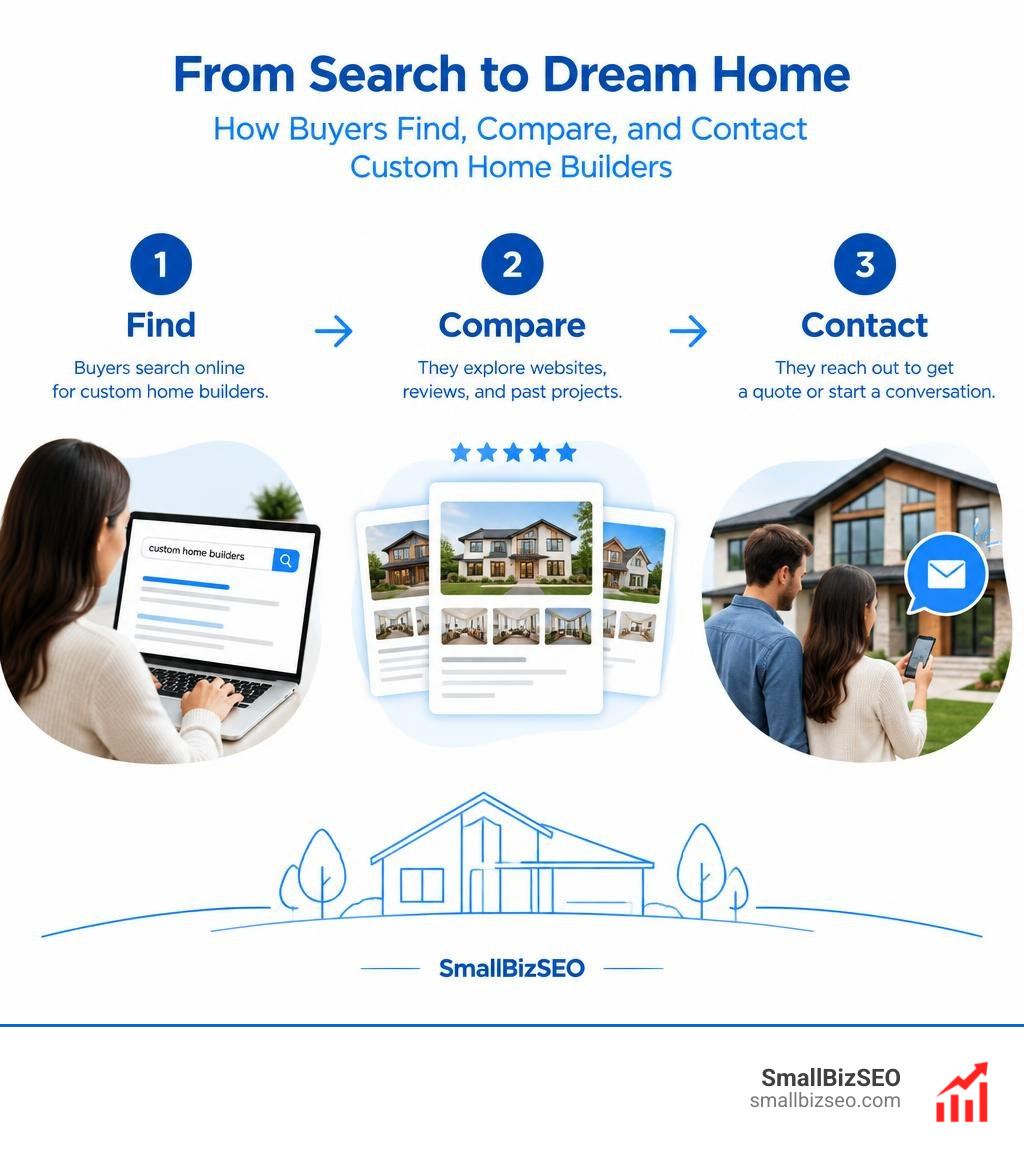
This matters because choosing a custom builder takes time. A buyer may find you through a local search, then return later to compare your work and decide whether to book a consultation. Your website needs to make each step easy.
I’m Clayton Johnson, founder of SmallBizSEO. My work in SEO, content strategy, and link building shapes how I approach SEO for custom home builders: helping businesses turn their expertise into clear answers that buyers can find and trust.
Handy SEO for custom home builders terms:
Core Pillars of SEO for Custom Home Builders
Organic search engine optimization delivers compounding visibility for residential contractors by aligning technical website health with qualified buyer intent. Because 97% of homebuyers start their search online, establishing an organic presence helps you reach clients before they finalize their builder shortlist.
A custom home buyer rarely converts on their first visit. Research shows a typical prospect reviews more than 40 pages across 8 to 12 builder websites before selecting three finalists. Custom home builds represent major investments with sales cycles lasting 3 to 12 months. An organic search strategy supports this multi-stage decision funnel by answering pre-construction questions, showcasing architectural capabilities, and capturing local search intent.
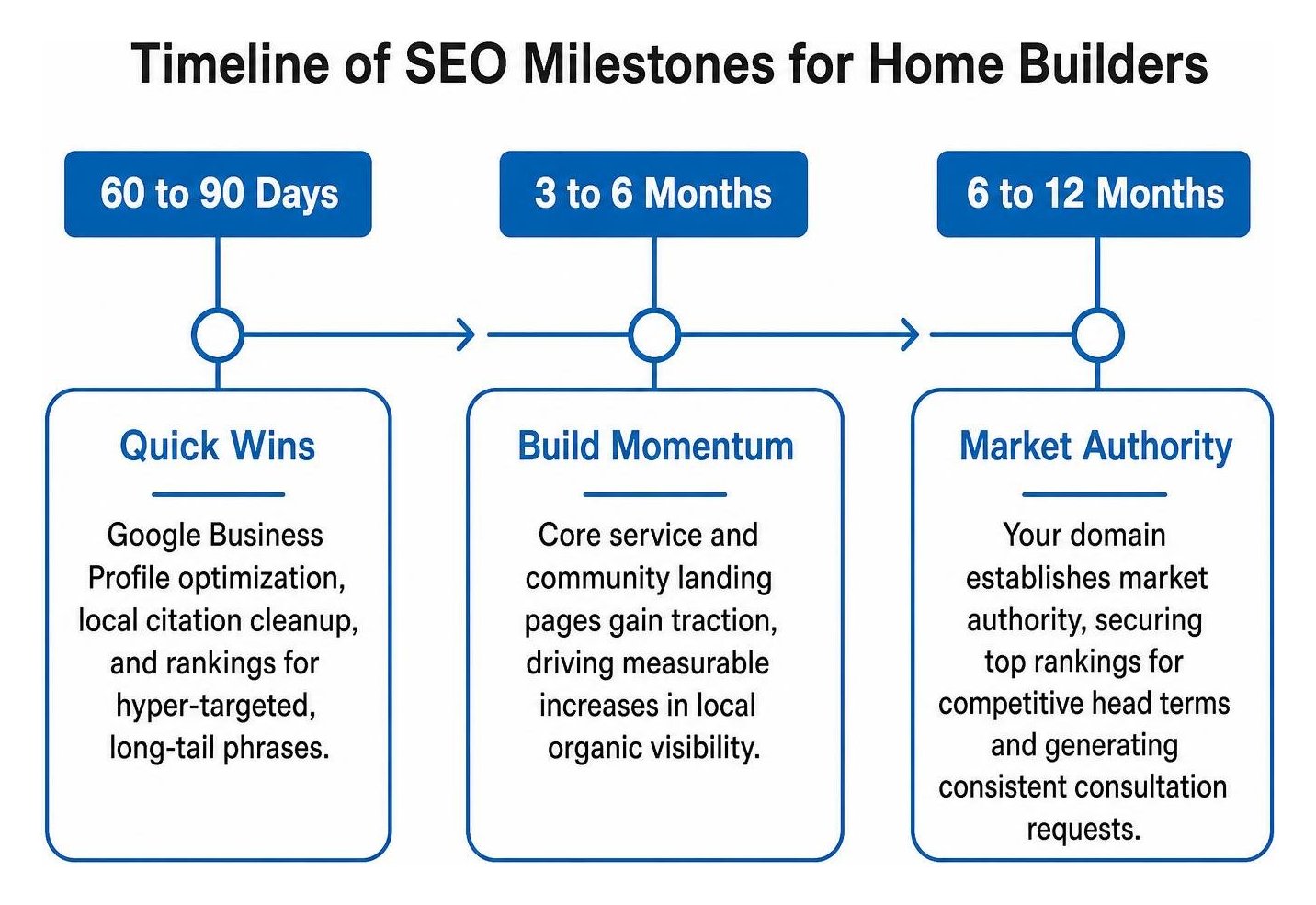
A structured organic strategy provides predictable ranking timelines:
- 60 to 90 Days: Quick wins emerge through Google Business Profile optimization, local citation cleanup, and rankings for hyper-targeted, long-tail phrases.
- 3 to 6 Months: Core service and community landing pages gain traction, driving measurable increases in local organic visibility.
- 6 to 12 Months: Your domain establishes market authority, securing top rankings for competitive head terms and generating consistent consultation requests.
Organic lead generation delivers high returns for residential contractors, generating qualified builder leads at an average cost of $40 to $120. Following foundational best practices, such as those outlined in the Google SEO Starter Guide, ensures your site builds sustainable domain trust and long-term search visibility.
What Keyword Research Strategy Fits SEO for Custom Home Builders?
An effective keyword strategy maps search queries directly to specific phases of the home-building journey rather than relying solely on generic industry terms.
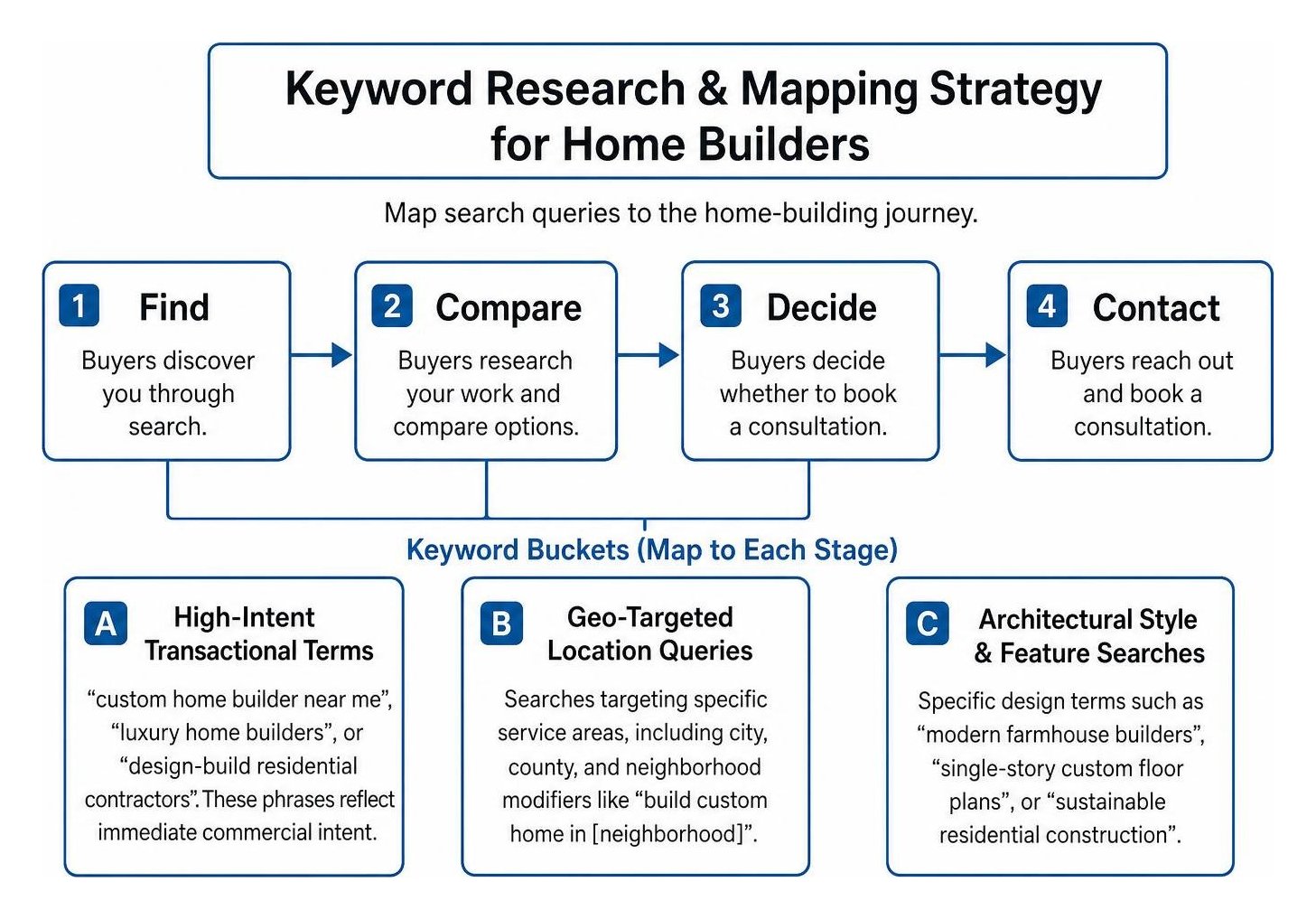
High-intent buyers search using geo-modified phrases, specific floor plans, architectural styles, and pricing terms. Conducting a comprehensive keyword research strategy uncovers search volume across four critical query buckets:
- High-Intent Transactional Terms: Queries such as "custom home builder near me," "luxury home builders," or "design-build residential contractors." These phrases reflect immediate commercial intent.
- Geo-Targeted Location Queries: Searches targeting specific service areas, including city, county, and neighborhood modifiers like "build custom home in [neighborhood]."
- Architectural Style and Feature Searches: Specific design terms such as "modern farmhouse builders," "single-story custom floor plans," or "sustainable residential construction."
- Informational Pricing and Process Queries: Early-stage research phrases such as "cost to build a custom home per square foot" or "custom home construction timeline."
Structuring pages around these distinct search intents ensures your site captures prospects at the exact moment their research begins.
How Does Local SEO and Google Business Profile Drive Map Pack Leads?
Local SEO captures nearby clients searching for immediate builder recommendations, with the Google Map 3-Pack capturing 40% to 50% of all local clicks.
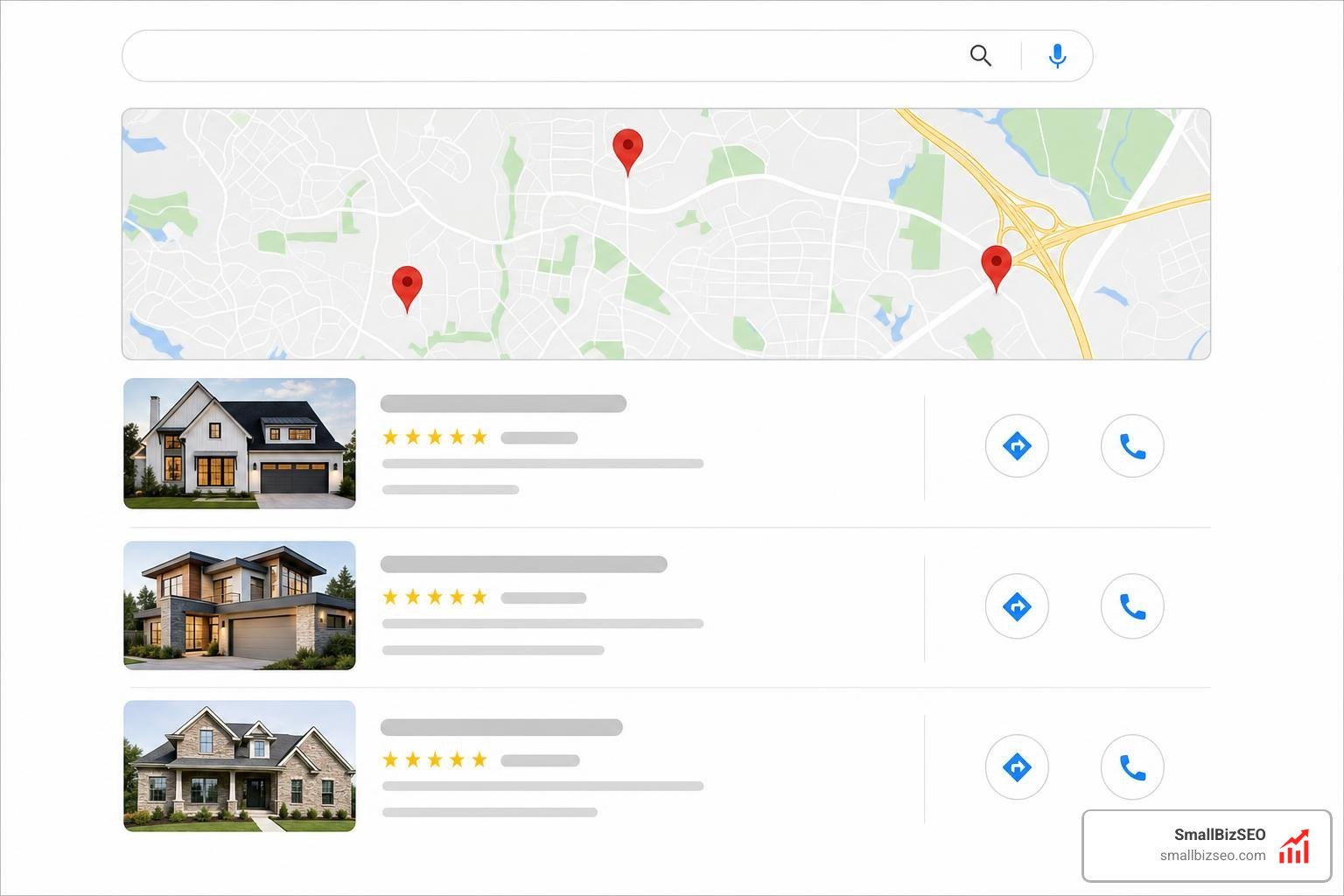
To dominate local search results, builders must implement proven local SEO techniques starting with Google Business Profile (GBP) optimization:
- Category Selection: Set your primary category to "Custom Home Builder" and add secondary categories such as "General Contractor," "Home Builder," and "Building Consultant."
- Review Velocity and Recency: Google rewards active customer feedback. A builder with 35 reviews who receives a new review every 30 days frequently outranks a competitor with 80 reviews whose last entry is over a year old. Request reviews systematically after project handoffs.
- Visual Portfolio Updates: Upload high-resolution photos of framing milestones, interior finishes, and exterior elevations weekly.
- Accurate Business Citations: Maintain consistent Name, Address, and Phone (NAP) details across directories. Our systematic approach to local citation management ensures search algorithms verify your physical proximity and market legitimacy.
A fully optimized Google Business Profile paired with consistent local citations can outrank older, thin websites with larger backlink profiles.
How Can Schema Markup and Technical Optimization Boost Search Rankings?
Technical SEO provides the infrastructure search engines need to index photo-heavy custom home portfolios quickly and accurately. Because more than 60% of builder searches happen on mobile devices, mobile responsiveness and fast page load speeds directly influence your rankings.
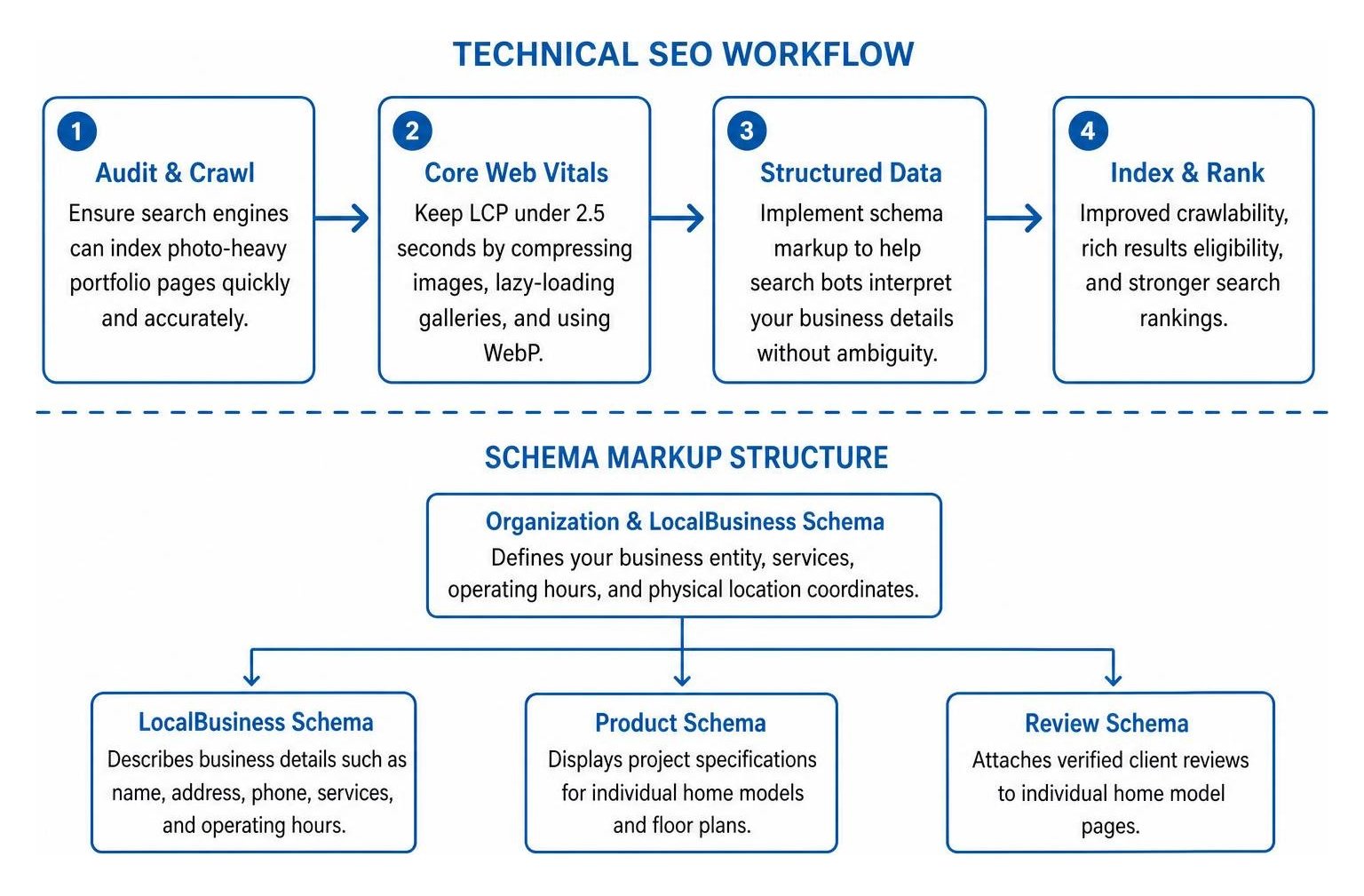
Prioritize these technical foundations:
- Core Web Vitals: Keep Largest Contentful Paint (LCP) under 2.5 seconds by compressing portfolio imagery, lazy-loading photo galleries, and using next-generation formats like WebP.
- Structured Data: Implementing structured schema markup helps search bots interpret your business details without ambiguity.
- LocalBusiness and Organization Schema: Defines your business entity, services, operating hours, and physical location coordinates.
- Product and Review Schema: Attaches verified client reviews and project specifications directly to individual home model pages.
- FAQPage Markup: Formats pre-construction questions for rich snippet eligibility in search engine results pages.
A technically sound website ensures that high-resolution galleries load smoothly without triggering crawl errors or user abandonment.
Strategic Execution and Lead Attribution for Home Construction
Converting search traffic into signed building contracts requires an organized site hierarchy that guides visitors naturally toward booking an initial consultation.
Organize your website into four dedicated page groups:
- Primary Service Pages: Detailed landing pages covering custom home construction, luxury design-build services, and major residential additions.
- Location and Community Landing Pages: Dedicated landing pages for every city, county, or master-planned community you serve.
- Model and Custom Floor Plan Hubs: Interactive galleries featuring floor plans, room dimensions, virtual walk-throughs, and downloadable specification sheets.
- Planning and Resource Guides: Authoritative articles addressing local permitting requirements, zoning considerations, architectural guidelines, and lot-evaluation checklists.
A structured website design prevents traffic loss by ensuring prospective clients find relevant local information instantly.
What Content Framework Powers SEO for Custom Home Builders and AI Search?
Generative AI platforms and search engine AI Overviews answer 30% to 50% of informational construction queries directly in search results. To stay visible, your content must be structured for citation by both traditional crawlers and AI search models.

Format your content around direct answers:
- Answer-Ready Headings: Use question-based H2 and H3 tags matching real customer questions, immediately followed by clear, concise summary answers.
- First-Person Subject Matter Expertise: Highlight real-world project challenges, site prep considerations, and material selection tips. By mastering E-E-A-T optimization for AI visibility, your website earns higher trust and citation frequency.
- Comprehensive Cost and Process Explanations: Publish detailed cost guides and breakdown tables covering excavation, foundation pours, framing, finishes, and permit expenses.
- Video Walk-Throughs: Integrate video model home tours alongside written descriptions. Video walk-throughs convert visitors at three to five times the rate of static photo galleries alone.
Publishing authoritative, well-structured content positions your building firm as the premier local authority in AI-driven search environments.
How Should Builders Track SEO Performance and Return on Investment?
Tracking SEO performance requires connecting organic traffic gains directly to pipeline revenue, consultation bookings, and signed custom build contracts.
| Milestone Phase | Primary Focus Area | Key Performance Indicators | Expected Lead Cost Benchmark |
|---|---|---|---|
| Months 1 to 3 | Technical audit, GBP setup, citation cleanup | Search impressions, crawl health, local Map 3-Pack visibility | $0 (Early indexation phase) |
| Months 3 to 6 | Service pages, community guides, initial reviews | Organic click growth, non-brand keyword rankings, phone inquiries | $60 – $120 per qualified lead |
| Months 6 to 12 | Authoritative content hubs, schema, link building | Top 3 rankings for head terms, booked consultations, lot reviews | $40 – $80 per qualified lead |
| Ongoing Maturity | Market dominance, AI citations, floor plan expansion | Consistent contract pipeline, signed build agreements, high ROI | $30 – $50 per qualified lead |
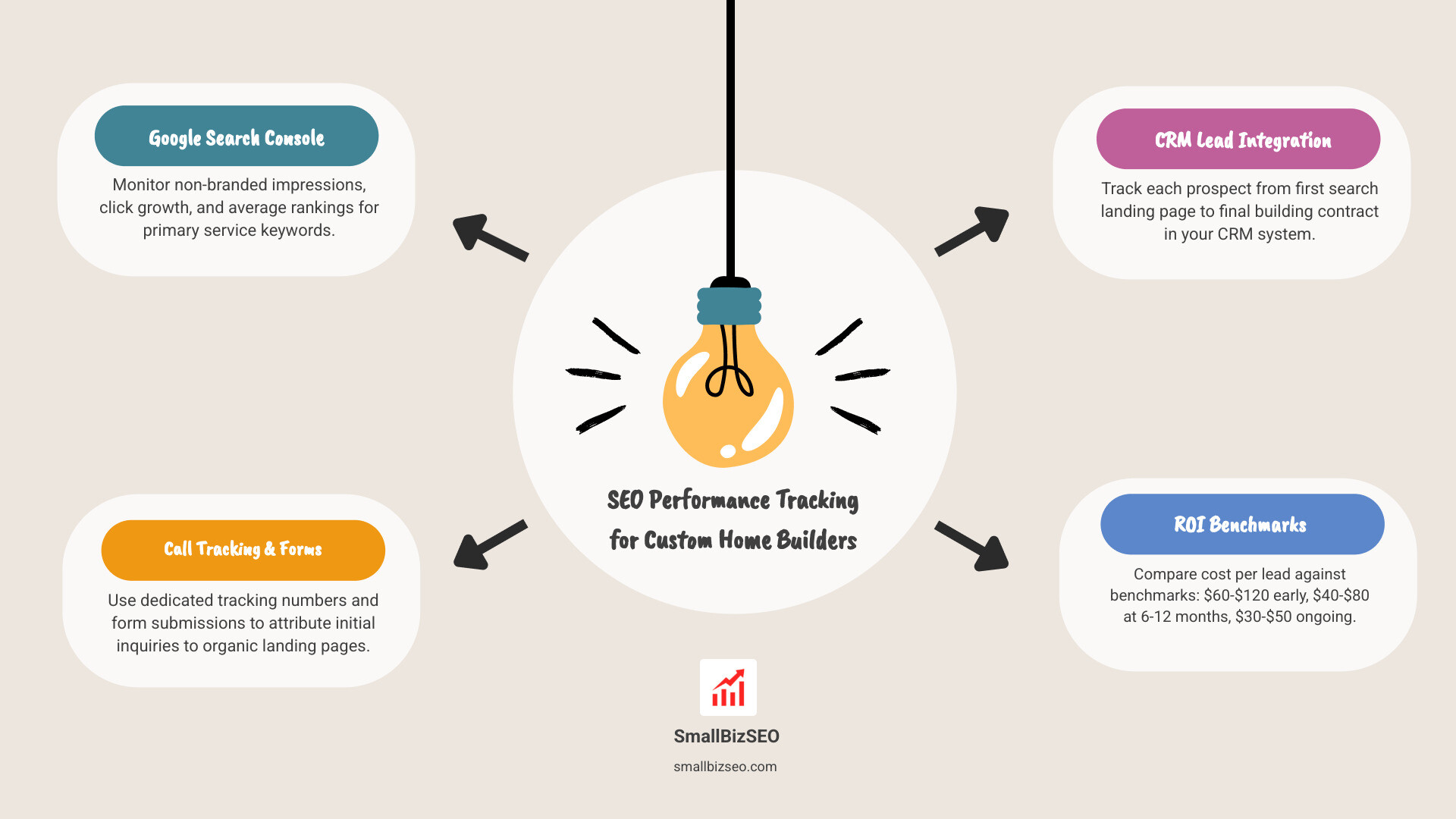
A realistic SEO engagement for a custom home builder ranges from $1,500 to $5,000 per month depending on local market competition. Track your return on investment through:
- Google Search Console: Monitor non-branded search impressions, click growth, and average ranking positions for primary service keywords.
- Call Tracking and Form Submissions: Use dedicated tracking numbers and forms to attribute initial inquiries to organic landing pages.
- CRM Lead Integration: Track each prospect in your customer relationship management system from their first organic search landing page to their final building contract.
At SmallBizSEO, we use our data-driven Velocity framework to deliver fast rankings, strong local visibility, and transparent reporting that ties directly to your bottom line. To uncover opportunities on your site and start turning search traffic into signed contracts, request a professional SEO visibility audit today.
Scale Your Custom Home Building Pipeline
Capturing high-value home construction contracts begins by meeting clients where their research starts. By combining technical site health, local map pack dominance, strategic keyword mapping, and answer-ready content, custom home builders can build a reliable lead pipeline that consistently generates qualified consultation requests and contract opportunities.