The Definitive Guide to Choosing an SEO Business Partner
The Definitive Guide to Choosing an SEO Business Partner
Fundamentals of Search Engine Optimization for Modern Companies
Navigating organic search doesn't require a degree in computer science, but it does demand a firm grasp of how search engines evaluate websites. Search engine optimization is the practice of refining your site so search engines can easily find, understand, and rank your content for target search queries.
When a business invests in organic visibility, it creates a compounding asset. Unlike paid digital advertising, where leads dry up the moment ad spend halts, organic rankings continue attracting qualified prospective customers around the clock.
| Organic Search Metric | Why It Matters | Target Benchmark |
|---|---|---|
| Click-Through Rate (CTR) | Percentage of searchers clicking your result | 25%+ for position #1 |
| Organic Traffic | Total visitors arriving via unpaid search | Steady month-over-month growth |
| Keyword Ranking | Page position for target search intent | Top 3 positions on page 1 |
| Search Intent Alignment | Matching content to buyer expectations | Low bounce rate, high dwell time |
How Search Engines Work and Core Pillars
Search engines operate through three basic steps: crawling, indexing, and ranking. Automated software crawlers scan the web by following links from page to page. Once a page is crawled, the search engine indexes its content, adding it to a massive digital library. Finally, algorithm rules evaluate hundreds of signals to rank indexed pages whenever a user performs a search query.
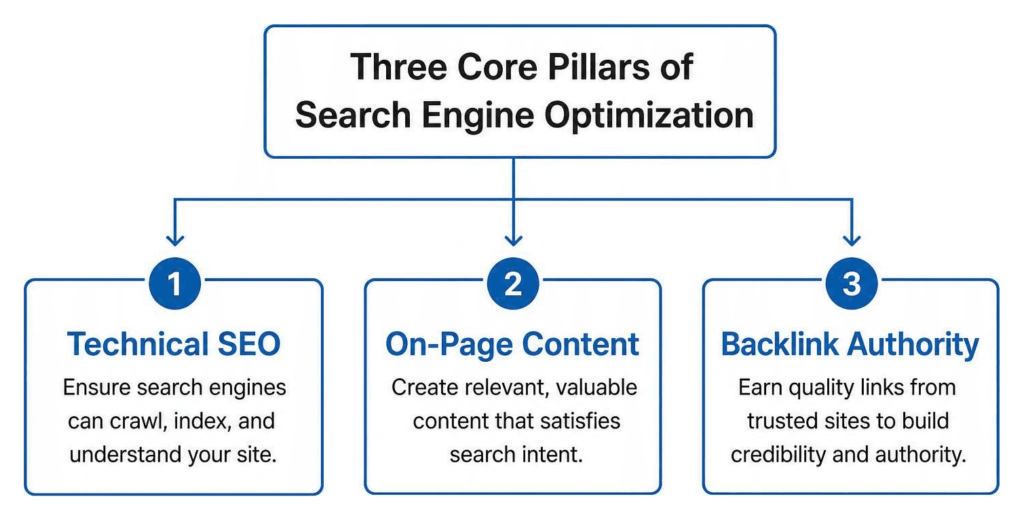
To succeed across this pipeline, a successful strategy relies on three main pillars:
- Technical SEO: Ensuring search engines can crawl and index your site without friction while eliminating site speed bottlenecks.
- On-Page Optimization: Crafting clear headings, meta descriptions, and body content aligned with user intent.
- Off-Page Authority: Building high-quality backlinks from reputable websites to demonstrate domain authority.
For a comprehensive approach, exploring our specialized SEO Services helps establish a solid digital foundation. Fine-tuning titles, metadata, and structural content through targeted On-Page SEO ensures your site communicates clearly with search crawlers.
Content Quality, User Experience, and E-E-A-T
Search engines don't rank web pages based on word count or mechanical keyword counts. Instead, algorithms prioritize content built on Google's E-E-A-T principles: Experience, Expertise, Authoritativeness, and Trustworthiness.
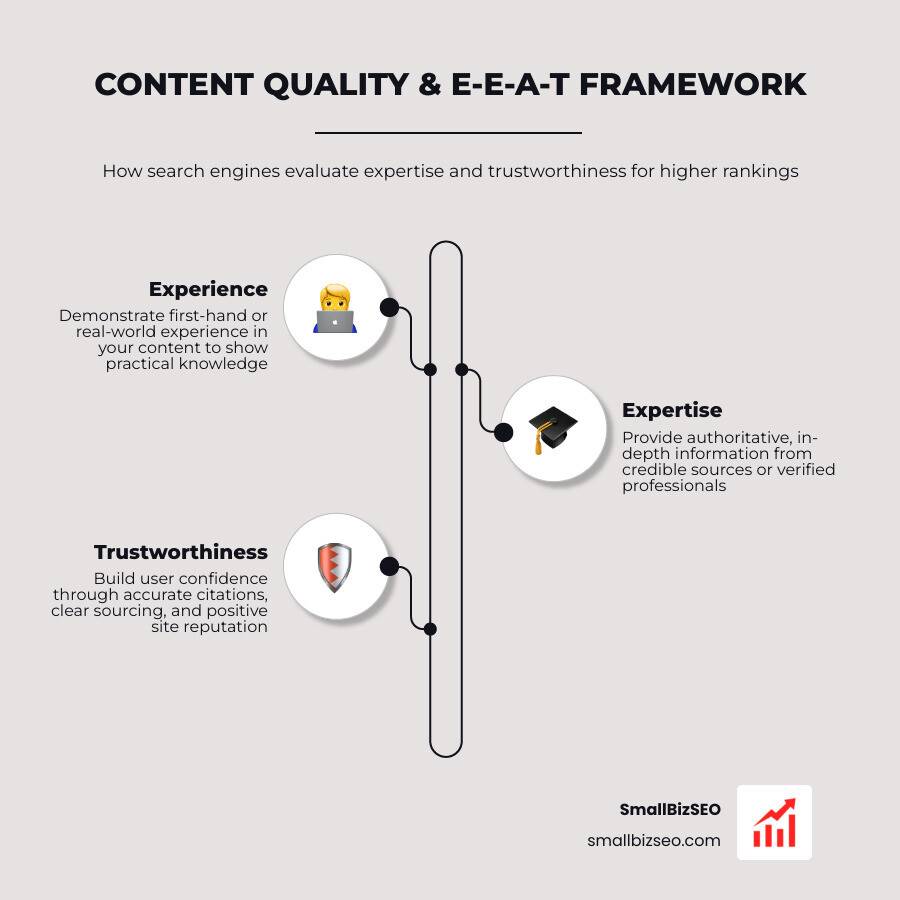
To rank consistently, content must solve specific customer problems with genuine depth. Providing clear first-hand experience and expert knowledge builds trust with both visitors and search evaluators. Furthermore, user experience (UX) metrics directly impact your visibility. A site that loads slowly, displays broken layout shifts on mobile devices, or buries information under clunky menus will struggle to maintain top positions.
Through our custom SEO Content Services, we focus on human-first copywriting that serves user needs while demonstrating industry authority.
Adapting to Generative AI, GEO, and AEO in Search
Search behavior is undergoing its biggest transformation in decades. Millions of consumers now ask conversational questions directly to tools like ChatGPT, Gemini, and Perplexity, while Google displays AI Overviews right at the top of traditional result pages.
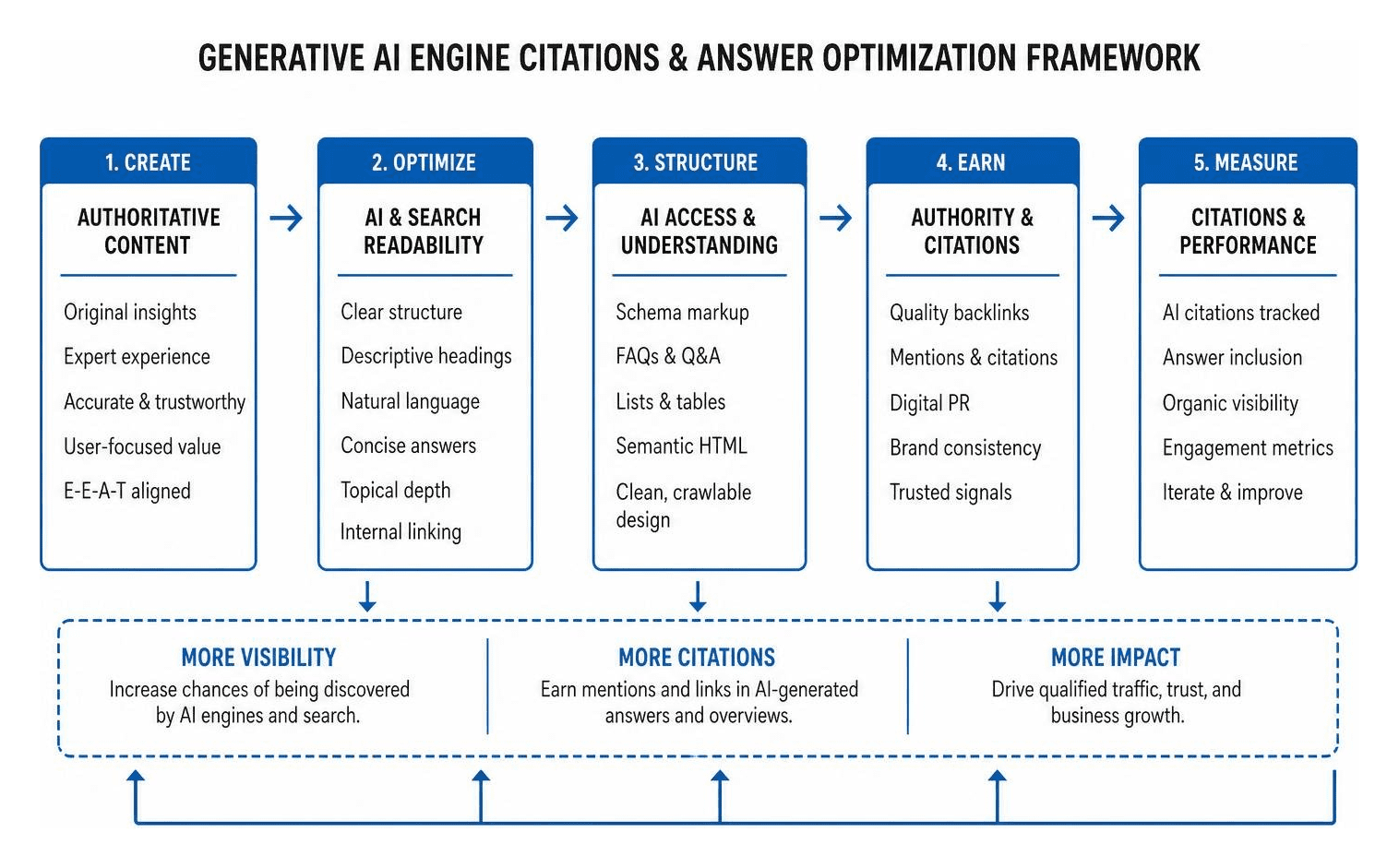
This evolution has introduced three critical optimization concepts for any growing SEO business:
- Generative Engine Optimization (GEO): Structuring content so large language models can extract context and cite your brand as an authoritative source.
- Answer Engine Optimization (AEO): Writing direct 50–60 word conversational answers to customer questions to capture featured snippets and AI synthesis blocks.
- Artificial Intelligence Optimization (AIO): Streamlining technical markup and data feeds so automated AI agents can index and recommend your services.
Businesses that adapt to these modern search models gain double the exposure, capturing standard organic search links alongside direct AI citations. Harnessing tailored AI SEO Services positions your brand at the forefront of both traditional search engines and emerging AI platforms.
Optimizing for AI Assistant Recommendations
Getting recommended inside generative AI tools requires a distinct technical and content approach compared to standard web searches. AI systems rely heavily on entity relationships, structured schema data, and online consensus across trusted web directories.
To ensure your brand appears inside AI-generated summaries:
- Implement Structured Data: Add JSON-LD schema markup across all service pages to give AI agents explicit facts about your business offerings.
- Target Conversational Queries: Structure headings as natural questions that customers ask during search research.
- Build Unlinked Brand Mentions: Develop digital authority across industry forums, publications, and review channels where AI platforms gather training data.
Local SEO vs. Broad SEO Strategies
Not all organic search strategies are built the same. A business serving a physical community requires a different search strategy than a national e-commerce platform.
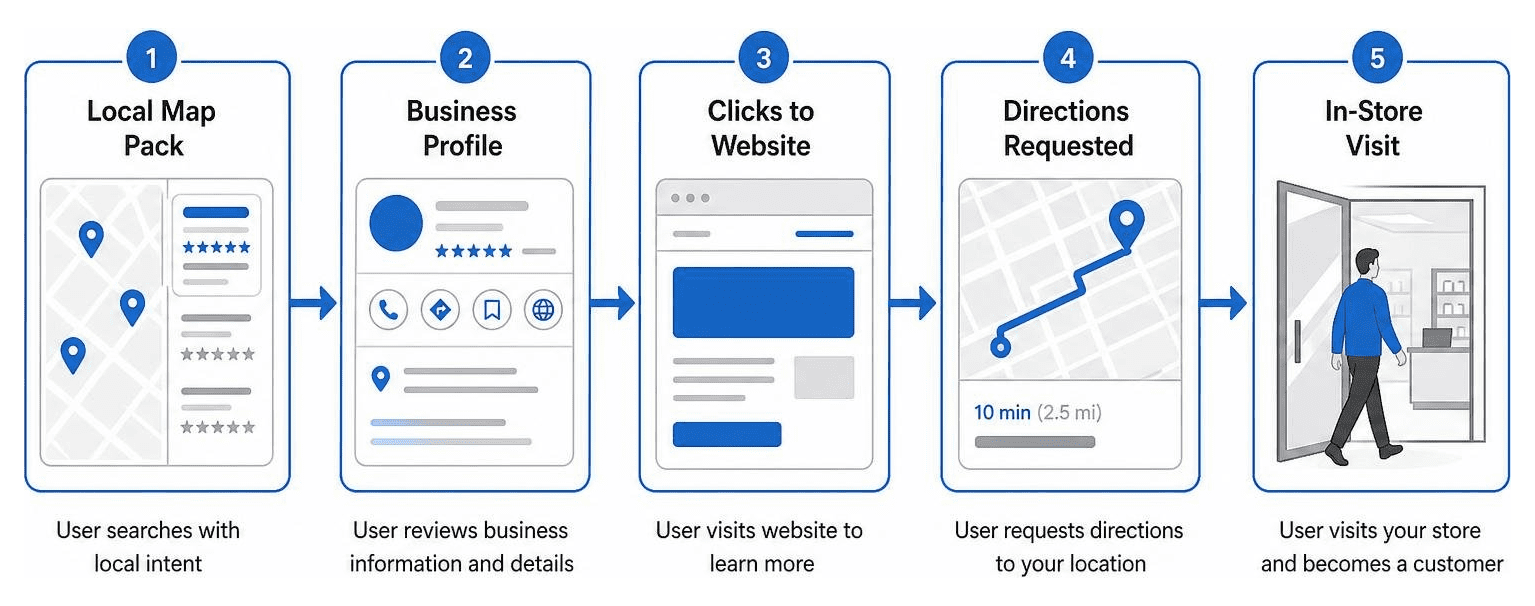
Nearly half of all search engine queries contain local intent. Even better, 72% of consumers who perform a local search visit a physical store within five miles of their location. Local search optimization focuses on winning the map pack and location-based queries by optimizing your Google Business Profile, collecting positive customer reviews, and managing accurate business citations.
Broad search strategies, by contrast, focus on national or international keyword intent without geographic limits. If you manage a physical storefront or offer geographic services, following our Local SEO Guide guarantees nearby shoppers find your business before your local competitors.
What to Expect from a Modern SEO Business Operations Team
Partnering with an organic growth provider shouldn't feel like sending money into a black box. A modern SEO business operations team works as a strategic partner, delivering systematic, transparent execution.
A reliable team handles core deliverables including:
- Technical & Content Audits: Identifying crawl errors, thin content, and code bottlenecks holding back site rankings.
- Strategic Backlink Acquisition: Earning high-authority context links through specialized Link Building Services.
- Automated Performance Tracking: Providing clear dashboards tracking organic traffic, conversion actions, and revenue impact rather than vanity impression metrics.
Selecting the Right SEO Business Model: In-House, Agency, or DFY
When selecting an organic search partner, small business owners generally choose between three main fulfillment models:
- In-House Specialist: Hiring a full-time internal expert grants complete control and single-brand focus. However, hiring an individual specialist usually costs between $75 and $100 per hour, plus benefits and overhead, making it expensive for smaller firms.
- Traditional Agency Retainer: Marketing agencies offer multi-disciplinary teams of strategists, web developers, and copywriters. Standard monthly retainers typically cost around $3,500 per month with a minimum six-month commitment.
- Done-For-You (DFY) Service: A flat-rate DFY service handles technical builds, content updates, and search engine submission behind the scenes without clogging your schedule with complex dashboards.
Choosing Affordable SEO for Small Business keeps costs manageable while delivering real rankings. Comparing options across our guide to Top SEO Services Compared simplifies finding the right fit for your budget.
Key Vetting Questions to Ask Every Target SEO Business
The digital marketing space contains plenty of outdated advice and risky tactics. Before signing any contract with an agency or provider, protect your website by asking these crucial vetting questions:
- What exact tactics do you use to acquire backlinks? (If they mention buying links in bulk or using automated spam software, walk away. Buying links violates search guidelines.)
- How do you measure campaign success? (Focus on providers tracking phone calls, lead forms, and revenue over vanity impression totals.)
- What is your contract commitment period? (Look for flexible engagements or transparent 90-day execution blocks rather than aggressive multi-year lock-ins.)
- How do you keep content compliant with E-E-A-T standards? (Ensure human editors review and refine any AI-assisted drafts to protect site authority.)
To avoid common pitfalls, read our guide on How to Find the Best SEO Agency alongside our practical walkthrough for Achieving the Best SEO Results.
Audits, Measurement, and Avoiding Outdated Tactics
Outdated search engine tactics like keyword stuffing, hiding invisible text on web pages, or purchasing low-quality blog links will get your domain penalized. Modern search engines are far too smart for cheap shortcuts.
Instead, professional search partnerships center around rigorous analysis and continuous improvement. We recommend starting your partnership with a thorough SEO Visibility Audit to identify technical crawl errors and mobile layout issues. Coupling this with a Detailed SEO Analysis reveals high-impact keyword opportunities sitting on pages two and three, giving your site immediate momentum.
Frequently Asked Questions About Organic Search Partnerships
How long does it take to see results from an organic search strategy?
Organic search engine strategy is a long-term, compounding investment rather than an overnight fix. While initial technical fixes and AEO citations can yield movement within 30 to 60 days, most businesses expect noticeable ranking improvements and compounding organic traffic growth between months three and six.
How much should a small business expect to invest in SEO?
Pricing varies depending on business scope and competitive landscape. Hiring an agency or consultant generally requires approximately $3,500 per month over a six-month campaign window, while hiring individual contractors averages $75 to $100 per hour. Flat-rate done-for-you programs provide a predictable budget alternative for small businesses.
What is the primary difference between traditional SEO and AI search optimization?
Traditional search engine optimization targets top positions on search engine result pages, earning direct user clicks from lists of web links. AI search optimization (AEO/GEO) ensures your brand is indexed, cited, and recommended directly inside generative answers generated by conversational assistants like ChatGPT, Perplexity, and Google AI Overviews.
Ready to Accelerate Your Organic Growth with SmallBizSEO?
Choosing the right partner to navigate organic search doesn't have to be overwhelming. At SmallBizSEO, we eliminate the guess work by applying our data-driven "Velocity" framework. We combine technical precision, human-reviewed E-E-A-T content, and high-authority link building into a streamlined organic strategy built for long-term growth.
Whether you want to climb traditional search engine rankings or secure your position inside AI engine recommendations, our team delivers transparent, automated reporting so you always know your exact return on investment.
Explore our full suite of SEO Services today, and let us build an organic growth engine that drives real customers straight to your business.