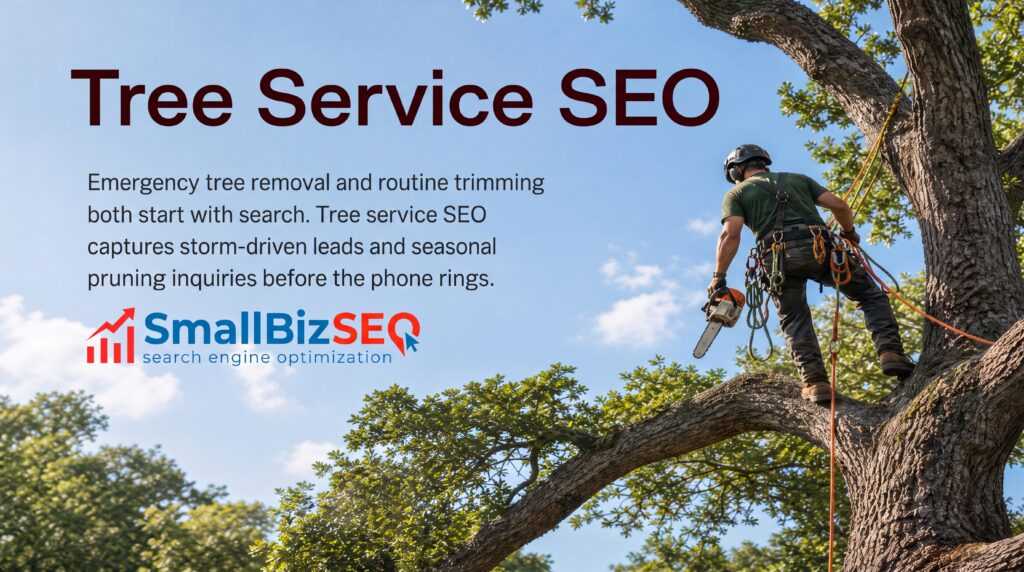
Connect the customer’s tree-care question with the work your business actually performs.
A homeowner wants branches pruned, another is asking about removing a tree, and a property manager has several stumps left from earlier work. Sending all three to an undifferentiated tree-service page loses useful context. We build a service structure that explains the actual job categories, gives each customer a clear inquiry route and makes your real coverage easy to find.
Search intent & content
Separate the tree, the task and the property
Help owners distinguish pruning, tree removal and stump work through clear job descriptions. Connect the requested task with property context, related cleanup arrangements and a practical estimate route for the services your team provides.
Pruning and tree-care inquiries
Explain the pruning work your business offers and invite owners to describe their goals, such as managing a tree’s relationship to a building or outdoor space. Keep tree-specific recommendations with your team’s assessment.
Example searchtree pruning estimate
Tree removal requests
Give removal its own scope explanation, including how customers discuss the tree’s location and the surrounding property. Clarify related tasks such as debris handling rather than leave owners to assume a complete package.
Example searchtree removal contractor quote
Stump grinding and remaining material
Where provided, distinguish stump work from removing the standing tree. Explain what owners should describe about the number and location of stumps, and how cleanup or remaining material is discussed.
Example searchstump grinding service estimate
Storm-related property inquiries
Use a clear route for storm-related requests within your actual offering. Make current contact arrangements visible and explain how to provide the property location and a brief description without asking customers to approach hazardous areas.
Example searchstorm tree service inquiry
Website priorities
Build useful pages around real customer decisions
Write job stories, not just galleries
Describe the requested task, property setting and work your company completed alongside permissioned photos. A pruning project should not be presented as removal evidence simply because both show a tree crew.
Make inclusions easy to discuss
Use service-specific explanations for cutting, hauling, stump work and cleanup when relevant. This gives customers useful questions for an estimate and reduces assumptions about what the quoted job covers.
Keep location pages operational
Explain actual coverage and how a site visit is requested. Useful local information is about whether the business accepts the job, not unsupported claims about travel time or emergency response.
Qualify inquiries without burdening owners
Ask for the requested task, property location and a short description. Existing photos can help, but the form should not require customers to measure trees or make technical judgments.
Our approach
A practical plan for your website
We start with the jobs your team accepts, genuine project examples and the details used to prepare an estimate. From there, we build focused service pages and a mobile-friendly contact journey that separates pruning, removal and stump inquiries.
Review the foundations
Check crawlability, existing pages, customer needs, and the services your business actually offers.
Map services to demand
Connect customer questions to useful service pages and supporting content without duplicating search intent.
Build, measure, improve
Publish useful pages and refine them using search visibility and separately configured inquiry analytics.
- Job descriptions identify the actual task and any separately arranged work.
- Project photographs have permission and accurately represent the completed service.
- Qualifications and specialist capabilities use verified business information.
- Contact instructions reflect actual hours and avoid unsafe information requests.
Frequently asked questions
Questions about your industry SEO strategy
Should tree removal and stump grinding have separate pages?
When both are offered, separate pages can clarify different job scopes. Someone with an existing stump needs information about that service, not a full explanation of removing a standing tree.
How can tree-service photos attract more relevant inquiries?
Add the task, property context and work included to each genuine example. That makes it easier for owners to recognize a similar request and understand the difference between pruning, removal and cleanup.
What should a tree-service form avoid asking customers to do?
Keep requests limited to information they can provide normally, such as location and the work being considered. Assessment of tree condition, access and technical requirements belongs with the service provider.
How do we measure whether SEO is helping?
Use Google Search Console for search visibility and page performance. Measure calls, inquiries, and lead quality separately through analytics and intake tracking where configured.
Can you guarantee rankings or new customers?
No. We focus on the work within our control: technical foundations, useful content, clear navigation, and measurement. Search outcomes depend on competition and other factors.
Build a clearer path from search to inquiry
Bring your tree-service menu and a few representative jobs. We can build clearer pages that help owners request the work your business actually handles.
Search rankings & AI visibility — AI SEO / AEO
- Google AI Mode
- ChatGPT
- Claude
- Gemini
- Perplexity


Related services & strategies