7 Targeted SEO Tactics for Landscape Architects and Designers
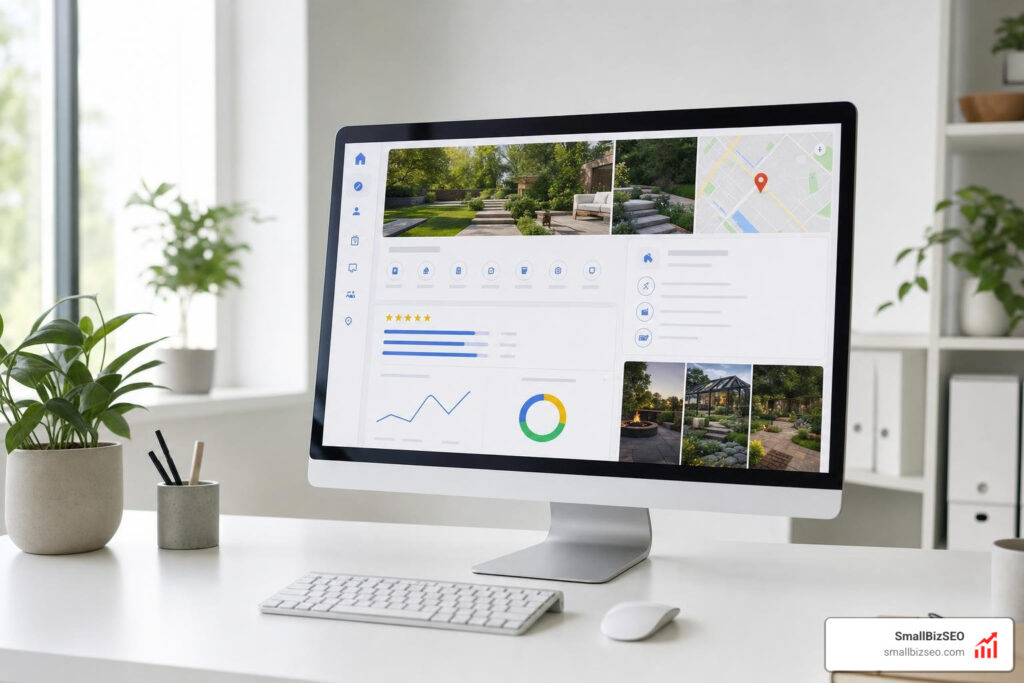
The Complete Blueprint: SEO for Landscape Architect Firms
SEO for landscape architects generates qualified leads by connecting high-intent property owners and developers with your specialized design portfolio. By combining local map visibility, technical website speed, and geo-targeted service content, your firm can attract high-value design commissions rather than low-budget maintenance inquiries.
About 97% of consumers go online to find local services, and 93% of those searches begin on a search engine. Because more than 90% of searchers click on results from the first page, your studio must maintain strong search visibility across both standard organic rankings and local map packs. Achieving this requires search empathy—understanding the exact language, zoning challenges, and aesthetic aspirations prospective clients have before they ever reach out.
Partnering with an experienced landscape designer SEO company helps bridge the gap between creative visual presentation and technical search engine discoverability. By using social media and SEO to grow as a landscape architect, practices can turn high-resolution project photography into evergreen discovery channels across search engines and AI answer platforms.
Why Does SEO for a Landscape Architect Differ from Standard Landscaping?
SEO for landscape architects differs from standard landscaping SEO because it targets low-volume, high-value professional design commissions rather than recurring lawn maintenance or quick seasonal cleanups. Search intent for landscape architecture revolves around site planning, civil grading, master layouts, environmental mitigation, and municipal zoning approvals.
While general landscaping terms see roughly 1.5 million monthly searches across the country, terms tailored specifically to landscape architecture represent a fraction of that volume. However, a single commercial or high-end residential design contract can generate five- to six-figure fees. Your search strategy must filter out unqualified searchers looking for simple mowing or mulch delivery and focus entirely on clients seeking licensed design deliverables.
| Search Dimension | Landscape Architecture Practice | General Landscaping Contractor |
|---|---|---|
| Primary Services | Master planning, environmental grading, zoning permits | Lawn mowing, tree trimming, mulch installation |
| Typical Search Intent | "commercial landscape architect", "estate master plan design" | "lawn care service near me", "cheap mulch delivery" |
| Average Project Value | High-ticket, multi-phase design contracts | Low-to-moderate recurring service charges |
| Core Conversion Asset | Detailed project case studies and technical site plans | Instant estimate forms and seasonal pricing lists |
| Target Audience | Commercial developers, municipalities, luxury homeowners | Residential homeowners seeking property upkeep |
Focusing on the full landscape architecture design scope establishes the required authority to outrank competitors on high-value commercial and residential searches.
How Do You Optimize Local Maps and Citations in SEO for Landscape Architect Practices?
To optimize local maps for a landscape architecture firm, claim your Google Business Profile, select "Landscape Architect" as your primary business category, add detailed service areas, and maintain complete Name, Address, and Phone (NAP) consistency across all design directories.
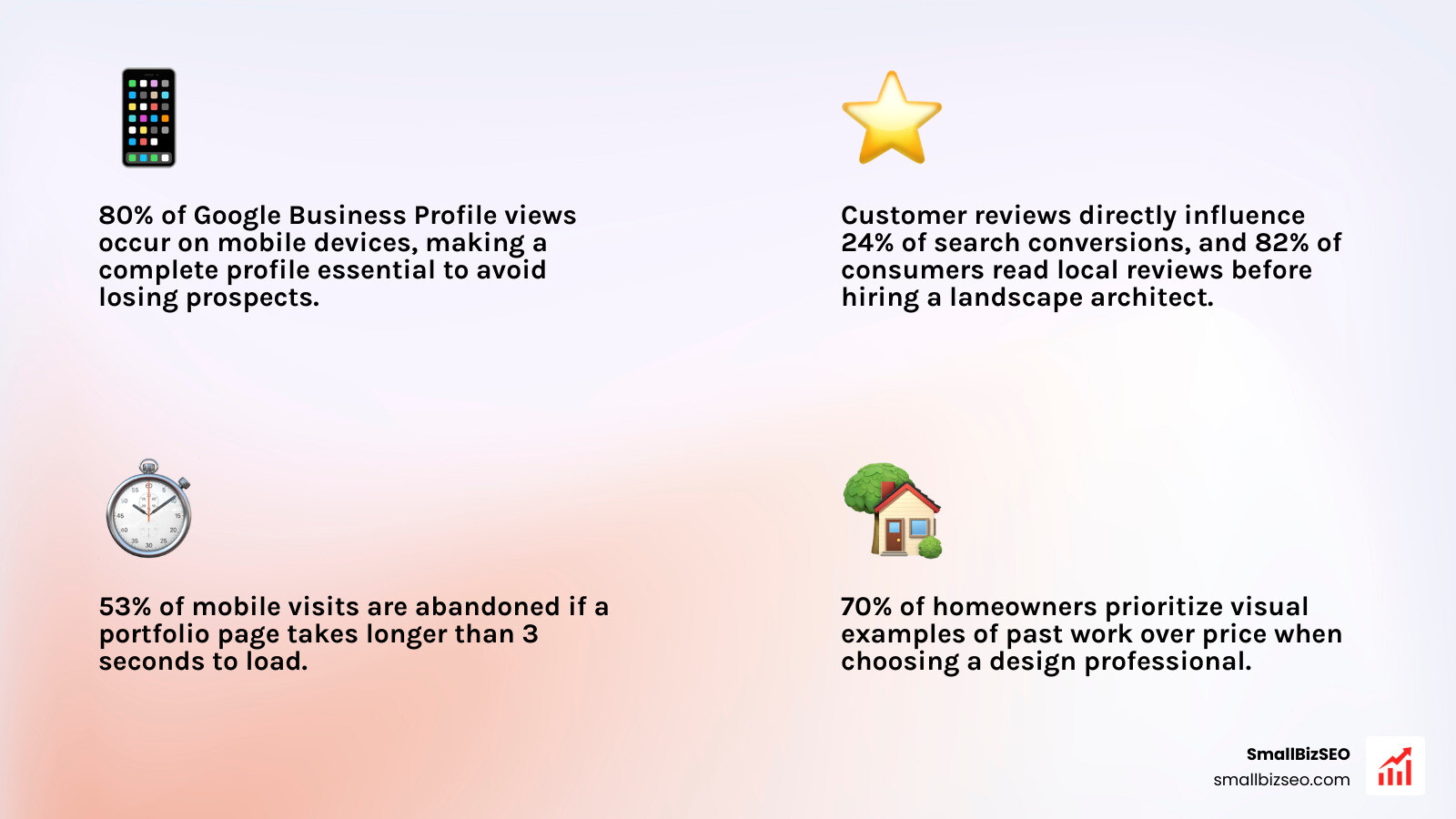
Google Business Profile (GBP) is the single most important driver of qualified local phone calls and direct inquiries. Because 80% of GBP views occur on mobile devices, an incomplete profile immediately causes prospective clients to bounce to a competitor. Furthermore, customer reviews directly influence 24% of search conversions, and 82% of consumers regularly read local reviews before hiring a firm.
Follow this systematic process to secure your firm in the local map pack:
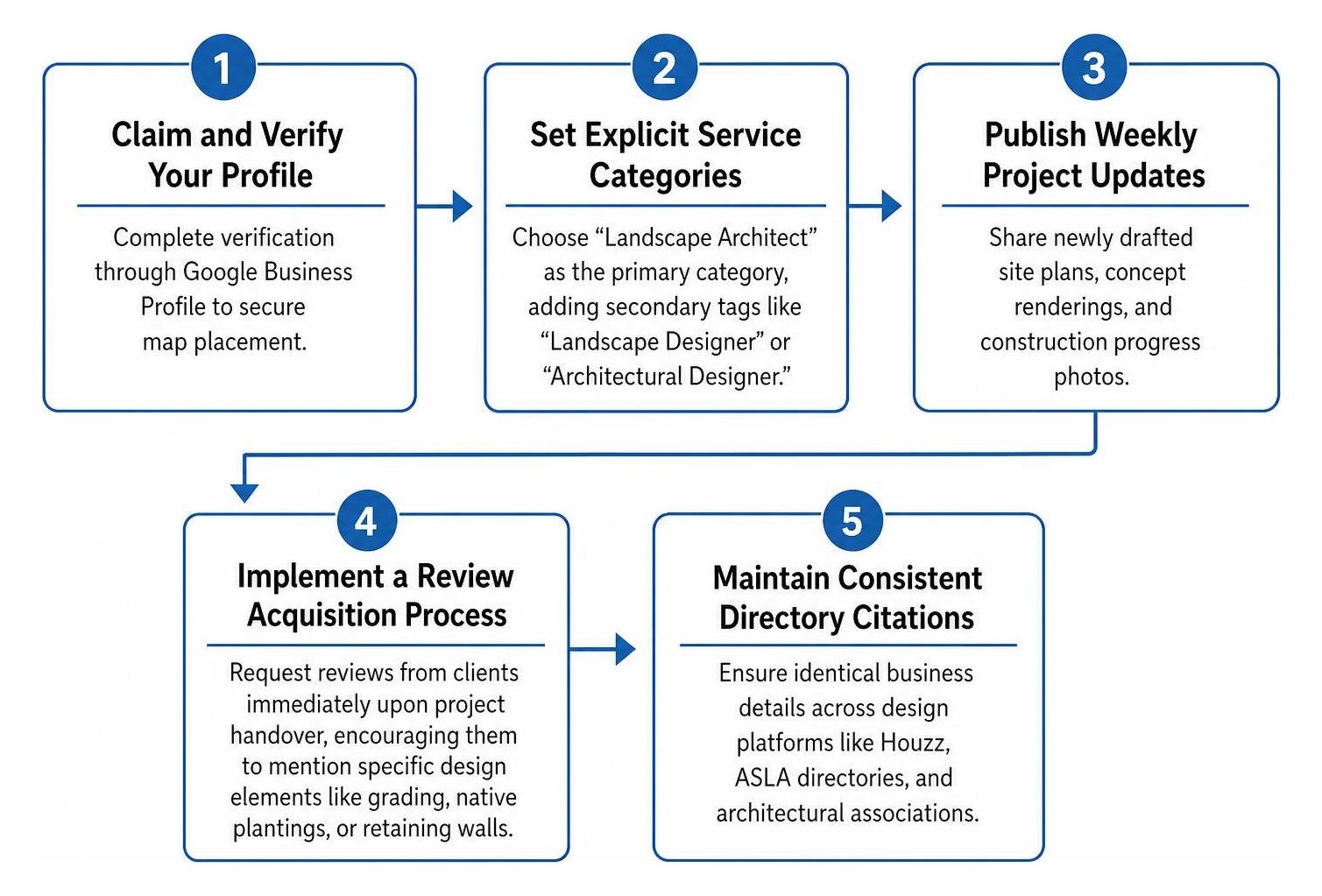
- Claim and Verify Your Profile: Complete verification through Google Business Profile to secure map placement.
- Set Explicit Service Categories: Choose "Landscape Architect" as the primary category, adding secondary tags like "Landscape Designer" or "Architectural Designer."
- Publish Weekly Project Updates: Share newly drafted site plans, concept renderings, and construction progress photos.
- Implement a Review Acquisition Process: Request reviews from clients immediately upon project handover, encouraging them to mention specific design elements like grading, native plantings, or retaining walls.
- Maintain Consistent Directory Citations: Ensure identical business details across design platforms like Houzz, ASLA directories, and architectural associations.
Practices that master local home services SEO establish the prominent trust signals required to dominate map pack rankings.
How Do You Structure Visual Portfolio Pages and Image Optimization?
Visual portfolio pages should be structured as standalone, indexable case studies containing 800 to 1,500 words of descriptive text, next-generation image formats (WebP), fast mobile loading times, and descriptive alt text detailing materials, site constraints, and design solutions.
A common mistake design firms make is publishing image galleries that lack indexable text. About 70% of homeowners prioritize visual examples of past work over price when choosing a design professional, and 60% of searchers state that photos directly influence who they contact. However, search engines cannot evaluate photos without accompanying textual context.
Heavy image libraries also risk failing Google's Core Web Vitals. Because 53% of mobile visits are abandoned if a page takes longer than 3 seconds to load, full-resolution portfolio images must be compressed into WebP formats, targeting under 100KB for hero banners and under 50KB for thumbnails.
Apply a structured formula for all image alt text: [Design Feature] + [Material/Style] + [Site Context] + [Location/Discipline]. Knowing how to describe before and after photos in alt text ensures search crawlers and AI answer engines index every image asset. For a broader technical framework, review image optimization guidance when preparing portfolio pages.
What Content and Service Page Strategies Capture High-Intent Leads?
High-intent leads are captured by creating dedicated service pages for specific project types (such as commercial master planning, urban rooftop terraces, and municipal park design) combined with localized landing pages targeting surrounding high-net-worth areas.

Firms often lose out on valuable search traffic by listing all services on a single summary page. Service-by-city pages convert at substantially higher rates because they directly match user intent. For instance, creating dedicated pages for specialized sub-disciplines—such as working alongside a landscape lighting designer SEO company or highlighting sustainable storm-water management—allows your site to capture long-tail commercial queries.
To build lasting topical authority, publish content clusters addressing key client considerations:
- Permit and Zoning Guides: Explain municipal grading ordinances, wetland preservation rules, and historical district requirements.
- Material and Sustainability Breakdowns: Detail native drought-tolerant planting strategies, permeable paving systems, and xeriscaping.
- Comprehensive Case Studies: Highlight project challenges, grading solutions, schematic designs, and final build photography.
When finding a landscaping SEO partner, ensure they specialize in building topical authority and structured data markup that feed directly into generative AI search summaries.
Scaling Design Inquiries and Tracking Search Performance
Scaling inquiries for your landscape architecture practice requires continuous technical maintenance, conversion tracking, and regular review of your search visibility.
At SmallBizSEO, we use our proprietary "Velocity" framework to deliver transparent, data-driven rankings and E-E-A-T-compliant organic growth for design firms. By continuously monitoring organic positions, call volume, and portfolio engagement, your practice can turn digital search visibility into predictable project inquiries. To uncover where your website currently loses potential clients, schedule a comprehensive SEO visibility audit with our team.