A Practical Guide to Local SEO for Drain Cleaning
How Can Drain Cleaning Businesses Get More Local Search Calls?
SEO for drain cleaning starts with a dedicated service page that answers what customers search for: slow drains, sewer smells, recurring clogs, and emergency help. Make the page easy to use on a phone, show the areas you serve, and give visitors a clear way to call. Keep your Google Business Profile accurate and ask customers for honest reviews after each job.
The rest of this guide shows how to build that page, answer cost questions, and reach both residential and commercial customers.
I’m Clayton Johnson, founder of SmallBizSEO. My work in content strategy, technical SEO, and local search shapes this practical approach to SEO for drain cleaning.
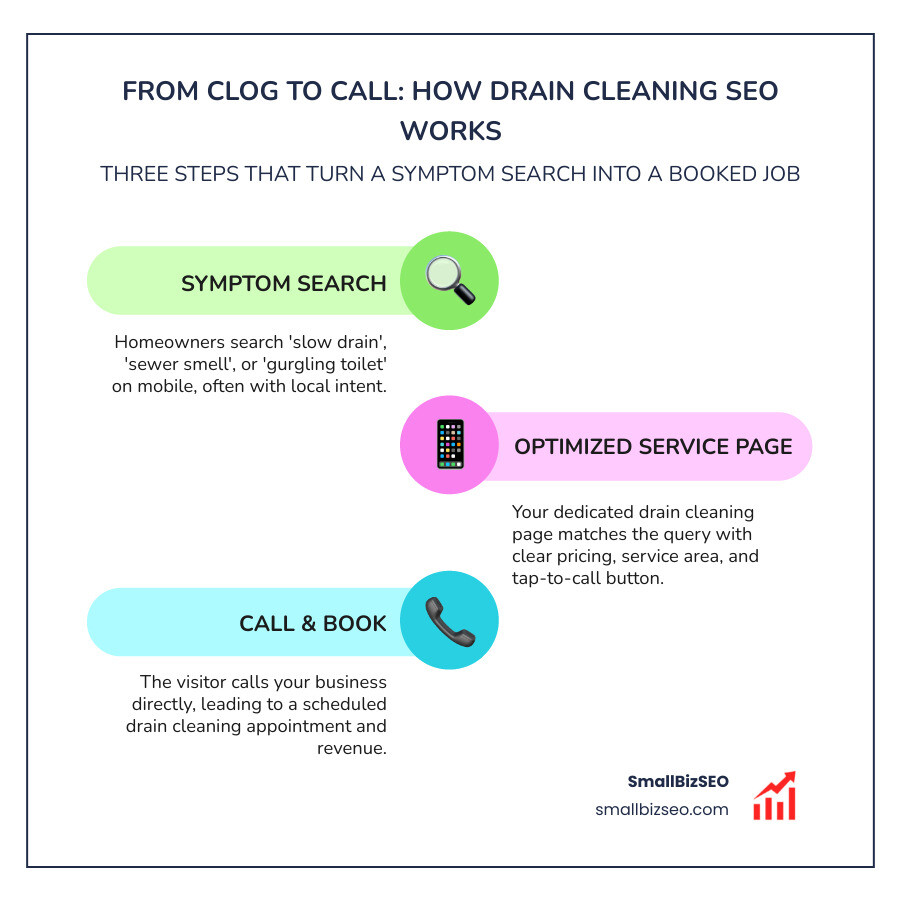
Simple guide to SEO for drain cleaning:
Core Strategies for High-Impact SEO for Drain Cleaning
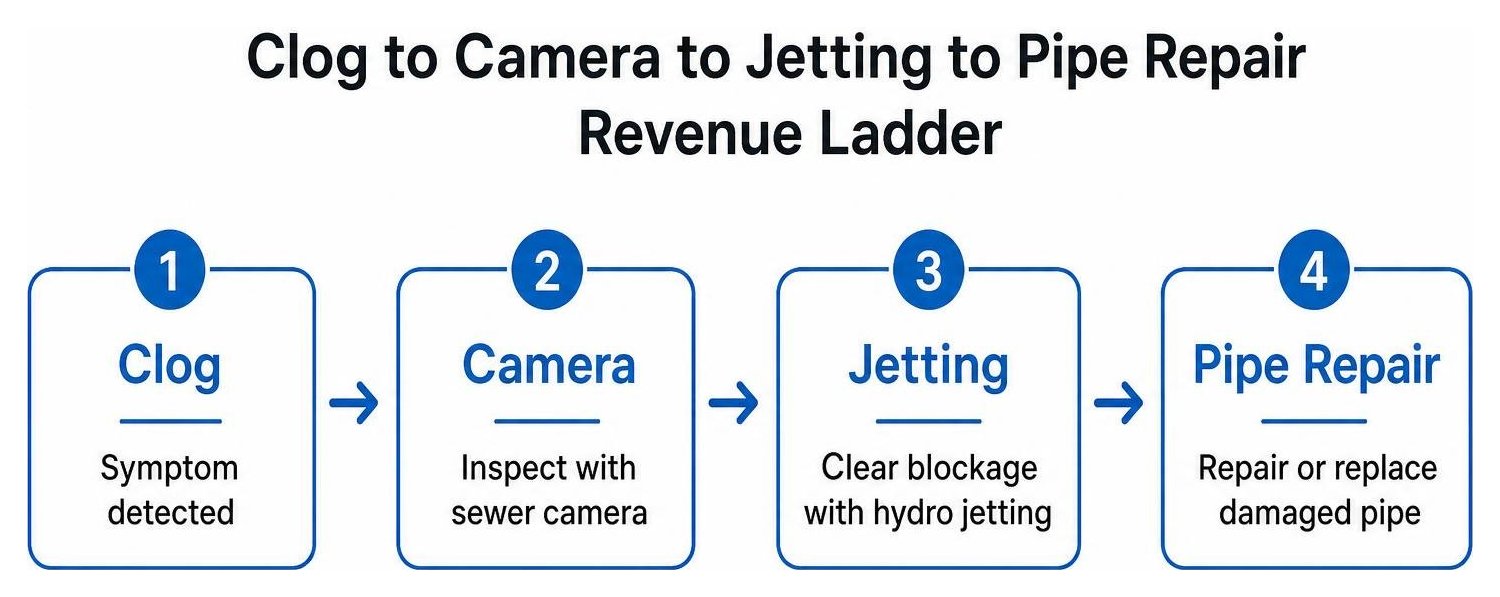
High-impact search optimization requires a clear service ladder that moves prospects from immediate symptom queries to full-scale diagnostics and maintenance solutions.
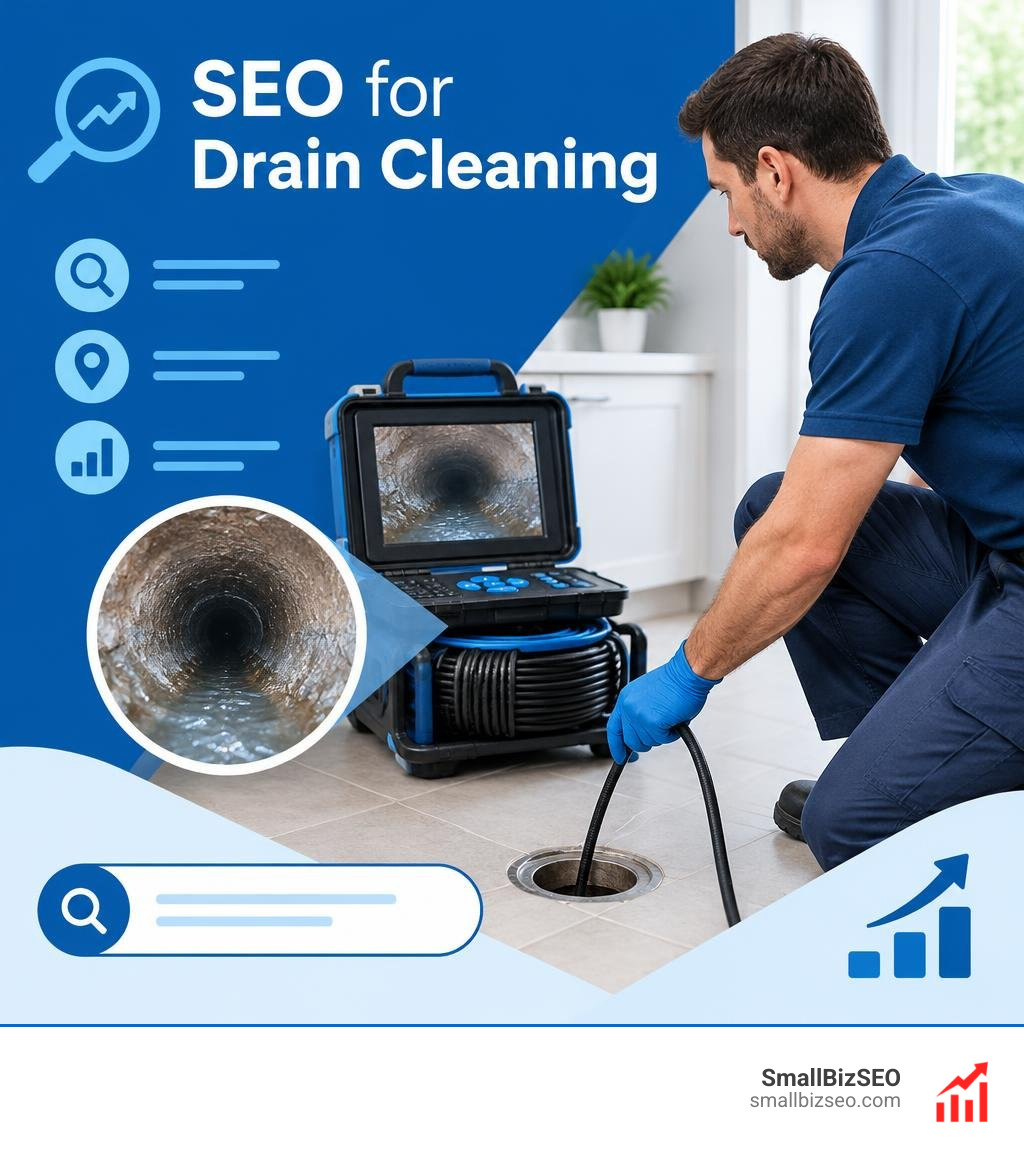
Drain cleaning represents one of the highest-volume search categories in the home service trades, capturing roughly 246,000 monthly searches across the country. However, many trade companies bury drain clearing as a simple bullet point on a general plumbing overview page. Doing this limits your organic visibility and surrenders emergency phone calls to competitors who build dedicated, symptom-focused landing pages.
To capture these high-intent leads, you must connect user problems to specific diagnostic and clearing techniques. Using structured data helps search engines understand these relationships. We recommend adding LocalBusiness structured data across your domain to clearly define your offerings, operational hours, and direct booking options.
Why Does Dedicated Service Page Architecture Drive SEO for Drain Cleaning?
Dedicated page architecture drives organic conversions because customers search by specific problems rather than general trade categories.
A property owner dealing with a backed-up basement floor drain or an overflowing toilet searches with immediate intent. When your site directs them to a general plumbing page, they often leave to find a provider that explicitly highlights rooter machinery, camera inspections, or same-day hydro jetting.
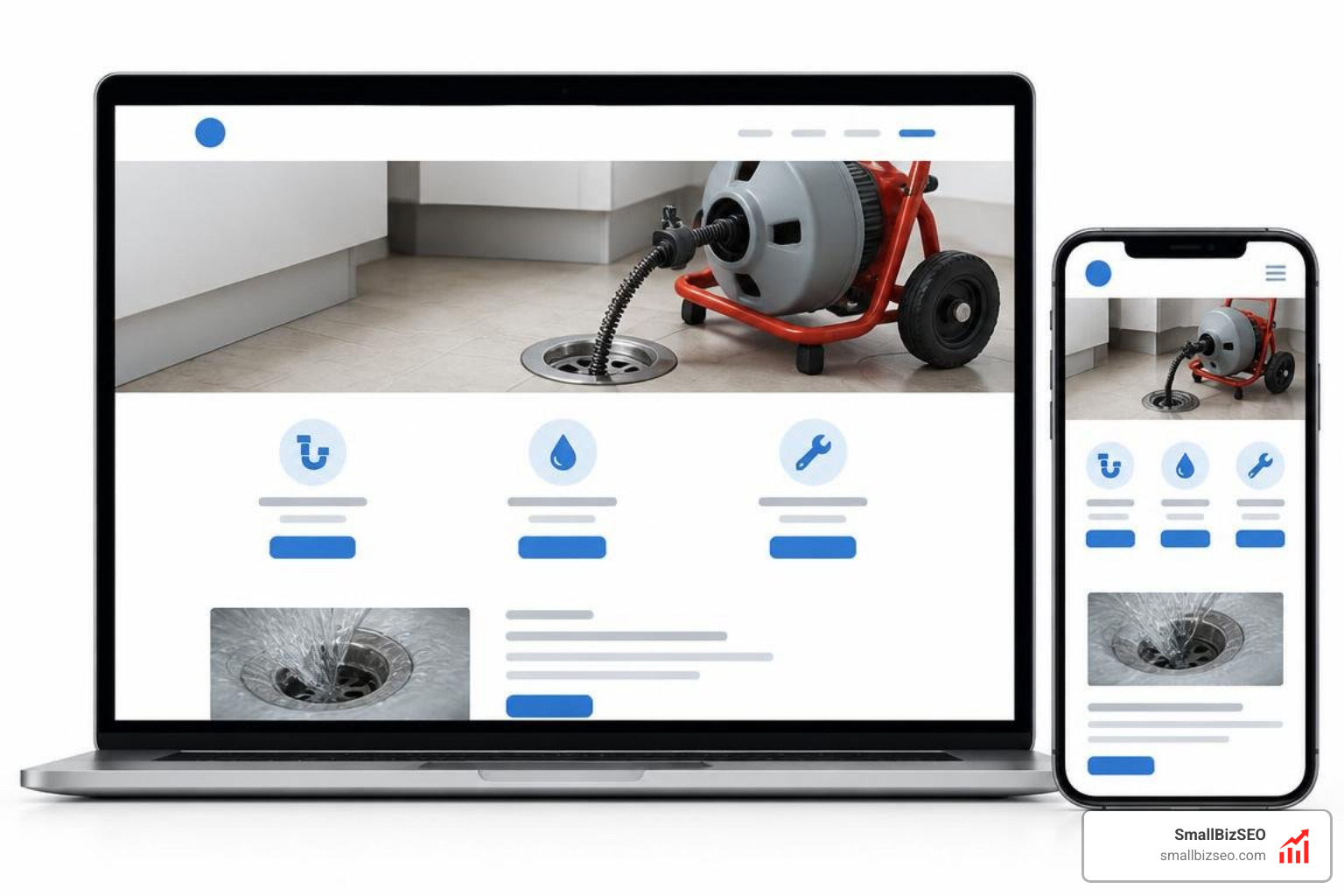
Building dedicated URLs allows you to run comprehensive keyword research and map specific user intents to isolated pages:
- Drain Cleaning Entry Page: Targets broad terms like "drain clearing service" and "rooter near me."
- Hydro Jetting Page: Captures heavy grease buildup and commercial main line inquiries.
- Sewer Camera Inspection Page: Targets diagnostic terms when clogs continually return.
- Emergency Rooter Services: Targets after-hours and urgent overflow situations.
Structuring your website with distinct sub-services allows you to achieve a tight search intent match on every query. This topical depth signals relevance to search engines and reassures the customer that you have the exact machinery needed for their problem.
How Should You Structure Symptom Pages, Cost FAQs, and Seasonal Content?
Structure your drain pages by leading with common symptoms, clear price ranges, and answers to seasonal blockage questions.
When homeowners notice a problem, they describe the symptom long before they diagnose the mechanical failure. Your service pages and supporting articles should directly target queries like "why is my kitchen sink draining slowly," "sewer smell in basement," or "toilet gurgles when shower runs."
Answering these questions directly in concise, 40-to-60-word blocks positions your content to capture a featured snippet at the very top of organic results.
| Drain Service Method | Typical Equipment Used | Primary Use Case | Common Cost Range |
|---|---|---|---|
| Drain Snaking (Cable) | Motorized mechanical snake | Minor blockages, hair, toilet paper | $100 – $300 |
| Hydro Jetting | High-pressure water jetter | Heavy grease, sludge, tree root scale | $300 – $600+ |
| Camera Inspection | Fiber-optic sewer camera | Recurring clogs, pipe health verification | $150 – $350 |
Transparent pricing directly on your page builds consumer confidence. Homeowners search extensively for cost comparisons; providing realistic ranges prevents bounce rates and qualifies the incoming phone calls.
Furthermore, align your content calendar with predictable weather and holiday patterns:
- Spring: Focus on heavy rainfall, saturated ground, and outdoor storm drain backups.
- Summer: Target active tree root intrusion into older clay and cast-iron sewer lines.
- Late Autumn: Address yard leaf debris in exterior perimeter drainage.
- Winter Holidays: Publish guides on cooking grease buildup, food waste disposals, and heavy guest usage.
How Does Google Business Profile Optimization and Review Velocity Power SEO for Drain Cleaning?
Optimizing your profile categories and maintaining consistent weekly review velocity directly elevates your map visibility.
Securing a spot in the local pack delivers immediate phone calls from mobile searchers. Most home service companies with fully completed business profiles and active review collection generate between 15 and 25 organic calls per week from map placement alone. At a typical ticket of $250, this represents $3,750 to $6,250 in weekly revenue generated without paid ad clicks.
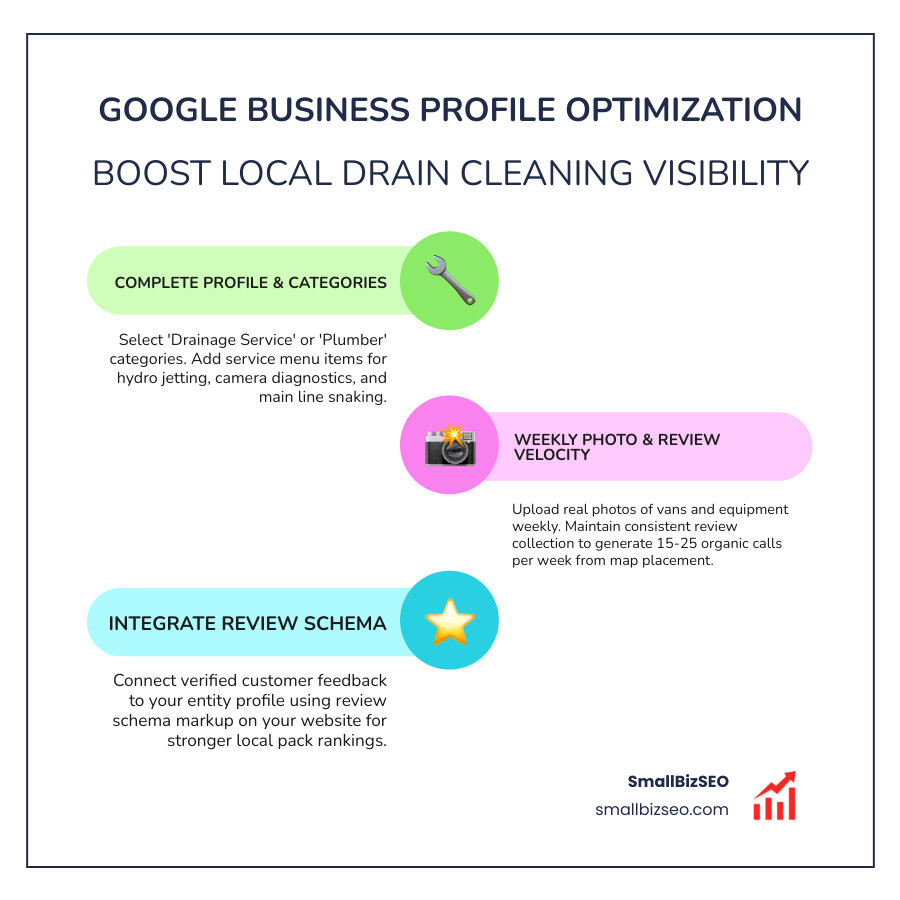
To maximize your local listing:
- Complete your Google Business Profile setup and select "Drainage Service" or "Plumber" as your core business categories.
- Add standalone items in your service menu for hydro jetting, camera diagnostics, and main line snaking.
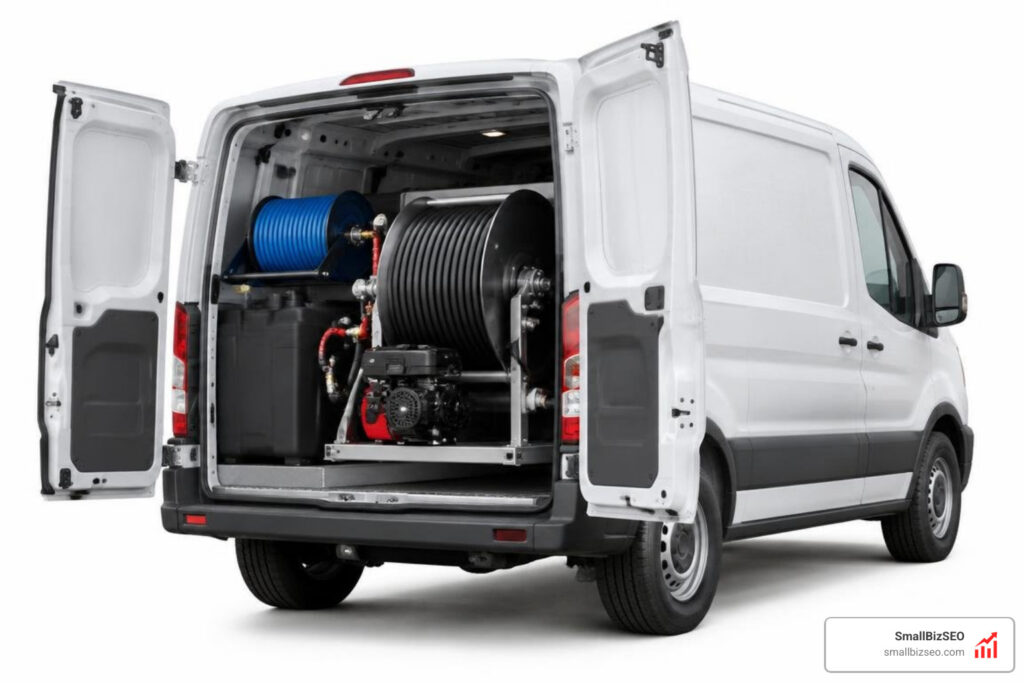
- Upload real, high-resolution photographs of service vans, jetting equipment, and diagnostic monitors weekly.
- Integrate review schema on your website so verified customer feedback connects with your entity profile.
Review recency often outweighs total review volume. A company with 60 total reviews that consistently earns 4 to 6 new entries every month will routinely outrank a competitor sitting on 90 older reviews with no new feedback in three months.
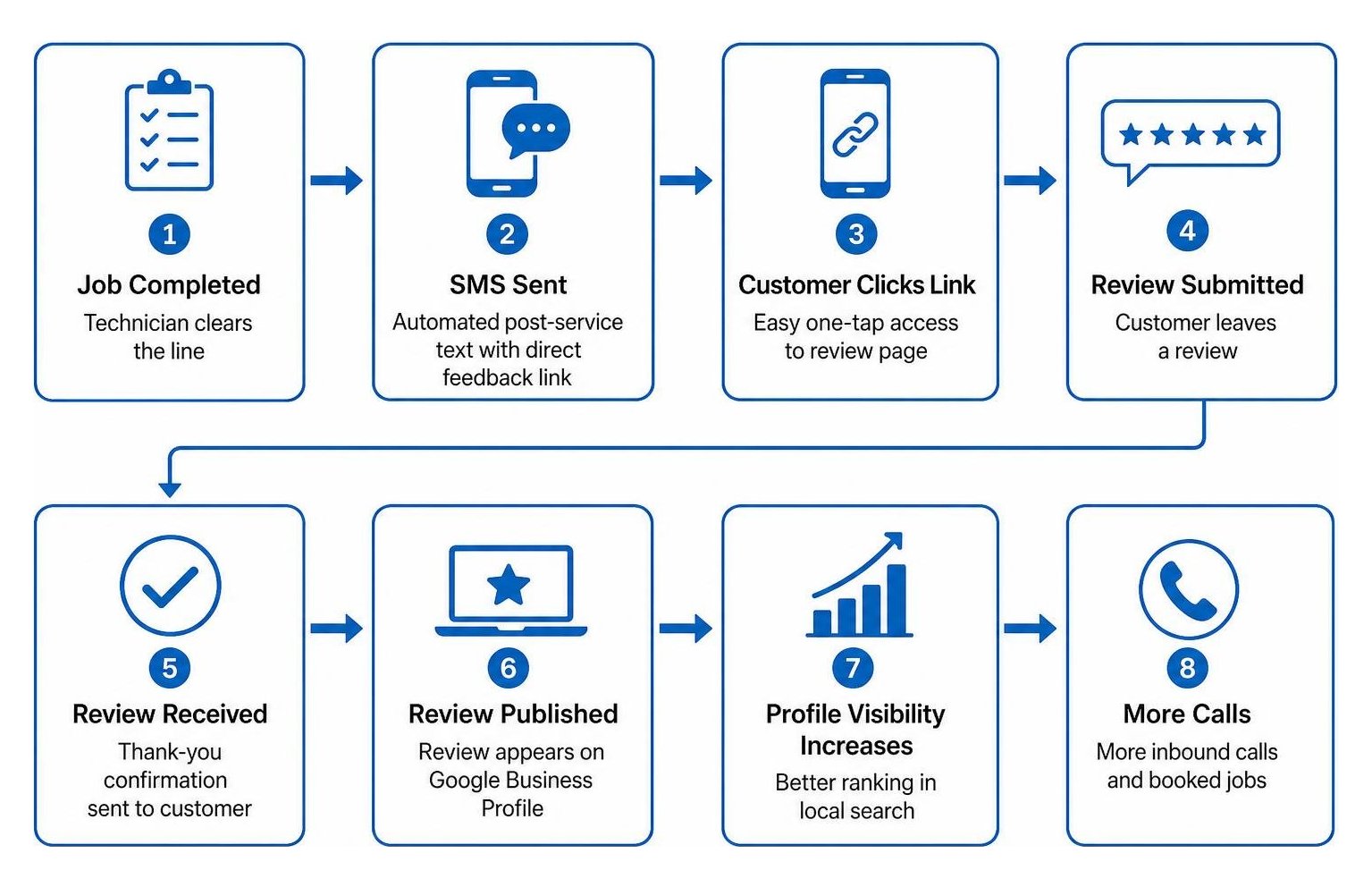
Set up an automated post-service SMS workflow that delivers a direct feedback link to the client right as the technician clears the line.
How Do Technical SEO and Multi-City Location Pages Expand Reach?
Technical SEO ensures rapid mobile load times, while unique city pages allow your business to rank across neighboring towns.
Because most emergency drain searches occur on smartphones while water is actively backing up, mobile speed and layout simplicity are critical. Ensure your tap-to-call buttons remain fixed and visible across every scroll depth, compress all video and imagery, and maintain strict NAP consistency (Name, Address, Phone) across all citations.
To expand past your primary office location, build a structured local landing page for every major community you serve. Avoid duplicating boilerplate text across these pages. Instead, apply sound schema markup and customize each page with:
- Genuine job photos from that specific neighborhood.
- Localized testimonials referencing common local infrastructure (such as older cast iron lines or municipal clay sewer systems).
- Verified driving zones that comply with standard service area business guidelines.
What Are the Key Differences Between Residential and Commercial Drain Marketing?
Commercial drain marketing targets ongoing grease and code compliance contracts, whereas residential marketing focuses on urgent, single-event clearing.
Commercial plumbing leads produce significantly higher lifetime customer value. Facilities managers, restaurants, and property management groups require scheduled preventative maintenance rather than simple one-off emergency snaking.
Target high-intent commercial terms by featuring these core service pages:
- Commercial grease trap pumping and line scouring.
- Preventative hydro jetting maintenance contracts for dining facilities.
- Multi-family vertical stack and main line clearing.
- Industrial floor drain maintenance and diagnostic reporting.
- Municipal code compliance and regulatory pipe flushing.
Track the long-term revenue generated from these commercial landing pages rather than evaluating them solely on raw lead counts. A single commercial agreement for scheduled quarterly maintenance provides predictable revenue that stabilizes cash flow throughout the year.
Dominating Local Drain Search with Sustainable Growth
Capturing consistent organic drain cleaning leads requires a cohesive strategy that combines symptom-rich content, fast technical architecture, and systematic review generation. When these components work together, organic search transforms from an occasional lead source into a dependable, compounding growth engine for your service fleet.
At SmallBizSEO, we implement our data-driven "Velocity" framework to help local trade businesses capture high-intent search visibility and convert searchers into booked service calls. We focus on transparent reporting tied directly to revenue, helping your business establish E-E-A-T authority in every community you serve.
If you want to uncover where your website currently stands and identify immediate ranking opportunities across your service territory, request a comprehensive SEO visibility audit from our team today.