A Quick Start Guide to AEO Implementation

How Can Answer Engine Optimization (AEO) Help Your Business Get Found?
Answer engine optimization (aeo) helps your business show up accurately when AI tools answer customer questions. To get started, choose a question your customers ask, answer it clearly near the top of a relevant page, and add details that show why they can trust the answer. Keep the page easy to access and update it when the facts change.
This builds on SEO rather than replacing it. A strong page can still earn search traffic, while also giving AI tools useful information to reference when someone asks for an answer instead of a list of links.
I'm Clayton Johnson, founder of SmallBizSEO. My work in SEO, content, and digital PR now includes answer engine optimization (aeo), with a focus on helping small businesses turn their expertise into clear, credible answers.
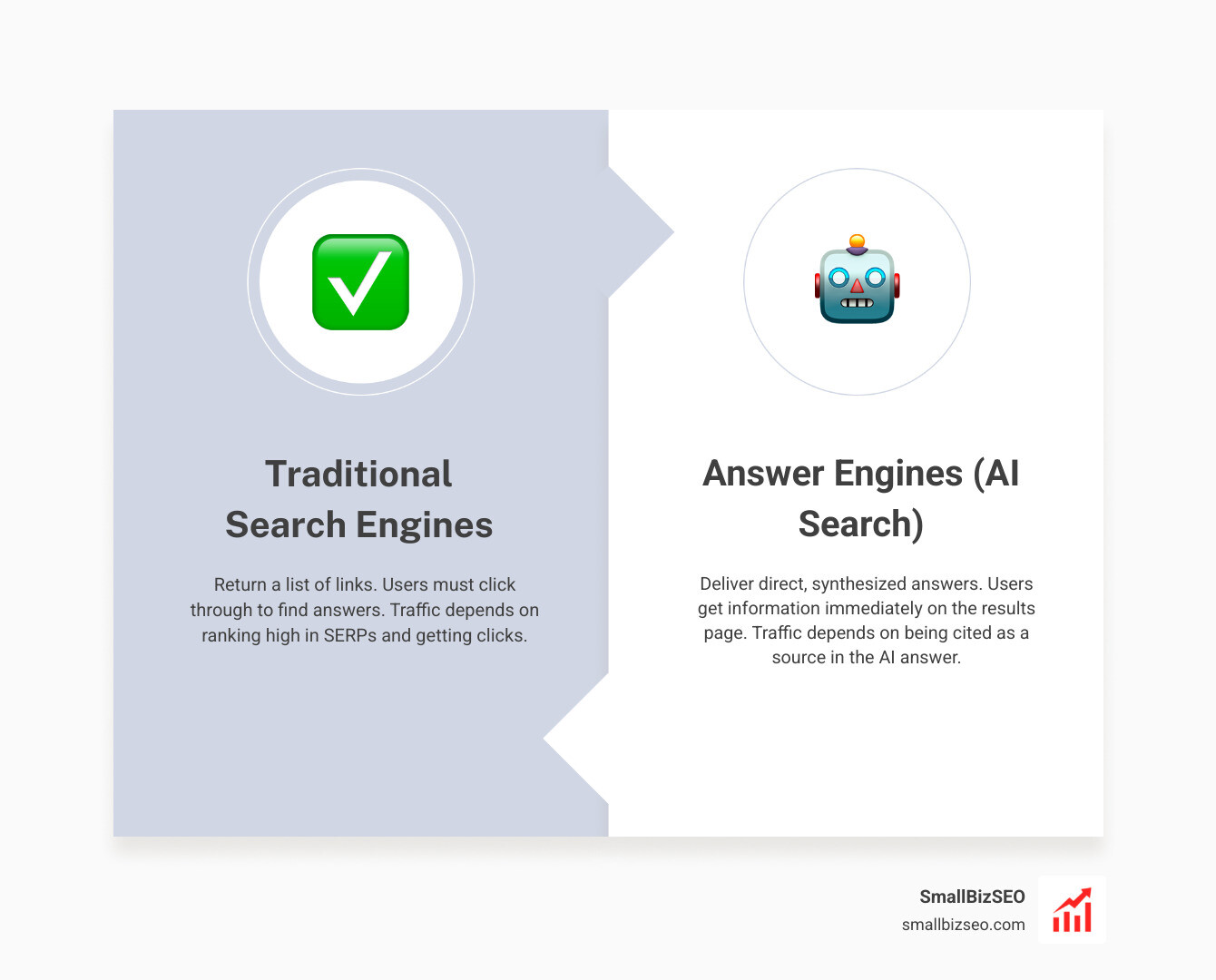
What Is Answer Engine Optimization (AEO) and How Does It Work?
Answer Engine Optimization is the practice of structuring and refining online content so artificial intelligence systems can easily discover, synthesize, and cite it as the primary response to user queries. While traditional search focuses on cataloging web pages, AI engines focus on delivering direct answers.

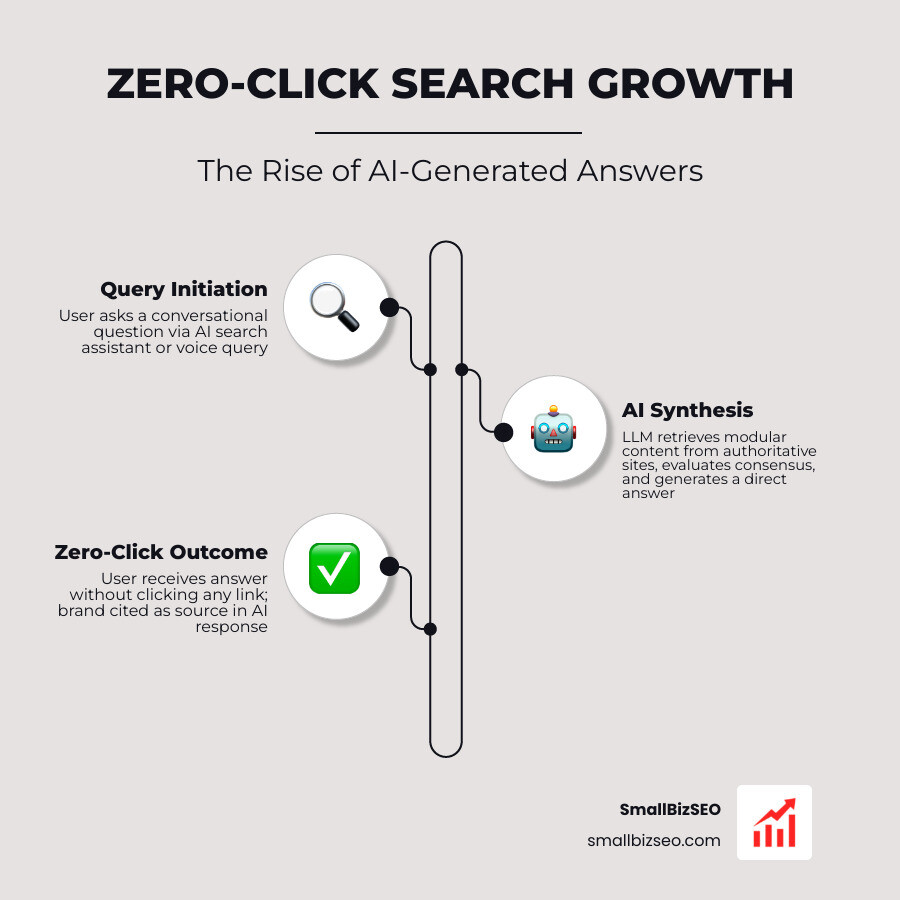
Modern AI systems rely on Retrieval-Augmented Generation (RAG) paired with large language models. When a user asks a complex question, the AI retrieves relevant passages from authoritative websites across the web, evaluates the facts, and synthesizes a direct response. If your website provides concise, modular, and fact-checked information, the AI extracts your data and references your brand. This discipline works hand-in-hand with Generative Engine Optimization (GEO) to establish strong entity integrity across the broader answer layer architecture.
How Does Answer Engine Optimization (AEO) Differ From Traditional SEO?
Traditional SEO aims to rank specific web pages in search engine results to capture link clicks. In contrast, AEO focuses on getting your business cited, quoted, or recommended directly inside synthesized responses.
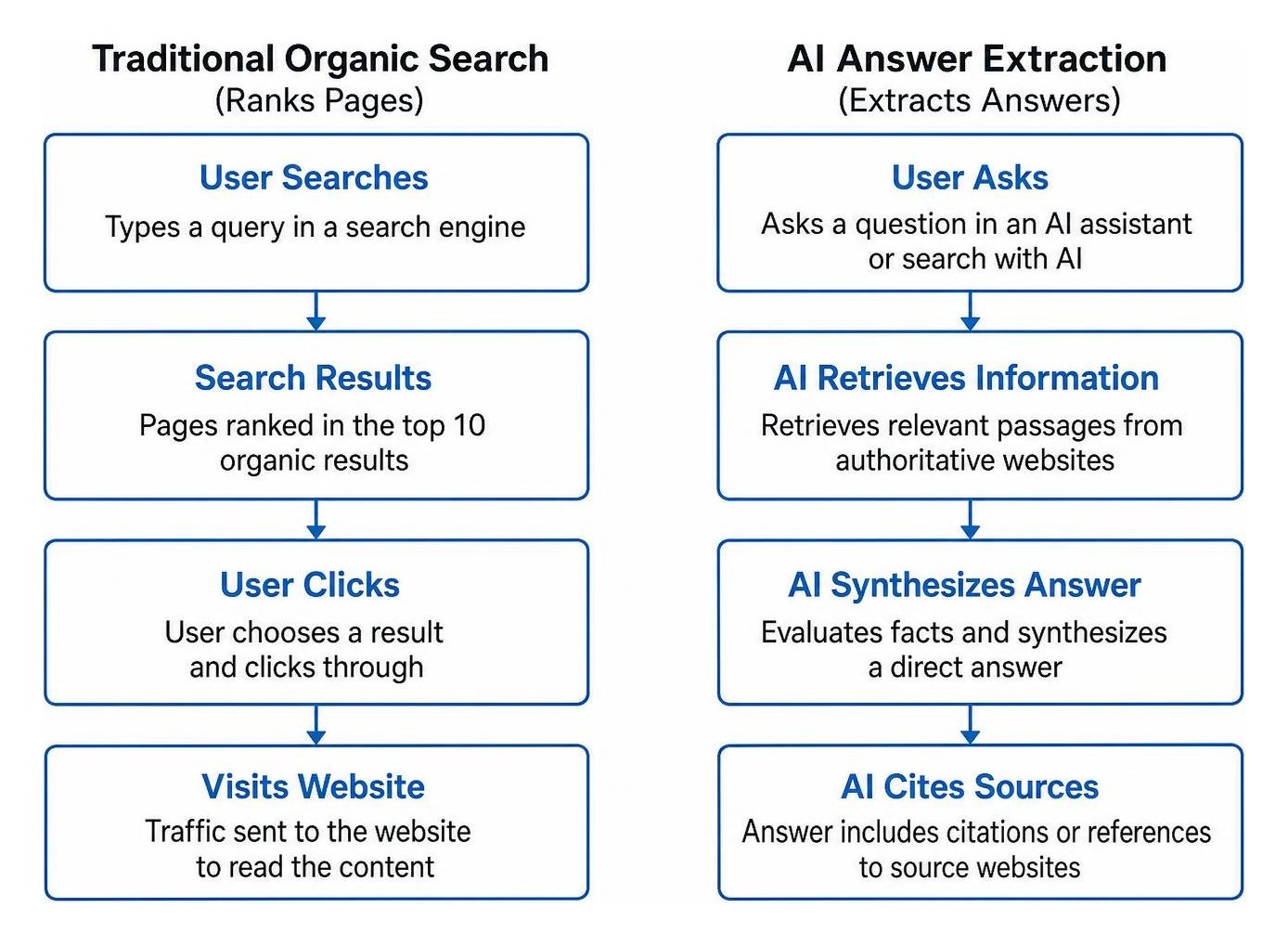
As research indicates, external link clicks drop noticeably when an AI summary is present compared to when it is absent. Academic research on generative AI search demonstrates that visibility has expanded from simple blue links to inclusion within multi-source generative answers.
| Strategic Dimension | Traditional SEO | Answer Engine Optimization (AEO) |
|---|---|---|
| Primary Goal | Top 10 organic SERP rankings | Citation and inclusion in AI answers |
| Target User Action | Clicking a link to visit the website | Digesting immediate answers and brand citations |
| Content Structure | Long-form, keyword-targeted pages | Modular, atomic Q&A blocks and structured data |
| Discovery Mechanism | Keyword matching and backlink weight | Semantic entity retrieval and query fan-out in AI Search |
| Core Success Metric | Organic clicks and organic impressions | AI citation frequency, mentions, and referral conversion |
Why Is Answer Engine Optimization (AEO) Vital for Brand Visibility?
AEO is essential because customer discovery behavior has shifted from browsing endless lists of links to interacting directly with conversational assistants.
Around 60% of web searches now end without a click to an external website. Even when users stay on the results page, appearing as the authoritative cited source captures critical early-stage brand awareness. Studies show that 99% of URLs displayed in AI modes come from top-ranking organic pages, reinforcing that solid baseline authority is critical.
Capturing a strong AI Share of Voice ensures your brand shapes buyer opinions during comparative research. As highlighted in coverage of creator-first AI discoverability, businesses that deliver clear, original perspective earn prominent attribution when AI systems formulate recommendations.
How Do Answer Engines Select Content for Citations and Overviews?
Answer engines evaluate content through four primary filters: entity authority, cross-source consensus, structural clarity, and content recency.

- Entity Authority and E-E-A-T: AI models verify whether your business demonstrates real-world Experience, Expertise, Authoritativeness, and Trustworthiness.
- Consensus Strength: If multiple independent, authoritative websites confirm your factual claims, AI models gain confidence in citing your content.
- Information Freshness: Answer engines prioritize fresh data. Content with transparent timestamps receives significantly higher citation rates.
- Crawlability and Standards: Allowing verified AI Crawler access and publishing machine-readable files like an llms.txt protocol helps search models ingest your core concepts without friction.
Actionable Steps for Executing an AEO Strategy
Implementing AEO requires turning your domain into an easy-to-digest knowledge source for human readers and machine crawlers alike.
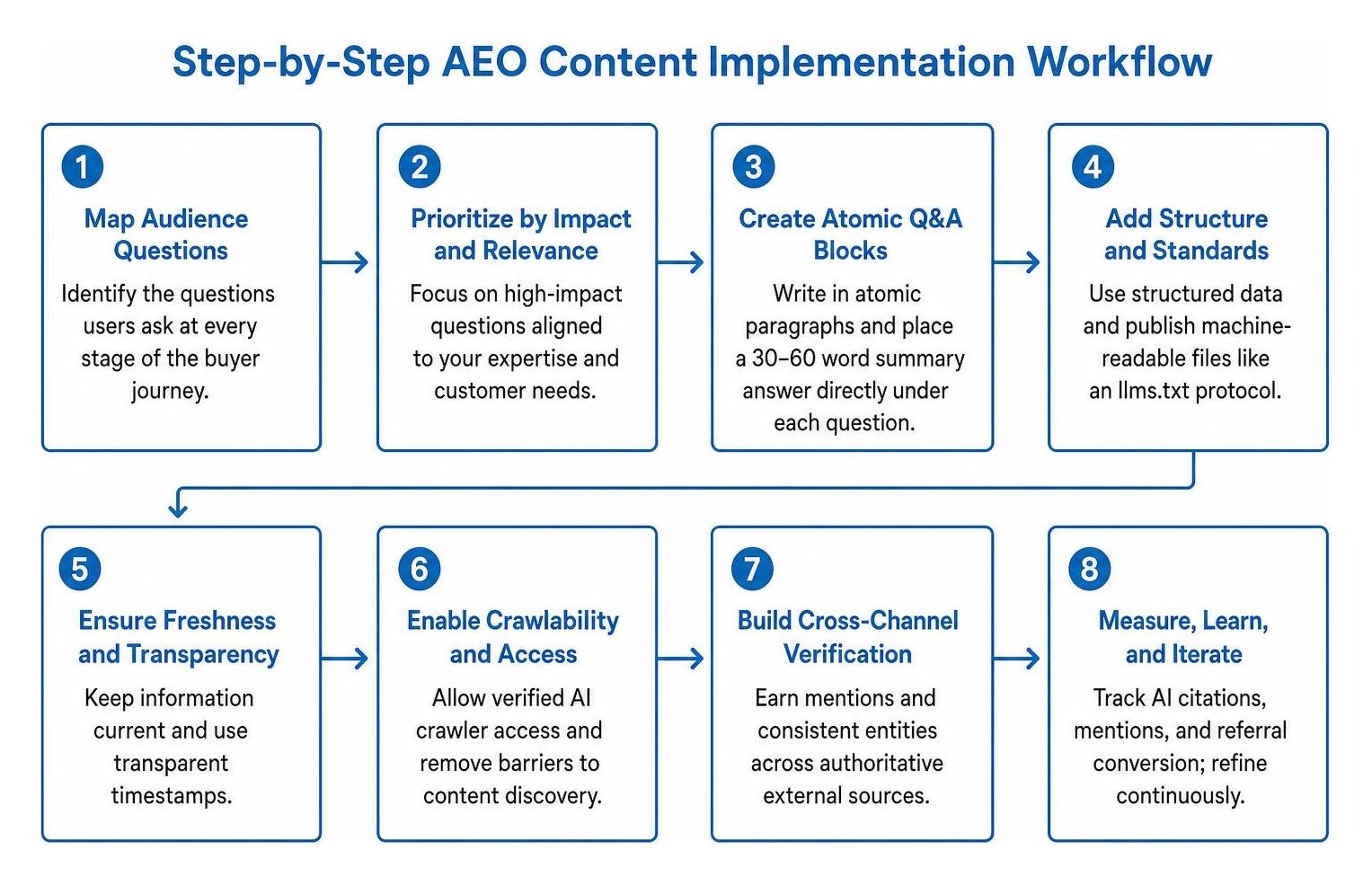
To build a high-performing AEO content pipeline:
- Adopt an Inverted Pyramid Framework: Place a direct, 30-to-60-word summary answer immediately beneath every question-based heading before elaborating.
- Write in Atomic Paragraphs: Keep paragraphs focused on a single factual concept so language models can extract clean snippets without editing out fluff.
- Establish Cross-Channel Verification: Build brand mentions and entity consistency across directories, industry publications, and partner platforms.
- Run Regular Technical Audits: Identify extraction gaps and crawler issues by conducting The AI SEO Audit: Tracking the Signals That Actually Matter to LLMs.
What Content Formats and Technical Markup Drive Best Results?
Content formatted with clean hierarchy and structured schema markup performs best in answer engine retrieval.
- Structured Schema Markup: Implement FAQPage, HowTo, and Article schema in clean JSON-LD markup to provide immediate machine context.
- Direct Comparison Tables: Tables comparing features, pricing, or processes allow AI bots to extract tabular data for complex prompts.
- Original Research and Data: Publishing unique statistics or proprietary findings makes your site an indispensable reference point.
- Multimodal Assets: Supporting articles with descriptive diagrams and video assets increases inclusion across diverse answer features.
How Do You Measure Success and Track AI Citations?
Evaluating AEO requires tracking brand presence across AI answers rather than relying solely on traditional rank tracking.

Key metrics to evaluate include:
- AI Citation Rate: The percentage of target industry prompts where your brand is explicitly hyperlinked or referenced.
- Brand Mention Coverage: How often AI assistants mention your business when users ask for category recommendations.
- AI Referral Traffic: The volume and conversion rate of visitors arriving from AI assistants.
- Sentiment and Framing: Whether conversational platforms describe your services accurately and favorably.
Future-Proof Your Brand with an Answer-Ready Foundation
The shift toward AI-powered answers does not eliminate the need for search optimization; it raises the standard for clarity, truth, and structure. By pairing foundational technical SEO with an answer-first content strategy, your business can capture valuable mindshare in conversational discovery. If you want to accelerate your visibility across modern search platforms, our data-driven Velocity framework and specialized SmallBizSEO AEO services ensure your company remains the trusted answer your customers find first.