5 Smart Ways to Balance Your Local SEO Budget on a Shoestring
How Can You Balance Local SEO on a Shoestring Budget?
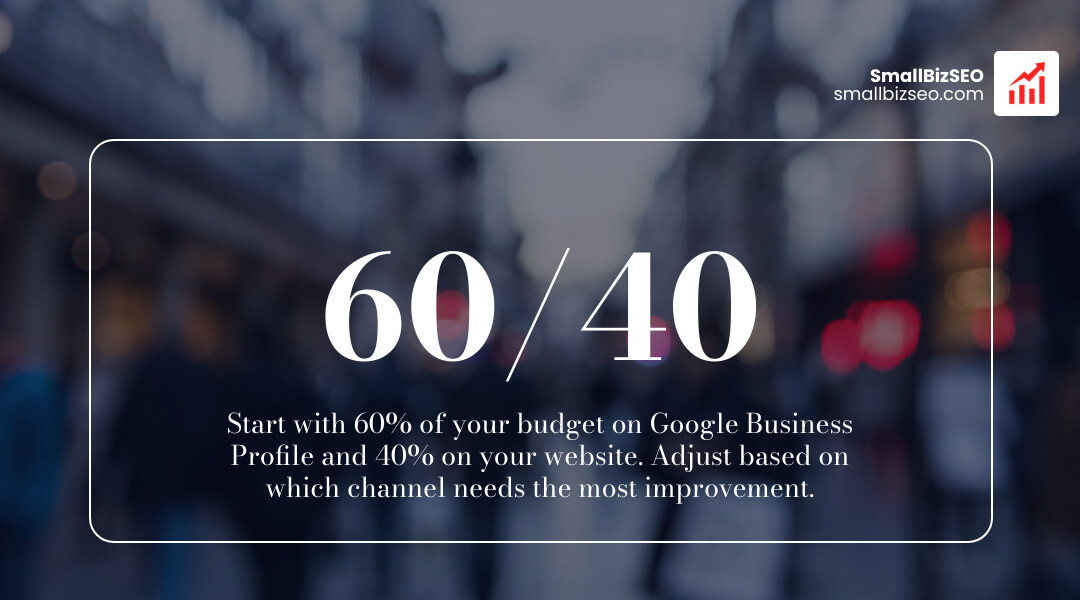
If you are deciding how to divide a limited local SEO budget between website and profile work, start with 60% for your Google Business Profile and 40% for your website. First, correct your profile's categories, hours, and contact details. On your website, fix anything that stops people from finding or contacting you, then improve your most important service page. Treat 60/40 as a starting point, not a rule.
Check calls and inquiries from both channels each month. If your profile is accurate but your site lacks useful service pages, shift more money to the website. If your site works well but your profile has errors or few reviews, shift more toward profile work.
I'm Clayton Johnson, founder of SmallBizSEO. My work in technical SEO and content strategy shapes how I advise owners on how to divide a limited local SEO budget between website and profile work: fix the biggest gap first, then use lead data to decide what comes next.
Handy how to divide a limited local SEO budget between website and profile work terms:
How Should You Divide a Limited Local SEO Budget Between Website and Profile Work?
To divide a tight local SEO budget effectively, identify where your potential customers take action first. For most neighborhood businesses, local customers find answers directly in map results before ever browsing a website. Allocating 60% to 70% of initial resources to profile optimization secures high-intent leads quickly, while directing the remaining 30% to 40% toward website health ensures you convert visitors who seek in-depth service details.
Google Business Profile (GBP) optimization delivers fast local visibility. Research indicates that the top map pack position earns roughly a 33.7% click-through rate, and approximately 47% of profile interactions turn into direct phone calls. In contrast, standard website organic rankings often require more time to mature but establish enduring topical authority.
When resources are tight, combining these efforts creates a measurable synergy effect. Industry benchmarks show that aligning profile categories with dedicated website landing pages can boost overall lead volume by up to 27% compared to running either tactic in isolation.
| Marketing Focus | Primary Deliverables | Typical Cost per 100 Leads | Average Time to Initial Results |
|---|---|---|---|
| Google Business Profile (60–70%) | Category tuning, review generation, photos, weekly updates | $400 – $600 | 14 to 30 days |
| Website Local SEO (30–40%) | Mobile usability, Core Web Vitals, service pages, schema | $900 – $1,400 | 60 to 90 days |
To build an efficient foundation, explore our comprehensive local SEO guide to structure your digital assets for steady growth.
Which Search Signals Should Guide Your Website and Profile Budget?
Local map pack algorithms evaluate three primary signals: relevance, distance, and prominence. Website organic search algorithms, on the other hand, evaluate site architecture, backlink equity, depth of content, and technical accessibility.
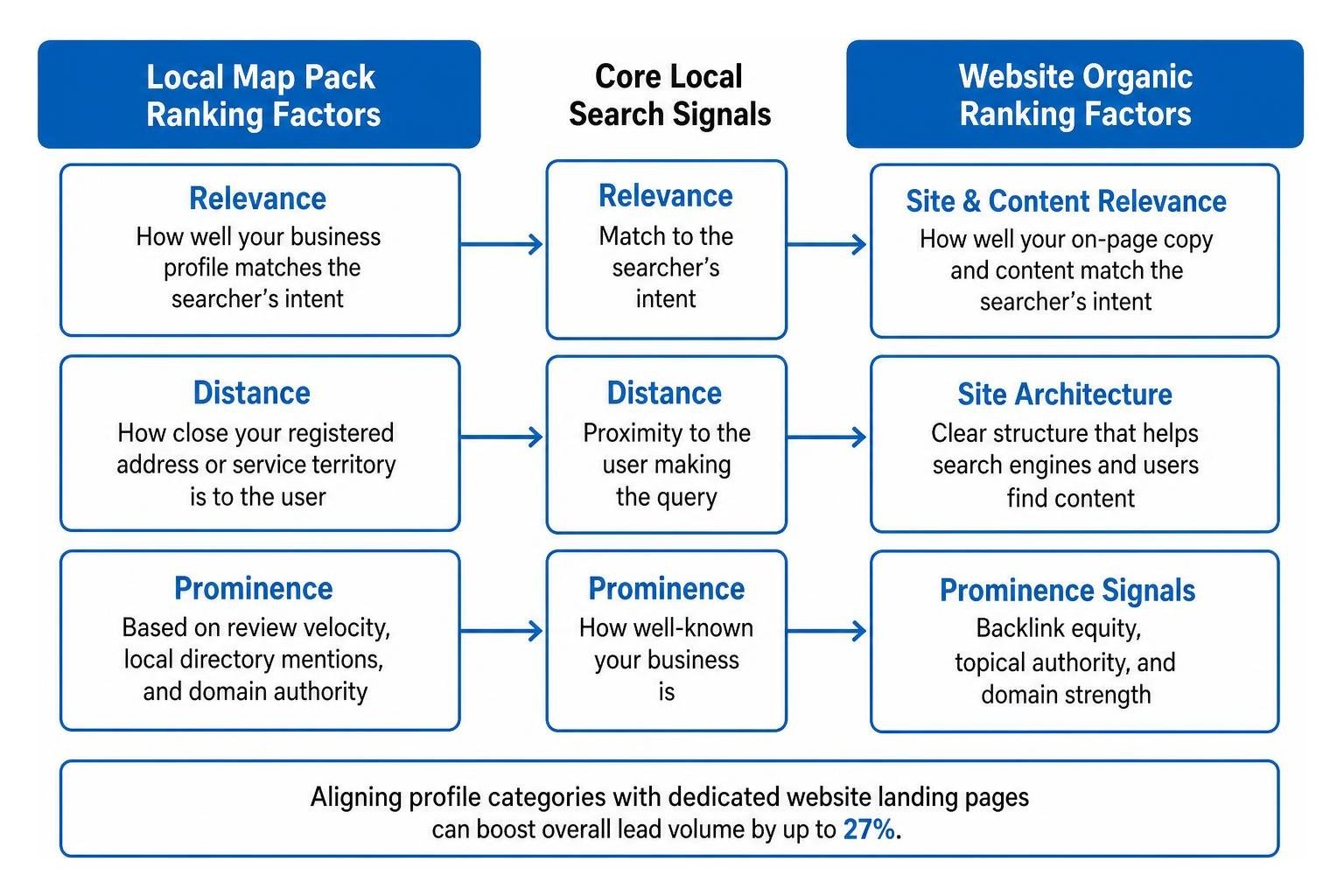
- Relevance: How well your business profile and on-page copy match the searcher's intent.
- Distance: How close your registered address or service territory is to the user making the query.
- Prominence: How well-known your business is based on review velocity, local directory mentions, and domain authority.
With roughly 46% of consumers regularly using "near me" search terms, spending money on broad informational blog posts rarely delivers immediate nearby sales. Reviewing targeted local map pack visibility strategies helps ensure your spending directly matches these location-based ranking signals.
Which High-ROI Google Business Profile Tasks Should You Fund First?
When funding profile tasks on a limited budget, prioritize primary category selection, directory consistency, and automated review workflows.
- Category Configuration: Select the exact primary category that reflects your core revenue driver. Add up to four supporting secondary categories to capture related search queries.
- Review Generation Systems: Businesses with regular streams of positive, descriptive reviews significantly outperform stagnant listings. Create an automated SMS or email review request process triggered immediately after service delivery.
- Weekly Updates and Visuals: Regularly upload clear workplace photos, staff pictures, and short weekly updates highlighting specific services or special promotions.
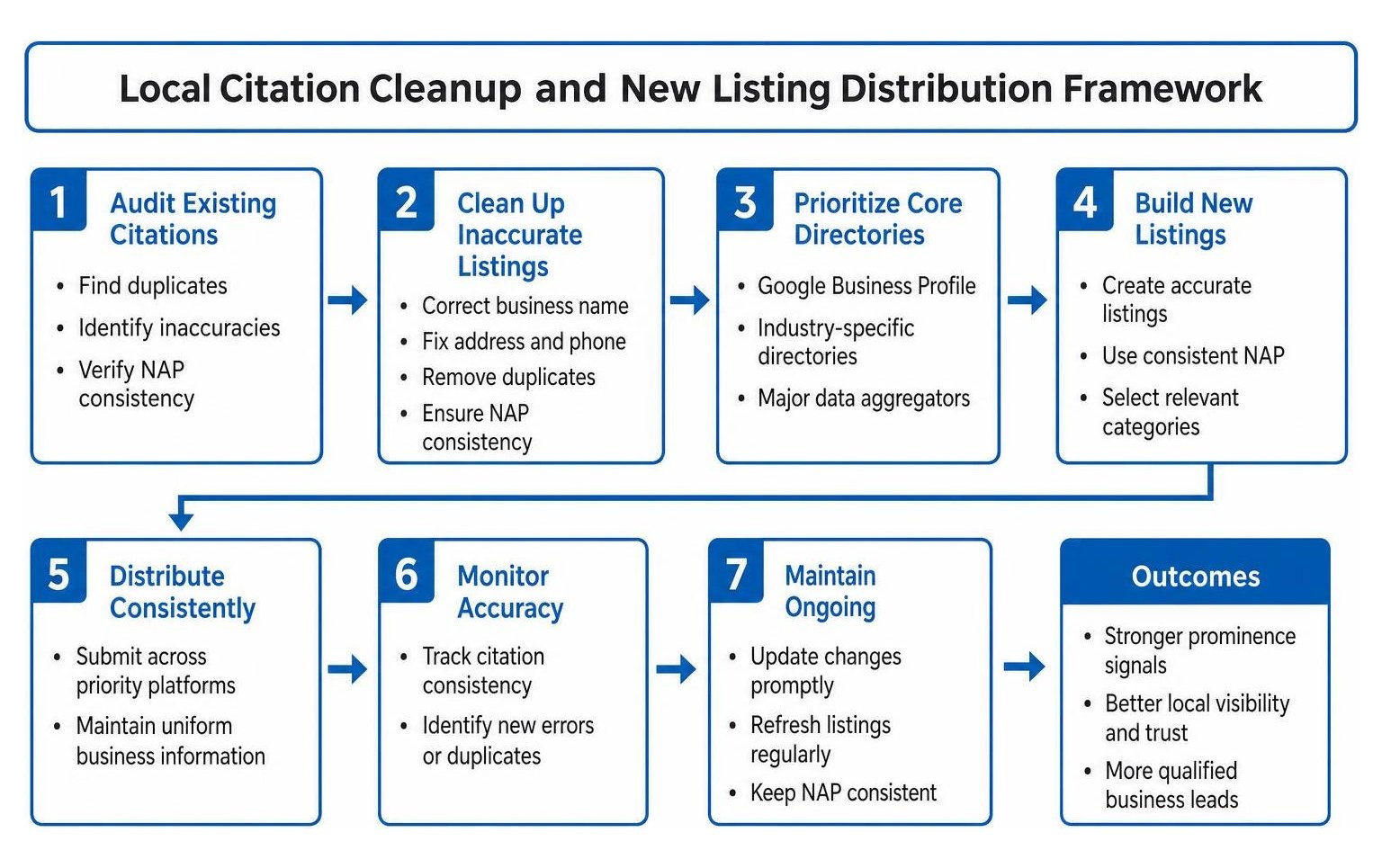
Directory accuracy also impacts your profile's prominence. Ensuring reliable NAP consistency across all platforms prevents algorithmic confusion. When cleaning up past records, following proven citation cleanup and new citation building strategies prevents wasted spend on duplicate or inaccurate listings.
Which Essential Website Fixes and Service Pages Deserve Your Remaining Funds?
Do not spend limited website funds on broad educational blog posts. Instead, direct your budget toward mobile performance, technical crawlability, structured data, and high-converting service pages.
- Mobile Usability & Speed: Ensure your site loads in under three seconds on mobile networks, with prominent tap-to-call buttons visible without scrolling.
- LocalBusiness Structured Data: Embed JSON-LD schema markup containing your exact legal name, address, phone number, operating hours, and geo-coordinates.
- Dedicated Service Landing Pages: Build focused 800-to-1,200-word pages for each core service offering rather than listing everything on a single generic page.
- Eliminate Thin Location Pages: Avoid generating dozens of low-quality doorway pages stuffed with city names, which waste crawl budget and fail quality evaluations.
How Should You Allocate Your Budget at Different Spending Levels?
Your spending strategy must adapt to your available capital. Reviewing data-driven marketing budget frameworks helps establish healthy spending guardrails.
- Under $500 per Month: Focus 70% on complete profile optimization, review gathering, and fixing NAP discrepancies. Spend 30% to clean up mobile website speed and correct your primary contact forms.
- $500 to $1,500 per Month: Split your budget evenly (50/50). Maintain weekly profile posts and active review responses while developing high-intent service pages and acquiring local business links.
Avoiding common local SEO mistakes ensures you see initial ranking improvements within 30 to 90 days.
How Can You Track Performance and Shift Your Budget as Your Business Matures?
Track call volumes, direct messages, and conversion forms rather than vanity impressions. Using transparent performance metrics lets you reallocate funds toward the highest-performing search assets over time.

Measure profile interactions inside GBP Insights (calls, website clicks, direction requests) alongside Google Analytics 4 conversion events. Utilizing automated geo-grid rank tracking provides visual heatmaps showing your local pack coverage across specific neighborhoods.
When profile listings solidify top-three rankings across your market, shift budget toward competitive service keywords on your website. At SmallBizSEO, our data-driven "Velocity" framework delivers fast rankings and E-E-A-T-compliant growth through transparent, automated reporting. When your business is ready for comprehensive management, explore our dedicated local SEO solutions to scale your visibility across both map results and organic search.
How Can You Measure Channel Synergy and Know When to Reallocate Spend?
Channel synergy occurs when profile visibility and website depth support each other. An active profile drives qualified visitors to your website, while authoritative website content reinforces your profile's topical relevance for competitive search terms.
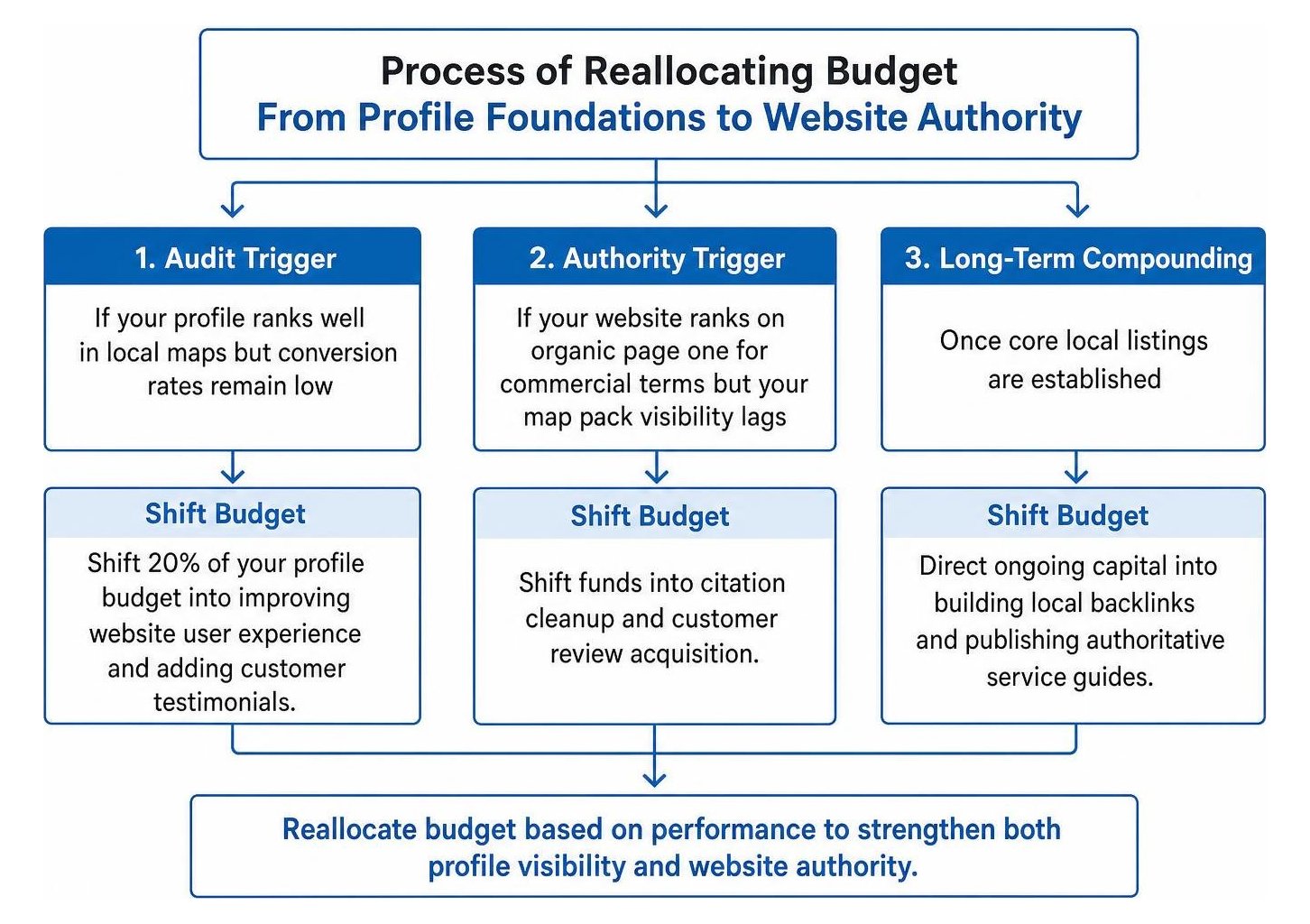
- Audit Trigger: If your profile ranks well in local maps but conversion rates remain low, shift 20% of your profile budget into improving website user experience and adding customer testimonials.
- Authority Trigger: If your website ranks on organic page one for commercial terms but your map pack visibility lags, shift funds into citation cleanup and customer review acquisition.
- Long-Term Compounding: Once core local listings are established, direct ongoing capital into building local backlinks and publishing authoritative service guides.
Balancing Your Local Search Investment for Long-Term Growth
Balancing a modest local search marketing budget does not require guesswork. By deploying a flexible 60/40 budget model, you capture ready-to-buy customers through your Google Business Profile while constructing a solid website foundation that supports long-term organic authority.
Regularly examine your lead volume, review response rates, and cost per acquisition to determine where your next marketing dollar does the most work. Focus on resolving your primary visibility bottlenecks first, keep your digital business details accurate across the web, and let actual conversion data steer your local SEO strategy toward steady growth.