A Practical Guide to Local Search Optimization
What Is Local SEO, and Why Does It Matter?
Local SEO helps your business show up when nearby customers search for what you offer. Unlike broader organic SEO, it focuses on results shaped by a searcher's location, including Google Maps and the local map pack. It matters because a customer looking for a service nearby may be ready to call, visit, or book.
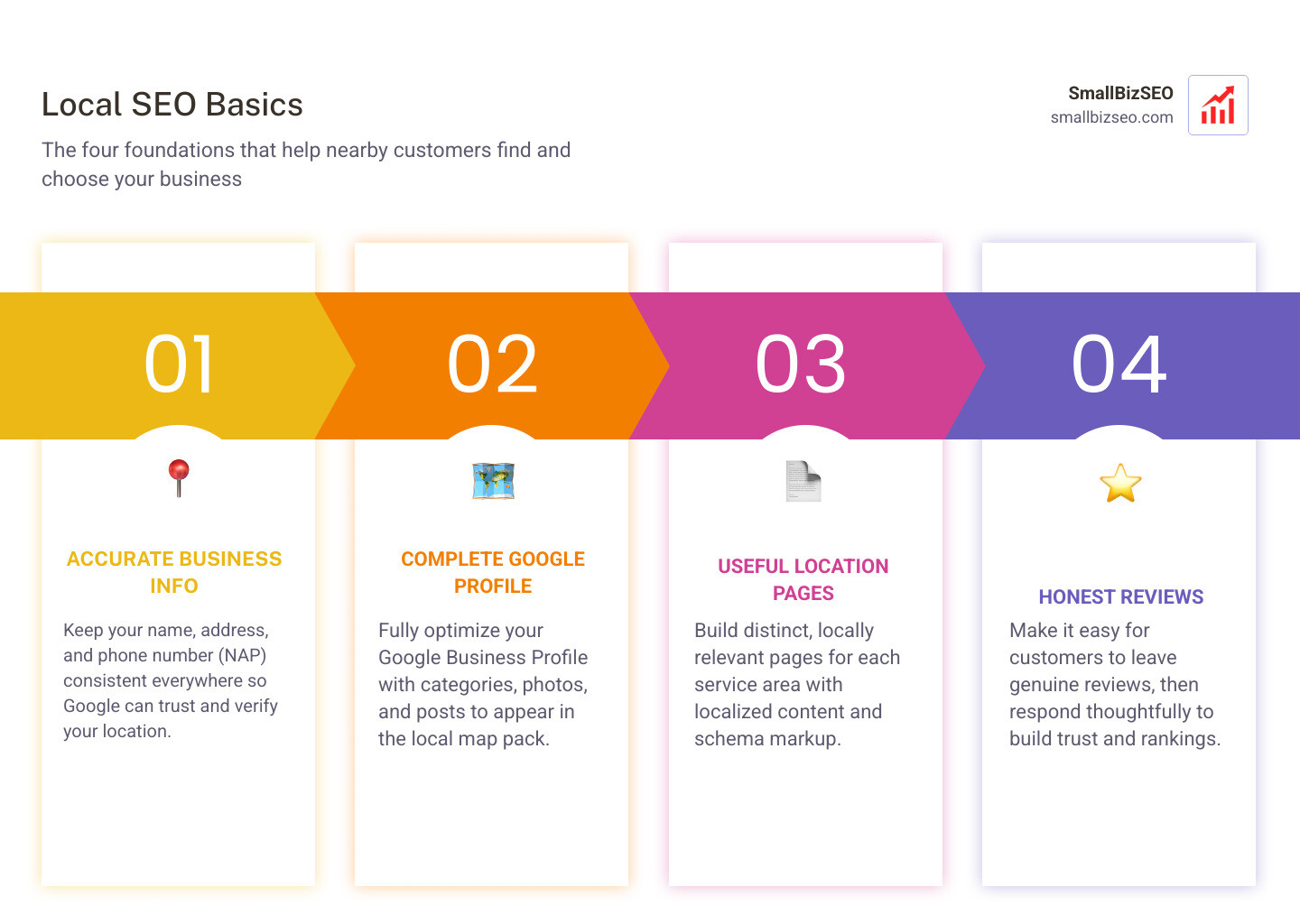
Start with accurate business information, a complete Google Business Profile, useful location pages, and a simple way to request honest reviews. This guide explains how those pieces work together and how to tell whether they bring in customers, not just clicks.
I'm Clayton Johnson, founder of SmallBizSEO. My work in local SEO connects website content, technical SEO, and authority building to help small businesses attract qualified leads.
What Is Local SEO, and How Does It Differ from Organic Search?
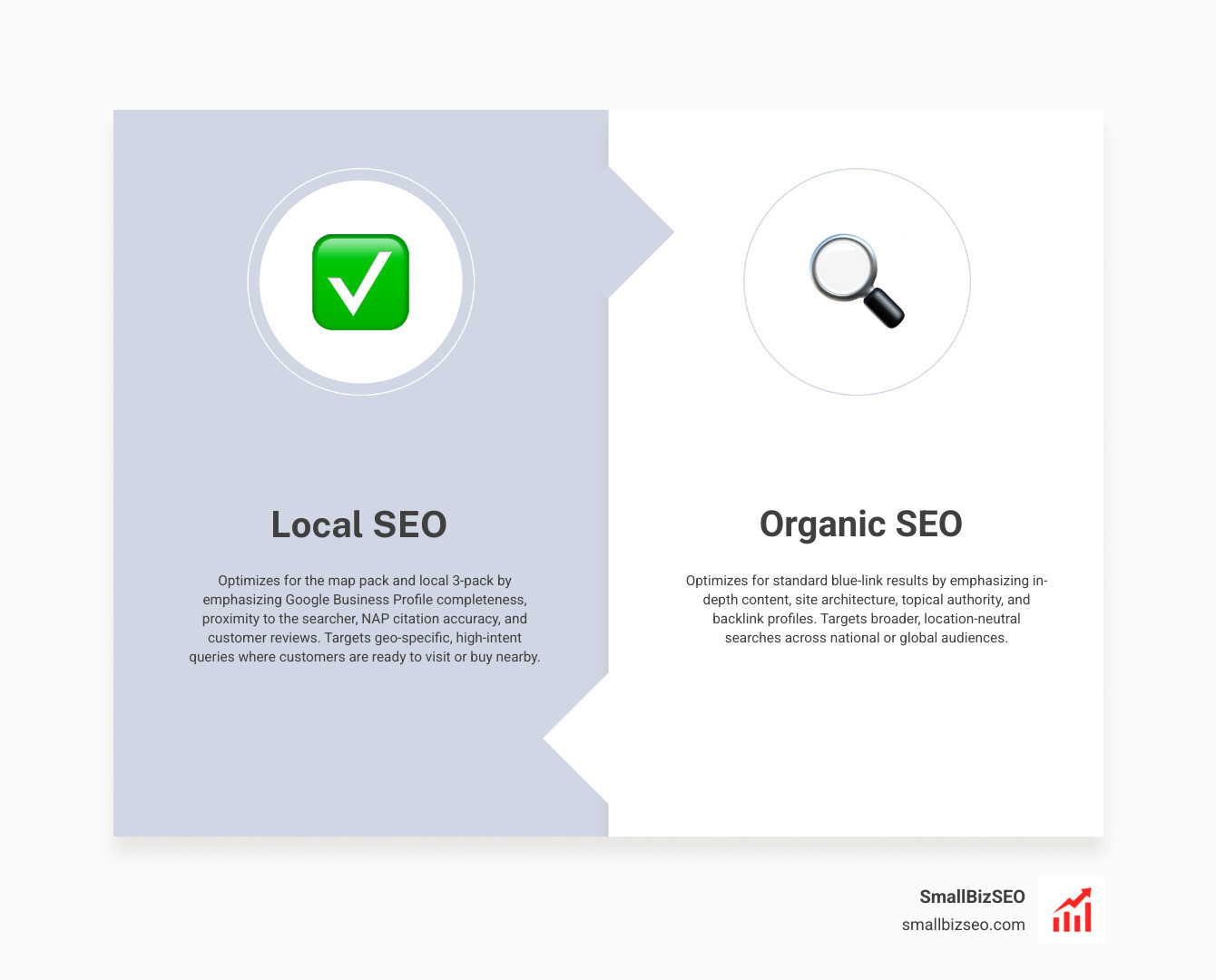
Local SEO targets geographic queries to connect businesses with nearby searchers, while traditional organic SEO focuses on non-geographic, topical searches. When someone searches with high commercial intent, search engines deliver localized results like the map pack alongside traditional web listings.
Local searches represent immediate consumer intent. In fact, 30% of all mobile searches are related to location, and 78% of people who search for something nearby on their phones visit the business within a day. Even better, 28% of those searches result in a direct purchase. If you search for pizza delivery while sitting in your office, Google will not show you great parlors across the country—it surfaces places ready to deliver hot slices right to your desk.
While traditional SEO relies heavily on domain authority and nationwide backlink profiles, local visibility relies on location signals, citation accuracy, and proximity.
| Ranking Signal | Local SEO Focus | Traditional Organic SEO Focus |
|---|---|---|
| Primary Goal | Local 3-Pack and map rankings | Nationwide or global standard blue links |
| Top Ranking Factors | Profile completeness, proximity, reviews | In-depth content, site architecture, backlinks |
| Location Factor | Physical distance to the searcher | Location-neutral (topical authority) |
| Key Asset | Google Business Profile (GBP) | Website technical structure and blog pillars |
| Citation Needs | Exact Name, Address, Phone (NAP) matches | Standard brand mentions and anchor links |
How Does Google Rank Businesses for Local Search Queries?
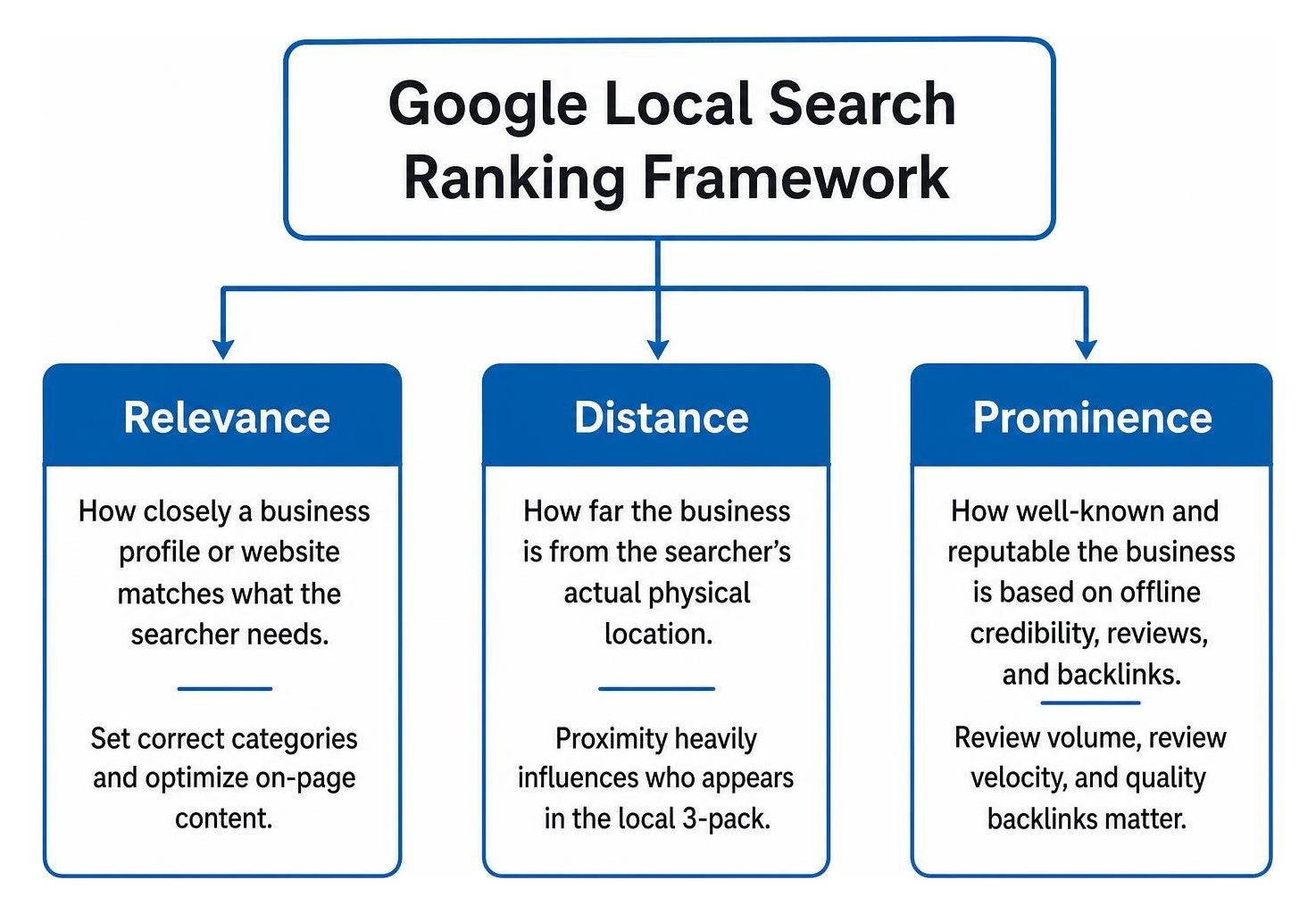
Google ranks local businesses using three core pillars: relevance, distance, and prominence. Understanding how these three elements interact is the key to mastering foundational local SEO basics.
- Relevance: How closely a business profile or website matches what the searcher needs. Setting correct categories and optimizing on-page content directly improves relevance.
- Distance: How far the business is from the searcher's actual physical location. Proximity heavily influences who appears in the local 3-pack.
- Prominence: How well-known and reputable the business is based on offline credibility, review volume, review velocity, and quality backlinks.
Historic search algorithm updates such as Possum and Hawk refined how search engines handle address filtering, preventing duplicate listings from cluttering results while ensuring organic signals support local placements. Learning what is local SEO and how to rank in local search results gives your team the blueprint needed to compete across all three ranking pillars.
How Can You Build an Effective Local Search Strategy Step by Step?
An effective local strategy begins with finding the exact terms customers use in your target areas, auditing your digital footprint, and executing technical fixes.
We recommend starting with thorough keyword research that incorporates regional terms and specific services. Identify whether buyers search using explicit geo-modifiers or implicit "near me" phrasing. From there, audit your direct competitors in the local pack to see what categories, page structures, and review volumes they maintain. Following a complete local SEO checklist ensures your foundational site architecture and on-page elements are completely configured before building external signals.
How Do You Optimize Your Google Business Profile and Citations for Local SEO?
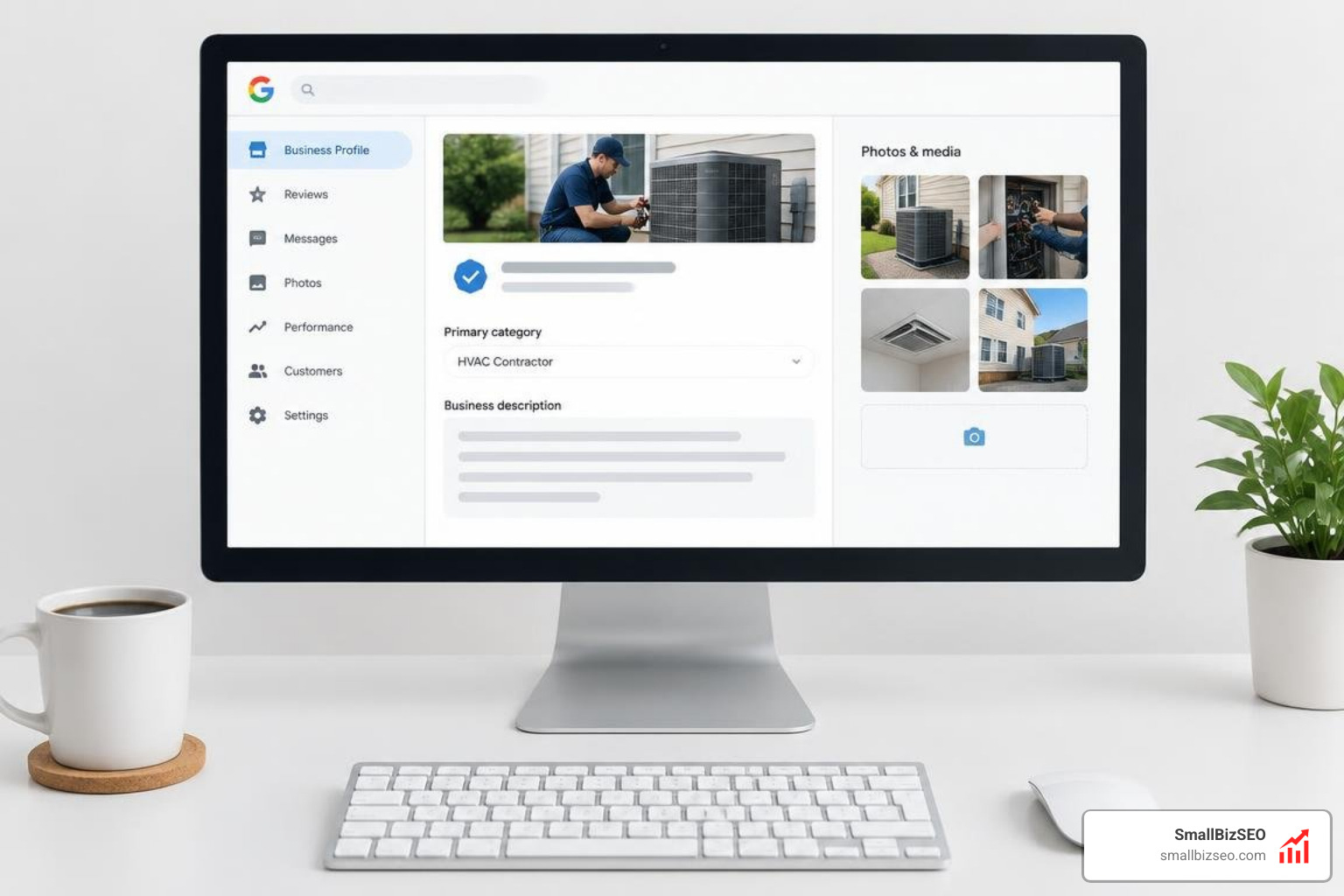
Optimizing your Google Business Profile requires claiming your listing, selecting precise primary categories, writing a clear business description, and uploading real photos regularly.
Customers are 70% more likely to visit and 50% more likely to consider buying from businesses that maintain a complete profile. In fact, 36% of SEO professionals identify a well-maintained profile as the single most critical ranking factor for winning the map pack. Follow our comprehensive resource on a practical guide to local SEO map visibility to maximize listing performance.
To keep your profile active and reliable:
- Verify ownership through official Google verification methods.
- Select the most accurate primary category (such as "HVAC Contractor" rather than a broad term) and layer relevant secondary categories.
- Write a compelling description focusing on your main services within the first 250 characters.
- Upload clear, authentic photos of your team, work, and facility on a weekly schedule.
- Publish weekly updates and offers using Google Posts to maintain activity.
Consistency across Name, Address, and Phone number (NAP) data on major data aggregators and business directories builds essential search engine trust.
- Match your official business name character for character across all web directories.
- Avoid formatting discrepancies in suite numbers, abbreviations, or street extensions.
- Use a single, direct local phone number rather than switching between call-tracking lines across citation platforms.
- Audit directories quarterly to eliminate outdated phone numbers or old business locations.
How Should You Structure Location Pages and On-Page Content for Local SEO?
Structure your location pages by providing distinct, locally focused service details, authentic testimonials, clear contact information, and LocalBusiness schema markup.
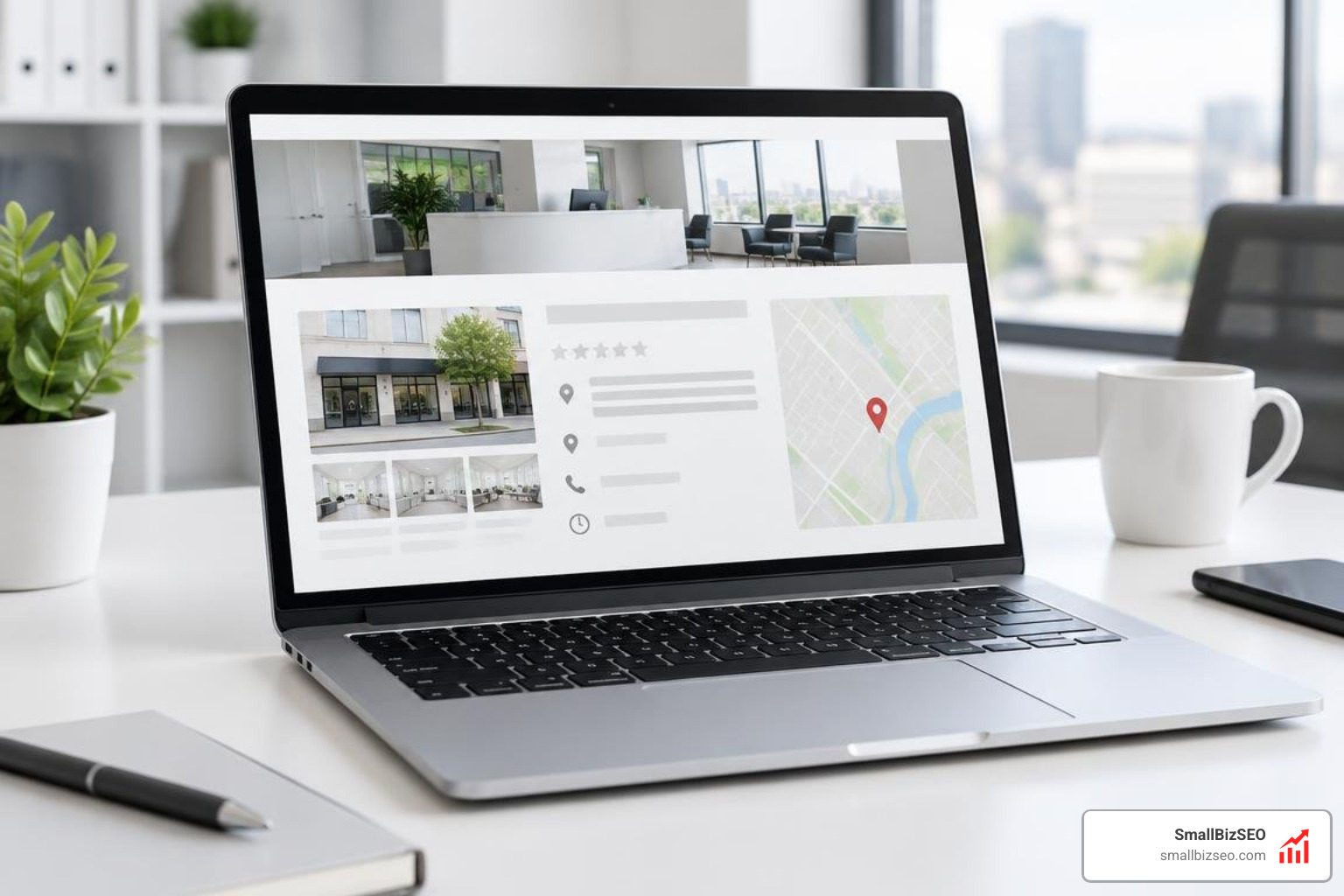
Avoid duplicating identical text across multiple landing pages. A solid rule of thumb is to ensure at least 60% of each geotargeted page contains entirely unique content. Include specific project highlights, staff introductions, unique neighborhood FAQs, and embedded maps.
Optimize your title tags by placing the primary service and region near the beginning (under 60 characters), write action-oriented meta descriptions, and implement clean LocalBusiness structured data so search engines can read your address, operating hours, and offerings effortlessly.
How Can You Earn Customer Reviews and Local Authority Backlinks?
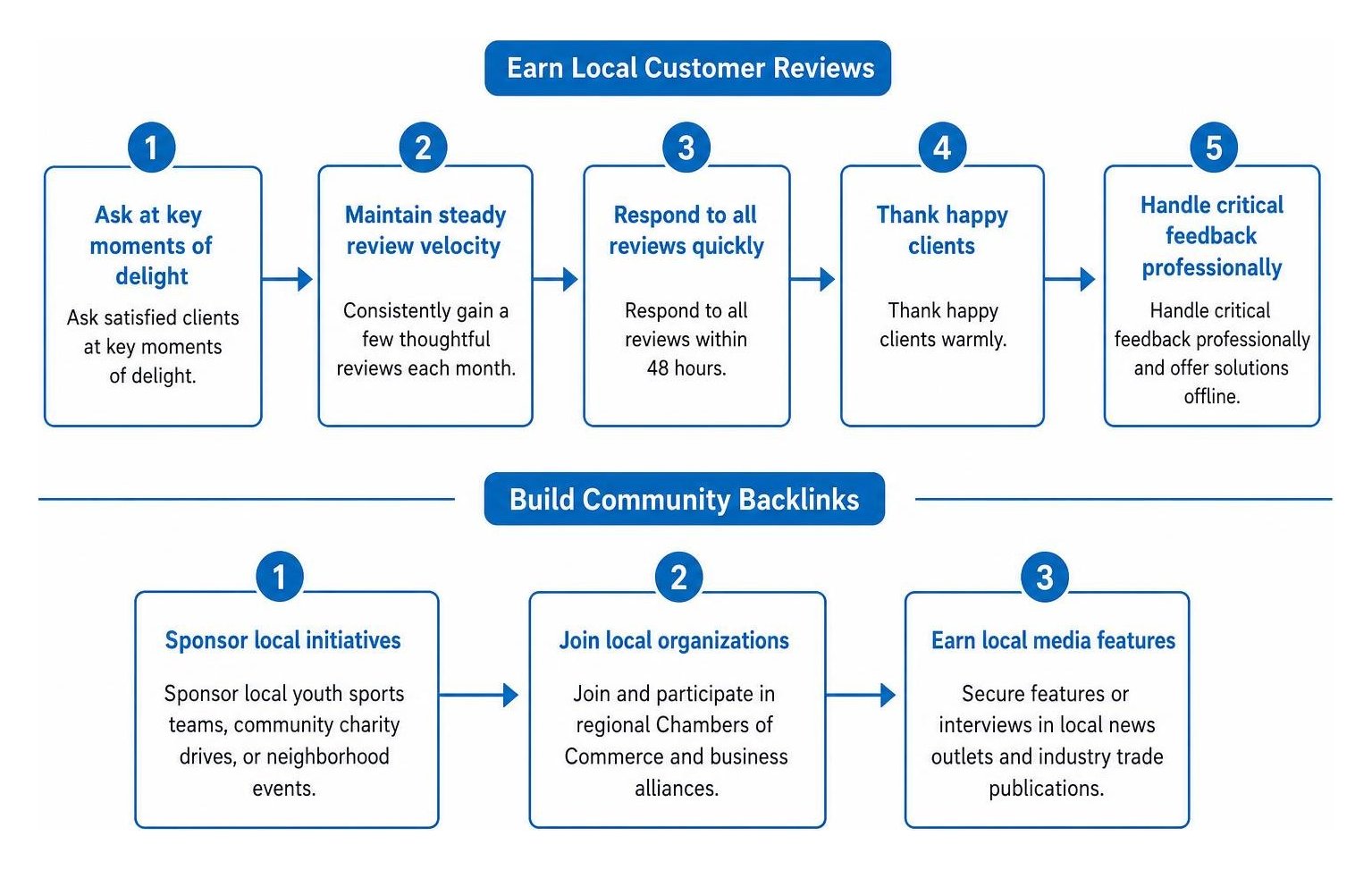
Earn authentic reviews by asking satisfied clients at key moments of delight, and build local backlinks by partnering with neighborhood organizations and industry associations.
Reviews account for 17% of map pack ranking weight among search professionals. Maintain a steady review velocity—consistently gaining a few thoughtful reviews each month signals trust far better than a single burst followed by months of silence. Always respond to all reviews within 48 hours. Thank happy clients warmly, and handle critical feedback professionally by offering direct solutions offline.
For links, 31% of SEOs view backlink signals as the top driver for traditional organic rankings associated with local queries. Earn authoritative local backlinks by:
- Sponsoring local youth sports teams, community charity drives, or neighborhood events.
- Joining and participating in regional Chambers of Commerce and business alliances.
- Securing features or interviews in local news outlets and industry trade publications.
How Do You Measure Local SEO Performance and Scale to More Locations?
Measure local performance by tracking map pack rankings, profile phone calls, direction requests, and organic conversions using dedicated analytics tools.
Platforms like BrightLocal, which brings over 16 years of local search experience, and Google Search Console provide essential visibility into keyword movement and user behavior. Always append UTM tracking parameters to your profile website links to measure exact conversions in your analytics reporting.
Local campaigns typically produce measurable ranking movement within 30 to 90 days. When expanding across several areas, avoid common local SEO mistakes killing visibility, such as creating duplicate listings or sharing one generic landing page. Instead, follow our guide to managing multi-unit local search visibility to maintain distinct profiles and localized pages for each branch.
Our team at SmallBizSEO implements a proprietary, data-driven "Velocity" framework designed to accelerate your local presence with E-E-A-T compliance and automated reporting. Explore our tailored local SEO services to turn searchers into long-term customers.
How Are AI Search and Map Pack Visibility Transforming Discovery?
AI search platforms and conversational interfaces now surface direct recommendations by synthesizing structured data, business profiles, and customer sentiment.
Large-scale research from SOCi's Local Visibility Index—which analyzed approximately 350,000 locations across 2,751 multi-location brands—demonstrates that businesses with consistent cross-platform citations, high review responsiveness, and rich structured data dominate AI-generated recommendations.
Generative AI models and conversational search engines rely heavily on entity trust. When your business information is clear, complete, and validated across multiple directories, AI tools naturally cite your brand when users ask for top-rated service providers. Discover actionable tactics in our walkthrough on AI tools for small business local search.
Ready to Turn Local Searches into Real Customers?
Building a dependable local search presence is not about chasing temporary shortcuts. It is about establishing lasting trust with search engines and your community through accurate information, prompt customer engagement, and high-quality web content.
Take the first step today: audit your Google Business Profile, correct any inconsistent citations, and ask your latest happy customer for a review. When you consistently deliver great experiences offline and communicate them clearly online, sustainable growth follows naturally.