The Multi-Unit Business Guide to Winning Local Search in Every Zip Code
How Can Multi-Unit Businesses Win Local Search?
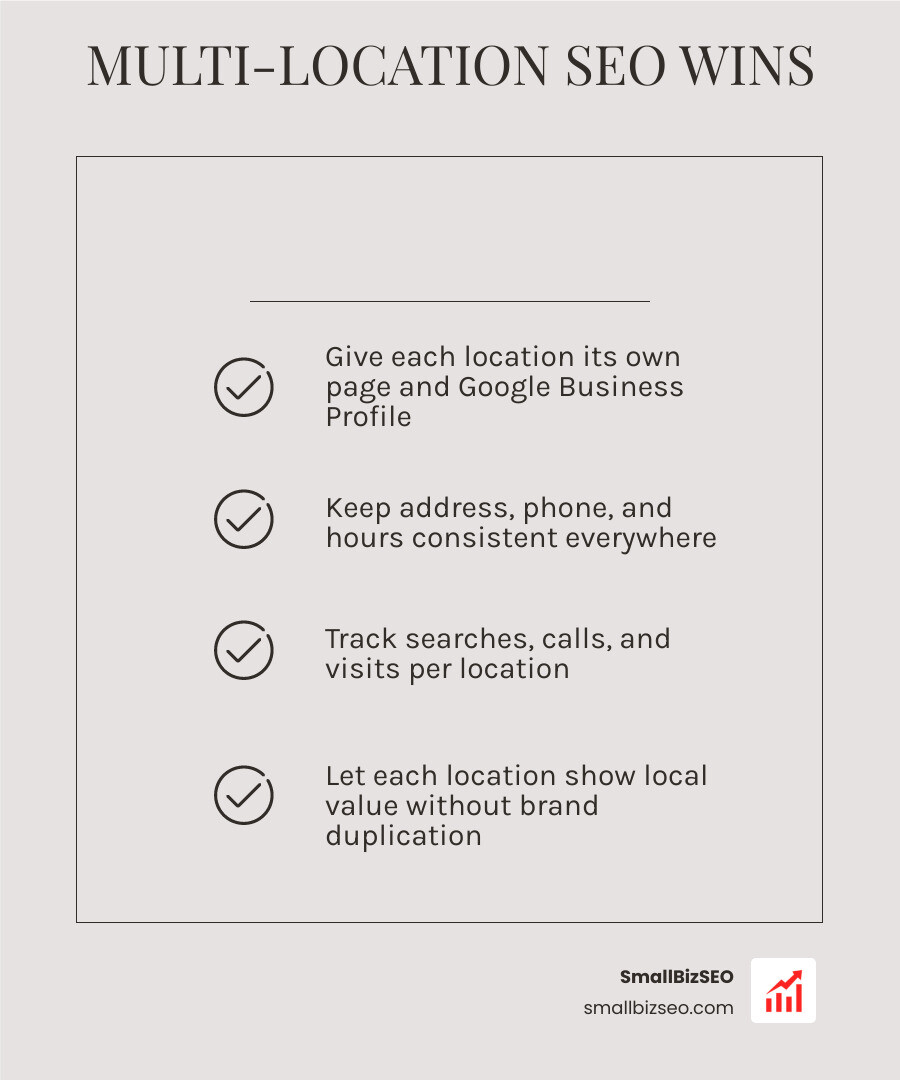
To manage SEO for multiple locations, give each real location its own useful page and Google Business Profile. Keep its address, phone number, and hours accurate wherever customers find them. Then track searches, calls, and visits by location so you can see which stores need attention.
The challenge is doing that work without making every page sound the same or letting outdated details spread across listings. A shared process keeps the brand consistent while giving each location room to show what makes it useful to nearby customers.
I'm Clayton Johnson, founder of SmallBizSEO. My work in SEO, content, and building search authority shapes my approach to SEO for multiple locations: make each location easy to find, understand, and choose.
Simple guide to SEO for multiple locations terms:
- LSI keywords for SEO
- roofing company SEO
- SEO business
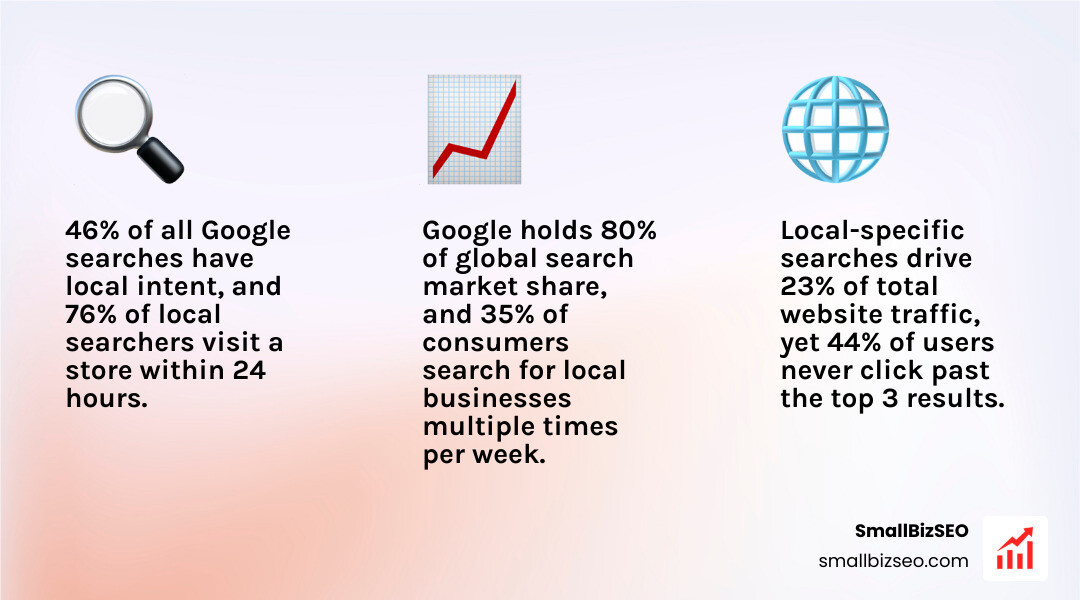
Local discovery drives modern consumer buying decisions. Search research reveals that 46 percent of searches are made with local intent, and 76 percent of searches for a local business result in an in-store visit within 24 hours. Furthermore, 96 percent of consumers use the internet to learn about local businesses, and 35 percent of consumers search for local businesses multiple times per week.
When buyers search for immediate answers, they rarely browse beyond the initial listings. Local-specific searches account for nearly 23 percent of all website traffic, yet 44 percent of users do not make it past the top three search results, and only 9 percent of Google users scroll to the bottom of the first page. With Google securing nearly 80 percent of search engine usage worldwide, multi-unit brands must establish local prominence across every target neighborhood without fracturing their core domain strength.
What Technical SEO Blueprint Helps Multi-Unit Businesses Rank Across Locations?
To rank across multiple markets, build a centralized website architecture that pairs each physical storefront with an individualized, content-rich landing page linked via a clear site hierarchy.
Search engines evaluate geographic relevance by clustering location-specific signals into distinct business entities. When multi-unit brands centralize their digital footprint on a single authority domain, every regional branch gains crawl equity and ranking momentum from the parent brand.
Should You Use One Domain or Separate Websites for Multiple Locations?
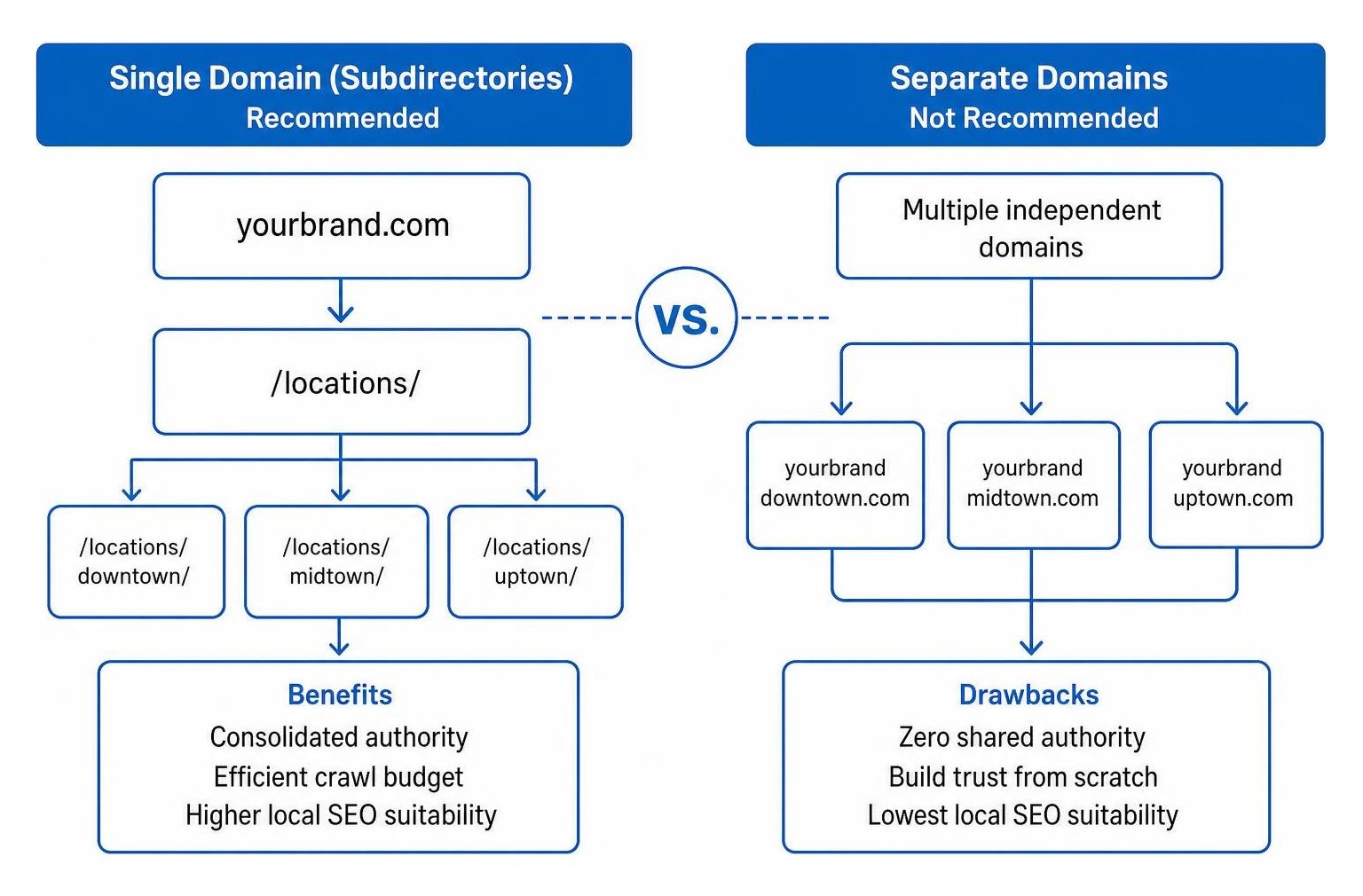
Keep all storefronts on a single primary domain using subdirectories rather than launching separate websites or subdomains.
A single domain structure (such as yourbrand.com/locations/city-name/) consolidates backlink equity, streamlines site crawl budgets, and simplifies brand maintenance. Subdomains split authority across fragmented web properties, while independent domains force you to build search trust from scratch for every new store.
| Architecture Option | URL Example | Domain Authority Impact | Maintenance Complexity | Local SEO Suitability |
|---|---|---|---|---|
| Subdirectories (Recommended) | yourbrand.com/locations/downtown/ | Consolidated across all locations | Low and centralized | Highest |
| Subdomains | downtown.yourbrand.com | Fragmented across subdomains | Moderate | Moderate |
| Separate Domains | yourbranddowntown.com | Zero shared authority | High per market | Lowest |
Consolidating your architecture under one primary domain allows you to deploy a unified enterprise local SEO strategy that scales seamlessly across hundreds of branches.
How Can You Build Unique Landing Pages for Each Location?
Prevent duplicate content penalties by ensuring at least 50 percent of each landing page features unique, locally sourced information, team details, and community relevance.
Search engines penalize thin "doorway pages" that simply swap city names on identical templates. High-performing multi-unit pages include:
- Real exterior and interior photography of the specific branch
- Named local managers and staff bios
- Local customer testimonials and case studies
- Specific services tailored to local regional needs
- Driving directions referencing recognizable community landmarks
- Localized FAQs addressing neighborhood-specific questions
Reviewing the ultimate guide to local search optimization basics will help you structure on-page geo-signals that satisfy both users and search crawlers.
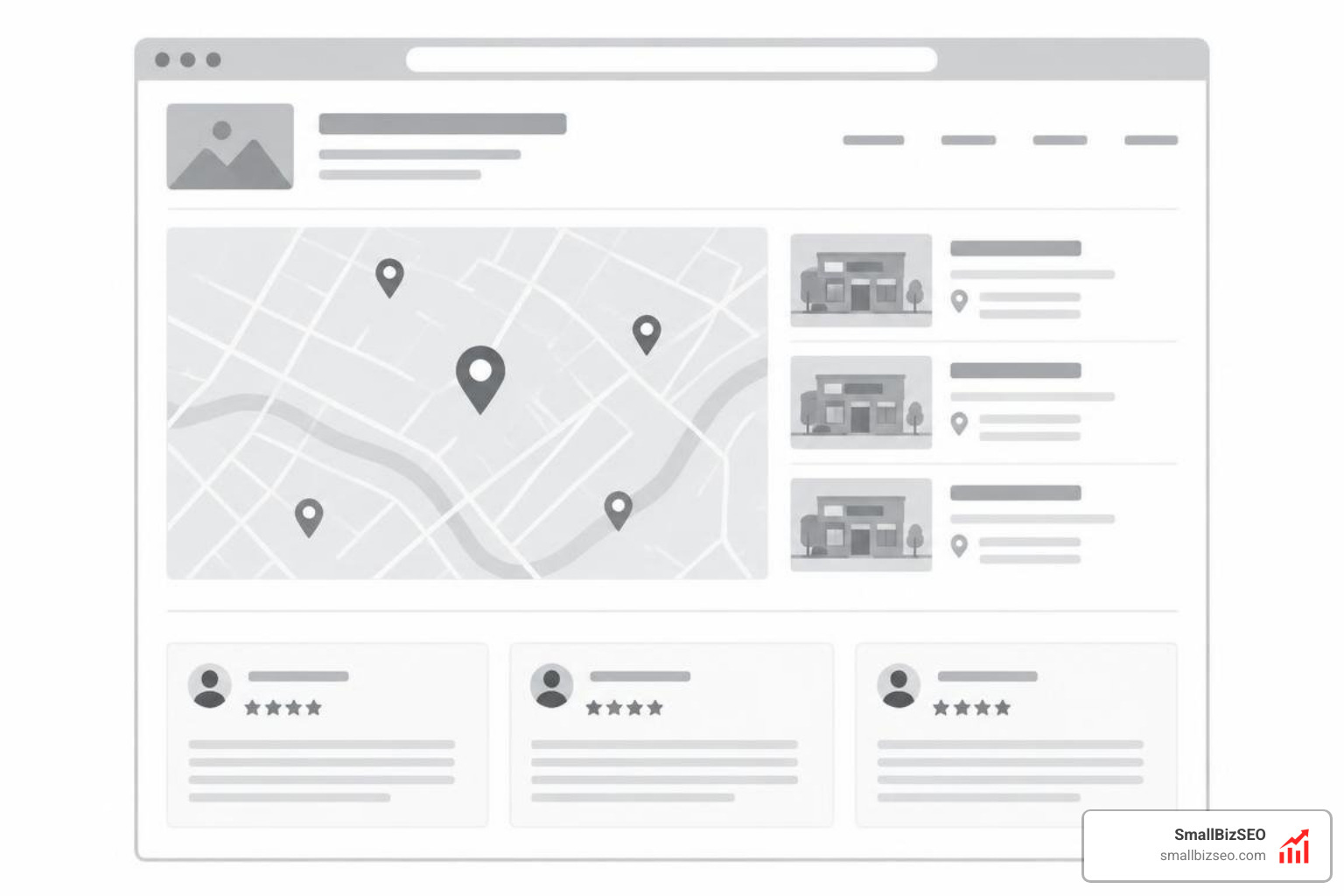
How Should You Connect Location Pages and Add LocalBusiness Schema Markup?
Connect your site using a hub-and-spoke internal linking architecture, and embed clean LocalBusiness JSON-LD structured data on every regional landing page.
A central "Locations Directory" hub page should link out to all individual branch pages, which link back to the hub and laterally to neighboring units. Service pages should also feature dynamic tables pointing directly to regional service landing pages.
Pair this structure with comprehensive LocalBusiness schema on every page. Use required structured data properties including name, address, telephone (NAP), operating hours, geo-coordinates, and a sameAs property linking directly to that specific verified listing. Review our in-depth guide to improving local SEO tactics and consult The Complete Guide To Local SEO For Multiple Locations for deep architectural frameworks.
How Can You Manage Listings, Reputation, and Analytics Across Locations?
Maintain an unshakeable single source of truth for your business data, automate listings across major citation networks, and track search visibility separately for each store.
Multi-unit brand management fails when listing updates happen in silos. A centralized operations system ensures that branch expansions, relocations, or seasonal hour changes propagate accurately across the entire web.
How Can You Manage Google Business Profiles and Citations at Scale?
Group all verified locations within a single master business account, standardizing primary categories while verifying name, address, and phone consistency across all major citation directories.
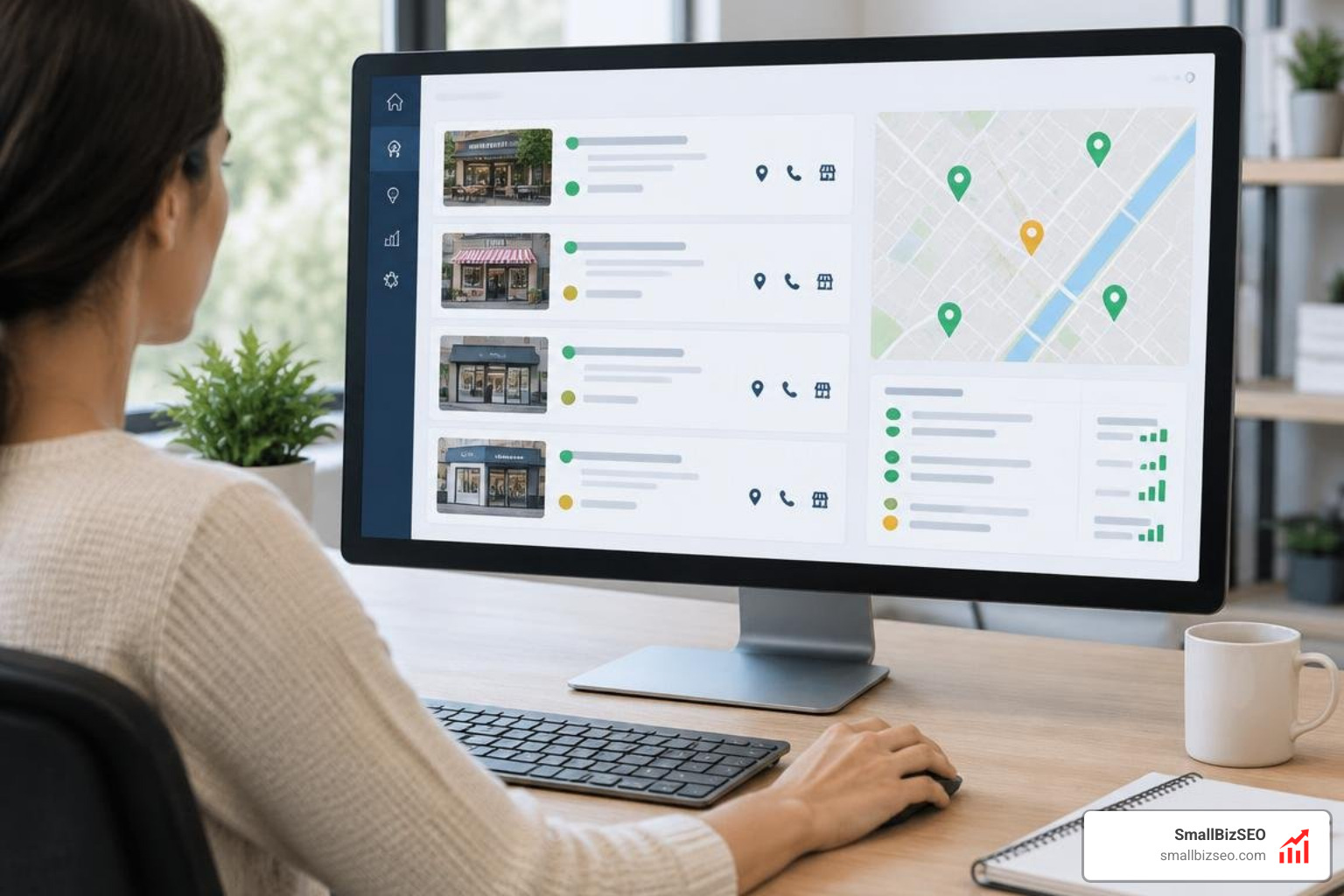
For organizations managing ten or more locations, Google offers bulk verification to streamline profile deployment. Core rules for managing scale include:
- Primary Category Uniformity: Keep primary business categories identical across identical branches to establish brand entity consistency.
- Master NAP Repository: Maintain a central spreadsheet or listing software sync to push identical formatting to major directories like Apple Maps, Bing Places, and industry-specific aggregators.
- Address Distinctions: For physical stores, display the verified street address. For service-area branches without physical customer reception, hide the street address and configure specific zip codes or service areas.
- Duplicate Cleansing: Regularly audit maps to flag and merge unauthorized user-generated duplicate listings.
Applying proven principles from a practical guide to local SEO map visibility ensures your listings remain protected against algorithmic filtering and duplicate profile conflicts.
How Are AI Search Overviews Changing Local SEO for Multiple Locations?
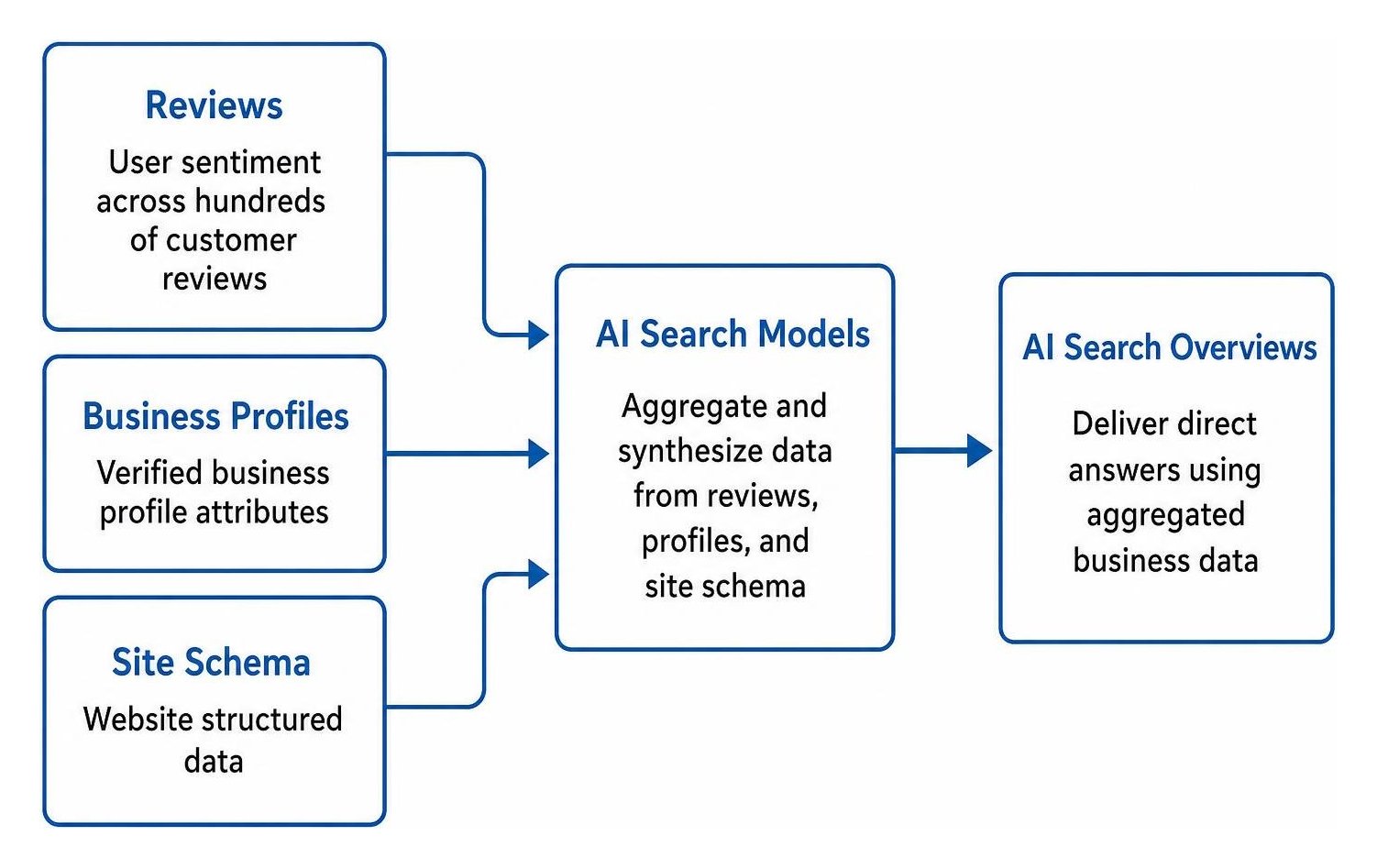
AI-driven search engines evaluate entire entity ecosystems, pulling direct answers from website structured data, review sentiment, and verified business profile attributes.
Modern search engines synthesize user sentiment across hundreds of customer reviews to answer natural language questions (such as "Which location has wheelchair access and quick service?"). This shift makes dynamic content and reputation health primary factors for AI answer engine inclusion.
Discover how automated search indexing evolves by exploring a practical guide to how AI helps with local SEO for small businesses alongside video analysis on Local SEO for Multiple Locations.
How Can You Track Storefronts, Generate Reviews, and Choose Next Steps?
Track search metrics individually by measuring Google Business Profile customer actions, local keyword map rankings, and organic landing page conversions for each separate storefront.
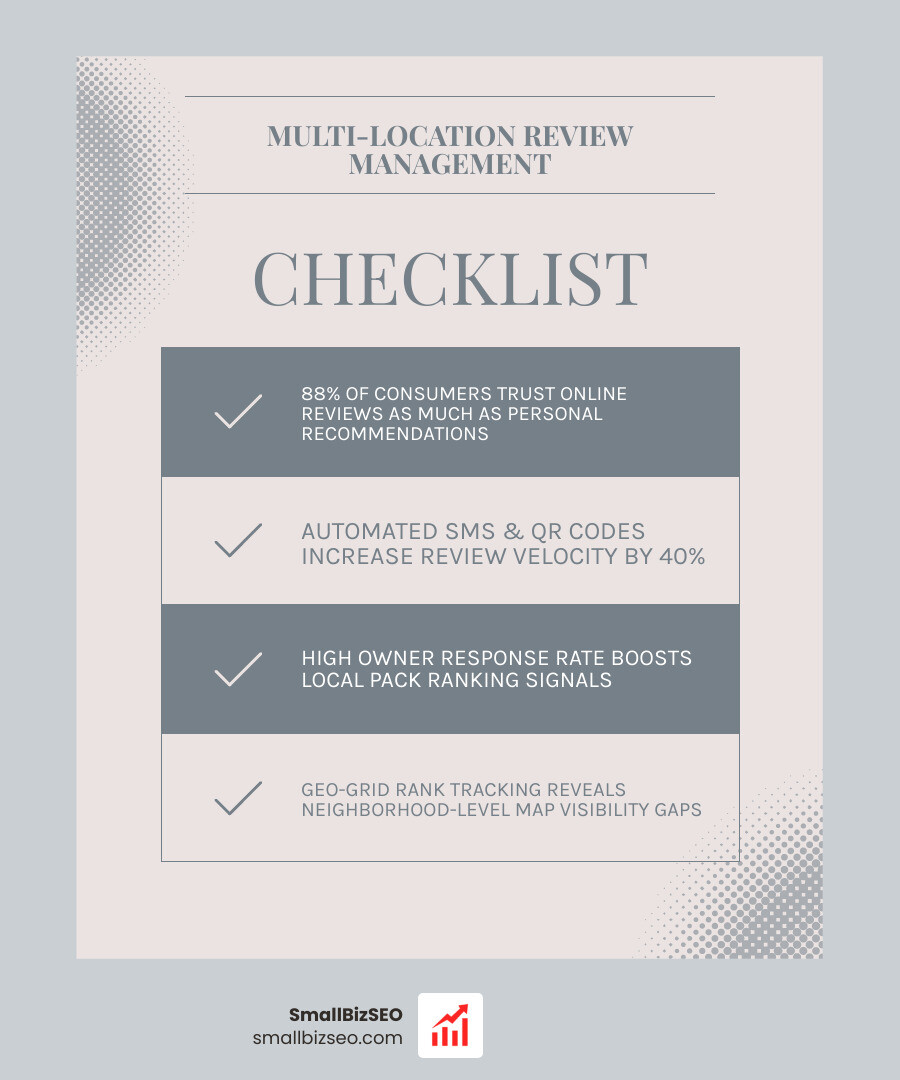
Because 88 percent of consumers trust online reviews just as much as personal recommendations, maintaining an active review acquisition process is essential. Use automated SMS links and in-store QR codes to encourage regular customer feedback, and maintain a high response rate using localized, helpful replies.
To evaluate store performance accurately:
- Track phone calls, website clicks, and driving direction requests per listing.
- Monitor map pack visibility across neighborhood coordinate grids.
- Filter Google Search Console metrics by directory subfolders (such as yourbrand.com/locations/branch-one/).
At SmallBizSEO, we help multi-unit businesses scale their visibility using our data-driven "Velocity" framework. We provide the technical SEO, localized content strategy, and link-building systems needed to build search authority across all your operating markets.
Explore our scalable SEO services and packages to unlock local search dominance across every zip code your brand serves.