How LSI Keywords for SEO Boost Search Engine Rankings
How LSI Keywords for SEO Boost Search Engine Rankings
Understanding LSI Keywords for SEO: Truths, History, and Definitions
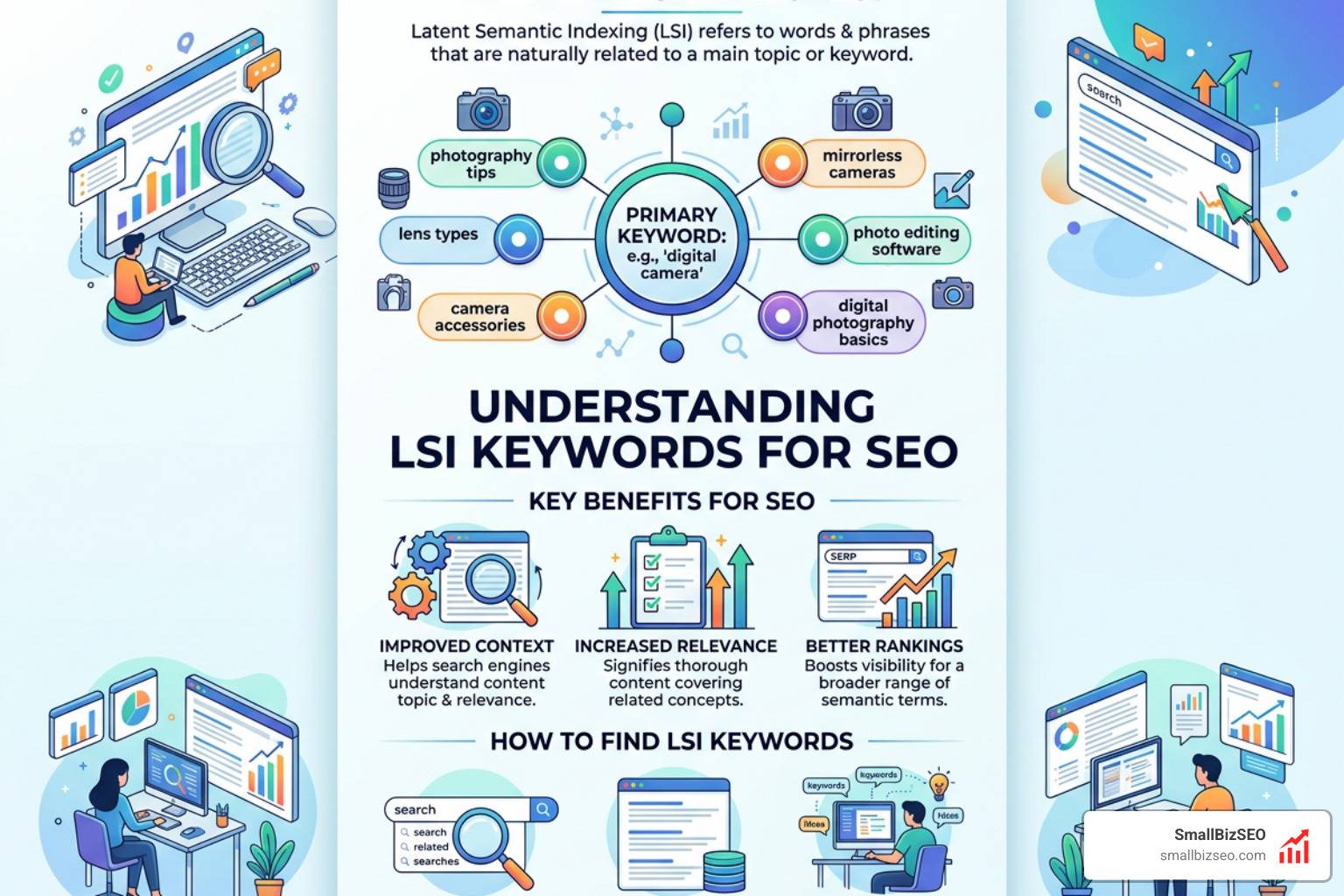
To build high-ranking content, we must understand how modern search engines evaluate human language. Long ago, content creators relied on simple keyword repetition to signal relevance. If you wanted to rank for "dog training," repeating those exact two words fifty times throughout the text was standard practice. Today, advanced search systems evaluate the broader semantic context surrounding a query rather than relying on raw keyword density.
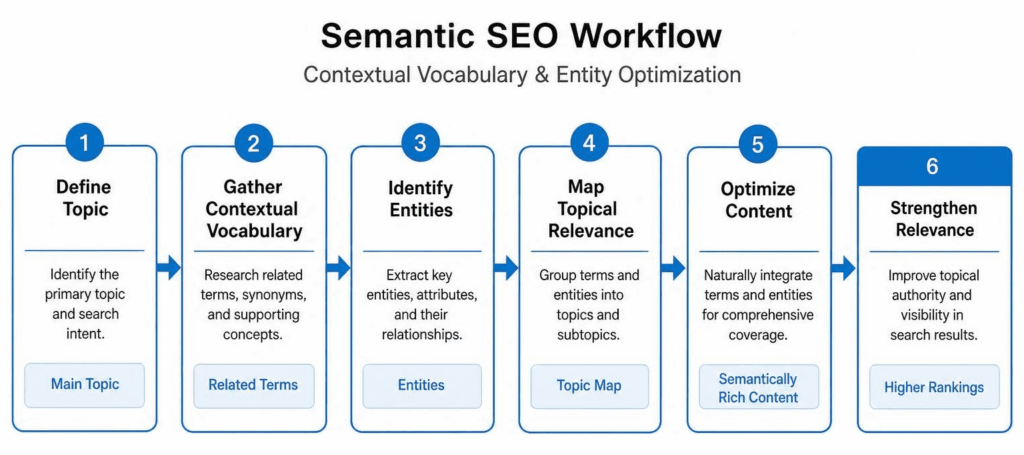
Contextual vocabulary consists of the specific supporting concepts, phrases, and terminology that naturally surround a primary topic. For example, an article about digital cameras that fails to mention relevant supporting terms like "megapixels," "lenses," "aperture," "sensor size," or "shutter speed" looks incomplete to both human readers and sophisticated search algorithms.
Origin of Latent Semantic Indexing
The term Latent Semantic Indexing (LSI) dates back to a seminal computer science research paper published by Bell Labs researchers. LSI was originally patented as an algorithmic method to solve a classic vocabulary problem in human-computer interaction: people frequently use different words to describe the exact same concept (synonymy), and single words often have multiple distinct meanings depending on context (polysemy).
Classical LSI solves this challenge by applying a complex mathematical operation called Singular Value Decomposition (SVD) to a static term-document matrix. This mathematical framework maps relationships between words and phrases across a fixed collection of documents. While highly effective for small catalog indexing and archival retrieval, classical LSI was invented before the modern World Wide Web existed and was never designed for massive scale.
LSI vs Semantic Keywords vs Secondary Keywords
The digital marketing industry originally adopted the shorthand phrase "LSI keywords for SEO" to describe semantically related terms. However, important technical distinctions exist between secondary keywords, LSI keywords, and semantic entities:
| Category | Definition | Primary Purpose | Example for "Credit Cards" |
|---|---|---|---|
| Secondary Keywords | Close variations or long-tail search variations of the main keyword. | Captures exact search intent variations. | "Best credit cards for travel" |
| LSI Keywords (Historical) | Words that statistically co-occur in top-ranking pages across a static index. | Identifies word association patterns. | "Annual fee," "Credit score" |
| Semantic Entities | Named concepts, objects, or ideas mapped within an entity database. | Establishes domain context and topic depth. | "Interest rate," "Balance transfer" |
Understanding these clear distinctions helps marketers create far more effective content briefs. While secondary keywords target specific long-tail queries, semantic terms and named entities establish the overall thematic depth and authority of your web page.
Does Search Engines Use LSI, and Why Context Still Matters
Google representatives have explicitly stated on multiple occasions that modern search engines do not use Latent Semantic Indexing in ranking algorithms. LSI technology was engineered for small, static document databases during the early days of information retrieval. Recomputing a global LSI mathematical matrix for billions of continuously updated, dynamic web pages would be computationally impossible at scale.
However, semantically related terms and topical context remain critical for organic ranking success. To master this balance, it helps to learn How to Analyze Keywords with a clear focus on conceptual relationships rather than relying solely on simple search volume metrics.
How Search Algorithms Process Semantic Context
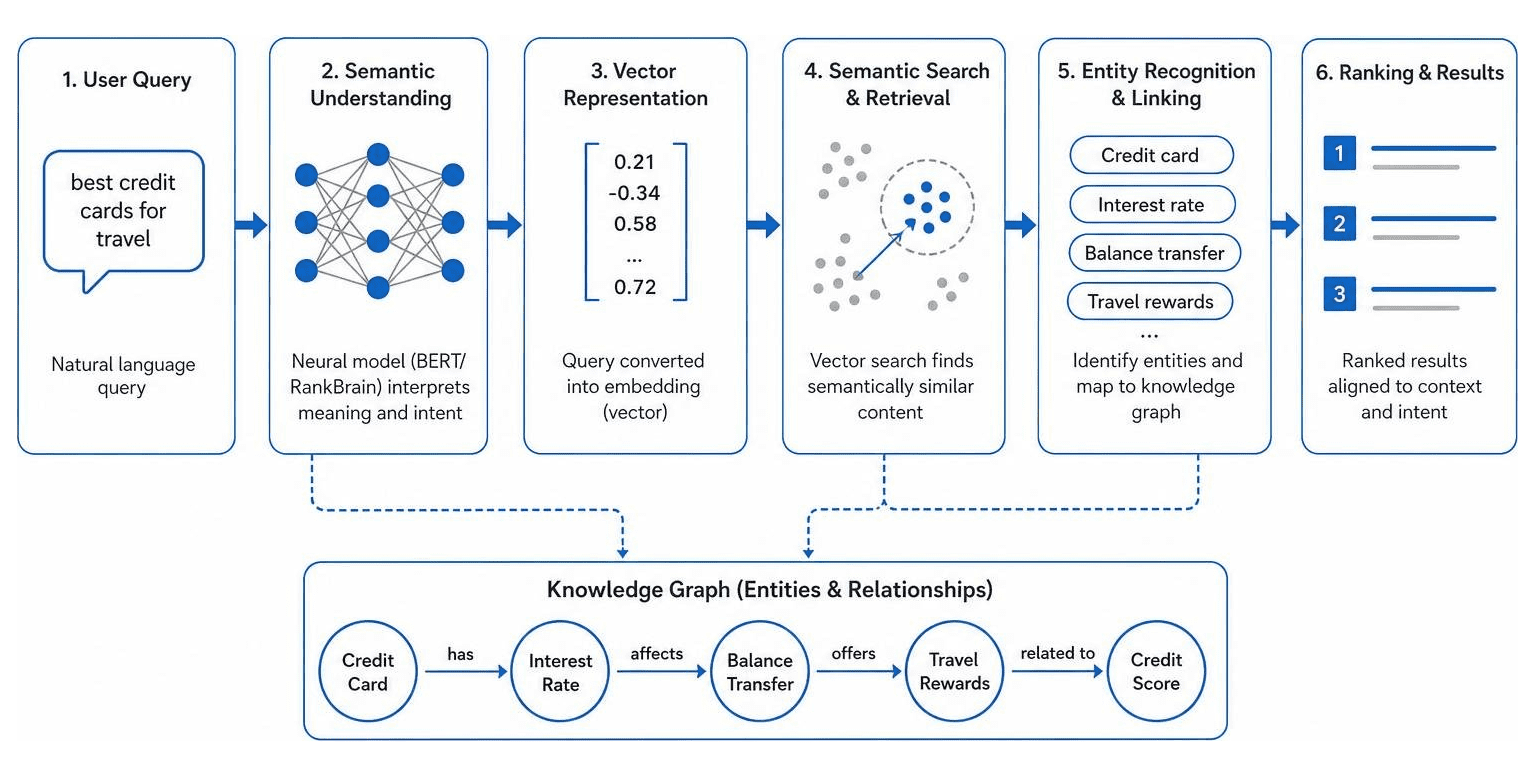
Instead of 1980s LSI technology, modern search engines rely on advanced artificial intelligence, vector embeddings, and neural network models:
- RankBrain: Uses machine learning to convert search queries and content into mathematical vectors, helping search engines understand unfamiliar or conversational queries accurately.
- BERT: A transformer-based model that analyzes the bidirectional context of a word based on all of its surrounding words, capturing natural subtleties in human search intent.
- MUM: Multitask Unified Model capable of cross-referencing information across multiple languages and formats to answer highly complex queries.
- Knowledge Graph: A vast, interconnected database of real-world entities (people, places, things, concepts) and the structural relationships between them.
Building Topical Authority and Driving Organic Growth
When search engines crawl and evaluate your content, they look for comprehensive topic coverage that resolves the user's ultimate search intent. Covering primary concepts alongside logical related subtopics builds domain authority across your entire website.
In a controlled 30-day SEO experiment, systematically optimizing existing content with semantic keywords and rich entity relationships produced dramatic performance gains across key organic metrics:
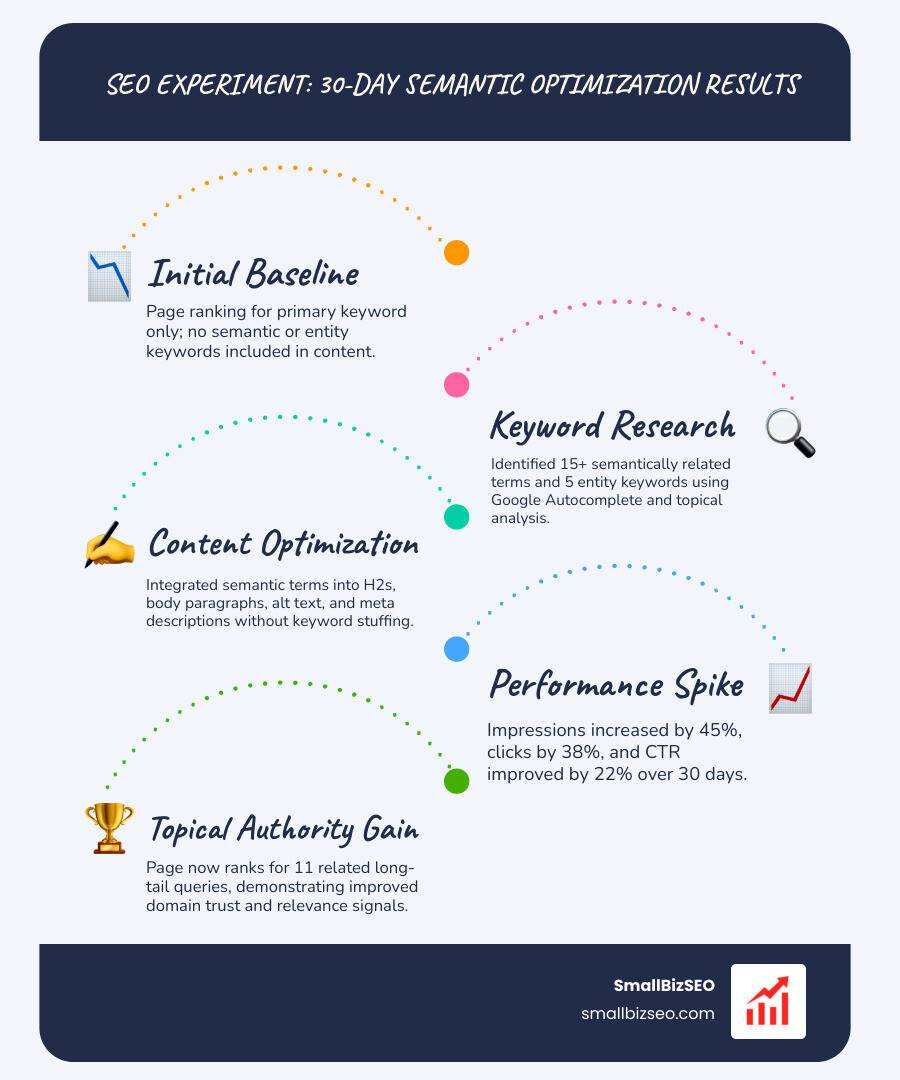
When you structure pages into comprehensive topical clusters, search algorithms reward your site with higher rankings across hundreds of long-tail search queries. For a deeper dive into structuring your content assets, read our full guide on SEO for Topical Authority The Complete Guide to Owning Your Niche.
How to Find Related Contextual Terms for Modern Content
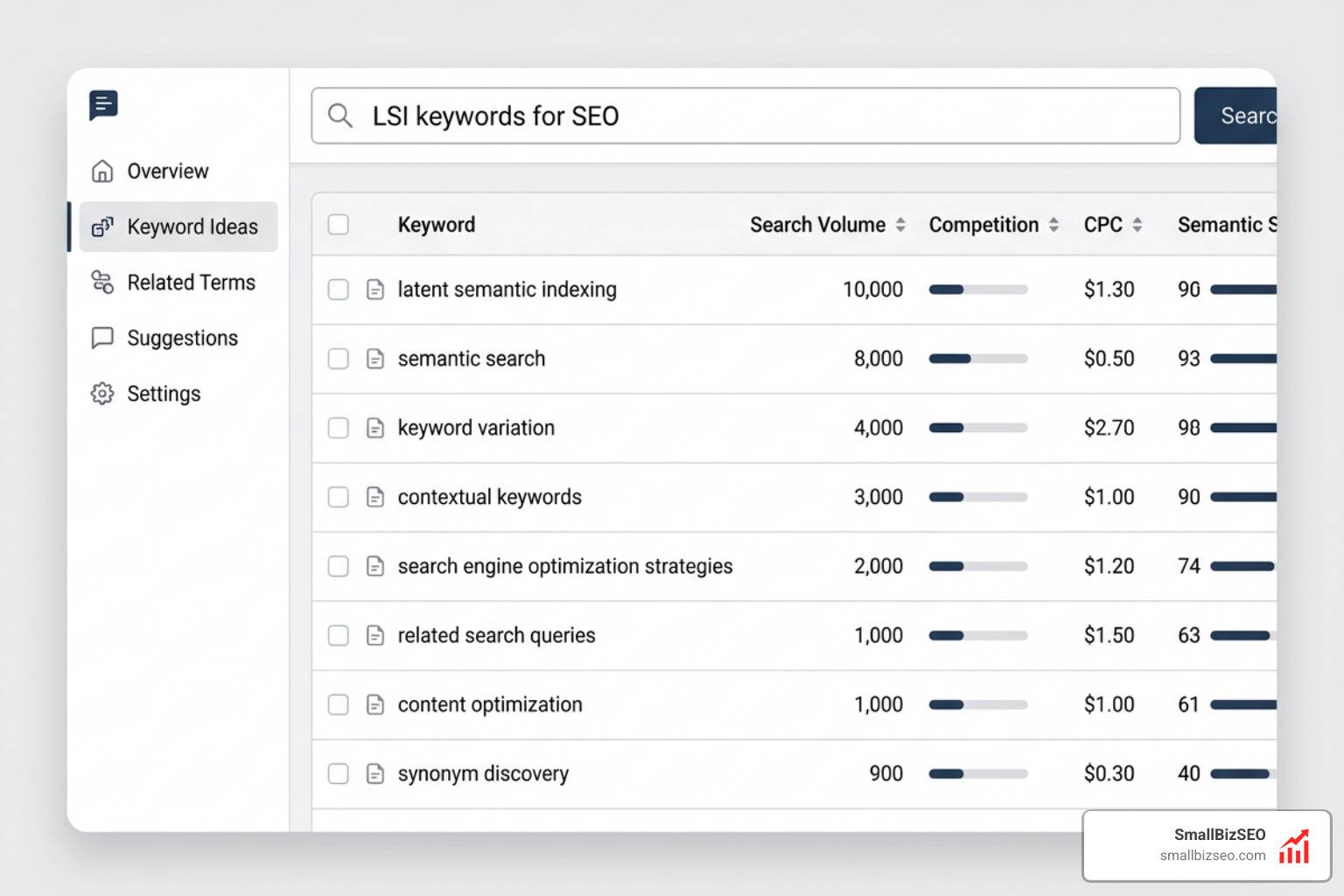
Finding the right semantic terms does not require enterprise software budgets. You can gather rich contextual vocabulary directly from search engine interfaces and accessible modern software tools.
Free Methods to Uncover LSI Keywords for SEO
You can discover the primary contextual terms search engines associate with your core topic using zero-cost search engine features:
- Google Autocomplete: Type your main target keyword into the search bar and note the descriptive suggested terms that automatically pop up.
- Related Searches: Scroll to the bottom of the organic search results page to examine the bolded terms inside related query suggestions.
- People Also Ask (PAA): Expand multiple PAA accordion boxes to uncover natural-language questions and adjacent subtopics users frequently search for.
- Google Image Tags: Search your topic on Google Images and review the descriptive category tags displayed directly above the image grid.
Applying these quick research methods ensures your content outlines cover essential reader questions. You can learn more in our comprehensive Beginners Guide to Keyword Content Optimization.
Advanced Software and Paid Semantic Discovery Tools
For large-scale content creation and enterprise workflows, dedicated software tools streamline semantic analysis and competitive gap mapping:
- Semrush: Over 10 million marketing professionals rely on Semrush to extract competitor keyword profiles and analyze semantic gaps across top-ranking SERPs.
- LSIGraph: Built specifically for semantic discovery, LSIGraph has returned over 5 billion semantic keywords for its 160,000 active users.
- Contentpen: A dedicated writing platform that automates semantic keyword extraction and guides structural content planning.
These modern platforms analyze the top ten search results for your target query and extract co-occurring vocabulary automatically. To learn how modern software automates these tasks, check out our analysis of What Are AI SEO Tools.
Content Optimization Strategy and Best Practices
Discovering semantic terms and entity relationships is only half the battle; placing them naturally inside your article structure is what yields long-term organic search results.
Strategic Placement of LSI Keywords for SEO in Content
Incorporate your semantic vocabulary where it adds immediate structural value for human readers and search crawlers:
- H2 and H3 Subheadings: Introduce major supporting subtopics in H2 or H3 tags to build a clear, readable logical hierarchy.
- Title Tags & Meta Descriptions: Include core secondary terms where they clarify search intent without crowding your main title.
- Opening and Closing Paragraphs: Frame the main topic early using essential entities, and summarize key concepts near the end of the text.
- Image Alt Text: Describe visual elements naturally using contextual, descriptive image tags.
For complete step-by-step placement instructions, review our comprehensive guide to On-Page SEO.
Common Mistakes to Avoid in Semantic SEO
Avoid these common execution traps when optimizing content with related terms:
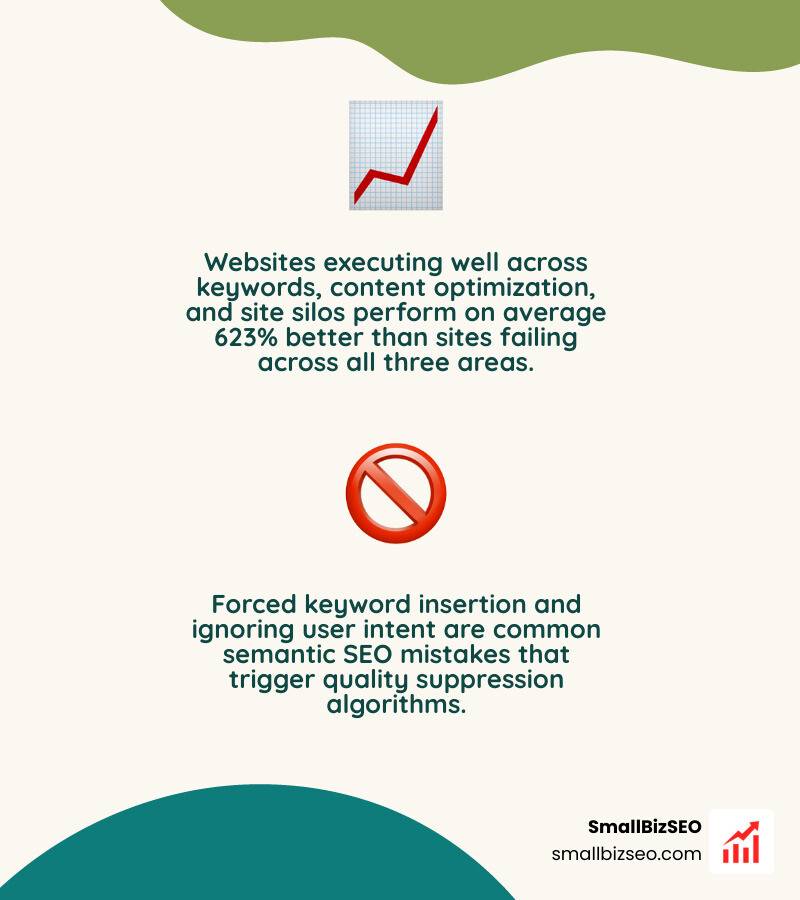
- Forced Keyword Insertion: Never insert a phrase if it disrupts sentence flow or sounds awkward when read aloud.
- Treating Semantic Lists as Quotas: Avoid attempting to check off every single word generated by optimization tools. Focus on genuine topical depth rather than arbitrary word counts.
- Ignoring User Intent: Adding context terms will not help if your web page fails to answer the searcher's core query directly and thoroughly.
Frequently Asked Questions About Semantic SEO
Does Google penalize unnatural keyword repetition?
Yes. Repeating keywords unnaturally or forcing irrelevant phrases into sentences triggers quality algorithms designed to suppress low-quality content. Modern search models prioritize readability, user engagement, and authoritativeness over raw keyword frequency.
How many semantically related keywords should be used?
There is no fixed target number or mathematical formula. Focus on answering the searcher's intent thoroughly. Include related subtopics and foundational concepts naturally, writing as an expert author in the field would convey the information.
What is the future of semantic SEO and entity optimization?
Search is rapidly moving toward entity-based AI answers, conversational search models, and natural language interactions. Generative answer engines synthesize information across trusted websites that display complete entity relationships and high editorial quality. Websites executing well across targeted keywords, content optimization, and structured site silos perform on average 623% better than sites failing across all three areas.
Elevate Your Organic Strategy with Modern Semantic Optimization
Mastering LSI keywords for SEO ultimately comes down to delivering comprehensive depth, clarity, and genuine value to searchers. While classical LSI algorithms belong to search engine history, weaving semantically related terms into well-structured, user-focused content remains essential for sustainable organic visibility.
At SmallBizSEO, our team uses a data-driven framework to help small businesses gain fast rankings and build long-term topical authority. Explore our complete SEO Services to see how we can expand your organic search presence.