What Are AI SEO Tools and Which Ones Are Worth Your Money
What Are AI SEO Tools and Which Ones Are Worth Your Money
What are AI SEO tools? Here's the short answer:
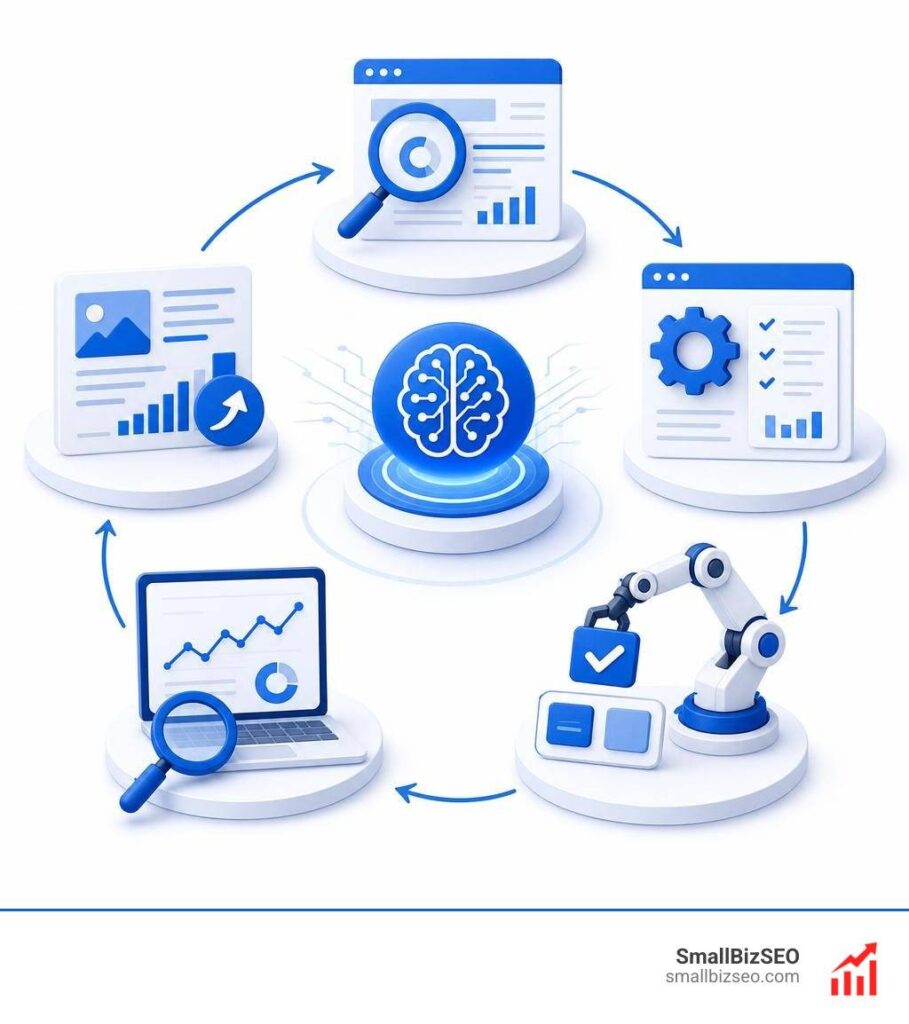
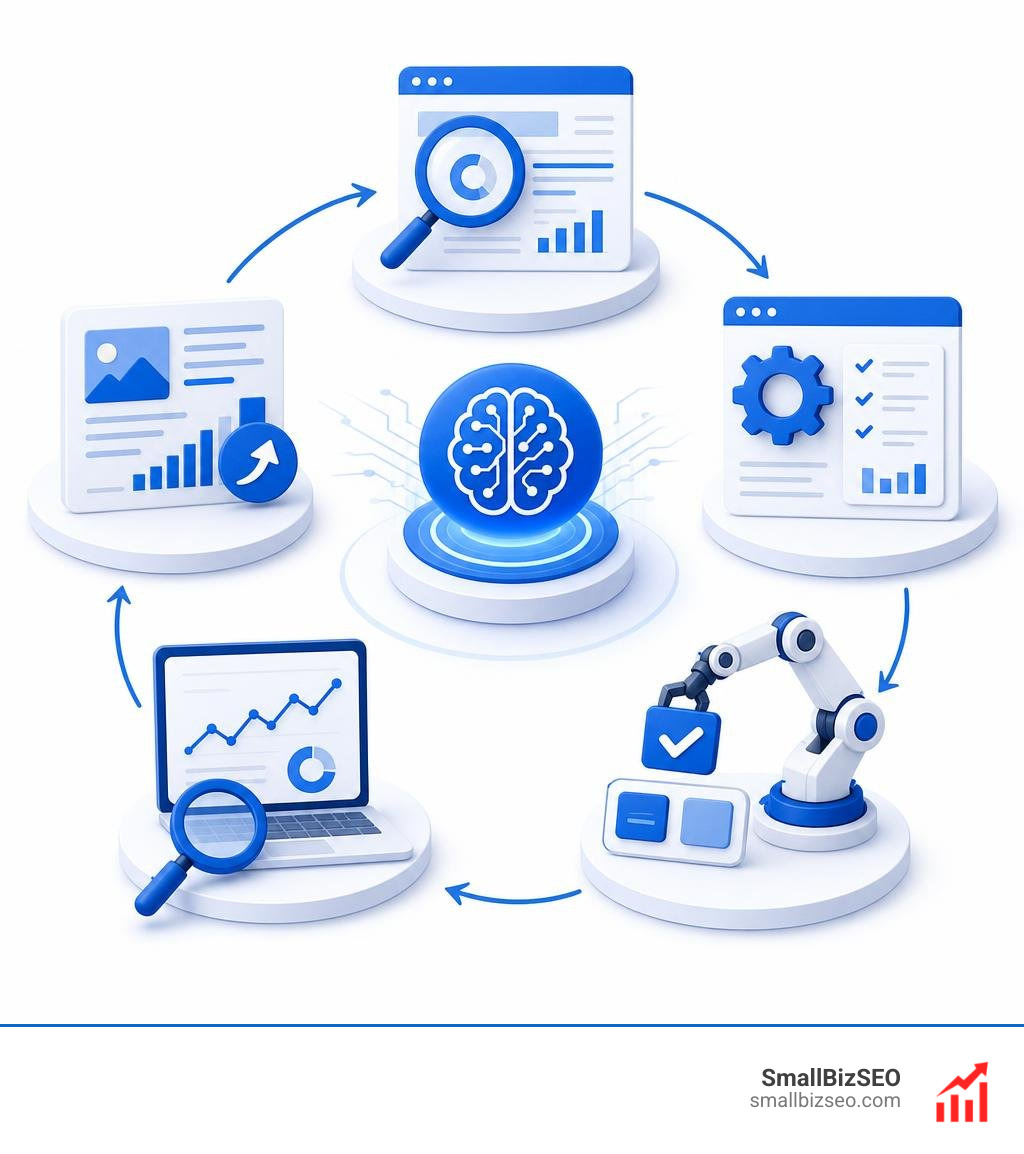
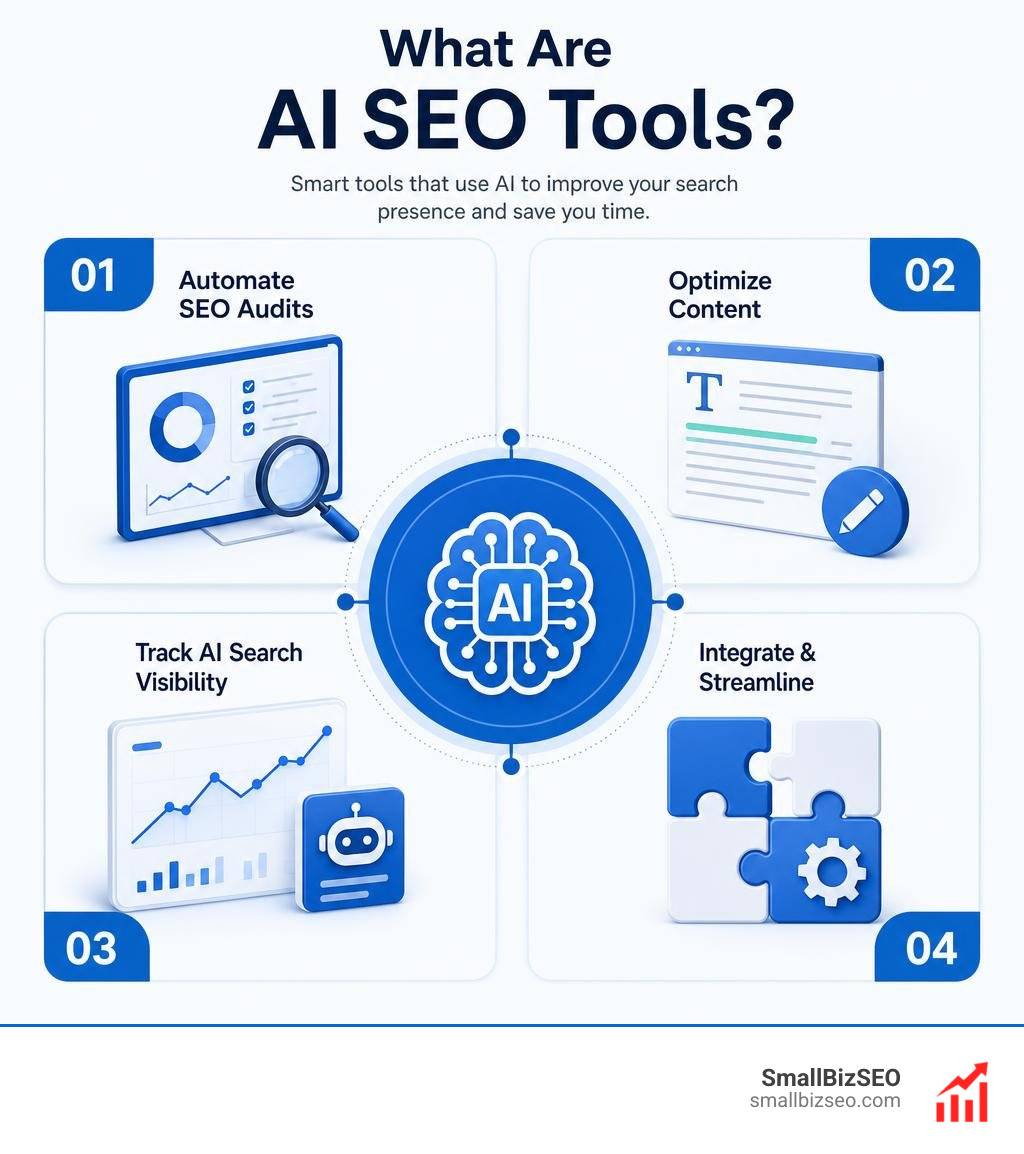
AI SEO tools are software platforms that use artificial intelligence and machine learning to automate and improve SEO tasks — like keyword research, content optimization, technical audits, link building, and tracking your brand's visibility across both Google and AI search engines like ChatGPT and Perplexity.
They differ from traditional SEO tools in one key way: instead of just showing you data and leaving the work to you, they analyze patterns, generate recommendations, and in many cases act on them automatically.
What they typically do:
- Automate site audits that would otherwise take 40+ hours per month
- Find keyword opportunities and content gaps faster than any human analyst
- Generate and optimize content aligned with search intent
- Monitor how your brand appears in AI-generated answers across ChatGPT, Claude, Gemini, and Perplexity
- Integrate with Google Search Console and Google Analytics to surface actionable insights
SEO isn't just about ranking on Google anymore. According to Semrush research, AI search visitors could surpass traditional search visitors for some topics as early as next year. That means showing up in AI-generated answers is becoming just as important as ranking on page one.
Meanwhile, Google pushes out 500+ algorithm updates per year, and millions of new pages compete for attention every single day. Keeping up manually is no longer realistic for most small business owners.
That's the gap AI SEO tools are designed to fill.
I'm Clayton Johnson, and I've spent years helping businesses use digital PR and SEO to grow their search visibility — including hands-on work with the tools and strategies that define what AI SEO tools can do for lean teams with limited time. In this guide, I'll walk you through the tools that are actually worth paying for, so you can stop guessing and start ranking.
What Are AI SEO Tools and How Do They Differ from Traditional Software?
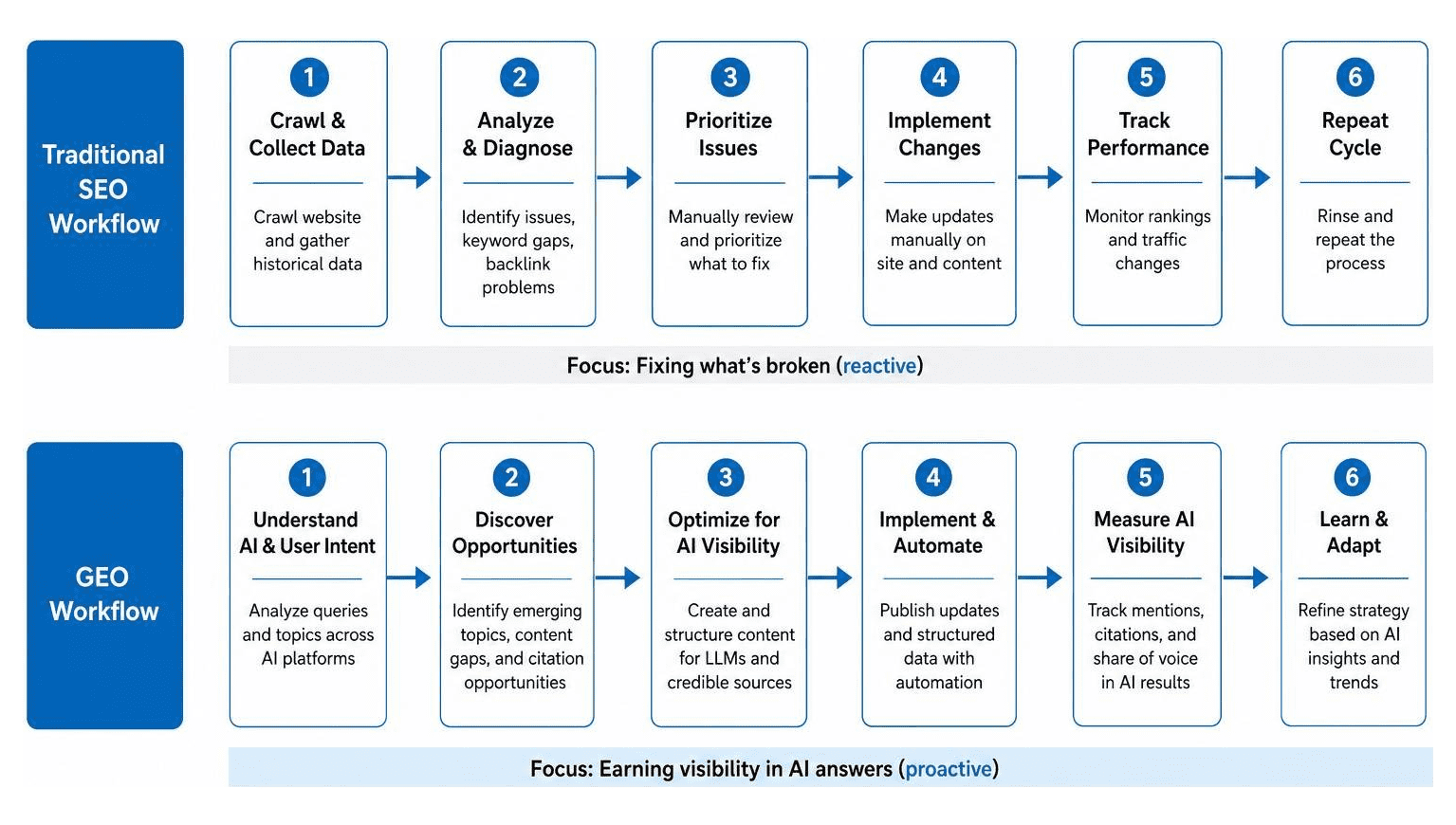
To understand how the search landscape is shifting, we first need to look at how modern software has evolved. Traditional SEO software was built for a world of static data. It crawled your site, counted your keywords, checked your backlinks, and gave you a massive list of errors to fix.
But today, search is dynamic. This is where modern optimization software comes in.
Traditional SEO vs. What Are AI SEO Tools
Traditional SEO tools show you what is broken; AI SEO tools help you fix it.
Running a manual SEO audit site-by-site can easily require 40 hours of work per month, and analyzing keywords can eat up another 30 hours. Traditional platforms leave those hours on your plate. Conversely, AI-driven platforms use predictive analytics and machine learning to identify trends, automate workflows, and spot hidden search patterns that humans miss.
Instead of looking backward at historical search volumes, AI tools look forward, predicting which topics will trend and how search engine algorithms will react to your content. For a deeper look at managing these strategies, check out our SEO Services Guide.
The Core Features of Modern AI SEO Software
When exploring what are AI SEO tools, you will find that the best platforms share several core capabilities:
- Natural Language Processing (NLP): They read and understand content the way search engines do, analyzing semantic relevance rather than just keyword density.
- Pattern Recognition: They scan massive datasets to find out why your competitors are outranking you.
- Workflow Automation & API Integrations: They connect directly to your CMS, Google Search Console (GSC), and Google Analytics (GA4) to push updates and pull real-time performance data.
For a thorough breakdown of how these features speed up your workflow, read the guide on AI SEO Tools: How to Use AI for Faster, Smarter Optimization.
What is GEO and How Do What Are AI SEO Tools Support It?
Generative Engine Optimization (GEO) is the practice of optimizing your website so that artificial intelligence models—like ChatGPT, Perplexity, Claude, and Gemini—cite your brand as a trusted source.
Traditional SEO focuses on title tags and meta descriptions for search engine results pages (SERPs). GEO focuses on structured data, academic research citations, authoritative brand mentions, and clear, direct answers that large language models (LLMs) can easily parse. Specialized tools like Finseo - AI-Powered SEO Tools for Next-Gen Search Optimization help you track your share of voice inside these conversational search engines.
How AI SEO Tools Automate Content, Keywords, and Technical Audits
Integrating AI into your marketing stack can feel overwhelming, but it becomes much simpler when you break it down by workflow.
Keyword Research and Semantic Content Optimization
Gone are the days of manually grouping thousands of keywords in Excel. AI tools automate keyword clustering by analyzing search intent and grouping queries based on SERP similarity.
Once your keywords are clustered, AI content helpers generate comprehensive content briefs, identifying semantic gaps and NLP-driven terms your competitors are using. This ensures your content matches user intent perfectly. To see how we handle this at scale, explore our SEO Content Services.
Automating Technical SEO Audits and Site Monitoring
Technical SEO is another area where machine speed beats human effort. AI agents can crawl your entire site in seconds, identifying broken links, crawl budget waste, schema markup errors, and rendering issues.
More importantly, autonomous agents don't just find issues—they can write the code fixes or deploy schema directly to your CMS. To understand how these autonomous systems operate, read Ahrefs' breakdown of AI Agents for SEO: What They Are, How They Work, and How to Build One .
AI-Driven Link Building and Outreach Automation
Link building has historically been the most time-consuming part of SEO. AI changes this by automating partner selection and authority evaluation.
Using NLP, AI tools scan the web to find highly relevant blogs, evaluate their backlink profiles, suggest the most natural anchor text placements, and draft personalized outreach templates that actually get replies.
Tracking Brand Visibility Across ChatGPT, Claude, and Perplexity
If buyers are asking ChatGPT or Perplexity for product recommendations, you need to know if your brand is being mentioned. AI SEO software now includes prompt tracking.
These tools run recurring query prompts across various LLMs to monitor your brand's share of voice, analyze which sources the AI models are citing, and track regional differences in AI responses.
The Best AI SEO Tools Worth Your Money: Reviewed and Compared
With so many tools claiming to use artificial intelligence, it is easy to fall victim to "wrapper tools" that simply repackage basic APIs. We have tested the top platforms to find the ones that deliver genuine value.
To help you compare, check out our breakdown below based on industry insights from AI SEO Tools Compared: 12 Tools, Real Pricing, and What Each ... and testing from I Tried 18 AI SEO Tools. Here Are The Ones That Really Work .
| Tool | Best For | Key Feature | Starting Price |
|---|---|---|---|
| Writesonic | Scalable Content Generation | Custom brand voice matching & real-time data integration | $79/mo |
| Surfer SEO | On-Page Optimization | Real-time content scoring & NLP keyword suggestions | $99/mo |
| SEOcrawl AI | GSC & LLM Tracking | Native AI visibility layer & GA4 traffic segmentation | €33/mo |
| Rankscale | Dedicated GEO Tracking | Granular tracking of brand citations across major LLMs | $99/mo |
Writesonic: Best for Scalable Content Generation
Writesonic is one of the most comprehensive AI writing platforms available. It allows you to upload your brand guidelines, style sheets, and past content to train the AI on your exact brand voice. It also pulls real-time data from search engines to ensure your content is factually accurate and up to date.
Surfer SEO: The Gold Standard for Content Optimization
Surfer SEO remains an industry favorite for on-page optimization. As you write, Surfer provides real-time feedback and an optimization score based on competitor analysis. It tells you exactly which NLP keywords to add, how many headings to use, and how to structure your article to maximize your ranking potential.
SEOcrawl AI: Best for GSC Integration and LLM Tracking
SEOcrawl AI bridges the gap between traditional search and the conversational search era. By connecting directly to Google Search Console and GA4, it tracks your standard keyword rankings while simultaneously running recurring prompts across ChatGPT, Claude, and Perplexity to measure your brand's AI visibility and refered traffic.
Rankscale: Best Dedicated GEO Tracking Tool
If your primary goal is tracking how often you are recommended by LLMs, Rankscale is an exceptional specialized tool. It provides granular tracking of specific keywords across different AI engines and regions, complete with sentiment analysis and competitor benchmarking.
Underrated and Niche AI SEO Tools to Consider
If you are looking for specialized solutions, these niche tools are highly effective:
- Indexly: Automates indexation requests to ensure your new content is found by search crawlers instantly.
- Pitchbox: An enterprise-level outreach platform that uses AI to personalize link-building campaigns.
- Ranking Raccoon: Helps find high-quality, safe collaboration opportunities with other verified websites.
- AIclicks: A lightweight tool for quick keyword clustering and search intent mapping.
Frequently Asked Questions About AI SEO Tools
Can AI SEO tools completely replace human SEO specialists?
No. While AI tools are incredible at processing data, identifying patterns, and automating repetitive tasks, they lack the capacity for high-level creative strategy, original research, and real-world relationship building.
Furthermore, search engines place immense value on human experience and authority. To learn how to balance automation with trust, read our guide on How to Optimize Your Content for E-E-A-T and Build Real Search Trust.
How do AI SEO tools integrate with Google Search Console and Google Analytics?
Most modern AI SEO platforms integrate seamlessly via secure OAuth connections. Once authorized, the tools automatically sync your performance data, allowing the AI to analyze traffic drops, flag indexing errors, and segment traffic referred specifically by AI search engines like ChatGPT and Perplexity.
How accurate are AI SEO tools in predicting search trends?
They are highly accurate when analyzing large datasets for seasonal patterns and competitor gaps. However, because search engine algorithms change constantly and LLM responses fluctuate based on real-time web searches, their predictions should be treated as strategic indicators rather than absolute guarantees.
Ready to Put AI SEO Tools to Work?
The search landscape is changing rapidly, but that does not mean SEO is dead—it is simply evolving. By utilizing the right tools, you can save dozens of hours each month, optimize your content for both Google and AI engines, and secure a sustainable competitive advantage.
At SmallBizSEO, we help businesses navigate this transition. Our data-driven "Velocity" framework is designed to deliver fast rankings and E-E-A-T-compliant growth through transparent, automated reporting. Ready to scale your search visibility on autopilot? Explore our AI SEO Services today.