Select the Right High-Performing AI Tool for Your Business Stack

Select the Right High-Performing AI Tool for Your Business Stack
Which AI Tools Lead Business Adoption?
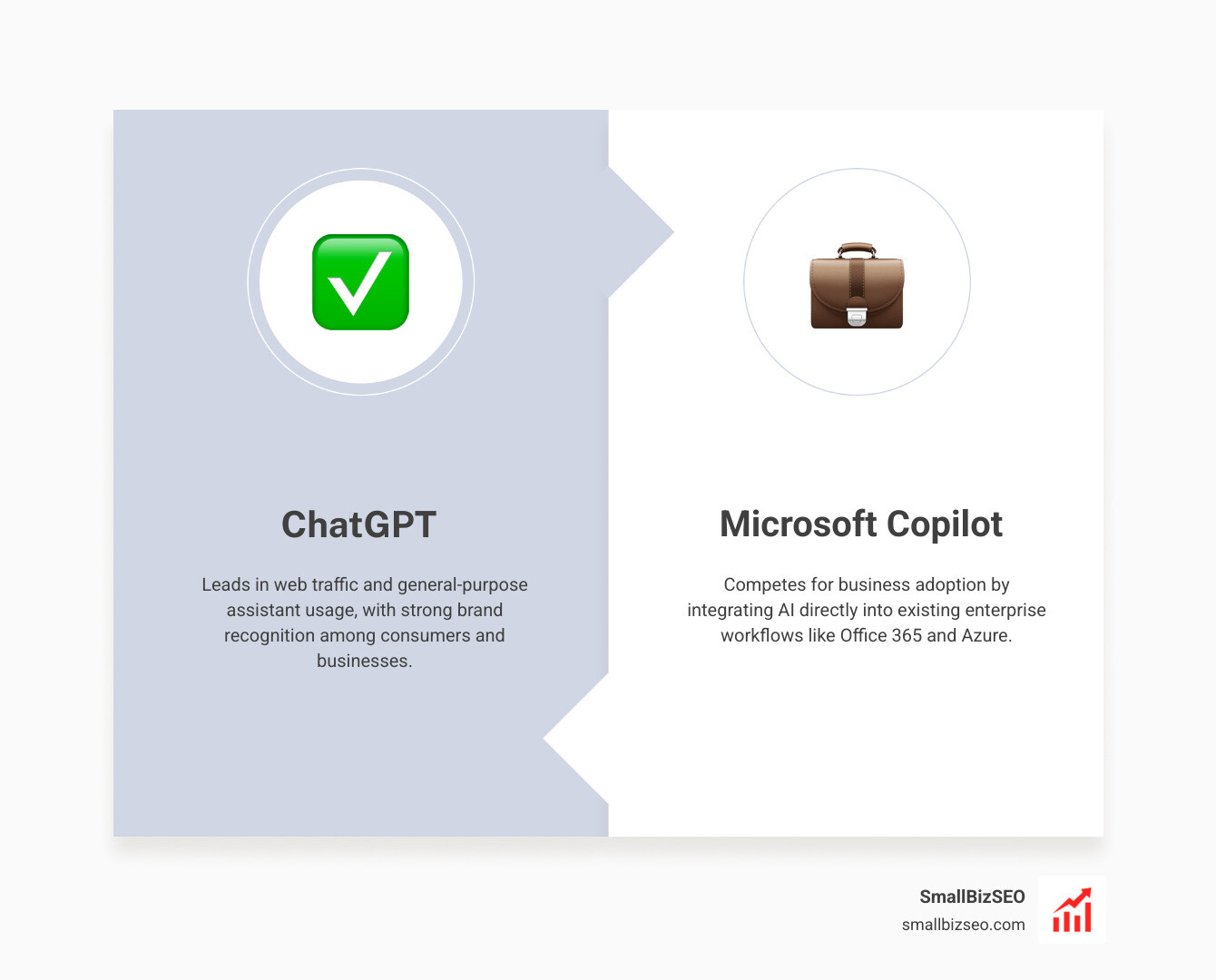
No single AI tool leads every business category. ChatGPT leads general-purpose assistants by web traffic, while Gemini is its closest challenger on that measure, according to consumer app usage data. Enterprise platforms such as Microsoft Copilot and Salesforce Agentforce compete for use inside existing workflows. Canva and Notion reach businesses by adding AI to tools they already use. A traffic ranking, though, is not a ranking of business spending or return on investment.
For a small business, the useful question is not just which tool is biggest? It is which tool fits your work, connects to your data, and earns its cost.
I'm Clayton Johnson, founder of SmallBizSEO, where I work on AI-assisted SEO research, content planning, and business intelligence workflows. This breakdown of AI tools market share, covering the most popular artificial intelligence platforms for businesses, looks beyond raw adoption numbers at practical operational value so owners can make clearer choices.
Related business AI research and benchmarks:
- AI Marketing Statistics: How Businesses Are Using Artificial Intelligence to Attract Customers
- ChatGPT Usage Statistics: Demographics, Popular Tasks, and Business Applications
- AI Advertising Statistics: Spending, Performance, and Consumer Engagement
What Is Driving the Race for Enterprise AI Market Share?
Enterprise AI market share is split across foundation models, cloud platforms, and workflow-specific tools; no single platform leads every category. Companies adopt machine learning solutions not just for novelty, but to lower operating overhead, summarize massive unstructured data stores, and streamline customer-facing operations.

The enterprise transformation toward automated systems is backed by historic capital allocation. Global market projections estimate that the artificial intelligence sector will expand past two trillion dollars over the coming decade, with North American enterprises representing over forty percent of total deployment.
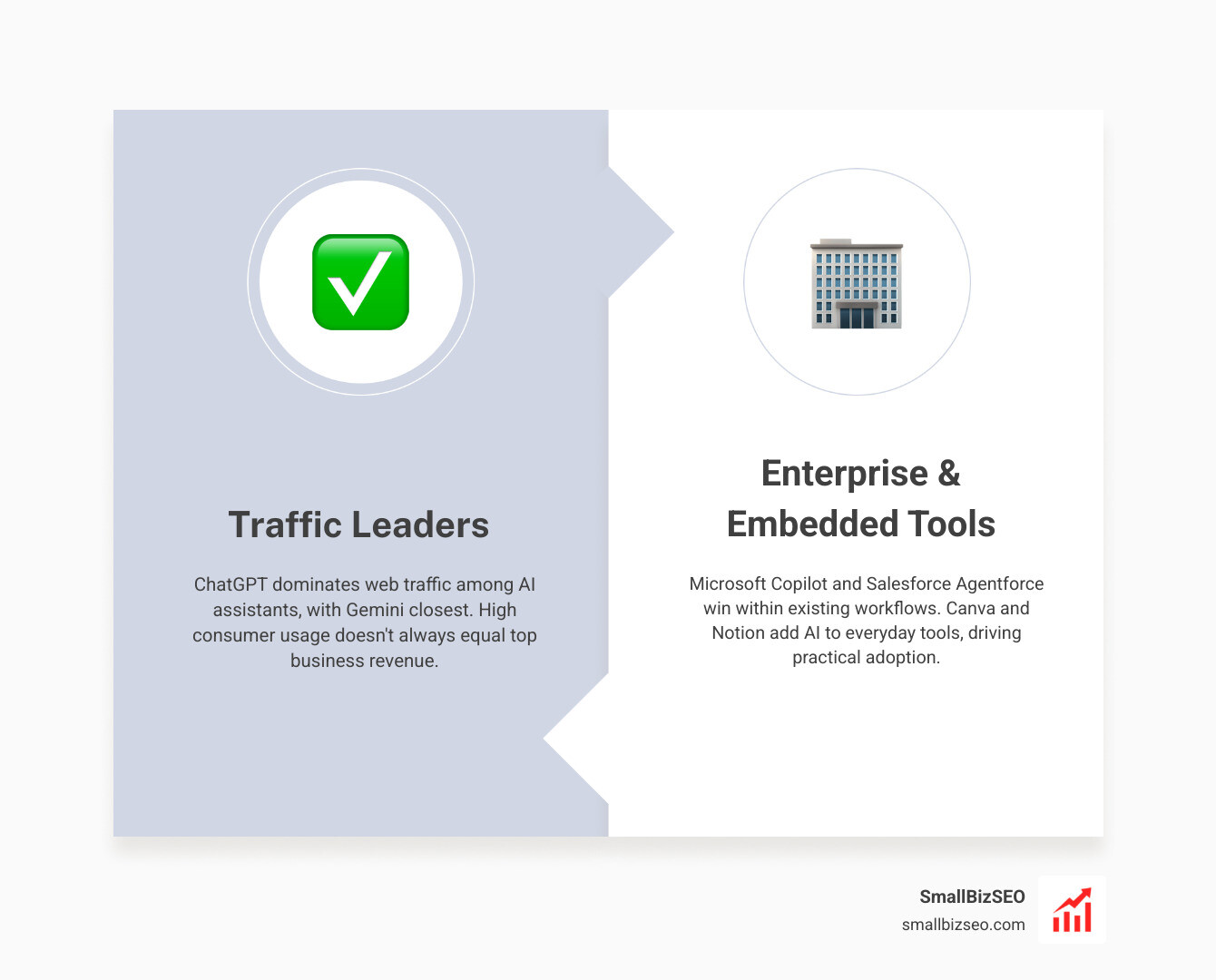
Organizations rarely rely on a single vendor to handle their entire operational stack. Instead, businesses build modular ecosystems that combine base intelligence layers with specialized tools for sales, research, customer service, and technical execution.
Which AI Tools Have the Largest Market Share Among Businesses?
Market-share leaders vary by measure: model usage, enterprise spending, software adoption, and payment activity can produce different rankings. A platform with massive consumer web traffic may generate less enterprise revenue than an embedded infrastructure layer integrated into company data warehouses.
According to enterprise AI software market share reports, commercial software spend is concentrated among major foundation labs and cloud ecosystems. OpenAI holds roughly a third of total software market revenue, with Microsoft Azure AI and Copilot representing nearly eighteen percent, followed by Anthropic, Google Cloud AI, and Amazon Web Services Bedrock.
At the same time, comprehensive generative AI adoption benchmarks reveal that enterprise transaction frequency tells an even more nuanced story. Real purchase data tracks different spending weights across departments.
| Platform | Primary Category | Dominant Use Case | Common Pricing Structure |
|---|---|---|---|
| OpenAI / ChatGPT | Foundation Assistant | General Research, Drafting, Coding | Tiered Seat Subscriptions & API Tokens |
| Microsoft Azure AI & Copilot | Enterprise Ecosystem | Document Automation, Enterprise Search | Per-User Add-On License ($30/seat/mo) |
| Anthropic / Claude | Reasoning & Coding | Code Synthesis, Document Analysis | Subscription Tiers & API Usage |
| Google Cloud / Gemini | Multimodal Workspace | Workspace Integration, Search Grounding | Seat Add-Ons & Token Consumption |
| Salesforce Agentforce | Autonomous CRM Agent | Customer Support, Sales Development | Consumption & Conversation-Based Billing |
| AWS Bedrock / SageMaker | Cloud Infrastructure | Custom Model Deployment, MLOps | Pay-As-You-Go Compute & Model Invocations |
Which Foundation Models Lead AI Tools Market Share: The Most Popular Artificial Intelligence Platforms for Businesses?
ChatGPT, Google Gemini, and Anthropic Claude compete for business use, while regional preferences and measurement methods affect which platforms appear to lead.
ChatGPT commands over eighty percent of direct conversational search and chatbot market traffic, outpacing Gemini by nearly three times on web visits. As crucial enterprise ChatGPT usage statistics illustrate, hundreds of millions of weekly active users turn to the platform for day-to-day administrative assistance.
However, direct SaaS payment activity data reveals that Anthropic captures substantial B2B transaction share. Claude's paid enterprise base has expanded rapidly due to technical workflows, automated programming via specialized command tools, and strong reasoning capabilities. Meanwhile, search-first alternatives like Perplexity capture research-focused users by supplying citation-backed outputs.
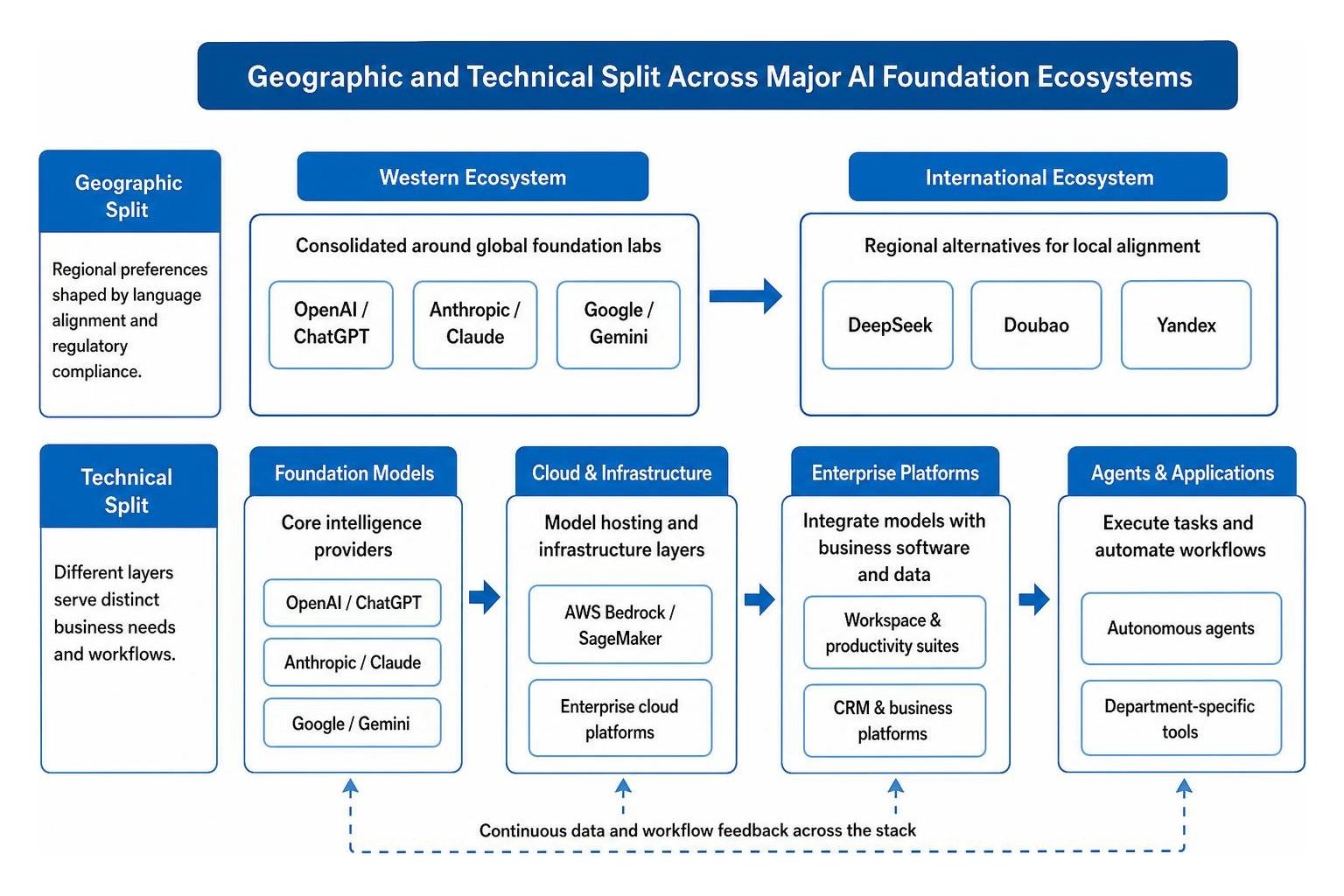
Global usage is also splintering into distinct regional ecosystems. While Western organizations consolidate around OpenAI, Anthropic, and Google, international markets frequently lean on domestic alternatives such as DeepSeek, Doubao, or Yandex for regional language alignment and regulatory compliance.
How Do Enterprise Ecosystems and Agents Compete for AI Tools Market Share?
Enterprise AI platforms compete by connecting models and agents to existing business data, software, and workflows. Standalone chatbots can draft isolated emails, but true enterprise platforms connect directly into records systems to execute multi-step operational tasks.
Salesforce has positioned Agentforce around this shift, deploying autonomous agents that qualify inbound sales leads and resolve customer service inquiries without manual intervention. Similarly, Microsoft Copilot leverages deep grounding across Microsoft 365 files and tenant data, while AWS Bedrock and Google Vertex AI serve as secure cloud environments for building custom pipelines.
When evaluating enterprise agentic tools, engineering teams look closely at autonomous workforce automation trends. Emerging horizontal agents like OpenClaw, Manus, and Genspark are demonstrating how autonomous software can navigate desktop applications, browse the web, and execute complex workflows across disparate interfaces without dedicated API integrations.
How Do Specialized Creative and Productivity Tools Capture Workflow Share?
Creative and productivity tools gain adoption by building AI into tasks people already do, such as design, writing, video editing, and note-taking. Rather than forcing employees to learn standalone interfaces, incumbent platforms embed artificial intelligence directly into their user environments.
Canva Magic Suite and Notion AI provide clear proof of this model. Notion has seen paid AI attach rates exceed fifty percent, making intelligent features a massive driver of total recurring revenue. Understanding real-world AI software pricing benchmarks helps companies evaluate whether these embedded add-ons are more cost-effective than separate software licenses.
In multimedia and video production, mobile-first platforms like CapCut command hundreds of millions of active users through one-click automated captions and background removal. Specialized enterprise creative tools such as Runway, Descript, and Jasper continue to retain dedicated professional segments by focusing on brand voice consistency, high-resolution generation, and collaborative marketing workflows.
How Can Businesses Maximize Enterprise AI ROI and Overcome Tech Stack Challenges?
Businesses can improve AI returns by choosing tools that fit their workflows, measuring costs and outcomes, and planning for integration and governance. Adopting artificial intelligence without a clear connectivity layer often results in stranded pilot projects and unpredictable monthly token bills.

Over three-quarters of mid-sized and enterprise businesses report difficulties connecting modern language models to legacy data architectures. Bridging these gaps requires central orchestration layers like Zapier or MuleSoft, which securely pipe internal records into AI prompts while enforcing permission boundaries.
At SmallBizSEO, we emphasize that artificial intelligence must tie directly to measurable business growth. Reviewing 50 essential generative AI statistics for business strategy shows that companies using connected data pipelines consistently outperform those deploying isolated consumer tools.
How Do Businesses Measure Real ROI Across Multi-Vendor AI Deployments?
Measure AI ROI by comparing total tool costs with changes in productivity, operating costs, and business outcomes. Quantifying return on investment prevents software bloat and validates recurring subscription expenses.
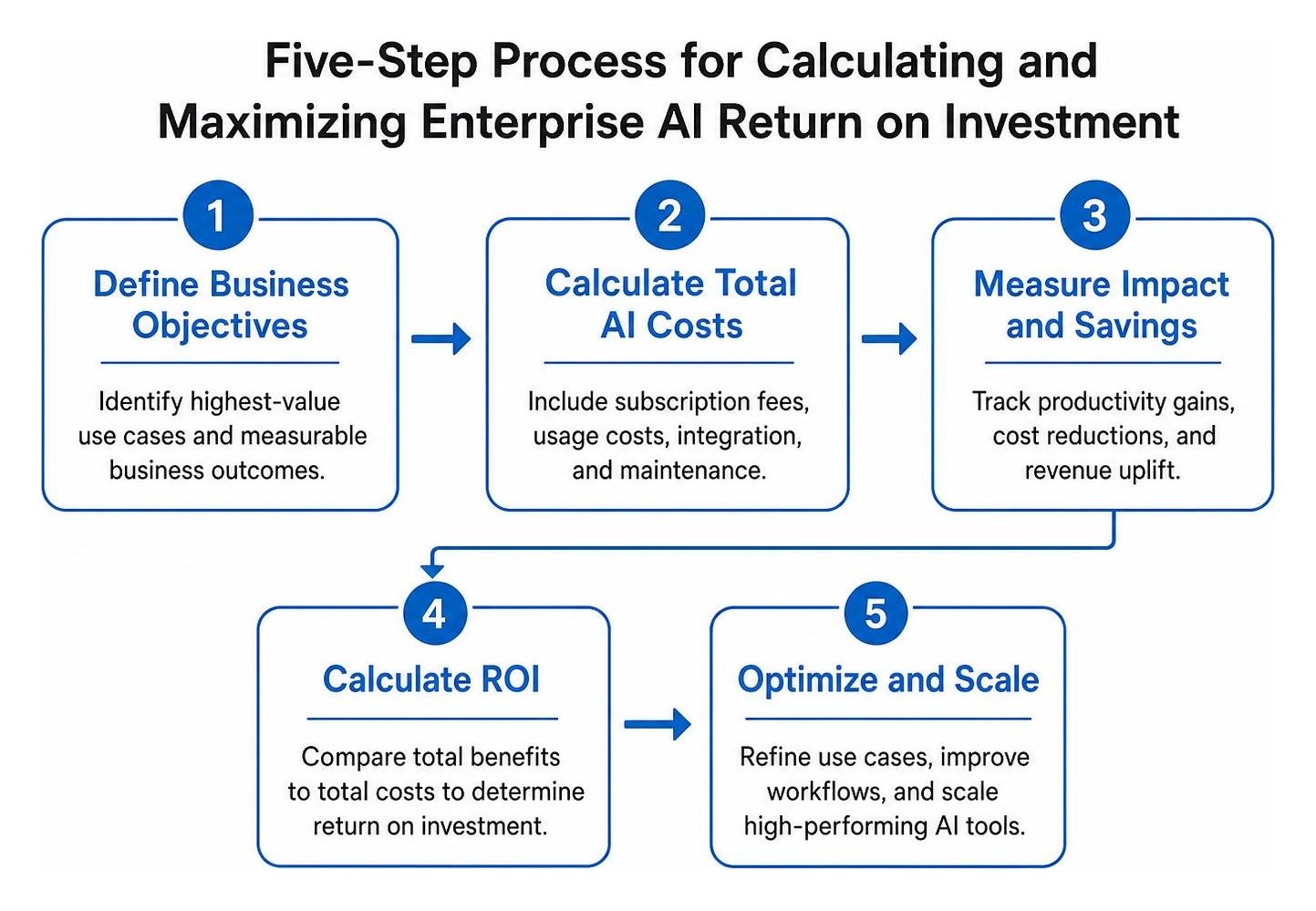
Tracking measured productivity and business cost savings requires analyzing hard operational markers:
- Time savings on repetitive customer support tickets and document summaries
- Acceleration of content production, technical coding cycles, and market research
- Direct cost reductions achieved by consolidating duplicate software seats
- Revenue uplift generated through automated lead routing and rapid inquiry response
More than forty percent of businesses intentionally deploy multiple AI vendors simultaneously. Multi-tenanting allows organizations to assign different tasks to the most cost-effective model, using lightweight systems for basic categorization while reserving premium reasoning engines for complex analysis.
How Can Businesses Address Data Silos, Multi-Tenanting, and Integration Obstacles?
Businesses can reduce integration and data risks by connecting systems carefully, setting access rules, and applying privacy and model-governance controls. Feeding proprietary company records into public training pools creates significant security liabilities.
Enterprise-grade deployments avoid this by utilizing trust layers, zero-data-retention APIs, and private vector databases for retrieval-augmented generation. These frameworks ensure sensitive customer records remain shielded behind corporate authentication perimeters while complying with emerging standards like the EU AI Act.
As cloud AI platform growth data demonstrates, centralized cloud infrastructure that bundles model governance, bias monitoring, and unified data connectors will continue capturing the largest share of corporate investment.
Finding the Right AI Stack for Your Business
Selecting artificial intelligence platforms should always be driven by functional utility rather than raw market hype. While foundation models like ChatGPT and Claude dominate general usage, long-term operational efficiency comes from integrating models directly into your daily workflow tools, customer databases, and content pipelines.
We recommend auditing your current operational bottlenecks, establishing clear data privacy rules, and testing specific agentic workflows on high-impact tasks before rolling out broad seat licenses. By pairing dependable automation with strategic oversight, your organization can build an AI stack that delivers real productivity and durable competitive advantage.