Is AI Slashing Your Ad Budget or Supercharging ROI?
Is AI Slashing Your Ad Budget or Supercharging ROI?
Can AI Improve Your Ad Budget and ROI?
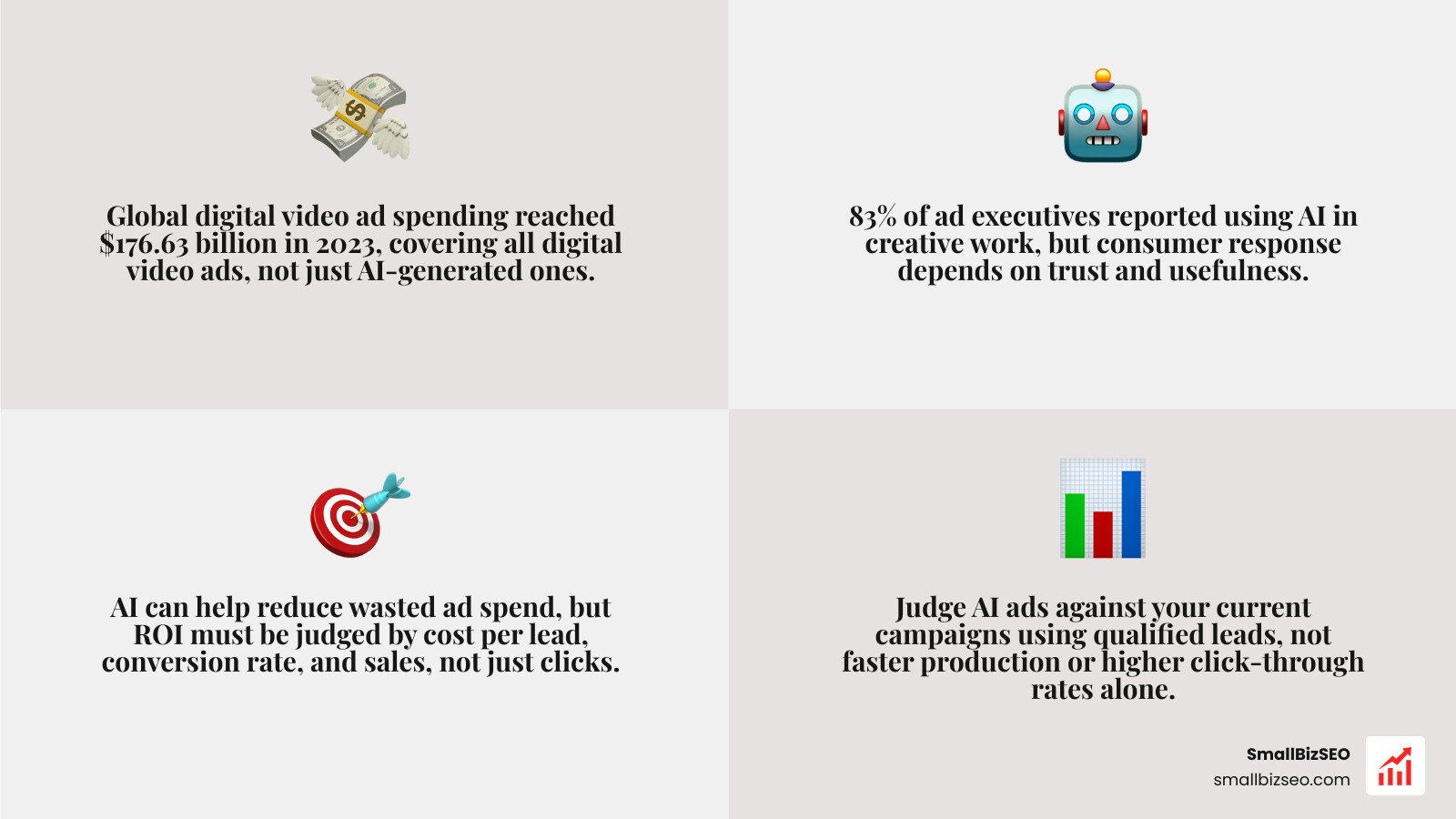
AI can help reduce wasted ad spend, but it does not guarantee a better return. Judge it against your current ads using cost per lead, conversion rate, and sales, not just clicks or faster production. Global digital video ad spending reached nearly $176.63 billion, but that figure covers all digital video ads, not just AI-generated ones. And while 83% of ad executives reported using AI in creative work, consumer response still depends on whether an ad feels useful and trustworthy.
I'm Clayton Johnson, founder of SmallBizSEO. These AI Advertising Statistics on spending, performance, and consumer engagement give small business owners clear benchmarks that tie automated campaigns directly to qualified leads.
Explore related research and data across marketing channels:
- AI Marketing Statistics: How Businesses Are Using Artificial Intelligence to Attract Customers
- AI Email Marketing Statistics: Personalization, Engagement, and Campaign Performance
- 50 AI Agent Statistics: Adoption, Automation, and Business Impact
How Is AI Reshaping Ad Budgets?
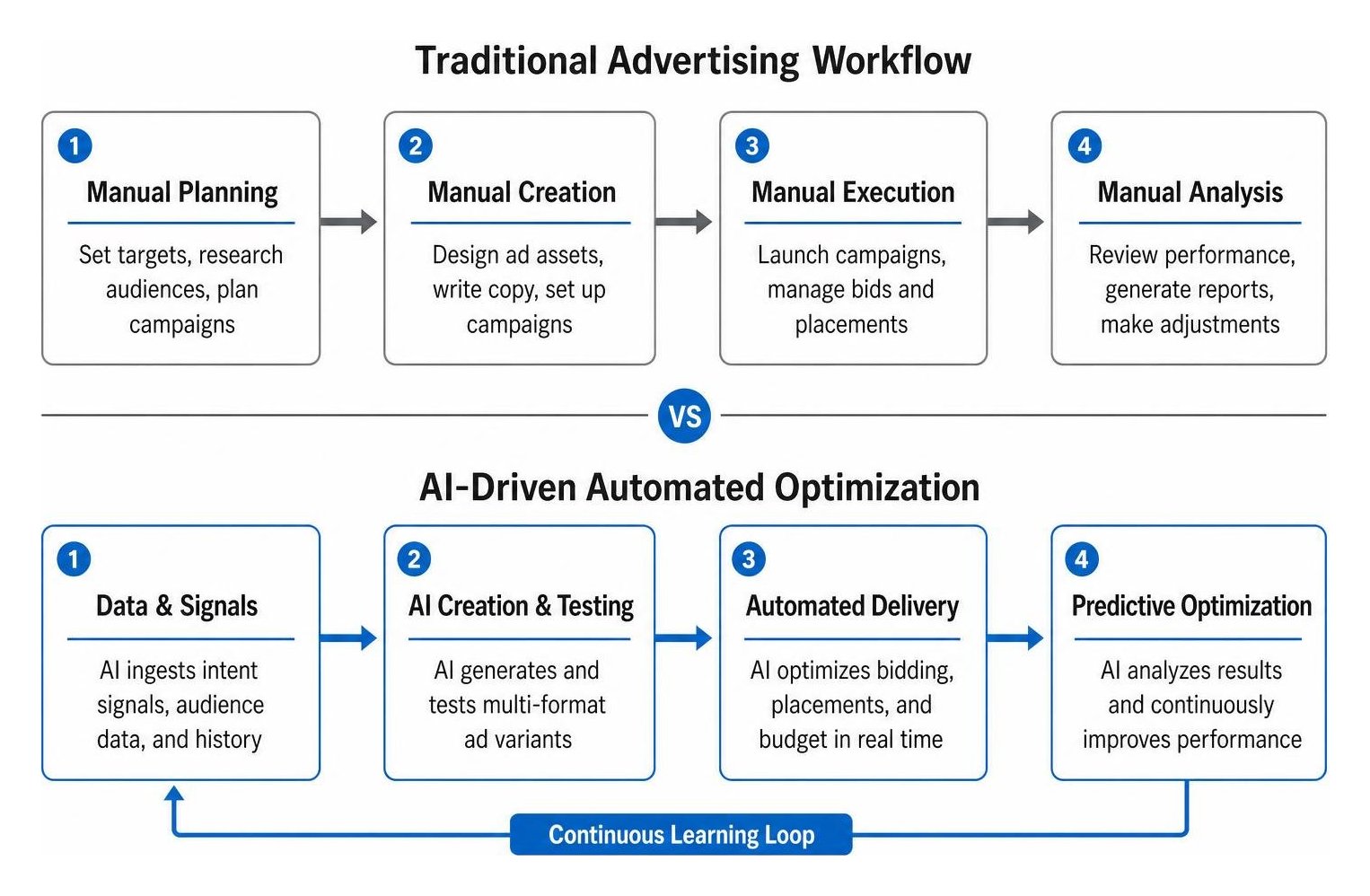
AI is shifting marketing budgets away from manual production toward automated distribution, predictive bidding, and multiformat creative testing. Marketers are investing heavily in automated ad tools to reduce production cycle times and optimize media buying in real time.
Understanding the broader scope of business spending on AI investments reveals that brands are allocating dedicated capital specifically to machine-learning advertising suites. Rather than simply trimming budgets, companies reinvest these efficiency gains into high-performing channels. According to findings from the Skai quarterly trends report, retail media spend climbed significantly while cost-per-click rates held steady, demonstrating that machine-driven bid management creates room for scalable volume without inflated media costs.
What Are the Global Trends in Digital Video and Search Ad Spend?
Digital video and paid search remain the twin engines of digital advertising growth, with automated algorithms managing the majority of transaction volume.
Programmatic real-time bidding functions like an automated digital auction house. When a user loads a webpage, algorithms analyze user intent signals and submit calculated bids within milliseconds. Smart bidding takes this further by adjusting keyword bids automatically to hit specific targets, such as target cost-per-acquisition or return on ad spend.
When evaluating AI software pricing benchmarks, businesses find that the operational savings gained by automating bidding workflows help offset initial software integration expenses. Smart bidding systems now oversee over three-quarters of leading search platform spend, securing lower acquisition costs while expanding total reach.
What Do Global AI Advertising Statistics Show About Spending and Engagement?
Global advertising data confirms that brands using automation achieve measurable engagement gains, though regional market maturity influences overall responsiveness.
The financial upside is clear: companies tracking cost savings and productivity gains report higher operational margins when using predictive models to serve personalized ad variants. Across major brand campaigns, multi-variant testing and automated asset allocation consistently lower customer acquisition expenses while boosting overall ad engagement.
How Does AI Advertising Perform on Spending, Results, and Consumer Engagement?
AI-powered advertising campaigns regularly outperform legacy campaigns across click-through rates and conversion metrics, provided the ad creative maintains clear relevance. Automated systems dynamically assemble images, headlines, and calls-to-action based on real-time user intent signals.
| Advertising Format | Metric Focus | Traditional Campaign Benchmark | AI-Enhanced Campaign Benchmark | Performance Difference |
|---|---|---|---|---|
| Paid Search (PPC) | Average Click-Through Rate (CTR) | ~2.1% | 3.2% - 5.8% | Up to 2.4x Increase |
| Search Bidding | Conversion Rate Lift | Baseline standard | +14% Conversion Rate | 9% Lower Average CPA |
| Dynamic Video Ads | Viewer Engagement Rate | Baseline standard | +25% Average Engagement | Measurable Retention Lift |
| Retail Media | Return on Ad Spend (ROAS) | Baseline standard | +22% ROAS Improvement | Lower Cost per Acquisition |
How Do Ad Format CTRs, Conversion Rates, and CPCs Compare?
Sponsored text placements powered by predictive intent engines deliver click-through rates roughly double those of traditional static search ads.
Automated bidding systems manage bids to capture higher-converting queries while filtering out low-intent clicks. By deploying dynamic creative variations that match surrounding contextual content, brands achieve substantially stronger conversion lifts and maintain lower average acquisition costs across search, display, and video placements.
How Precise Is AI Targeting, and Where Can Bias Occur?
Interest-based algorithmic targeting dramatically expands qualified ad impressions, but automated ad delivery systems can introduce demographic skews if unmonitored.
According to academic research on AI-related advertising precision and bias, interest-targeted campaigns generated an average of 45,275 impressions per ad compared to roughly 28,764 for non-targeted campaigns. However, algorithmic distribution patterns skewed heavily toward male demographics (nearly 63% of overall exposure) and over-indexed on specific age brackets (25 to 34 years old). Marketers must actively audit demographic distribution metrics to prevent automated systems from reinforcing systemic delivery biases or ignoring valuable customer segments.
How Do Consumers Evaluate AI Ads, and What Builds Trust?
Consumer reception of AI-generated ads depends on entertainment value, aesthetic quality, and message clarity rather than technical novelty alone.
When ads cross the line into synthetic awkwardness, viewer trust drops rapidly. Research outlined in industry research on the widening AI ad gap highlights a clear perception divide: while 82% of advertising executives assumed younger demographics held positive feelings toward automated ad creative, only 45% of surveyed consumers actually reported favorable sentiment.
What Drives Responses to Video Ads in Vietnam and Australia?
Cross-national empirical research reveals that cultural market maturity dictates how audiences perceive and respond to automated video ad creative.
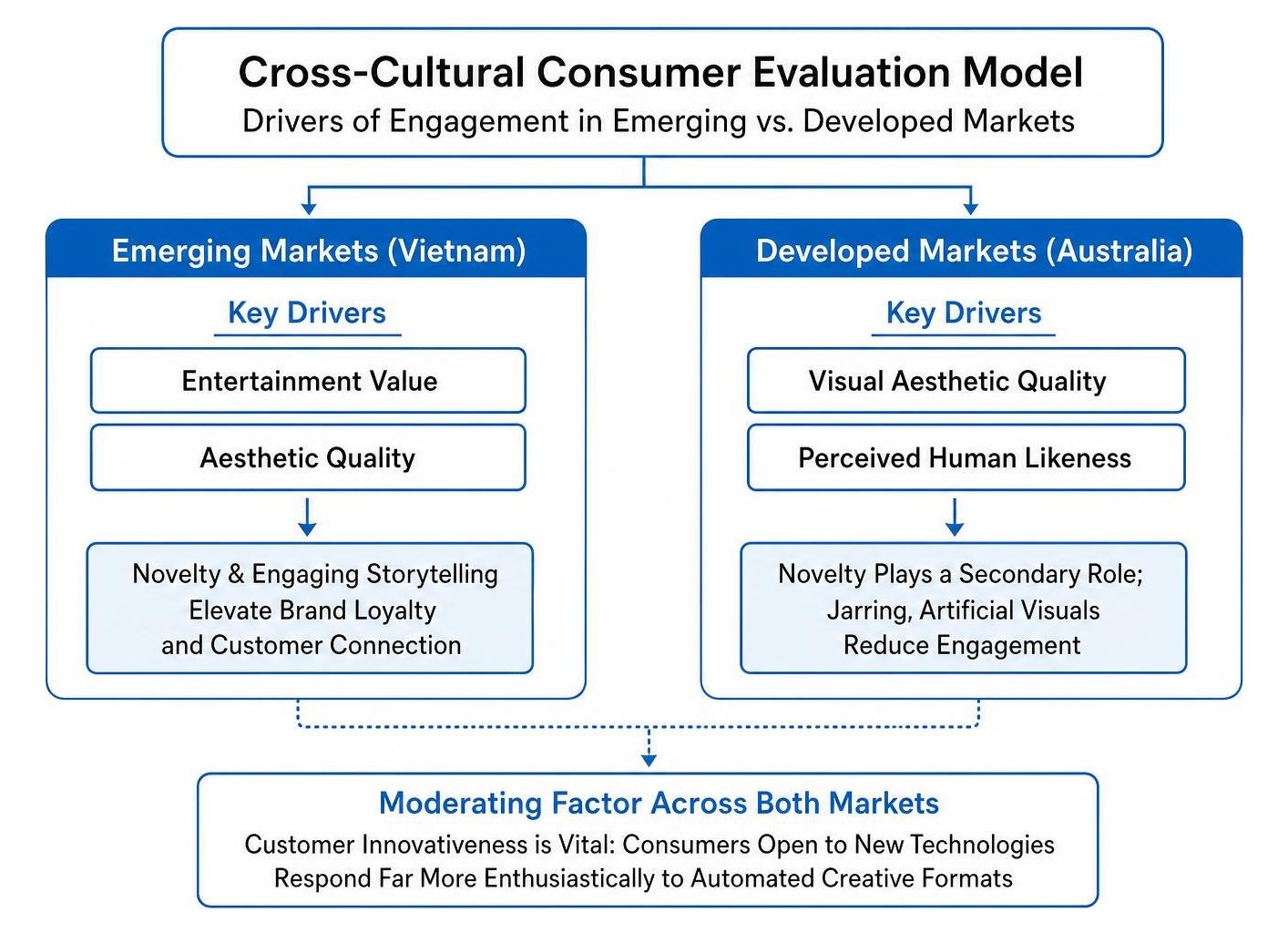
An empirical study across emerging and developed markets revealed distinct behavioral drivers:
- Emerging Markets (Vietnam): Entertainment value and aesthetic quality served as the primary drivers of consumer experience. Novelty and engaging storytelling directly elevated brand loyalty and customer connection.
- Developed Markets (Australia): Visual aesthetic quality and perceived human likeness were the dominant drivers, with novelty playing a secondary role. Highly mature digital audiences penalized jarring, artificial visuals.
Across both markets, customer innovativeness acted as a vital moderating factor: consumers open to new technologies responded far more enthusiastically to automated creative formats.
Does Labeling an Ad as AI-Generated Reduce Trust?
Mandatory disclosures can trigger an initial trust penalty if the ad content feels generic, but transparent communication preserves long-term credibility.
When users encounter artificial content that triggers the Uncanny Valley effect—where visual elements appear almost human but subtly unnatural—they experience emotional discomfort. Disclosing AI usage on high-tech or innovative products rarely hurts performance, but traditional consumer goods require authentic storytelling and polished visual execution to prevent skeptical reactions.
How Can Marketers Use Dynamic Creative to Improve ROI?
Dynamic Creative Optimization tailors ad creative components—such as images, headlines, and call-to-action buttons—in real time based on user behavior and context.
Instead of manually designing dozens of individual banners, marketers feed visual assets and modular copy into predictive personalization engines. The system assembles and tests high-probability combinations for every target segment, accelerating campaign learning and eliminating guesswork.
How Can Marketers Balance Automated Creative with Human Storytelling?
The most effective ad campaigns blend algorithmic efficiency with strategic human narrative oversight.
While automated tools excel at rapid formatting, background generation, and variant assembly, they lack nuanced emotional empathy. Successful teams establish clear editorial frameworks when scaling AI content with human quality, ensuring that every ad variation aligns with brand voice, values, and customer needs before launch.
What Steps Can Marketers Take to Improve AI Advertising Performance?
Improving campaign performance requires a structured optimization workflow combining first-party data, disciplined multi-asset testing, and continuous oversight.
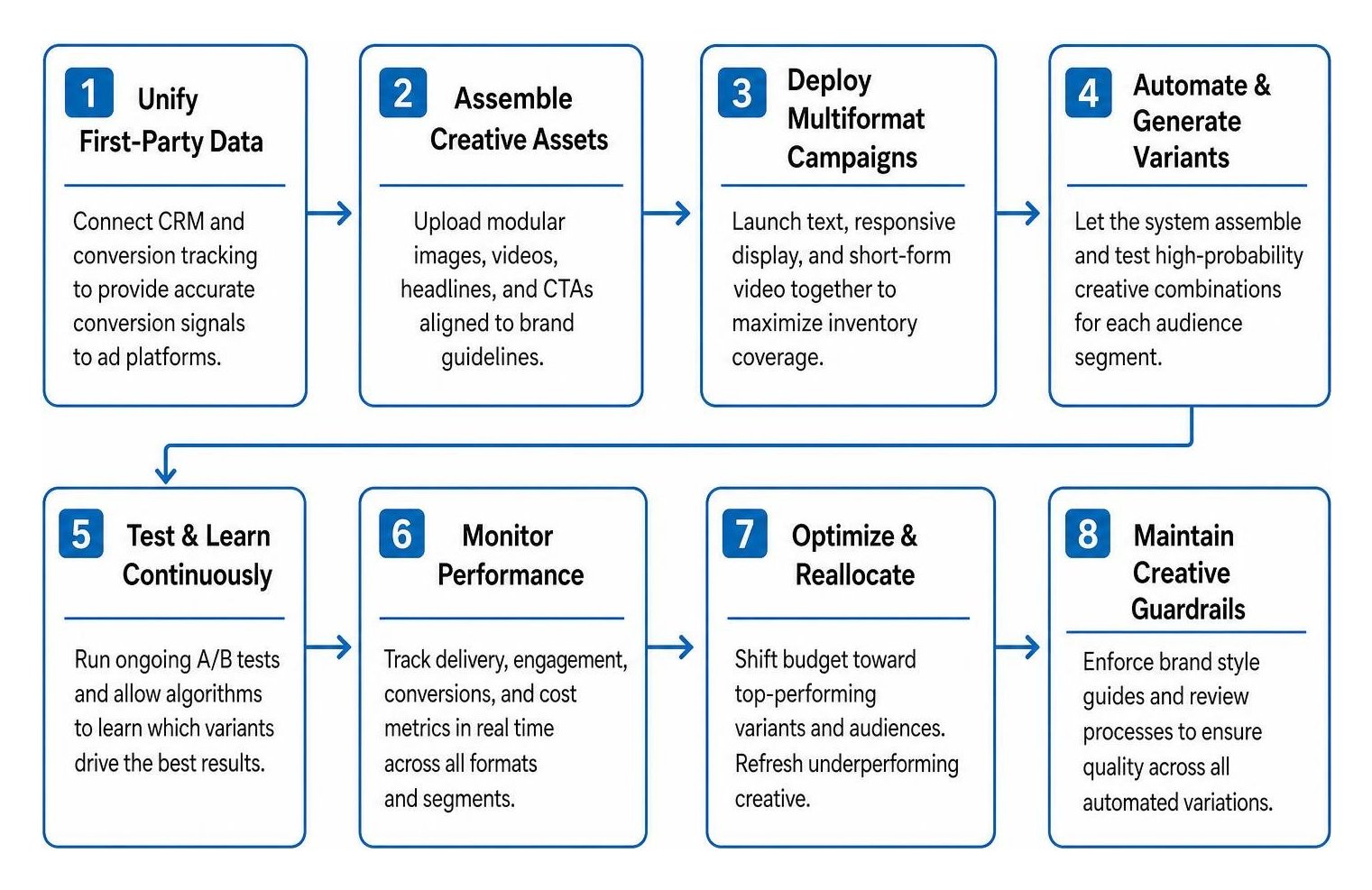
Follow these actionable execution steps to maximize returns:
- Unify First-Party Data: Ensure customer relationship management and conversion tracking feeds accurate conversion signals directly into ad network algorithms.
- Deploy Multiformat Campaigns: Combine text, responsive display, and short-form video creative within single campaign architectures to capture diversified inventory.
- Establish Creative Guardrails: Maintain strict brand style guides and review processes to verify aesthetic quality across automated variations.
- Monitor Demographic Distribution: Regularly check ad delivery across age, gender, and regional metrics to correct algorithmic delivery bias.
- Iterate Based on Downstream Revenue: Optimize bids and creative assets around qualified pipeline leads and closed sales rather than raw click counts.
Frequently Asked Questions About AI Advertising Performance
How Does AI-Generated Ad Performance Compare with Traditional Advertising?
AI-enhanced campaigns consistently achieve higher click-through rates and lower acquisition costs than static traditional ads. Automated bidding models improve conversion rates by approximately 14% on average while reducing cost-per-acquisition by 9%, driven by real-time intent matching and dynamic creative testing.
Why Can Labeling an Ad as AI-Generated Reduce Consumer Trust?
Labeling can introduce a trust penalty when consumers perceive the creative as low-effort or emotionally disconnected. Skepticism decreases significantly when the advertised product is tech-oriented or when the creative demonstrates clear aesthetic quality and informative value.
Which Creative Attributes Drive the Highest Engagement in AI Video Ads?
Entertainment value, visual aesthetic quality, and message clarity generate the strongest engagement in automated video advertising. Cross-market studies show that entertainment and visual polish drive substantial increases in viewer engagement, brand affinity, and repeat customer loyalty.
Maximizing Growth with Data-Driven Ad Precision
Artificial intelligence is a powerful force multiplier for ad efficiency, but sustainable return on investment requires sound strategy, verified customer data, and compelling creative execution.
At SmallBizSEO, we build measurable, long-term search visibility and campaign performance through our data-backed Velocity framework. We focus on transparent performance metrics that tie technical optimization directly to qualified leads and real business revenue.
To expand your digital marketing strategy and make informed technology choices, explore our comprehensive guide on 50 generative AI statistics every business owner should know to keep your brand ahead of modern search and advertising trends.