A – Z Guide to Distinguishing Brand Awareness From SEO Traffic

Why Separate Brand Awareness Growth From Generic SEO Traffic?
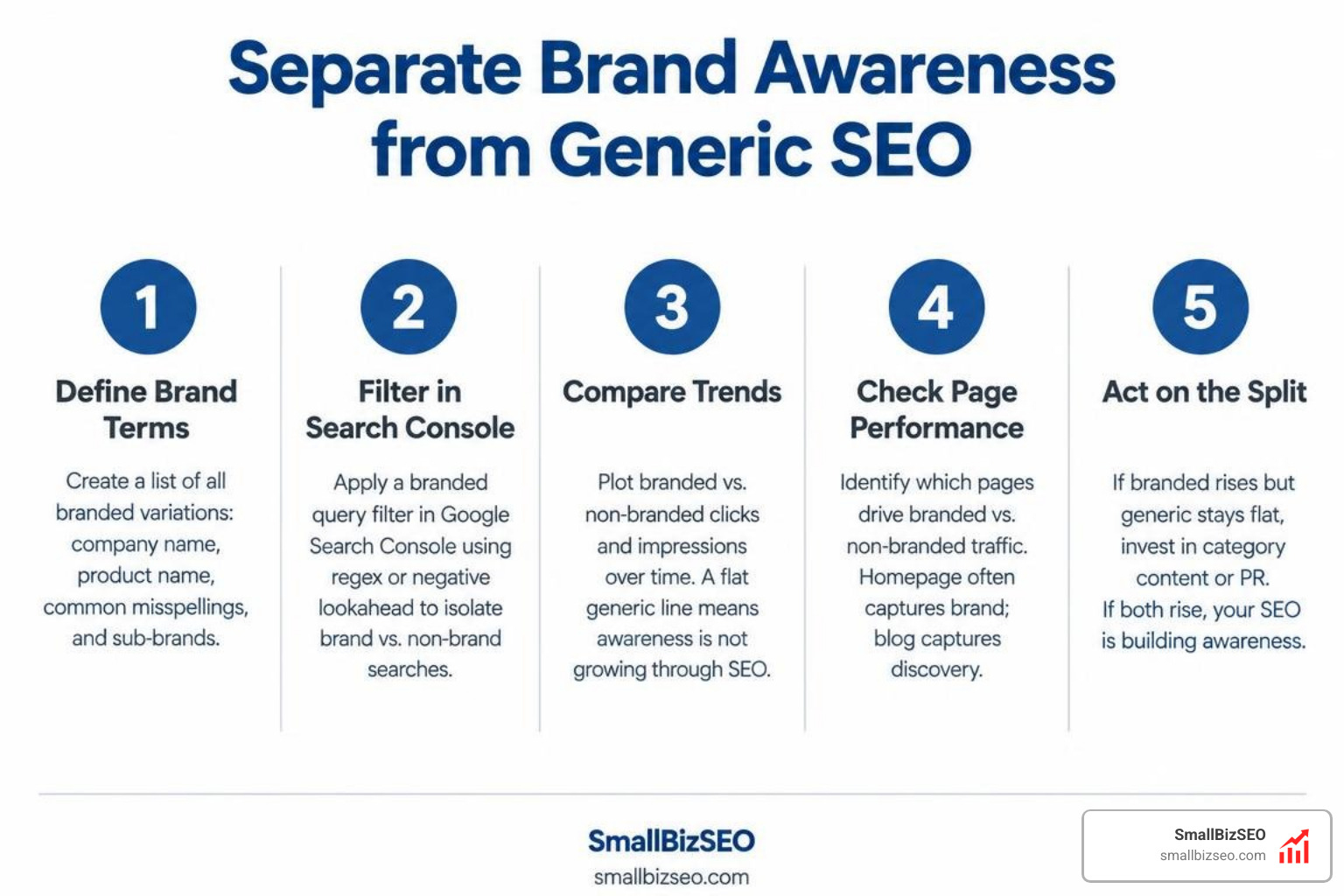
Separating brand awareness growth from generic SEO traffic starts with two groups in Google Search Console: searches that include your business name or a known variation, and searches that do not. Compare each group’s clicks and impressions over time, then check which pages bring in inquiries. If branded searches rise while generic searches stay flat, your business may be gaining recognition without reaching more people through category searches.
Ads, PR, and word of mouth can all lead someone to search for your name. SEO can build awareness too. The split helps you see what changed before you decide where to spend your time and budget.
I’m Clayton Johnson, founder of SmallBizSEO. My work connects SEO, content, and digital PR, and separating brand awareness growth from generic SEO traffic helps me ask a useful question: are more people discovering the business, or are more people searching for one they already know?
Why Is It Essential to Separate Brand Awareness Growth From Generic SEO Traffic?
To understand real marketing performance, you must isolate demand capture from demand generation. Branded searches measure existing demand for your business, while non-branded searches show how well you reach people discovering your category.

When business owners look at a single blended organic traffic line on an analytics dashboard, they often assume all upward movement reflects successful search optimization. In reality, total organic traffic blends two fundamentally different user journeys:
- Navigational intent: A searcher already knows your brand name, typed it into Google to find your login portal or homepage, and clicked your first-position result.
- Commercial discovery: A searcher typed a problem, service, or product category without knowing who you are, found your educational or transactional page, and learned about your business for the first time.
Relying on blended metrics hides whether your optimization campaigns are acquiring new prospects or merely acting as a digital front desk for people who heard about you on a podcast, saw a billboard, or were referred by a colleague.
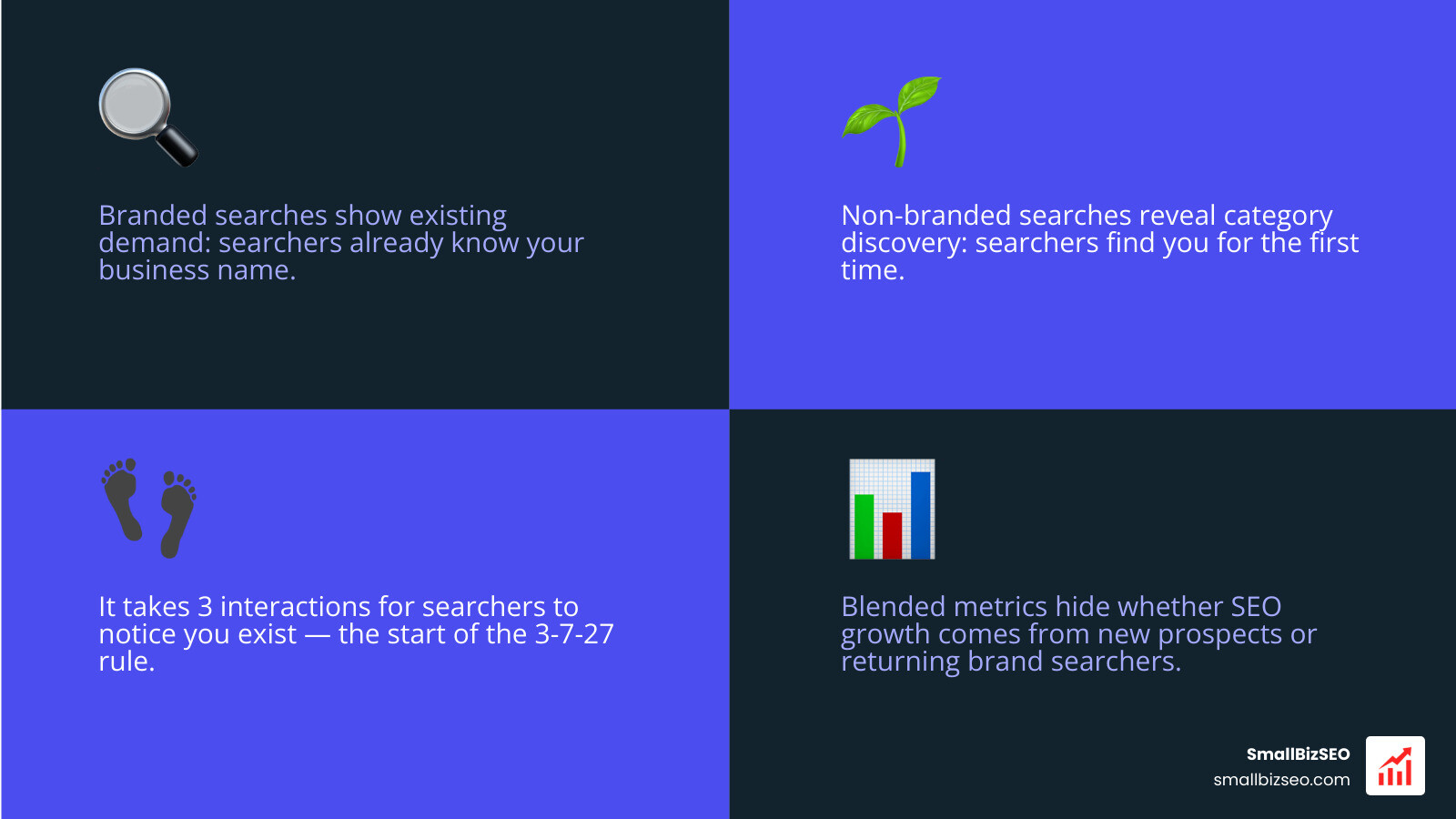
Understanding this distinction ties directly into the classic 3-7-27 brand awareness rule: it takes 3 interactions for searchers to notice you exist, 7 interactions for them to remember your name, and 27 touchpoints to build enough trust to buy. Organic discovery across generic search terms feeds the early stages of this journey, creating the brand familiarity that later turns into direct, branded searches.
How Does Branded Demand Differ From Generic Non-Branded Organic Traffic?
Branded queries contain your company name, proprietary product names, or close misspellings, indicating clear brand intent. Non-branded queries focus on category terms, problems, or solutions, targeting uncommitted searchers who are exploring their options.
Targeting a non-branded keyword allows your business to appear in front of an audience actively seeking solutions rather than specific vendors. Because these two search types represent different stages of buyer awareness, their performance metrics differ significantly across click-through rates (CTR) and conversion patterns.
| Metric / Dimension | Branded Organic Search | Generic (Non-Branded) Organic Search |
|---|---|---|
| Primary User Intent | Navigational / Direct purchase | Informational / Commercial discovery |
| Average Position | Almost always Position 1 | Fluctuates based on algorithm & competition |
| Click-Through Rate (CTR) | High (typically 40% to 60%+) | Moderate to low (5% to 28.5% for top spots) |
| Conversion Likelihood | 2x to 3x higher conversion rate | Lower initial conversion; top-of-funnel capture |
| Primary Growth Driver | PR, paid media, offline ads, word of mouth | Technical SEO, content strategy, link building |
Over 44% of Google searches include branded terms. Because brand affinity can double or triple click-through rates, branded traffic naturally delivers exceptional conversion rates. However, relying solely on branded visitors leaves your business vulnerable if awareness from outside channels begins to fade.
Why Does Conflating Brand Awareness With SEO Performance Distort Growth Reporting?
Lumping branded and generic search together artificially inflates average SEO metrics, masking underlying drops in search visibility and misallocating marketing budgets.
When third-party initiatives—such as a paid advertising push, a viral social media post, or PR coverage—generate a spike in brand searches, blended organic traffic rises. Looking at that top-line number might lead you to believe your search optimization agency performed miracles. In truth, an external campaign drove that lift, while your commercial discovery rankings might have dropped. As detailed in this guide on how branded traffic inflates your SEO results, blending these segments distorts average position and CTR metrics because high-performing branded navigational queries skew the sitewide averages.
This distortion creates three critical problems:
- Misattributed ROI: Marketing leadership credits SEO for revenue that paid media, sales outreach, or PR actually generated.
- Hidden Content Decay: Falling rankings on high-intent service terms go unnoticed because rising brand queries offset the traffic loss.
- Inaccurate Unit Economics: An artificial rise in blended traffic skews your calculation of customer acquisition cost and misrepresents which campaigns drive true organic conversion growth.
How Can You Split Branded and Generic Search Data Accurately?
You can cleanly split branded and generic search performance by using Google Search Console query filters alongside custom regular expressions (regex) to categorize search terms into dedicated reporting buckets.
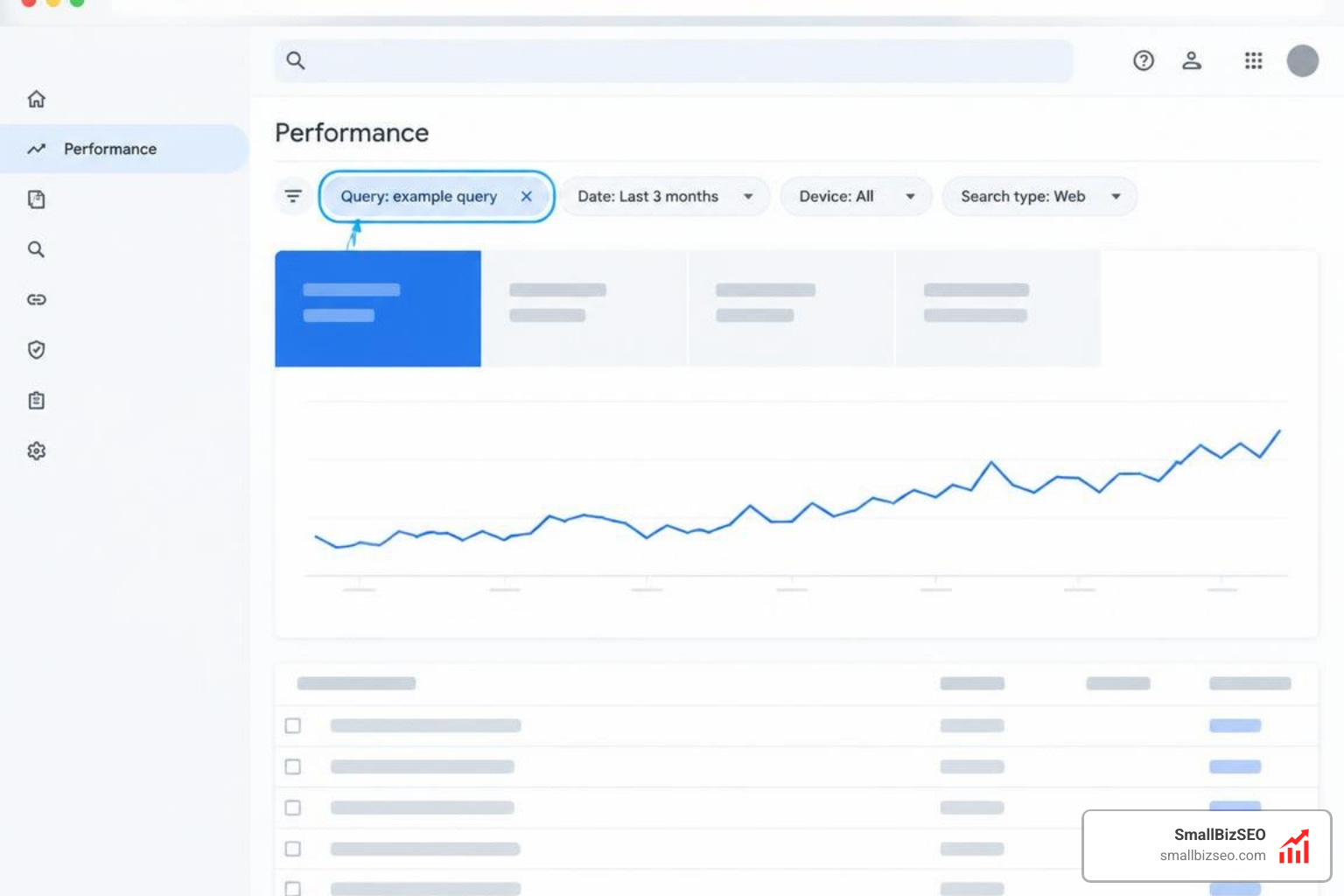
Google Search Console (GSC) is the single source of truth for query-level search data. Relying strictly on Google Analytics 4 (GA4) is insufficient because privacy thresholds prevent GA4 from showing query-level search terms directly. By isolating queries in Search Console, you can accurately measure how non-branded rankings expand over time.
How Do You Configure Google Search Console for Separating Brand Awareness Growth From Generic SEO Traffic?
To configure Google Search Console, navigate to the Performance report and create dedicated views using the native query filters or custom regex expressions that capture your brand name and its variations.
For in-depth setup steps, see this guide on branded vs. non-branded traffic analysis. When managing day-to-day reporting, track these core dimensions among the clear SEO metrics every small business owner needs to track monthly:
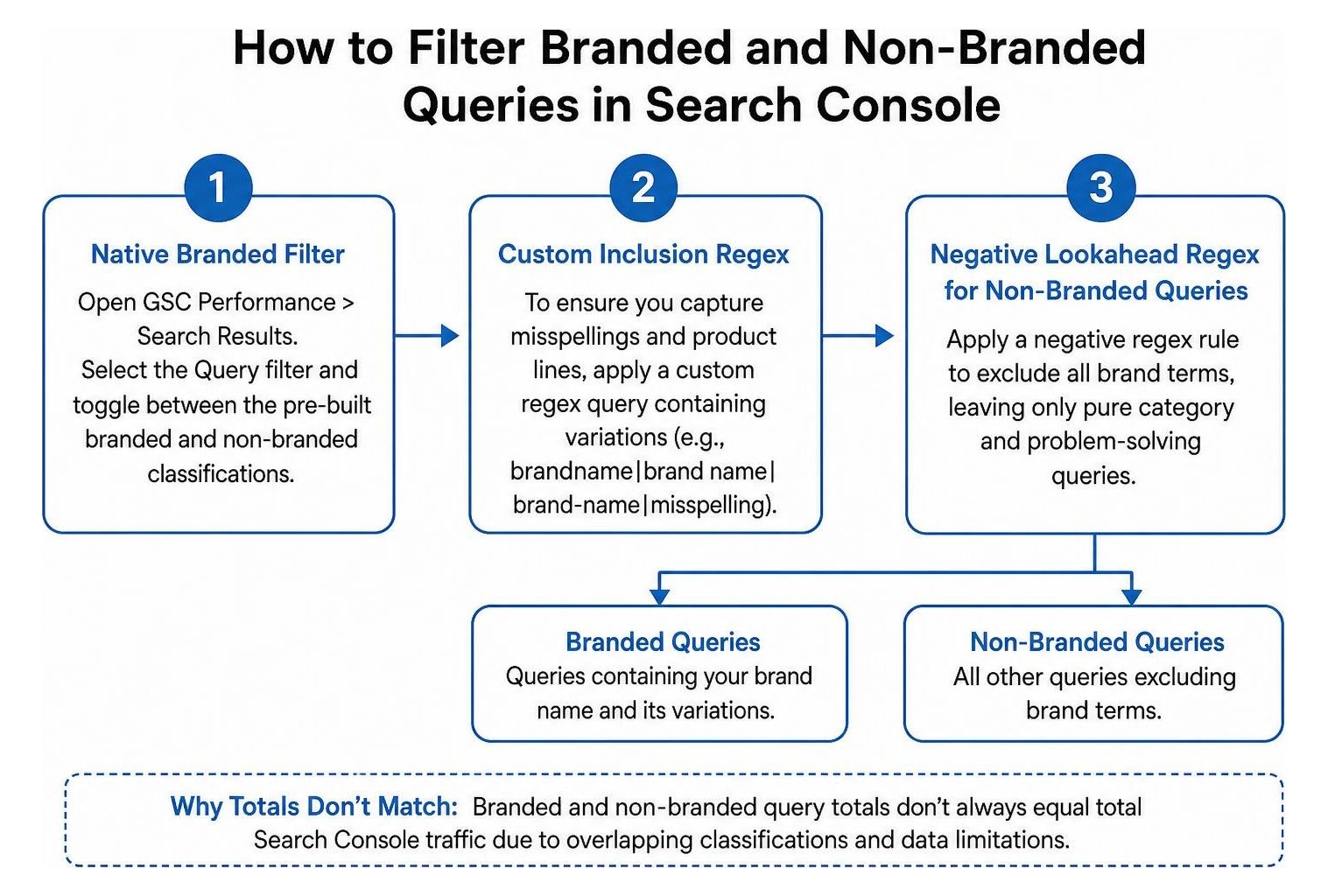
- Native Branded Filter: Open GSC Performance > Search Results. Select the Query filter and toggle between the pre-built branded and non-branded classifications.
- Custom Inclusion Regex: To ensure you capture misspellings and product lines, apply a custom regex query containing variations (e.g.,
brandname|brand name|brand-name|misspelling). - Negative Lookahead Regex for Non-Branded Queries: Apply a negative regex rule to exclude all brand terms, leaving only pure category and problem-solving queries.
Why Don't Branded and Generic Query Totals Match Total Search Console Traffic?
Your branded query clicks plus your non-branded query clicks will rarely equal your total Search Console clicks because Google omits anonymized queries to protect searcher privacy.
Industry research shows that anonymized queries account for roughly 46.77% of all clicks recorded in Search Console. When search volume for a very specific, long-tail query falls below a privacy threshold, Google aggregates those impressions and clicks into your total site numbers but hides the exact query string from the table.
In typical performance samples, a page might record 762 total impressions while disclosed query rows display only 458 impressions (about 60.1% visibility). The remaining 39.9% sits in Google's anonymized tier. This means your query-level split is an operational estimate rather than a perfect accounting ledger.
| Classification Method | Pros | Cons / Limitations |
|---|---|---|
| Native GSC Brand Filter | Automated setup; uses machine learning to identify misspellings and entities | Less control over ambiguous product names; opaque rules |
| Custom GSC Regex Rules | Complete control; customizable for sub-brands and complex misspellings | Requires ongoing maintenance as you launch new products |
| Data Warehouse / BigQuery | Joins GSC data with CRM conversions; bypasses basic UI row limits | Requires technical resources and database setup |
Understanding these data gaps helps you track your overall visibility score accurately, evaluating directional trends rather than stressing over minor row discrepancies.
How Should You Use Branded and Generic Search Trends to Make Decisions?
Evaluate branded and non-branded trends simultaneously using a four-quadrant diagnostic matrix to determine whether your business needs top-of-funnel content or brand-building investments.
Evaluating both trajectories together clarifies what actions you should take:
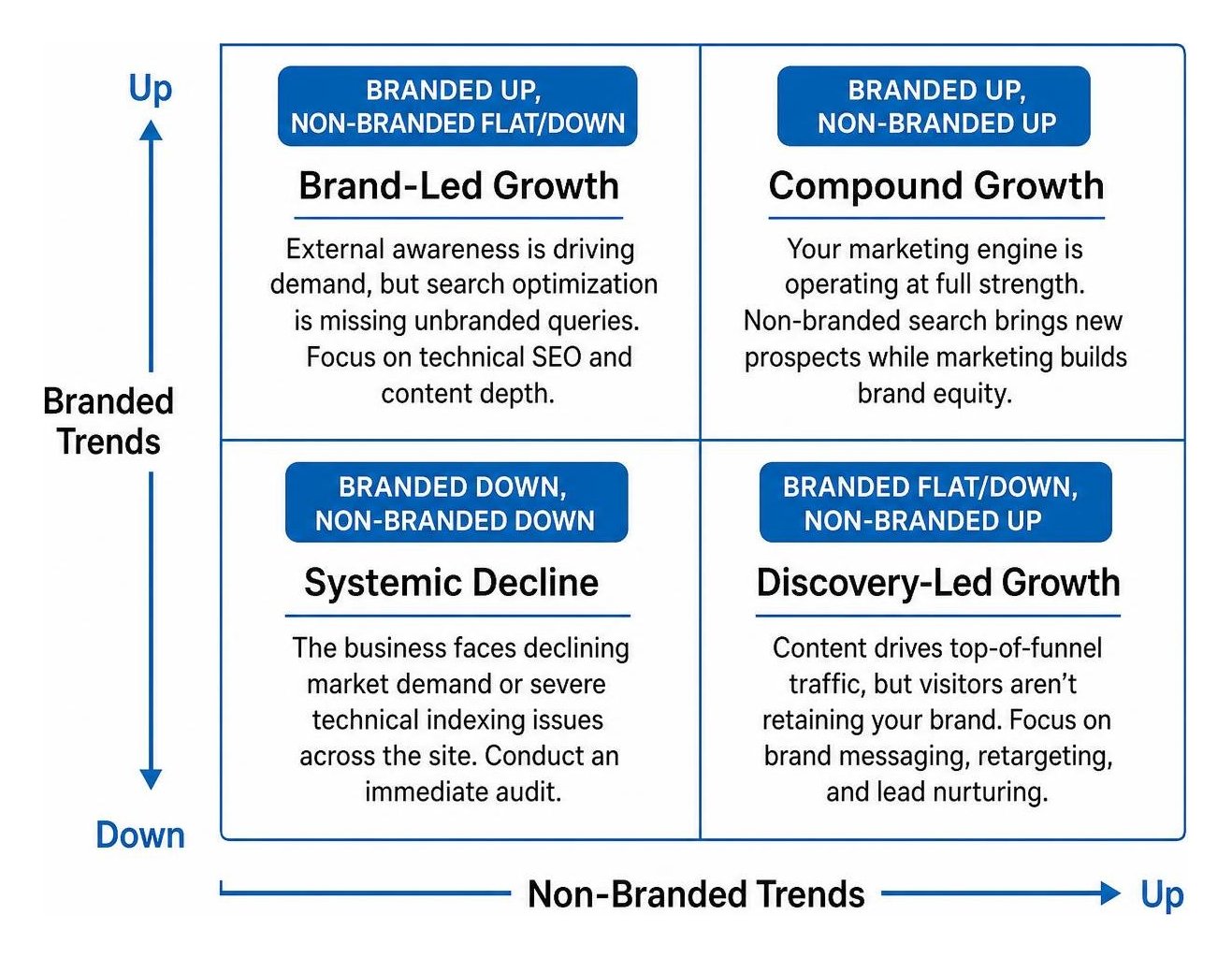
- Branded Up, Non-Branded Up (Compound Growth): Your marketing engine is operating at full strength. Non-branded search introduces new prospects, while external marketing builds brand equity.
- Branded Up, Non-Branded Flat/Down (Brand-Led Growth): External awareness (PR, social, ads) is driving demand, but your search optimization is failing to capture unbranded category searches. Focus on technical SEO and content depth.
- Branded Flat/Down, Non-Branded Up (Discovery-Led Growth): Your content strategy is winning top-of-funnel traffic, but visitors are not retaining your brand name. Focus on brand messaging, retargeting, and lead nurturing.
- Branded Down, Non-Branded Down (Systemic Decline): The business faces declining market demand or severe technical indexing issues across the site. Conduct an immediate technical and brand audit.
What Practical Steps Separate Brand Awareness Growth From Generic SEO Traffic Across Page Types?
To see where SEO drives discovery versus where it simply captures existing demand, analyze performance by page template instead of looking only at sitewide numbers.
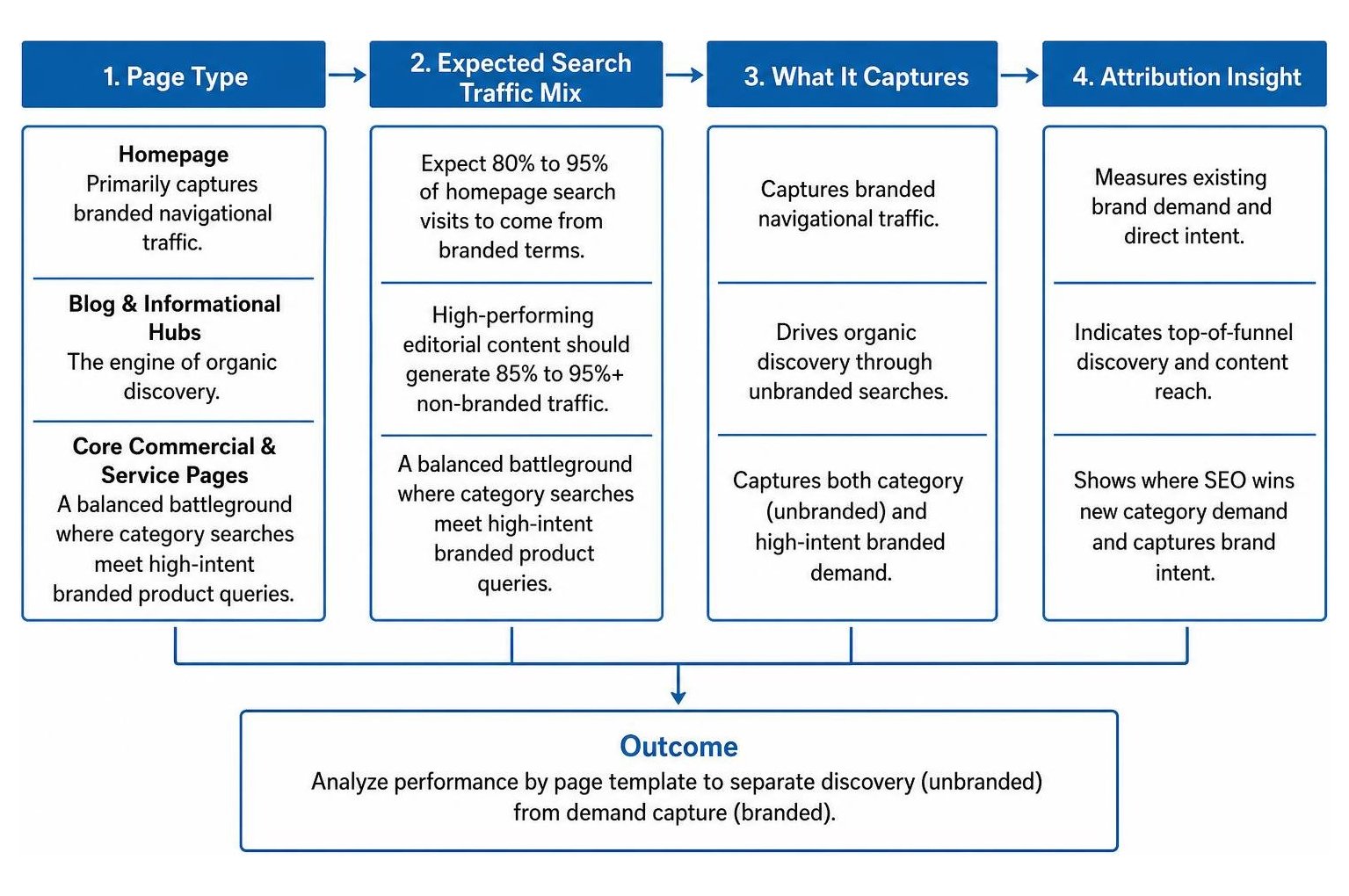
- Homepage: Primarily captures branded navigational traffic. Expect 80% to 95% of homepage search visits to come from branded terms.
- Blog & Informational Hubs: The engine of organic discovery. High-performing editorial content should generate 85% to 95%+ non-branded traffic.
- Core Commercial & Service Pages: A balanced battleground where category searches meet high-intent branded product queries.
Publishing authoritative, brand building content on your informational pages brings in unbranded visitors and introduces them to your point of view. Over time, those readers return through direct and branded searches.
When resources are limited, small and mid-sized businesses should prioritize these high-impact actions:
- Standardize company name, leadership details, and structured schema across all directory and social profiles to clarify your entity footprint.
- Build tightly organized topic clusters around core customer problems rather than publishing scattered, one-off blog posts.
- Earn authoritative media and industry mentions through original data studies and podcast interviews to spur name searches.
- Review lead inquiries and down-funnel lead quality by landing page type to confirm which pages drive genuine sales opportunities.
How Should You Evaluate AI Overviews, Zero-Click SERPs, and Downstream Conversion Ratios?
Search engines increasingly use AI-generated answers and zero-click layouts, making brand recognition essential for maintaining organic performance.
Industry data shows that AI Overviews appear in up to 82.91% of branded-keyword results. In zero-click environments, searchers often read summaries without clicking a link, which makes establishing your business as a recognized brand entity crucial. When an AI answer cites your business, it builds credibility and often prompts the user to search for your company name later.
Tracking these touchpoints through to organic revenue helps ensure your marketing investments yield real returns. At SmallBizSEO, our data-driven Velocity framework separates navigational brand queries from non-branded discovery terms. This approach ensures your reporting clearly shows where new customer acquisition happens and helps you build a sustainable branded search demand strategy.
Turning Search Data Into Clear Business Growth
Measuring search performance without separating branded from generic traffic is like running a store without knowing whether shoppers walked in from your street sign or drove across town specifically to see you. Both visitors matter, but they require entirely different marketing investments.
Take time this week to set up brand-exclusion filters in Google Search Console. Review your trends across informational and commercial landing pages, identify whether your growth comes from broader awareness or new category discovery, and use those insights to guide your next marketing moves.