Audit Past Traffic Attribution Reports to Separate HTTPS Facts from Fiction

How can you check an old report's HTTPS traffic claim?
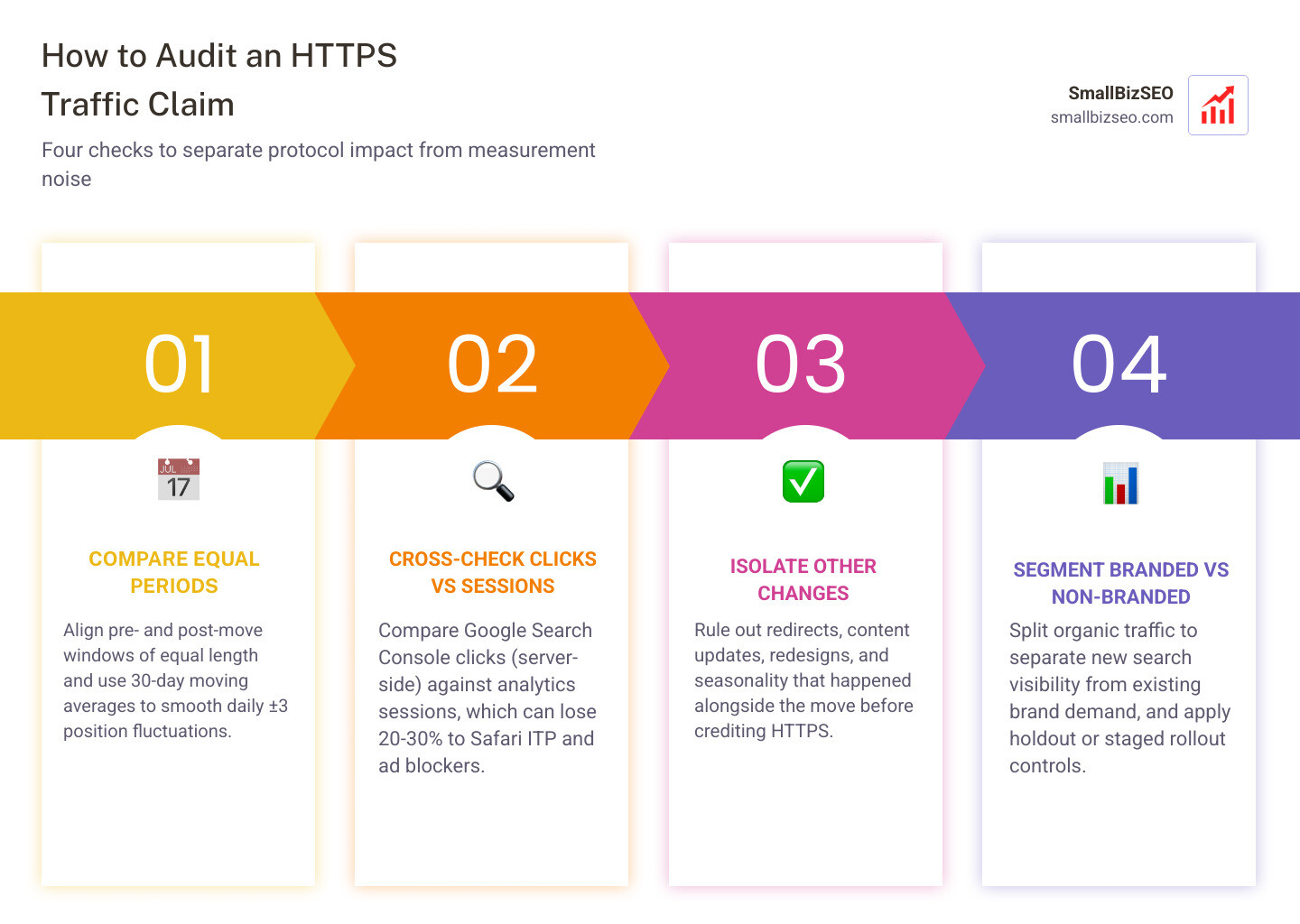
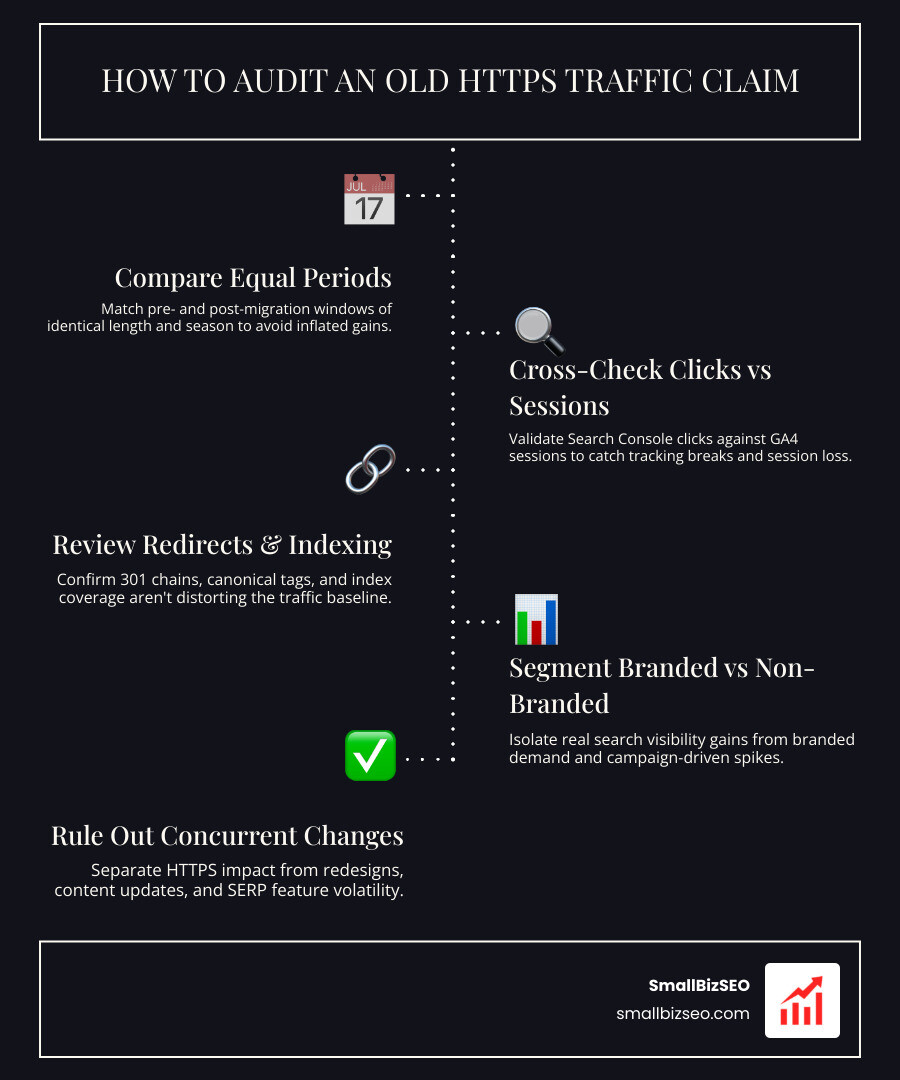
To evaluate old SEO reports that attribute traffic gains to HTTPS, check what changed besides the protocol. Compare equal periods before and after the move, then check Google Search Console clicks against analytics sessions. Review redirects and indexing, and separate branded searches from non-branded searches. If content, campaigns, tracking, or search results changed at the same time, a traffic increase alone cannot prove HTTPS caused it.
HTTPS is a Google ranking signal, but a report needs more than a before-and-after chart to credit it for growth. The goal is to find out whether more people reached the site through search, or whether the numbers changed for another reason.
I'm Clayton Johnson, founder of SmallBizSEO. My work in technical SEO and transparent reporting shapes how I evaluate old SEO reports attributing traffic gains to HTTPS: test the claim against search data, site changes, and measurement quality before drawing a conclusion.
Introduction: The Reality of Historical Migration Claims
When security updates were rolled out across the web, countless reports proclaimed massive traffic spikes credited entirely to SSL certificates. The reality is far more nuanced. Google treats secure connections as a lightweight ranking signal—essentially a tie-breaker when two pages are otherwise equal in quality and relevance.

Historical attribution bias frequently led analysts to confuse correlation with causation. During site migrations, organic numbers regularly swing by 20% to 40% purely because of tracking glitches, missing tags, or protocol-switching artifacts rather than real user demand. When legacy reports fail to audit these variables, baseline distortion makes routine measurement anomalies look like brilliant SEO victories.
Step-by-Step Guide: How to Evaluate Old SEO Reports Attributing Traffic Gains to HTTPS
A forensic audit of historical SEO data requires looking beyond total session charts. Understanding how to interpret SEO data and anomalies involves validating the entire search journey, from server logs to downstream conversions.
Step 1: How to Evaluate Old SEO Reports Attributing Traffic Gains to HTTPS by Auditing Measurement Errors
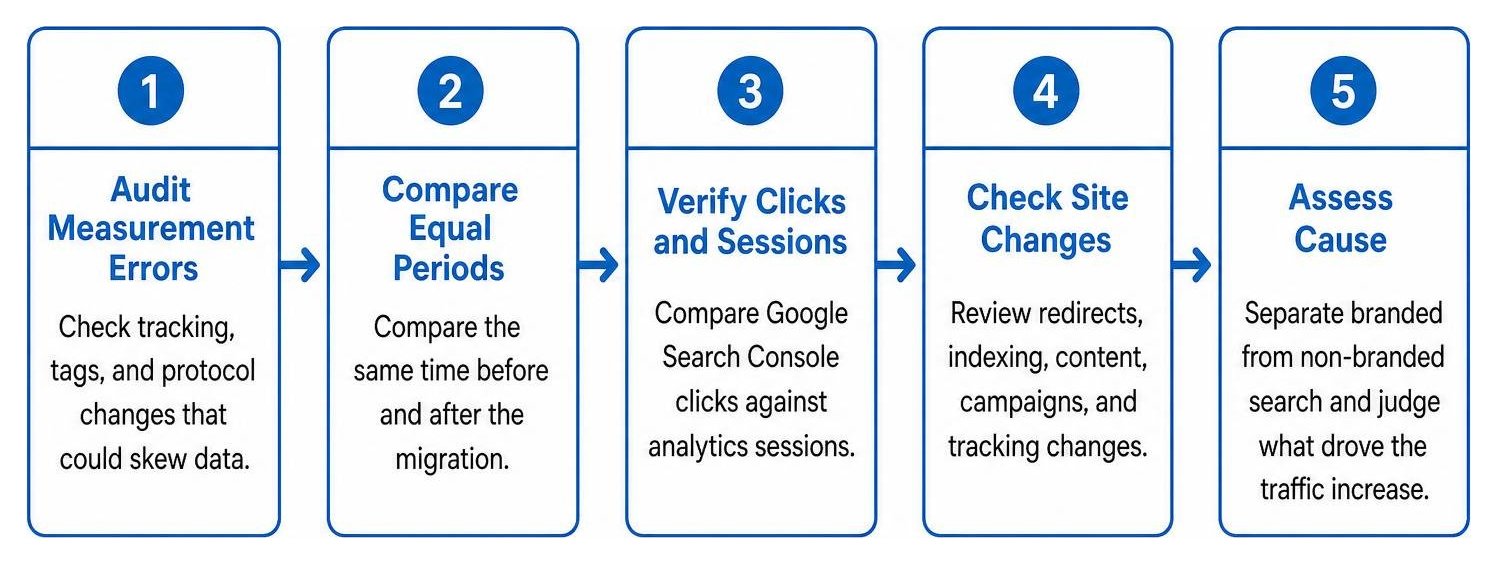
The first priority during any audit is determining whether recorded traffic gains reflect real searchers or measurement defects.
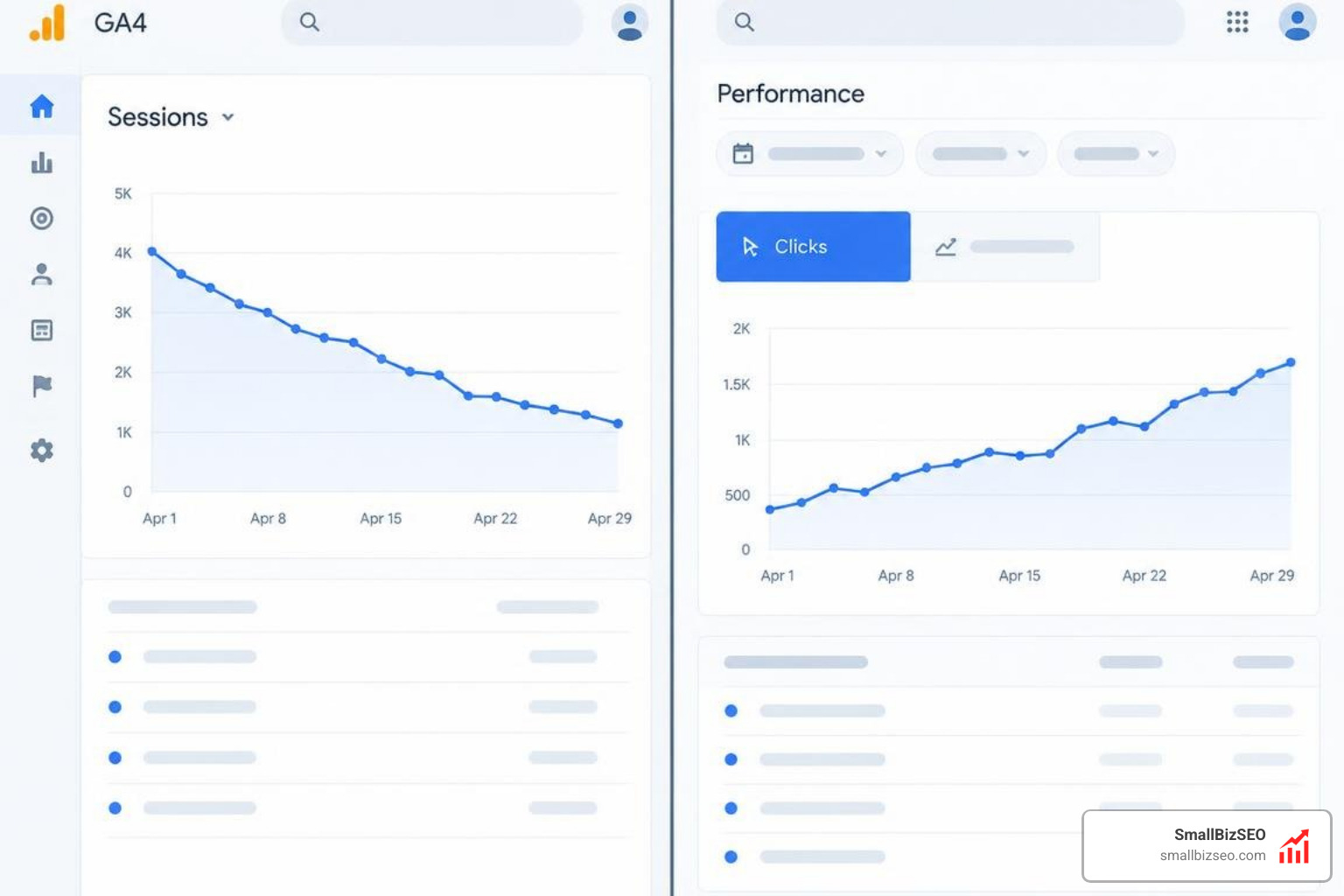
Client-side analytics tools like GA4 can lose 20% to 30% of user sessions due to ad blockers, Safari Intelligent Tracking Prevention (ITP), and consent banner drops. In contrast, Google Search Console logs server-side clicks before browser filtering occurs. As detailed in this SEO analytics guide, a sudden lift in analytics sessions often stems from fixed tracking snippets or referrer restoration rather than new organic search visibility.
When HTTP sites linked to HTTPS destinations in the past, referral headers were stripped, dumping organic search users into direct traffic buckets. Once the site moved to HTTPS, that traffic suddenly reappeared in analytics as organic, creating an artificial traffic spike. Mastering SEO reporting fundamentals requires running dual-tracking verification to prevent these phantom gains from polluting historical records.
| Audit Dimension | Client-Side Tracking (GA4) | Server-Side Data (Search Console / Logs) | Impact on Historical Attribution |
|---|---|---|---|
| Data Collection Point | Browser-rendered JavaScript tags | Server response & Google search log | Ad blockers and ITP deflate client counts by 20–30% |
| Referrer Preservation | Stripped on secure-to-insecure visits | Tracked at query click point | Restored referrers look like "new" organic traffic |
| Bot & Filter Handling | Excludes automated browsers post-load | Counts all verified Googlebot crawls | Crawl spikes get mistaken for user traffic gains |
| Tagging Stability | Breaks if scripts drop during migration | Immune to on-page tag misconfigurations | Tag fixes create artificial traffic surges |
Step 2: How Do You Separate Protocol Changes from Redirects, Content Updates, and Seasonality?
To accurately attribute performance changes, isolate protocol updates from simultaneous site modifications. Sites rarely switch to HTTPS in isolation; teams frequently update design templates, rewrite content, and clean up URL architecture at the exact same moment.
Understanding Google's official HTTPS ranking documentation helps set realistic expectations. Because HTTPS is a lightweight signal, typical rank movements average less than a fraction of a position.
Rankings naturally fluctuate by plus or minus three positions daily due to personalization and data center testing. To evaluate true performance trends, compare 30-day moving averages rather than single-day snapshots. Furthermore, backlink signals experience a lag of 4 to 12 weeks before influencing SERP positions. If a report claims immediate ranking jumps within days of installing an SSL certificate, those gains were almost certainly driven by pre-existing backlink equity or broader algorithmic shifts. In cases where traffic shifted dramatically, evaluating recovery from core algorithm updates or reviewing modern technical SEO standards provides the proper context.
Be mindful that around 58% to 60% of searches conclude without a click due to AI Overviews and featured snippets, which dilute organic click-through rates regardless of protocol security.
Step 3: How Can You Validate Search Console and Server Logs Against Legacy Claims?
Validating past claims requires checking technical server logs and Google Search Console performance data.
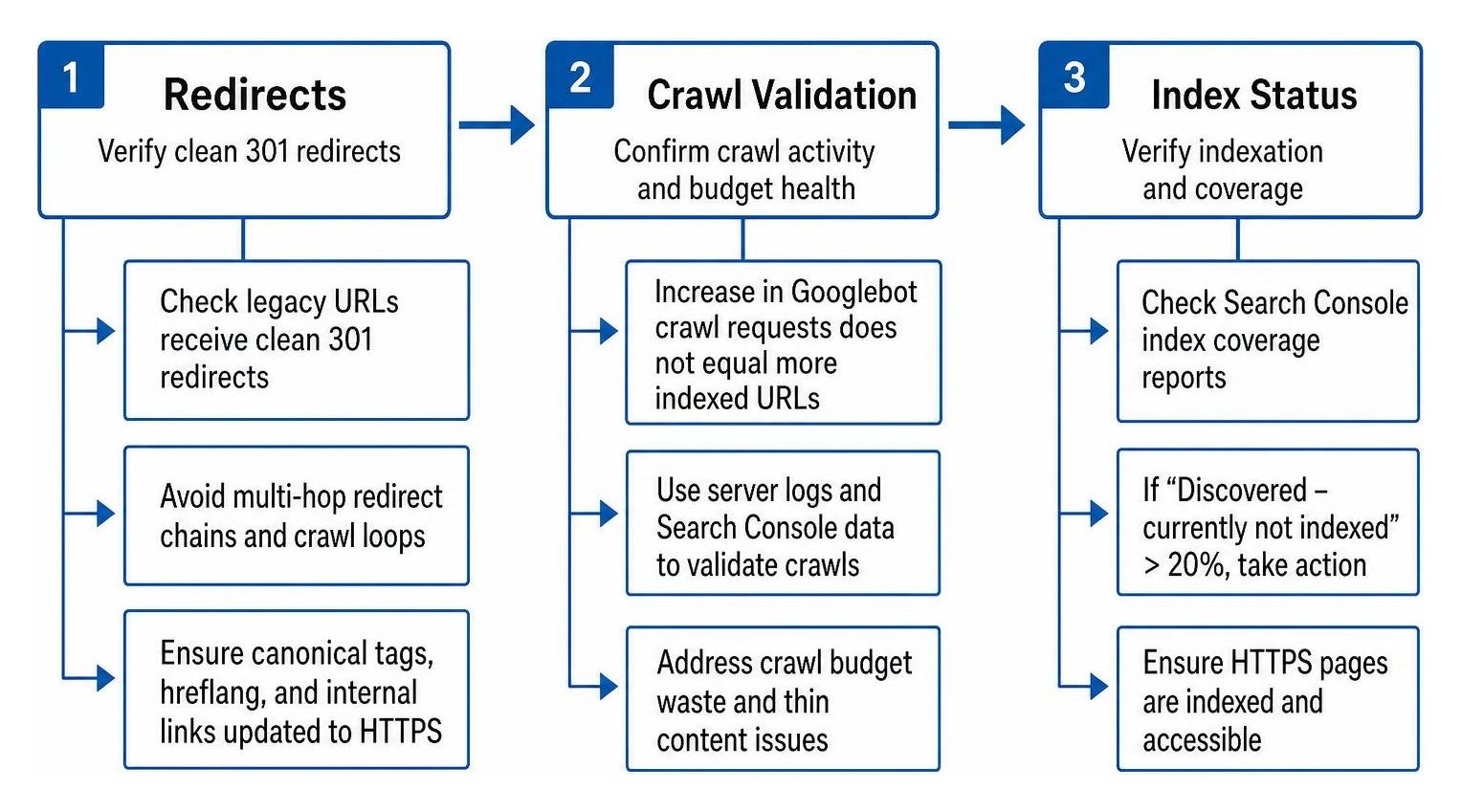
Verify that legacy URLs received clean 301 redirects rather than multi-hop redirect chains by reviewing methods for verifying static site migrations. Incomplete redirect maps dilute link equity and generate crawl loops that distort traffic figures.
Next, confirm whether pages were actually indexed. As highlighted in research on analyzing server logs to separate crawl requests from indexation, an increase in Googlebot crawl requests does not equal an increase in indexed URLs.
Check Search Console index coverage reports. If the status "Discovered – currently not indexed" exceeds 20% of submitted URLs, crawl budget waste or thin content issues exist. Ensure canonical tags, hreflang annotations, and internal links were completely updated to secure URLs, avoiding mixed-content warnings or HTTP Strict Transport Security (HSTS) errors. For full implementation details, review our guides on HTTPS technical implementation and modern HTTP/2 and HTTP/3 network protocols.
Step 4: How to Evaluate Old SEO Reports Attributing Traffic Gains to HTTPS Using Statistical Controls and Segmentation
Raw traffic aggregates hide the true drivers of organic visibility. Proper attribution demands data segmentation and statistical validation.
- Branded vs. Non-Branded Segmentation: Strip out branded queries. A spike in branded searches often reflects offline marketing, PR campaigns, or seasonal demand rather than technical protocol improvements.
- Statistical Significance Thresholds: A 10% traffic lift requires a minimum sample size of 3,000 sessions at a 95% confidence level to represent a genuine trend. For conversion lift assessments, a 2% increase requires at least 15,000 sessions across comparable time horizons.
- Attribution Modeling: Attribution models heavily sway historical claims. Last-click attribution undercounts organic search influence by 40% to 60%, while position-based modeling distributes credit more equitably across the funnel.
- Causal Validation: Using causal pathways for visibility attribution helps distinguish whether gains came from holdout controls, staged rollouts, or sitewide protocol changes.
Reconciling Discrepancies and Presenting Accurate Findings to Stakeholders
Auditing past reports can reveal that celebrated wins were actually measurement errors or routine market fluctuations. Communicating these findings requires clarity, diplomacy, and a constructive approach.
Deliver an objective narrative that separates technical accomplishments from commercial performance. Moving to HTTPS is always the right technical decision for security, privacy, and user trust. Clarifying that historical traffic gains came from restored analytics referrers rather than explosive search demand does not diminish the value of technical hygiene—it establishes data integrity for future campaigns.
How Should You Reconcile Conflicting Data and Document the Audit for Future Reporting?
When auditing legacy reports, inconsistencies between analytics tools, Search Console, and CRM platforms are common.

CRM records can experience error rates around 42% due to lead-tagging gaps or manual entry mistakes. If conversion discrepancies between GA4 and your CRM exceed 30%, investigate tracking triggers before using that data for business forecasting.
To protect future reporting, maintain a standardized audit change log that documents:
- Exact deployment timestamps for certificates, redirects, and tracking scripts.
- Search Console impressions, clicks, and average position tracking using 30-day moving averages.
- Branded versus non-branded query splits.
- Core algorithm update windows and marketing campaign schedules.
Adopting transparent SEO reporting frameworks ensures reporting remains accountable, accurate, and aligned with measurable business growth.
Moving Forward with Accurate Technical Attribution
Evaluating historical SEO reports is not about assigning blame for past measurement mistakes; it is about establishing a reliable baseline for strategic decision-making. By cross-referencing server-side data, adjusting for measurement discrepancies, and isolating protocol updates from broader site changes, marketing teams gain true visibility into their organic performance.
At SmallBizSEO, we apply our data-driven Velocity framework to deliver transparent, reliable reporting and actionable technical strategies. If you want to audit your historical search data or optimize your site's technical foundation, schedule a comprehensive HTTPS visibility audit with our team today.