A Practical Guide to Choosing a Technical SEO Company

A Practical Guide to Choosing a Technical SEO Company
What a Modern Technical SEO Company Does: Core Services and Capabilities
When your website grows, its underlying infrastructure becomes increasingly intricate. A specialized technical SEO company steps in to manage the codebase, server architecture, response protocols, and rendering pathways that dictate how search engine bots perceive your digital footprint. Instead of focusing solely on content or keywords, these engineering-minded specialists resolve structural barriers, latency bottlenecks, and misconfigured directives that quietly suppress organic visibility.
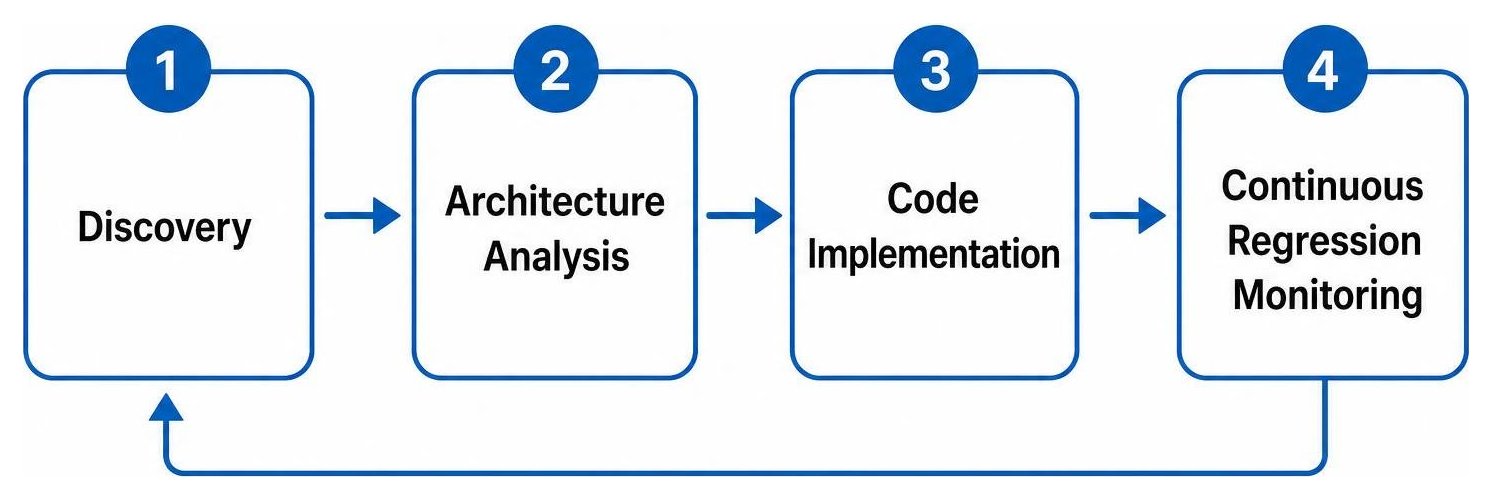
A comprehensive engagement usually starts with a detailed SEO visibility audit. This assessment examines server responses, bot access patterns, URL parameter hygiene, and indexing health across your entire domain. By performing log-file analysis, technical specialists can uncover how search bots allocate their crawl budget across your pages. This critical diagnostic process allows development teams to diagnose critical audit errors before broken templates, infinite crawl loops, or bad redirects drain organic revenue and server resources.
Infrastructure Health, Crawlability, and Indexation Control
Search engines do not possess unlimited computing power to crawl the web. In fact, enterprise studies indicate that the average website wastes 30% to 40% of its crawl budget on duplicate parameters, broken loops, redirect hops, and unindexed assets. Proper site structure and server-level configuration can cut crawl-budget waste by up to 70%, ensuring search bots direct their attention to revenue-generating URLs.
Managing crawlability requires configuring structural directives properly:
- Directive File Management: You must optimize your robots txt file following official Google Search Central documentation to block scrapers, internal search query pages, faceted parameters, and administrative scripts from consuming bot bandwidth.
- Sitemap Segmentation: Dividing XML sitemaps by template, category, or update frequency allows you to monitor indexing percentages and indexation anomalies in real time within search console reports.
- Faceted Navigation Controls: Dynamic filtering on catalog sites can generate millions of thin URLs. Implementing parameter rules, AJAX state handling, and canonical tags prevents duplicate index bloat.
- Redirect Mapping: Eliminating redirect chains and mapping legacy URLs directly to canonical equivalents ensures that authority flows without link equity loss.
Rendering Architecture and Core Web Vitals Optimization
Modern web applications rely heavily on dynamic JavaScript frameworks such as React, Next.js, Angular, and Vue. However, search engines process client-rendered JavaScript through a two-wave indexing pipeline that can delay rendering and indexing for weeks. A technical agency helps you choose the right rendering strategy—whether that involves Server-Side Rendering (SSR), Incremental Static Regeneration (ISR), or Static Site Generation (SSG)—to guarantee immediate crawler discoverability.
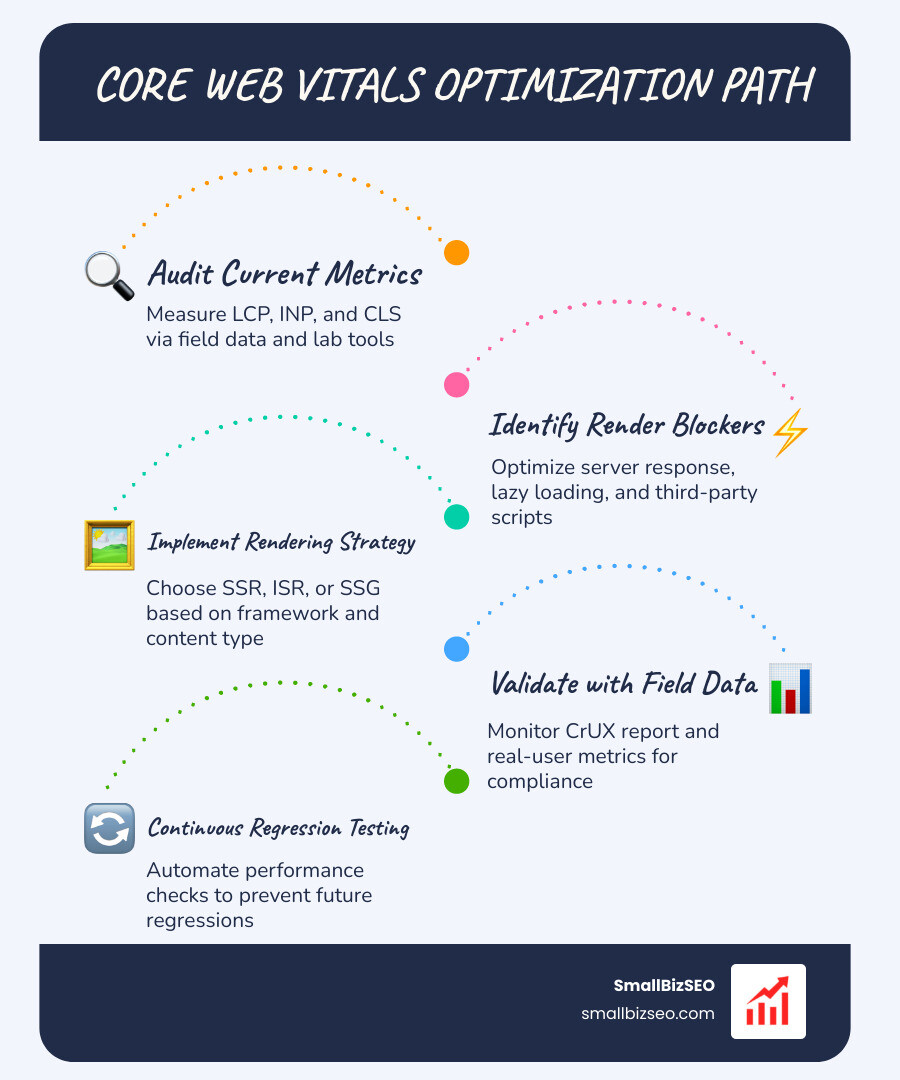
Furthermore, user experience metrics directly impact ranking signals and conversion rates. Sites with passing Core Web Vitals benchmarks see significant organic traffic and engagement lifts compared to non-compliant sites:
- Largest Contentful Paint (LCP): Measures main content loading speed, targeting under 2.5 seconds by optimizing critical rendering paths, server response times, and resource preloading.
- Interaction to Next Paint (INP): Evaluates full-page interactivity, targeting under 200 milliseconds by eliminating long main-thread tasks and excessive script execution.
- Cumulative Layout Shift (CLS): Prevents unexpected visual shifts, targeting a score under 0.1 through explicit dimension attributes on media and dynamic container reservation.
- Loading Benchmarks: Improving your first contentful paint score creates immediate perceived speed improvements for both users and crawlers.
- Viewport Adaptability: Auditing for mobile first indexing ensures responsive rendering matches desktop parity across DOM elements, structured metadata, and layout stability on every device.
Schema Graph Deployment and AI Search Readiness
Structured data connects individual pages into an interconnected knowledge graph. Instead of adding disconnected snippets of schema code, experienced technical teams implement linked JSON-LD graphs (@graph) based on standards defined by Schema.org that connect your Organization, WebSite, Author, and Product entities.
This machine-readable context has become essential as search moves toward generative engines and AI Overviews. By structuring data to answer conversational queries, websites secure valuable citations across emerging search surfaces. Running a targeted guide to AI SEO audit helps identify formatting gaps, build llms.txt directories, and maintain entity clarity for automated answer engines.
How to Select the Right Technical Partner for Your Tech Stack
Evaluating a technical SEO agency requires looking beyond surface-level marketing promises and general traffic reports. You need a team with deep engineering fluency that understands how your tech stack, CDN layers, and continuous integration pipelines function under the hood.

Vetting Criteria: How to Evaluate a Technical SEO Company
When interviewing agencies, verify whether their recommendations arrive as static PDF documents or production-ready implementation tickets. The best technical partners integrate directly with your engineering sprints and provide code-level pull requests directly within your GitHub or GitLab repositories.
Key technical criteria to evaluate include:
- Log-File Analysis Capability: The agency should process raw CDN and server access logs to observe actual bot behavior, response code frequencies, and crawl waste rather than relying purely on third-party scrapers.
- Staging Validation Protocols: Fixes should be tested on staging servers with automated crawl diff comparisons before deploying to production environments.
- CMS and Framework Fluency: The team must have hands-on experience with your specific environment, such as fixing Shopify SEO issues, debugging WordPress database bloat, or handling headless CMS setups.
- Automated Regression Testing: Ensuring that upcoming code releases do not accidentally reintroduce broken canonicals, stripping metadata, or unoptimized scripts.
When to Hire a Dedicated Technical SEO Company vs Full-Service Agency
| Engagement Attribute | Dedicated Technical SEO Company | Full-Service Digital Marketing Agency |
|---|---|---|
| Core Focus | Codebase health, rendering, crawl architecture | Content creation, social ads, digital PR |
| Primary Deliverables | Git pull requests, dev tickets, log analysis | Blog articles, backlink reports, ad campaigns |
| Ideal For | Complex platforms, migrations, web app fixes | Early-stage sites needing broad marketing |
| Engineering Level | High (DevOps, JavaScript, API integrations) | Moderate to Low (standard CMS settings) |
If you are undergoing a complex replatforming, troubleshooting JavaScript hydration failures, or managing thousands of faceted URLs, a specialist technical firm is indispensable. If you need turnkey marketing containing brand strategy and content production, exploring broad strategic SEO packages might provide better operational balance.
Technical SEO Audit Costs, Timelines, and High-Leverage Fixes
Investing in technical search infrastructure requires setting clear performance milestones, realistic timelines, and measurable engineering goals.
A thorough technical SEO audit can range in cost based on website complexity, catalog scale, and architecture:
- Small-to-Medium Sites: Diagnostic audits typically range from $1,500 to $5,000 for standard CMS platforms.
- Enterprise and Complex Apps: Comprehensive reviews for large catalogs, headless builds, or custom web applications range from $5,000 to $15,000+.
- Ongoing Retainers: Code-level implementation, staging deployment QA, and continuous regression monitoring usually require $4,000 to $12,000 per month.
Prioritizing High-ROI Technical Fixes
Fixing crawl errors increases organic traffic by 20% to 35% on average. To see the fastest impact, technical updates should be sequenced based on business value and structural dependency:
- Resolve Severe Crawl Blocks: Remove errant
noindextags, misconfigured robots disallows, and 5xx server errors on commercial landing pages. - Compress Click-Depth: Ensure every high-intent conversion asset sits within three clicks of the homepage through smart breadcrumb taxonomies and contextual hubs.
- Optimize Internal Links: Funnel equity from pages with strong external link analysis metrics directly into high-converting commercial URLs.
- Remediate Template-Level CWV Bottlenecks: Remove render-blocking resources, self-host critical fonts, and streamline CSS delivery across shared header templates to lift performance sitewide.
Frequently Asked Questions About Technical SEO Companies
How long does it take to see results from technical SEO improvements?
Technical SEO improvements show results on a timeline of 12+ weeks because search engines discover changes gradually across crawling and indexing cycles. Simple configuration updates (like removing an accidental noindex tag or opening an inadvertently blocked directive) can restore traffic within days. However, site-wide architectural overhauls, Core Web Vitals recalculations in rolling Chrome User Experience Reports, and full index reconciliations require multiple crawling cycles before search algorithms fully reflect the updates.
What does a technical SEO audit typically cost?
A professional technical audit generally costs between $1,500 and $5,000 for smaller, standard platforms. For enterprise-level websites, single-page applications, and large eCommerce catalogs requiring server log analysis and code repo review, pricing spans from $5,000 to over $15,000. Be wary of audits priced under $500, as these are almost always automated software exports without meaningful engineering diagnosis.
What are the main red flags when hiring a technical SEO firm?
Key red flags include receiving generic automated PDF exports without manual root-cause diagnosis, a lack of experience with modern JavaScript frameworks, and an inability to provide implementation tickets or pull requests for your developers. Additionally, avoid any firm that promises overnight ranking guarantees or fails to connect technical fixes directly to revenue metrics.
Engineering Long-Term Visibility for Your Business
Technical search optimization is the foundational layer that ensures your digital investments generate sustainable returns. Without clean server architecture, reliable rendering, and structured data, great content and authority building can go unnoticed by modern search engines.
At SmallBizSEO, we help businesses build durable organic growth through our data-driven "Velocity" framework. By combining deep technical audits with transparent, automated reporting and E-E-A-T-compliant optimization, we ensure your site is fast, indexable, and ready for the future of search. Discover how partnering with a dedicated technical SEO company can eliminate your technical debt and turn search visibility into a consistent growth channel.