Bed and Breakfast Search Optimization Strategies That Keep Guests Coming Back

Why Does SEO for Bed & Breakfasts Matter for Direct Bookings?
SEO for bed & breakfasts helps travelers find your website and book with you directly. Start with three steps: make each room page clear about its location and amenities, complete your Google Business Profile, and make it easy to check availability on a phone.
These steps help your inn appear for searches that match what you offer. They also give guests a clear path from finding your property to booking a stay. The list below shows how to build on that foundation without wasting time on traffic that is unlikely to become a guest.
I'm Clayton Johnson, founder of SmallBizSEO. My work in technical SEO, content strategy, and link building for small businesses informs this practical guide to SEO for bed & breakfasts.
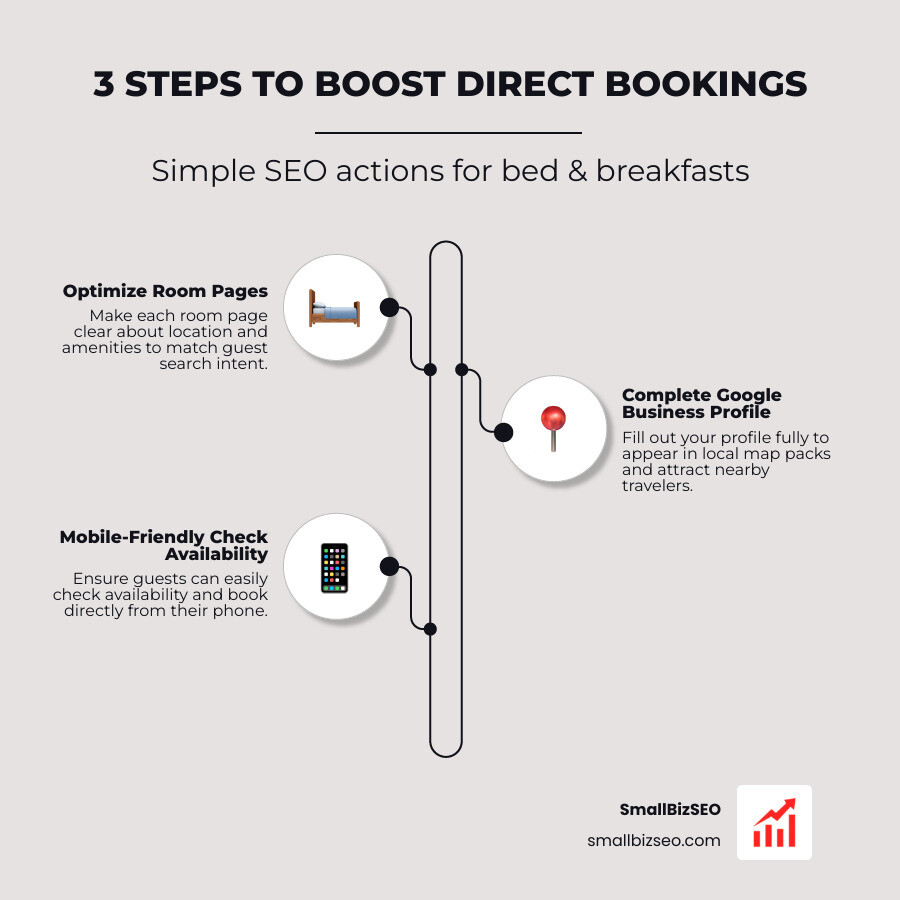
Quick SEO for bed & breakfasts terms:
Why Invest in SEO for Bed & Breakfasts to Win Direct Bookings?
Investing in search optimization allows bed and breakfasts to bypass expensive online travel agency (OTA) commissions, capture high-intent travelers, and build lasting direct relationships with guests.
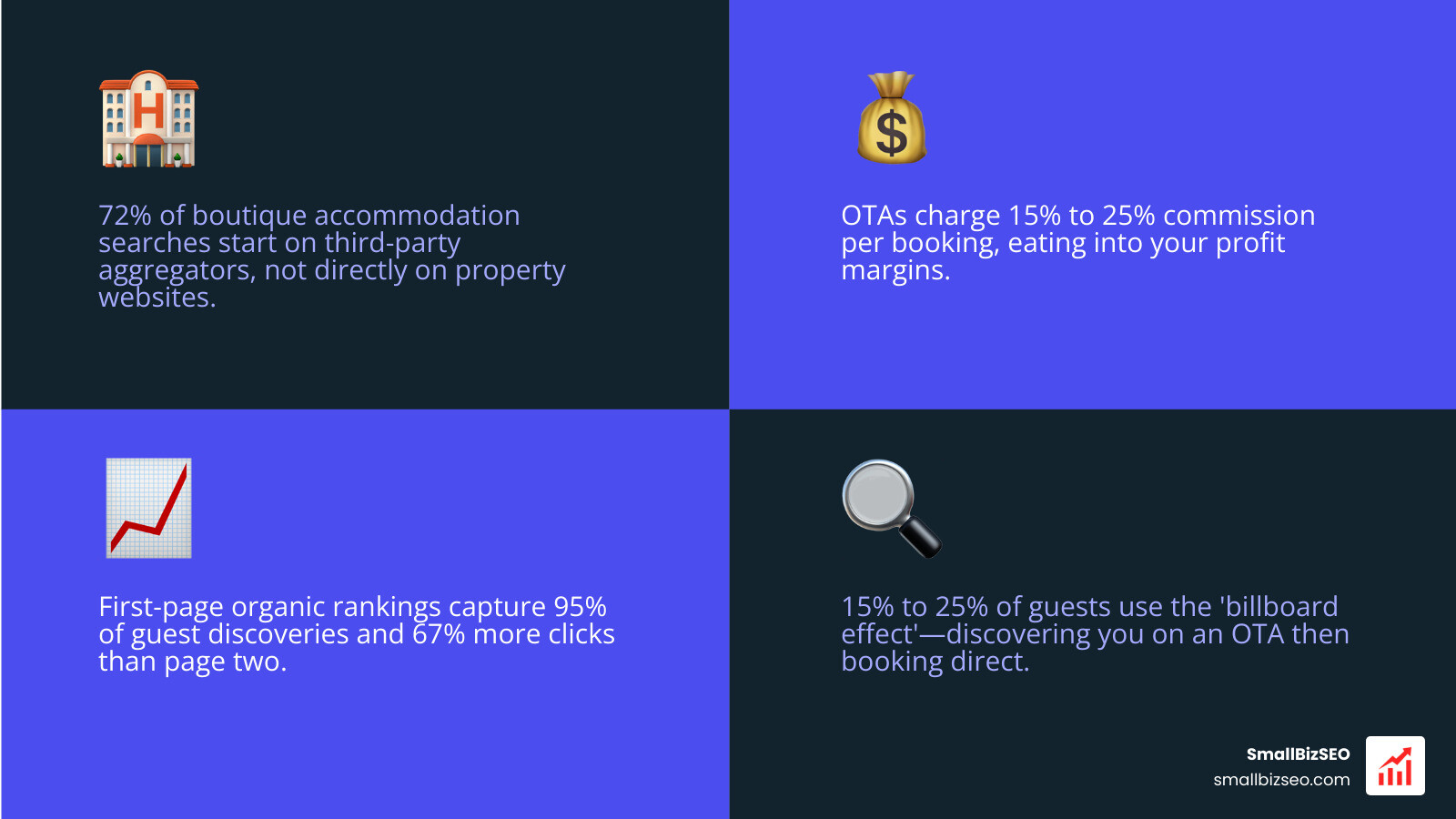
Online travel agencies dominate guest discovery, with about 72% of boutique accommodation searches starting on third-party aggregators. However, OTAs charge hefty commissions between 15% and 25% on every completed room night. When your property relies solely on third-party listings, you lose both profit margins and direct communication with your guests.
First-page organic rankings capture 95% of guest discoveries, and properties ranking near the top capture 67% more clicks than those buried on subsequent pages. Travelers discovering your inn organically spend 40% more than visitors arriving from paid ads. Furthermore, between 15% and 25% of guests use the "billboard effect"—discovering your inn on an OTA and then searching for your direct website to complete their reservation. Optimizing your website ensures that these travelers land on your booking engine rather than bouncing back to a competitor.
5 Essential Search Optimization Strategies to Elevate Your Inn's Online Presence
How Do You Master Keyword Research and Guest Search Intent in SEO for Bed and Breakfasts?
To master keyword research, identify high-intent, long-tail search phrases that reflect your property's specific amenities, location, and guest travel motivations.
Foundational search engine optimization principles begin with understanding user intent. Broad terms like "lodging" carry intense competition and vague intent. Instead, target high-converting, long-tail phrases that match distinct guest personas, such as:
- "Romantic fireplace suite bed and breakfast"
- "Pet friendly boutique inn with gourmet breakfast"
- "Historic guesthouse walking distance to wineries"
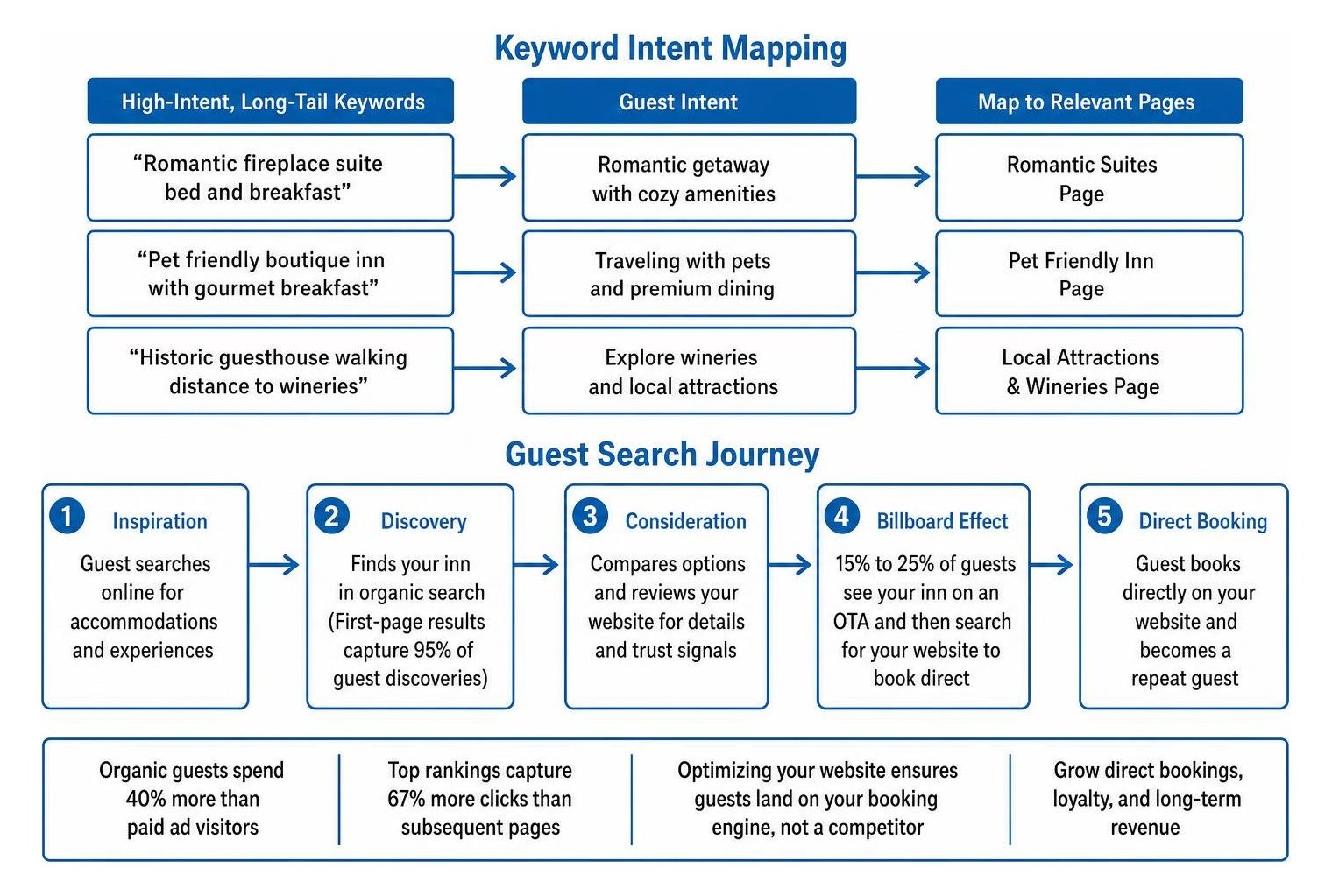
Map these terms directly to individual pages on your website to avoid keyword cannibalization. Each room type, seasonal package, and amenity deserves dedicated copy that mirrors how guests actually type their queries into search engines.
What Technical and On-Page Elements Strengthen SEO for Bed & Breakfasts?
Strengthening technical and on-page SEO requires fast mobile page speeds, clear header hierarchies, compelling metadata, and structured data markup.
According to Google's Search Engine Optimization Starter Guide, technical health forms the backbone of search visibility. Sites loading in under two seconds keep 75% of visitors engaged. Because 90% of travelers browse accommodations on mobile devices first and 29% complete bookings on smartphones, responsive mobile design is essential.
Implement LodgingBusiness and BedAndBreakfast schema markup in JSON-LD format on your key pages. Structured data helps search engines display rich snippets, including your room rates, star ratings, and amenities directly in search results. Ensure each page features:
- A unique title tag under 60 characters containing your property type and target location
- An engaging meta description under 160 characters highlighting unique selling points
- Descriptive image file names and natural alt text representing authentic guest experiences
- A streamlined internal linking structure that guides users naturally toward your booking engine
How Can You Dominate Local Map Packs with Google Business Profile and Citations?
You can dominate local map packs by verifying your Google Business Profile, maintaining consistent citations across business directories, and proactively managing guest reviews.
Local search visibility drives immediate bookings. Implementing comprehensive local SEO strategies starts with choosing "Bed & breakfast" as your primary Google Business Profile category. Add at least 20 to 30 high-resolution photos showcasing guest rooms, common areas, and morning breakfast spreads. Listings with rich visual media generate significantly higher user engagement.
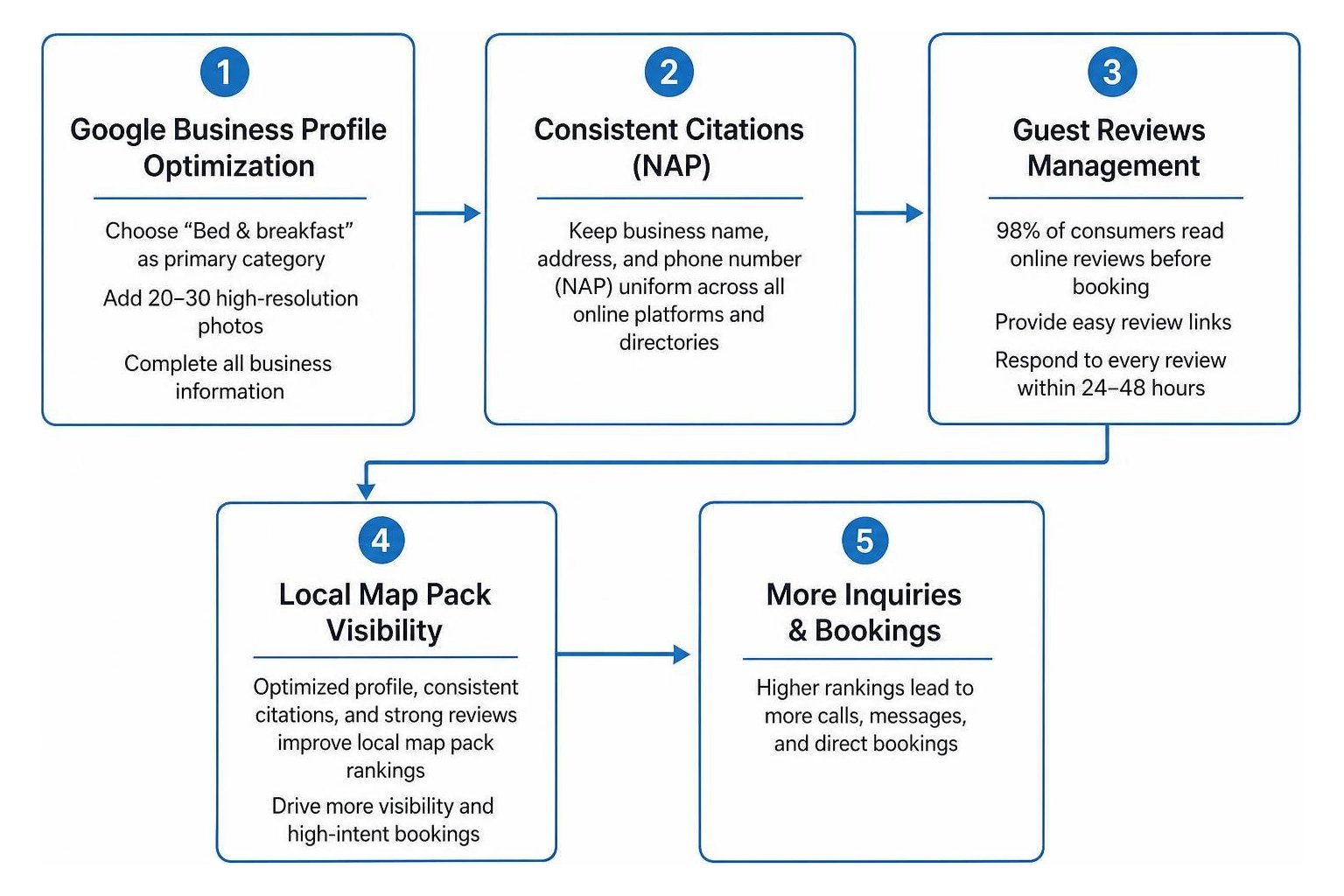
Keep your business name, address, and phone number (NAP) perfectly uniform across all online platforms and regional directories. Inconsistent contact details confuse search engines and harm map rankings.
Because 98% of consumers read online reviews before booking local accommodations, review volume, recency, and management play a massive ranking role. Provide easy checkout review links via follow-up emails or discreet QR cards, and respond professionally to every positive and negative review within 24 to 48 hours.
What Content and Destination Guides Drive High-Intent Room Inquiries?
Creating destination guides, itinerary suggestions, and experiential room descriptions attracts travelers during their initial vacation planning phase.
Travelers often search for activities before selecting their accommodations. Applying hospitality and tourism search optimization allows your website to become a helpful regional resource.
Publish evergreen destination guides and seasonal attraction roundups, such as:
- Curated dining guides featuring nearby farm-to-table restaurants
- Self-guided walking or scenic driving itineraries
- Area event calendars and festival travel tips
- Detailed descriptions of breakfast ingredients sourced from regional farms
Connecting these informative guides directly to your room reservation pages converts casual readers into confirmed guests.
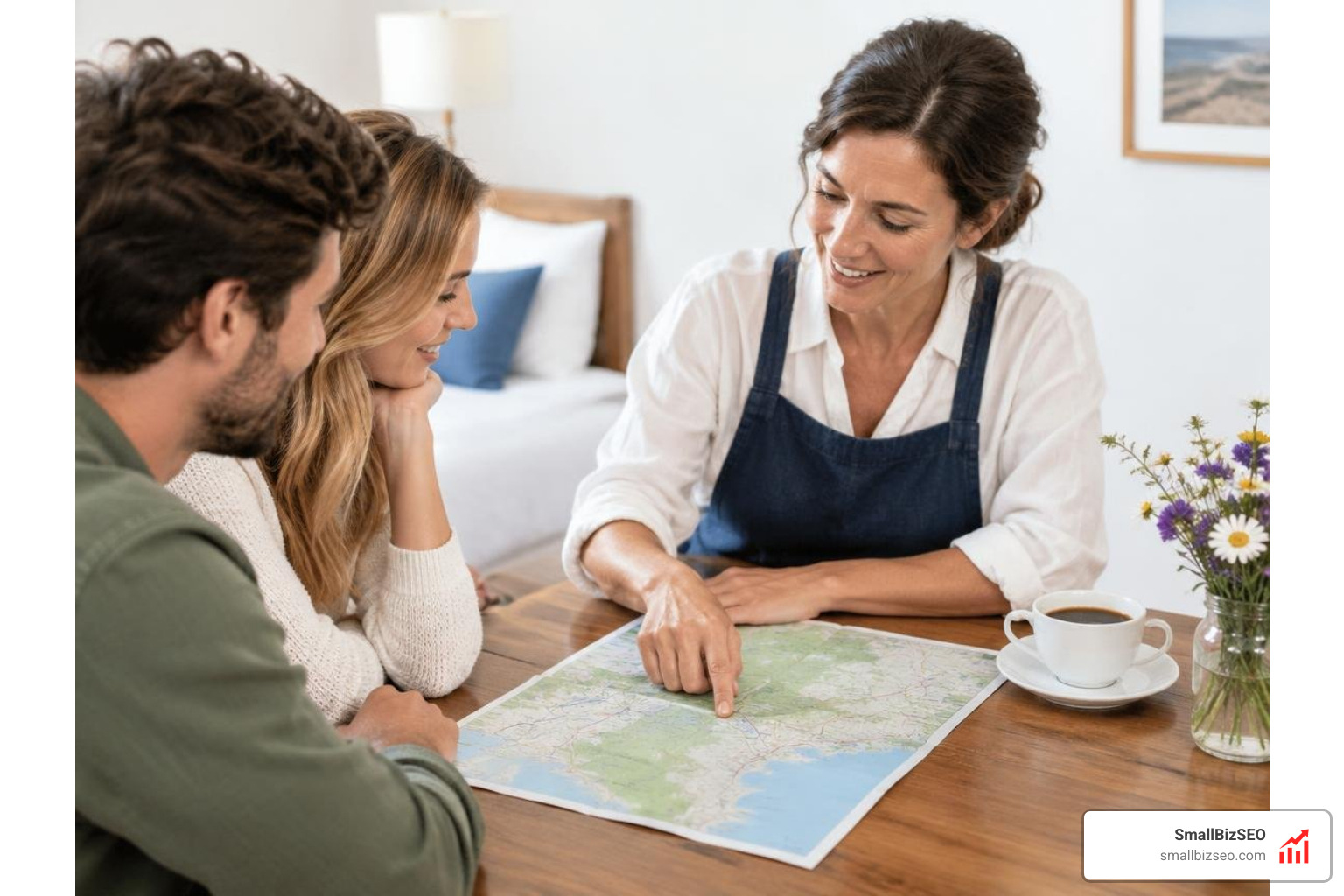
How Do You Build Backlinks and Digital PR Through Local Tourism Partnerships?
Earning authoritative backlinks from local tourism boards, regional businesses, and travel publishers boosts your website's domain authority and search rankings.
Search engines evaluate your credibility based on the quality of external websites linking to you. A single link from an established regional authority signals genuine trust.
- Regional tourism boards and destination marketing organizations
- Local chambers of commerce and small business associations
- Neighborhood partners, such as nearby wedding venues, vineyards, and tour operators
- Features in respected travel publications and guest features on boutique hospitality blogs
Cross-referencing relationships with nearby businesses by building a curated "Area Recommendations" page encourages reciprocal mentions and drives qualified referral traffic.
How Do You Measure the ROI and Long-Term Value of Your Inn's Optimization?
To measure SEO return on investment, track organic visitor growth, keyword positions, direct booking revenue, and your effective cost per acquired guest.
Most pages ranking in Google's top 10 positions build authority over two to three years, making consistent performance tracking essential. Using Google Analytics 4 and Google Search Console, monitor:
- Organic website sessions and phone inquiries
- Direct booking conversion rates (typically averaging between 1% and 5%)
- Revenue generated from organic search visitors
- Map pack impression and interaction trends
Calculate your guest acquisition efficiency using this simple relationship:
Cost per new guest = Total SEO investment divided by (Unique organic visitors multiplied by Booking conversion rate)
Because saving a single room reservation from third-party commission often covers the equivalent cost of professional SEO maintenance, organic search remains one of the highest-yield marketing channels for independent lodging.
When you are ready to evaluate your website's current search reach and uncover untapped revenue opportunities, schedule a comprehensive SEO visibility audit with our team at SmallBizSEO. Our data-driven "Velocity" framework delivers E-E-A-T-compliant growth and transparent reporting that turns online searches into loyal, repeat guests.