Hotel SEO Tactics That Drive High-Value Guest Reservations Directly
How Can Hotel SEO Bring in More Direct Bookings?
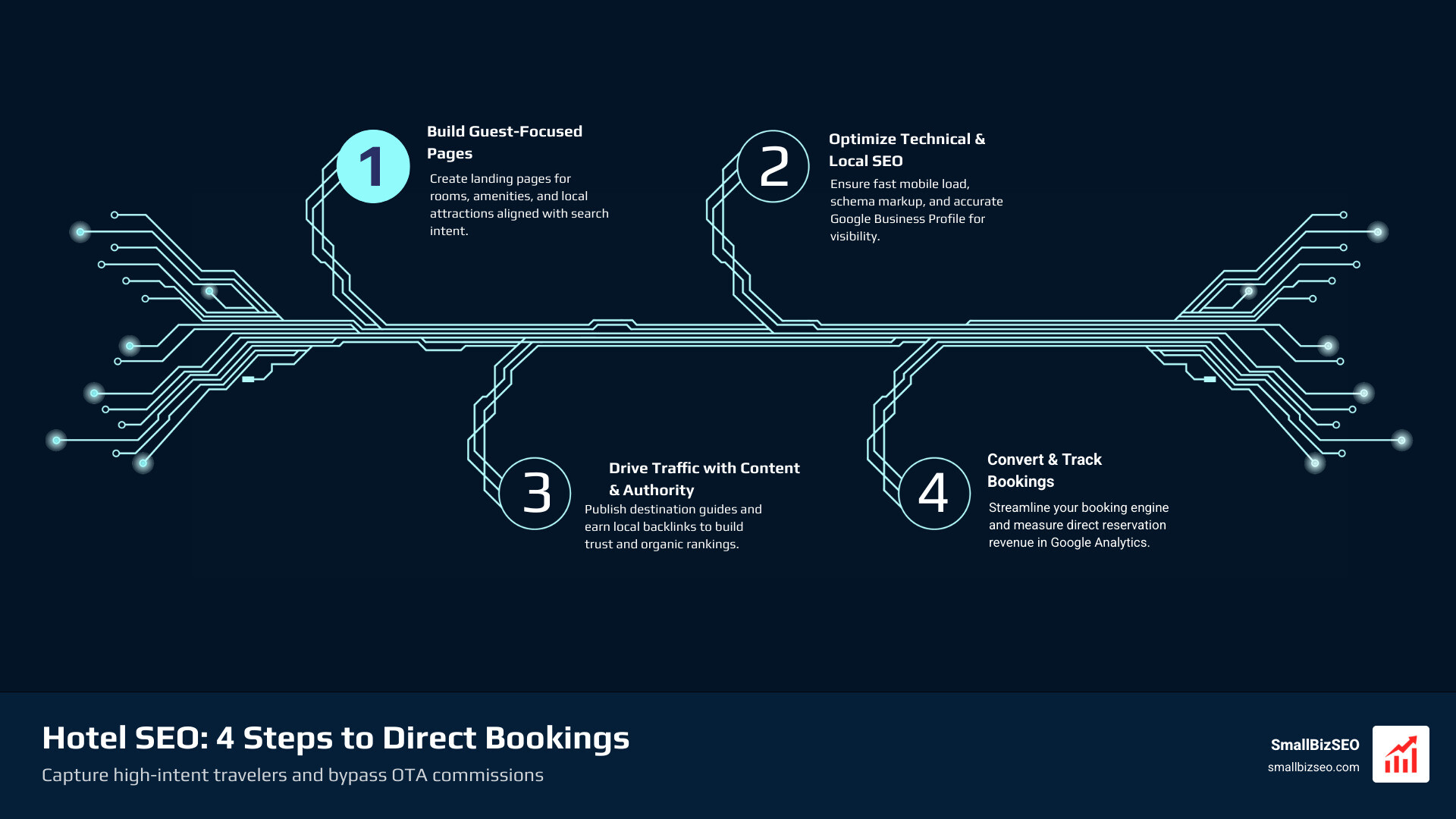
SEO for hotel websites starts with the searches your guests make before they book. Build pages for your rooms, amenities, and location. Make each page fast and easy to use on a phone, keep your Google Business Profile accurate, and give visitors a clear path to your booking engine. Track completed reservations, not just website visits.
That matters because a guest who finds your hotel through search can book on your site instead of returning to an online travel agency. Better visibility only helps revenue if the booking process works.
I'm Clayton Johnson, founder of SmallBizSEO, where I work on technical SEO, content strategy, and digital PR for small businesses. I apply that experience to SEO for hotel websites by focusing on useful answers, credible information, and clear booking paths.
Core Framework: SEO for Hotel Websites to Drive Direct Bookings
Hotel SEO captures high-intent travelers during their research phase and routes them directly to your reservation engine, bypassing high third-party commissions. Online Travel Agencies (OTAs) drive roughly 63.4% of bookings for independent operators, taking between 15% and 25% in fees per stay. Because search engines award more than 90% of organic traffic to first-page results, establishing strong organic visibility allows properties to retain their full profit margin.
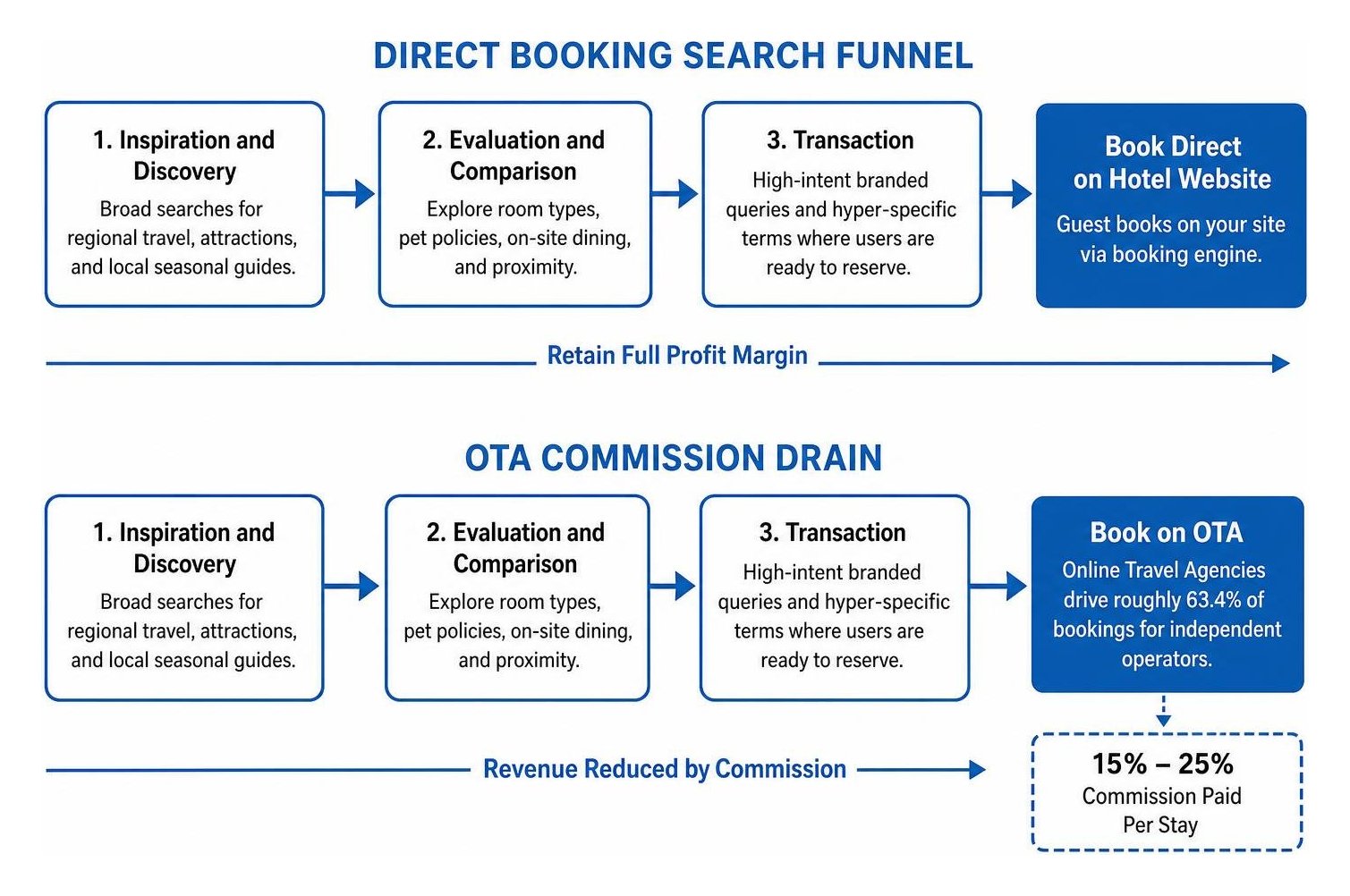
A winning hospitality search strategy maps directly to guest intent across three core phases:
- Inspiration and Discovery: Broad searches for regional travel, attractions, and local seasonal guides.
- Evaluation and Comparison: Mid-funnel queries exploring specific room types, pet policies, on-site dining, and proximity to convention centers.
- Transaction: High-intent branded queries and hyper-specific terms like "boutique suites with balcony" where users are ready to reserve.
Converting these visitors requires removing friction between your search landing page and your central reservation system. A slow-loading booking widget or mismatched pricing causes potential guests to bounce back to search engines. Aligning on-page experience with traveler expectations turns routine search volume into reliable, commission-free reservations.
How to Execute On-Page and Keyword SEO for Hotel Landing Pages
Target long-tail phrases that match specific guest needs, and place those terms naturally in your page titles, headers, and descriptions. Generic terms like "hotel rooms" face intense competition. Instead, target high-intent variations like "downtown boutique hotel with valet parking" or "spacious double queen suite near theater district."
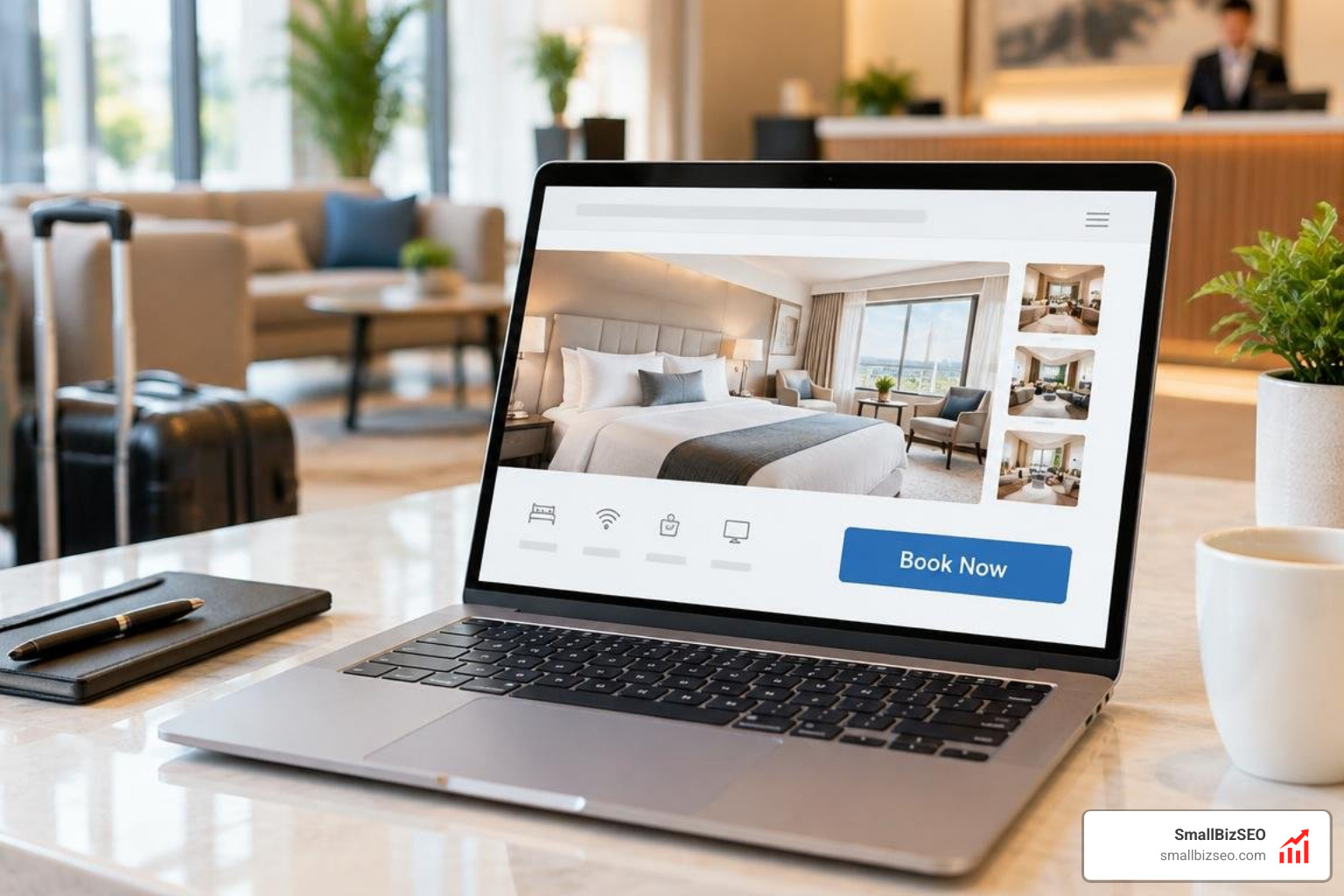
Every distinct accommodation type deserves a dedicated landing page built around user search habits. When structuring page elements, follow these direct steps:
- Meta Title Tags: Place your primary keyword phrase first, followed by the hotel name, keeping the entire tag under 60 characters (e.g., King Balcony Suite | Historic Boutique Hotel).
- Meta Descriptions: Write a compelling 150-to-160-character summary that outlines unique room perks and includes a direct call to action like "Book direct for complimentary breakfast."
- Heading Hierarchy: Maintain a clean structure using a single H1 for the page title, followed by H2 and H3 tags organizing amenities, floor plans, and policies.
- Image Alt Text: Write descriptive text for room galleries, such as "spacious marble bathroom with soaking tub in executive suite," rather than generic image file names.
- Natural Keyword Density: Keep phrasing natural, integrating target keywords at a modest 1% to 2% density across body copy without awkward keyword stuffing.
Crafting detailed, helpful landing pages with tailored hospitality SEO strategies ensures search engines recognize your property's unique offerings and present them to qualified travelers.
How Technical SEO and Generative AI Search Elevate Visibility
A fast, technically sound website helps search engines index your room inventory while enabling AI answer engines to cite your property. Desktop search results favor pages loading in under 1.65 seconds, while mobile delays dramatically increase drop-offs. If a site takes 10 seconds to load, bounce probability spikes by more than 120%.
Meeting Google's Core Web Vitals targets requires clean site architecture:
- Largest Contentful Paint (LCP): Keep main visual content load times under 2.5 seconds by compressing oversized images and serving modern WebP formats.
- Interaction to Next Paint (INP): Ensure responsiveness stays below 200 milliseconds by deferring non-essential booking scripts.
- Cumulative Layout Shift (CLS): Prevent visual jumping by reserving fixed layout spaces for dynamic price widgets and image carousels, maintaining a score below 0.1.
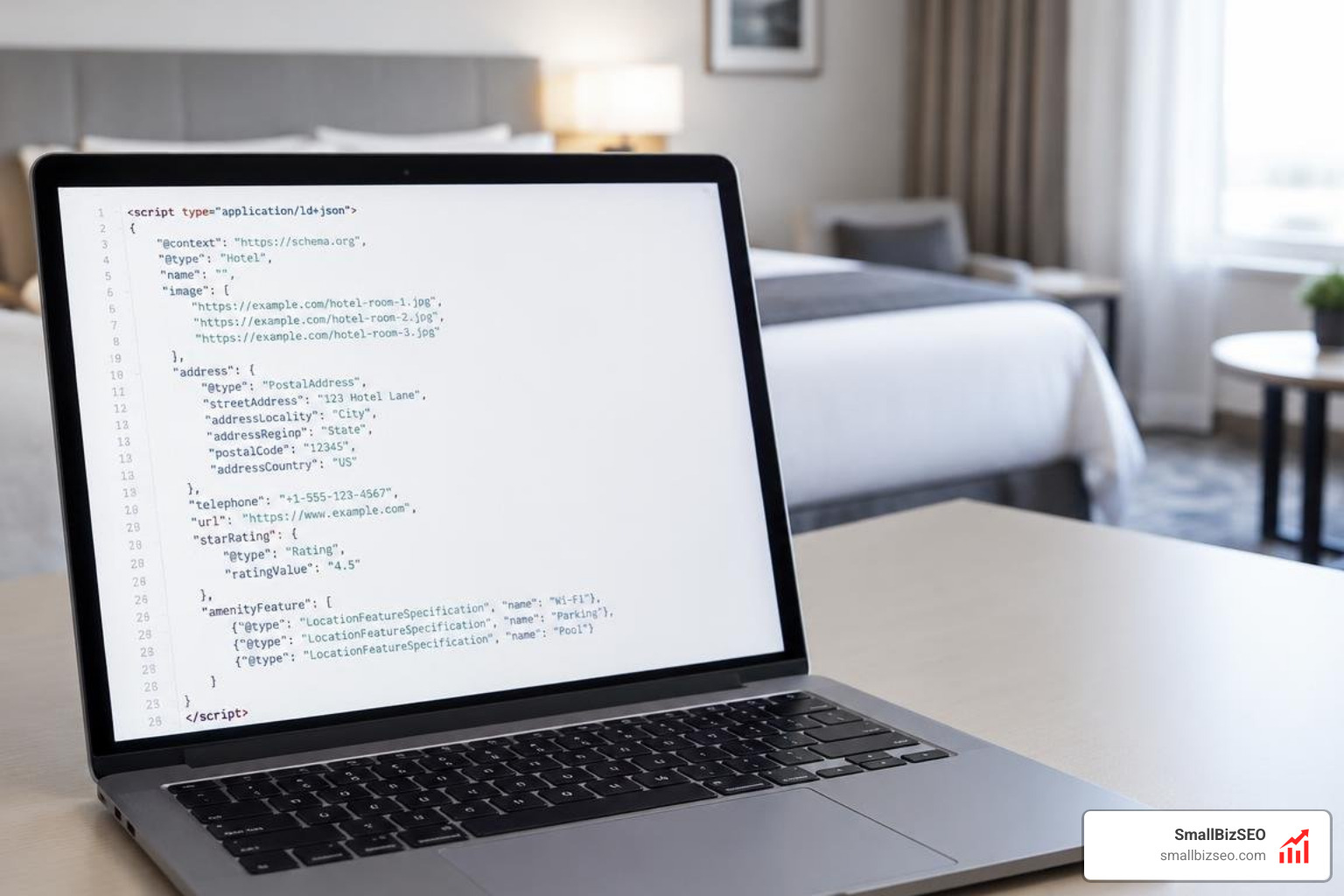
Structured data plays an equally vital role. Implementing Schema.org markup (such as Hotel, HotelRoom, Offer, and FAQPage) communicates exact pricing, star ratings, and amenities directly to web crawlers.
With 80% of travelers seeking AI assistance during their trip-planning journey, structured data directly feeds generative search tools and AI Overviews. Official hotel websites account for 13.6% of citations in AI travel summaries—surpassing the 9% global cross-industry average. Clear schema markup ensures AI models quote your room features and property details accurately.
How to Optimize Local SEO for Hotel Visibility and Google 3-Pack Rankings
Optimizing your Google Business Profile with verified details, complete amenities, and steady guest reviews is the fastest way to appear in local map packs. Local search drives immediate bookings, particularly on mobile devices where travelers seek accommodations near their current location or upcoming destination.
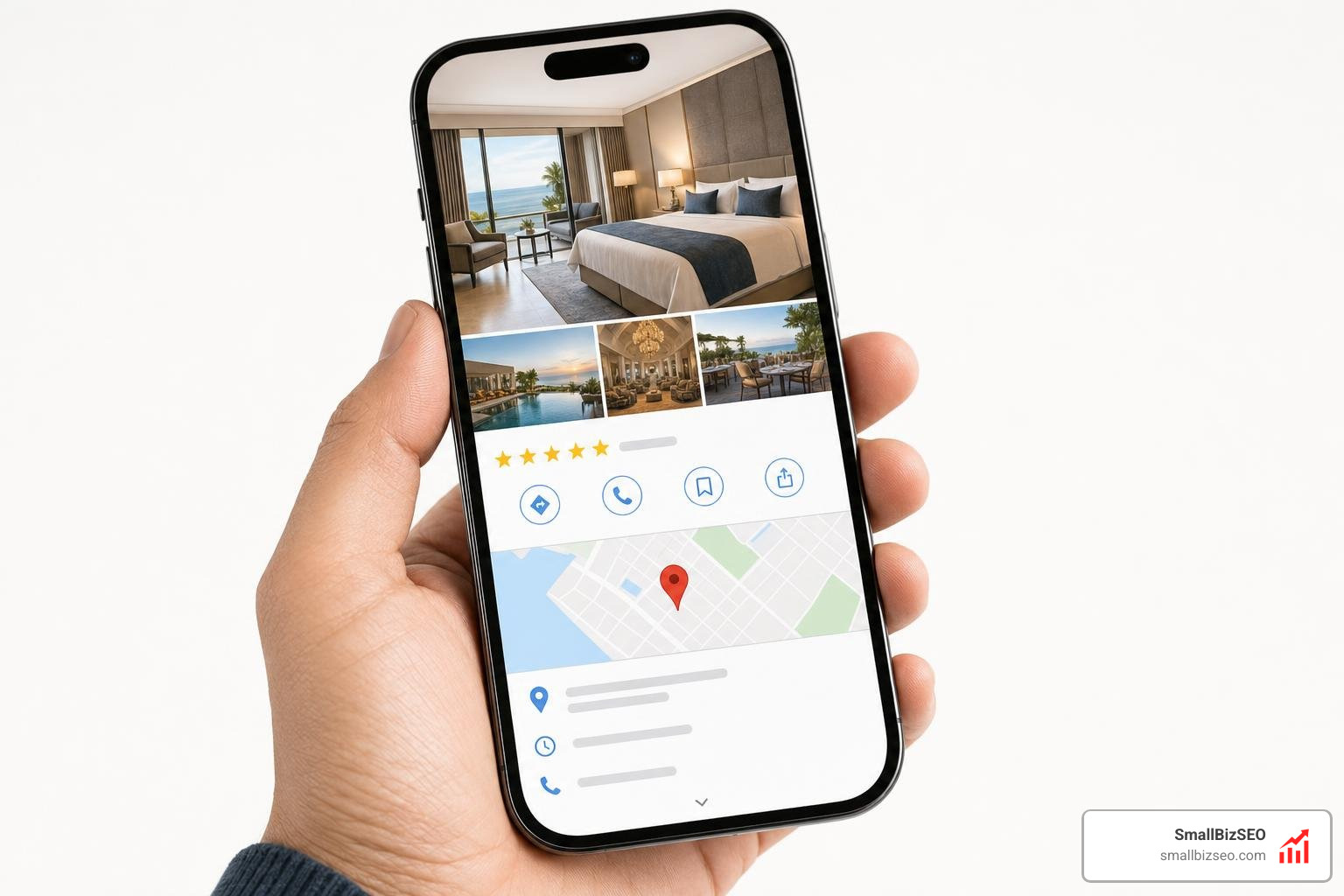
Follow these steps to dominate local map searches:
- Maintain Precise NAP Data: Ensure your property Name, Address, and Phone number are identical across Google, Apple Maps, Bing Places, and industry directories.
- Complete All Amenity Attributes: Check off every applicable feature in your profile dashboard, such as EV charging stations, complimentary Wi-Fi, pool access, and pet-friendly rooms.
- Add High-Quality Photography: Profiles displaying 50 or more high-resolution interior and exterior images generate significantly higher engagement. Because 35% of search users browse image results and 63% of image clickers visit the associated website, visual optimization directly drives traffic.
- Build Consistent Review Velocity: Send automated follow-up messages or provide in-room QR codes inviting guests to share their experience. Responding to both positive and negative reviews within 12 to 24 hours shows active management and reinforces local ranking authority.
For comprehensive venue strategies, review established hotel and venue marketing strategies to maximize exposure across business and leisure traveler segments alike.
How Content Marketing and Off-Page Authority Build Guest Trust
Publishing detailed destination guides and earning mentions from reputable travel resources establishes the topical authority search engines reward. Creating search-led content captures guests during the early planning stages before they open an OTA app.
Content pillars that perform well include:
- Curated Neighborhood Guides: Detailed walking tours, hidden local dining spots, and transportation guides connecting your property to transit hubs.
- Event and Venue Hubs: Dedicated resource pages targeting corporate retreats, wedding parties, and conference attendees.
- Practical FAQs: Direct answers to questions regarding check-in times, valet options, baggage storage, and nearby airport shuttles.
Off-page authority develops when local businesses, event organizers, and tourism portals link back to these helpful resources. Partnering with nearby attractions, securing listings on official tourism bureau pages, and studying mastering SEO for tourism destinations helps build a credible backlink profile. You can also explore proven approaches seen in luxury hospitality digital strategies to see how established brands earn editorial mentions and authoritative regional links.
How to Measure Performance, Avoid Pitfalls, and Scale Hotel Search Strategy
Monitoring organic booking growth requires separating brand searches from non-brand discovery terms in your analytics. By tracking performance across the entire reservation funnel, properties can easily identify technical bottlenecks, adjust underperforming content, and eliminate wasted marketing spend.
How Does Organic Hotel SEO Compare to OTA Channels?
Organic SEO delivers higher long-term profit margins and direct customer relationships, while OTAs offer immediate booking volume at high commission costs. A balanced distribution strategy uses OTAs for baseline volume while scaling organic direct channels to capture the most profitable stays.
| Feature / Metric | Organic Hotel SEO | Online Travel Agencies (OTAs) |
|---|---|---|
| Cost Per Booking | Fixed optimization investment (0% commission) | 15% to 25% commission per reservation |
| Guest Data Ownership | Full guest contact details for direct remarketing | Restricted guest data owned by the platform |
| Brand Equity | Builds long-term property authority and visibility | Promotes the OTA marketplace over your property |
| Time to Results | Progressive growth over 3 to 12 months | Immediate placement upon listing activation |
| Traffic Retention | Sustained organic equity over time | Visibility ends when commissions or ads stop |
Investing in professional hotel SEO services builds sustainable website authority, steadily lowering your blended customer acquisition costs over time.
What KPIs, Timelines, and Workflows Deliver High-Value Bookings?
Expect initial local visibility gains within 60 to 90 days, while competitive organic terms typically mature over 6 to 12 months.
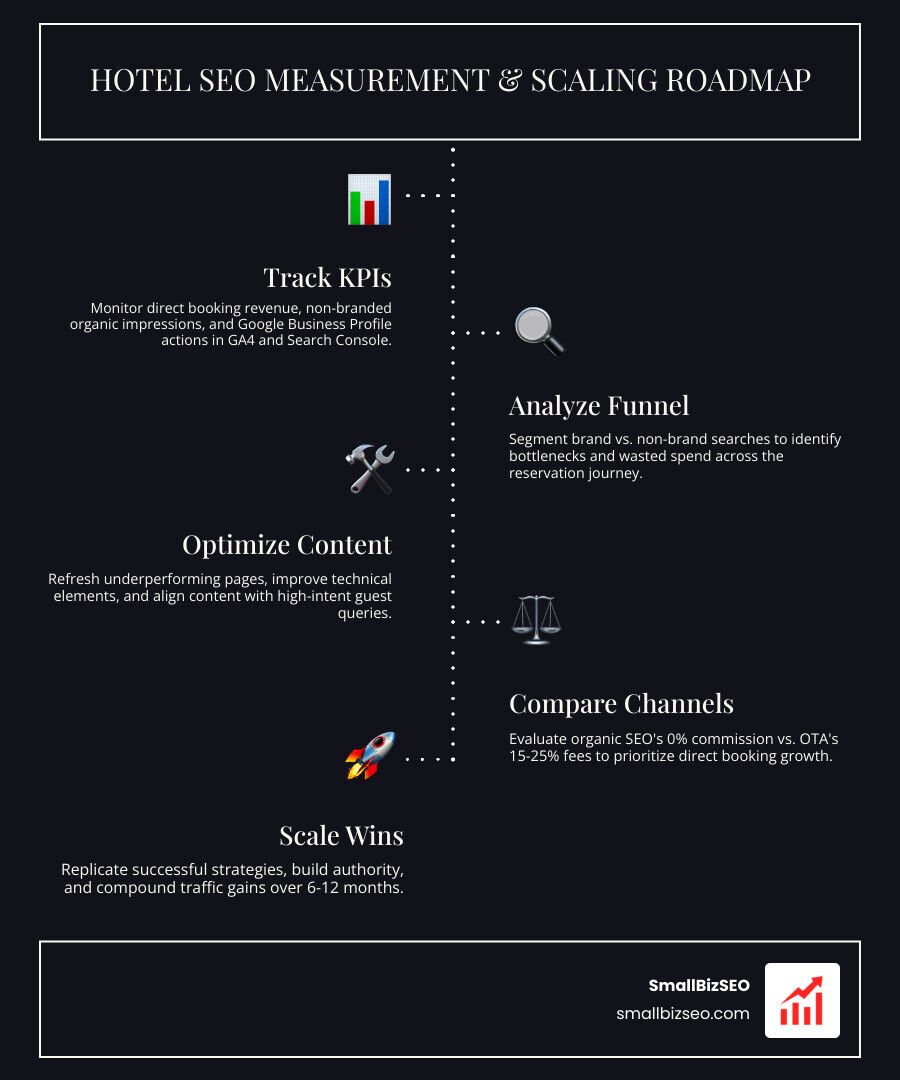
Track these essential metrics in Google Analytics 4 and Google Search Console:
- Direct Booking Revenue: Total dollar value of reservations attributed to organic search.
- Non-Branded Organic Impressions: Search visibility growth for generic destination and amenity queries.
- Google Business Profile Actions: Phone calls, website clicks, and direction requests originating from map listings.
- Booking Engine Drop-off Rate: The percentage of visitors who enter the reservation calendar but abandon before completion.
Common mistakes include maintaining duplicate descriptions across multiple room categories, ignoring mobile page speed, and letting local citations fall out of date.
At SmallBizSEO, our data-driven "Velocity" framework eliminates technical debt, optimizes landing pages, and builds authoritative links to accelerate rankings. To uncover technical errors holding back your property's search potential, begin with a comprehensive SEO visibility audit to map your fastest path to direct booking growth.
Ready to Turn Organic Clicks Into Direct Stays?
Increasing direct reservations begins by removing the friction between search discovery and your reservation desk. When your website loads instantly, presents clear room options, and answers traveler questions directly, guests book with confidence. Evaluate your current mobile speeds, update your local business details, and build pages tailored to real traveler needs to secure high-value stays without unnecessary middleman fees.