The Ultimate Blueprint for Local SEO Optimization and Small Business Growth

The Ultimate Blueprint for Local SEO Optimization and Small Business Growth
Why Local SEO Optimization for Small Businesses Changes Everything
Local SEO optimization for small businesses is the process of improving your online presence so nearby customers find you first — on Google Search, Google Maps, and AI-powered local results — without paying for ads.
Here's what effective local SEO does for you, fast:
- Claim and optimize your Google Business Profile — complete every field, add photos, and choose the right category
- Keep your Name, Address, and Phone (NAP) consistent across every online directory
- Collect and respond to customer reviews — recency and quantity both matter
- Add location-specific pages and content to your website
- Build local citations on Yelp, Bing Places, Apple Maps, and niche directories
- Use geo-modified keywords like "plumber in [your city]" throughout your site
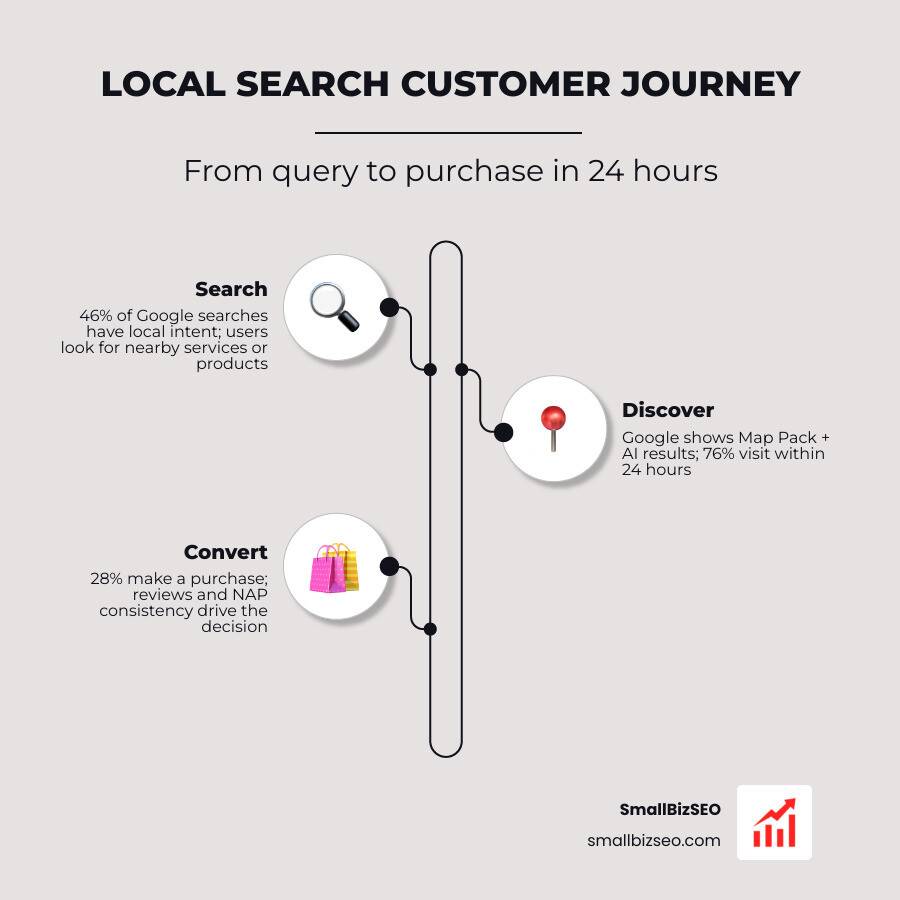
The numbers tell the real story. 46% of all Google searches have local intent. Of the people who search for something nearby, 76% visit a business within 24 hours — and 28% make a purchase. Yet most small businesses remain invisible when those high-intent customers search.
That's a massive gap between where customers are looking and where most small businesses show up.
If you run a restaurant, a law firm, a gym, or any business that serves a local area, this gap is costing you real money every single day. The good news? Closing it doesn't require a huge budget or a technical background. It requires the right steps, done consistently.
I'm Clayton Johnson, a digital PR and SEO strategist who has spent years helping businesses improve their search visibility through targeted campaigns — including local SEO optimization for small businesses across competitive markets. In the sections below, I'll walk you through every step you need to take to dominate local search in your area.
What is Local SEO and Why Does It Matter for US Businesses?
For small businesses, appearing where local buying decisions start is the difference between thriving and fading away. Organic search drives 53% of all online traffic, contributing to a massive 44% of total revenue share across digital channels. When we look specifically at brick-and-mortar or service-based companies, that organic traffic is heavily driven by local searches.
When users search for a service or product near them, Google doesn't just return a standard list of blue links. Instead, it triggers the "Map Pack" (or Local 3-Pack), showing a map alongside three prominent local business listings. This highly visible area captures the vast majority of clicks on mobile and desktop devices.
Furthermore, search engines are evolving rapidly. With the rise of zero-click searches and AI Overviews, searchers often get direct answers to their queries without ever clicking through to a website. Google's AI systems frequently pull data directly from Google Business Profiles to recommend businesses to users. If your digital footprint isn't optimized, these AI tools simply won't know you exist. Utilizing smart local marketing strategies ensures your business remains the clear and obvious choice for both human searchers and search engine algorithms.
Understanding the Core Differences from Traditional SEO
Traditional SEO is a broad, non-geographical discipline. It focuses on ranking a website for national or global search terms based on content depth, site architecture, and domain authority. A blog post targeting a national keyword competes with massive media sites and global corporations.
Local SEO, on the other hand, is highly targeted and geographically constrained. It focuses on capturing traffic from users in a specific, immediate area. If someone searches for "emergency roof repair," Google uses real-time proximity factors to display businesses located just miles away from the searcher. You do not need millions of backlinks or a massive corporate budget to win at local SEO; instead, you need absolute clarity, geographic relevance, and deep local trust.
The Three Pillars of Google Local Rankings
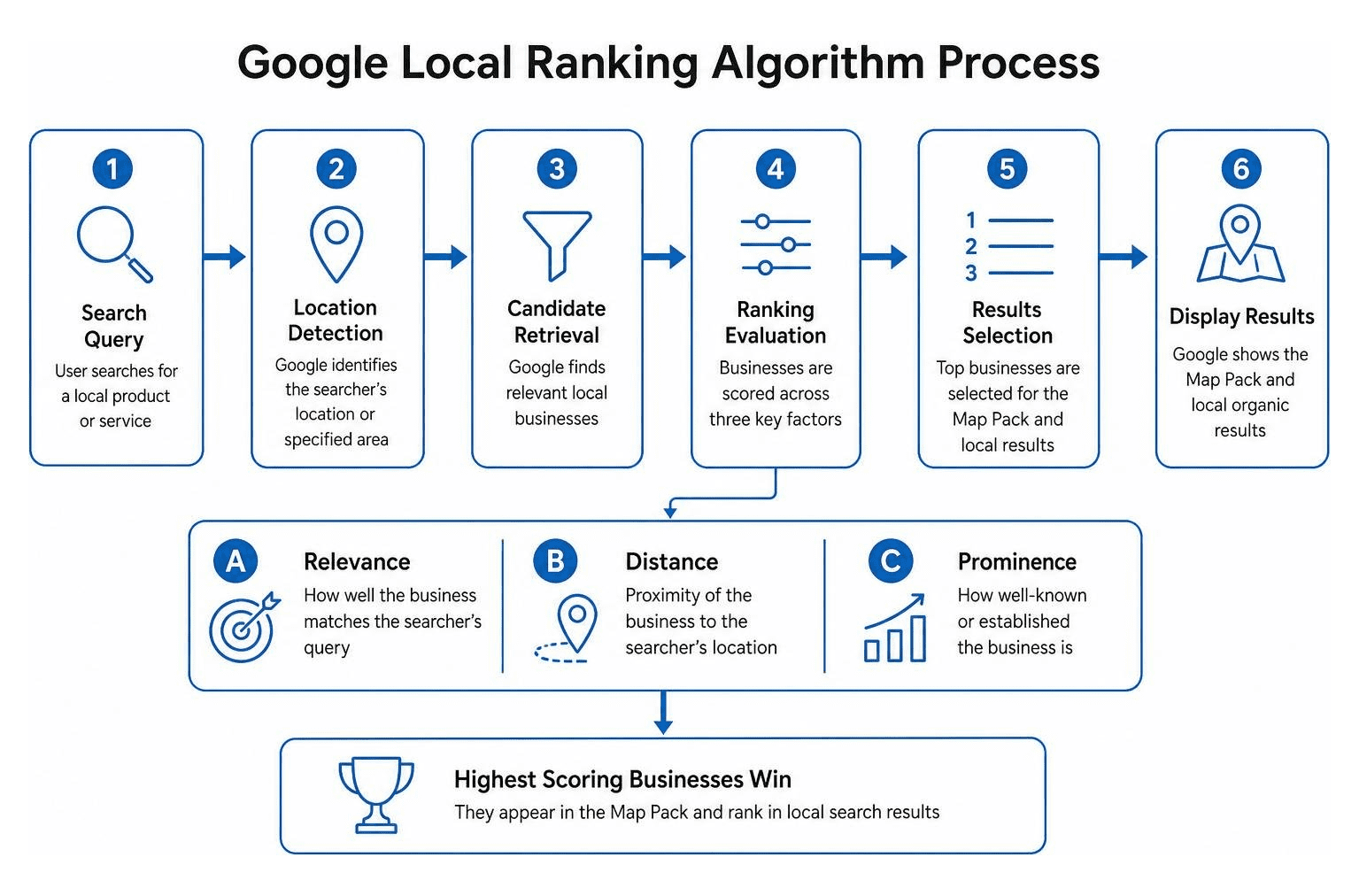
Google uses a distinct algorithm to determine which businesses appear in the local Map Pack and localized organic results. This algorithm is built upon three foundational pillars:
- Relevance: How well a business profile or website matches the searcher's query. Google analyzes your business categories, description, and website content to determine if you offer what the user is looking for.
- Distance: The physical proximity of your business to the searcher or the location specified in the search query. This is a primary ranking factor that you cannot directly control, but you can optimize your presence to make your service boundaries crystal clear.
- Prominence: How well-known or established your business is. Google measures this using signals like review scores, review volume, directory citations, local backlinks, and standard organic search rankings.
Step-by-Step Local SEO Optimization Small Business Checklist
To systematically improve your visibility, we recommend breaking your strategy down into phases. This structured approach helps you build a solid foundation before moving on to ongoing growth tactics. If you want to accelerate this process, you can explore our tailored small business SEO services designed to deliver sustainable search engine growth.
Claiming and Verifying Your Google Business Profile
Your Google Business Profile (GBP) is the single most important asset for local search success. To get started, search for your business on Google. If a profile already exists, click "Own this business?" to claim it. If no profile exists, create a new one using your exact legal business name.
During the verification process, Google will typically require a postcard sent to your address, a phone call, or a short video verification showing your physical workspace and tools.
When setting up your profile, selecting your primary category is critical. This single choice has the highest impact on your relevance ranking. Choose the most specific category that describes your core business (e.g., "Italian Restaurant" instead of just "Restaurant"). You can add secondary categories later, but keep them limited and highly accurate to avoid diluting your relevance. Write a compelling, 250-to-300-word business description that naturally incorporates your primary services and target areas without keyword stuffing.
Optimizing Your Profile for Maximum Local SEO Optimization Small Business Impact
Once verified, do not treat your profile as a set-it-and-forget-it asset. To maximize your local seo optimization small business efforts, keep your profile highly active:
- Upload Photos Constantly: Businesses with photos receive 42% more requests for driving directions and 35% more website click-throughs than those without. Upload real, high-quality photos of your team, projects, and office weekly.
- Complete the Services Section: List every service you offer and write a brief, helpful description for each. This provides rich context for Google's AI systems.
- Utilize the Q&A Feature: Customers can ask questions directly on your profile. Take control of this section by posting and answering your own frequently asked questions (FAQs) to address common customer barriers.
- Publish Weekly Updates: Use Google Posts to share company news, seasonal offers, and recent projects. This signals to Google that your business is active and open for customers.
Local Keyword Research and Location-Specific Content Strategy
To capture local search traffic, your website must speak the language of your local community. Rather than targeting broad, highly competitive terms, we focus on high-intent terms that indicate a ready-to-buy customer. Understanding your current search landscape through a keyword gap analysis: what it is and how to do it right will help you identify the exact terms your competitors are ranking for that you are currently missing.
Finding High-Intent Local Keywords
Local keyword research is about finding the intersection of your services and geographic locations. Use these free and accessible methods to build your list:
- Google Autocomplete: Type your primary service into the search bar followed by "in" or "near" and see what Google suggests. These are real queries that users search for frequently.
- Google Keyword Planner: Use this free tool to analyze search volumes and find related geographical terms.
- Competitor Analysis: Look at the title tags and meta descriptions of the top-ranking local competitors in your industry to see which geo-modifiers they use.
Focus on long-tail, question-based keywords that are perfect for voice search queries, such as "who is the best residential plumber near me" or "where can I find emergency roof repair."
Creating Location Pages and Hyper-Local Content
If your business serves multiple neighborhoods or distinct municipalities, do not rely on a single homepage to rank for all of them. Create dedicated location pages for each key service area.
Each location page should contain:
- A unique, locally focused title tag and H1 header.
- Clear, visible contact information (NAP) matching your directories.
- Custom content describing projects completed in that specific neighborhood, local client testimonials, and driving directions.
- Embedded Google Maps showing your location or service area.
Avoid duplicate content; copying and pasting the exact same text across ten different city pages will harm your search visibility. Instead, share authentic stories, neighborhood guides, and local case studies that demonstrate real community involvement and E-E-A-T (Experience, Expertise, Authoritativeness, and Trustworthiness).
Building Local Citations and Managing Online Reviews
Search engines verify the legitimacy of your business by looking at what the rest of the web says about you. This is accomplished through building local citations and collecting authentic customer feedback.

To build a comprehensive roadmap for your digital presence, check out our local SEO guide to understand how these elements fit into your long-term organic growth.
Establishing NAP Consistency Across Directories
A citation is any online mention of your business Name, Address, and Phone number (NAP). Google cross-checks this information across hundreds of directories to verify that your business is real and active.
| Citation Platform | Description | Priority Level |
|---|---|---|
| Google Business Profile | Core profile feeding Google Maps and local search results. | High |
| Yelp | Major consumer review directory with high organic authority. | High |
| Bing Places | Feeds search results and maps for Bing users. | Medium |
| Apple Maps | Primary navigation app for iOS users. | High |
| Local Chambers of Commerce | High-authority local links that build geographical trust. | High |
Inconsistencies in your NAP — such as a misspelled street name on Yelp or an old phone number on Bing — confuse search engines and erode your search authority. For help ensuring your business profiles are built correctly, you can review industry standards on local SEO optimization to see how clean citation building impacts local search visibility.
Generating and Responding to Customer Reviews
Online reviews are a primary ranking factor for the Map Pack. Google wants to recommend businesses that consistently deliver great customer experiences.
To systematically generate reviews, make the process as easy as possible. Create a direct Google review link using your Google Business Profile dashboard and send it to clients via email or text message immediately after completing a service.
An effective review request template:
"Hi [Name], thank you for choosing us for your [Service]! We would love to hear about your experience. Could you take 30 seconds to leave us a quick review here? [Insert Link]"
Always respond to every review — both positive and negative — within 24 hours. When responding to positive reviews, thank the customer by name and mention the specific service provided. For negative reviews, remain professional, avoid getting defensive, and offer to resolve the issue offline.
Advanced Tactics for Multi-Location Brands
Managing local search visibility gets more complex when you operate multiple physical storefronts or serve a massive geographic territory.
Scaling Local SEO Optimization Small Business Strategies for Multiple Locations
For multi-location brands, maintaining a clean structure is paramount to avoid internal competition.
| Strategy Component | Single-Location Approach | Multi-Location Approach |
|---|---|---|
| GBP Structure | One optimized profile | Multiple verified profiles managed under a single bulk account |
| Website Architecture | NAP on homepage and contact page | Dedicated subfolders or location pages with unique content |
| Schema Markup | Single LocalBusiness schema on homepage | Unique LocalBusiness schema with geo-coordinates on each location page |
| Review Strategy | Centralized review generation | Location-specific review links to distribute authority |
Ensure that each location page contains structured data (Schema.org markup). This code helps search engines understand details like your business hours, exact coordinates, and accepted payment methods without room for misinterpretation.
Local Link Building and Community Engagement
Backlinks from local, high-authority websites are incredibly valuable because they carry geographic relevance that national backlinks cannot match.
To build local links:
- Sponsor Local Organizations: Sponsoring a little league team, local charity, or community event often earns you a high-quality link on their sponsors page.
- Get Featured in Local Press: Reach out to neighborhood news outlets with unique story angles or community initiatives.
- Partner with Non-Competitors: Exchange resource links with complementary businesses in your area (e.g., a plumber linking to a trusted local tile installer).
Collaborating with specialized digital PR experts is a great way to scale these outreach efforts. You can learn more about these customized outreach frameworks by reviewing industry best practices to see how high-authority local link building is executed.
Frequently Asked Questions About Local SEO
What are the most common local SEO mistakes small businesses make?
The most common mistakes include keyword stuffing your business name in your Google Business Profile (which can lead to suspension), creating duplicate listings for the same location, and ignoring negative reviews. For a deeper look at what to avoid, read our guide on 5 local SEO mistakes killing your visibility to protect your rankings.
What tools are best for tracking local SEO performance?
For free tracking, Google Search Console and your Google Business Profile performance dashboard are essential. For paid, advanced tracking, tools like BrightLocal, Semrush, and Moz Local help you track keyword rankings down to the ZIP code level and manage citations across the web.
How long does it take to see results and what are the costs?
Most businesses see initial improvements in Map Pack visibility within 60 to 90 days of optimizing their Google Business Profile. Organic website rankings for competitive terms typically take 4 to 12 months. Costs vary depending on whether you take a DIY approach (100+ hours of labor) or partner with an agency. For a physical shop, compare the proposed work with your store locations, customer needs and available budget.
Conclusion
Dominating local search results is not an overnight achievement, but it is the single most valuable long-term marketing investment a local business can make. By systematically optimizing your Google Business Profile, building clean citations, and earning authentic customer reviews, you build an digital asset that drives qualified leads on autopilot.
At SmallBizSEO, we help businesses scale their local presence through our data-driven "Velocity" framework. We combine technical SEO, content strategy, and high-authority local link-building to deliver transparent, automated reporting and E-E-A-T-compliant growth.

Ready to leave your competitors behind in the local search results? Get started with our professional SEO services today and claim your spot at the top of your market.