8 Proven Tactics for Cosmetics Retail Search Engine Optimization
How Can Independent Cosmetics Retailers Improve Search Rankings?
SEO for cosmetics retail starts with matching pages to how people shop. Build clear category pages for product searches, answer ingredient and skin-concern questions in useful guides, and link those guides to relevant products. Then make sure search engines can reach your pages without getting lost in duplicate shade URLs or slow, image-heavy pages.
This approach helps a small store show up for more than its brand name. It can reach shoppers who are comparing products, checking ingredients, or ready to buy.
I'm Clayton Johnson, founder of SmallBizSEO. My work in technical SEO, content strategy, and digital PR shapes this guide to SEO for cosmetics retail.
Know your SEO for cosmetics retail terms:
Organic search accounts for 58.9% of total beauty ecommerce traffic, while paid search brings in less than 1%. In a market where beauty and personal care reached a $104 billion valuation, showing up during non-branded discovery is the single most sustainable way to grow. Independent beauty storefronts cannot outspend global conglomerates on ad auctions, but a tailored organic search strategy levels the playing field.
Core Architecture of SEO for Cosmetics Retail: Solving Catalogs, Variants, and Site Speed
Direct answer: The core architecture of cosmetics ecommerce SEO relies on clean crawl paths, strict canonical tags to eliminate shade duplication, disciplined faceted navigation, and sub-2.5-second load speeds on mobile devices.
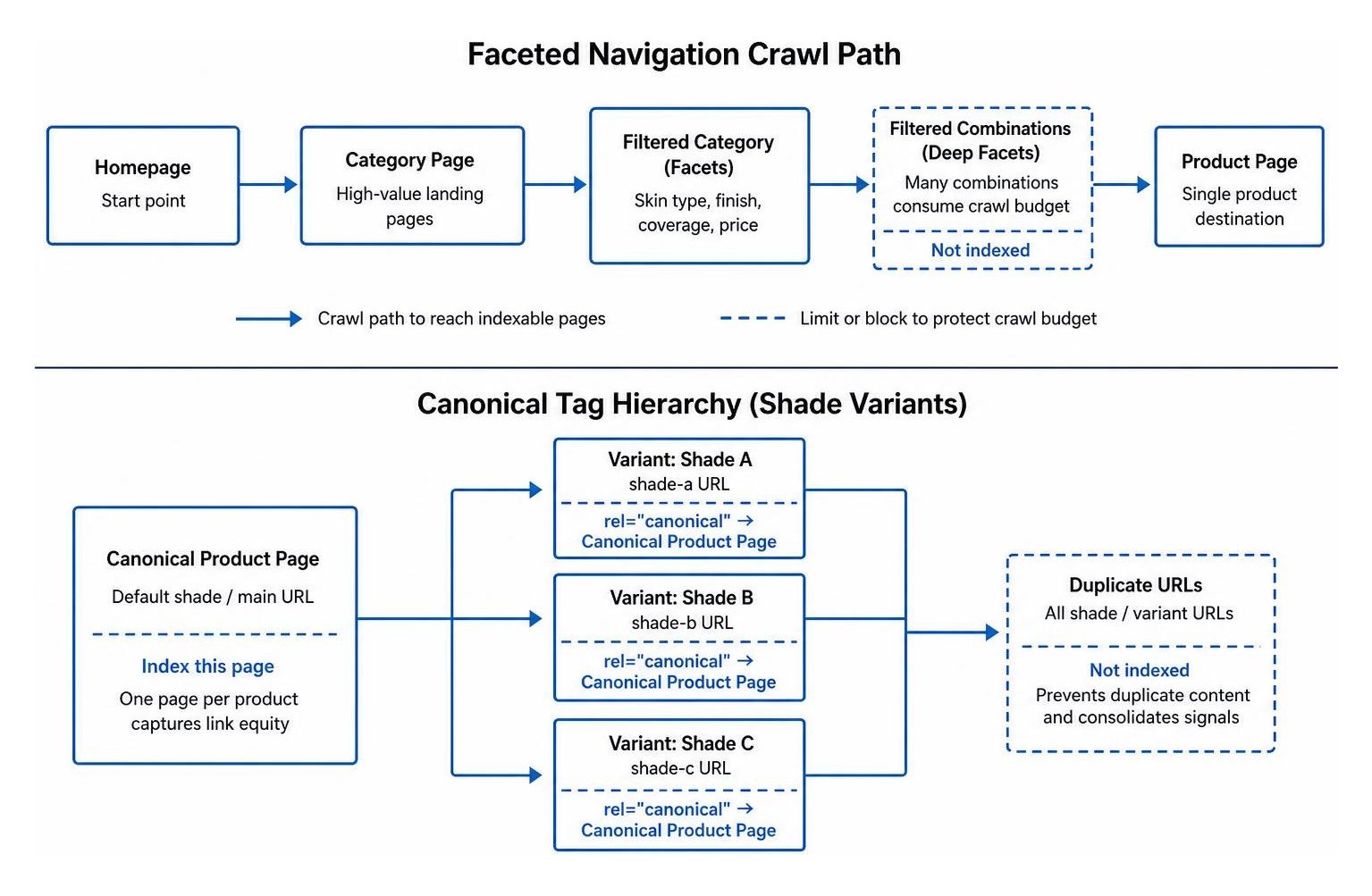
Large beauty catalogs generate thousands of filter combinations (such as skin type, finish, coverage, and price range). If left unchecked, these faceted URLs consume your crawl budget and dilute link equity. Implementing structured canonical tags and proper parameters ensures search engines index only high-value category landing pages while crawling inventory efficiently. Following clear guidelines like Google's ecommerce URL structure best practices prevents structural indexation traps.
Proven case studies show the power of architectural precision. In one documented case, a structured approach mapping products to specific concerns generated over 1.01 million organic clicks, 6.43 million impressions, and an average click-through rate of 15.7%—more than three times the global ecommerce benchmark. Integrating specialized ecommerce SEO services early ensures that every product, collection, and concern page captures its intended audience without internal competition.
How Do Technical Fixes and Shade Variant Handling Power SEO for Cosmetics Retail?
Direct answer: Cosmetics stores must consolidate shade variants under a single primary URL using dynamic client-side loading or canonical tags, while ensuring JavaScript elements like virtual try-on tools do not block search engine bots.
When a single foundation product offers 40 distinct shades, generating separate indexable URLs for every color creates massive keyword cannibalization and duplicate content. The solution is setting the primary product detail page as the canonical source of truth and loading individual shade swatches dynamically.
Fast performance is equally critical. Heavy swatch galleries, interactive shade finders, and virtual try-on tools frequently degrade Largest Contentful Paint (LCP). Converting visual assets into lightweight WebP formats, implementing responsive lazy loading, and refining media delivery through visual content optimization keeps load times rapid on mobile networks.
| Strategy Area | Indie Beauty Brands | Large Catalog Retailers |
|---|---|---|
| Catalog Architecture | Streamlined hierarchy focused on hero collections and niche claims | Deep, faceted multi-tier categories with strict robots.txt parameter rules |
| Variant Handling | Consolidated canonicals per SKU with dynamic front-end selectors | Automated rule-based canonicalization and selective indexation of high-volume shades |
| Crawl Budget Priority | Deep contextual internal linking between blogs and product pages | Log-file analysis, pagination cleanup, and facet indexation control |
| Content Strategy | High-touch ingredient stories and transparent founder education | Algorithmic product tag optimization and broad category buying guides |
How Should Ingredient and Concern Clusters Be Built for High-Intent Organic Traffic?
Direct answer: Build a hub-and-spoke content model that connects educational ingredient guides (e.g., "Niacinamide Benefits") directly to specific problem-solving collection pages (e.g., "Serums for Hyperpigmentation") and relevant product checkout pages.
Shoppers frequently research symptoms and active ingredients before selecting a specific brand. Uncovering non-branded commercial-investigational terms requires comprehensive high-intent beauty search term research. By conducting methodical keyword research, retailers can uncover commercial queries across Google Autosuggest, People Also Ask boxes, and trending autocomplete data from visual social platforms.
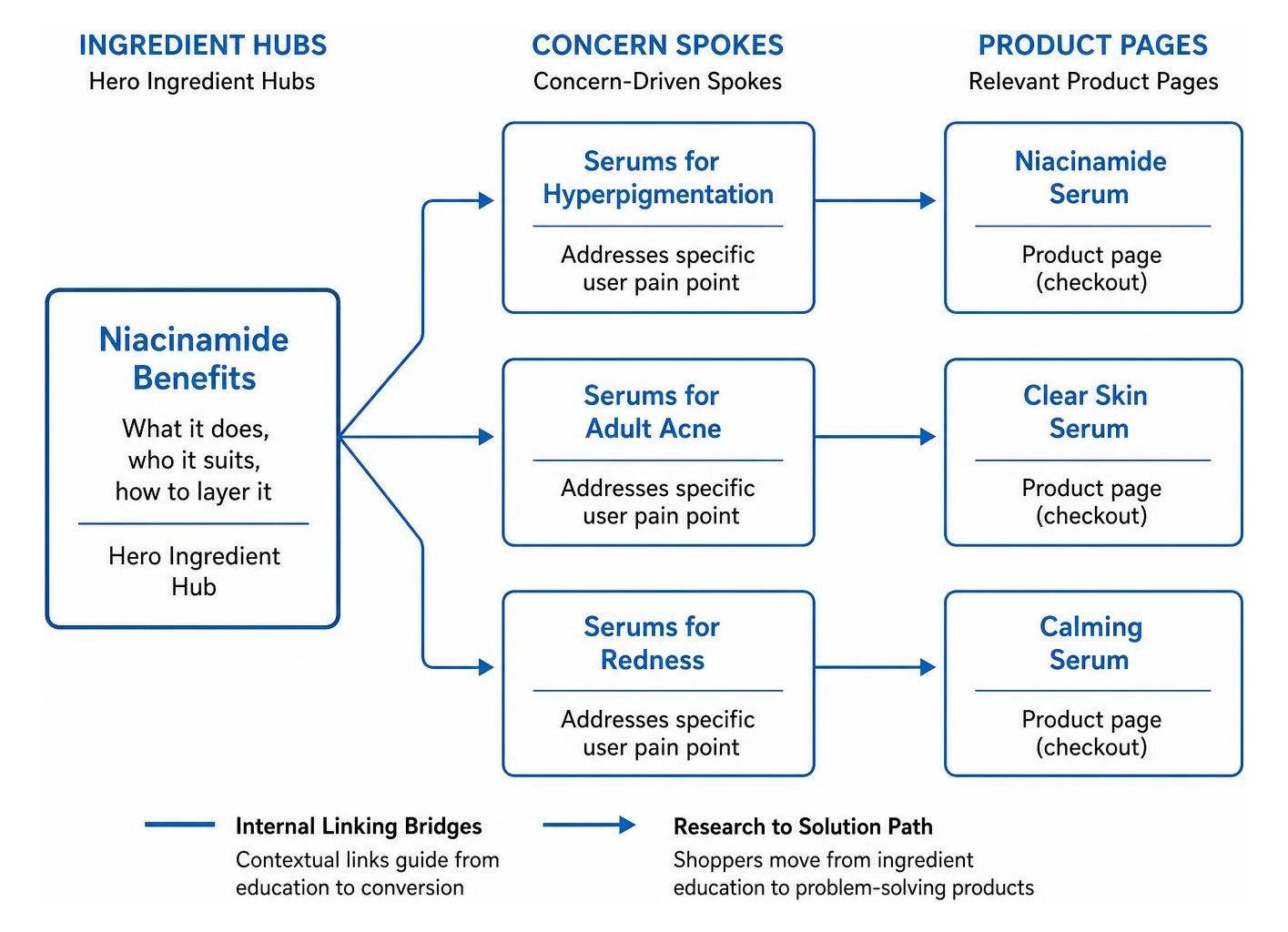
When structuring these clusters:
- Hero Ingredient Hubs: Create detailed, plain-language reference guides explaining what the ingredient does, who it suits, and how to layer it.
- Concern-Driven Spokes: Address specific user pain points (such as adult acne, barrier repair, or redness reduction).
- Internal Linking Bridges: Embed contextual links from educational content straight into matching product pages, guiding shoppers seamlessly from research to conversion.
How Can AI Search Engines and Generative Overviews Be Optimized for Beauty Products?
Direct answer: Optimizing for AI answer engines requires clear entity definitions, structured Product schema markup, and transparent ingredient documentation that artificial intelligence systems can parse and cite.
Generative platforms like Google AI Overviews, ChatGPT, and Perplexity prioritize structured, factually verifiable information. When a potential customer asks an AI assistant for a "fragrance-free cream for sensitive rosacea-prone skin," the engine pulls brands that clearly define their attributes in structured code and straightforward copy.
To maximize citations:
- Implement complete
ProductandOfferschema markup detailing active ingredients, sizes, and price. - Keep copy strictly aligned with FDA and MoCRA cosmetic labeling guidelines—rely on function-based language (such as "helps soothe redness") rather than drug-like claims.
- Create dedicated transparency sections detailing vegan, cruelty-free, and clean-formulation certifications so AI models recognize your brand as a verified entity.
Scaling Organic Growth: Authority, Local Presence, and Campaign Measurement
Direct answer: Long-term organic growth requires pairing technical website health with authentic customer reviews, localized search listings for retail spaces, and clear attribution tracking across traditional search and AI platforms.
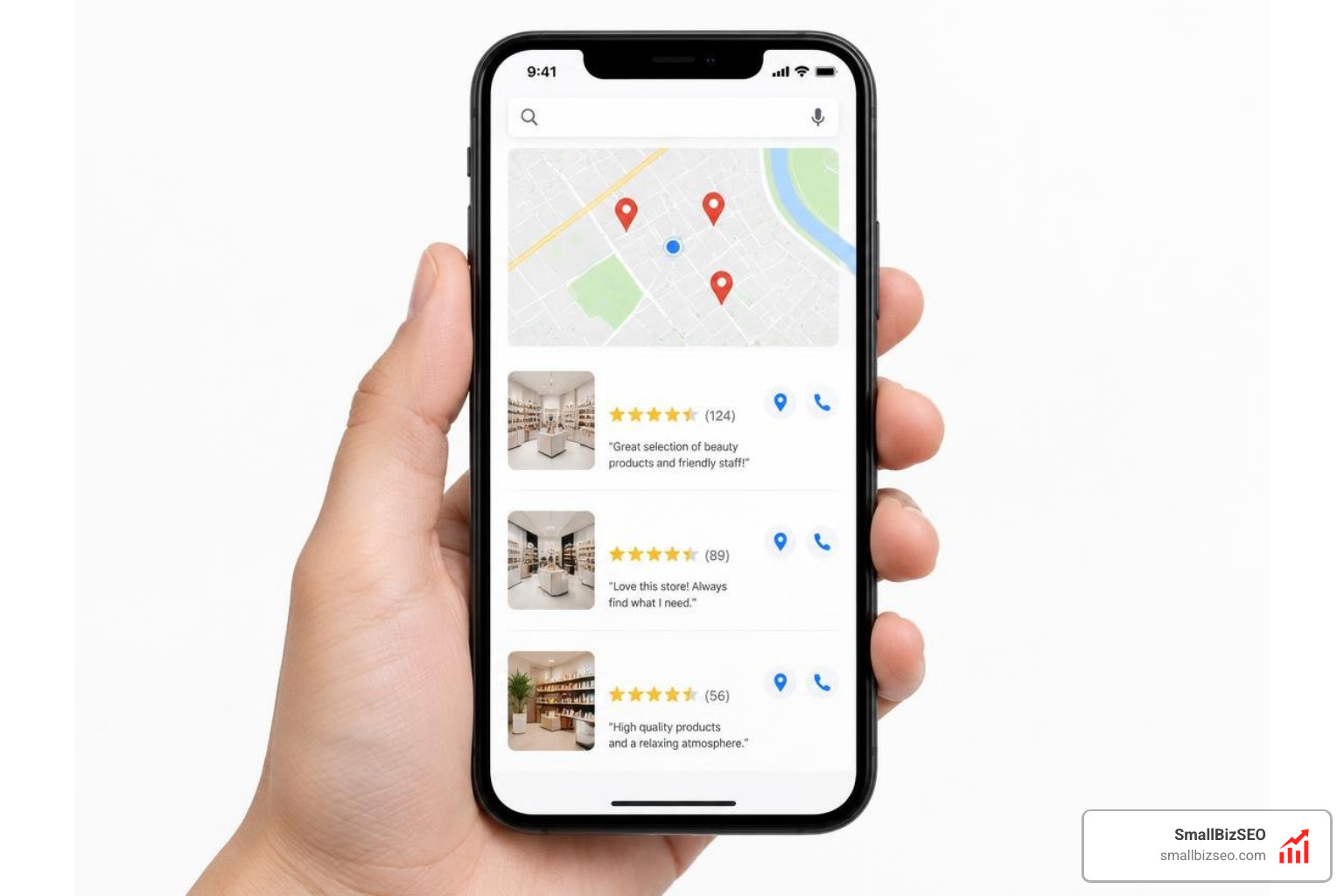
Building lasting search visibility is about more than just keyword placement; it is about establishing experience, expertise, authoritativeness, and trust (E-E-A-T). Search engines evaluate the authenticity of your beauty catalog through real customer interactions, qualified editorial mentions, and accurate business data across all touchpoints.
How Do Customer Reviews, UGC, and Influencers Support SEO for Cosmetics Retail?
Direct answer: User-generated content and customer reviews provide fresh, long-tail keyword phrasing, improve trust signals, and unlock star-rating rich snippets that dramatically lift click-through rates.
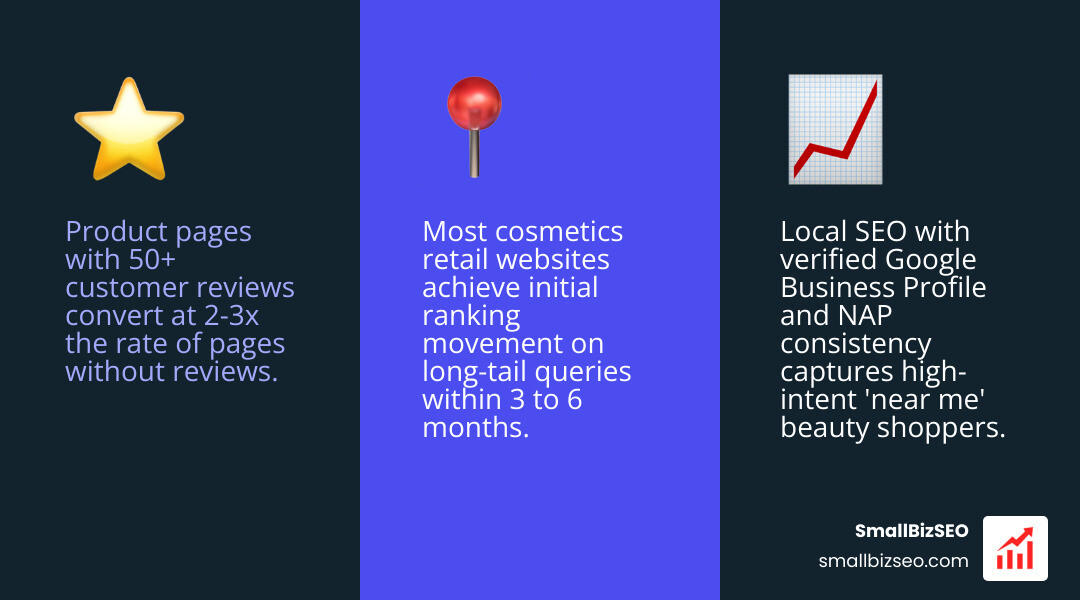
Product detail pages that feature 50 or more authentic customer reviews convert at roughly two to three times the rate of pages without reviews. Beyond immediate conversions, customer reviews naturally incorporate real shopper vocabulary—such as "doesn't pill under makeup" or "great for olive undertones"—which helps product pages rank for unexpected long-tail phrases.
To ensure search engines display your review stars in search results, configure structured data with these essential schema attributes:
aggregateRating: Specifies the average star rating and total count of verified buyer reviews.review: Outlines individual customer feedback, including submission dates and reviewer names.author: Identifies the reviewer or certified beauty expert who evaluated the formula.reviewRating: Defines the specific numeric score provided in the individual assessment.
How Should Omnichannel and Local Search Be Structured for Brick-and-Mortar Cosmetics Stores?
Direct answer: Retailers with physical storefronts or treatment rooms should maintain a verified Google Business Profile, use subfolder directory structures for each location, and embed localized schema markup.
If you operate a boutique or salon counter, local foot traffic is an invaluable revenue channel. Managing physical locations requires targeted local SEO execution to capture high-intent "near me" queries from nearby shoppers looking for specific beauty products or shade-matching consultations.
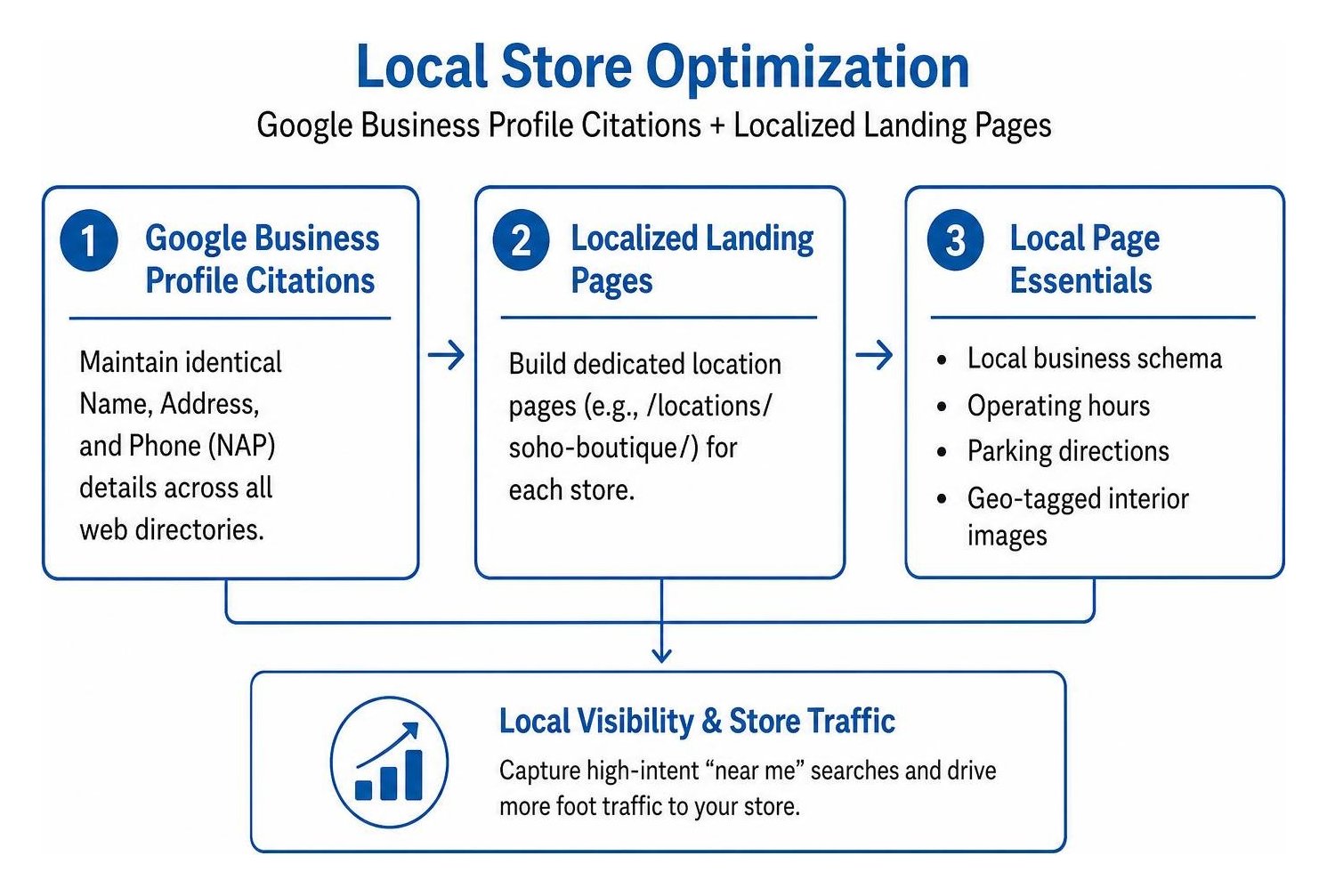
Maintain identical Name, Address, and Phone (NAP) details across all web directories. Build dedicated location landing pages (such as /locations/soho-boutique/) that feature local business schema, operating hours, clear parking directions, and geo-tagged interior imagery of your store shelves.
How Long Does It Take to Measure Success and Avoid Costly Beauty SEO Mistakes?
Direct answer: Most cosmetics retail websites achieve initial ranking movement on long-tail product queries within 3 to 6 months, while broad category terms require consistent authority building over a longer period.
Common beauty SEO pitfalls include deleting seasonal product URLs without 301 redirects, creating thin duplicate category descriptions, and ignoring keyword cannibalization between blogs and product listings. Sustainable growth comes from tracking both traditional keyword rankings and visibility inside emerging AI answer engines.
At SmallBizSEO, our data-driven "Velocity" framework is built to accelerate organic rankings and deliver transparent, E-E-A-T-compliant growth for growing businesses. Ready to uncover hidden catalog issues and accelerate your store's organic revenue? You can schedule a comprehensive SEO visibility audit with our team to map out a clear path forward.
Fueling Long-Term Growth for Your Beauty Storefront
Building sustainable search visibility for an independent cosmetics brand is a compounding investment. By fixing technical variant structures, answering real customer skin concerns with ingredient-focused content clusters, and collecting verified customer reviews, you turn your digital storefront into an organic customer engine. Start by auditing your variant URLs, streamline your site speed, and build the educational resources your beauty customers are searching for every day.