NAP Consistency Explained: Why Your Local Business Depends on It
NAP Consistency Explained: Why Your Local Business Depends on It
What Is NAP Consistency and Why It Drives Local Search
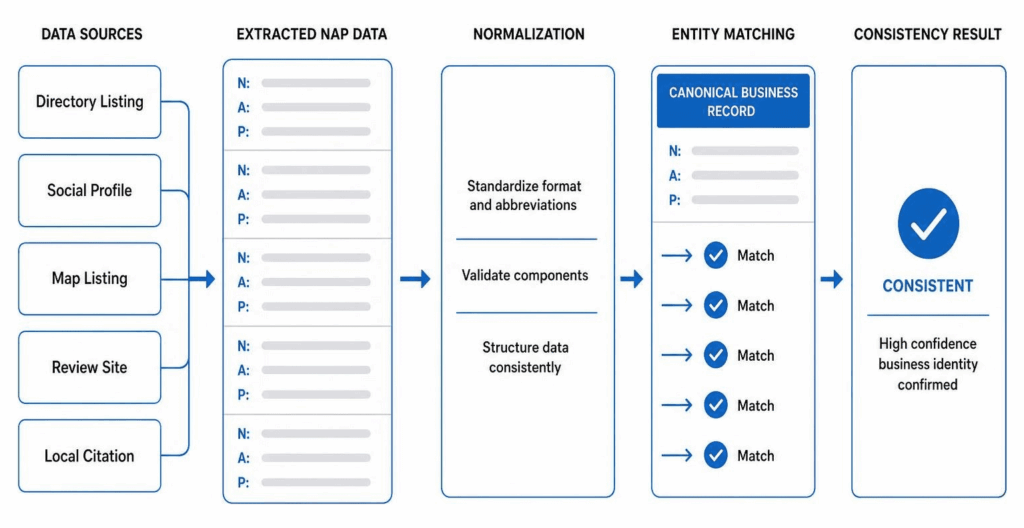
When search engine crawlers explore the web, they look for authoritative patterns that confirm your business is real, active, and located where you say it is. Your business name, street address, and phone number form a digital footprint. If every directory, social profile, and map application shares the exact same footprint, search engine algorithms can confidently verify your real-world identity.
Location verification relies on strict patterns. If your business name is listed with minor variations or your street address contains conflicting suite numbers, algorithms flag those entries as uncertain. Maintaining clean contact information tells search engines that your business is open for operation and ready to receive local customers.
Defining NAP vs NAPW Standards
While NAP covers the fundamental triad of Name, Address, and Phone number, modern search optimization often expands this standard to NAPW (Name, Address, Phone, Website URL). Adding your canonical website URL ensures search crawlers connect your third-party business listings directly to your primary website landing page.
When creating directory profiles, always link to the exact final destination URL rather than relying on redirects. Including trailing slashes, standardizing https://, and aligning your domain structure across platforms prevents web-wide identity splits. For a deeper breakdown of basic terminology, review Moz's guide on NAP in local SEO to see how citations function across search ecosystems.
How NAP Consistency SEO Powers Local Map Pack Rankings
Google calculates local search results using three primary criteria: relevance, distance, and prominence. NAP consistency SEO directly feeds into all three pillars by providing reliable location and identity data.
- Relevance: Identical naming and category details confirm your specific line of business.
- Distance: Precise, standardized street addresses allow search algorithms to pinpoint your physical geographic location relative to the user's search query.
- Prominence: Consistent citations distributed across authoritative directories signal to search engines that your brand is established and well-known.
When your business information matches across key sources, search engines reward that clarity with higher placements in the Local Map Pack. To build a robust baseline for map results, check out our guide on local search optimization basics.
The Impact of NAP Consistency SEO on Search Engine Trust
Search engines run on probability engines. When cross-referencing information about your business across external directories, algorithms calculate an entity confidence score. If directory A says you are located on Main Street and directory B says Main Avenue, the algorithm's confidence score drops. Instead of guessing which address is accurate, search engines simply rank a fully verified competitor above you.
Research indicates that consistency of your NAP data can impact your local performance by as much as 16%. In fact, businesses that maintain clean, uniform citation profiles receive 23% more website clicks from Google search results compared to businesses burdened with conflicting contact listings.
| Performance Metric | Clean & Consistent NAP Data | Fragmented or Outdated NAP Data |
|---|---|---|
| Local Search Performance | Full algorithmic confidence (+10–25% rank lift) | Performance suppressed by up to 16% |
| Website Clicks from Google | +23% average increase in organic clicks | Reduced engagement due to lower rankings |
| Direction Requests | Maximum local conversion rate | 40–50% fewer direction requests |
| Consumer Brand Trust | High retention and high conversion | 80% of consumers lose brand trust |
If your search rankings have plateaued despite active marketing efforts, conflicting citation records could be holding you back. Read our analysis on 5 local SEO mistakes killing visibility to spot other silent issues suppressing your presence.
How Search Algorithms Evaluate Citation Signals
Search platforms gather business information from major data aggregators like Data Axle, Neustar Localeze, Foursquare, and Acxiom. These aggregator databases supply location data to hundreds of secondary local directories, navigation systems, and review sites.
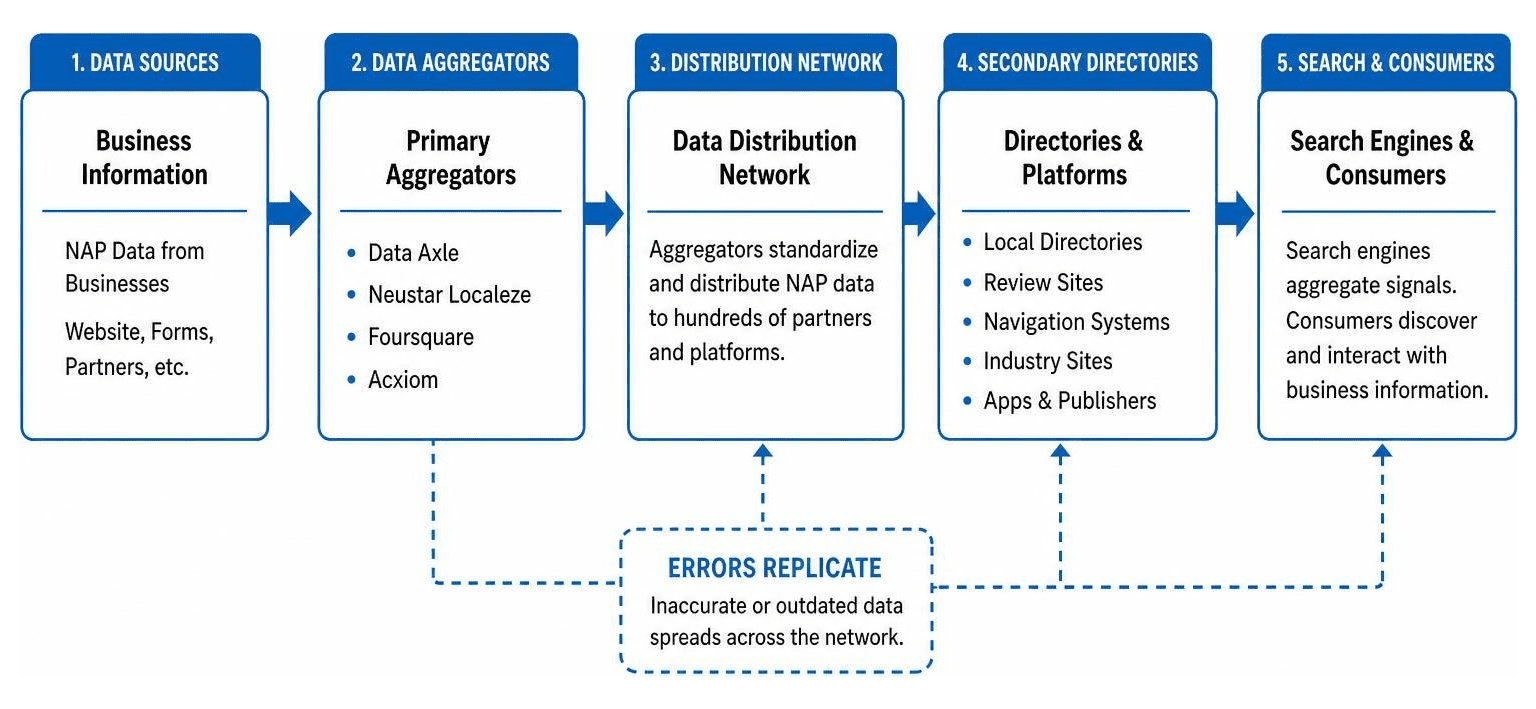
When an error exists at the aggregator level, it replicates rapidly across dozens of secondary sites. This automated distribution creates data drift, where outdated business details spread quietly through search networks.
Consumer Trust and Conversion Loss Risks
Listing errors hurt real-world customer acquisition long before they hurt your organic rankings:
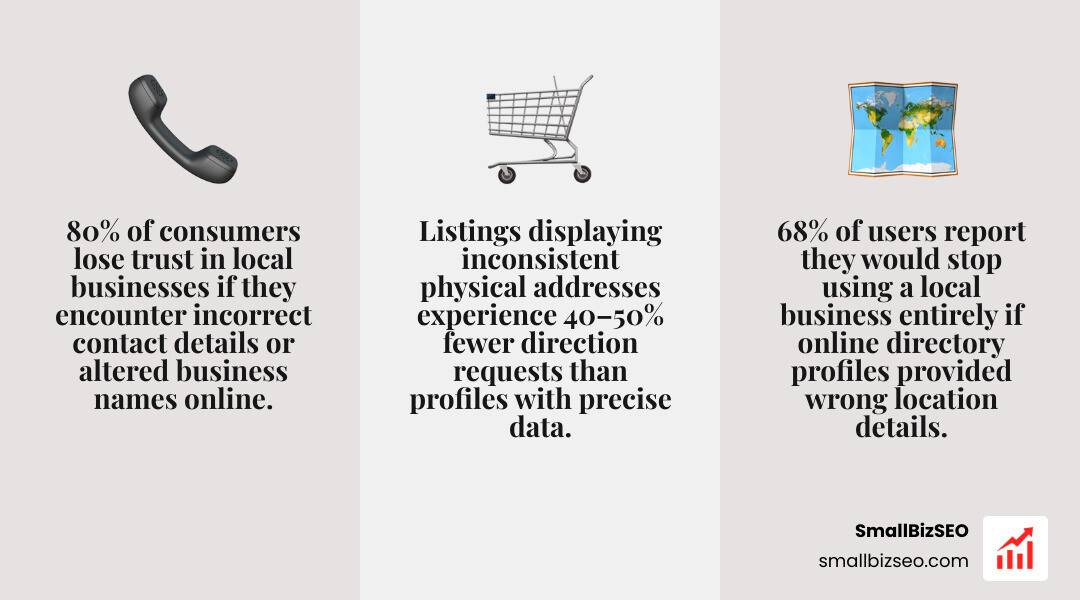
- Lost Trust: 80% of consumers lose trust in local businesses if they encounter incorrect contact details or altered business names online.
- Abandoned Purchases: 68% of users report they would stop using a local business entirely if online directory profiles provided wrong location details.
- Missed Directions: Listings displaying inconsistent physical addresses experience 40–50% fewer direction requests than profiles with precise data.
Every incorrect phone number or outdated address represents missed phone leads and wasted foot traffic.
Common Inconsistencies and Sources of Data Drift
NAP inconsistencies rarely stem from deliberate errors. Instead, they accumulate slowly through routine business operations, platform updates, and automated web scrapers.
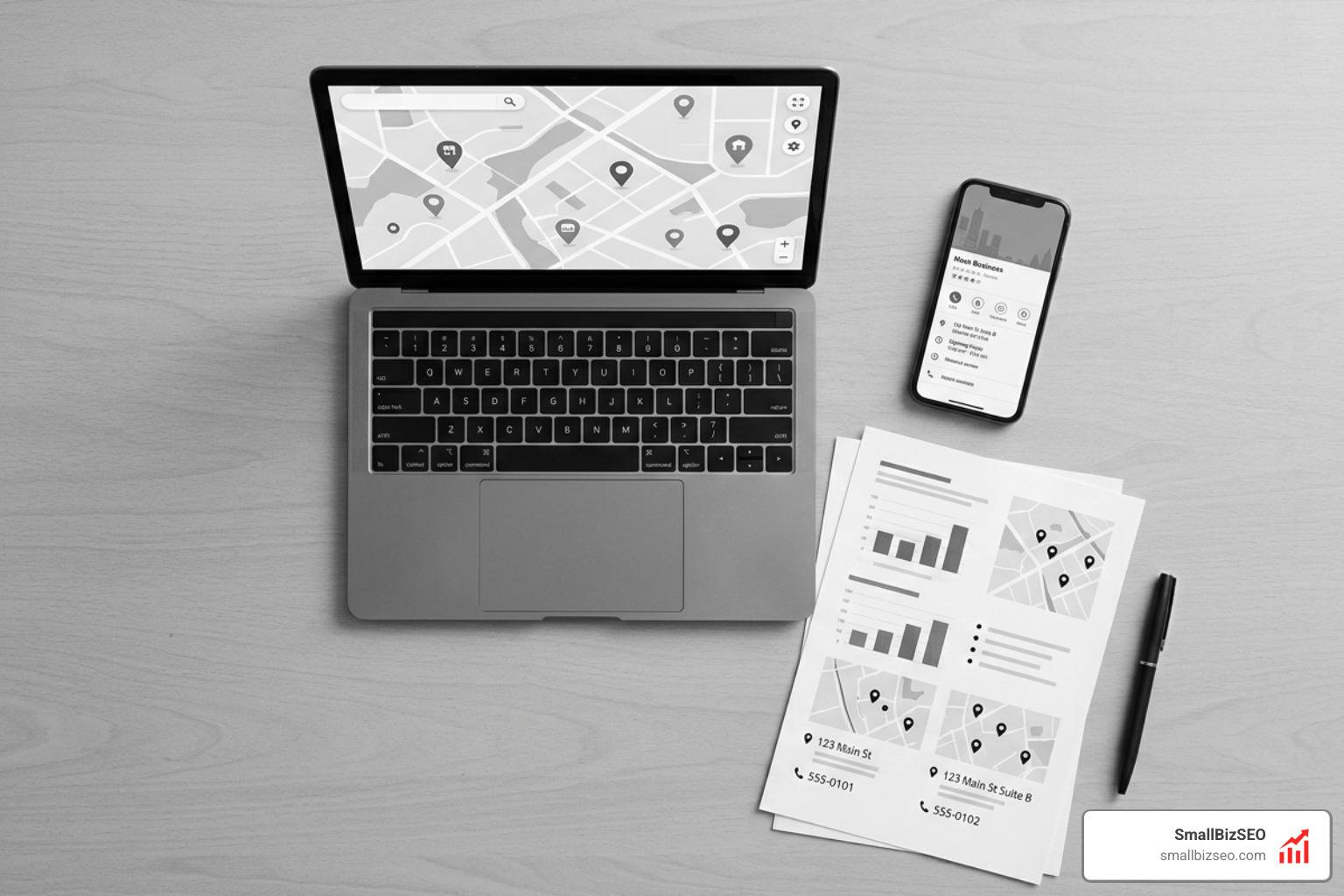
The most frequent listing discrepancies include:
- Name Variations: Listing a formal corporate name like "Apex Services, LLC" on one directory while using "Apex Services" or "Apex Plumbing & Heating" on social media platforms.
- Street Abbreviations: Inconsistent usage of street terms, such as mixing "Suite 200," "Ste 200," and "#200," or alternating between "Avenue" and "Ave."
- Phone Formatting: Formatting telephone numbers with varying styles, such as mixing
(555) 019-2831,555-019-2831, and+1 555 019 2831. - Unclaimed Ghost Profiles: Automated directories creating auto-generated business listings with placeholder info scraped from outdated public records.
- Unresolved Business Moves: Relocating your store or office but failing to update older directory listings, leaving legacy address pins on map services.
- Phone Number Updates: Changing your main landline without clearing old contact numbers off secondary citations.
How to Audit and Establish Your Master NAP
Resolving citation errors starts with establishing a definitive, standardized profile that serves as the single source of truth for your brand.
Building a Canonical Master Listing Standard
Create a permanent internal document containing your canonical master NAP. This plain text reference must be shared across your organization so everyone uses the exact same character strings for outreach, listing submissions, and web updates.
Follow these rules when defining your canonical standard:
- Follow USPS Address Standards: Format physical street addresses according to official postal standards to simplify machine parsing.
- Standardize Business Name Formatting: Lock down your precise operational business name. Do not stuff promotional keywords into your official title, as keyword-stuffed names violate search engine guidelines and trigger listing suspensions.
- Use Crawlable Text On Site: Display your canonical NAP in plain HTML text within your website footer and contact pages. Never lock contact information inside embedded images where search crawlers cannot parse the text.
- Implement Schema Markup: Embed
LocalBusinessstructured JSON-LD code on your primary contact pages. Structured code delivers structured data straight to search engine indexing pipelines.
Step-by-Step Local Citation Audit Process
Once your master standard is locked, follow this systematic audit procedure:
- Audit Primary Platforms First: Verify your Google Business Profile, Apple Maps, Bing Places, Facebook Page, and Yelp listing against your master document.
- Search for Stray Mentions: Use targeted Google site operators to uncover legacy or duplicate listings across the web:
"Your Business Name" + "Old Address""Your Phone Number"site:yelp.com "Your Business Name" - Correct Primary Aggregators: Submit updated data directly to the major data aggregators (Data Axle, Localeze, Foursquare). Cleaning data at the core aggregator level stops invalid info from continually re-populating downstream directories.
- Update Direct Directories: Systematically log into high-authority platforms to update outdated profiles, request profile merges for duplicate accounts, and delete inaccurate listings.
Pairing clean citation data with a broader growth strategy ensures maximum market reach. Learn more in our overview on local marketing strategy.
Advanced Strategy: Multi-Location Management, Call Tracking, and DNI
Managing business data gets more complex when scaling operations across multiple locations or incorporating advanced phone attribution software.
Managing Citations Across Multiple Business Branches
Operating multiple physical locations requires clear organization to prevent internal data overlap:
- Distinct Landing Pages: Build dedicated location pages on your primary domain for every physical branch (e.g.,
/locations/north-side). - Unique Local Phone Lines: Assign each physical branch its own distinct local direct-dial phone number. Avoid using a shared toll-free number across multiple locations, as shared numbers confuse search verification algorithms.
- Parent/Child Schema Organization: Implement nested JSON-LD schema linking local child location pages back to the corporate parent organization.
For more guidance on organizing multi-location structures, explore our analysis on local SEO optimization for growth.
Implementing Call Tracking and Dynamic Number Insertion Safely
Call tracking software measures phone conversion sources, but placing static tracking numbers on random directories ruins your citation integrity. You can safely track call leads without hurting your NAP consistency SEO by following proper setup rules.
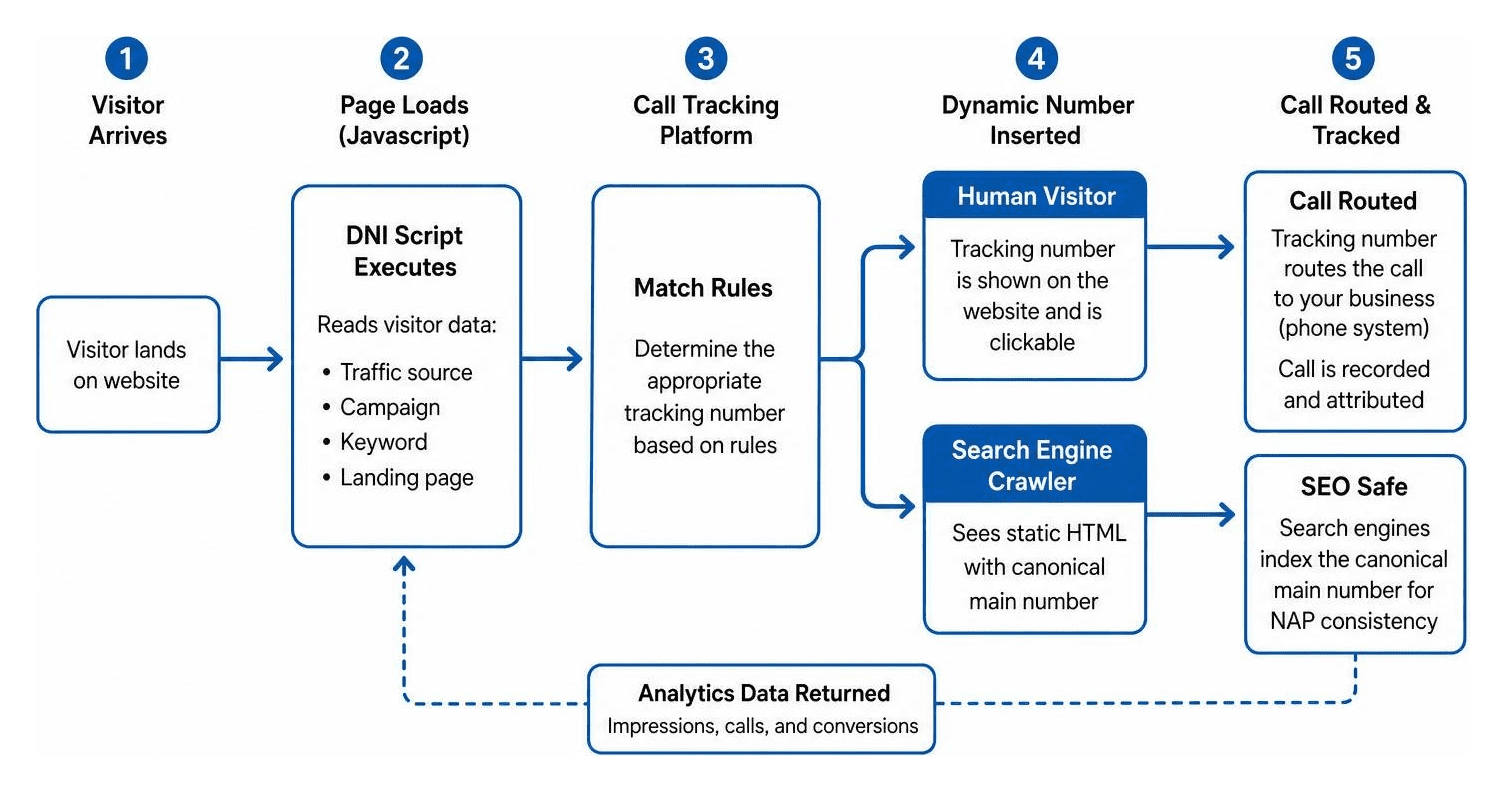

- Website Call Tracking (DNI): Dynamic Number Insertion relies on website JavaScript to dynamically swap the visible phone number for human visitors based on their traffic source (e.g., Google Ads vs social media). Because search engines crawl static raw HTML code rather than rendering dynamic visitor sessions, crawlers read your canonical main business number in the static code while you capture detailed phone attribution analytics.
- Google Business Profile Call Tracking: When setting up call tracking on your primary map profile, place your custom tracking number in the Primary Phone field, and enter your canonical main landline in the Secondary Phone field. Search engines use the secondary line to confirm entity identity while routing incoming customer calls through your tracking software.
Local Verification in the Era of AI Search and Voice Discovery
Local discovery is evolving rapidly. Modern consumers rely heavily on conversational AI search engines and voice assistants like ChatGPT, Perplexity, Microsoft Copilot, and Google AI Overviews to find nearby services.

Generative Search Engines and Entity Resolution
Traditional search engines display lists of links, leaving users to evaluate options manually. Generative AI tools provide single definitive recommendations in response to natural voice commands.
When an AI engine processes a query like "find a reliable electrician near me," it consults internal Knowledge Graphs and scrapes directory networks to confirm business details. If the AI encounters conflicting phone numbers or address records, its entity resolution confidence drops. Rather than risk recommending an inactive or inaccurate business, the AI omits your business entirely. Establishing clean, uniform citation profiles gives AI engines the high confidence score required to recommend your brand.
Modern Workflows for NAP Consistency SEO Monitoring
Cleaning up your directory presence is not a one-time task. Data aggregators and automated web scrapers periodically refresh their databases, which can re-introduce stale details over time.
Maintain long-term data integrity by building a light quarterly maintenance routine:
- Schedule Quarterly Audits: Review your core profiles every three months to catch unauthorized user edits or scraper errors early.
- Monitor Google Business Profile Notifications: Review and respond promptly to automated edit suggestions flagged within your Google Business Profile dashboard.
- Set Up Brand Alerts: Configure Google Alerts for your official business name and main telephone numbers to spot unauthorized new listings as soon as they index.
Frequently Asked Questions About Local Citations
How long does it take to see ranking improvements after fixing NAP errors?
Most businesses see noticeable ranking improvements within 60 to 90 days after completing a citation cleanup campaign. Direct listing updates on platforms like Google Business Profile or Facebook take effect within 24 to 72 hours, but updates submitted to core data aggregators can take 2 to 8 weeks to propagate across secondary directory networks.
Does call tracking hurt local SEO rankings?
No, call tracking does not harm your local search rankings when implemented correctly. Using Dynamic Number Insertion (DNI) on your website presents tracking numbers dynamically via client-side scripts while preserving your main phone number within the static HTML code for search engines. On Google Business Profile, listing your tracking number as the primary line and your standard landline as the secondary line preserves verification signals while capturing lead data.
How often should a small business audit its online citations?
Single-location small businesses should perform a full citation audit every 3 to 6 months. Multi-location enterprises, fast-growing brands, or businesses that have recently changed physical addresses or re-branded should monitor their listings monthly or quarterly to catch data drift before it impacts local rankings.
Elevate Your Local Presence with Clean Citation Data
Clean citation data is the gatekeeper of local search visibility. You can invest in professional content, build web authority, and generate customer reviews, but persistent listing errors will prevent search algorithms from fully trusting your real-world identity.
Take control of your digital footprint today:
- Lock your master NAP standard in a centralized document.
- Audit high-priority platforms and correct outdated information.
- Clean up core data aggregators to halt the spread of invalid details.
- Implement LocalBusiness JSON-LD schema on your website.
- Establish a quarterly audit workflow to protect your listings long-term.
At SmallBizSEO, we help businesses build durable organic visibility through data-driven technical optimization, clean structured data execution, and reliable citation management. Explore our comprehensive local SEO guide to learn how our Velocity framework can transform your search presence.