Proven Organic Search Strategies Every Car Rental Business Needs

Understanding the Impact of Organic Search on Fleet Bookings
Effective SEO for a car rental agency combines local map pack optimization, crawlable fleet architecture, and commercial search intent targeting to capture direct, commission-free reservations. These strategies help independent operators appear when travelers compare vehicles online, reducing reliance on online travel agencies and keeping fleets moving profitably.
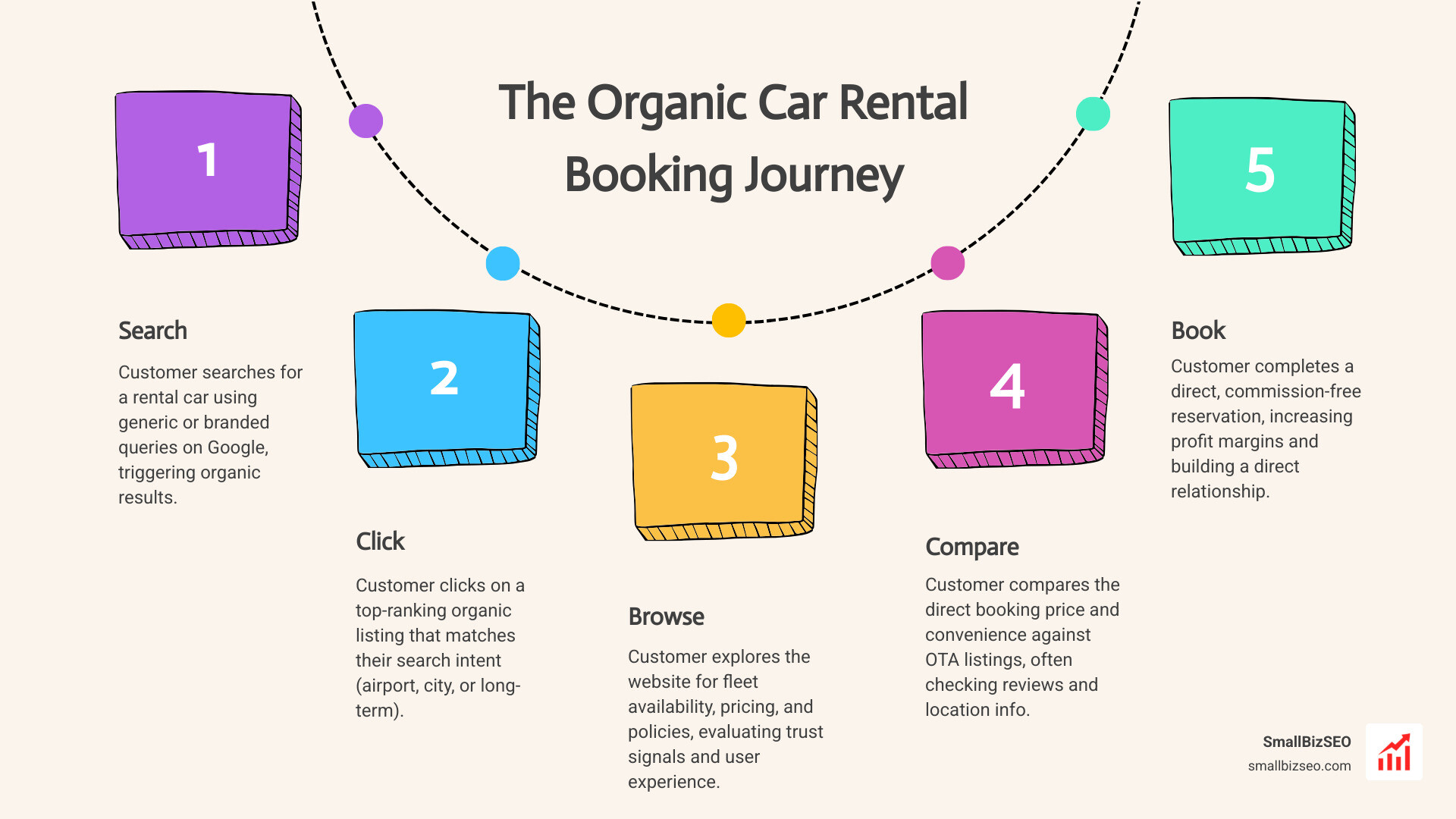
Organic search drives over half of all trackable website traffic across industries, and the car rental sector is no exception. Roughly 92% of vehicle shoppers research digitally before calling, booking, or visiting a counter, while about three-quarters of all rental reservations now occur online. When potential renters search for vehicles, they enter a critical comparison window where organic rankings determine which brands capture direct, commission-free reservations.
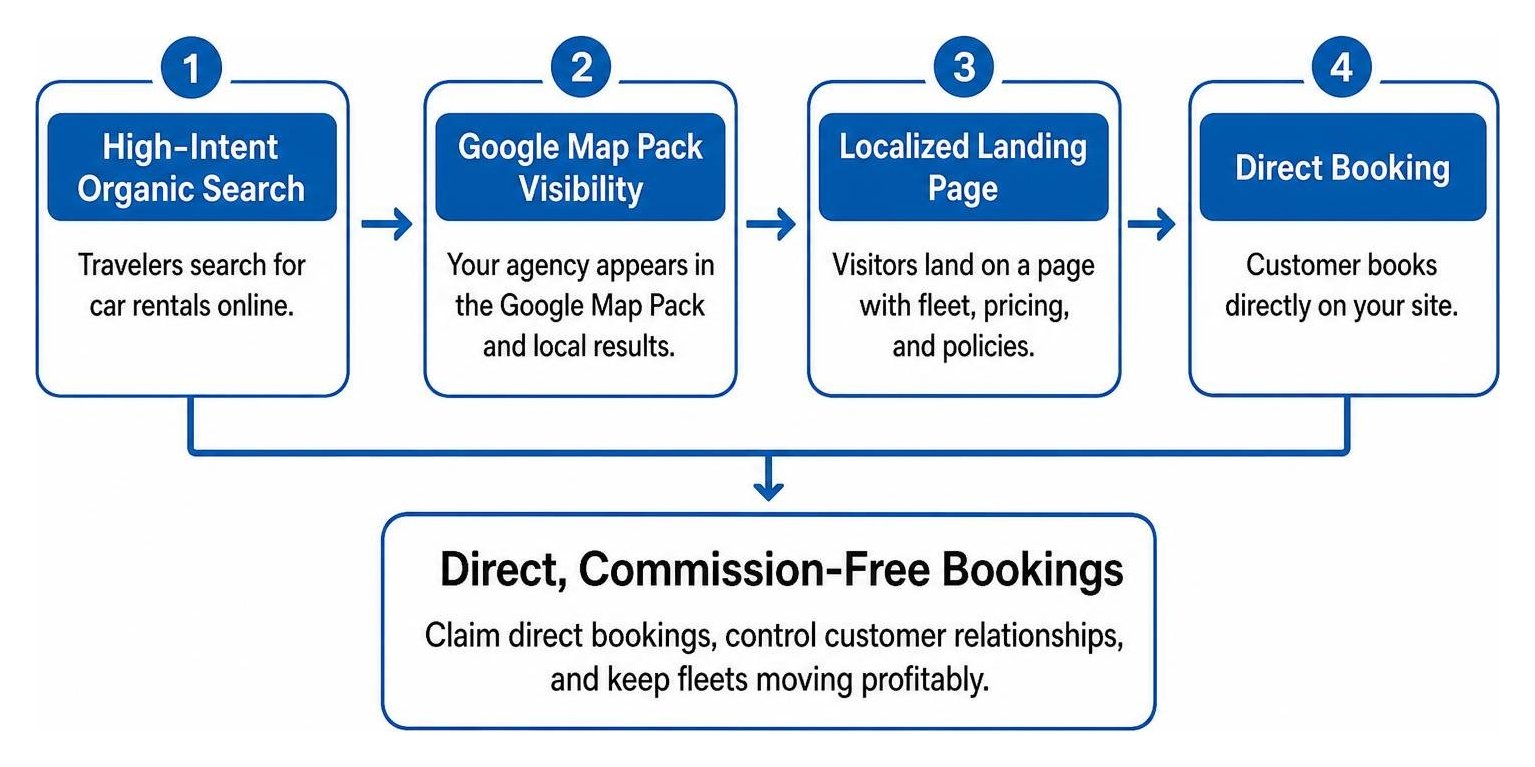
Relying exclusively on online travel agencies (OTAs) costs independent operators between 15% and 25% in commission per reservation. Effective organic search positioning allows rental agencies to claim direct bookings, control customer relationships, and keep fleets moving profitably.
Comprehensive SEO for Car Rental Agency Expansion
Executing SEO for a car rental agency requires an interconnected approach that unites multi-location targeting, site architecture, and search engine discoverability. Following core principles outlined in resources like Google's SEO Starter Guide, agencies must build structured websites that make vehicle availability, pricing, and policies immediately clear to search engines and users alike.
How Does Local SEO Drive Nearby and Airport Bookings?
Local search queries such as "car rental near me" account for more than 70% of car rental clicks. Local SEO optimizes your digital footprint so your agency appears in the Google Map Pack and localized organic search results when travelers search within your service area.
To maximize local visibility, focus on these essential components:
- Google Business Profile (GBP) Optimization: Claim and verify separate profiles for every physical rental location. Set your primary category to "Car rental agency" and select accurate secondary categories.
- Complete Business Profiles: Add high-resolution photos of your actual fleet, operating hours, payment methods, and detailed vehicle attributes.
- NAP Consistency: Ensure your Name, Address, and Phone number are identical across your website, Google Business Profile, and regional directories. Review our practical guide to local map visibility for citation auditing methods.
- Review Acquisition Workflow: Encourage renters to leave specific reviews immediately upon returning vehicles. Positive reviews that mention exact models, neighborhoods, or pickup logistics strengthen local rankings.
- Dedicated Location Pages: Create unique landing pages for each neighborhood or branch rather than duplicating copy. Incorporate local landmarks, driving directions, and local pickup details, following local search optimization basics.
Which Technical SEO for Car Rental Agency Websites Matters Most?
Technical SEO ensures search engine crawlers can index your inventory pages while providing mobile travelers with a fast, friction-free booking experience. Because over 70% of tourists and mobile travelers search for rentals on smartphones, mobile performance directly impacts your bottom line.
- Mobile Page Speed and Core Web Vitals: Optimize Largest Contentful Paint (LCP) and Interaction to Next Paint (INP) by compressing fleet images into modern WebP formats and deferring non-essential scripts.
- Booking Engine Indexability: Many reservation widgets load via dynamic JavaScript or iframes that search bots cannot parse. Ensure your primary fleet categories and vehicle models reside on crawlable, static HTML pages with clear internal links.
- Structured Data Implementation: Add
AutoRentalandLocalBusinessschema markup to your code. This helps search engines read pricing tiers, operating hours, and fleet categories directly, as highlighted in the VEVS Car Rental Software optimization framework. - Shallow Site Architecture: Maintain a clear root-to-node hierarchy (Homepage to City/Location Hub to Vehicle Category to Specific Model) and keep priority booking pages within two to three clicks of your homepage. Explore our comprehensive guide to technical SEO for in-depth architecture strategies.
How to Execute Keyword Research and Search Intent Matching?
Successful keyword research for car rental websites targets commercial search intent rather than broad search volume. Bidding or optimizing for generic head terms like "rental cars" places you in direct competition with massive aggregators. Instead, focus on specific, revenue-driving phrases that reflect precise traveler needs.
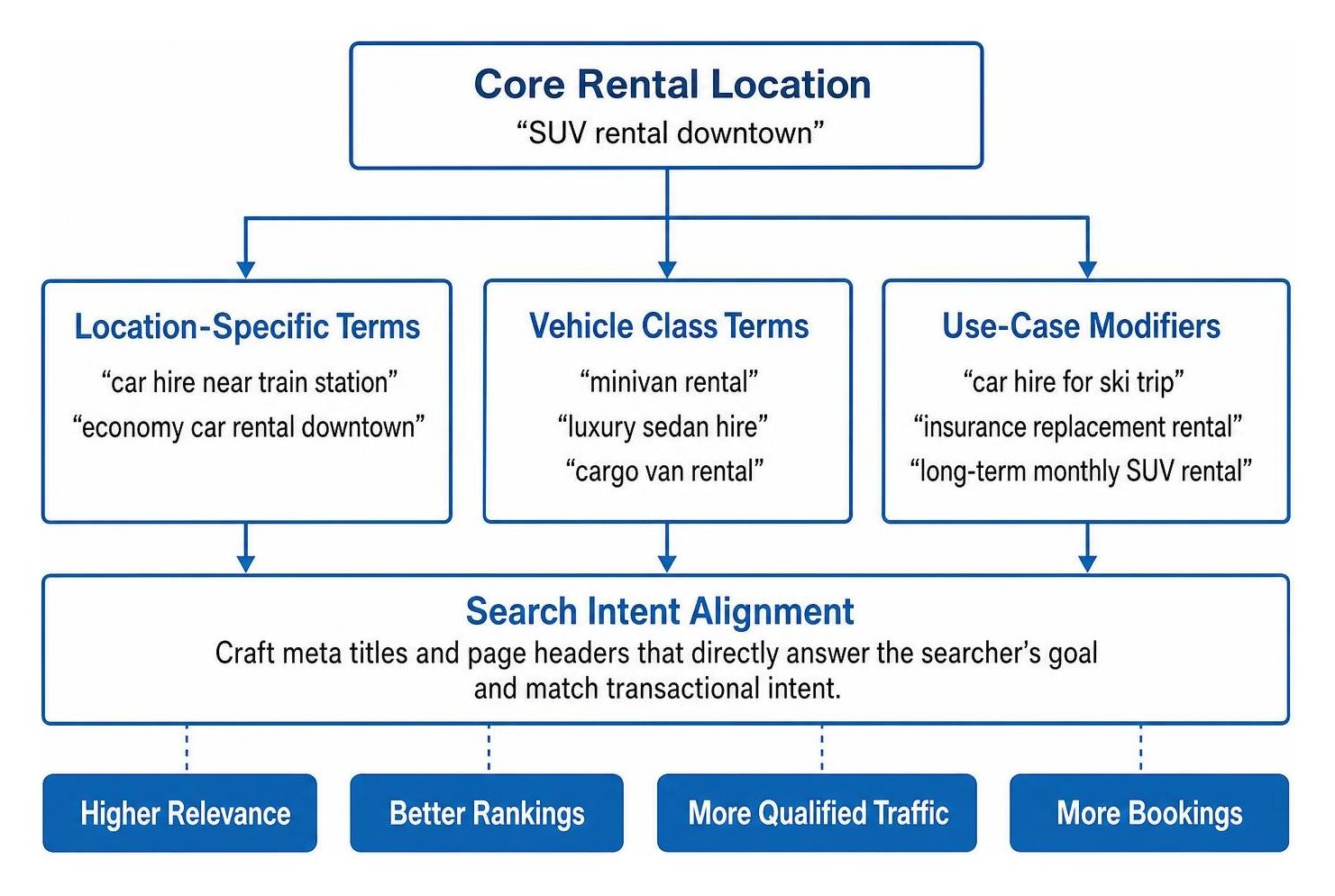
- Location-Specific Terms: Target geo-modified queries such as "car hire near train station" or "economy car rental downtown."
- Vehicle Class Searches: Build pages targeting high-converting inventory classes, including "minivan rental," "luxury sedan hire," or "cargo van rental."
- Use-Case & Transactional Intent: Align content with user needs by structuring pages around specific trip types, such as "car rental with debit card" or "long-term monthly SUV rental."
- Search Intent Alignment: Craft meta titles and page headers that directly answer the searcher's goal. Learn how to map transactional queries to user journeys with our keyword research strategy and ensure an exact search intent match on every landing page.
What Content and Link Building Tactics Fuel SEO for a Car Rental Agency?
A robust content and link-building strategy establishes topical authority and builds domain trust, signaling to search engines that your agency is a verified local authority.
- Transparent Policy Guides: Build dedicated pages covering age requirements, deposit rules, insurance coverage, and toll policies. Answering these questions upfront pre-qualifies leads and reduces customer service friction.
- Local Travel Guides and Itineraries: Publish curated driving guides and seasonal road trip itineraries connected to your service zones. Integrating these assets with structured SEO content marketing captures travelers in the research phase before they select a vehicle.
- On-Page Optimization: Refine header tags (H1, H2, H3), meta descriptions, and image alt text on all fleet pages. Incorporate natural, conversion-focused calls to action alongside standard on-page SEO elements.
- Local Business Partnerships: Build natural backlinks by partnering with local hotels, event venues, tourism boards, and regional travel bloggers seeking trusted local transportation partners.
Measuring ROI, Avoiding Pitfalls, and Scaling Results
To maintain long-term search growth, car rental operators must track qualified conversions rather than vanity traffic numbers.

How Do Rental Types Differ Between Airport, City, and Long-Term Leasing?
Different rental models serve distinct customer personas. Search strategies must adapt accordingly:
| Rental Category | Primary Target Audience | Core Keyword Focus | Key Landing Page Elements |
|---|---|---|---|
| Airport Rentals | Inbound tourists, business travelers | "Airport car rental pickup," "Terminal shuttle car hire" | Flight delay policies, terminal shuttle directions, fast pickup guarantees |
| City/Downtown Rentals | Local residents, weekend travelers, replacement drivers | "Car rental near me," "Weekend SUV hire," "Van rental downtown" | Neighborhood parking info, insurance replacement options, debit card rules |
| Long-Term Leasing | Corporate clients, seasonal residents, temporary workers | "Monthly car rental," "Long-term auto lease," "Flexible corporate fleet" | Tiered monthly pricing tables, mileage allowances, maintenance inclusions |
How Long Does SEO Take and How Do You Measure ROI?
SEO is a compounding asset. Initial technical corrections and Google Business Profile optimizations often produce local visibility improvements within three to six months, with competitive rankings expanding steadily over six to twelve months.
Calculate your SEO return on investment by comparing direct booking revenue against your optimization investment and measuring savings from reduced OTA commissions. Add your direct booking revenue to your OTA commission savings, subtract your SEO investment, then divide that result by your SEO investment and multiply by 100 to express ROI as a percentage.
Avoid common industry mistakes such as publishing duplicate location pages, hiding booking widgets behind unindexable scripts, or neglecting customer reviews. Combining organic search with targeted paid campaigns ensures full search coverage while organic equity builds.
Accelerating Your Direct Booking Engine
Dominating search results gives your car rental agency control over its customer base, reduces third-party platform fees, and keeps vehicle utilization high throughout the year. By refining your local search profiles, cleaning up technical code, and publishing helpful fleet and policy pages, you create a sustainable pipeline of direct reservations.
If you are ready to scale your organic performance, partner with a dedicated car rental agency SEO partner or begin with a comprehensive SEO visibility audit from SmallBizSEO to unlock your fleet's true earning potential.