Rank Top for Urgent Pet Needs with Veterinary Search Optimization

How Can SEO for Veterinary Care Help Pet Owners Find Your Clinic?
SEO for veterinary care starts with making your clinic easy to find and easy to contact. Complete your Google Business Profile with accurate hours, services, and contact details. Keep that information consistent across the web. Then build fast, mobile-friendly pages that answer local pet owners' questions and make calling or booking simple.
That matters most when a pet needs care now. A clear listing and a tap-to-call button can help a worried owner find the right next step without digging through your site.
I'm Clayton Johnson, founder of SmallBizSEO. My work in technical SEO, content strategy, and building authority for small businesses shapes this approach to SEO for veterinary care: help people find trustworthy answers and act on them.
When a pet suddenly falls ill or swallows something dangerous, pet parents do not casually browse directories. They grab their smartphones and search for immediate answers. Meeting that urgent search intent requires your practice to show up at the very top of local map results and organic listings.
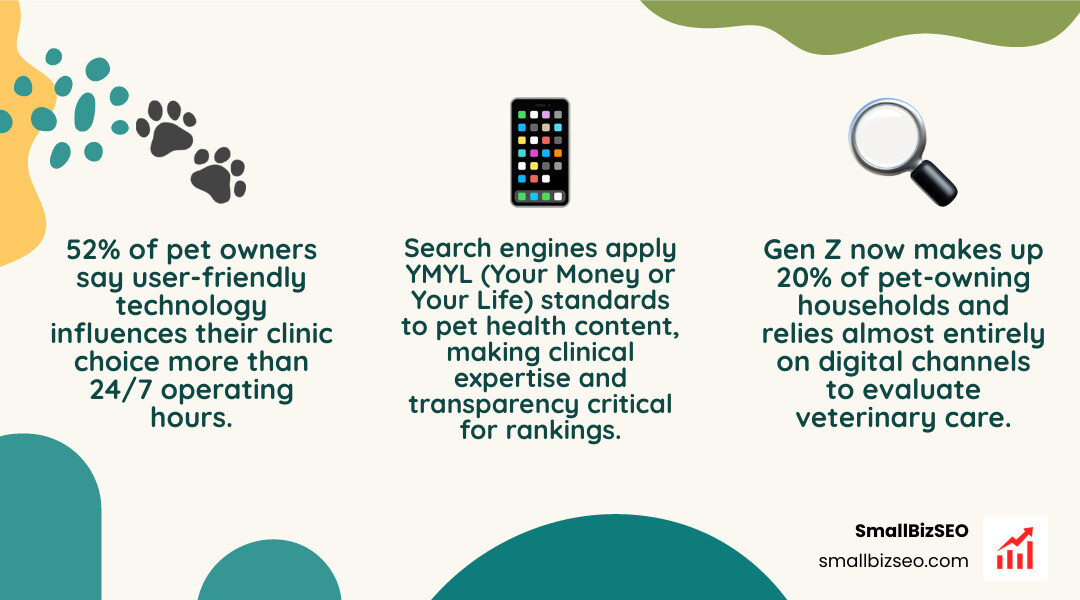
Modern pet ownership has evolved rapidly. Gen Z makes up 20% of pet-owning households, evaluating medical care almost entirely through digital channels. Furthermore, 52% of pet owners state that modern, user-friendly technology influences their clinic choice more than 24/7 operating hours. Search engines treat pet health content with heightened scrutiny similar to human healthcare standards, meaning clinical expertise and operational transparency directly dictate organic visibility.
Proven Fundamentals of SEO for Veterinary Care: Local Visibility, Reviews, and Technical Health
To establish foundational digital trust, veterinary practices must treat their online footprint as a clinical asset. Solid search visibility bridges the gap between pet owners in need and your examination rooms. By aligning technical health, directory precision, and patient feedback, your practice creates a high-converting channel that drives appointments.
How Do You Optimize Your Google Business Profile and Local Citations for Map Pack Dominance?
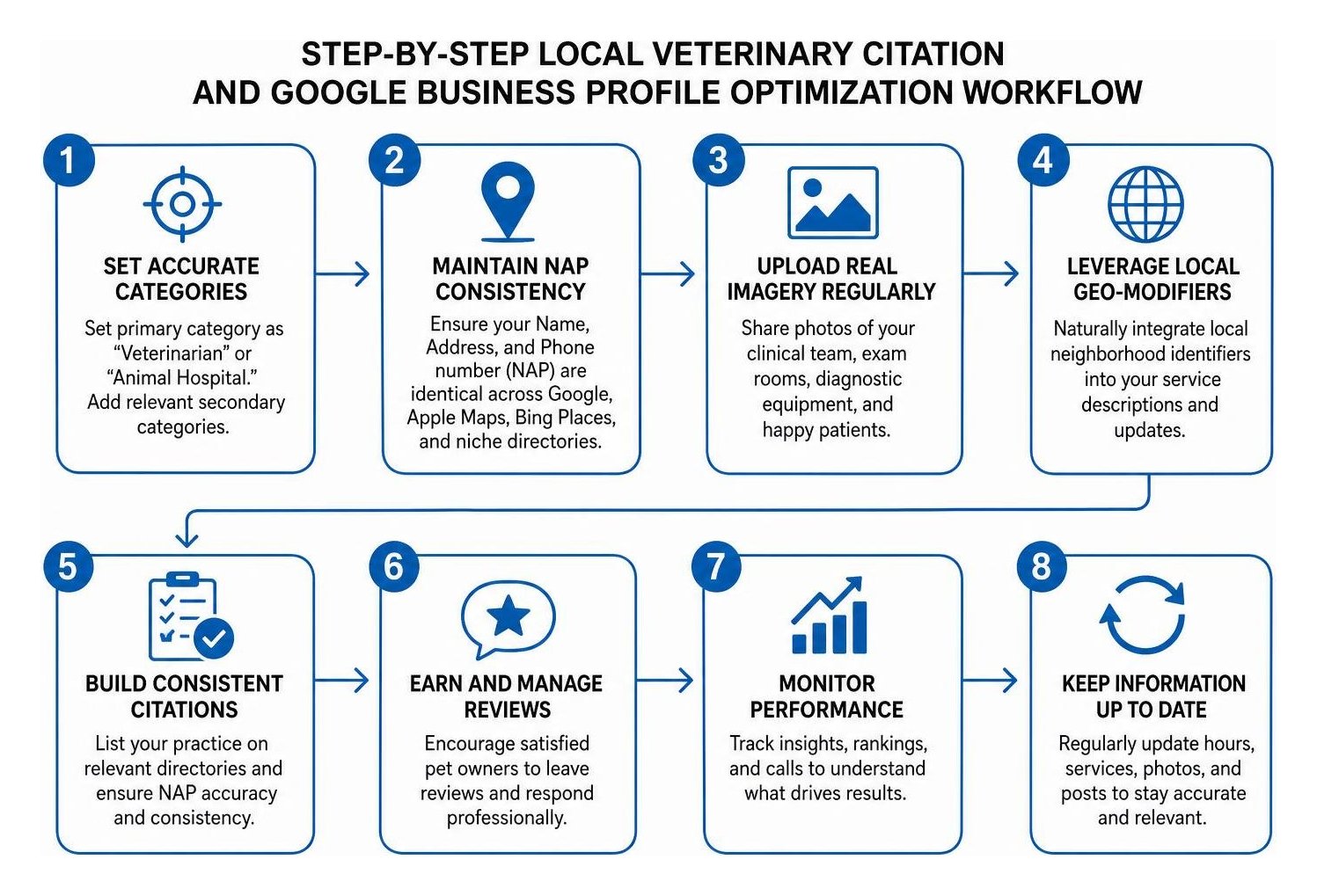
Your Google Business Profile (GBP) is the single most important asset for local veterinary search visibility. Because pet owners search within tight geographic radii, dominating the local 3-pack ensures immediate discovery.
- Select Accurate Categories: Set your primary category as "Veterinarian" or "Animal Hospital." Add specific secondary categories like "Emergency Veterinarian Service" if applicable.
- Maintain Strict NAP Consistency: Ensure your Name, Address, and Phone number (NAP) are identical across Google, Apple Maps, Bing Places, and niche pet directories.
- Upload Real Imagery Regularly: Share crisp photos of your clinical team, exam rooms, diagnostic equipment, and happy patients to foster immediate connection.
- Leverage Local Geo-Modifiers: Naturally integrate local neighborhood identifiers into your service descriptions and updates.
Following our comprehensive local SEO guide helps your practice solidify its map pack positioning and capture urgent foot traffic effectively.
What On-Page and Technical Optimization Best Practices Power SEO for Veterinary Care?
To turn search engine visits into scheduled appointments, your clinic website must load quickly and present clinical topics clearly. Search engines evaluate your site's structure, speed, and topical depth to verify medical credibility.
- Implement VeterinaryCare Structured Data: Use structured schema markup to communicate operating hours, accepted pet types, clinical staff, and exact coordinates to search bots.
- Optimize for Mobile Speed and Core Web Vitals: Pet parents facing emergencies will abandon pages that take more than two seconds to load. Compress all media and simplify code.
- Target Specific Symptom and Long-Tail Keywords: Instead of relying solely on broad terms, build dedicated pages addressing specific search queries like "dog limping after running" or "cat dental cleaning."
- Highlight DVM Author Bylines: Strengthen search engine trust by attributing pet health articles to licensed veterinarians, supporting your practice by building search trust through E-E-A-T.
Structuring your site with clean URL paths and submitting an updated XML sitemap ensures search engines crawl and index every procedure page promptly.
How Can Practices Build an Automated Review Pipeline to Establish Pet-Parent Trust?
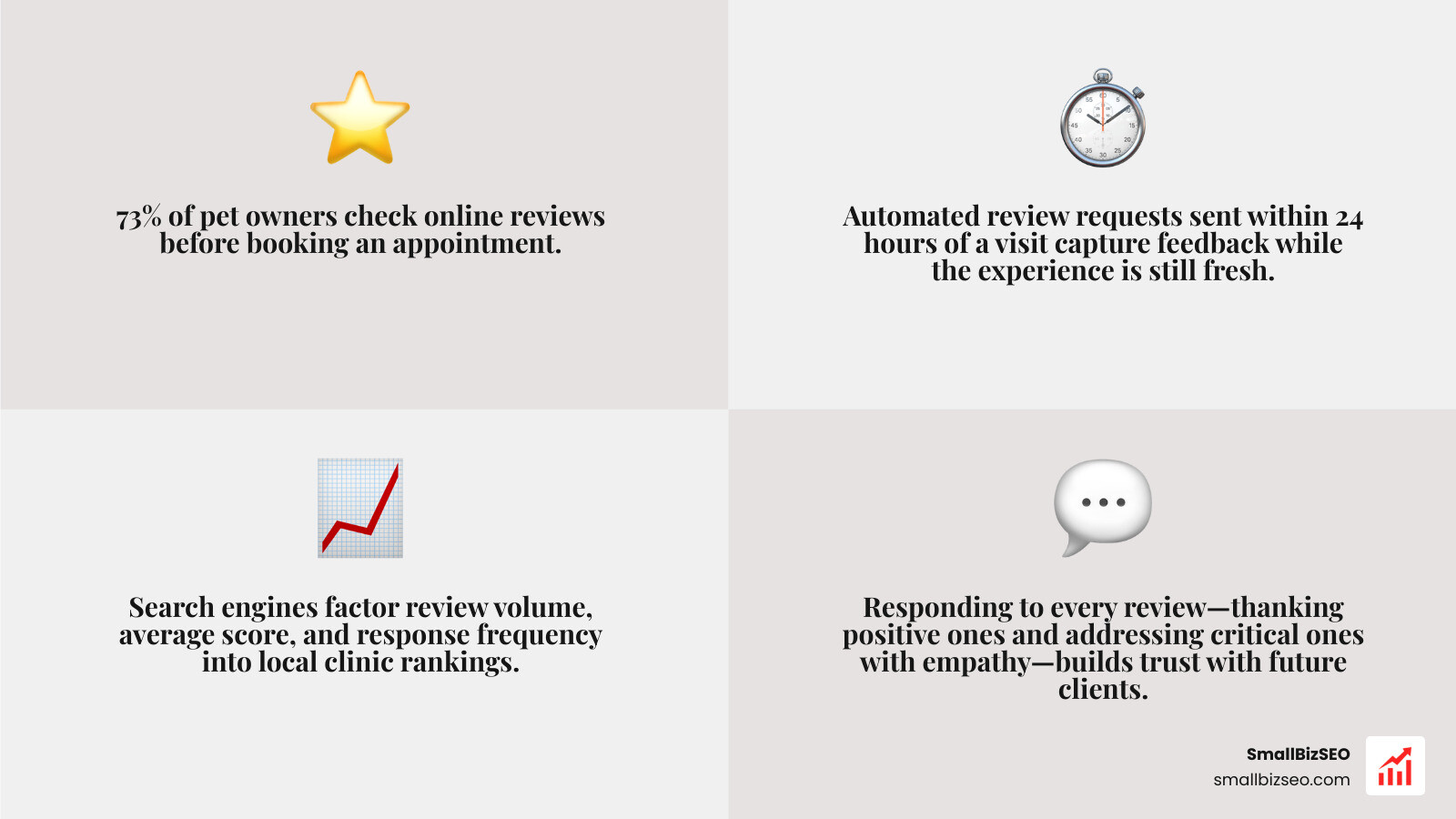
Online reviews serve as the digital currency of trust in veterinary medicine. Research indicates that 73% of pet owners routinely check online reviews before booking an appointment. Search engines also evaluate review volume, average score, and response frequency when ranking local clinics.
To build a steady review stream without burdening front-desk staff:
- Deploy Automated Post-Visit Requests: Send automated SMS or email review requests within 24 hours of a routine appointment while the positive experience is fresh.
- Provide Direct Review Links: Remove friction by giving clients a direct link to your Google Business Profile review screen.
- Respond to Every Review Professionally: Thank positive reviewers warmly. Address critical reviews with empathy and offer an offline resolution without disclosing specific clinical details publicly.
Advanced Execution: Specialized Clinics, AI Search, and the 90-Day Implementation Roadmap
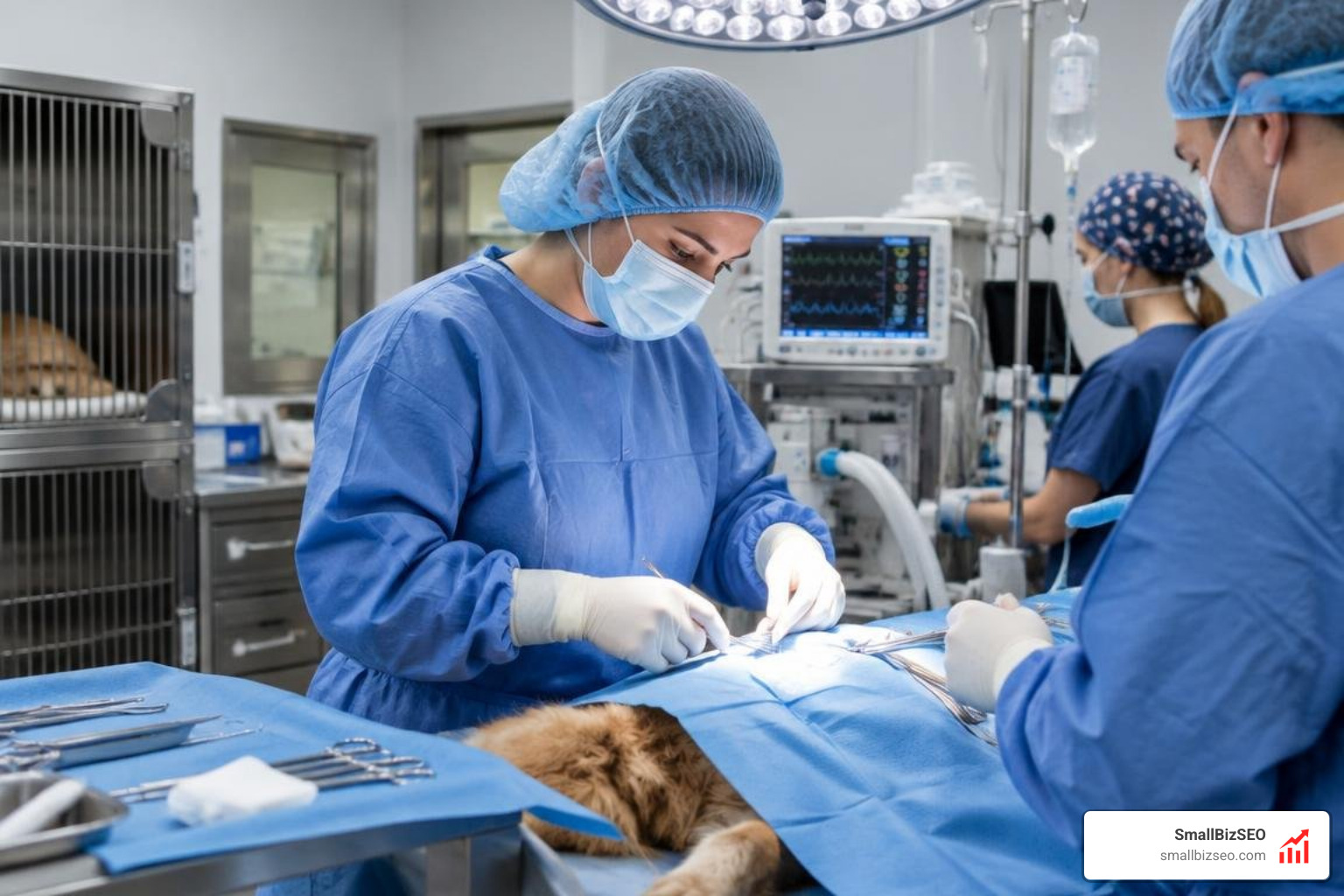
Advanced veterinary practices require specialized SEO strategies. Whether your facility provides advanced orthopedics, equine medicine, or round-the-clock emergency care, your online presence must address specific clinical needs and emerging artificial intelligence platforms.
How Does SEO for Veterinary Care Differ for Emergency Animal Hospitals and Surgeons?
General practices, surgical centers, and emergency animal hospitals serve vastly different pet-owner intents:
| Practice Type | Primary Search Intent | Core Keyword Focus | Conversion Priority |
|---|---|---|---|
| General Practice | Preventive wellness, vaccinations, routine care | "vet near me", "kitten vaccinations" | Online booking forms, phone calls |
| Veterinary Surgeon | Specialized procedures, second opinions | "TPLO surgery for dogs", "pet orthopedic specialist" | Detailed procedure guides, doctor credentials |
| 24/7 Emergency Hospital | Urgent triage, immediate medical crises | "emergency vet open now", "animal hospital" | Prominent click-to-call buttons, live directions |
Specialty surgical clinics must create comprehensive procedure guides explaining diagnostic processes, surgical techniques, and recovery timelines. Conversely, emergency facilities must prioritize mobile tap-to-call buttons, prominent live operating hours, and rapid map navigation. Practices offering large animal services can also collaborate with an equine veterinary care SEO company to address rural market challenges.
Why Does Local Optimization Help Clinics Rank in AI-Powered Search Engines?
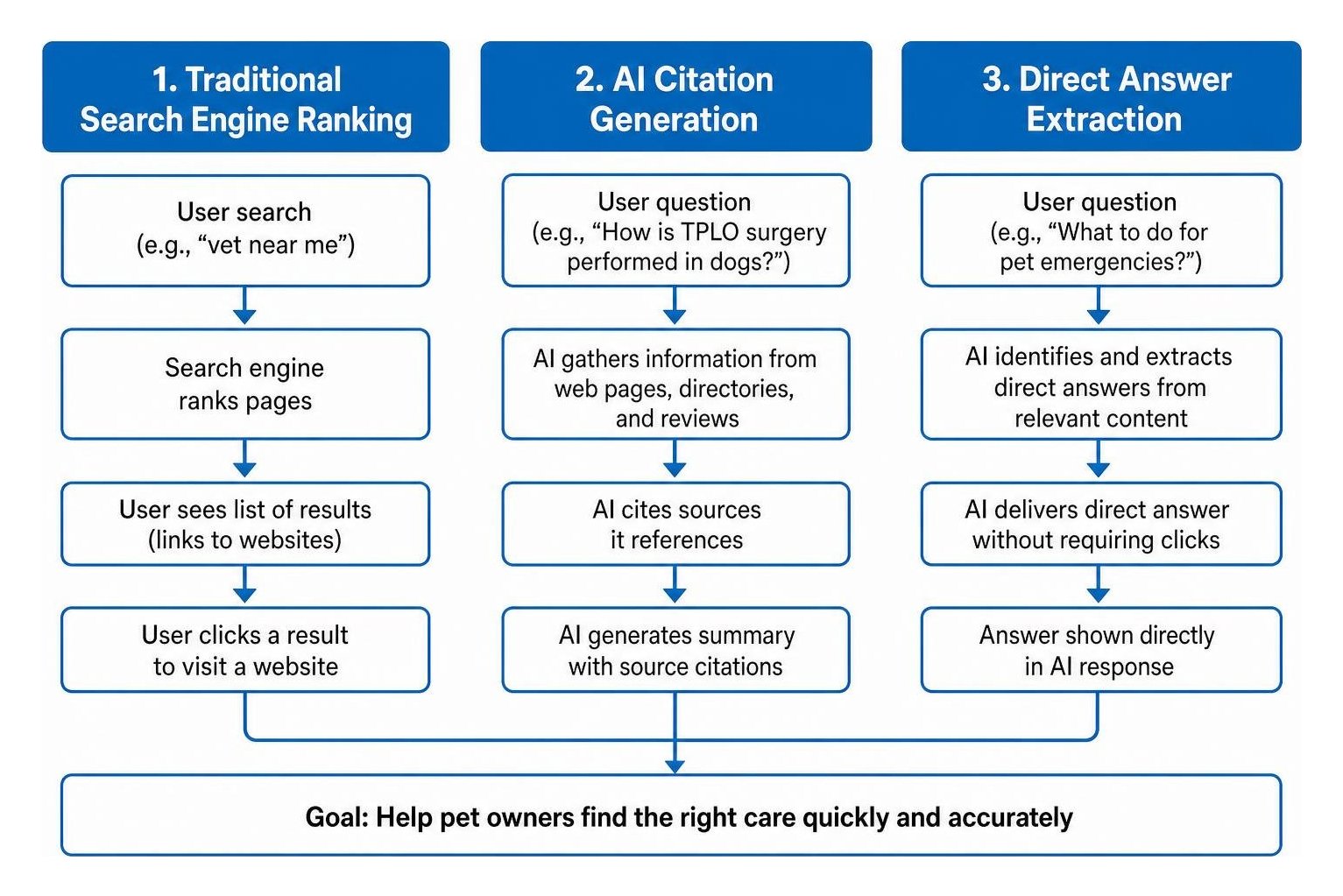
AI-driven search engines like ChatGPT and Perplexity pull directly from local directories, structured web data, and customer reviews to generate recommendations. Optimizing for generative engines requires:
- Clear Direct Answer Formats: Structure procedural content with definition-first sentences that answer common pet health questions clearly.
- Comprehensive FAQPage Schema: Implement schema markup around common pet care inquiries to facilitate machine readability.
- Open Crawler Accessibility: Ensure your site's technical files permit standard AI search crawlers to access public pet care advice.
Practices that combine clinical authority with technical structured data thrive in both traditional and generative search environments, as detailed in our guide on AI search optimization strategies.
What Step-by-Step Implementation Roadmap Drives Measurable Veterinary SEO Results?
A structured rollout prevents common pitfalls like keyword stuffing or neglecting technical website maintenance.
- Days 1–30: Technical and Local Setup
- Audit website architecture, mobile loading speed, and Core Web Vitals.
- Claim, verify, and complete your Google Business Profile.
- Standardize NAP data across primary pet directories.
- Days 31–60: Content and Clinical Schema
- Build dedicated service pages for primary procedures and wellness checks.
- Add licensed DVM author bylines and VeterinaryCare schema markup.
- Launch an automated post-visit review pipeline.
- Days 61–90: Authority and Local Link Acquisition
- Form partnerships with local animal shelters and non-competing pet care services.
- Publish localized pet care guides addressing regional seasonal health risks.
- Track calls, direction requests, and organic growth in Google Search Console.
Connecting with dedicated animal hospital SEO company services ensures your clinic achieves lasting organic visibility through our proven Velocity framework.
Taking the Next Step Toward Clinic Growth
Attracting new pet parents requires a steady, reliable search presence that delivers helpful answers when families need them most. By claiming your local map listings, maintaining a fast and mobile-responsive website, creating doctor-verified content, and gathering authentic client reviews, you position your clinic as the most trusted healthcare resource in your community.
Every step you take to refine your search visibility directly improves your ability to deliver timely, compassionate care to the animals that need it. Start by evaluating your clinic's local profile today, and build an online presence that pet parents can rely on around the clock.