Scale Your Pediatric Mental Health Practice with a Child Psychologist SEO Company

Why Choose a Child Psychologist SEO Company?
A Child Psychologist SEO Company should help parents find your practice when they search for care, then make it easy for them to decide whether to get in touch. Look for a partner that can improve your website, build pages around the services families actually seek, strengthen local search visibility, and report on qualified inquiries, not just rankings.
Child psychology SEO needs extra care. Parents may search for a child’s behavior rather than a diagnosis, and your website must explain services clearly without putting patient privacy at risk. The right SEO plan connects those searches to trustworthy information and a simple path to contact your practice.
I’m Clayton Johnson, founder of SmallBizSEO. My work in technical SEO, content strategy, and building website authority for small businesses informs this guide to choosing a Child Psychologist SEO Company.
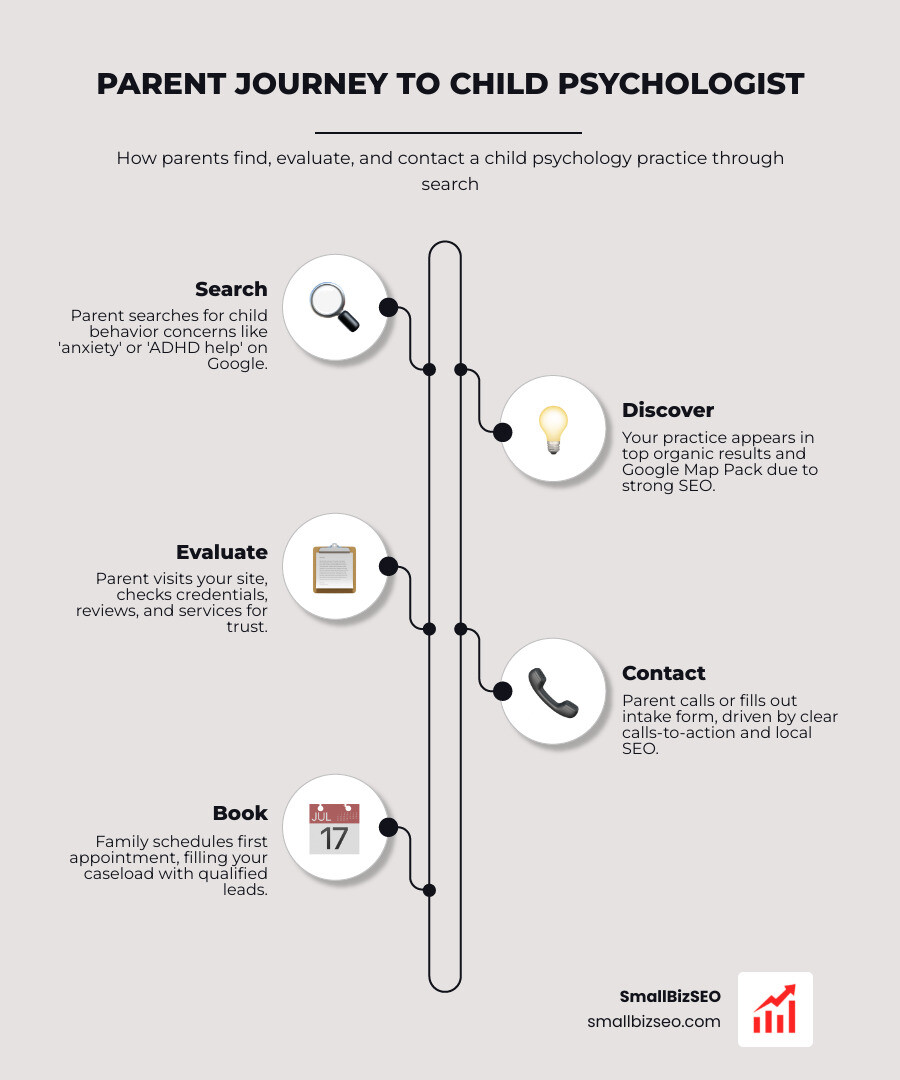
Why Partnering with a Child Psychologist SEO Company Drives Practice Growth
Partnering with a specialized SEO agency drives practice growth by placing your clinical services directly in front of parents who are actively seeking care for their children. Search engines drive 51% of all website traffic, and nearly three-quarters of that volume originates on Google. Because 92% of searchers pick businesses listed on the first page of search results, ranking at the top directly impacts whether families find your practice.

When a child experiences emotional or behavioral distress, parents turn to search engines to find answers. About 70% of clients choose a private practice based on information they discover online, and 63% use a practice's website as their primary touchpoint. If your clinic lacks a visible, intuitive digital presence, parents will book appointments with competing practices. In fact, 30% of consumers will not even consider a provider without an accessible website.
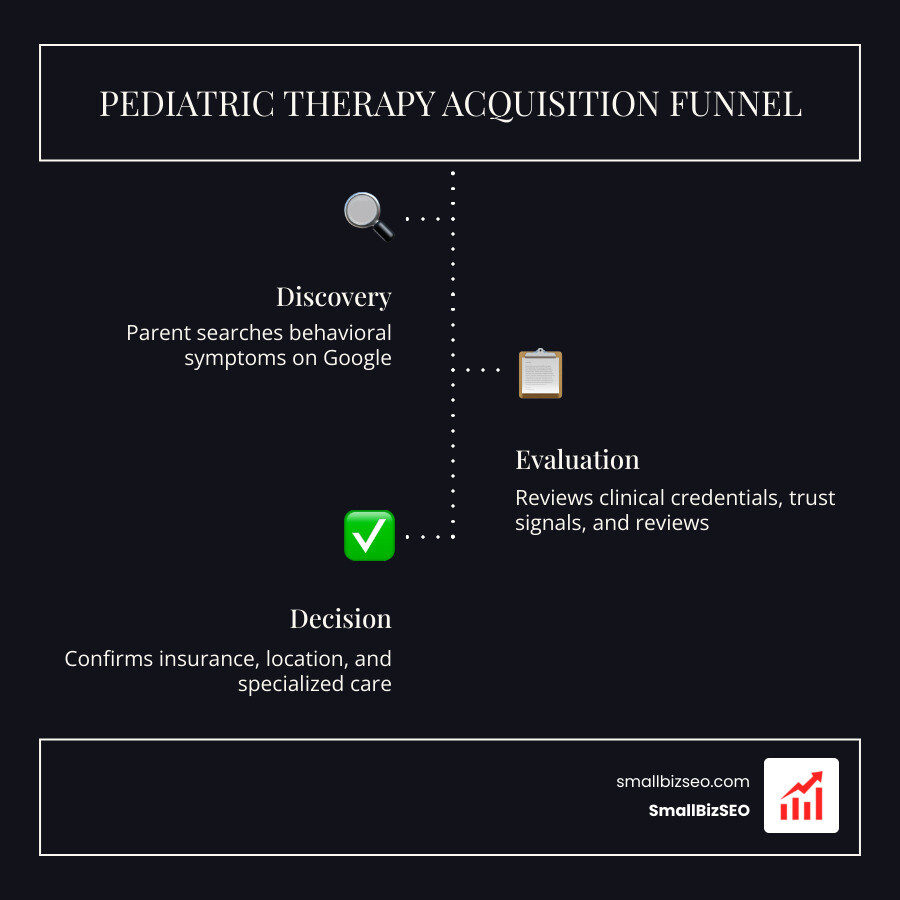
An effective SEO strategy aligns your website with every step of this journey. It captures early informational searches when parents research developmental concerns and converts high-intent searches when families need immediate clinical support.
What Distinguishes Pediatric Therapy SEO from General Adult Counseling SEO?
Pediatric therapy SEO differs from adult therapy SEO because it focuses on a dual-audience dynamic: the parent conducts the search and makes financial decisions, while the child receives the treatment. Adult clients typically search using direct diagnostic terms like "anxiety therapist" or "trauma therapy." In contrast, parents often use the language of distress, searching for observable behaviors and developmental milestones.
Parents frequently type queries such as:
- "Why is my 7-year-old having sudden temper tantrums?"
- "Child school refusal help"
- "Pediatric ADHD testing near me"
- "Signs of social anxiety in young children"
- "Sensory processing therapy for toddlers"
Pediatric SEO requires building content around these developmental challenges, behavioral milestones, and age brackets (early childhood, school-age, and adolescence). Clinical terminology must be translated into empathetic, family-centered answers that reassure worried parents while maintaining professional authority.
What Core Services Should a Child Psychologist SEO Company Provide?
A dedicated SEO agency for child psychologists must deliver specialized technical, creative, and local optimization services tailored to healthcare standards. Therapists do not need a couch for SEO—just a clean, fast-loading, and easily navigable website.
Key core services include:
- Technical Site Audits: Resolving broken links, enhancing mobile responsiveness, and optimizing Core Web Vitals to deliver seamless user experiences.
- Keyword Clustering and Content Strategy: Structuring condition-specific pages based on parent search queries.
- On-Page Optimization: Crafting meta tags, headers, and accessible copy that match custom web design standards for therapists.
- Local SEO and Google Business Profile Optimization: Managing map listings, local citations, and service radius configurations.
- Ethical Link Acquisition: Earning high-authority backlinks from trusted medical directories, pediatric associations, and educational institutions.
| SEO Capability | Specialized Child Psychology SEO | General Digital Marketing Agency |
|---|---|---|
| Search Intent Focus | Parental symptom queries and developmental milestones | Generic, broad diagnostic terms |
| Compliance Standards | Strict adherence to HIPAA and APA ethics rules | Standard commercial marketing tactics |
| Trust Signals (E-E-A-T) | Board certifications, clinical bylines, and academic sources | Generic sales copy and promotional hooks |
| Primary Success Metric | Booked clinical evaluations and verified inquiries | Raw website clicks and impressions |
Essential Optimization Strategies for Pediatric Mental Health Practices
The foundation of successful pediatric therapy SEO lies in building dedicated condition and service silos. Grouping your clinical offerings into clear categories allows search engines to understand your specific specialties while helping anxious parents quickly find relevant information.

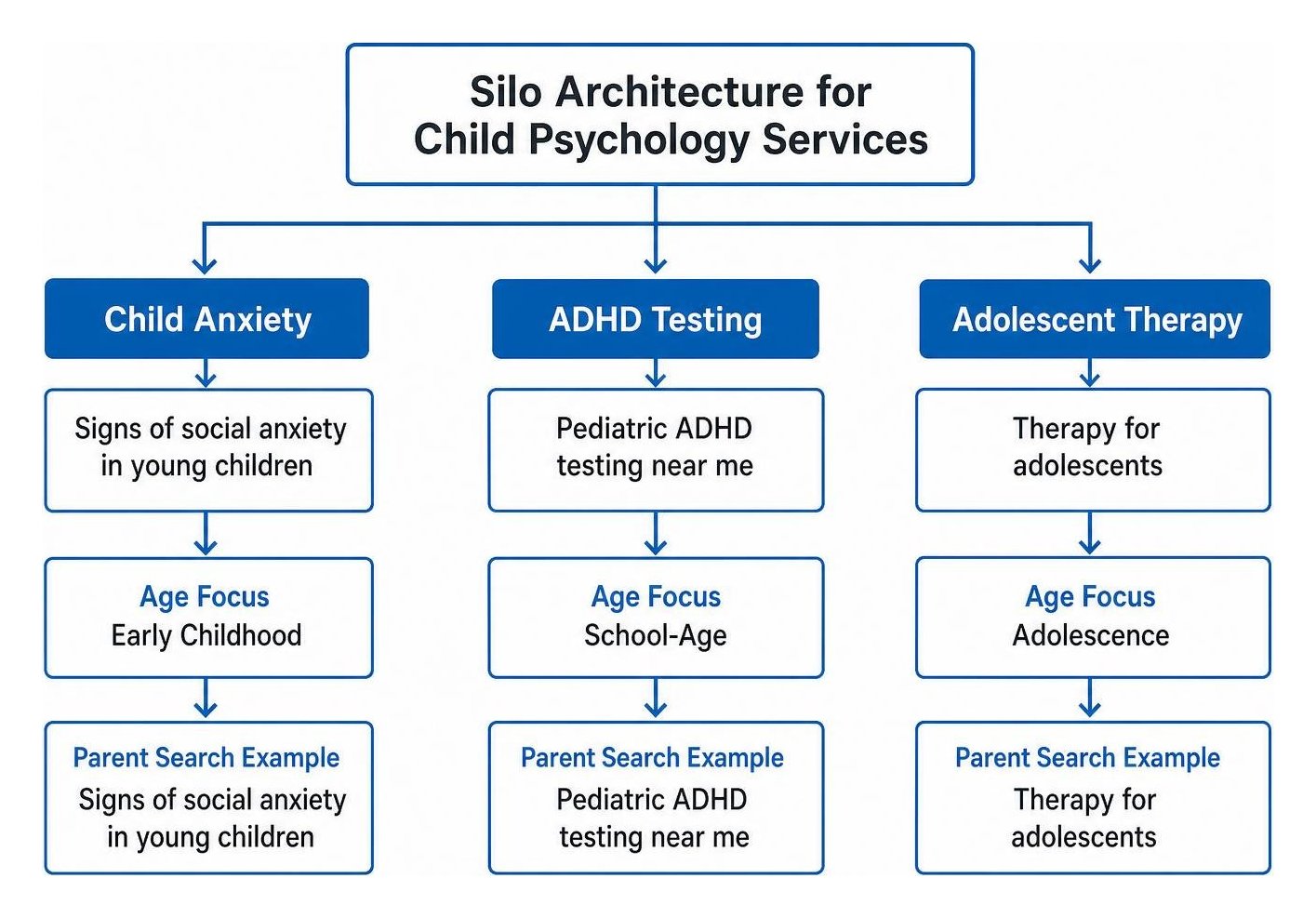
Rather than listing all specialties on a single generic services page, your site should feature dedicated URLs for each condition, assessment, and age group. Optimizing these pages for local search queries and telehealth keywords ensures you capture families seeking both in-person evaluations and remote care. For step-by-step guidance on map optimization, explore these official Tips to improve your local ranking on Google - Google Business Profile Help.
How Do YMYL Trust Signals, Local Search, and Service Pages Attract Parents?
Google classifies mental health content under its strict "Your Money or Your Life" (YMYL) standards. To rank prominently, pediatric websites must demonstrate exceptional Experience, Expertise, Authoritativeness, and Trustworthiness (E-E-A-T).
You can establish strong E-E-A-T signals by:
- Showcasing clinician credentials, state license numbers, doctoral degrees, and specialized certifications clearly on practitioner bio pages.
- Citing peer-reviewed psychiatric research and clinical guidelines within educational articles.
- Adhering to professional ethical standards, such as APA guidelines prohibiting deceptive claims or coercive testimonial requests.
Local search optimization is equally critical for in-person practices. Maintaining consistent Name, Address, and Phone (NAP) details across directories helps place your clinic in Google's local map pack. Reviews also significantly impact local rankings and parent trust: 84% of patients read online reviews before scheduling care. Research indicates that providers with 50 or more reviews earn 10 times more bookings than those with fewer than 10 reviews, while practices exceeding 100 reviews achieve a 27-fold increase in patient inquiries.
Recent findings show that pediatric referral network data indicates digital search now outpaces traditional physician referrals by 3.1 times. Clinics can capture this demand by partnering with a psychologist SEO company and implementing strategies from our local SEO guide.
How Can Clinicians Balance HIPAA Compliance with AI Search Optimization?
Clinicians must safeguard patient privacy while optimizing for modern search engines and AI discovery platforms. HIPAA regulations prohibit tracking Protected Health Information (PHI) through standard marketing pixels or unencrypted forms.
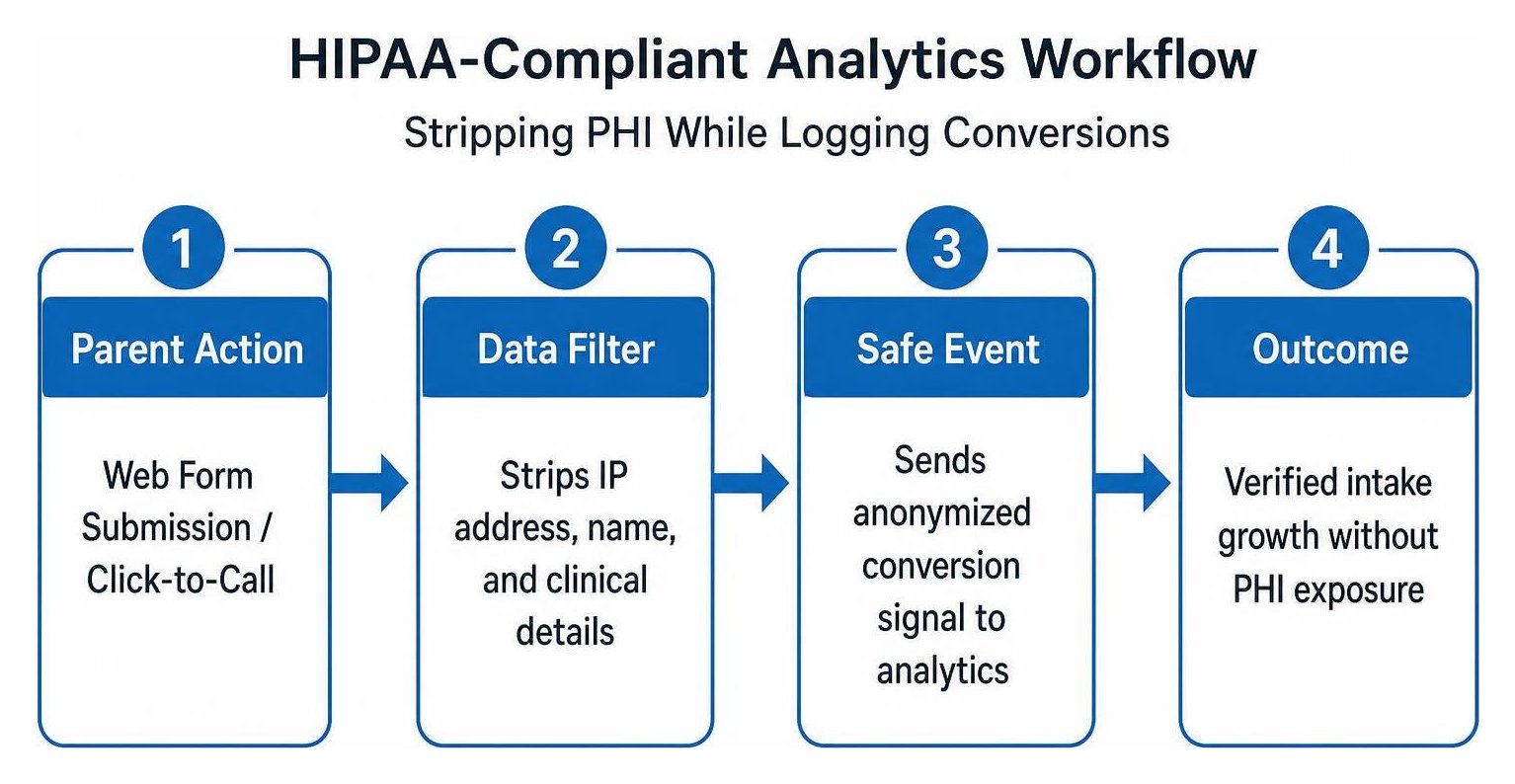
To maintain compliance while optimizing for search:
- Use HIPAA-compliant conversion tracking that records form submissions and call actions as anonymized events without logging personal medical details.
- Secure all pages with HTTPS and implement encrypted patient intake systems.
- Deploy structured medical schema markup (such as
MedicalOrganizationandPsychologicalTreatment) to help AI search engines and Google AI Overviews interpret your clinical expertise accurately.
Investing in a specialized healthcare SEO company ensures your digital strategy leverages Answer Engine Optimization (AEO) safely, keeping your practice visible across voice searches, AI assistants, and traditional search results.
How to Evaluate and Choose the Best SEO Partner for Your Clinic
When choosing an SEO partner, evaluate their healthcare experience, ethical marketing practices, and reporting transparency. An experienced agency will focus on actual practice growth rather than vanity metrics like raw keyword rankings or impressions.

Review our detailed the ultimate guide to choosing a full service SEO company to structure your agency evaluation. Look for partners that offer no-lock-in agreements, provide automated reporting dashboards, and focus on generating qualified patient intakes.
How Long Does an SEO Company for Child Psychologists Take to Fill Caseloads?
SEO produces compounding, long-term returns, but search engine indexation, trust building, and ranking momentum require time.
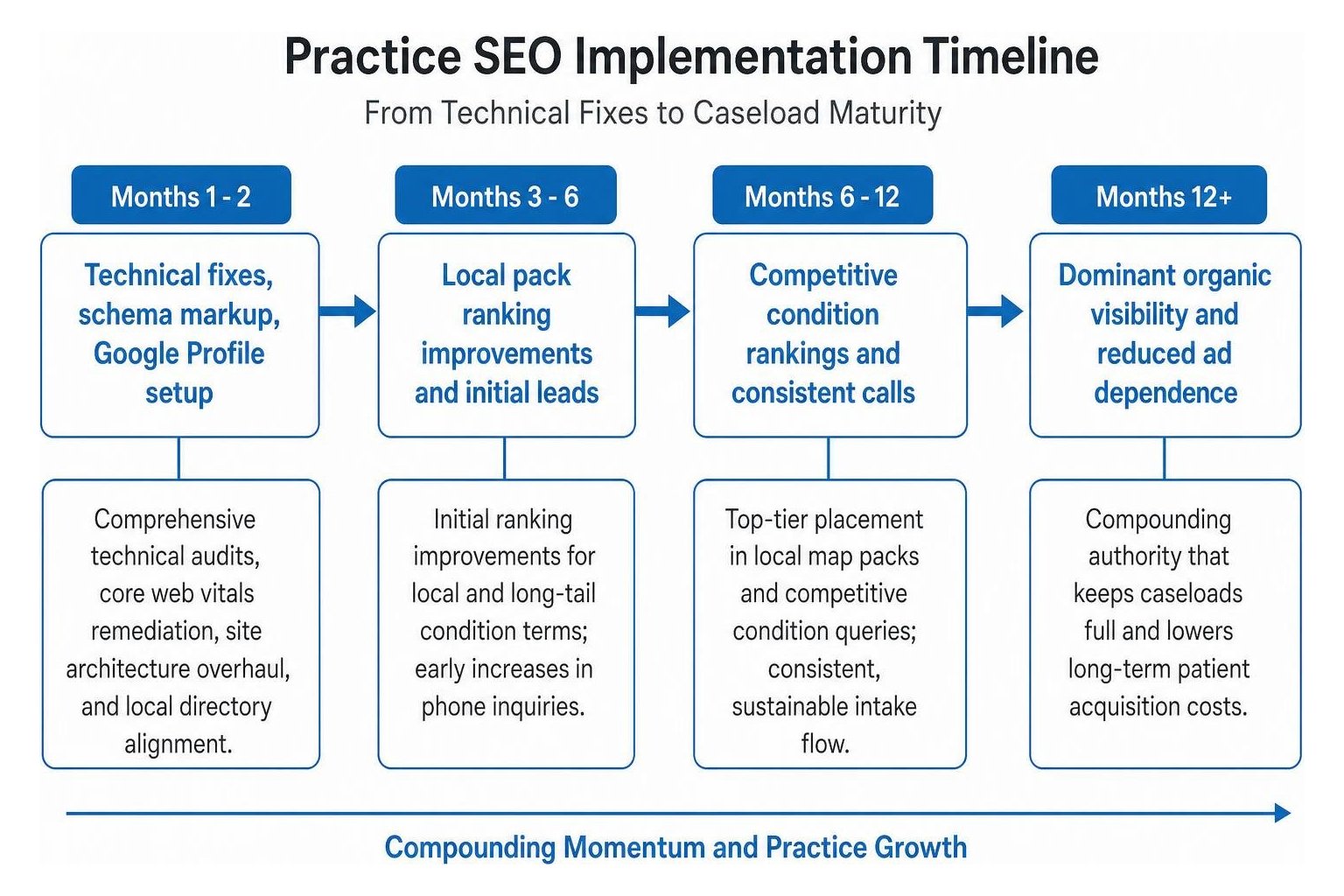
- Months 1 to 2: Comprehensive technical audits, core web vitals remediation, site architecture overhaul, and local directory alignment.
- Months 3 to 6: Initial ranking improvements for local and long-tail condition terms; early increases in phone inquiries.
- Months 6 to 12: Top-tier placement in local map packs and competitive condition queries; consistent, sustainable intake flow.
- Months 12 and Beyond: Compounding authority that keeps caseloads full and lowers long-term patient acquisition costs.
Practices needing comprehensive clinical search solutions can explore our mental health service SEO company solutions to accelerate this growth trajectory.
Which Key Metrics and Conversion Goals Should Practice Owners Track?
The success of your SEO campaign should be measured by patient acquisition and return on investment, not just traffic volume. The U.S. Small Business Administration recommends allocating 7% to 8% of gross revenue to marketing, making transparent tracking vital for your practice's financial health.
Key performance indicators to monitor include:
- Qualified Phone Calls: Verified inquiries from parents seeking specific pediatric services.
- Completed Intake Forms: Conversion rates on dedicated condition landing pages.
- Cost Per Booked Evaluation: Total marketing spend divided by completed new-patient intakes.
- Local 3-Pack Visibility: Organic ranking positions for geo-targeted search phrases.
- Organic Search Share: The percentage of new patient inquiries generated through organic search compared to paid advertising or directories.
Fill Your Practice Caseload with Targeted Search Growth
Building a thriving pediatric psychology clinic requires connecting with parents at the precise moment they seek guidance for their children. By combining technical site architecture, local search visibility, and empathetic, E-E-A-T-aligned content, our data-driven "Velocity" framework delivers sustainable search growth while safeguarding patient privacy.
Ready to expand your practice's reach and connect with local families in need of care? Request a free, confidential practice audit from our team today at child psychologist SEO company and begin building your long-term organic referral pipeline.