SEO for Animal Shelters and Foster Groups Made Simple
How Can SEO Help Animal Shelters Find More Adopters?
SEO for animal shelters starts with making it easy for nearby people to find adoptable pets and take the next step. Keep your Google Business Profile accurate, give each available animal its own searchable page, and make adoption applications simple to complete on a phone. Clear donation and volunteer pages can help people who want to support your work find their way in, too.
I'm Clayton Johnson, founder of SmallBizSEO. My work in technical SEO, content strategy, and link building for small businesses shapes this guide to SEO for animal shelters: practical steps that connect search visibility with adoption inquiries.
SEO for animal shelters glossary:
Why Organic Search Visibility Matters for Animal Shelters
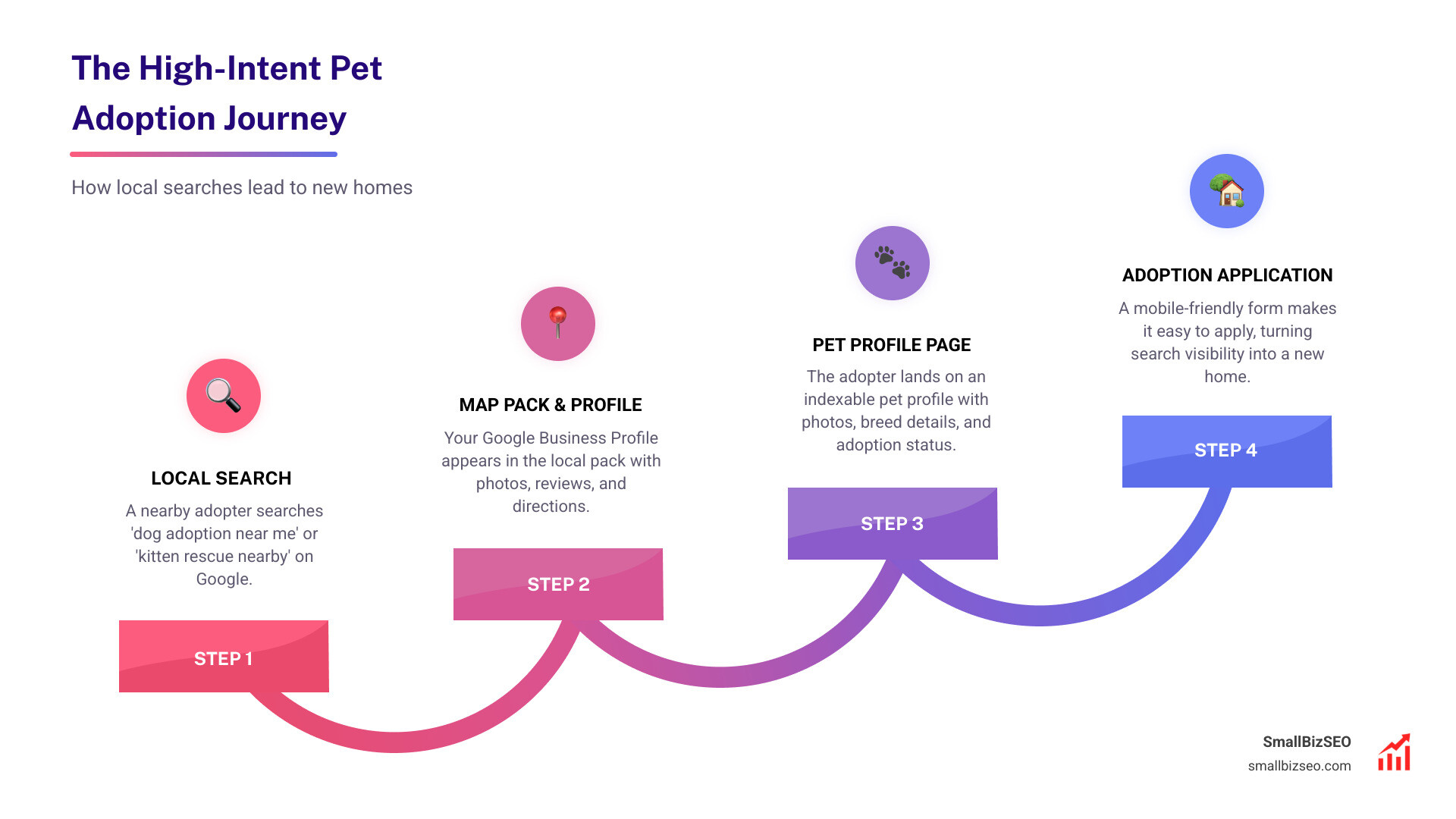
Organic search visibility matters for animal shelters because prospective adopters search online before visiting a facility. When rescue organizations optimize their web presence, they capture high-intent searches from community members ready to adopt, donate, or volunteer.
Every month, prospective pet parents conduct over 375,200 high-intent adoption searches across major search engines. Without targeted search engine optimization, local shelters miss these connections. Benchmark data from the RKD Group, evaluating over 2,500 nonprofits including 298 animal welfare organizations, reveals that animal rescues outperform peer sectors like food banks in organic traffic and top-three keyword positions. However, many shelters lag behind in domain authority because of underutilized technical setups and missed local link opportunities.
Organizations that modernize their digital discoverability see up to 3x more adoption inquiries than those relying strictly on word-of-mouth. Beyond adoptions, higher organic rankings drive consistent donor contributions and volunteer recruitment.
The Complete Blueprint to Master SEO for Animal Shelters
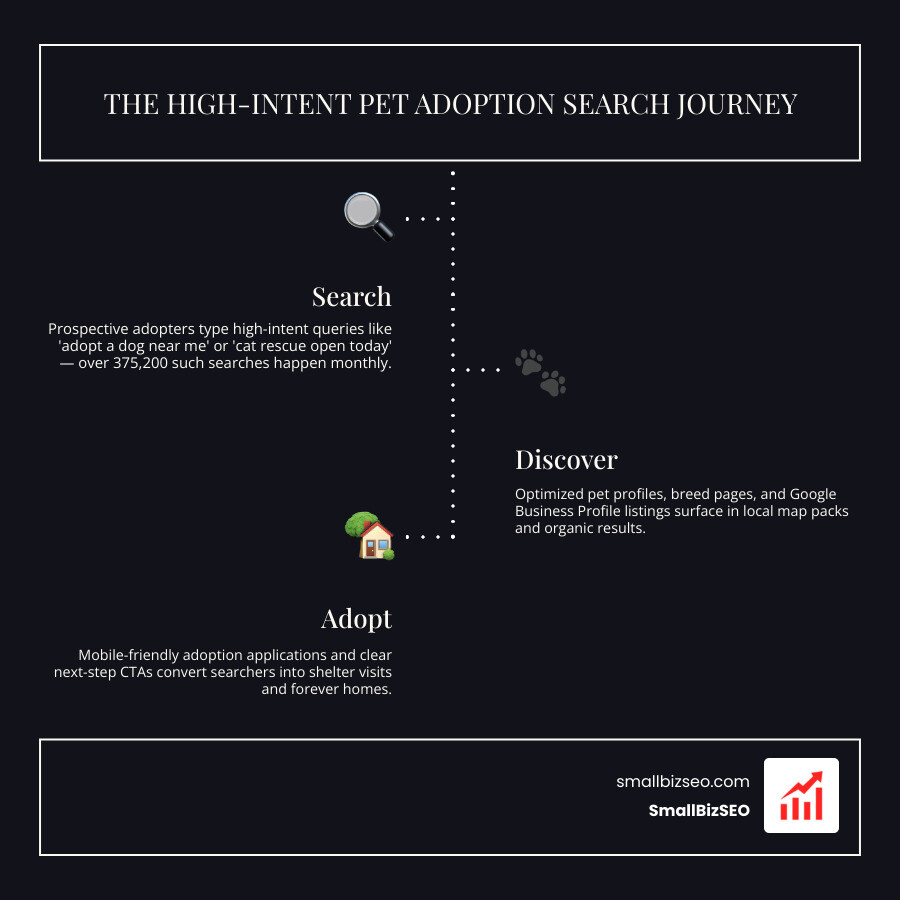
A successful search strategy requires capturing the exact queries prospective adopters type into search bars every day. People searching for a pet are ready to take action immediately.

To capture this demand, shelters must align their website architecture with high-intent keywords and local modifiers.
| High-Intent Search Term | Monthly Search Volume | Primary User Intent |
|---|---|---|
| animal shelter near me | 110,000 | Immediate local visit / intake / rescue inquiry |
| adopt a dog near me | 90,500 | High-intent canine adoption search |
| pet adoption near me | 74,000 | Broad adoption research across dogs, cats, and small animals |
| adopt a cat near me | 49,500 | Direct feline adoption inquiry |
| dog adoption near me | 33,100 | Specific breed/size search for local canine adoption |
| cat adoption near me | 18,100 | Targeted search for kittens and adult felines |
How Does Local SEO for Animal Shelters Capture High-Intent Adopters?
Local search optimization puts your facility in front of nearby families at the exact moment they look for a pet. Setting up and claiming your Google Business Profile represents roughly 32% of your local pack ranking strength, according to Whitespark's Local Search Ranking Factors study.
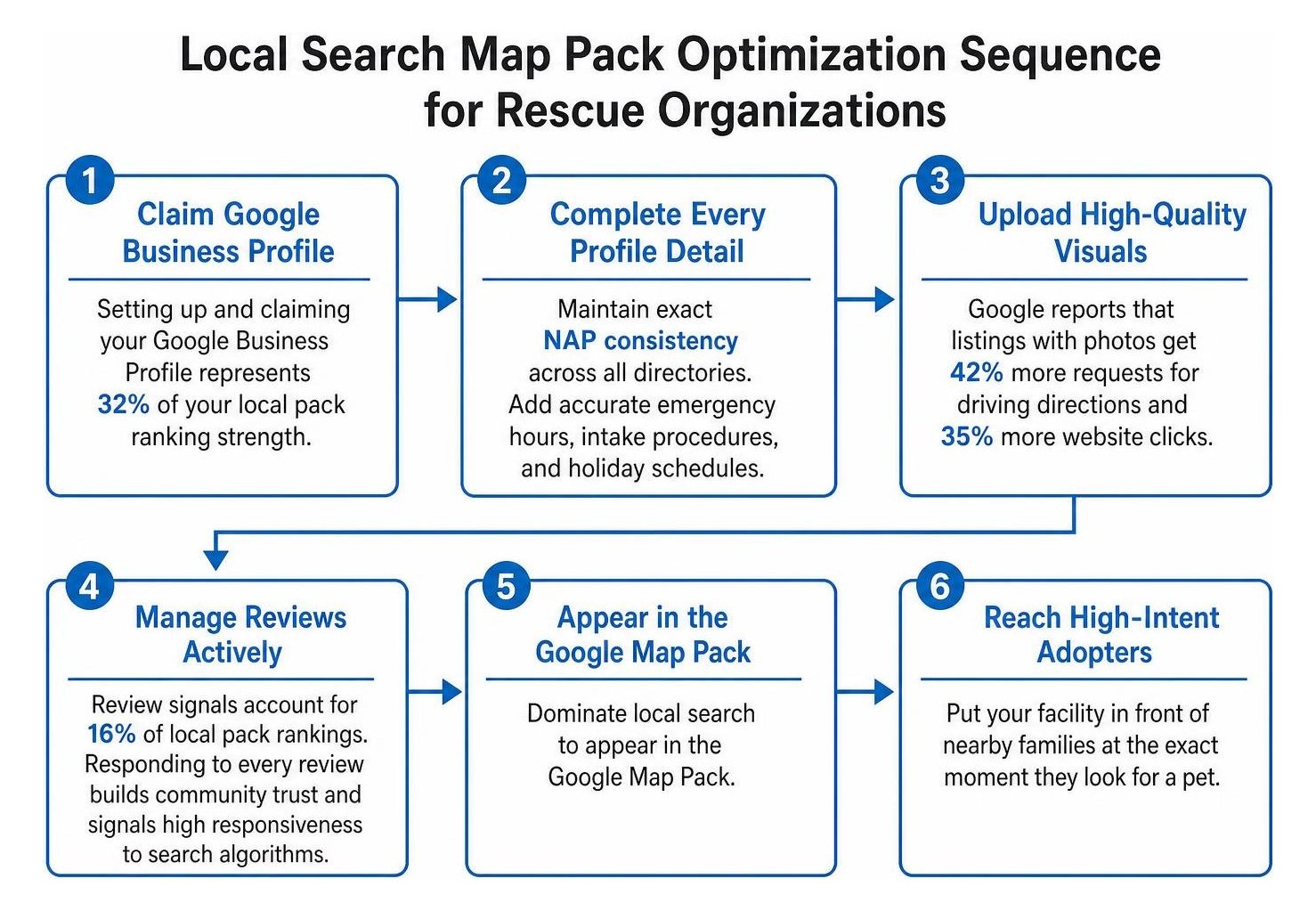
To dominate local search and appear in the Google Map Pack:
- Complete Every Profile Detail: Maintain exact NAP consistency across all directories. Add accurate emergency hours, intake procedures, and holiday schedules.
- Upload High-Quality Visuals: Google reports that listings with photos get 42% more requests for driving directions and 35% more website clicks. Upload clear, geo-tagged photos of your facilities and pets weekly.
- Manage Reviews Actively: Review signals account for 16% of local pack rankings. Responding to every review builds community trust and signals high responsiveness to search algorithms.
- Leverage AI and Map Discoverability: Applying local SEO strategies helps emerging platforms surface your shelter when users ask conversational questions like, "Which shelter near me has bonded pairs available?" Using AI local search discovery ensures your rescue stays visible across all modern platforms.
How Should Individual Pet Profiles and Breed Pages Be Structured?
Every available animal should have its own dedicated, indexable URL instead of being trapped inside an unindexed third-party widget.
When organizations like Animal Care Centers of NYC organize pet listings effectively, search engines can index individual profiles for specific queries like "terrier mix adoption" or "domestic shorthair kitten."
Programmatic breed landing pages allow shelters to rank for breed-specific searches automatically. When an animal finds a forever home, never delete the page to produce a 404 error. Instead, update the page with an "Adopted!" badge, display similar adoptable pets to retain the visitor, and implement a 301 redirect to the main directory after 30 to 60 days to preserve internal link equity. While aggregator listings on third-party networks provide broad visibility, your own website should always remain the authoritative, canonical source for all pet data.
What Schema Markup and Technical Foundations Ensure Fast Indexing?
Applying structured data allows search engines to understand availability status, species, age, and location directly in search results.

Implementing schema markup using JSON-LD adoption structured data gives your listings enhanced search snippets.
Essential technical foundations include:
- Mobile-First Speed: Over 60% of pet adoption searches happen on mobile devices, and 73% of "near me" searches occur on phones. Users abandon sites that take longer than 3 seconds to load.
- Core Web Vitals Optimization: Compress images into modern formats like WebP or AVIF, keeping file sizes well under 300 KB.
- Dynamic XML Sitemaps: Maintain dynamic sitemaps that automatically add new pet profiles and remove completed adoptions so search crawlers do not waste budget on outdated pages.
What Content and Link Strategies Build Lasting Search Authority?
Building topical authority requires publishing comprehensive educational content that answers common pet care and training questions.
High-profile organizations such as North Shore Animal League America attract substantial organic links by serving as educational authorities. Content hubs—like A-Z breed guides, new pet transition tips, and puppy training basics—earn featured snippets and capture early-stage searchers before they are ready to adopt.
Earning quality local backlinks strengthens your authority. Build relationships by securing links from:
- Veterinary care providers and local animal hospitals
- Local pet groomers, boarding kennels, and pet supply retailers
- Local news outlets and community event coverage
- Pet care how-to videos on YouTube, complete with descriptive copy and links back to adoption application forms
Publishing expert-backed medical and behavioral advice reinforces E-E-A-T search authority across search engines and AI discovery tools alike. Furthermore, eligible rescue non-profits can tap into Google Ad Grants for up to $10,000 per month in search advertising credits to complement organic initiatives.
What Are the Key Benchmarks and Mistakes in SEO for Animal Shelters?
Data from Torchbox shows animal welfare charities hold an average Domain Authority of 68, placing them among the strongest performers in the nonprofit sector. However, local rescue groups often struggle because of common technical oversights.
Common pitfalls to avoid:
- Iframe and JavaScript Traps: Loading pets exclusively via third-party JavaScript widgets where search engines cannot crawl individual pet profiles.
- Broken URLs: Deleting pet profiles immediately upon adoption, generating dozens of 404 errors that drain site health.
- Thin Content: Publishing animal profiles with only a single low-resolution photo and no written description of the pet's temperament, health status, or ideal home.
- Inconsistent Local Data: Failing to maintain unified directory listings across maps and review portals.
Measuring key metrics—such as local map pack impressions, clicks for directions, organic traffic to adoption galleries, and completed adoption forms—provides clear visibility into what works. Typical search campaigns show early ranking movements within 4 to 8 weeks, with full traffic compounding across 3 to 6 months.
Connecting Rescues with Loving Homes Through Structured SEO
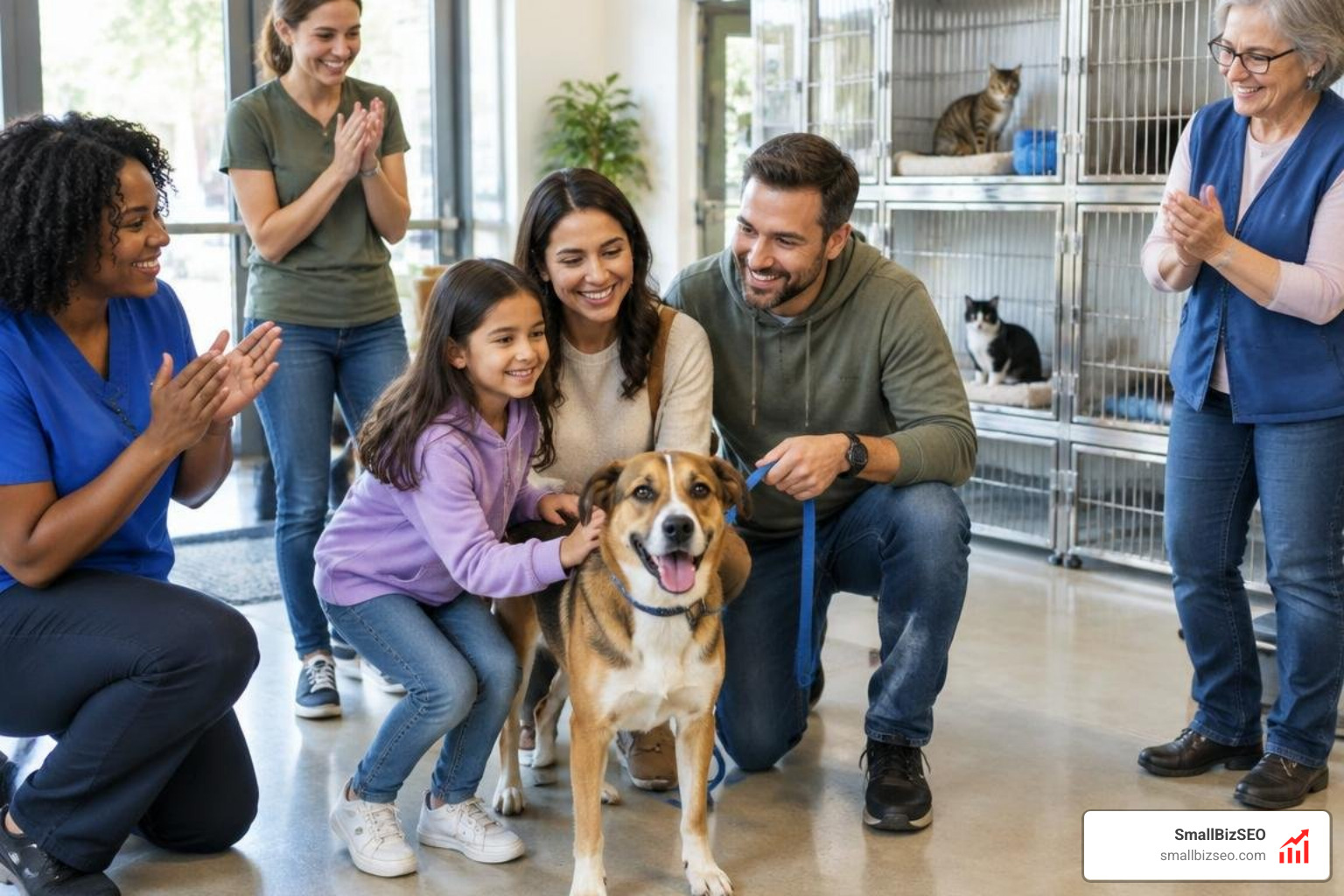
Search visibility directly determines how quickly an animal moves from a kennel to a loving family. When your shelter builds an optimized digital foundation, your community can find your pets, support your mission, and share your available animals with ease.
At SmallBizSEO, we implement a data-driven "Velocity" framework that delivers fast rankings, robust technical foundations, and transparent reporting for organizations ready to scale their community reach. Combining optimized profiles, technical health, and content authority ensures your shelter remains the first stop for adopters across your area.
To explore how our team builds search systems for the pet care community, discover our specialized animal care search strategy and help more animals find the homes they deserve.