SEO for Travel Agencies
SEO for Travel Agencies
Why SEO for Travel Agency Growth Matters
To get more bookings from search, start with the trips you know best. Build pages for specific destinations and traveler needs, such as a guided family trip to Japan. Add useful details, original photos, and a clear way to ask for a quote. Then make sure those pages load well on mobile and can be found by Google.
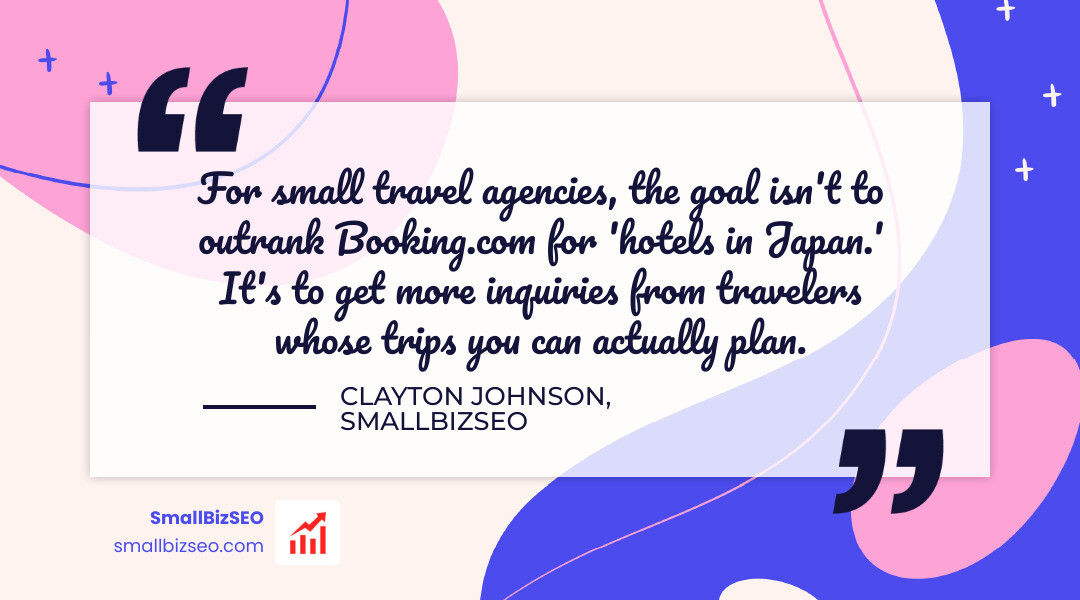
This gives a small agency a better path than trying to outrank Booking.com or Expedia for broad terms like "hotels in Japan." The goal is not just more visits. It is more inquiries from people whose trips you can actually plan.
I'm Clayton Johnson, founder of SmallBizSEO. My work connects SEO, content, and digital PR to qualified leads; here, I'll apply that approach to SEO for travel agency growth without treating rankings as the final result.
Know your SEO for travel agency terms:
- enterprise local SEO
- local SEO map
- SEO for enterprise companies
Search behavior in the travel space has changed dramatically. Around 60% of all online searches conclude without a single click to an external website, and mobile devices generate over 62% of global web traffic. With nine out of ten travelers researching their itineraries online and roughly 82% booking digitally, search engines are your frontline storefront. Organic search delivers a median return on investment of approximately 748%—returning $7.48 for every single dollar invested—vastly outperforming paid ad campaigns burdened by rising acquisition costs.
How Does SEO for Travel Agency Brands Overcome OTA Dominance?
Direct Answer: Travel agencies beat online travel agencies (OTAs) by targeting high-intent, specialized long-tail searches and customized itinerary terms rather than high-volume generic keywords.
OTAs like Expedia and Booking.com dominate generic terms with multi-million dollar budgets. However, they rely on cookie-cutter directory pages that cannot answer complex, personal vacation questions. By partnering with a specialized tourism SEO company, agencies can capture motivated travelers seeking deep, handcrafted itineraries.
| Search Query Type | OTA Generic Target (High Volume, Low Intent) | Agency Long-Tail Target (High Intent, High Conversion) |
|---|---|---|
| Safari Planning | "Kenya hotels" | "10-day private Kenya safari with local guide and costs" |
| Honeymoon | "Italy vacation" | "custom 14-day Amalfi Coast honeymoon itinerary" |
| Family Travel | "Tokyo flights" | "guided Tokyo itinerary for families with toddlers" |
| Adventure | "Costa Rica tours" | "all-inclusive Costa Rica rainforest & volcano guided trek" |
Targeting specific itineraries allows you to sidestep massive OTA commission fees (often 15% to 30%) and secure direct consultation requests.
What Is GEO and Why Does Generative AI Search Optimization Matter?
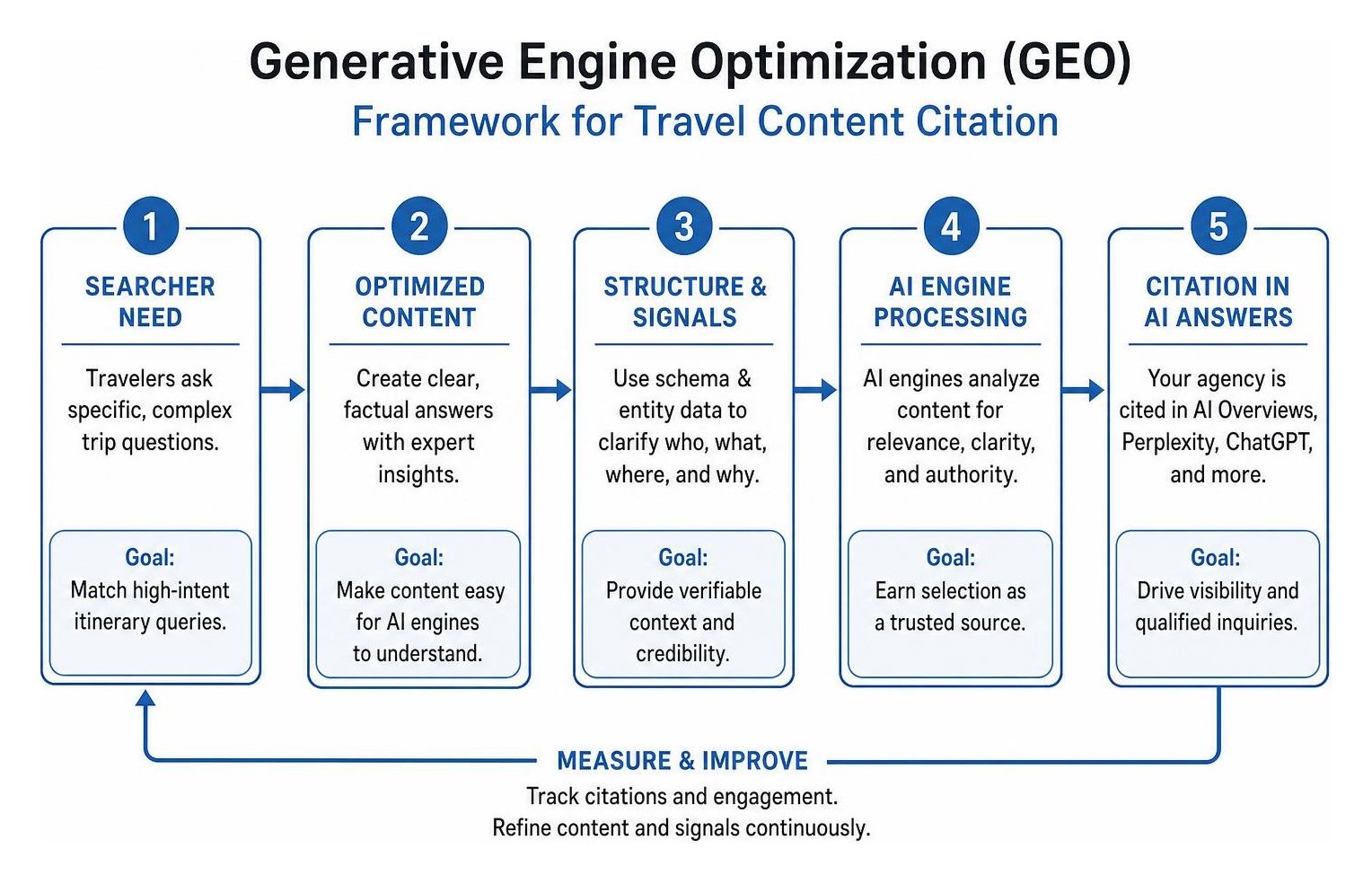
Direct Answer: Generative Engine Optimization (GEO) is the practice of formatting and structuring content so AI answer engines, such as Google AI Overviews, Perplexity, and ChatGPT, can easily cite your business as a primary recommendation.
AI Overviews now appear in search results across the web, capturing informational real estate before traditional blue links even appear. Travel queries experienced an extraordinary 381% surge in AI Overview impressions. Winning in this environment requires writing clear, factual answers supported by structured entity data and expert insights. Reviewing an integrated digital marketing strategy for travel agencies helps ensure your agency is positioned as the definitive source that AI engines quote directly.
Core Pillars of Search Optimization for Tour Operators and Agencies
Direct Answer: Sustainable travel SEO rests on four foundational pillars: topical content architecture, verified on-page experience signals (E-E-A-T), robust technical performance, and strong local presence.
Building a visible brand online requires moving beyond random blog writing. Partnering with a dedicated travel SEO company allows you to align technical site architecture with the traveler's complete decision loop, guiding users seamlessly from inspiration to final deposit.
How to Structure Content Architecture and High-Intent Keywords?
Direct Answer: Organize your website using a hub-and-spoke pillar model where a central destination guide links out to detailed sub-topic pages covering costs, packing lists, seasonality, and exact day-by-day itineraries.
Topical authority tells search engines that your agency is a complete subject-matter authority on a destination. To build this structure, pair each primary destination page with supporting cluster pages:
- Destination Pillar Guides: Comprehensive hubs providing regional overviews and travel logistics.
- Detailed Itinerary Breakdowns: Day-by-day trip schedules featuring transparent cost estimates.
- Preparation & Practical Advice: Packing checklists, visa requirements, and transit advice.
- Advisor Proof & Real Stories: Authentic trip reports, real customer photos, and verified advisor bios demonstrating genuine first-hand experience.
Which Technical SEO and Schema Markup Fixes Deliver Highest ROI?
Direct Answer: Prioritize mobile Core Web Vitals performance, resolve crawl-bloat from faceted filters, and implement JSON-LD structured data such as TouristTrip and FAQPage schemas.

Page load speed directly governs booking conversions. A 0.1-second improvement in mobile loading speed correlates with a 10.1% increase in booking conversions for travel websites, while pages slowing from 1 to 3 seconds experience a 32% rise in bounce rates.
Structured data delivers an immediate visual competitive advantage. Rich snippets generated by travel schema markups achieve up to 30% higher click-through rates. Explore practical implementations in advanced schema and rich result opportunities for travel content to turn plain search snippets into interactive booking assets.
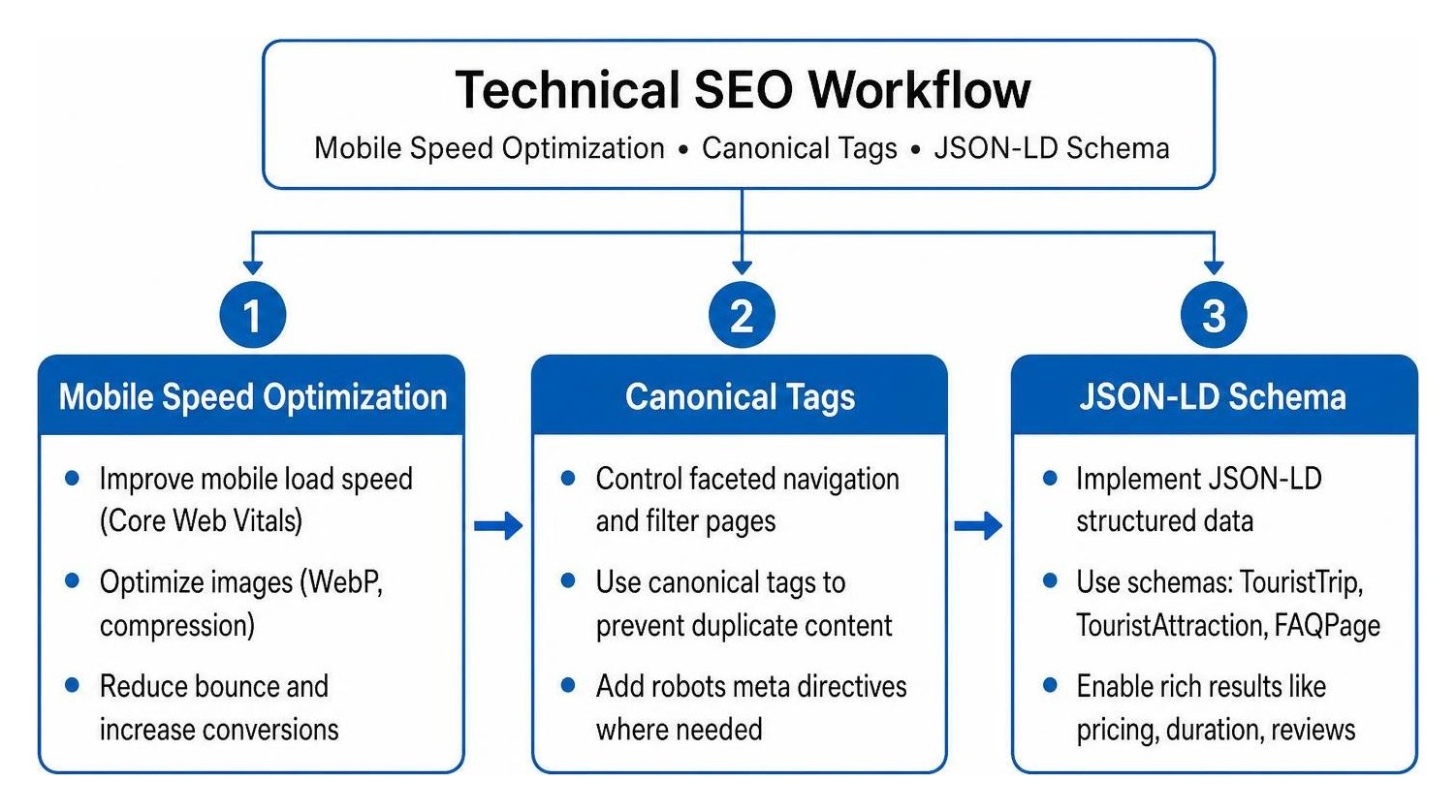
Key technical priorities include:
- JSON-LD Schema Markup: Tag your tour offerings with
TouristTrip,TouristAttraction, andFAQPageschemas to display pricing, duration, and review stars in search results. - Faceted Navigation Controls: Use canonical tags and robots meta directives on dynamic search filters to avoid duplicate content traps.
- Image Optimization: Compress high-resolution travel photography using modern WebP formats while adding descriptive alt text.
How Does Local SEO for Travel Agency Locations Capture Direct Inquiries?
Direct Answer: Optimize your Google Business Profile with complete category listings, verified service descriptions, consistent business information, and regular customer reviews to dominate the local 3-pack map rankings.
With 46% of all Google searches carrying local intent, travelers regularly search for trusted planning professionals nearby. Furthermore, 76% of individuals who perform a local search visit a related business within 24 hours. Maintaining consistent business names, addresses, and phone numbers across directories ensures your agency captures local consults and walk-in bookings.
Action Plan: How to Drive Sustainable Direct Bookings and Measure ROI
Direct Answer: Connect organic keyword rankings directly to business revenue by tracking consultation requests, completed proposals, client acquisition costs, and closed trip bookings inside your analytics dashboard.
True SEO success is measured in bookings, not vanity page views. To generate qualified inquiries consistently:
- Target Commercial Decision Keywords: Focus your publishing efforts on terms that reflect immediate booking intent.
- Execute Digital PR Campaigns: Earn high-authority media backlinks by publishing unique travel data studies or curated holiday trends.
- Track Revenue Attribution: Configure Google Analytics 4 to track trip inquiry forms, direct phone calls, and proposal acceptances.
Turn Search Visibility into a Direct Booking Engine
Outranking travel aggregators does not require an enterprise budget—it requires clear focus, authentic experience, and technical precision. By building authoritative topic hubs, deploying rich schema markup, and capturing local search demand, your agency can turn organic search into your most profitable sales channel.
Ready to uncover hidden revenue opportunities across your site? Request your comprehensive SEO visibility audit today, and let our team build a high-performing organic growth strategy tailored to your travel brand.