The Definitive Guide to Comparing AI SEO Services

The Definitive Guide to Comparing AI SEO Services
How AI SEO Services Are Changing the Way Businesses Get Found Online
AI SEO services help businesses get cited and recommended inside AI-powered search tools like ChatGPT, Gemini, Perplexity, and Google AI Overviews — not just ranked on a traditional results page.
If you're comparing your options, here's a quick breakdown of what to look for:
| What to Compare | Why It Matters |
|---|---|
| LLM visibility audit | Shows where your brand appears (or doesn't) across AI engines |
| Content structuring for AI | Determines if AI can extract and cite your answers |
| Schema and structured data | Helps AI models parse your business accurately |
| Entity and brand definition | Builds the trust signals AI uses to recommend you |
| Citation and mention tracking | Measures real visibility, not just clicks |
| Traditional SEO foundation | Still required for crawlability and indexation |
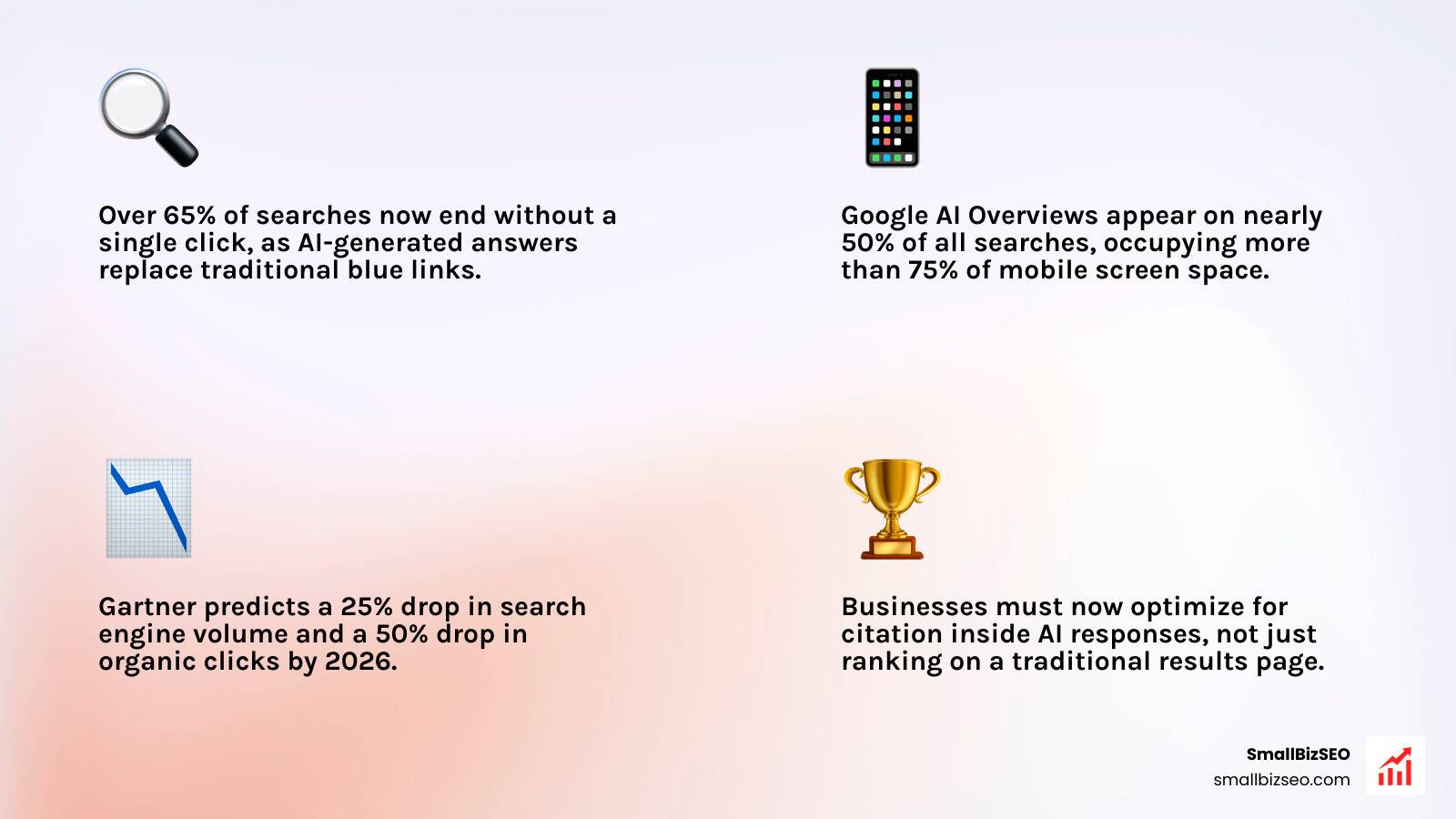
Search isn't what it used to be. Over 65% of searches now end without a single click. Google AI Overviews are triggering on nearly half of all searches and taking up more than 75% of mobile screen space. Gartner has predicted a 25% drop in search engine volume and a 50% drop in organic clicks — and those numbers are becoming reality right now.
For small business owners, this creates a real problem. You can rank on page one and still be invisible if an AI summary answers the question before anyone clicks.
The rules of search visibility have quietly shifted — and most businesses haven't caught up yet.
I'm Clayton Johnson, a digital PR and SEO strategist focused on building search visibility through content and authority signals — including the emerging discipline of AI SEO services. In this guide, I'll walk you through how these services work, what separates the good providers from the average ones, and how to choose the right fit for a small business.
Understanding AI SEO Services vs Traditional SEO
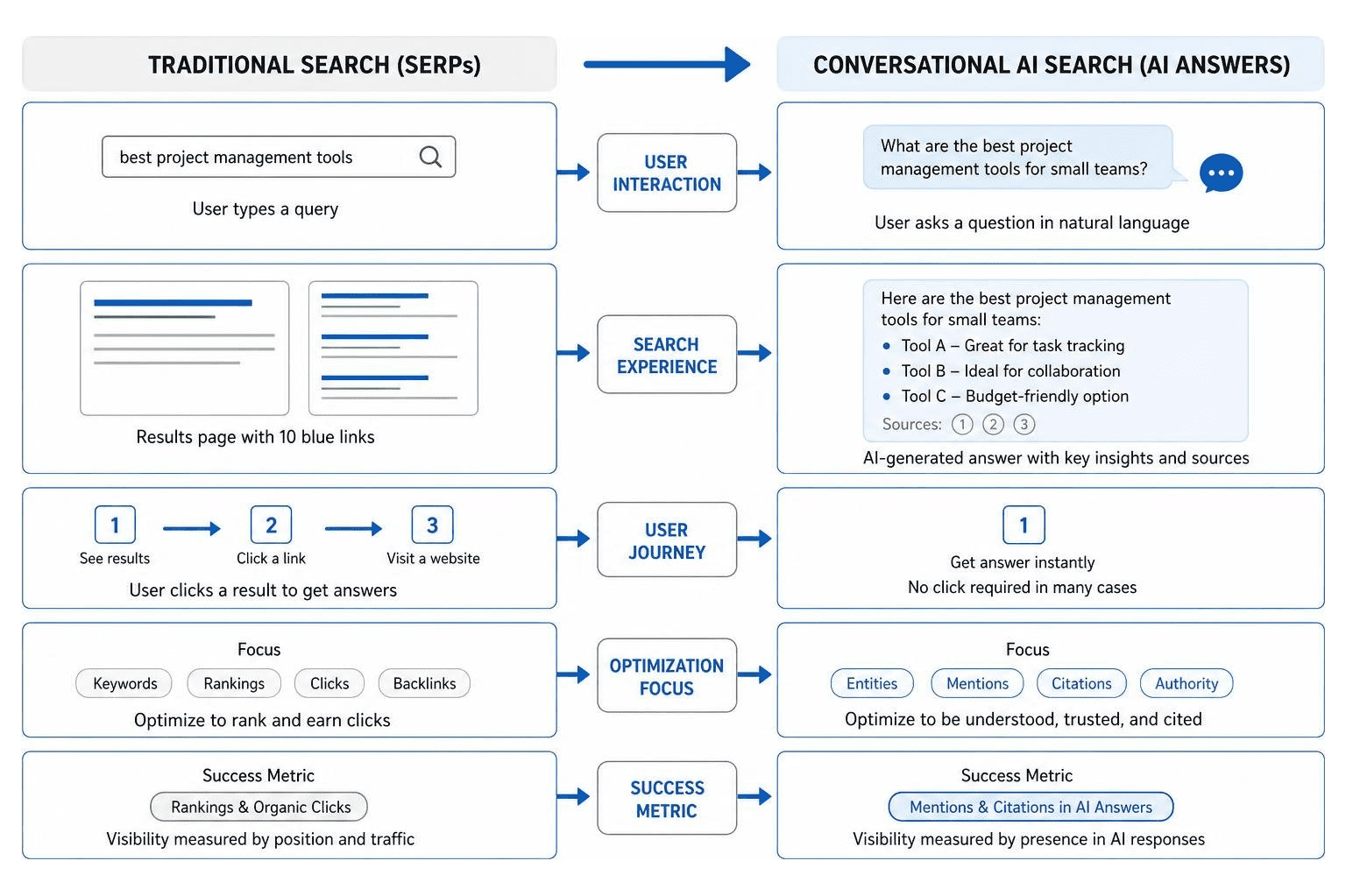
Traditional SEO is built around a simple transaction: a user types a keyword, Google displays ten blue links, and the user clicks one. We optimize page titles, meta descriptions, and header tags to win that click.
With generative search, that transaction is broken. Large language models (LLMs) synthesize information from across the web to answer the user directly. Instead of fighting for a spot in a list of links, we must now fight for a mention inside a single, cohesive AI-generated response.
To achieve this, modern marketing teams rely on What Are AI SEO Tools to analyze LLM databases and adapt their sites. If you are new to this shift, our SEO Services Guide explains how the search landscape is expanding beyond classic search engine results pages (SERPs).
The Core Differences in Optimization Mechanics
The shift from traditional to AI-driven search requires a change in optimization mechanics:
- Keyword Density vs. Entity Mapping: Traditional SEO often focuses on repeating specific keyword strings. AI search engines care about "entities"the established relationships between your brand, your products, and your industry.
- Syntactic Matching vs. Semantic Search: AI models use natural language processing (NLP) to understand the intent behind a query. They do not just match words; they evaluate the depth and accuracy of your answers.
- Citations over Clicks: AI engines prioritize content that is highly structured and easily cited. To evaluate how prepared your site is for this environment, we recommend performing a Guide to AI SEO Audit.
How AI SEO Services Complement Traditional Search Strategies
AI SEO does not replace traditional SEO; it sits on top of it. Without a technically sound website, AI crawlers cannot access your content in the first place.
A successful hybrid strategy ensures your site is fully indexable by search engines while being structured for AI models to extract information. By maintaining your core technical hygiene, you ensure that traditional search captures deep-dive traffic while AI optimization earns the initial brand recommendations. You can explore how we balance these two worlds through our core SEO Services.
The Technical Pillars of Generative Engine Optimization (GEO)
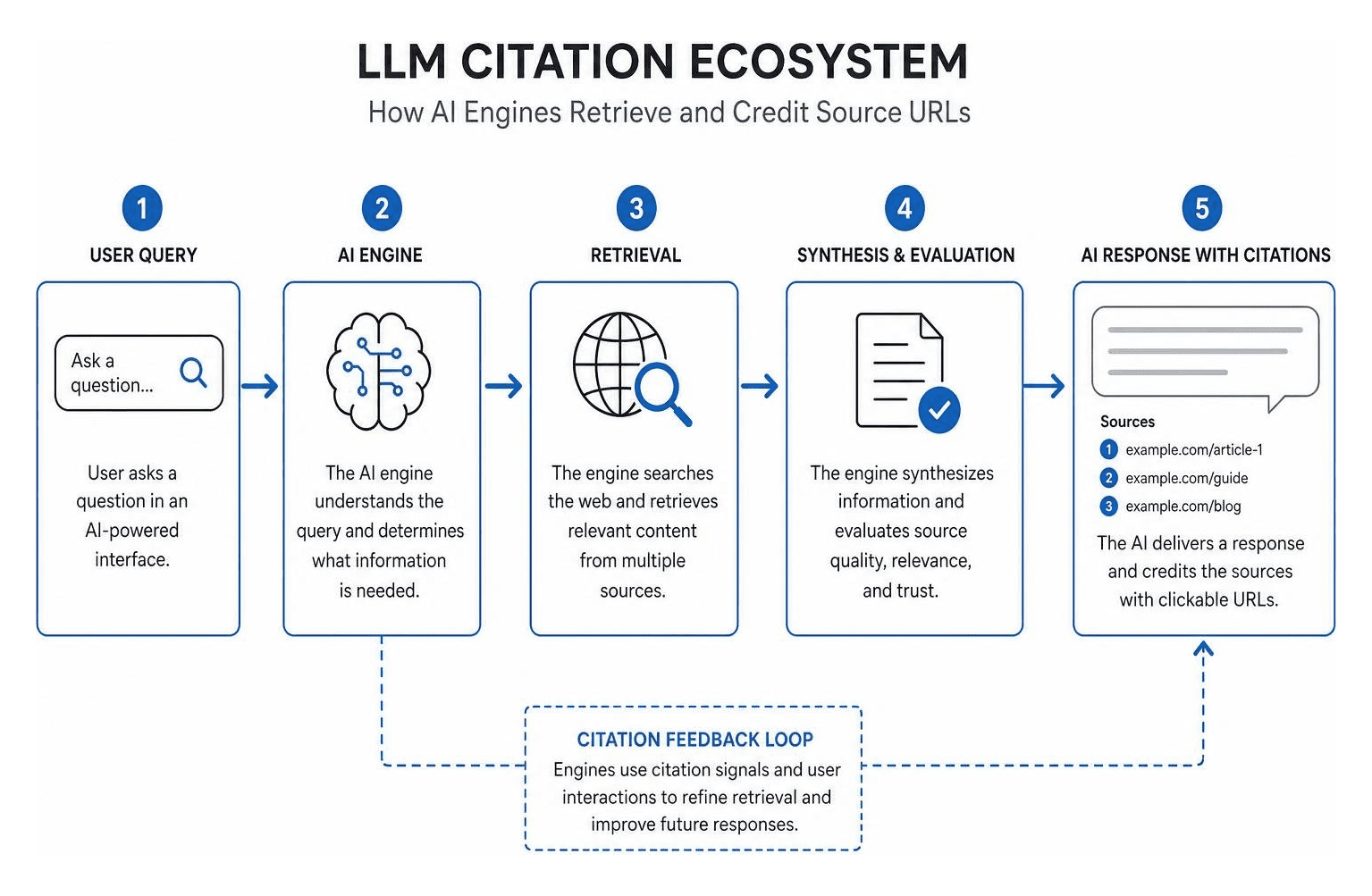
To win recommendations inside ChatGPT, Gemini, and Perplexity, your website must be optimized for Generative Engine Optimization (GEO).
Demystifying GEO, AEO, and LLM SEO
While these terms are often used interchangeably, they target slightly different aspects of modern search:
- LLM SEO: The broad practice of optimizing your brand so large language models understand and trust your business.
- GEO (Generative Engine Optimization): Structuring content specifically to be synthesized by generative search engines that blend multiple sources into a single answer.
- AEO (Answer Engine Optimization): Optimizing for direct, conversational answers, particularly for voice search and smart assistants.
As conversational queries of eight or more words continue to increase, your content must be prepared for highly specific, long-tail questions. Initiating a Detailed SEO Analysis can help reveal whether your current pages align with these conversational patterns.
Best Practices for Optimizing Content for AI-Generated Answers
To make your website highly citable for LLMs, you should implement the following content adjustments:
- Lead with the Answer: Use an "answer-first" writing style. State the direct answer to a user's question in the first two sentences, then support it with expert depth.
- Deploy Schema Markup: Use detailed schema, including FAQ, Product, and Organization schema, to make your data machine-readable.
- Use Self-Contained Facts: Write clear, factual sentences that can be easily extracted by an AI crawler without losing context.
To scale this approach, many businesses partner with professional SEO Content Services to rewrite existing pages into formats that AI engines prefer.
Comparing the Leading Providers of AI-Driven SEO
When looking for ai seo services, selecting a partner with proven technical capabilities is essential. The right provider should understand how to bridge the gap between traditional search visibility and generative AI recommendations.
Instead of relying on outdated keyword-stuffing tactics, leading providers focus on semantic structure, schema markup, and entity authority. When evaluating potential partners, look for teams that offer comprehensive visibility audits, structured data implementation, and clear citation tracking rather than just standard keyword reports.
Enterprise vs Small Business AI SEO Services
Enterprise AI SEO programs often rely on massive programmatic content generation and custom API integrations to monitor thousands of keyword variations. For smaller businesses, this level of complexity is rarely necessary.
Small businesses should focus their budgets on high-impact areas: establishing a clear brand entity, optimizing high-priority service pages, and maintaining a clean technical foundation. We structure our SEO Packages to deliver these essential AI-ready optimizations without the enterprise price tag.
Key Components of an Effective AI SEO Strategy
An effective strategy must address how machines learn about your business. This involves three core components:
- Entity Definition: Ensuring your brand name, address, and offerings are identical across all online directories, reviews, and social platforms.
- Citable Structuring: Reformatting your blog posts and service pages so that AI crawlers can cleanly extract facts.
- Authority Building: Earning high-quality, third-party mentions on trusted websites that serve as training data for LLMs.
We recommend starting with an SEO Visibility Audit to benchmark your brand's current footprint across both traditional search and generative engines.
Measuring Success and ROI in the Era of AI Search
Measuring success in AI search requires a shift in how we look at analytics. Because many AI searches do not result in a direct click, traditional traffic metrics do not tell the whole story.
Key Metrics for Tracking LLM Citations and Visibility
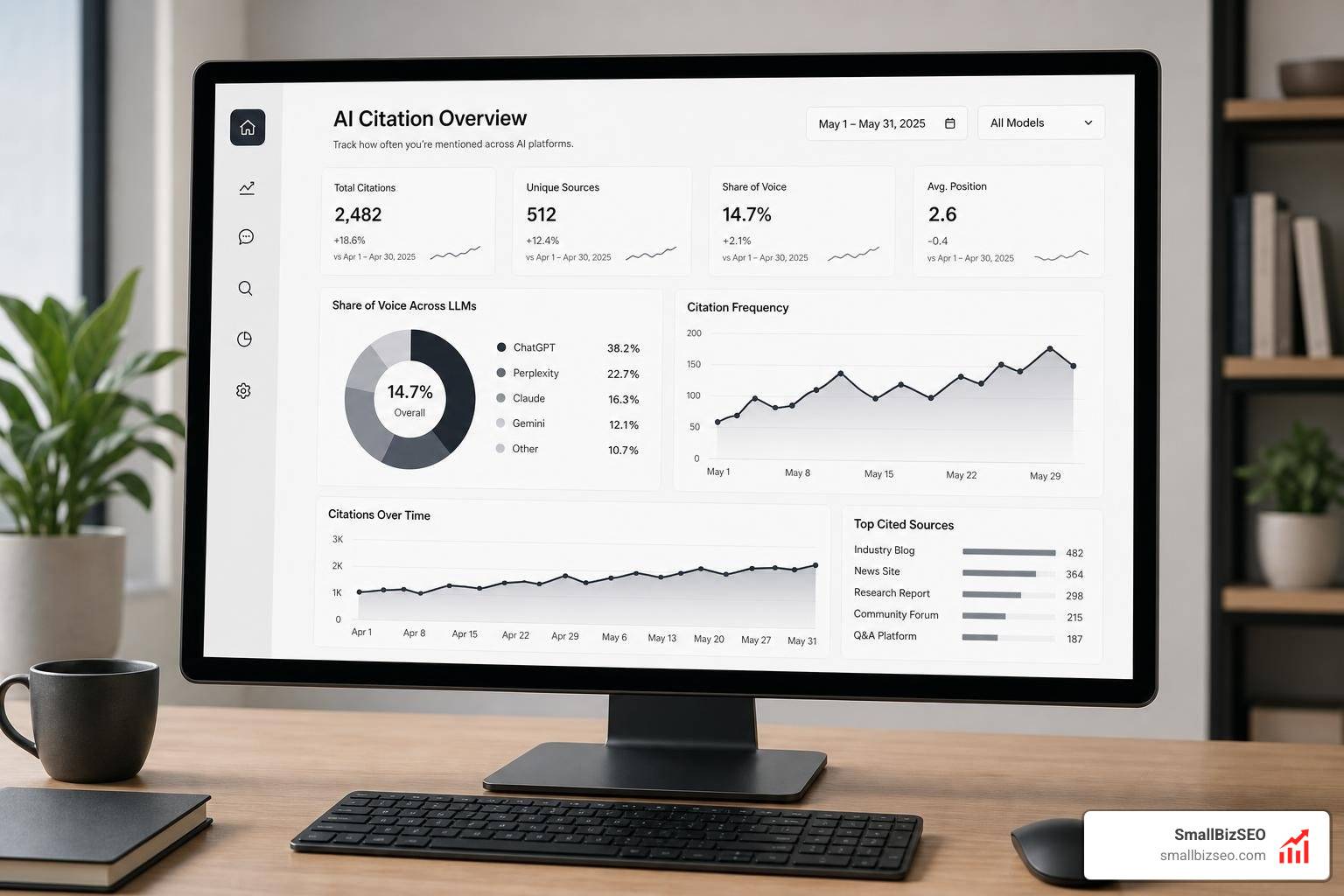
To understand your true reach, we track several modern visibility metrics:
- Citation Frequency: How often an LLM cites your website as a source when answering questions about your industry.
- Share of Voice (SoV): Your brand's percentage of mentions across generative search engines compared to your top competitors.
- Assisted Conversions: Tracking users who first discovered your brand through an AI recommendation and later visited your site directly to convert.
As we use these advanced techniques, we always adhere to our Anti-Spam Responsible AI Use Policy to ensure all automated optimizations remain ethical and compliant with search engine guidelines.
Timeline and Expectations for AI SEO Results
Like traditional optimization, AI SEO is a compounding strategy. Technical adjustments—such as schema implementation and structural content rewrites—can show early crawl and indexation improvements within a few weeks.
Generally, early citations in platforms like Perplexity or Google AI Overviews begin to appear within 4 to 6 weeks. Broad, meaningful visibility gains across major LLMs typically take 3 to 6 months to fully manifest, depending on your brand's existing authority and market competition.
Frequently Asked Questions About AI SEO
Which industries benefit most from AI SEO?
Industries where users seek fast, comparative, or highly detailed answers benefit the most. This includes e-commerce (for product comparisons), SaaS and B2B tech (for software recommendations), healthcare, and financial services.
How do AI search engines decide which brands to cite?
AI models prioritize clarity, factual accuracy, and external validation. They look for consistent entity data across the web and prefer content that is structured cleanly, uses schema markup, and is backed by reputable third-party citations.
Should businesses block AI crawlers from accessing their site?
In almost all cases, no. Blocking AI crawlers prevents your brand from being recommended in the answers that buyers rely on. Unless you have strict compliance, proprietary data, or paywalled content concerns, keeping your site open to AI crawlers is essential for future visibility.
Future-Proof Your Brand with Next-Generation Search Optimization
Search behavior has changed, but the goal remains the same: putting your business in front of the people who need your services. By combining a strong traditional technical foundation with advanced generative optimization, you can ensure your brand is both found by search engines and recommended by AI.
At SmallBizSEO, our data-driven "Velocity" framework is designed to deliver fast rankings and compliant growth through transparent, automated reporting. We help you build the machine-readable authority that search engines and LLMs trust.
Ready to secure your spot in the future of search? Secure Your AI SEO Services Strategy with us today, and let's make sure your brand is the answer buyers find first.