The No-Nonsense Guide to Achieving the Best SEO Results
Why Getting the Best SEO Results Is Harder — and More Important — Than Ever
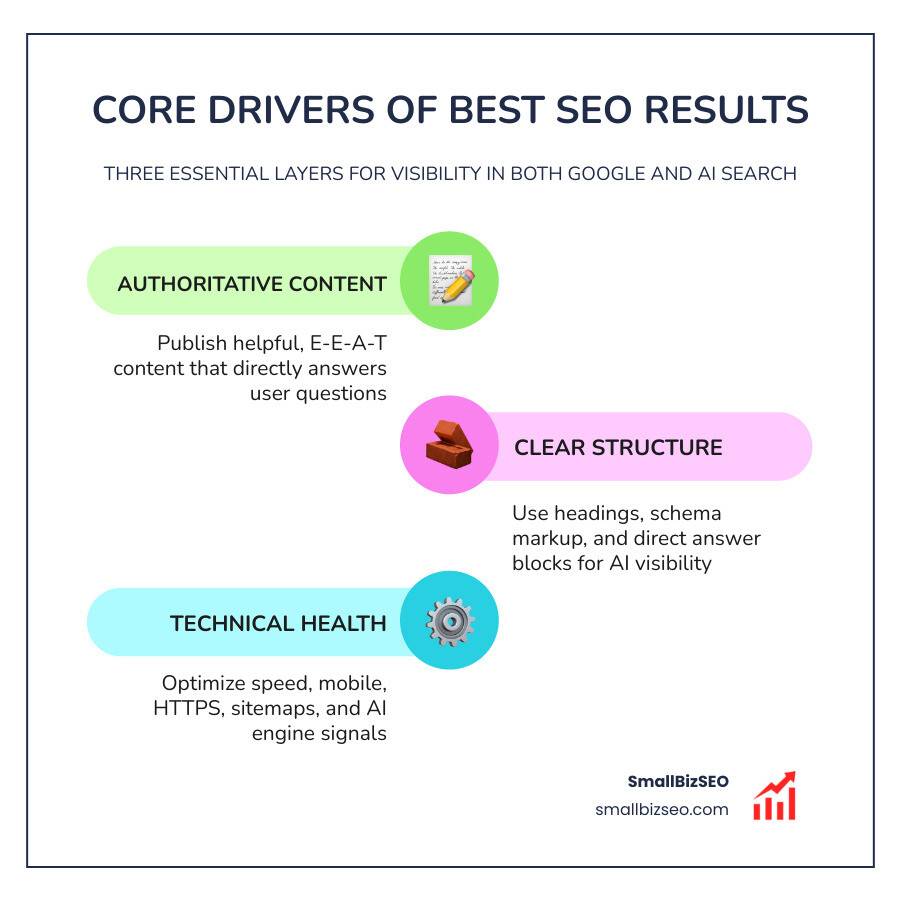
Achieving the best SEO results comes down to a handful of proven actions, applied consistently across both traditional search and AI-powered platforms.
Here's what drives the best SEO results:
- Publish helpful, authoritative content that directly answers real user questions
- Structure pages clearly with proper headings, schema markup, and direct answer blocks
- Earn quality backlinks from relevant, trustworthy sources
- Fix technical foundations — page speed, mobile optimization, HTTPS, and sitemaps
- Optimize for AI engines like Google AI Overviews, ChatGPT, and Perplexity, not just Google
- Track and update content regularly to stay fresh and relevant
Here's a sobering reality: 96.55% of web pages get zero traffic from Google. Zero. That means the vast majority of websites are essentially invisible — not because search is broken, but because most content isn't built to compete.
Search has also changed dramatically. It's no longer just about ranking on Google. AI-powered platforms like ChatGPT, Perplexity, and Google AI Overviews are now sending real traffic — and they pull from a completely different set of signals than traditional search engines do. If your content isn't structured for both, you're leaving a growing slice of visibility on the table.
The good news? The fundamentals still work. Strong content, solid technical SEO, and smart structure remain the engine behind lasting rankings. You just need to know what's changed — and what hasn't.
I'm Clayton Johnson, a digital PR and SEO strategist focused on building campaigns that earn real visibility and consistent leads — exactly the kind of work that delivers the best SEO results for small businesses navigating an increasingly complex search landscape. In this guide, I'll walk you through everything you need to know, without the jargon.
Traditional SEO vs. Generative Engine Optimization (GEO)
To understand how to get the best SEO results today, we have to look at how search has split into two parallel tracks. On one side, we have traditional search engine optimization (SEO), which aims to rank your website in the standard blue links on Google or Bing. On the other side, we have Generative Engine Optimization (GEO), which focuses on getting your business cited inside AI-generated answers.
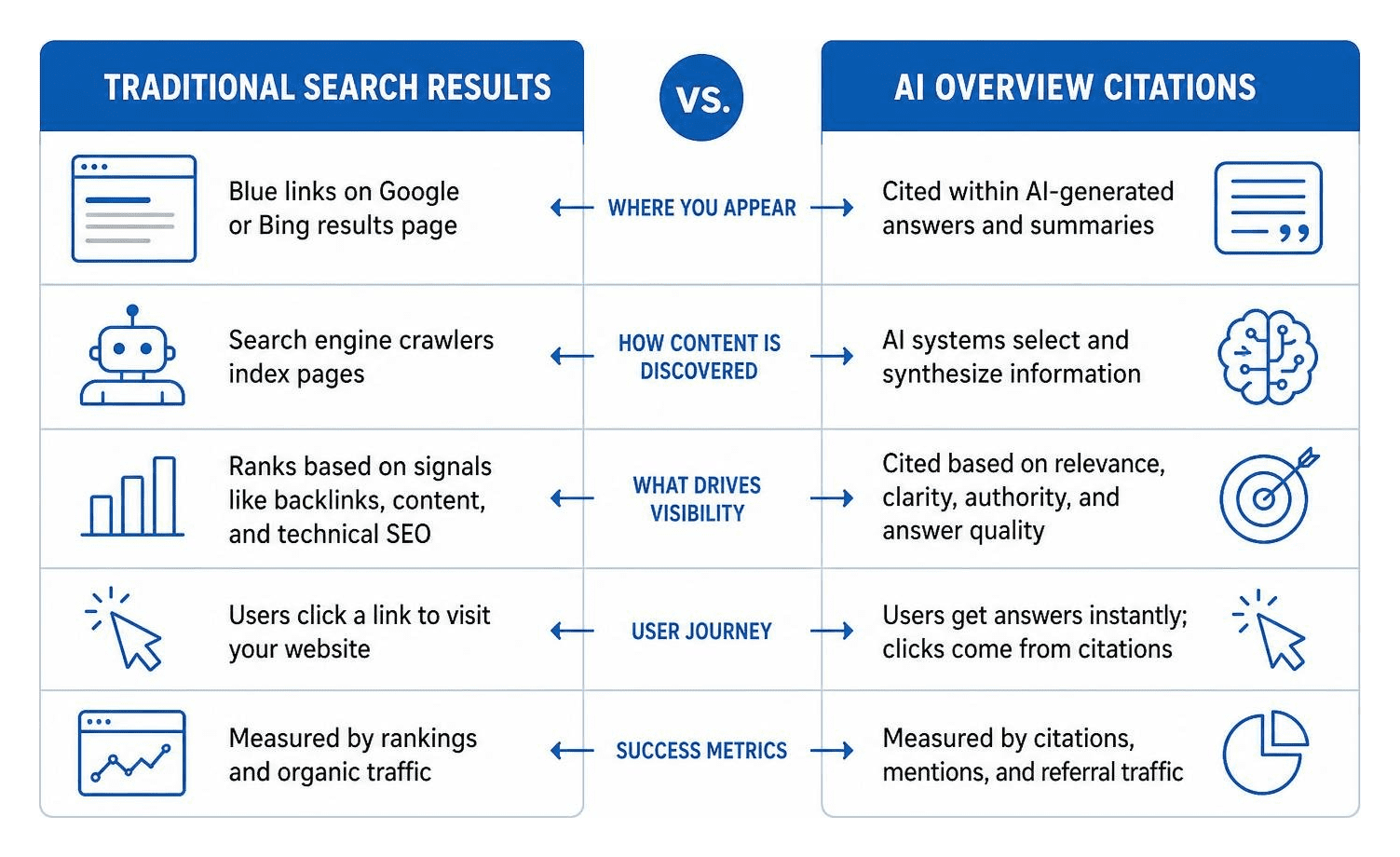
AI search engines do not look at the web the same way Google’s traditional crawlers do. When a user asks a question, platforms like ChatGPT Search, Perplexity, and Google AI Overviews synthesize information from multiple sources to create a single, cohesive answer.
If your brand is not mentioned and linked within that generated summary, you are effectively invisible to those users. To bridge this gap, modern marketing leaders use a hybrid approach that blends traditional optimization with advanced answer-engine strategies. You can read more about this shift in our detailed guide on SEO vs AEO: Optimize Google & AI Engines.
Why Traditional Search Optimization Still Matters
While AI search is growing rapidly, traditional SEO remains the foundation of organic traffic. Google still drives the vast majority of web traffic, and the core ranking signals have not disappeared.
To rank well in standard search engine results pages (SERPs), we must still prioritize:
- Core Web Vitals: Ensuring fast loading times, quick interactivity, and visual stability.
- Mobile-First Indexing: Designing pages that render flawlessly on mobile devices, as search engines default to indexing the mobile version of your site.
- High-Quality Backlinks: Earning contextual, authoritative links that signal to search engines that your site is a trusted resource.
If your website is struggling to rank despite your best content efforts, check out our diagnostic checklist on Why Your Rankings Are Still Stuck to identify and fix hidden technical bottlenecks.
What is GEO and How Does It Drive the Best SEO Results?
GEO is the process of making your content easily extractable for Large Language Models (LLMs). Instead of merely targeting keyword volume, GEO focuses on optimizing for the LLM context window.
AI engines rely heavily on credibility signals. Research shows that direct brand mentions and authoritative citations correlate strongly with AI visibility (with a correlation of 0.664, which is often higher than the impact of raw backlink volume for AI crawlers).
To secure these valuable citation slots, we must establish real trust. This means optimizing your site’s Experience, Expertise, Authoritativeness, and Trustworthiness (E-E-A-T) signals. Learn the exact steps to build this authority in our guide on How to Optimize Your Content for E-E-A-T and Build Real Search Trust.
How to Structure Content for Maximum Search and AI Visibility
Getting the best SEO results requires structuring your content so that both human readers and AI crawlers can understand it instantly.
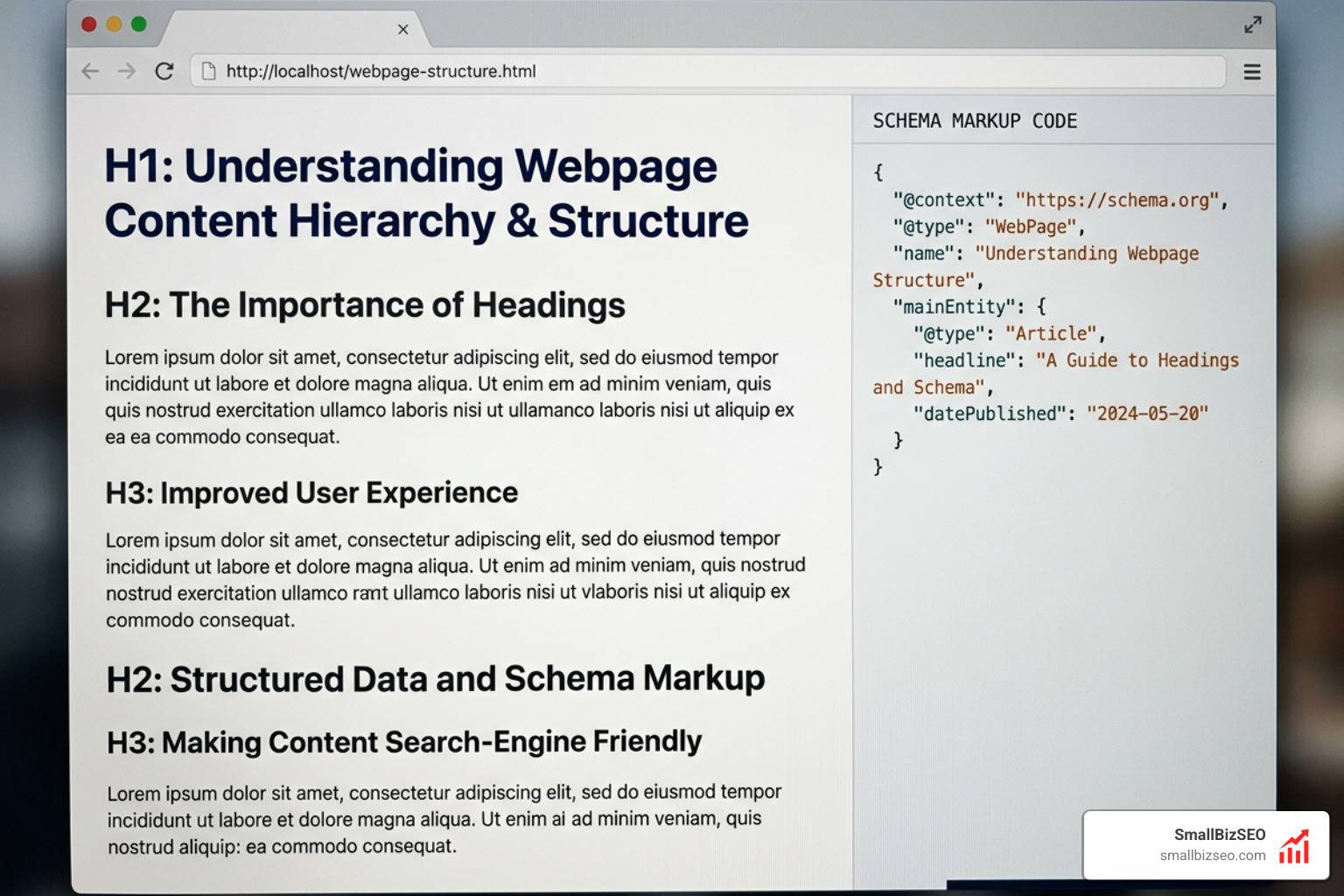
A clean, predictable heading hierarchy (H1, H2, H3) acts as a map. It tells search engines exactly what your page is about and allows AI models to parse and quote your content accurately. To make this data even easier for machines to read, we use structured schema markup to label authors, organizations, and key facts. To see how these elements fit together, refer to the Answer Engine Optimization (AEO) Playbook.
Crafting the Perfect Direct Answer Block
An "answer capsule" or direct answer block is a short, highly focused paragraph placed near the top of your page that directly answers the primary search query.
The ideal length for an answer block is 40 to 60 words. If it is too short, AI engines may ignore it; if it is too long, the LLM may truncate it. By pairing these blocks with SpeakableSpecification and FAQPage schema, you make it incredibly easy for search engines to pull your text verbatim into AI Overviews and voice search results.
| Search Engine / Platform | Preferred Format | Key Optimization Signal |
|---|---|---|
| Google AI Overviews | Direct definitions, bulleted lists | Clear H2 questions, structured schema |
| ChatGPT Search | Wikipedia-style authoritative facts | High-quality brand mentions, clean tables |
| Perplexity | Real-world data, forum-style discussions | Direct answers, structured comparison data |
| Microsoft Copilot | Markdown and semantic HTML tables | Semantic table element markup in the first 40% of the page |
Structuring Your Site to Achieve the Best SEO Results
To build deep topical authority, we organize content into topic clusters. A topic cluster consists of a broad, comprehensive "pillar page" that links to multiple detailed "supporting pages" (and vice versa). This internal linking structure distributes page authority throughout your site and helps crawlers discover your content faster.
Before writing, we always recommend conducting a thorough search analysis to find out where your competitors are winning. You can learn how to do this systematically in our guide on Keyword Gap Analysis: What It Is and How to Do It Right.
Technical SEO and Multi-Engine Optimization Strategies
No matter how great your content is, a broken technical foundation will prevent you from achieving the best SEO results.

Technical SEO ensures that search engine bots and AI crawlers can easily access, read, and index your website. If you want to see how your site measures up against modern standards, you can request a comprehensive SEO Visibility Audit from our team.
Core Technical Foundations for Modern Search
To keep your site healthy and visible, we focus on five core technical pillars:
- Core Web Vitals: Keep your Largest Contentful Paint (LCP) under 2.5 seconds and Interaction to Next Paint (INP) under 200 milliseconds.
- HTTPS Security: Ensure your site is fully secure with a valid SSL certificate.
- Clean Sitemaps: Maintain an updated XML sitemap and submit it to Google Search Console and Bing Webmaster Tools.
- Optimized Robots.txt: Ensure you are not accidentally blocking search bots or AI crawlers (like GPTBot or PerplexityBot) from accessing your key pages.
- Crawl Budget Management: Eliminate duplicate pages, broken links, and redirect loops to make the most of search engine resources.
Optimizing for Google, Bing, and AI Search Engines
Different search platforms reward different types of content. For example, Google AI Overviews heavily favor authoritative written content paired with YouTube videos. Microsoft Copilot, which relies on Bing's index, rewards semantic HTML tables (table element, table header element, table body element) placed within the first 40% of a page. Perplexity frequently pulls citations from active discussions on platforms like Reddit, while ChatGPT relies on highly structured, encyclopedic factual data.
To maximize your organic reach across all of these platforms, we recommend reading the comprehensive Google SEO Guide: How To Rank Higher In Google Search to align your site with multi-engine standards.
Measuring Performance and Maintaining Your Rankings
To sustain the best SEO results, you must track your performance across both traditional search engines and AI platforms.
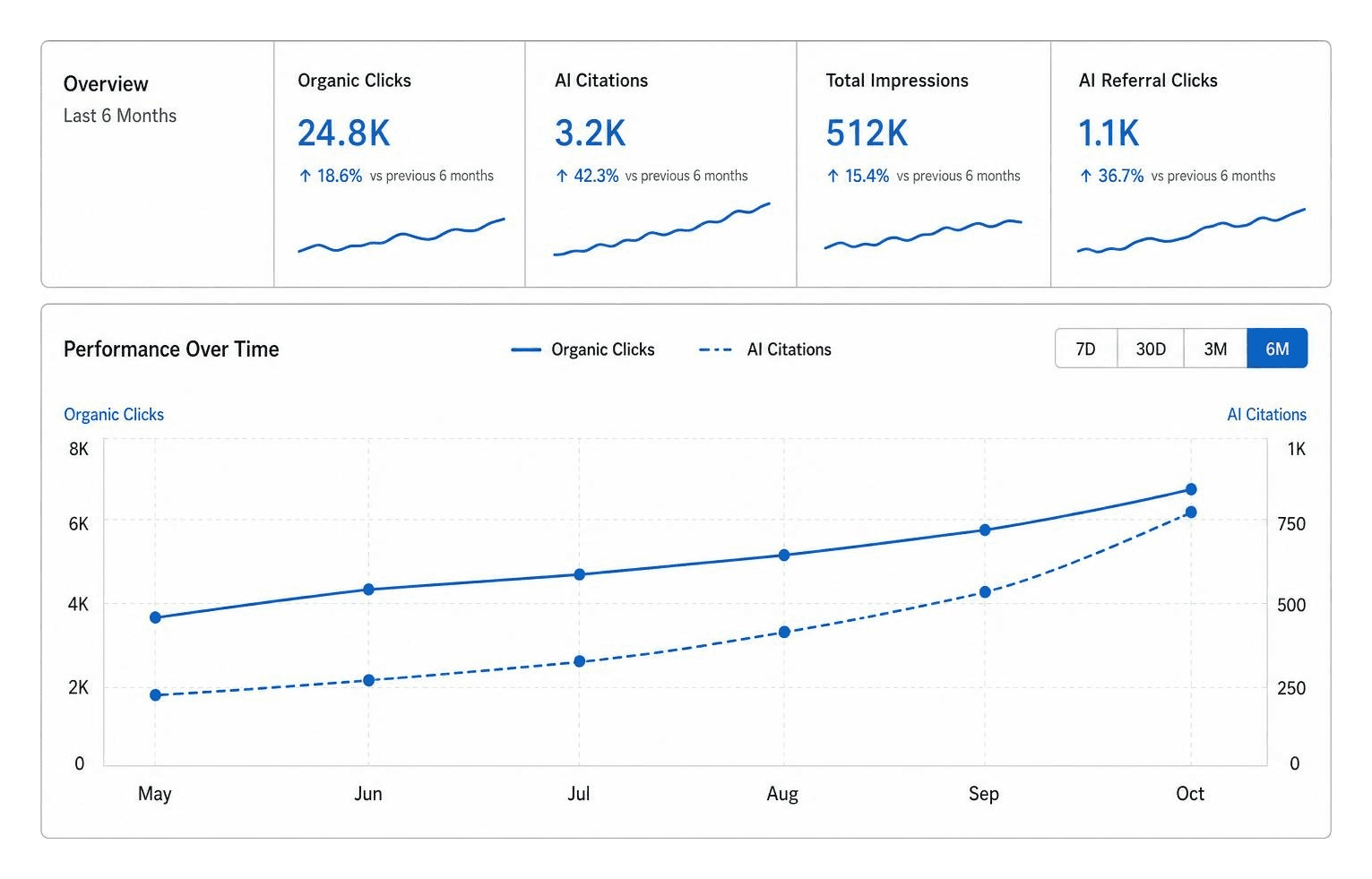
Tracking Metrics Across Traditional and Generative Search
We look beyond standard keyword rankings to measure true visibility. Our team tracks:
- Organic Clicks and Impressions: Monitored through Google Search Console.
- AI Citations and Referrals: Identifying how often your brand is cited inside ChatGPT, Perplexity, and Copilot.
- Referral Traffic: Segmenting your web traffic to see exactly how many high-intent visitors are coming from AI search engines.
Using advanced platforms like SE Ranking, which is trusted by over 40,000 agencies worldwide, we provide transparent, automated reporting that connects your SEO efforts directly to business growth.
Content Audits and Freshness Workflows
Search algorithms and AI models favor fresh, up-to-date content. In fact, recently updated pages are cited by AI engines at significantly higher rates than older, stagnant articles.
We recommend conducting regular content audits to update outdated statistics, refresh old links, and eliminate redundant content that might be diluting your site’s authority. To build a repeatable content maintenance workflow, explore our comprehensive SEO Services Guide.
Frequently Asked Questions About Getting the Best SEO Results
What is the difference between SEO and AEO?
Traditional SEO (Search Engine Optimization) focuses on ranking your website in the standard search results page. AEO (Answer Engine Optimization) structures your content specifically to win citation slots and direct answers inside AI assistants. While SEO targets a click to your website, AEO targets a verbal or written citation in an AI response. To dive deeper into this tactical shift, read AEO vs SEO: Why Direct Answer Blocks Are the New H1 | ZSky AI.
How long does it take to see measurable SEO results?
For established websites targeting low-to-medium difficulty keywords, traditional rankings can improve in a few weeks. For highly competitive terms, it typically takes several months of sustained optimization and link building. AI citations can occur much faster, often appearing within a few weeks of your content being crawled and indexed.
Does AI-generated content hurt search rankings?
No, search engines do not penalize content simply because it was created with AI. However, they do penalize unedited, low-quality, or mass-produced content that offers no original value (scaled content abuse). To rank well, your content must be helpful, accurate, and meet E-E-A-T guidelines, regardless of how it was drafted.
Conclusion
Achieving the best SEO results requires a balance of technical expertise, high-quality content, and forward-thinking optimization for AI engines.
At SmallBizSEO, we help small businesses grow using our data-driven "Velocity" framework. We combine technical audits, custom content strategies, and authority-building link campaigns to deliver fast, compliant, and sustainable search visibility. With our transparent, automated reporting, you will always know exactly how your campaigns are performing.
Ready to take your search visibility to the next level? Explore our tailored SEO Services today, and let's start driving real, measurable results for your business.