9 Proven SEO Fundamentals Every Law Firm Website Needs

9 Proven SEO Fundamentals Every Law Firm Website Needs
Build Attorney Website SEO That Brings in Qualified Cases
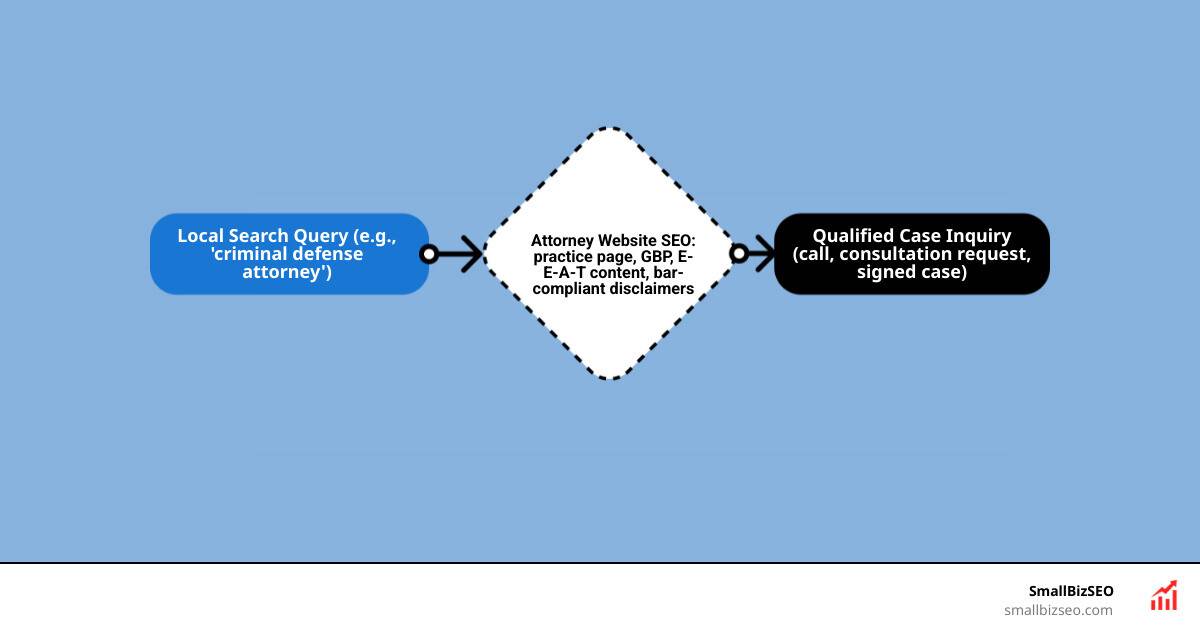
Attorney Website SEO helps your firm appear when local people search for the legal help you provide. Start by creating a focused page for each practice area, optimizing your Google Business Profile, publishing attorney-reviewed answers to real client questions, and making the site fast and easy to use on mobile.
The goal is not simply more traffic. It is more calls, consultation requests, and signed cases from people who need an attorney in your service area.
Legal search is unusually competitive and high stakes. Prospects may be dealing with an arrest, injury, divorce, or urgent deadline. They need clear information, proof of credentials, and an easy way to contact your firm. A strong SEO strategy builds that trust before the first call.
Search engines also hold legal sites to a higher standard. Your content should be accurate, reviewed by a qualified attorney, compliant with applicable bar advertising rules, and supported by real business details, credible citations, and a dependable website experience.
I am Clayton Johnson, a digital PR and SEO strategist focused on campaigns that improve search visibility and create meaningful engagement. In this guide, I will show how Attorney Website SEO can turn your website into a more reliable source of qualified local inquiries.
What Makes Legal Search Optimization Unique?
Law firm marketing operates under a completely different set of rules than standard local business promotion. A homeowner hiring a roofer wants pricing and availability, but a prospective legal client is often experiencing an urgent life crisis. With roughly 96% of individuals turning to search engines when seeking legal guidance, search algorithms scrutinize law firm websites with extreme precision.

When partnering with a Legal Marketing SEO Company, firms quickly realize that high traffic numbers mean nothing if the search intent is mismatched. Furthermore, if you are wondering Why Your New Law Firm Is Struggling to Rank and How to Fix It, the barrier is almost always related to trust signals, algorithmic safeguards, and regulatory hurdles.
Google YMYL and E-E-A-T Scrutiny
Search engines place legal topics squarely within the "Your Money or Your Life" (YMYL) category. Because inaccurate legal information can lead to severe real-world harm—such as lost parental rights, financial ruin, or criminal penalties—Google requires elevated levels of Experience, Expertise, Authoritativeness, and Trustworthiness (E-E-A-T).
Demonstrating strong E-E-A-T requires clear evidence that qualified legal professionals create or review your content. This means showcasing verified bar admissions, trial experience, peer-reviewed publications, and detailed attorney bios rather than publishing anonymous or unvetted articles.
State Bar Advertising Compliance
Unlike ordinary consumer businesses, attorneys cannot publish hyperbolic marketing claims. State bar advertising rules strictly regulate how lawyers present their practices online. In general, your website must:
- Avoid unsubstantiated phrases like "best lawyer" or "#1 firm."
- Refrain from using terms like "expert" or "specialist" unless officially certified by an accredited state entity.
- Display mandatory disclaimers regarding prior case results and client testimonials.
- Ensure all factual statements avoid creating unrealistic expectations of success.
Core Pillars of Attorney Website SEO for Law Firms
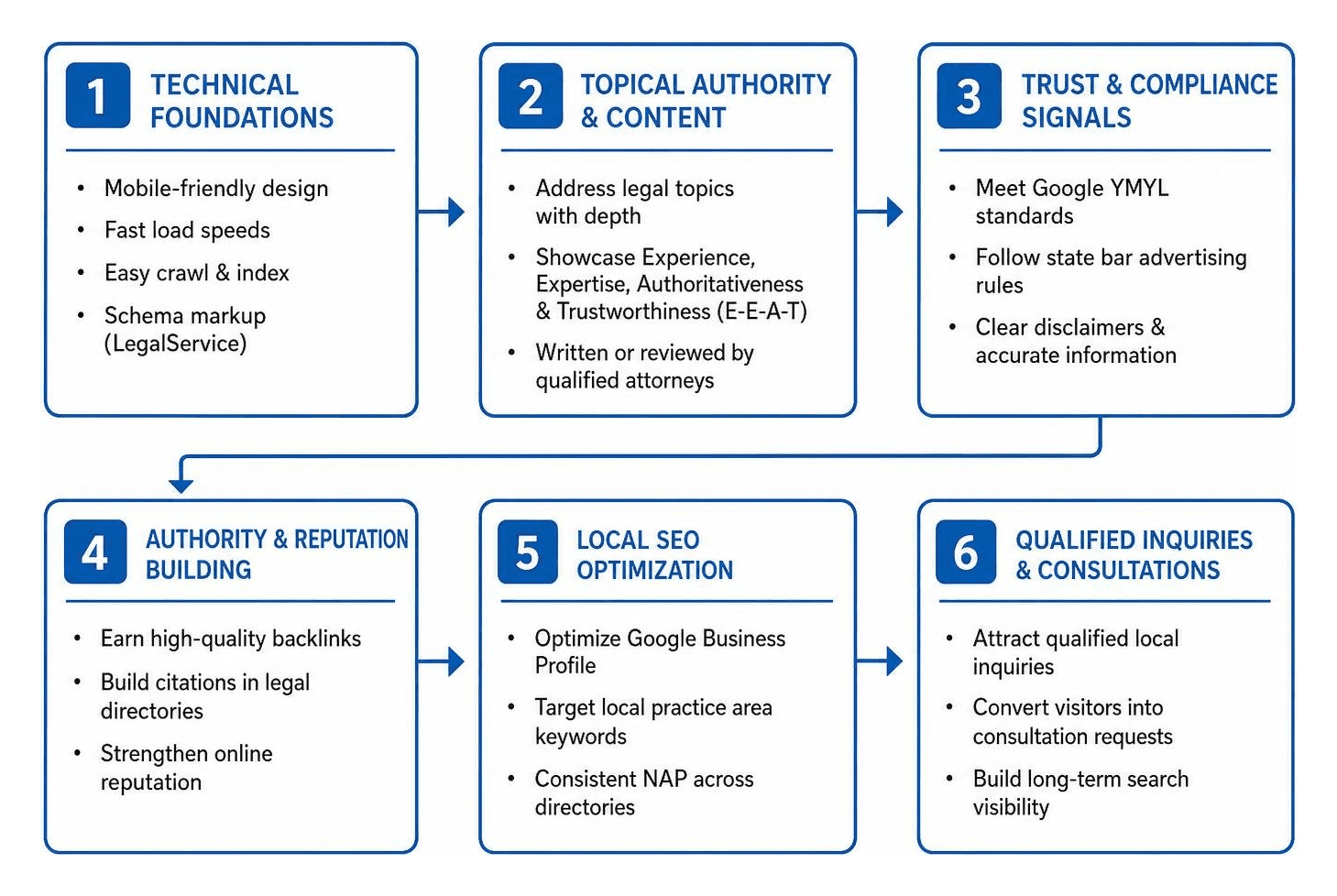
To build lasting search visibility, legal practices must address technical foundations, deep topical authority, and authoritative link networks simultaneously.
Technical Foundations of Attorney Website SEO
Technical SEO ensures that search engines can effortlessly crawl, index, and render your website. Because over 60% of legal inquiries occur on mobile devices, responsive layouts and rapid load speeds are essential. In fact, research indicates that 88% of users will abandon a site after a frustrating initial experience.
Implementing structured schema markup according to Schema.org standards makes your content readable to both traditional crawlers and generative AI engines. Through precise On-Page SEO, we configure essential legal schema types:
- LegalService Schema: Defines your firm's service categories, operating hours, and accepted payment methods.
- Attorney Schema: Details individual lawyer credentials, bar licenses, education, and practice areas.
- FAQPage Schema: Formats legal questions and answers to capture rich search snippets.
- LocalBusiness Schema: Embeds verified business data, coordinates, and contact details.
Content Authority and Case-Value Keyword Research
Generic content generation is ineffective for modern law firms. Sustainable visibility relies on mapping keywords to actual case value rather than chasing high-volume, generic queries.
Through specialized SEO Content Services, practices organize content into dedicated hub-and-spoke topic clusters. Rather than combining all capabilities into a single consolidated page, build comprehensive 1,500-to-2,500-word resources for every specific practice focus and related statutory sub-topic.
Strategic Legal Link Building and Citations
Backlinks validate your firm's authority. While roughly 66% of web pages have zero external backlinks, acquiring links from trusted legal domains provides an immediate ranking advantage.
Our specialized Link Building Services focus on earning editorial references through digital PR commentary, legal scholarship, local community engagement, and authoritative legal directory citations.
Local Search and Practice-Area Visibility
Because 85% of consumers rely on online maps to find nearby legal providers, local search performance dictates client acquisition. The local map pack captures a significant portion of high-intent search clicks, making local optimization indispensable.
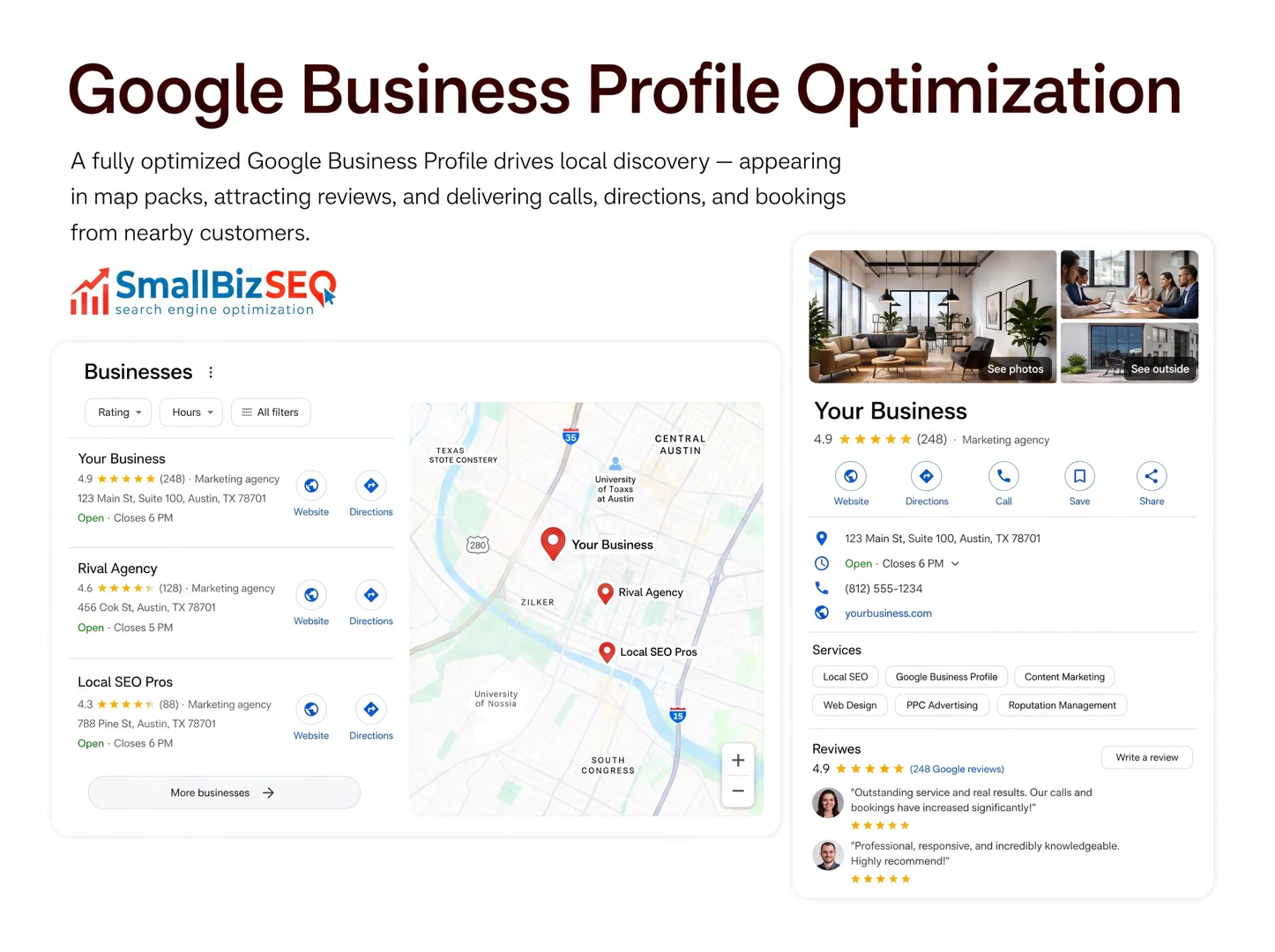
Referencing our comprehensive Local SEO Guide will help you establish consistent geographic signals across every digital touchpoint.
Google Business Profile Optimization
Your Google Business Profile (GBP) is often the very first interaction a distressed client has with your practice. Optimizing your profile involves:
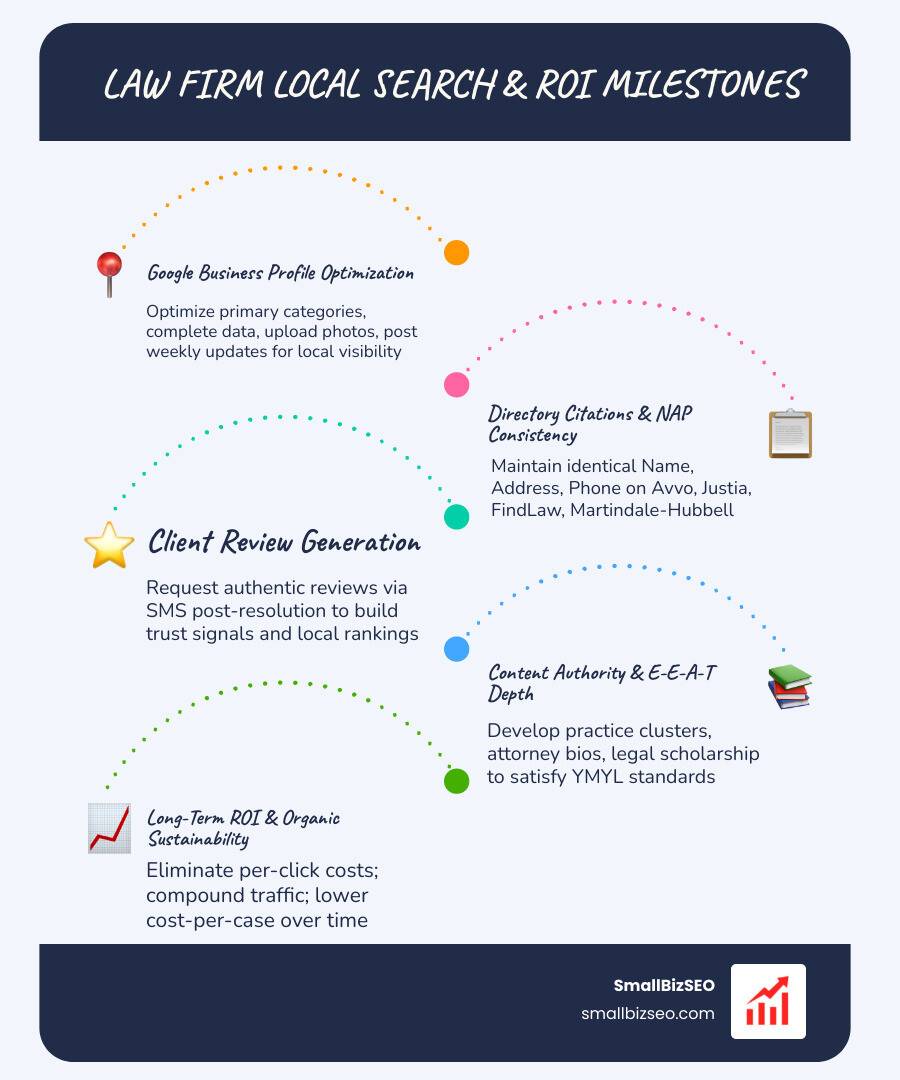
- Selecting explicit primary categories (e.g., "Personal Injury Attorney" rather than generic "Law Firm").
- Maintaining 100% data completion across business hours, consultation booking links, and service menus.
- Regularly uploading high-resolution office photos and attorney headshots.
- Publishing weekly updates regarding local community involvement and legal insights.
Directory Citations and Client Review Generation
Maintaining identical Name, Address, and Phone (NAP) details across premier legal portals—such as Avvo, Justia, FindLaw, and Martindale-Hubbell—reinforces algorithmic trust.
Coupled with citations, proactive review acquisition drives local visibility. Requesting authentic reviews via SMS immediately following case resolution creates consistent positive feedback, signaling reliability to potential clients.
Measuring ROI and Long-Term Value in Law Firm SEO
Legal search queries command some of the highest advertising costs in digital marketing, with certain pay-per-click terms reaching hundreds of dollars per individual click. Once established, an organic SEO campaign generates continuous inquiries without recurring per-click charges.
| Organic Search Milestone | Typical Focus Area | Expected Business Impact |
|---|---|---|
| Phase 1: Foundation | Technical audit, schema markup, NAP cleanup | Improved crawl rate, resolved indexing bottlenecks |
| Phase 2: Content Expansion | Practice clusters, attorney bios, E-E-A-T depth | Rising impressions for long-tail, high-intent queries |
| Phase 3: Authority Building | Legal directory links, digital PR, review acquisition | Local 3-pack appearances, core practice rankings |
| Phase 4: Compounding Growth | Conversion rate refinement, intake optimization | Consistent inbound calls, reduced cost per signed case |
Conversion Tracking and Attorney Website SEO Performance
Search rankings are merely intermediate signals; the only true metric of marketing performance is signed cases.
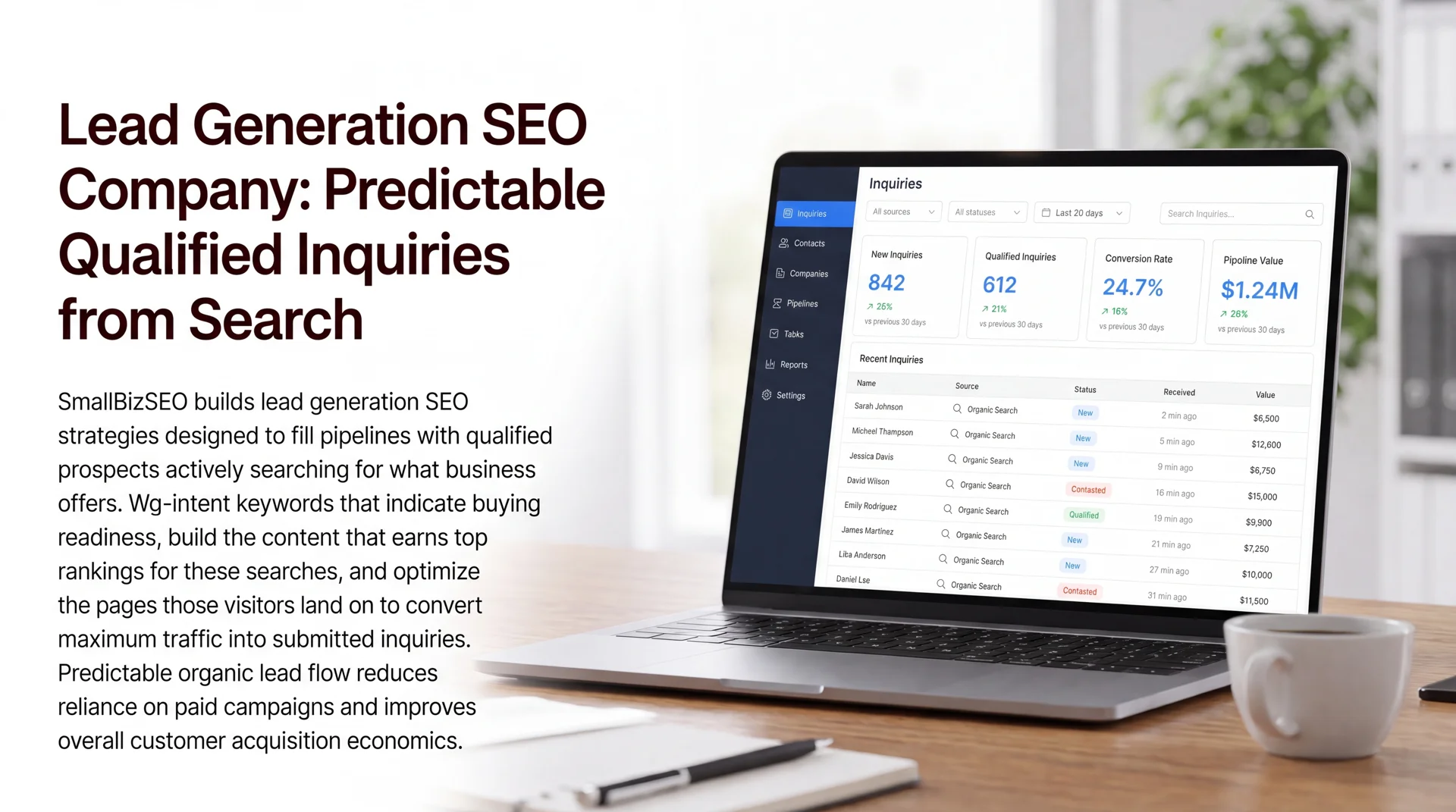
By integrating Google Search Console with dedicated dynamic call tracking and intake CRM systems, we trace incoming phone inquiries and contact submissions directly back to the specific landing pages and search queries that produced them.
Hiring an Agency vs. Managing In-House SEO
While solo practitioners often begin by managing basic updates independently, the complex intersection of technical architecture, continuous content production, and digital PR typically necessitates specialized support. If you are assessing prospective marketing partners, reviewing How to Find the Best SEO Agency in USA Without Losing Your Mind will help you avoid vendors who rely on generic tactics or make unrealistic ranking guarantees.
Frequently Asked Questions About Law Firm SEO
How long does it take for a law firm website to rank on Google?
Achieving prominent organic rankings generally requires three to twelve months. This timeframe varies based on local market competitiveness, domain history, content depth, and the speed at which authoritative backlinks are acquired.
What are the most critical ranking factors for attorney websites?
The primary ranking factors include comprehensive on-page content satisfying user search intent, robust E-E-A-T signals, a fully optimized and verified Google Business Profile, high-quality legal backlinks, and fast, mobile-friendly technical performance.
Can a solo attorney compete with large legal practices in organic search?
Yes. Solo practitioners routinely outrank larger legal firms in local 3-packs and organic listings by focusing on hyper-local geographic areas, targeting highly specific niche practice sub-specialties, and maintaining strong client review profiles.
Elevate Your Firm's Search Authority and Case Acquisition
Developing a dominant digital presence is not an overnight task—it is an enduring practice asset. By aligning your website with rigorous E-E-A-T guidelines, optimizing local map assets, and building authoritative content, your practice can secure a dependable pipeline of qualified clients.
At SmallBizSEO, our proprietary Velocity framework provides data-driven technical optimization, strategic content assets, and transparent reporting designed to turn search visibility into signed retainers. Explore our specialized Attorney SEO Company solutions today to build a sustainable organic growth strategy for your firm.