Turn Vintage Finds into Search Wins with Flea Market SEO
How Does SEO for Flea Markets Bring in More Shoppers?
SEO for flea markets starts with the details shoppers need to plan a visit. Put your market’s location, hours, upcoming dates, and vendor information on clear, mobile-friendly pages. Keep those details consistent on your Google Business Profile, and use page titles that name your market and location. This helps nearby shoppers find you when they search for a weekend market or a specific vintage find.
I’m Clayton Johnson, founder of SmallBizSEO. My work in local SEO, content strategy, and website structure informs this guide to SEO for flea markets.
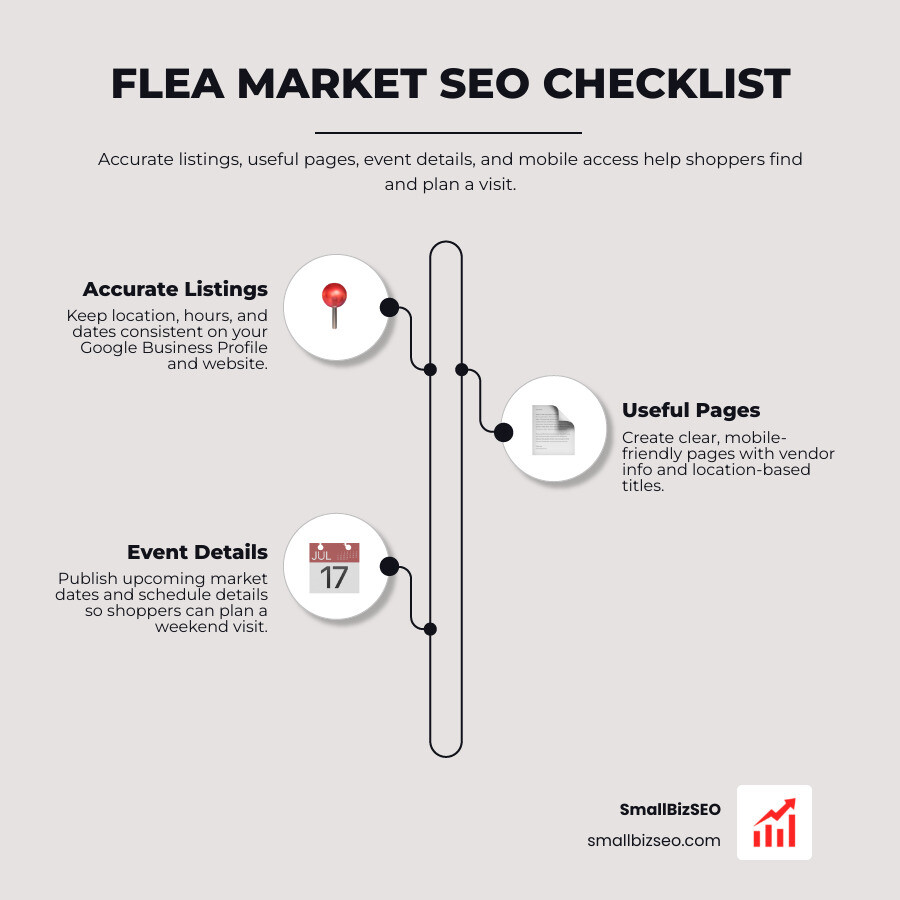
Common SEO for flea markets vocab:
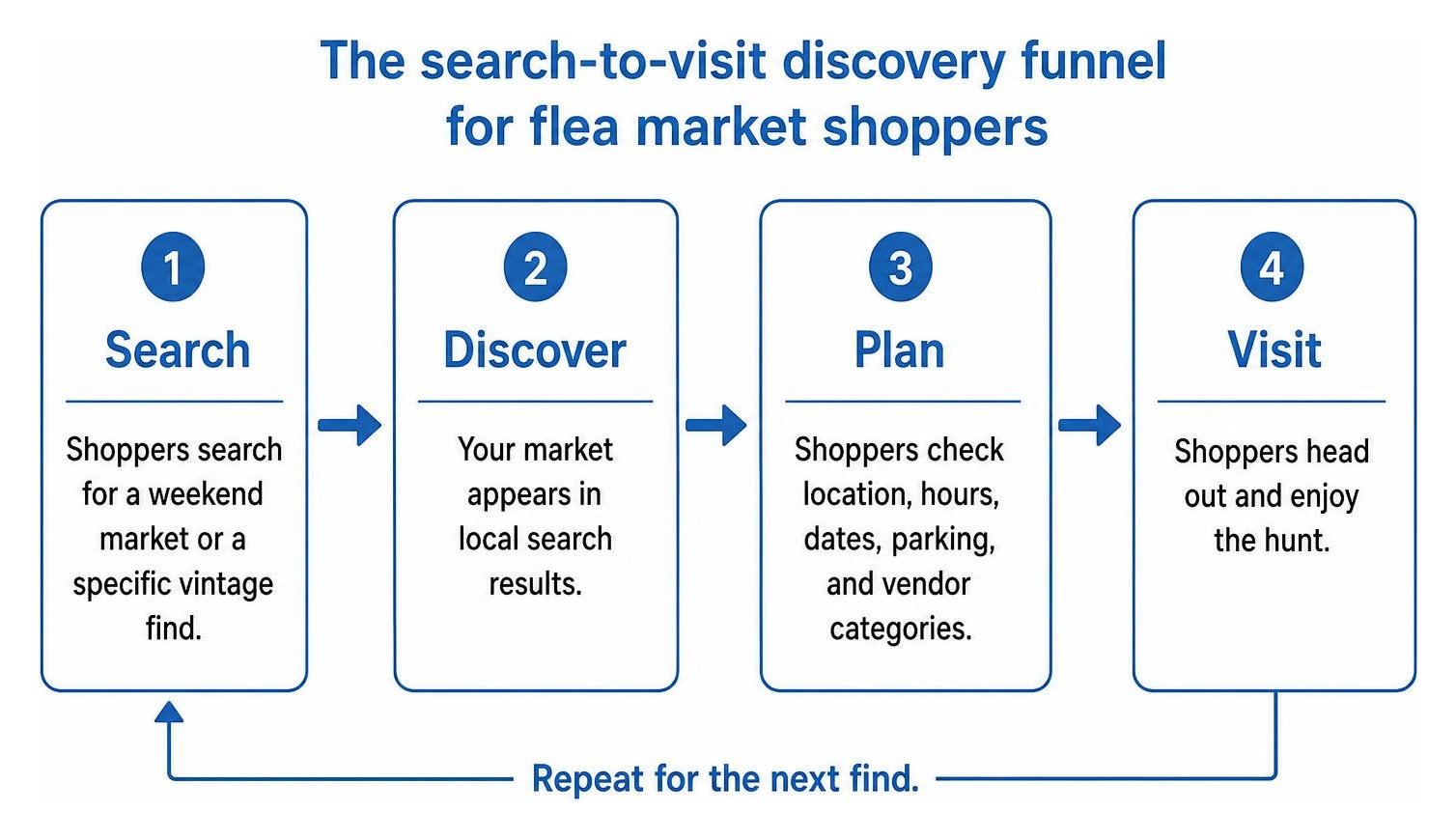
How Can Flea Market SEO Turn Online Searches into Weekend Visits?
Strong local listings, dedicated market pages, and verified event schedules help buyers find your market and plan their weekend trips. When treasure hunters decide where to spend their Saturday morning, they turn to search engines to check opening hours, parking options, and available vendor categories. As highlighted in travel features where the hunt is the thrill, shoppers want an exciting discovery experience, but they need frictionless logistical clarity first.
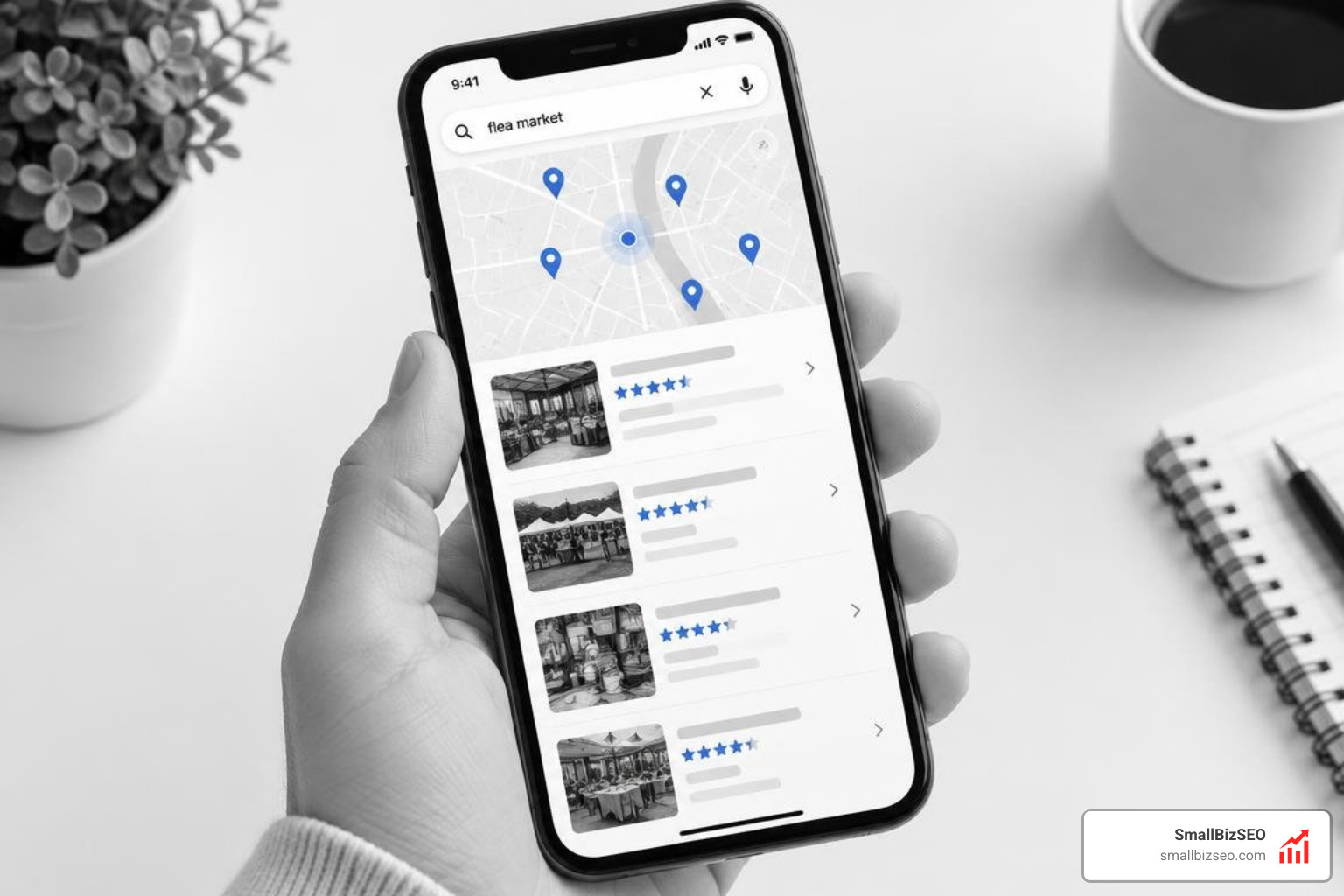
Connecting digital discovery to physical footfall requires optimizing every step of the local user journey. If an eager collector searches for mid-century furniture or vintage jewelry, your site must confirm immediately that your vendors have what they want and that your gates are open.
Why Is SEO for Flea Markets Critical for Attracting Shoppers and Vendors?
SEO helps shoppers discover weekend dates while giving antique dealers and makers a clear path to apply for open booths. A vibrant community event cannot thrive on word-of-mouth alone. Organic search delivers sustainable, recurring traffic without requiring daily advertising spend.
Understanding why getting found matters allows operators to capture two distinct audiences simultaneously:
- High-Intent Shoppers: People searching for terms like "flea markets open this Sunday" or "antique markets near me."
- Quality Vendors: Small business owners searching for phrases like "rent a flea market booth" or "outdoor craft market vendor applications."
Following established SEO best practices for classified websites ensures your listings rank for long-tail item searches rather than just your brand name. When a shopper looks for collectible vinyl or retro clothing, your market's indexed stall directories can surface directly at the top of the search engine results page (SERP).
How Do You Optimize Local Search and Maps for Weekend Markets?
To capture map searches, claim and optimize your Google Business Profile, maintain exact directory listings, and weave geo-targeted terms into your page content.
Our local SEO guide outlines how neighborhood signals influence map visibility. Because flea markets operate on specific days, setting primary hours alongside special event hours prevents disappointed visitors from arriving on closed days.
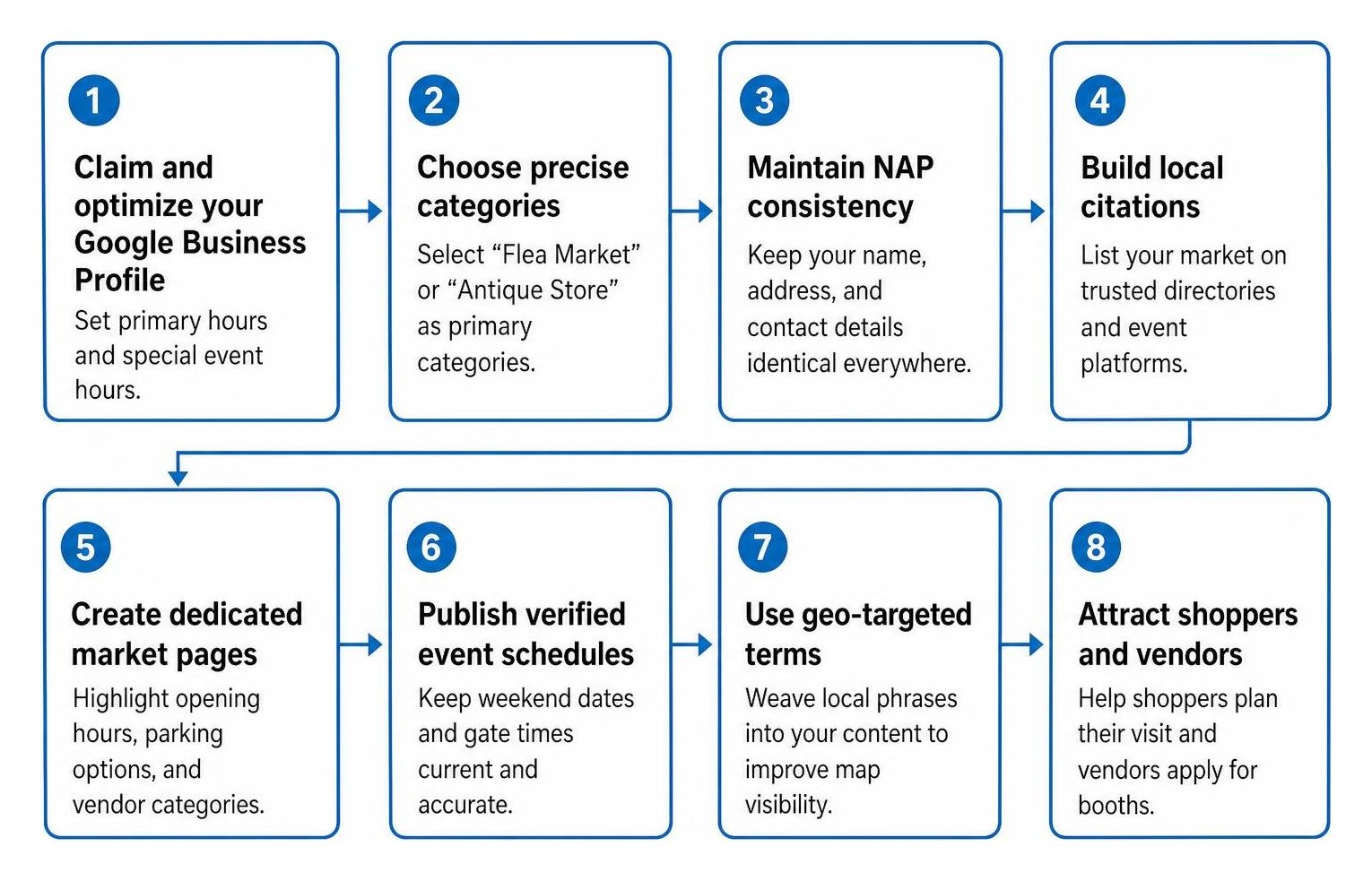
Building local citations reinforces geographical authority. Search algorithms cross-reference your details across trusted external directories to verify that your market is an established venue.
To improve your standing in map results:
- Follow our local map visibility guide to choose precise primary categories like "Flea Market" or "Antique Store."
- Maintain strict NAP consistency standards so your name, address, and contact numbers match identically across event platforms.
- List your venue on local tourism portals, neighborhood directories, municipal event calendars, and classified aggregators.
- Encourage happy visitors to leave detailed reviews mentioning specific items they bought.
What Structured Data and Event Schema Can Flea Markets Use in Search Results?
Event structured data communicates your exact dates, operating hours, ticket costs, and venue coordinates to search engines in a format they understand directly. Adding JSON-LD markup to your website does not guarantee visual rich snippets, but it provides the explicit data search algorithms require to feature your dates in interactive event carousels.
Pairing event schema with proven on-page SEO techniques ensures search bots index both your recurring weekend dates and your permanent location profile.
| Schema Property | LocalBusiness Schema | Event Schema | Practical Purpose |
|---|---|---|---|
@type |
FleaMarket or LocalBusiness |
Event or SaleEvent |
Identifies the physical venue vs. a specific scheduled market date. |
name |
Market Venue Name | Specific Event Name | Distinguishes the overall brand from themed or seasonal market days. |
startDate |
Regular opening hours | ISO 8601 Date & Time | Signals to search engines the exact opening bell for the weekend. |
endDate |
Regular closing hours | ISO 8601 Date & Time | Informs algorithms when the event concludes to remove expired badges. |
location |
Physical Postal Address | Place / Virtual Location | Anchors map coordinates to guide navigation apps. |
offers |
General price ranges | Admission / Booth Fees | Clarifies entry pricing or stall rental rates for shoppers and vendors. |
Implementing clean structured data gives your listings a distinct visual advantage over competitor sites that rely solely on unformatted plain text.
How Can You Build Technical and Programmatic SEO for Flea Markets at Scale?
For operators managing regional directories, multi-location swaps, or expansive vendor rosters, programmatic SEO creates dedicated, indexable pages for each city, neighborhood, and product category.
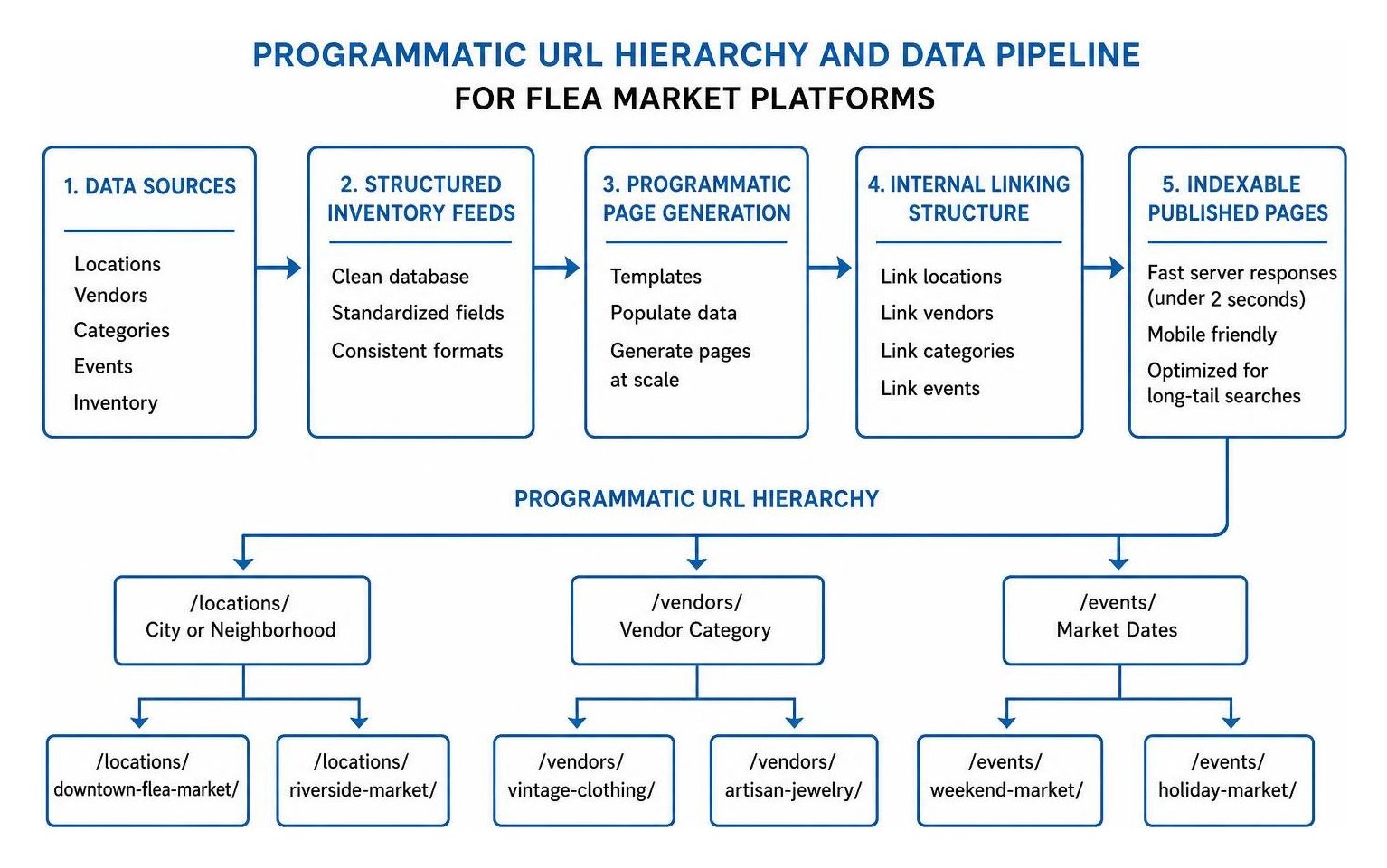
Scaling a directory without writing hundreds of manual articles requires a clean database and strong internal links. By combining structured inventory feeds with strategic SEO content marketing, you can automatically generate pages targeting long-tail searches like "artisan market booths" or "vintage clothing pop-ups."
To maintain crawl efficiency and prevent thin-content penalties:
- Build clean URL structures such as
/locations/downtown-flea-market/and/vendors/vintage-clothing/. - Ensure server responses load in under two seconds on mobile networks.
- Include unique, dynamically populated vendor counts, amenity details, and interactive maps on every page to prevent duplicate content flags.
- Monitor your indexation rates in Google Search Console to resolve crawl errors quickly.
How Can Vendor Profiles and Customer Content Build Market Authority?
Publishing detailed profiles for your permanent and visiting sellers creates fresh, keyword-rich content that builds search relevance for niche items.
When vendors list their curated specialties—such as antique watches, handmade pottery, or upcycled denim—your site begins ranking for high-intent collector queries.
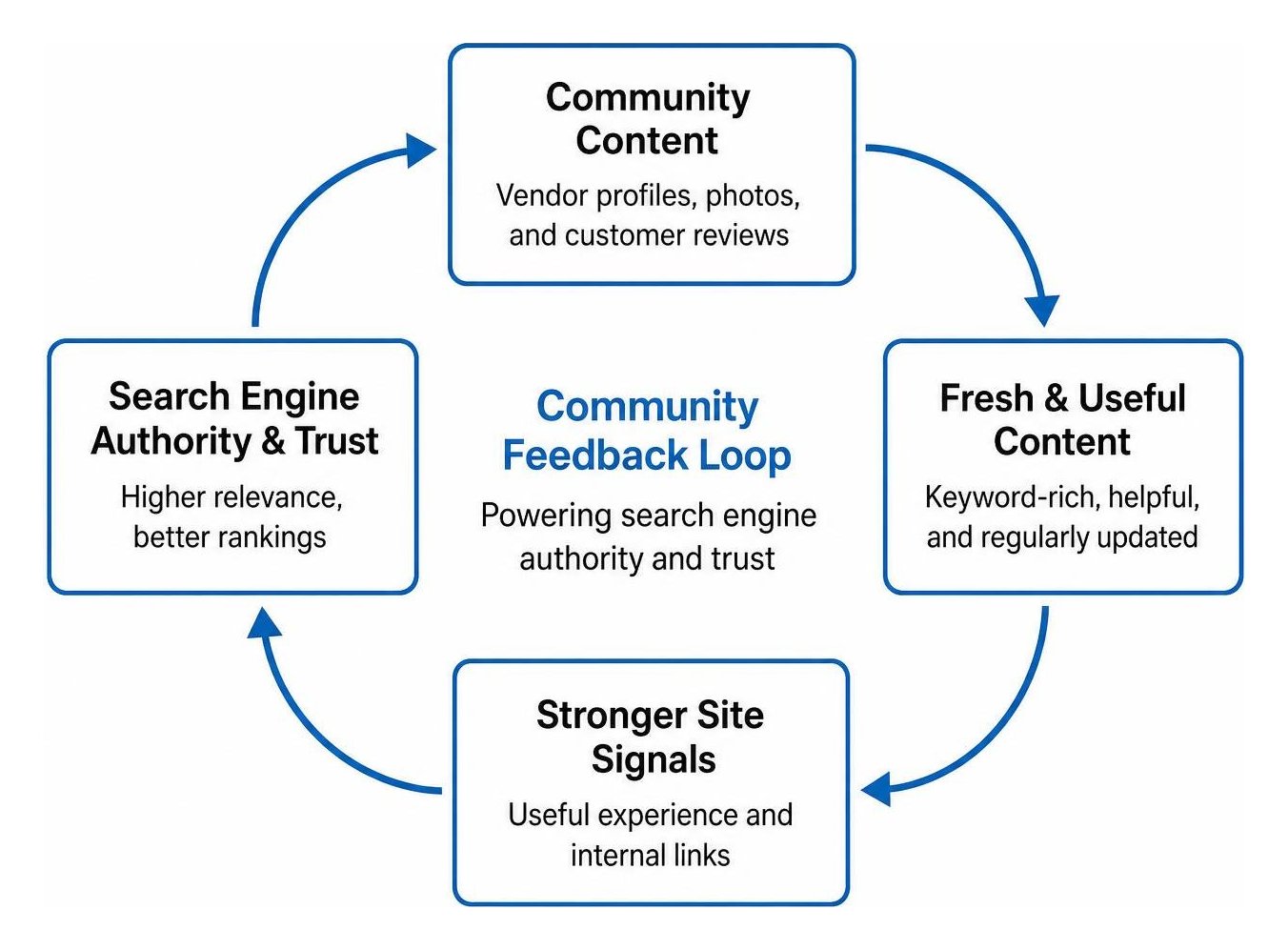
Integrate user-generated content by encouraging shoppers to upload photos and leave reviews. Adding an interactive vendor map makes the site genuinely useful for visitors while establishing strong internal links between vendor profiles and main category pages.
What Search Optimization Mistakes Should Flea Market Organizers Avoid?
Flea market websites frequently lose rankings due to outdated seasonal schedules, unindexed dynamic scripts, or slow-loading photo galleries that frustrate mobile users.
Run through this quick audit checklist to keep your market visible:
- Expired Dates: Do not leave old event dates in page titles or meta descriptions; update them before the upcoming weekend.
- Duplicate Listings: Prevent search engines from indexing duplicate vendor pages created by URL tracking tags.
- Uncompressed Imagery: High-resolution stall photos must be compressed into lightweight WebP formats with descriptive alt text.
- Missing Local Schema: Always test your JSON-LD code in structured data testing tools to catch missing fields before publishing.
- Mobile Usability: Test touch targets, vendor search bars, and navigation links on phones to ensure shoppers can browse effortlessly on the go.
Charting Your Path to Greater Market Visibility
Auditing your technical structure, refreshing local map profiles, and applying structured event data ensures your stalls stay packed with buyers every weekend. Expanding your digital footprint transforms fleeting neighborhood events into reliable, year-round destinations for vintage lovers and vendors alike.
If you are ready to expand your market's reach, partner with a dedicated flea markets SEO company that understands local search dynamics. Let our team evaluate your current rankings and build an actionable growth roadmap tailored to your venue by requesting a comprehensive SmallBizSEO visibility audit today.