4 Surprising Ways Attribution Model Changes Alter Reported Organic Conversions
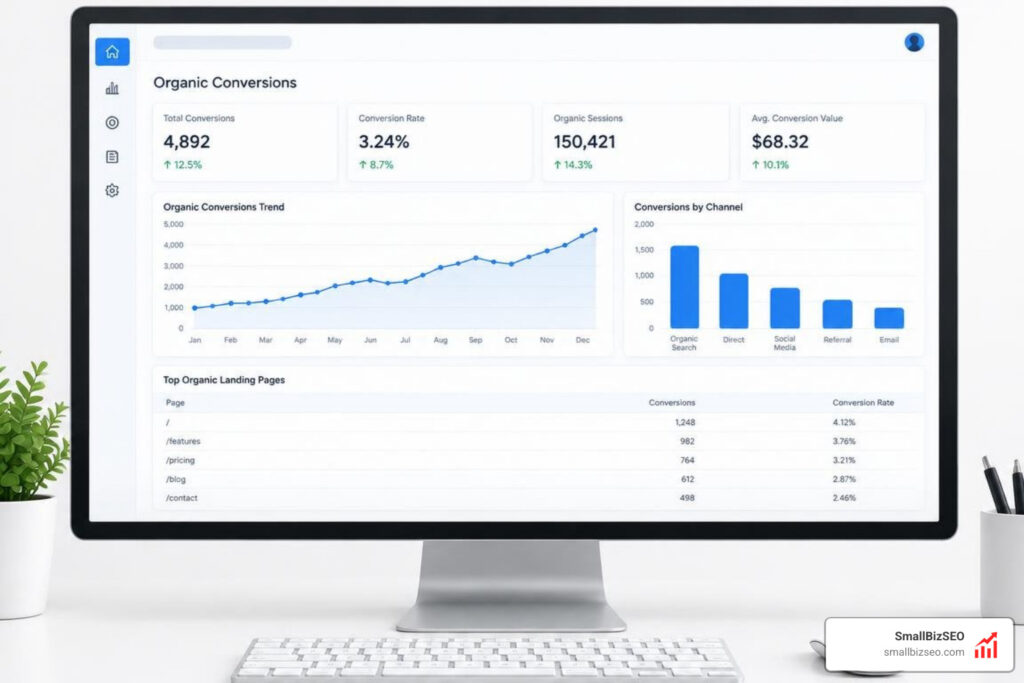
Why can organic conversions change when your traffic does not?
Changing an attribution model changes which channel gets credit for a conversion. Organic search may gain or lose reported conversions even when the number of leads or sales stays the same. To check how attribution model changes affect reported organic conversions, compare the same dates and conversion events under both models. Then check organic sessions and your actual leads or sales before calling the shift an SEO gain or loss.
I’m Clayton Johnson, founder of SmallBizSEO, where I help small businesses connect search visibility with qualified leads through SEO and clear reporting. That work shapes how I explain how attribution model changes affect reported organic conversions and how to check the numbers before making decisions.
How Do Attribution Model Changes Affect Reported Organic Conversions Across Analytics Tools?
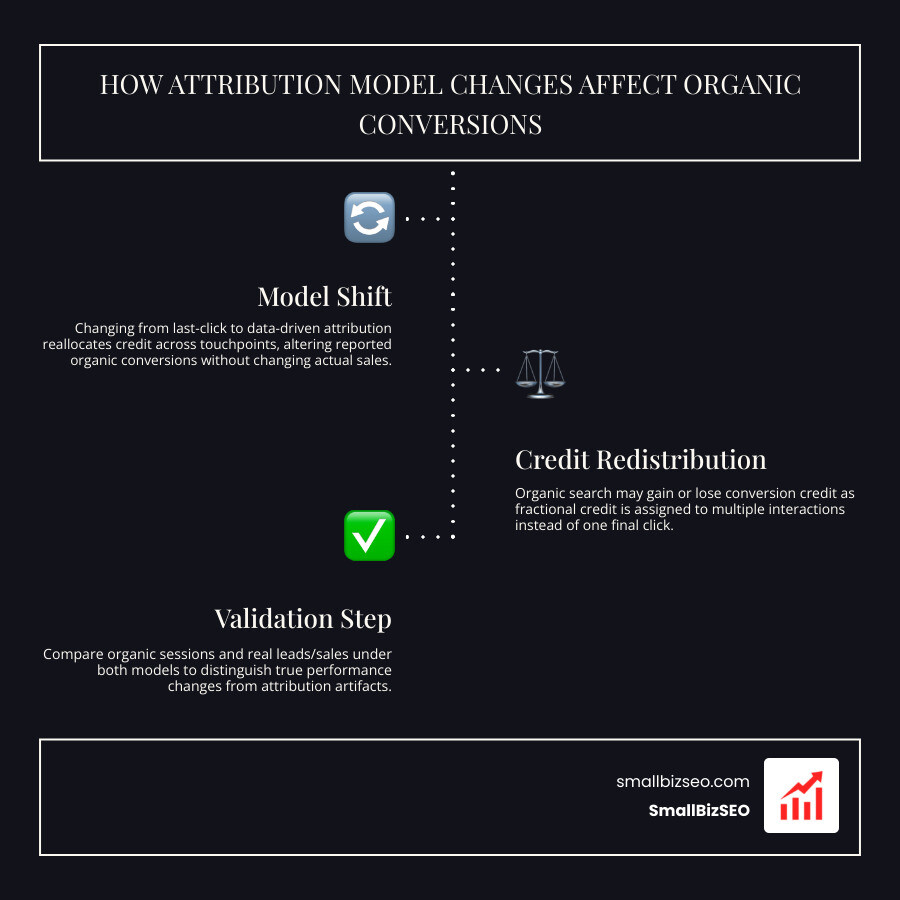
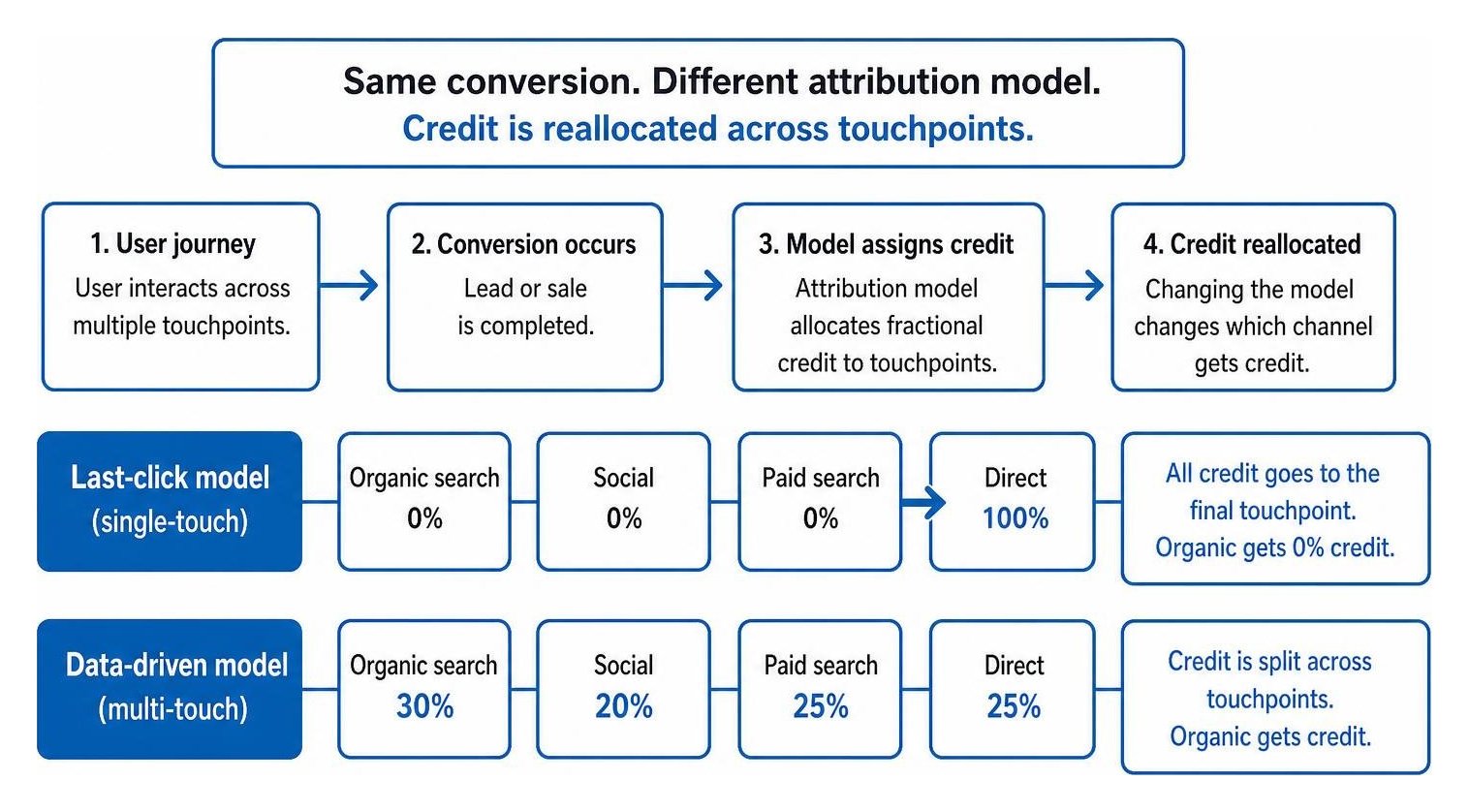
An attribution model update reallocates conversion credit across customer touchpoints rather than altering the total volume of business outcomes. When analytics platforms shift from rule-based rules to algorithmic models, reported organic conversion metrics change because credit is split among multiple interactions instead of being assigned entirely to a single channel.
Historically, standard web analytics platforms credited conversions using single-touch rules. Legacy rules like first-click, linear, time decay, and position-based historically accounted for less than 3% of web conversion paths before major platforms deprecated them in favor of machine learning models.
Modern platforms use machine learning algorithms that evaluate both converting and non-converting user paths. These data-driven models evaluate device type, ad format, interaction sequence, and time lag to calculate fractional credit. As a result, switching models alters your conversion reporting columns even when actual website performance remains identical.
| Attribution Model | How Credit Is Assigned | Typical Impact on Reported Organic Conversions | Best Use Case |
|---|---|---|---|
| Last-Click (Non-Direct) | 100% of credit goes to the final non-direct marketing touchpoint. | Devalues top-of-funnel organic search; artificially inflates direct or retargeting channels. | Simple, transactional e-commerce with same-day purchase cycles. |
| Position-Based (U-Shaped) | 40% to first touch, 40% to lead creation touch, 20% split among middle interactions. | Highlights organic search discovery while maintaining credit for conversion actions. | Multi-touch sales journeys and content-driven lead generation. |
| Linear | Equal credit divided evenly across every recorded touchpoint in the path. | Moderately increases organic visibility across long research phases. | General overview reporting across equal-impact marketing campaigns. |
| Data-Driven (Algorithmic) | Machine-learning models dynamically assign fractional credit based on statistical lift. | Distributes decimal conversions across channels; organic credit adjusts based on actual path influence. | High-volume properties with at least 400 conversions and 10,000 paths per event type. |
Why Do Reported Organic Conversions Drop After Switching to Data-Driven Attribution?
Reported organic conversions often decline after switching to data-driven attribution because the model distributes fractional credit to earlier or later paid, video, and social touchpoints instead of giving 100% of the conversion to the closing organic search visit.
Under traditional last non-direct click rules, an organic search session that directly preceded a purchase received full credit. Data-driven attribution evaluates whether an earlier display impression, social engagement, or paid ad interaction influenced the user. If the machine learning model determines those earlier touchpoints increased the statistical probability of conversion, it assigns fractional values (such as 0.42 conversions) to organic search and shares the remainder across other channels.
Reviewing About attribution models - Google Ads Help reveals that data-driven rules require at least 300 conversions and 3,000 interactions within a rolling 30-day window to maintain algorithmic stability. When evaluating a dip in organic conversion volume, first inspect your assisted conversion data and baseline organic sessions. If search traffic, page rankings, and total inbound leads remain steady, the drop is simply a mathematical reallocation of credit.
How Do Attribution Model Changes Affect Reported Organic Conversions in Multi-Touch Funnels?
In multi-touch customer funnels, changing attribution models dramatically alters how top-of-funnel organic discovery is valued compared to bottom-of-funnel closing channels. Under single-touch last-click rules, businesses systematically undervalue organic search by 30% to 60% because search frequently acts as the initial research vehicle.

Complex sales cycles rarely involve a single visit. A prospect might discover an informative technical guide via organic search, revisit the website days later through a branded search query, download an asset, and eventually convert weeks later after clicking a remarketing ad or direct bookmark.
When organizations rely on last-touch tracking, closing channels capture the full conversion value, artificially driving down the perceived efficiency and increasing the apparent cost per lead for SEO. Switching to multi-touch or data-driven attribution models distributes credit across the entire research phase, revealing how early organic interactions generate the pipeline that downstream channels ultimately close.
How Do Lookback Windows and Channel Drift Distort Organic Search Value?
Attribution lookback windows define the timeframe during which past user interactions can receive credit for a conversion event, and changing these window boundaries can distort recent performance data. Standard analytics properties often default to a 30-day window for acquisition events and 90 days for general conversions.
When platforms shorten or adjust lookback windows, conversions that take weeks to develop are prematurely disconnected from their initial organic touchpoints. For businesses with multi-week research cycles, removing longer lookback windows can cause conversion reporting to show 20% to 40% fewer attributed outcomes overnight, despite real-world revenue remaining unchanged.
Furthermore, conversion values take time to stabilize. A multi-touch model back-dates fractional credit to the date of the initial touchpoint, making recent weekly data look artificially low until the full conversion cycle passes. Additionally, you must audit past traffic attribution reports to separate https facts from fiction to prevent direct traffic misclassification, which occurs when privacy filters or browser parameters strip referral tags and mislabel organic search visits as direct visits.
How Can You Audit and Accurately Report Organic Search Conversions?
To accurately audit and report organic search performance, compare model variations side-by-side in your analytics platform and validate the results against unfiltered traffic and primary CRM records. Verifying the underlying data ensures that choosing a new attribution model reflects genuine SEO ROI and protects reported organic revenue.
How Can You Distinguish Real Traffic Declines from Attribution Artifacts?
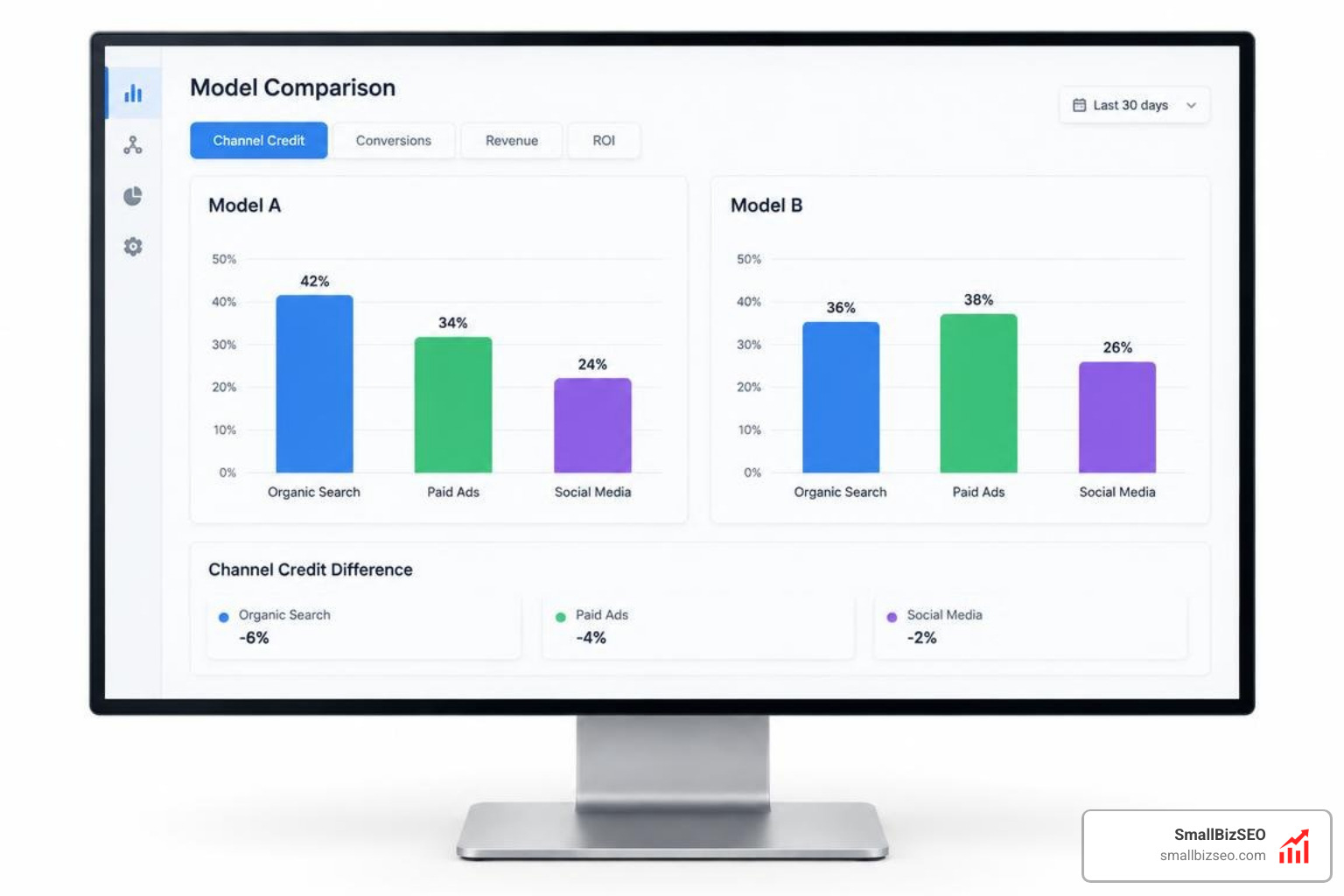
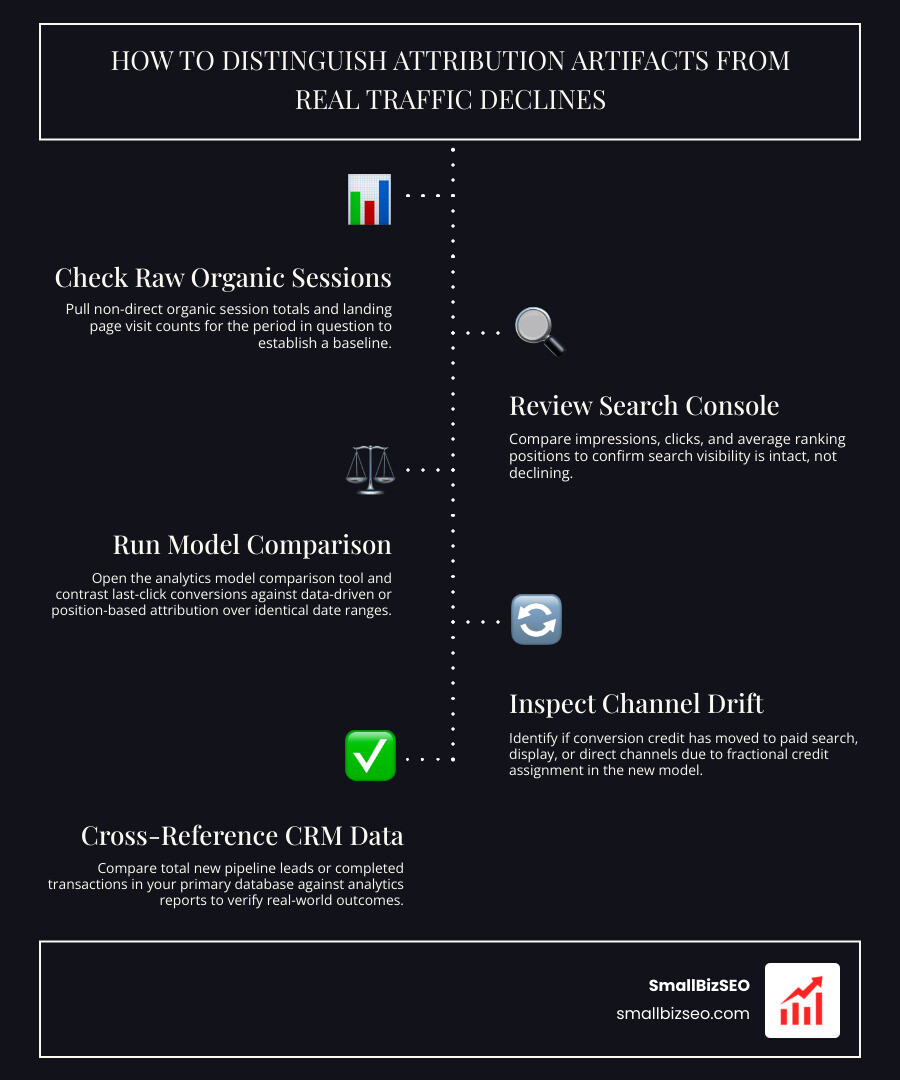
You can distinguish a true organic traffic decline from an attribution artifact by benchmarking raw session data and Search Console click volume against your conversion metrics. If organic visits remain steady while attributed conversions drop, the change is an attribution artifact.
Follow this systematic audit workflow to isolate reporting changes:
- Extract Raw Organic Sessions: Pull non-direct organic session totals and landing page visit counts for the period in question.
- Review Google Search Console Data: Check organic impressions, clicks, and average ranking positions to confirm search visibility is intact. If traffic dropped, use why did clicks tank a pre refresh diagnostic checklist for marketers to audit technical factors.
- Open the Model Comparison Tool: Compare last-click conversions directly against data-driven or position-based conversions over identical date ranges.
- Inspect Channel Drift: Identify whether conversion share moved to paid search, display, or direct channels due to fractional credit assignment.
- Cross-Reference Backend CRM Leads: Compare total new pipeline leads or completed transactions in your primary database against analytics reports.
How Can You Communicate Attribution Shifts to Stakeholders and Protect SEO Investment?
Communicate attribution shifts to stakeholders by focusing on macro business outcomes, explaining that a change in measurement rules does not mean a decline in customer acquisition. Presenting raw traffic alongside pipeline results proves that search remains a vital growth driver.
When reporting to leadership, emphasize that why transparent SEO reporting is non negotiable for growth stage founders centers on separating measurement tools from real-world revenue. Clarify that data-driven models split single conversions into fractional decimals, meaning channel counts will shift while aggregate pipeline value remains identical. Highlight blended customer acquisition cost and total lead generation volume to prevent unnecessary budget cuts to high-performing organic campaigns.
How Can You Set Up Analytics to Measure the Effects of Attribution Model Changes on Reported Organic Conversions?
Configure your measurement platforms by setting appropriate lookback windows, maintaining strict UTM governance, and integrating backend CRM events into your analytics property. Proper tracking architecture ensures your reporting captures every meaningful search touchpoint.
Begin by navigating to your analytics attribution settings and selecting a 90-day lookback window for key conversion events to capture extended consideration paths. Standardize UTM parameters across all paid, email, and social campaigns to ensure non-organic traffic is never misallocated to organic search. Integrate native CRM milestones into your tracking property so downstream sales stages receive fractional credit alongside initial web forms.
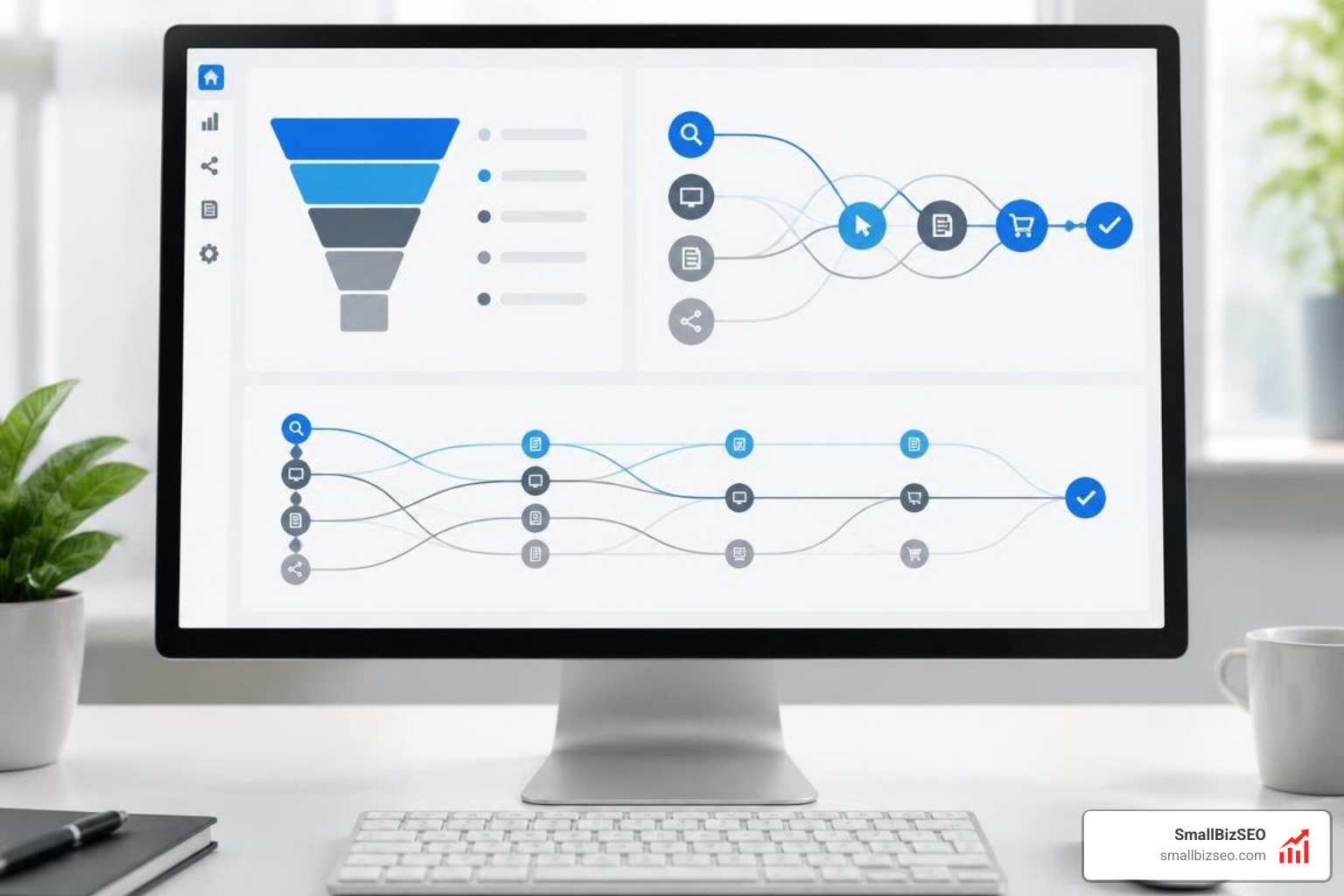
Finally, construct automated SEO performance reports that display both first-user acquisition metrics and session-level conversion outcomes side-by-side. Tracking both entry discovery and closing interactions provides an accurate, unskewed view of your organic search performance.
Practical Next Steps for Accurate Conversion Tracking
Attribution models are measurement frameworks, not indicators of actual market demand. When platform updates or algorithmic shifts alter your reported numbers, rely on baseline sessions, keyword visibility, and backend sales data to evaluate your true performance. By auditing your conversion paths, setting realistic lookback windows, and communicating model mechanics clearly to stakeholders, you ensure your organic search strategy continues driving sustainable business growth.