A Practical Guide to Finding Evergreen Topics for Seasonal Niches

How do you find evergreen topics in a seasonal niche?
When choosing evergreen topics for businesses with seasonal demand, start with customer questions that matter before, during, and after the busy season. Check at least a year of search trends for steady interest, then choose topics that connect to what you sell. A pool supply store, for example, could pair a year-round guide to pool water care with a seasonal guide to opening a pool in spring.
That approach gives customers a reason to find you between peak periods while keeping your seasonal content focused on timely needs. It can also help build a steadier flow of relevant visits and leads, though results depend on demand and how well the content serves customers.
I’m Clayton Johnson, founder of SmallBizSEO. My work in SEO and content strategy shapes how I approach choosing evergreen topics for businesses with seasonal demand: start with real customer questions, then use search data to test which answers are worth creating.
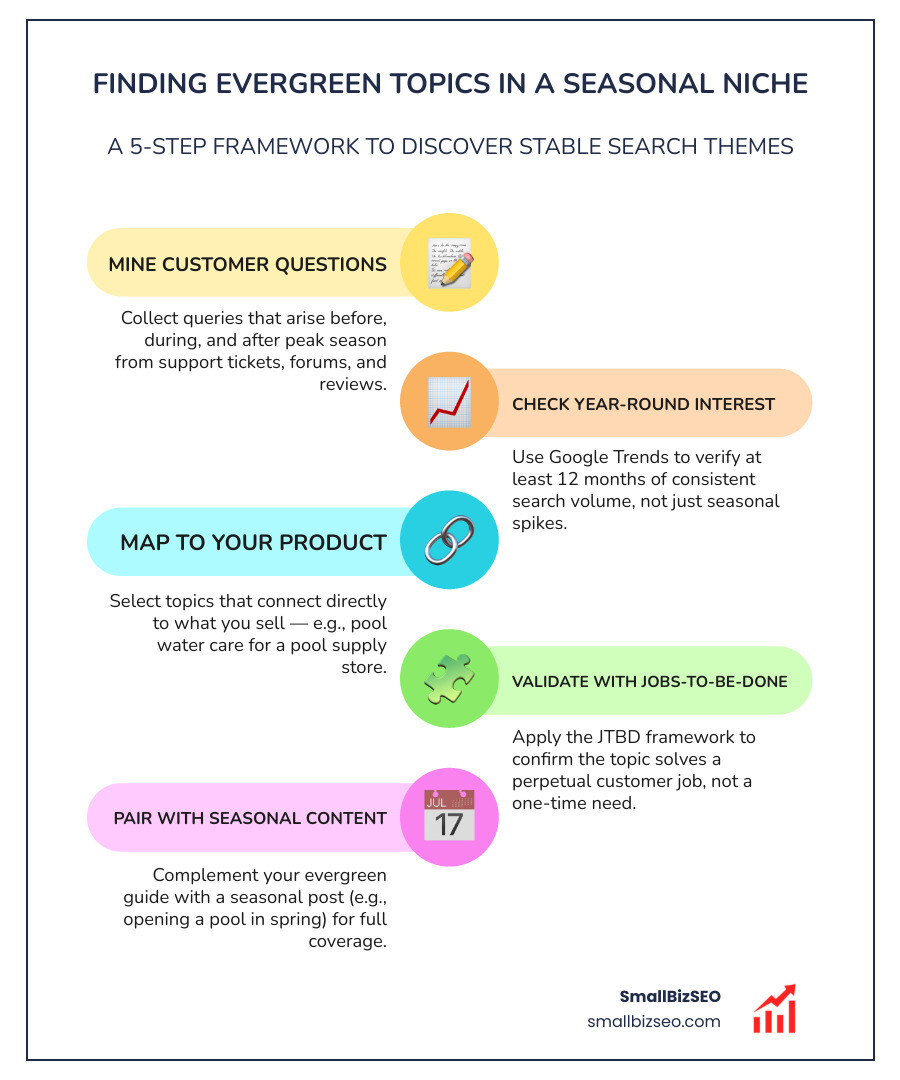
Framework for Choosing Evergreen Topics for Businesses with Seasonal Demand
To build steady organic traffic in a cyclical business, you must separate your seasonal sales triggers from your customers' perpetual problems. An evergreen topic is any subject where search interest, core principles, and audience relevance remain stable across all twelve months.

While seasonal articles capture intense, short-term demand during peak holidays or specific weather windows, evergreen articles generate three to five times more cumulative traffic over their lifecycle. Our data-driven framework balances immediate demand surges with lasting topical visibility. Developing comprehensive SEO for topical authority requires answering the foundational questions your prospects research long before they enter an active buying cycle.
Understanding evergreen content creation fundamentals means recognizing that customer intent changes with the calendar. During peak periods, search intent leans heavily transactional. During the off-season, that same audience searches for maintenance advice, troubleshooting, planning frameworks, and comparative research. Aligning your product quality and customer expectations during these educational touchpoints establishes early trust, lowering return rates and driving repeat business when peak buying resumes.
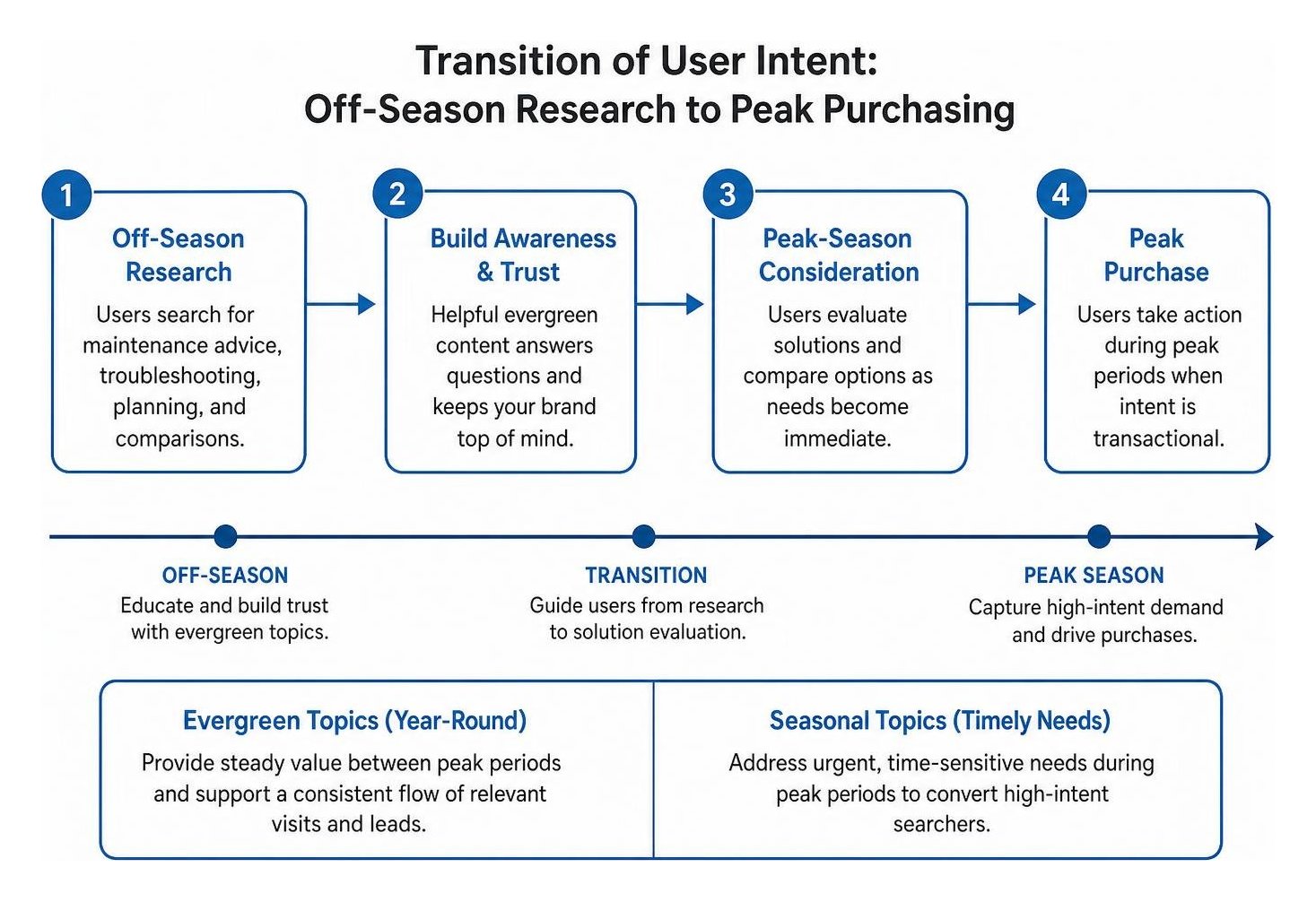
How to Identify Enduring Audience Pain Points Behind Peak Seasonal Surges
To uncover timeless topics within a cyclical niche, extract the underlying Job-to-be-Done (JTBD) that exists before and after the purchase. Customers do not simply buy a seasonal product; they invest in a broader lifestyle, hobby, or business objective that requires continuous maintenance and education.
For instance, an e-commerce retailer selling winter ski equipment can target year-round search queries around physical conditioning for winter sports, equipment storage techniques, and base layer fabric selection. These informational hubs keep the brand top of mind during spring and summer lulls.
Organizing these supporting assets into a structured content hub connects broader informational guides to high-converting product pages. Effective evergreen assets for seasonal businesses include:
- Comprehensive buying guides and sizing manuals that prevent post-purchase returns
- Preventative maintenance tutorials and storage checklists
- Foundational skill-building courses and explainer articles
- Diagnostic troubleshooting workflows and calculators
By answering these persistent pain points, you transform one-time seasonal buyers into loyal subscribers and repeat customers.
What Data Signals Guide Choosing Evergreen Topics for Businesses with Seasonal Demand?
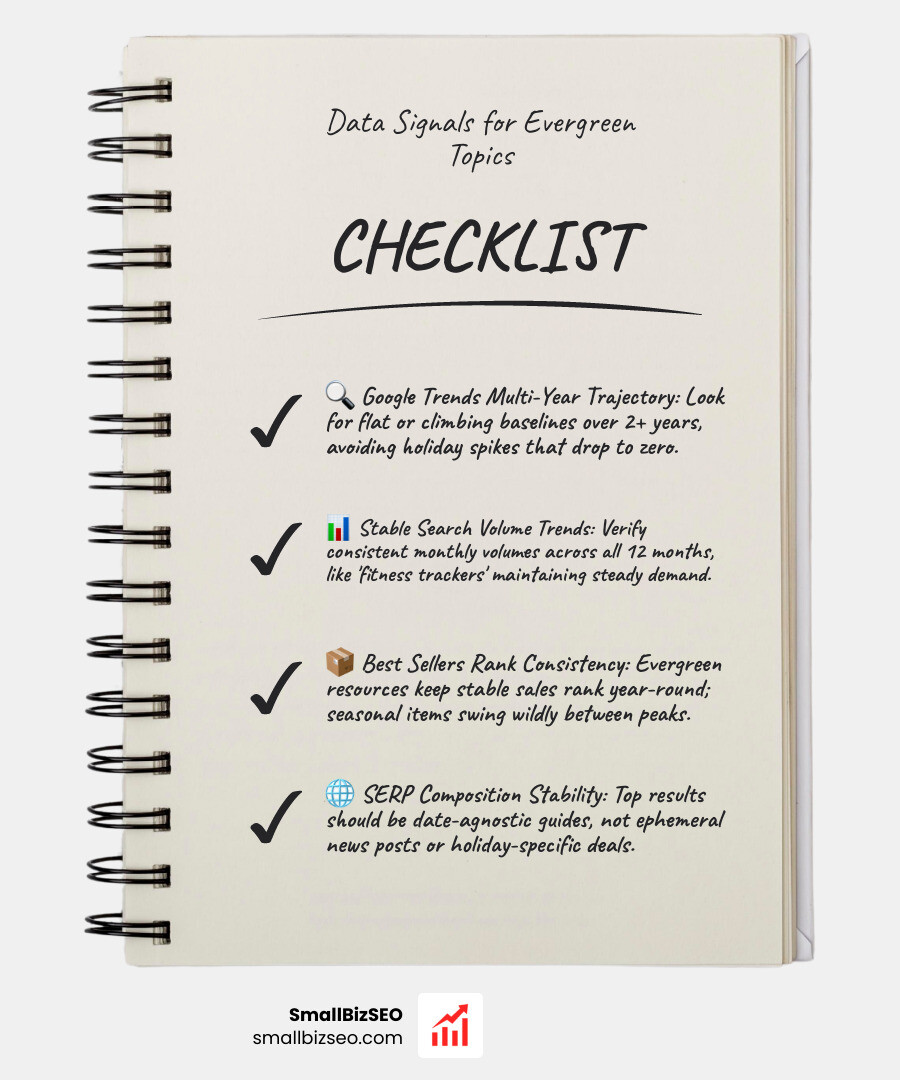
Validating evergreen search demand requires evaluating objective historical data rather than assuming what your audience needs. Before writing, test target topics against several key performance indicators:
- Google Trends Multi-Year Trajectory: Look for queries displaying a flat or steadily climbing baseline over multiple continuous years, avoiding topics with severe holiday spikes that plummet to zero.
- Stable Search Volume Trends: Verify consistent search volume across a full twelve-month cycle. Queries like "fitness trackers" maintain steady demand, pulling in tens of thousands of monthly searches regardless of the season.
- Best Sellers Rank (BSR) Consistency: For physical products and low-content publishing, track sales velocity benchmarks. A seasonal item might see its sales rank swing wildly between peak and off-peak months, whereas an evergreen resource maintains a stable rank throughout the year.
- SERP Composition Stability: Analyze top search engine results to confirm that high-ranking URLs consist of established, date-agnostic guides rather than ephemeral news posts or holiday-specific deals.
- Historical Traffic Baselines: Cross-reference past analytics using proven SEO seasonality strategies and tracking to evaluate year-over-year performance curves rather than month-over-month snapshots.
What Is the Optimal Content Mix for Retail, B2B, and E-Commerce Businesses?
No single content ratio fits every organization. The ideal balance between evergreen authority assets and time-sensitive seasonal campaigns depends directly on your business model, customer sales cycles, and revenue concentration.
| Business Model | Recommended Evergreen Ratio | Recommended Seasonal Ratio | Primary Content Focus |
|---|---|---|---|
| Retail & Direct-to-Consumer | 30% – 40% | 60% – 70% | Care guides, sizing charts, gift hubs, and holiday promos |
| B2B & Professional Services | 70% – 80% | 20% – 30% | Foundational frameworks, how-to hubs, and fiscal planning |
| Publishing & Content Creators | 50% – 60% | 40% – 50% | Core educational tutorials, roundups, and trend updates |
| Local Services | 60% – 70% | 30% – 40% | Service explainers, pricing FAQs, and seasonal prep |
Direct-to-consumer retail brands that generate the vast majority of their annual sales during peak quarters must allocate sufficient resources to timely promotional pushes while keeping core buying guides active. Conversely, B2B organizations thrive on steady lead generation, requiring a disciplined content planning process that prioritizes compounding informational assets supported by timely industry commentary.
Maintaining Evergreen Content Authority and Measuring Long-Term ROI
Evergreen content produces compounding financial returns by permanently lowering your customer acquisition cost (CAC). Unlike seasonal paid campaigns where traffic drops immediately when ad spend stops, a well-optimized evergreen asset amortizes its production cost over time, delivering continuous organic visits, backlinks, and qualified leads.

Measuring the long-term value of your evergreen content strategy requires tracking page-level pipeline contribution, assisted conversions, and brand authority signals. At SmallBizSEO, our data-driven Velocity framework tracks organic keyword velocity and E-E-A-T signals to ensure every content asset delivers tangible, measurable business growth.
How Does AI Search Influence Evergreen Content Maintenance and Updates?
Modern search engines and AI answer engines have changed how evergreen topics must be maintained. High-performing content is no longer a set-it-and-forget-it asset. Modern AI search models operate with an effective citation shelf life of roughly thirteen weeks for pages without active maintenance.
Pages updated within thirty days earn three times more AI citations than content left untouched for several months. Substantive updates—such as expanding analysis, adding fresh examples, or clarifying explanations—earn nearly four times more citations than superficial timestamp refreshes.
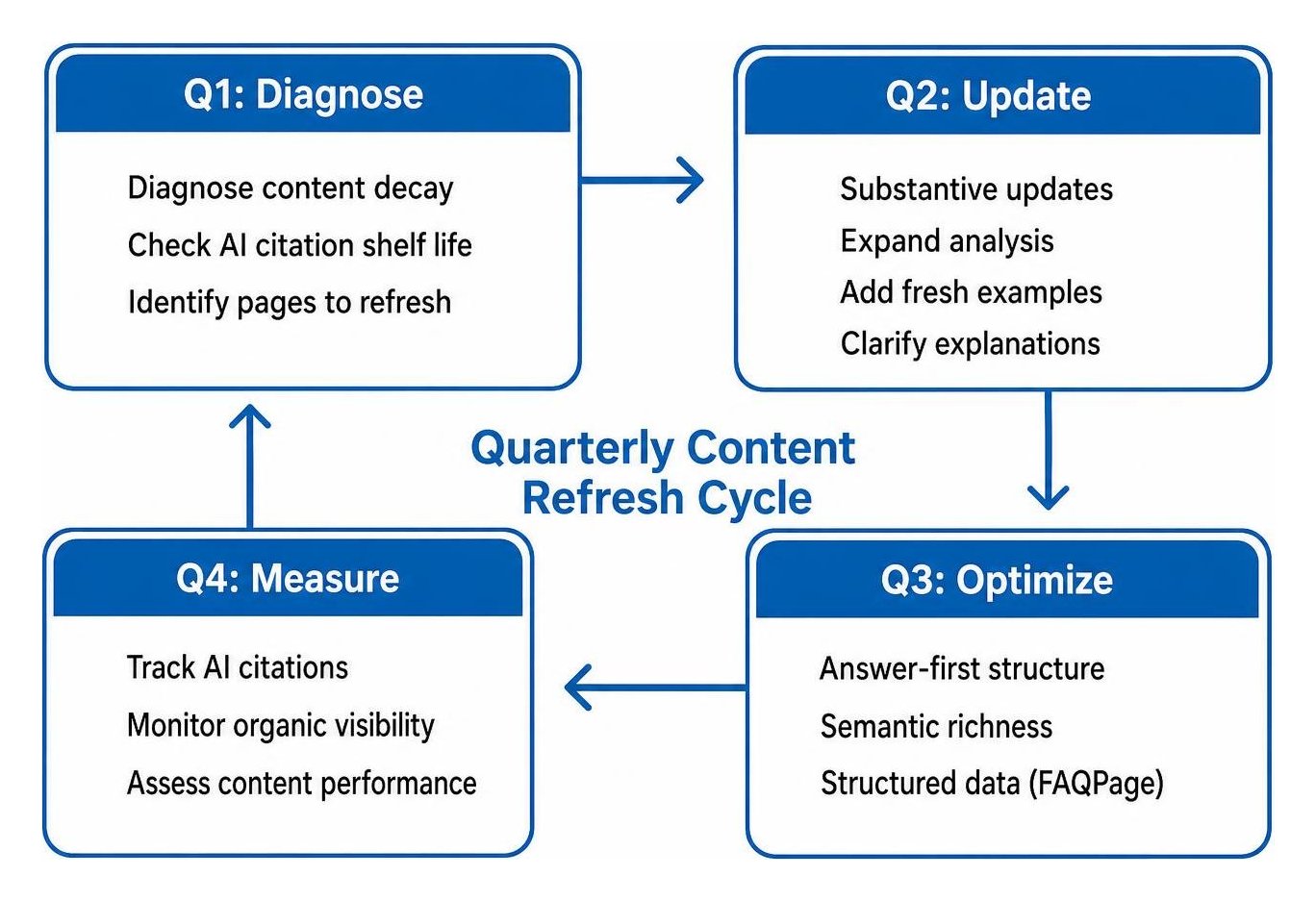
Regularly diagnosing content decay keeps your key pages competitive. Follow these best practices to maintain search visibility across AI answer engines:
- Answer-First Structure: Place concise, direct answers within the top third of the page, where over forty percent of AI search citations originate.
- Semantic Richness: Naturally incorporate fifteen or more recognized semantic entities and related subtopics to strengthen topical depth.
- Structured Data: Implement FAQPage schema markup to provide search engines with clean, machine-readable question-and-answer pairs.
- Visible Timestamps: Clearly display last-modified dates to signal currency to search engine crawlers.
What Common Mistakes Happen When Choosing Evergreen Topics for Businesses with Seasonal Demand?
When transitioning from reactive seasonal publishing to an evergreen model, businesses frequently run into structural errors that dilute organic search performance.
- Forcing Seasonal Angles into Evergreen Assets: Adding specific holiday references or temporary promotions to foundational tutorials dates the content and reduces search relevance during the off-season.
- Using Date-Stamped URLs: Publishing evergreen guides on URLs with specific year tags splits backlink equity over time. Always use stable, date-agnostic URLs that can be updated annually.
- Abandoning Audience Engagement Off-Season: Pausing email communication and content distribution during slow quarters damages brand recall and search visibility right before peak demand begins.
- Neglecting Maintenance: Publishing content without establishing a strategic content calendar that schedules quarterly refreshes leads to gradual ranking decay.
How to Scale Your Year-Round Organic Content Strategy
Building a resilient business means creating digital assets that generate consistent visibility regardless of the calendar. By identifying persistent audience pain points, validating demand through reliable search data, and adhering to a consistent maintenance schedule, seasonal businesses can smooth out revenue volatility and establish enduring domain authority.
If you are ready to identify profitable evergreen topics and build an organic growth engine that delivers reliable traffic every month of the year, our team at SmallBizSEO is here to help you turn strategy into measurable business results.