A Practical Guide to Understanding Brand Visibility Metrics
A Practical Guide to Understanding Brand Visibility Metrics
Search Visibility Is More Than a Ranking
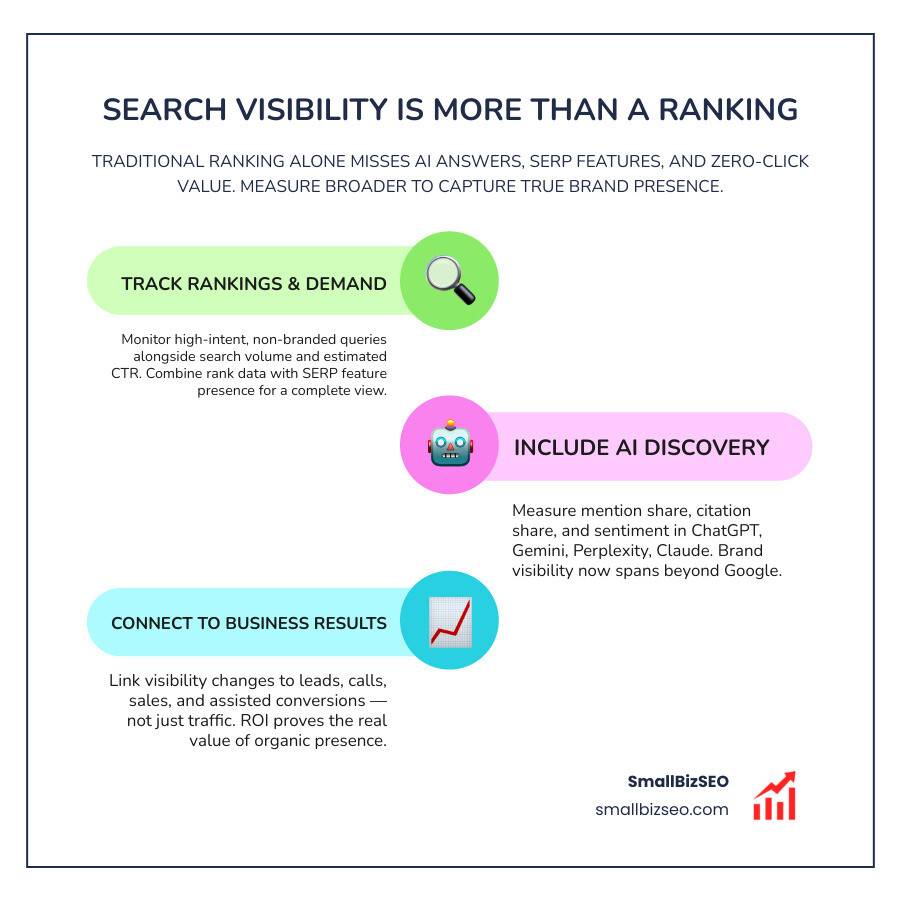
Search visibility measures how often and how prominently your brand appears when people search for topics that matter to your business. It goes beyond checking whether one keyword ranks at position one. A useful visibility view combines rankings, search demand, estimated click-through rate, SERP features, and brand mentions in AI answers.
For a small business, start with three practical measures:
- Track a focused set of high-intent, mostly non-branded queries.
- Compare your share of visibility with the competitors your customers also consider.
- Connect visibility changes to leads, calls, sales, and assisted conversions - not traffic alone.
This matters because a top organic result can now sit below AI Overviews, local packs, videos, product listings, and other features. Many searches also end without a click. Your brand can still gain awareness in those moments, but traditional traffic reports may not show the full value.
Search visibility also now includes AI discovery. Tools such as ChatGPT, Gemini, Claude, and Perplexity may name, recommend, or cite brands differently from Google. That means smart measurement looks at both traditional organic presence and AI mention share, citation share, position in answers, and sentiment.
I am Clayton Johnson, and I use digital PR, SEO, and content strategy to improve search visibility and market presence for growing businesses. In this guide, I will show you how to measure the signals that matter and turn stronger visibility into meaningful business results.
Simple guide to search visibility terms:
Fundamentals of Search Visibility: Definition and Measurement
Search visibility is the estimated share of organic search attention your website captures across a curated group of keywords. Instead of looking at individual rankings in isolation, visibility models calculate your overall market presence by blending keyword rank positions, estimated click-through rates (CTR), and aggregate search volume.
Understanding what is organic search visibility? How to measure and improve it allows you to step back from day-to-day rank fluctuations and evaluate your real brand footprint. While Google Search Console impressions show raw appearances across every query your site touches in the top 100, visibility metrics evaluate the search terms you deliberately target to drive revenue.
To dive deeper into setting up these custom performance indicators, explore our in-depth guide to measuring SEO visibility metrics.
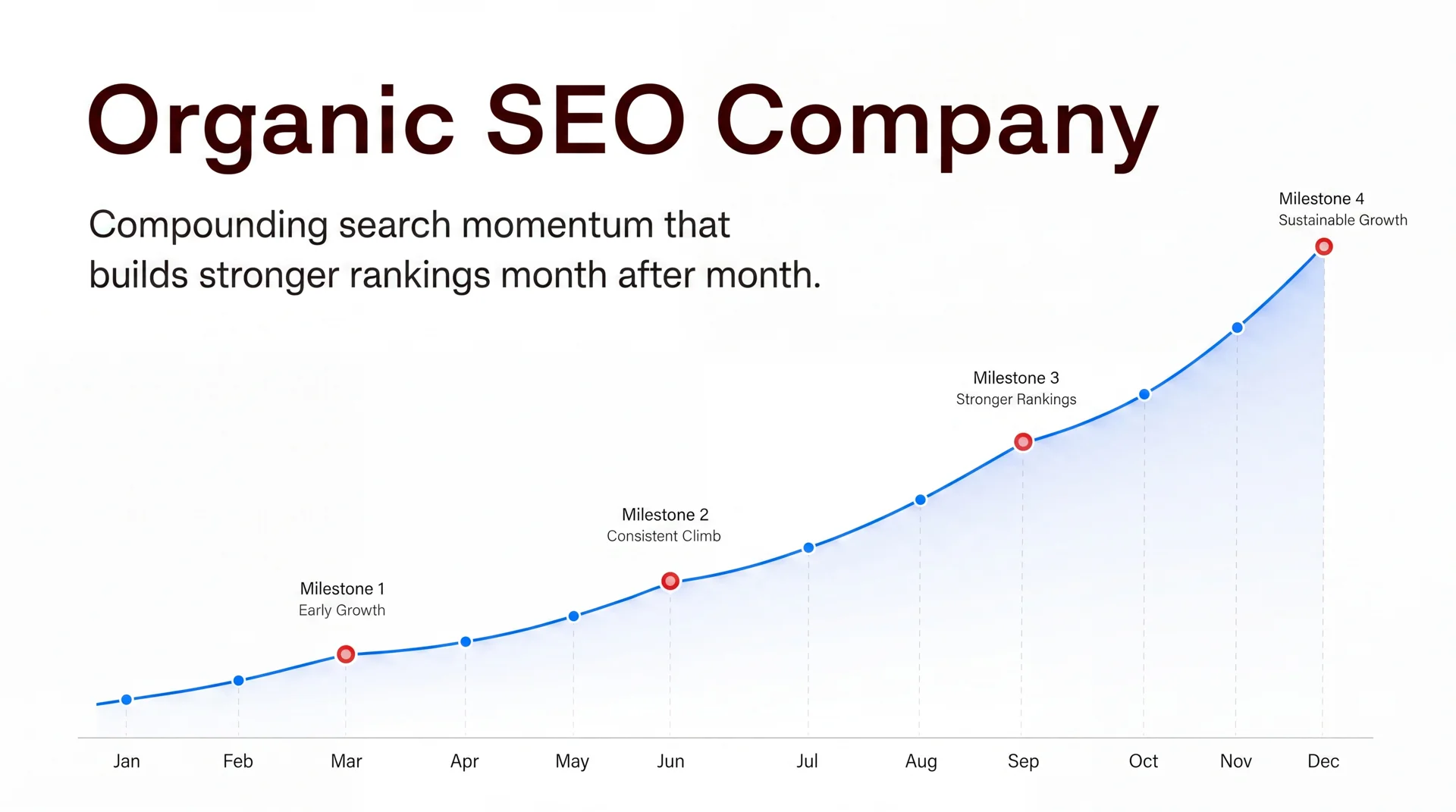
Traditional Keyword Rankings vs. Modern Visibility Scores
Relying solely on single-keyword rank tracking can feel like throwing darts at a moving target. Search engine result pages (SERPs) are volatile, and personalized results mean two users rarely see identical pages.
Visibility scores solve this problem through aggregate weighting. A jump from position 100 to 60 generates virtually zero extra organic visibility, but moving from position 3 to position 1 creates an exponential surge in clicks. Modern visibility calculations weight positions 1 through 10 heavily because top positions capture the vast majority of user engagement, while lower positions receive fractional weight.
Calculating and Benchmarking Your Search Visibility Score
Most tracking platforms calculate visibility by assigning an estimated CTR to each ranking position and multiplying it by keyword search volume.
When establishing your baseline using resources like a quick start guide to Moz visibility score, keep realistic benchmarks in mind:
- 35% to 45% Visibility Score: Represents top-tier market performance for non-branded queries. This range aligns naturally with the average CTR of a position-one URL.
- Above 50%: Exceptional market dominance across a tracked topic cluster.
- 100% Visibility Score: Practically impossible for non-branded keywords, as it requires holding position one for every tracked term while capturing every click.
Benchmark your score against direct competitors rather than chasing an arbitrary number. Tracking relative share of voice over time shows whether your organic footprint is expanding or contracting within your industry.
SEO vs. AEO: Navigating the Shift to AI Discovery
As search technology evolves, discovery splits across two distinct engines: traditional search engines and AI answer engines. This has introduced Answer Engine Optimization (AEO) and Generative Engine Optimization (GEO) alongside standard SEO.
Traditional SEO targets ranked links on a results page. In contrast, AEO and GEO optimize content to ensure your brand is selected, cited, and recommended inside conversational answers generated by large language models (LLMs). Features and workflows detailed in seo-features highlight how modern tracking now monitors brand inclusion in AI platforms alongside standard search results.
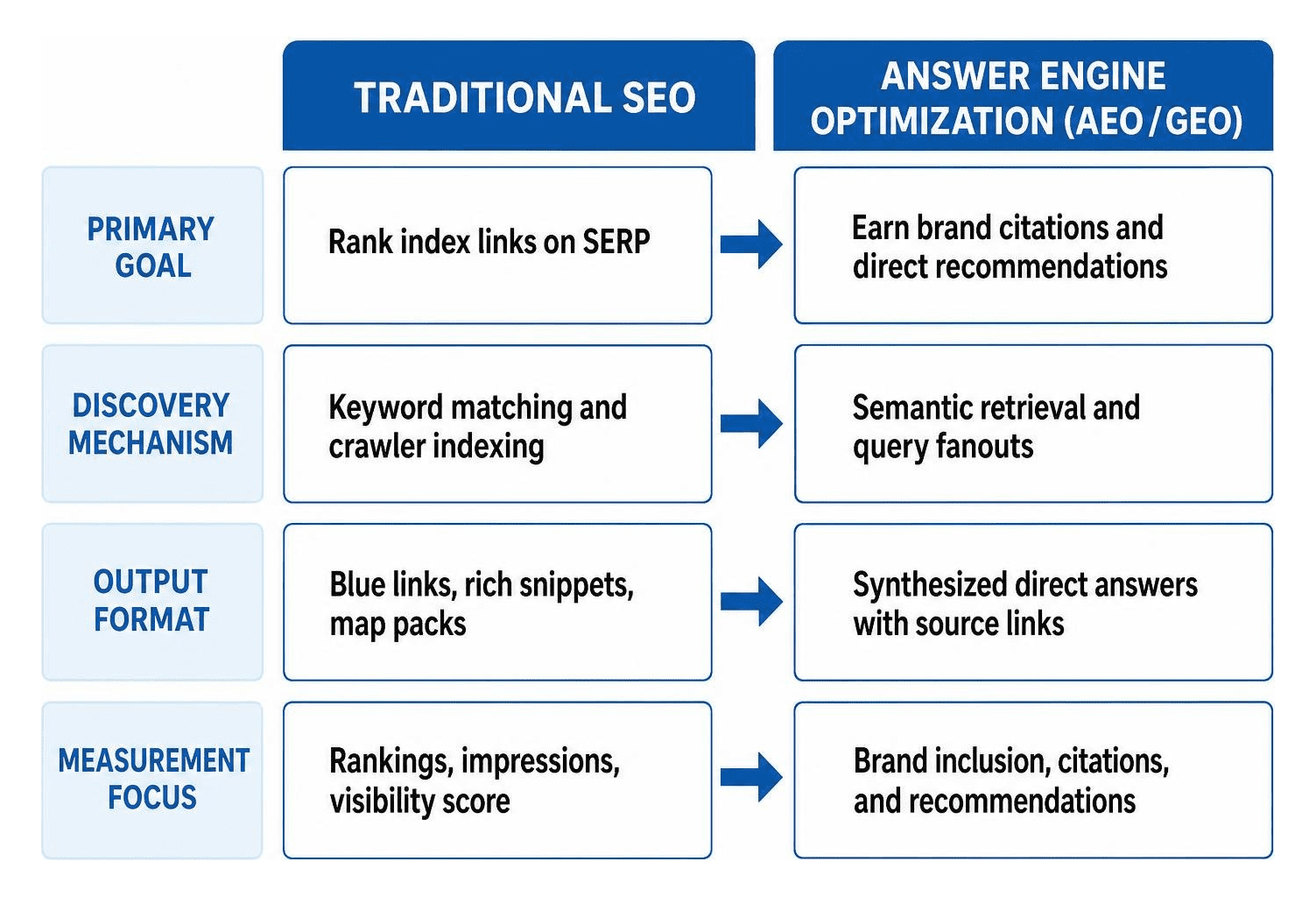
| Factor | Traditional SEO Visibility | AI Search Visibility (AEO / GEO) |
|---|---|---|
| Primary Goal | Rank index links on SERP | Earn brand citations and direct recommendations |
| Discovery Mechanism | Keyword matching and crawler indexing | Semantic retrieval and query fanouts |
| Output Format | Blue links, rich snippets, map packs | Synthesized direct answers with source links |
| Core Measurement | Rank position, CTR, organic sessions | Citation share, sentiment, mention presence |
The Impact of AI Overviews and Zero-Click Queries
Google displays AI Overviews on roughly 14.49% of search results pages, and nearly 60% of searches end without a user clicking through to an external website. When informational queries are answered directly on the SERP, traditional blue links get pushed further down the screen, particularly on mobile devices.
Winning visibility in zero-click environments requires optimizing for rich elements like Featured Snippets, People Also Ask blocks, and AI Overviews. Structuring your content to deliver quick, authoritative summaries establishes brand awareness even when searchers do not immediately click through.
Tracking Brand Mentions and Citation Share in LLMs
Nearly half of all business executives believe AI platforms will become primary tools for business research, and 84% of decision-makers already make purchasing decisions based on an AI platform's first suggestion.
However, studies show that ChatGPT's sources have only a 39% overlap with Google's top organic results. High Google rankings do not guarantee brand presence in AI answers. Answer engines use "query fanouts," breaking single prompts into sub-queries to aggregate sources.
Tracking AI visibility requires monitoring brand sentiment, citation frequency across models like Claude and Perplexity, and reviewing server logs to analyze AI retrieval bot activity. For actionable techniques on mastering these algorithmic preferences, read the secret sauce to cracking the Google visibility score.
Practical Strategies to Maximize Organic Reach
Building lasting visibility requires moving beyond random keyword targeting. Building topical authority requires organized content architecture where comprehensive pillar pages link contextually to detailed cluster pages.
Learn how to boost your search engine visibility score without selling your soul by focusing on genuine user value, topical depth, and structured internal linking.
Technical and Content Levers to Improve Search Visibility
To achieve rapid visibility gains, prioritize "striking-distance" keywords—search terms currently ranking in positions 2 through 12. Because search engines already recognize your content's relevance, minor optimizations can push these URLs into top-three positions where CTR increases exponentially.
Key levers to improve your search performance include:
- Structured Data Markup: Implement Schema.org types (Organization, FAQPage, Product, Article) so search engines and AI models can parse your core entity data cleanly.
- Crawler Access: Ensure your
robots.txtallows access to both traditional web crawlers and major AI retrieval bots. - Direct Content Formatting: Use the "Bottom Line Up Front" (BLUF) principle by providing clear, direct answers in your opening paragraphs before expanding on the details.
- Internal Link Flow: Pass authority from high-performing pages to newer cluster articles using descriptive, natural anchor text.
To understand how third-party platforms interpret these site signals, consult our guide on what your Searchmetrics SEO visibility score is trying to tell you.
Building Authority Through Earned Media and Entity Signals
AI engines and traditional search algorithms lean heavily on E-E-A-T (Experience, Expertise, Authoritativeness, and Trustworthiness). Machine learning models validate factual claims by checking external third-party sources.
Digital PR campaigns, industry directory listings, podcast appearances, and journalistic coverage provide the unlinked and linked citations AI engines rely on to recommend your company. Aligning your digital footprint across external review hubs and authoritative industry publications cements your brand as a recognized entity in knowledge graphs.
How to Diagnose Drops and Connect Metrics to Revenue
Tracking search visibility protects your business by providing an early warning system. When rankings fluctuate across individual keywords, aggregate visibility metrics reveal whether you are experiencing a temporary blip or a sitewide technical issue.
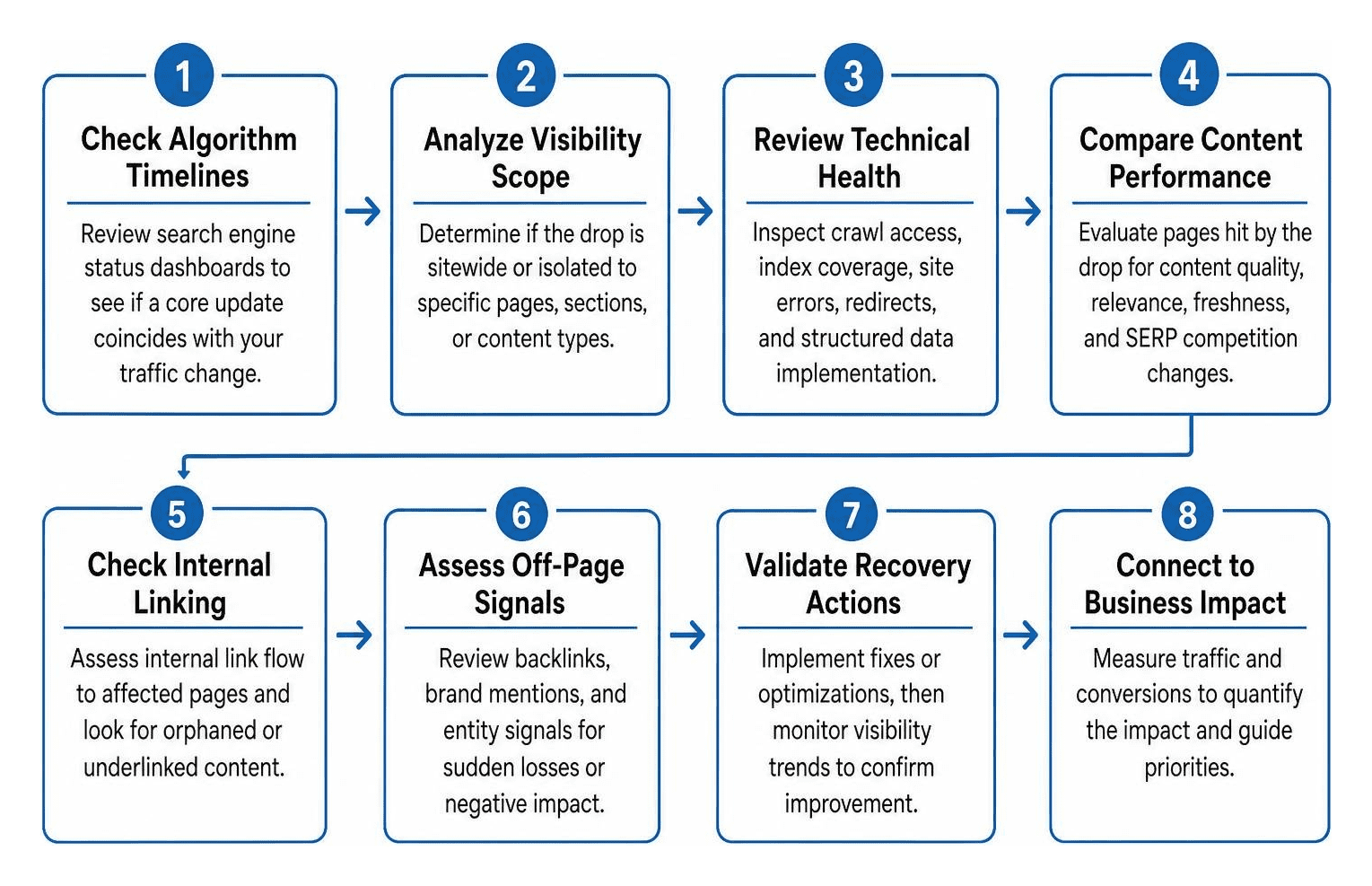
Diagnosing Sudden Visibility Declines
When visibility drops, use this systematic checklist to pinpoint the root cause:
- Check Algorithm Timelines: Review search engine status dashboards to see if a core update coincides with your traffic change.
- Inspect Crawlability and Indexation: Use Google Search Console to check for new crawl errors, accidental
noindextags, or canonicalization conflicts. - Audit Content Freshness and Cannibalization: Identify whether multiple pages compete for the same query intent or if competitor updates have made your content outdated.
- Segment by Template: Determine if the drop is localized to a specific page category (such as product pages or blog posts) or impacts the entire domain.
Connecting Visibility to Conversions and Bottom-Line ROI
Search visibility must translate into pipeline revenue. High visibility on purely informational terms with zero commercial intent will not grow your bottom line.
In web analytics platforms, configure multi-touch attribution to measure how organic visibility assists conversions across the buyer journey. Connect non-branded visibility gains directly to key business outcomes: qualified lead submissions, demo bookings, phone inquiries, and direct sales.
Frequently Asked Questions About Digital Brand Presence
Can a website achieve a 100% search visibility score?
No. A 100% score requires a single website to hold position one for every tracked keyword while capturing all available clicks. Because search clicks distribute across several organic results, map packs, and paid listings, realistic non-branded visibility scores for category leaders generally peak between 35% and 45%.
Why does my Google ranking not match my brand visibility in ChatGPT?
AI answer engines utilize retrieval-augmented generation and training datasets that pull from diverse web sources, listicles, review aggregators, and forums. With only a 39% source overlap between Google organic links and ChatGPT citations, AI engines rely heavily on third-party editorial validation rather than standard search rank alone.
How long does it take to see improvements in organic visibility?
Measurable shifts in search visibility typically take between two to six weeks following technical fixes, content refreshes, or internal link updates. This timeline matches the re-crawling, processing, and indexing cycles required by search engine bots and AI retrieval agents.
Accelerate Your Brand Visibility with SmallBizSEO
Building sustainable organic search presence requires balancing technical foundations, authoritative content creation, and modern AI engine optimization. At SmallBizSEO, our data-driven "Velocity" framework delivers rapid ranking improvements and E-E-A-T compliance through transparent tracking.
Ready to uncover the hidden gaps holding your site back? Request your tailored SEO visibility audit today and build an organic search strategy that drives real revenue.