All About Comparing Franchise SEO Services
All About Comparing Franchise SEO Services
What Is a Franchise SEO Service, and How Should You Compare Providers?
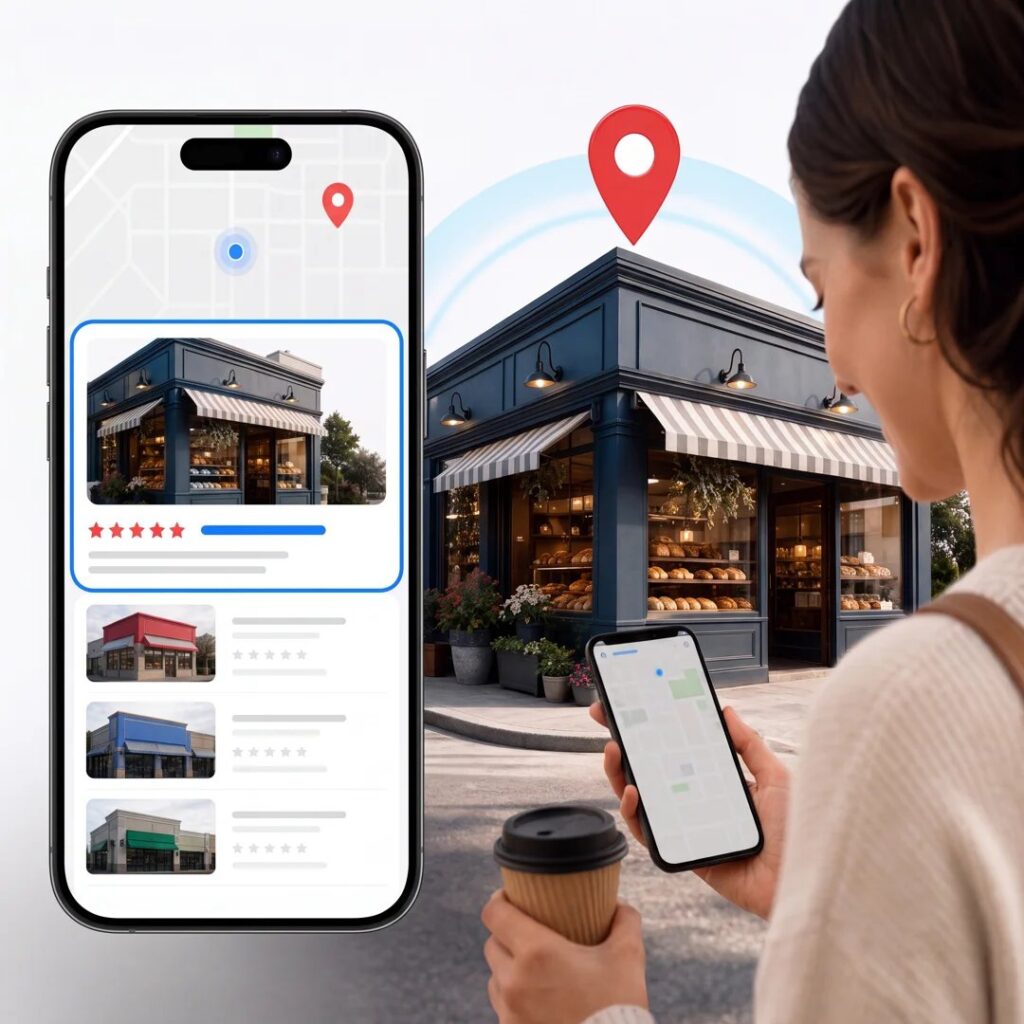
A franchise SEO service helps a brand and its individual locations appear in relevant searches. When comparing providers, look for more than a promise of higher rankings. A strong service should manage location pages and Google Business Profiles, keep business details accurate, build useful local content, and show leads and results for each location.
The hard part is doing that work at scale without making every location page look the same. Corporate teams need consistent standards; franchisees need pages and listings that reflect their actual services and communities. This guide will help you compare both sides of that work.
I’m Clayton Johnson, founder of SmallBizSEO, where I connect SEO, content, and digital PR to help businesses attract qualified leads. My work on search visibility and Answer-Ready SEO shapes how I evaluate a franchise SEO service: by what it does, how it scales, and what it measures.
Basic franchise SEO service terms:
- enterprise local SEO
- local SEO map
- home services SEO
What Is a Franchise SEO Service and How Does It Drive Multi-Location Growth?
A franchise SEO service is a comprehensive digital marketing program designed to increase organic search traffic, Google Map rankings, and qualified leads for both the parent corporate brand and every individual franchisee territory.
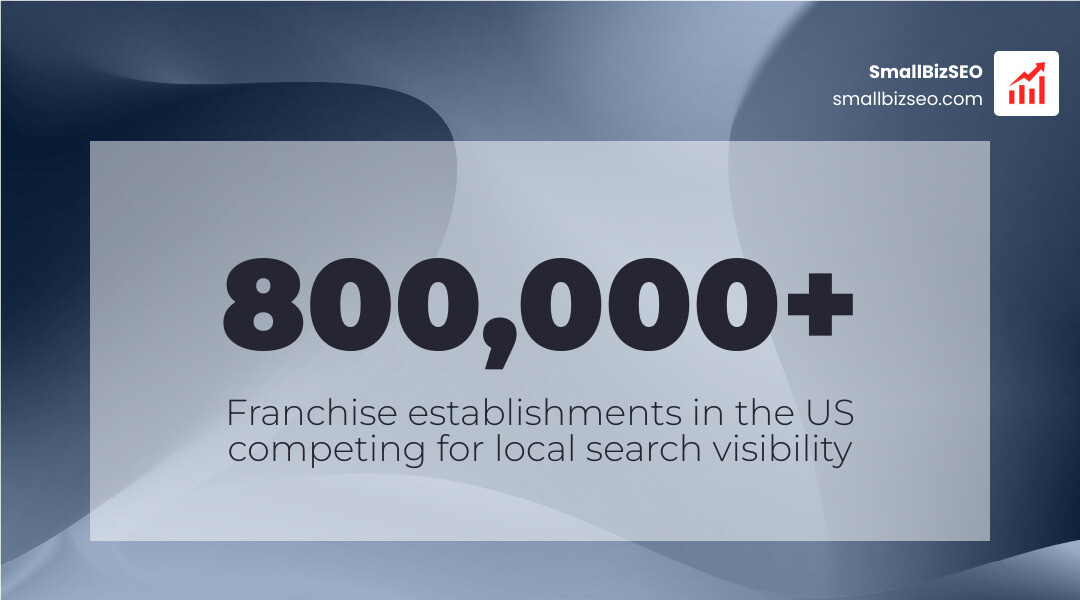
With more than 800,000 franchise establishments operating across the country, standing out online requires a unified multi-location growth strategy. Around 46% of all Google searches are seeking local information, and 78% of location-based mobile queries result in an offline purchase within 24 hours. When a franchise network implements a coordinated campaign, it captures high-intent customers right at the moment they are ready to buy while steadily compounding overarching brand equity.
How Does a Franchise SEO Service Differ from Standard Local SEO?
Standard local optimization focuses entirely on a single storefront within a single geographic radius. In contrast, a specialized campaign balances high-level domain authority with localized, territory-specific visibility across dozens or hundreds of branches.
Working with a standard local SEO company is ideal for independent shops, while a national SEO company focuses on broad, non-geographic terms. A dedicated multi-unit approach bridges both worlds. It establishes corporate governance rules so that every franchisee maintains strict brand consistency while allowing local operators the flexibility to highlight their unique staff, regional promotions, and community involvement.
Furthermore, multi-unit programs leverage dual-funnel targeting. They capture retail consumers searching for immediate solutions while simultaneously driving franchisee acquisition by ranking recruitment pages for entrepreneurs looking to invest in a proven business model.
What Are the Biggest Challenges in Scaling Multi-Unit Visibility?
The primary obstacles in multi-location optimization involve managing massive volumes of content, structured location data, and fierce local competitors without creating internal technical conflicts:
- Duplicate content and thin pages: Copy-pasting the same body text across 50 city pages leads search engines to filter out repetitive listings.
- Citation inconsistency: Discrepancies in Name, Address, and Phone Number (NAP) details across major business directories weaken search engine trust.
- Territory cannibalization: Overlapping zip codes or poorly defined target service areas can cause sister locations to compete against each other for the exact same local search queries.
- Fragmented reporting: Managing separate, disconnected analytics tools makes it difficult for corporate executives to evaluate network-wide return on investment.

Maintaining uniform data is paramount. Ensuring that each branch maintains an accurate verified business location profile establishes verifiable trust signals that help search engines understand regional service footprints.
Core Pillars to Evaluate When Comparing Multi-Location Strategies
To achieve sustainable multi-unit growth, an agency must combine centralized brand management with hyper-local relevance, ensuring technical health, robust crawl efficiency, and strong E-E-A-T (Experience, Expertise, Authoritativeness, and Trustworthiness) signals across every branch.
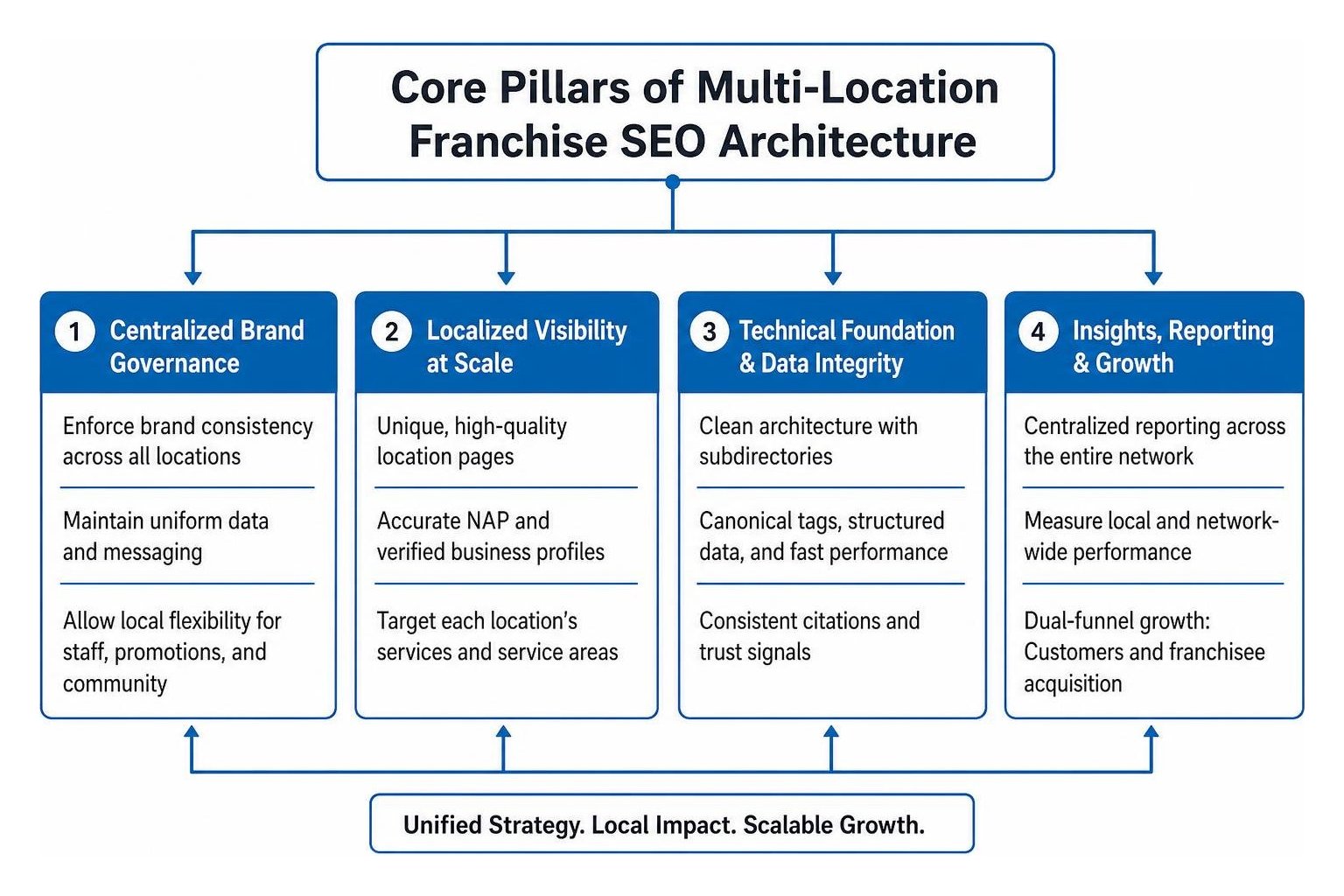
Partnering with an experienced enterprise local SEO company ensures that technical foundations—such as site speed, canonical tags, and structured data—remain rock-solid across massive URL catalogs. Modern programs also optimize for AI answer engines and large language models (LLMs) like ChatGPT, Gemini, and Perplexity, ensuring your brand is the cited authority when consumers ask natural-language discovery questions.
Single Domain Architecture vs. Microsites: Which Structure Ranks Best?
A single-domain architecture using clean subdirectories (e.g., brand.com/locations/city-name) consistently outperforms separate microsites for multi-unit brands.
Consolidating all franchise locations under one domain pools backlink authority and link equity, accelerating indexing and ranking for newly opened territories. Conversely, independent microsites divide marketing budgets, dilute domain strength, and create administrative nightmares.
| Feature / Metric | Single Domain Subdirectories (brand.com/locations/city) |
Independent Microsites (brand-city.com) |
|---|---|---|
| Domain Authority | Consolidates power across the entire network | Fractured; each new site starts from zero |
| Link Equity | Shared across all location pages | Confined to individual sub-domains/sites |
| Crawl & Index Efficiency | High; search engines quickly discover new branches | Slow; requires individual sitemaps and verification |
| Brand Governance | Centralized, strict, and easily maintained | Prone to brand drift and inconsistent designs |
| Technical Maintenance | Single codebase update updates all pages | High overhead; multiple CMS platforms to patch |
What Essential Deliverables Should Every Franchise SEO Service Include?
A comprehensive multi-location program must provide end-to-end management covering both on-page architecture and off-page reputation assets.
Key deliverables include:
- Bulk Google Business Profile (GBP) Optimization: Centralized verification, category selection, business description enhancements, and weekly photo updates across all profiles.
- Geo-Targeted Landing Pages: Tailored location pages featuring local team bios, specific service menus, local customer testimonials, and embedded interactive maps.
- Location-Specific Schema Markup: Clean
LocalBusinessJSON-LD structured data indicating exact geo-coordinates, business hours, and operational details for rich snippet eligibility. - Automated Citation Syndication: Continuous synchronization of NAP data across top data aggregators and local directories to eliminate conflicting records.
- Proactive Review Management: Automated systems that encourage authentic feedback. Customer reviews directly impact conversions: 88% of consumers trust online reviews as much as personal recommendations, and a one-star improvement on platforms like Yelp can drive a 5% to 9% lift in revenue.
- Hyper-Local Backlink Acquisition: Securing community-level citations through youth sports sponsorships, local chamber of commerce memberships, and regional PR initiatives aligned with industry-standard digital marketing growth benchmarks.
How to Choose the Right Partner, Expected Costs, and Timelines
Selecting an experienced franchise SEO company requires evaluating their technical execution capabilities, communication protocols, and proven methodologies.

Look for agencies that use standardized frameworks rather than ad-hoc tactics. At SmallBizSEO, we deploy our proprietary "Velocity" framework, combining technical precision, E-E-A-T-aligned content creation, and real-time dashboarding to drive predictable organic growth across multi-unit business structures.
What Are the Typical Costs, Timelines, and Key Metrics for Success?
Professional multi-location optimization retainers generally range between $1,000 and $5,000+ per month, depending on location count, initial technical debt, and geographic competition. Comprehensive programs start with an in-depth audit ranging from $2,500 to $3,500, followed by tiered SEO packages tailored to the size of your multi-unit footprint.
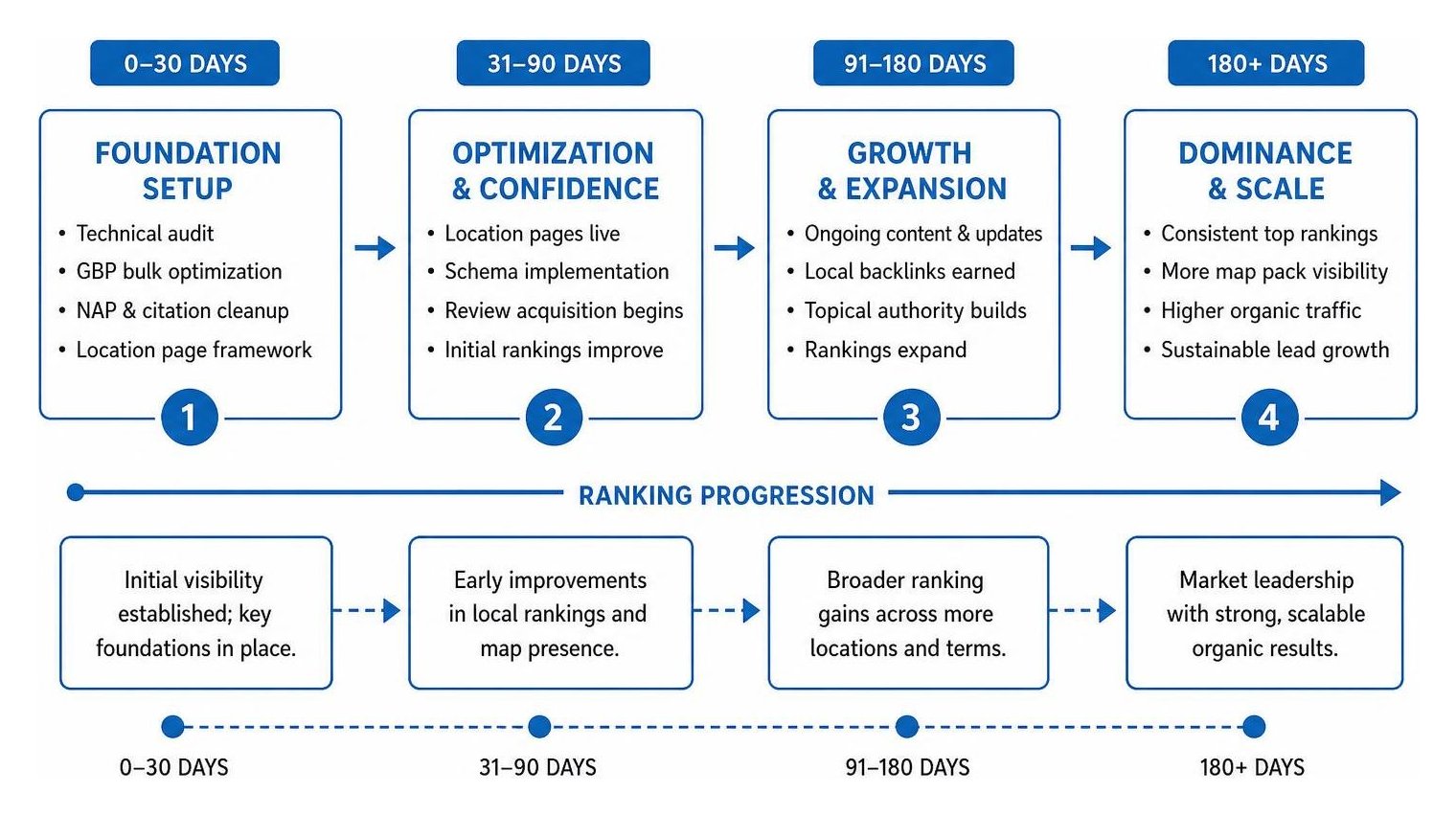
Initial Google Map Pack visibility improvements and citation corrections generally materialize within 60 to 90 days. Comprehensive organic ranking transformations and substantial inbound lead lifts typically develop over a 3- to 6-month period.
To evaluate progress accurately, track these primary multi-location KPIs:
- Organic Impressions and Clicks Per Location: Gauging brand visibility at the hyper-local level.
- Local 3-Pack Rankings: Monitoring top-three map presence for core commercial-intent queries.
- Google Business Profile Actions: Tracking phone calls, website clicks, and driving direction requests.
- Lead Volume & Conversion Rates: Measuring web form fills, appointment requests, and incoming qualified leads.
- Cost Per Validated Lead: Connecting marketing spend directly to local customer acquisition costs.
- Network Revenue Attribution: Integrating call tracking and CRM data to measure bottom-line financial returns.
How Do You Select the Right Agency for Your Franchise Network?
Use this structured vendor scorecard during discovery calls to determine whether a prospective agency can handle the operational complexities of multi-unit management:
- Centralized Governance: Do they provide clear content playbooks that maintain corporate brand standards while allowing franchisee customization?
- Scalable Onboarding: Can they seamlessly integrate new franchisee locations into the existing site structure as the brand expands?
- Granular Reporting: Does their reporting software allow both network-wide corporate oversight and filtered, location-specific views for individual operators?
- Conversion Rate Optimization: Do they optimize local landing pages with clear calls-to-action, click-to-call mobile buttons, and fast-loading layouts?
Ready to Expand Your Multi-Location Reach?
Managing digital growth across dozens or hundreds of territories does not have to be an uphill battle. By unifying your network under a single-domain architecture, maintaining flawless citation accuracy, and deploying unique local content, you can turn every branch into a high-performing digital asset.
If you are ready to eliminate fragmented rankings and scale your organic pipeline across every market, schedule an SEO visibility audit with our team today. We will evaluate your technical foundation, review your local profile health, and build a scalable roadmap designed for multi-unit success.