An Essential Guide to Finding a Reliable SEO Service Provider
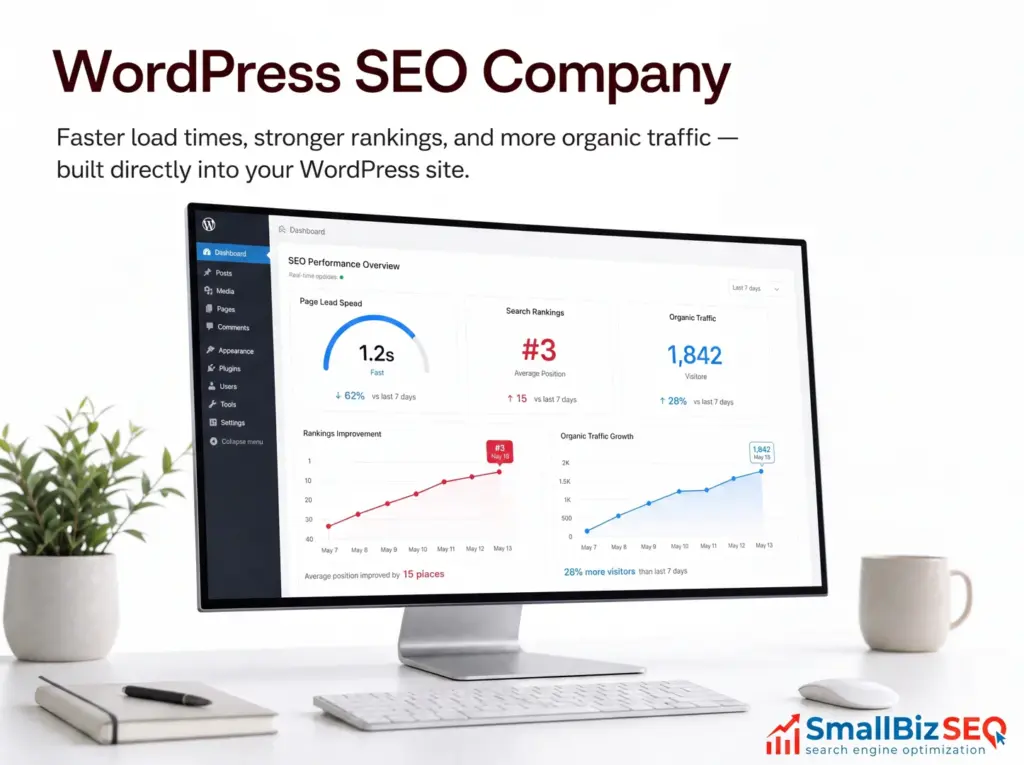
An Essential Guide to Finding a Reliable SEO Service Provider
Why a WordPress SEO Optimization Service Matters
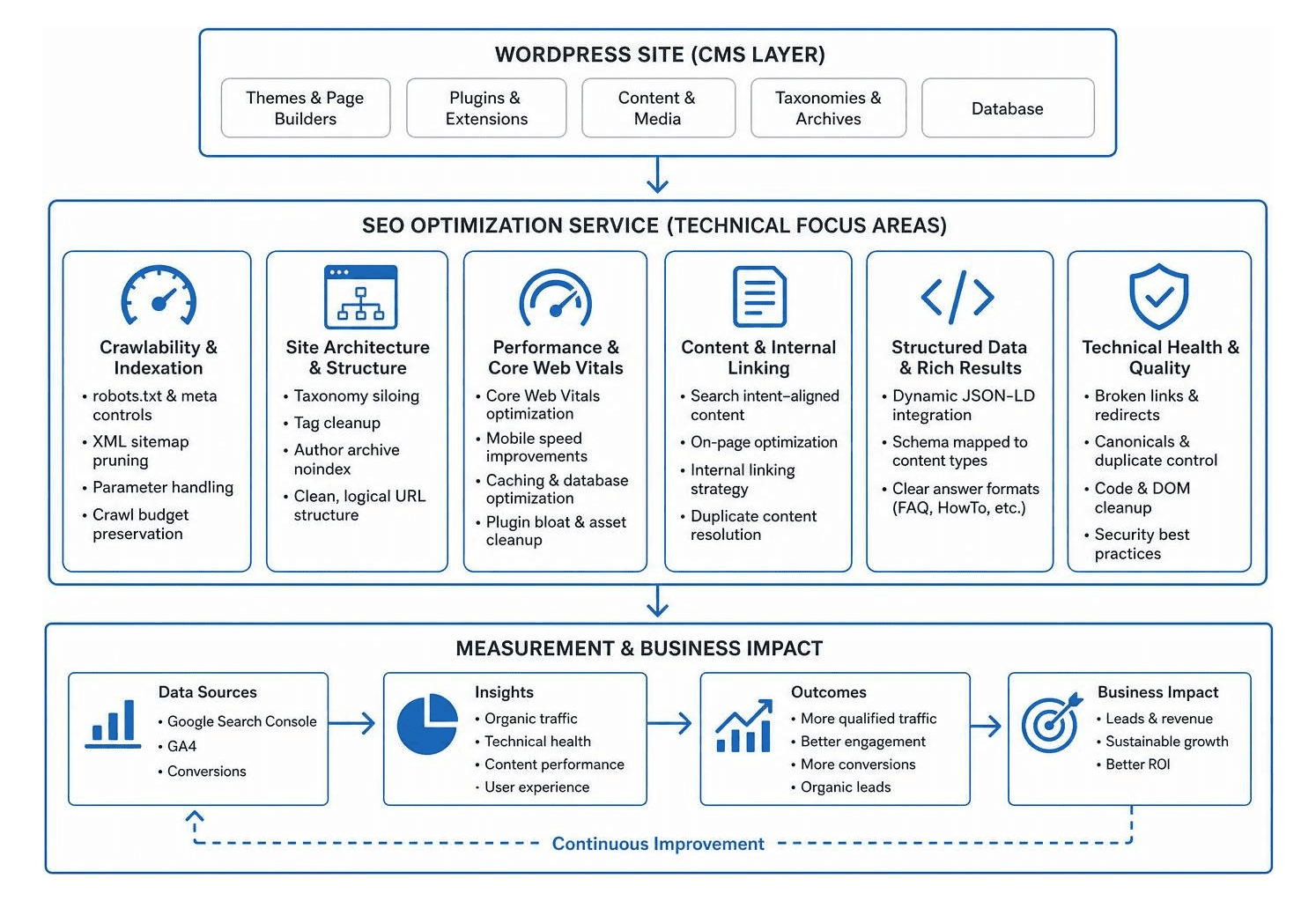
A reliable WordPress SEO optimization service should do more than install an SEO plugin. Look for a provider that can audit your site's speed, crawlability, duplicate pages, plugins, content, internal links, and structured data - then connect those improvements to leads and revenue.
For a small business, the right partner helps turn an underperforming WordPress site into a dependable source of qualified traffic. WordPress is widely used, but its themes, page builders, taxonomies, and plugins can create problems that generic SEO work may miss. Slow pages, bloated archive URLs, broken redirects, and weak page structure can all limit visibility.
Choose a provider that offers:
- A clear technical audit and prioritized action plan.
- Core Web Vitals, mobile speed, and plugin-bloat fixes.
- On-page content and internal-linking improvements based on search intent.
- Schema and clear answer formats that help search engines and AI tools understand your business.
- Transparent reporting through Google Search Console, GA4, conversions, and organic leads - not rankings alone.
I'm Clayton Johnson, and I use digital PR and SEO campaigns to improve search visibility and market presence. In this guide, I will show you how to assess a WordPress SEO optimization service based on the work it performs and the business results it can measure.
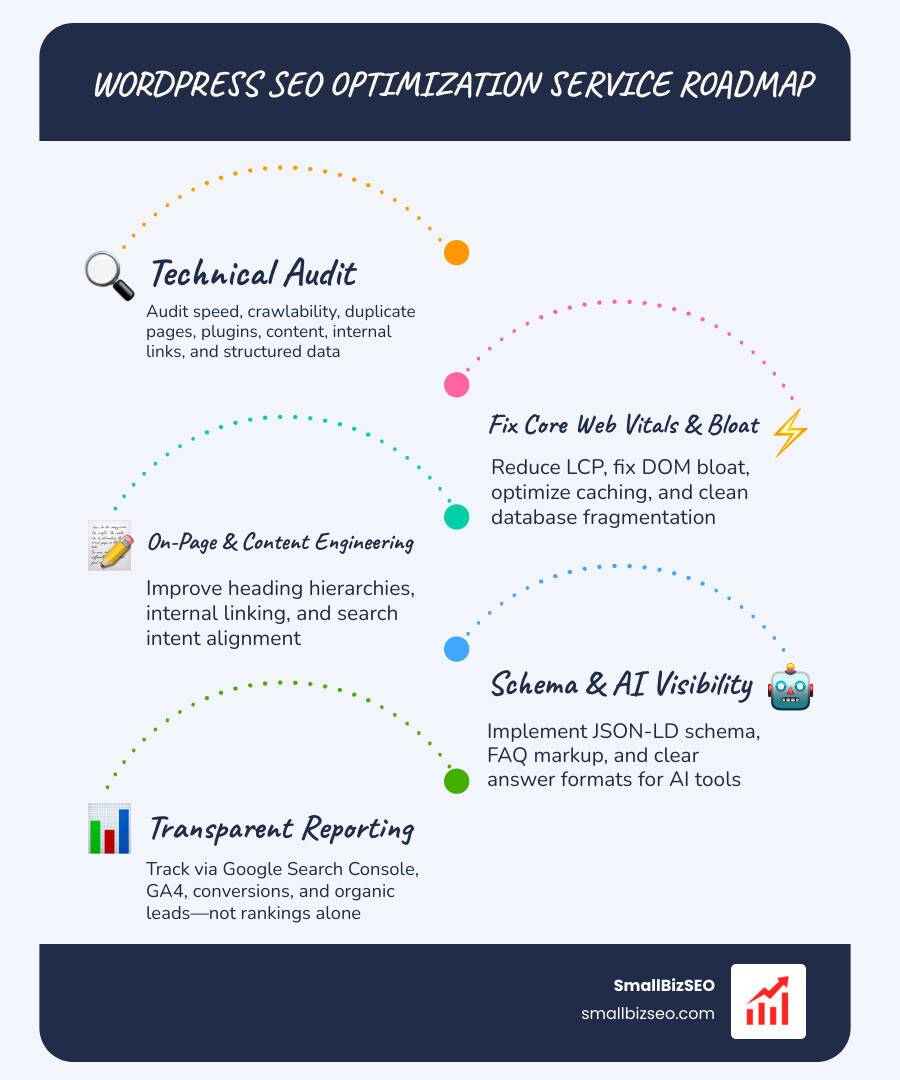
What Is WordPress SEO and Why Platform Specifics Matter
WordPress powers 43% of all business websites across the web. While its flexibility makes it a favorite for business owners, that same modular architecture introduces unique search engine challenges. Out of the box, WordPress is prone to automated archive creation, deep taxonomy bloat, and database fragmentation.
When you invest in comprehensive SEO services, the execution must adapt directly to the underlying Content Management System (CMS). Generic digital marketing strategies often overlook how WordPress templates render Document Object Model (DOM) elements, how shortcodes impact server latency, or how auto-generated media attachment URLs create crawl traps.
| Feature Area | Generic SEO Approach | Dedicated WordPress SEO Approach |
|---|---|---|
| Site Architecture | Standard URL mapping | Deep taxonomy siloing, tag cleanup, and author archive noindex rules |
| Code Structure | Basic HTML tag review | Gutenberg code cleanup, asset unloading, and theme bloat reduction |
| Performance Tuning | Generic image compression | Server-level caching, object caching, database query pruning, and WebP conversion |
| Rich Snippets | Static schema copy-paste | Dynamic JSON-LD integration mapped across custom post types |
| Indexing Controls | Basic robots.txt rules | Parameter handling, XML sitemap pruning, and crawl budget preservation |
Why You Need a Dedicated WordPress SEO Optimization Service Over Generic SEO
A generalist agency might understand keyword research, but platform-specific quirks require surgical precision. When working with a specialized website SEO company, you receive technical fixes that treat the root causes of poor rankings rather than the symptoms.
For instance, stacking multiple visual page builders on top of third-party plugins generates excess inline CSS and JavaScript. This extra code forces search engine bots to spend precious crawl budget parsing script clutter instead of your commercial copy. An experienced partner knows how to safely refactor templates, resolve plugin conflicts, and establish clean permalink structures without breaking existing functionality.
The Hidden Traps of Relying Purely on SEO Plugins
A widespread myth among site owners is that installing an SEO plugin like Yoast SEO or Rank Math automatically handles search engine optimization.
Plugins are simple input tools, not autonomous strategies. While they allow you to set title tags and output XML sitemaps, they cannot:
- Clean up messy database tables filled with orphaned post metadata.
- Optimize high Time to First Byte (TTFB) caused by server misconfigurations.
- Write high-converting, search-intent-aligned copy.
- Resolve render-blocking assets that ruin mobile user experiences.
Relying solely on green checklist lights provides a false sense of security while leaving your site vulnerable to hidden technical roadblocks.
What to Look For in a WordPress SEO Optimization Service
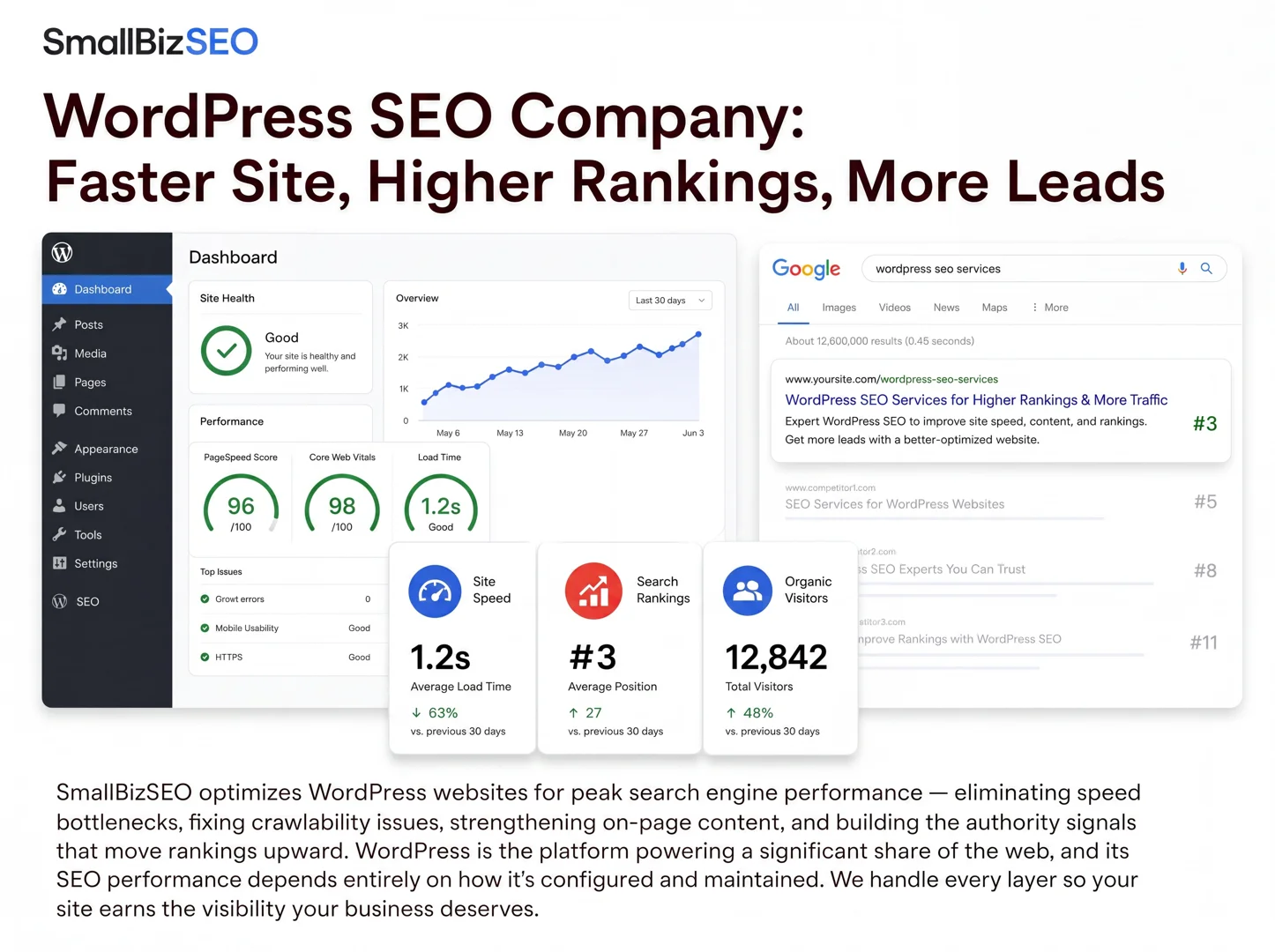
When vetting potential providers, look for full-stack capabilities that span technical engineering, semantic on-page structure, and modern discovery optimization. A mature partner operates from prioritized roadmaps rather than ad-hoc tasks, turning technical improvements into clear business outcomes through complete SEO company services.
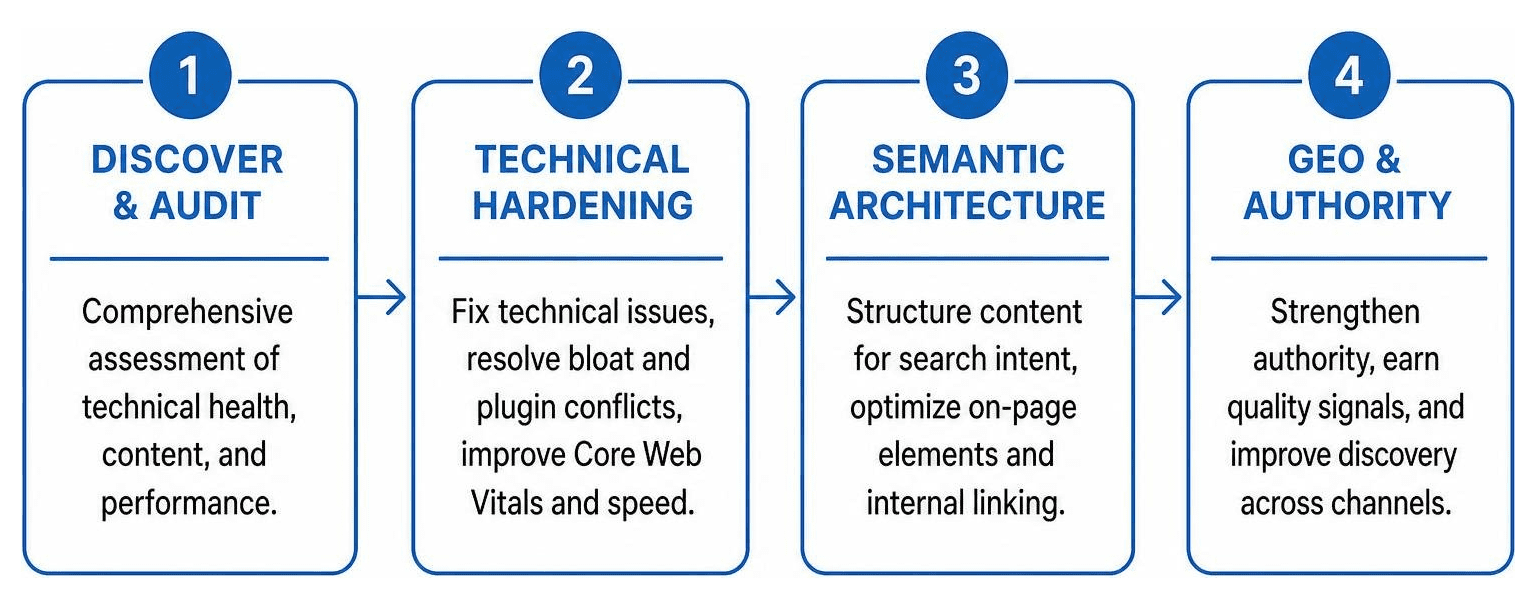
How a Professional WordPress SEO Optimization Service Fixes Technical Bloat
The technical foundation dictates how easily search engine crawlers access, index, and score your pages. A professional technical SEO company zeroes in on measurable performance metrics, directly targeting Core Web Vitals to elevate your mobile user experience:
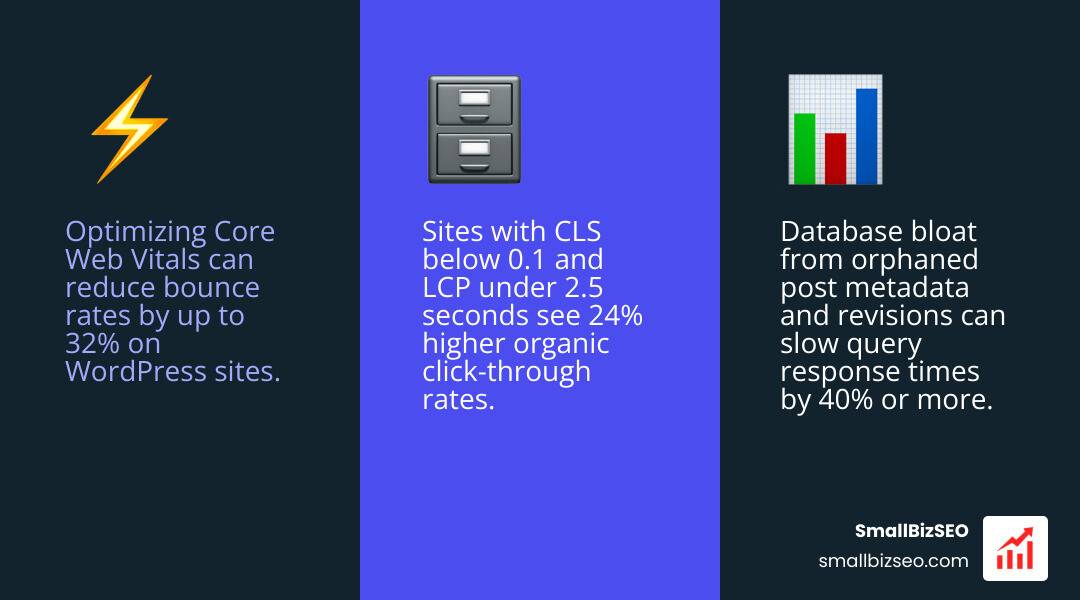
- Largest Contentful Paint (LCP): Bringing render times under 2.5 seconds by pruning heavy theme scripts, preloading critical resources, and configuring advanced Content Delivery Networks (CDNs).
- Interaction to Next Paint (INP): Resolving main-thread execution delays caused by complex JavaScript listeners and heavy visual builders.
- Cumulative Layout Shift (CLS): Reserving explicit dimensions for images, ad units, and dynamic embeds to keep layout shifts below 0.1.
- Database Hygiene: Purging post revisions, transient feeds, and unused plugin tables using targeted SQL queries to streamline server queries.
On-Page Semantic Architecture and Content Engineering
Modern search engines parse websites as structured networks of topical entities rather than simple keyword collection points. Effective execution combines targeted on-page SEO with rigorous SEO friendly content writing to build undeniable topical authority.
This process involves:
- Establishing clear H1–H4 heading hierarchies that mirror user search intent.
- Implementing custom, nested JSON-LD schema (such as
Organization,Service,Product, andFAQPage) that explicitly defines relationships in the Knowledge Graph. - Designing intentional internal linking silos that pass link equity from informational blog hubs straight to commercial conversion pages.
- Eliminating internal keyword cannibalization by consolidating overlapping posts into authoritative pillar resources.
Generative Engine Optimization and AI Search Visibility
Search discovery extends across traditional search engine result pages (SERPs) and AI-driven platforms like ChatGPT Search, Perplexity, and Google AI Overviews.
Securing organic visibility requires Generative Engine Optimization (GEO):
- Crawler Access Management: Ensuring your
robots.txtproperly permits AI crawlers such asGPTBotandPerplexityBot. - Direct-Answer Structuring: Crafting modular content blocks, factual summaries, and data tables that Large Language Models (LLMs) can easily ingest and cite.
- Entity Resolution: Aligning brand entities across external knowledge bases to build real-world authority and increase citation frequency.
How to Evaluate and Choose the Right WordPress SEO Partner
Selecting an agency requires careful vetting. Avoid providers relying on vanity metrics, and instead check listings on verified agency directories or curated WordPress agency directory listings to evaluate proven client track records.
Essential Vetting Criteria and Red Flags to Avoid
When interviewing agencies, protect your investment by watching for clear warning signs:
- Red Flag: Guaranteed #1 Rankings. Search algorithms change frequently; no ethical agency can guarantee specific positions.
- Red Flag: Secret or Proprietary Networks. Beware of providers utilizing private blog networks (PBNs) or automated link-spam schemes that risk algorithmic penalties.
- Red Flag: Lack of Staging Protocols. Any agency suggesting direct code edits on a live production website without a staging environment risks site downtime.
- Green Flag: Developer-Led Capabilities. Look for teams with deep WordPress development knowledge capable of editing theme templates, refactoring functions, and modifying backend code safely.
- Green Flag: Transparent Deliverables. Reputable teams provide transparent sprint backlogs detailing every technical fix, schema update, and content refresh.
Pricing Models, Timelines, and Measurable Success Metrics
Professional WordPress optimization engagements generally fall into transparent service structures. You can select tailored SEO packages based on your commercial objectives, domain maturity, and competitive landscape, or consult a strategic SEO services guide to scope out your exact technical requirements.
- Foundational Audits and Cleanups: One-time technical sprint projects to resolve legacy errors, configure schema, and repair index bloat.
- Monthly Growth Retainers: Ongoing content production, technical maintenance, entity building, and digital PR campaigns designed for continuous compounding growth.
Success should be monitored via Google Analytics 4 (GA4) and Google Search Console, measuring organic sessions, non-branded click growth, engaged conversion rates, and qualified lead volume rather than static keyword reports.
Frequently Asked Questions About WordPress SEO
How long does it take to see organic traffic results on WordPress?
Initial crawl updates, technical indexing fixes, and impression improvements typically surface within 60 to 90 days. Meaningful organic traffic growth and competitive keyword advances usually mature between months 3 and 6, while comprehensive market authority and significant revenue growth compound steadily over a 12 to 24-month timeline.
Will optimizing my WordPress site break the existing theme or code?
A professional team tests all code adjustments, asset removals, and plugin configurations inside an isolated staging environment before pushing updates live. This workflow protects your site's visual design, eCommerce checkout funnels, and tracking tags throughout the optimization process.
What is the difference between WordPress SEO and WooCommerce SEO?
Standard WordPress SEO centers on pages, informational posts, and core lead-generation layouts. WooCommerce SEO requires specialized technical handling for high-volume eCommerce catalogs, including managing faceted search URL parameters, applying product-level JSON-LD schemas, preventing duplicate content across overlapping variations, and streamlining category taxonomy silos.
Transforming Your WordPress Architecture Into a Revenue Engine
A great WordPress website is only as valuable as the customers who find it. Out-of-the-box themes, unmanaged plugins, and slow load times can quietly throttle your organic growth, regardless of your product or service quality. Partnering with a trusted WordPress SEO company bridges the gap between deep code-level technical engineering and high-intent organic visibility.
By addressing underlying technical debt, refining your site architecture, and preparing your content for both traditional and AI-driven search engines, we build an organic channel that drives measurable leads, sales, and long-term business value.