An Essential Guide to SEO for Animal Trappers
How Can SEO for Animal Trappers Bring in More Local Calls?
SEO for animal trappers helps nearby customers find your business when they need wildlife removed. Start with a complete Google Business Profile, a fast mobile-friendly website, and pages for the animals and services you handle. Make your service area, hours, and phone number easy to find so someone with an urgent problem can contact you quickly.
A page about a raccoon in the attic can answer a more useful question than a general “wildlife removal” page alone. The guide below covers how to build those pages, improve local visibility, and fix website issues that may keep them out of search results.
I’m Clayton Johnson, founder of SmallBizSEO, where I help small businesses connect technical SEO, content, and authority building with qualified leads. I bring that approach to SEO for animal trappers in the steps that follow.
Related content about SEO for animal trappers:
- SEO for security & alarm system installers
- SEO for chimney cleaning services
- SEO for basement waterproofing & foundation repair
Core Pillars of High-Impact SEO for Animal Trappers
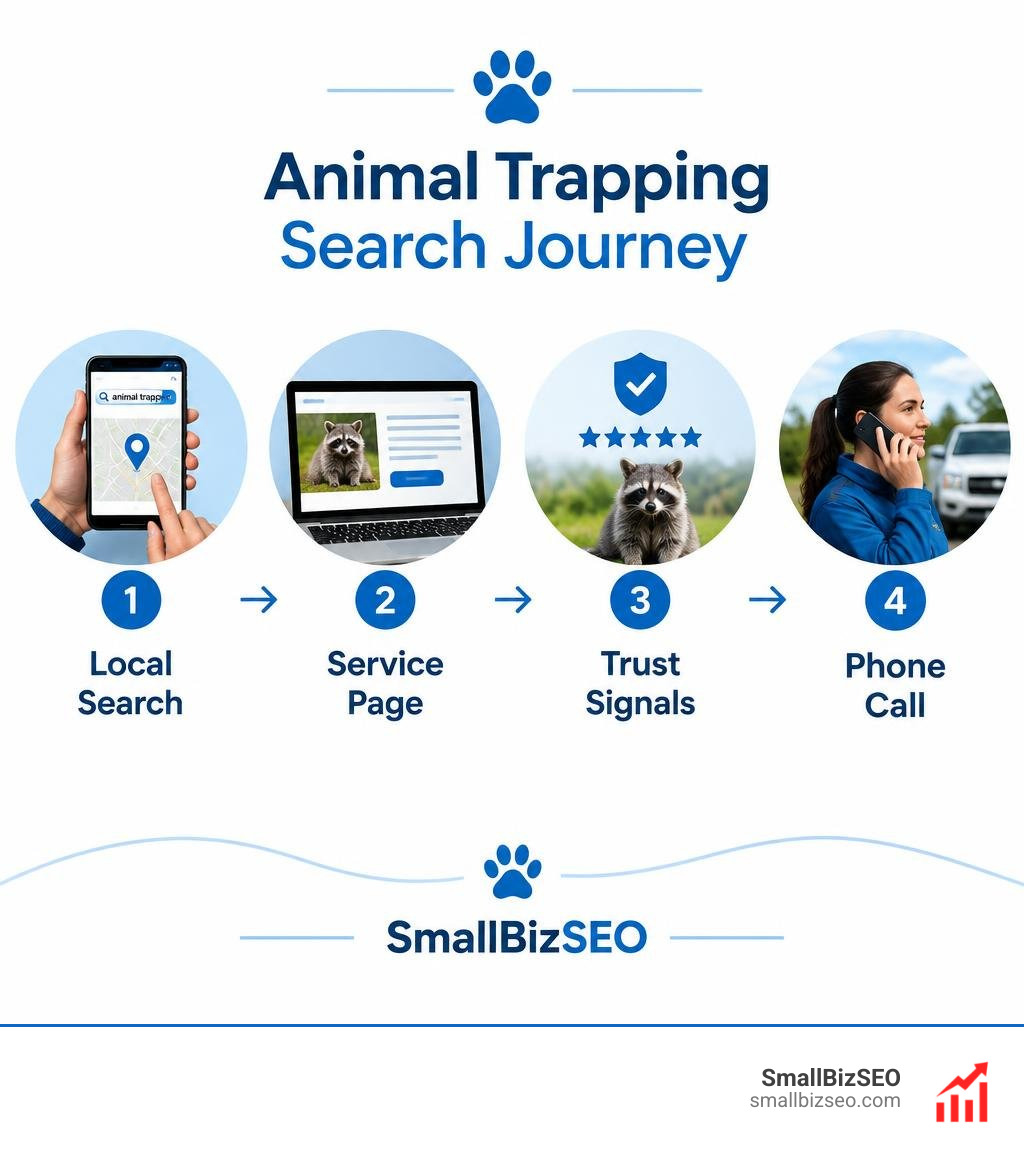
Search engine optimization connects wildlife control operators directly with property owners experiencing immediate animal intrusions. Because over 96% of Americans use search engines to locate local service providers, a structured organic search footprint turns urgent online searches into steady inbound service calls.
To secure long-term revenue growth and capture market share from competitors, trappers need a system that addresses every step of the customer journey. When scratching sounds echo through an attic at two in the morning, homeowners do not browse passively; approximately 30% of online searchers take action immediately.
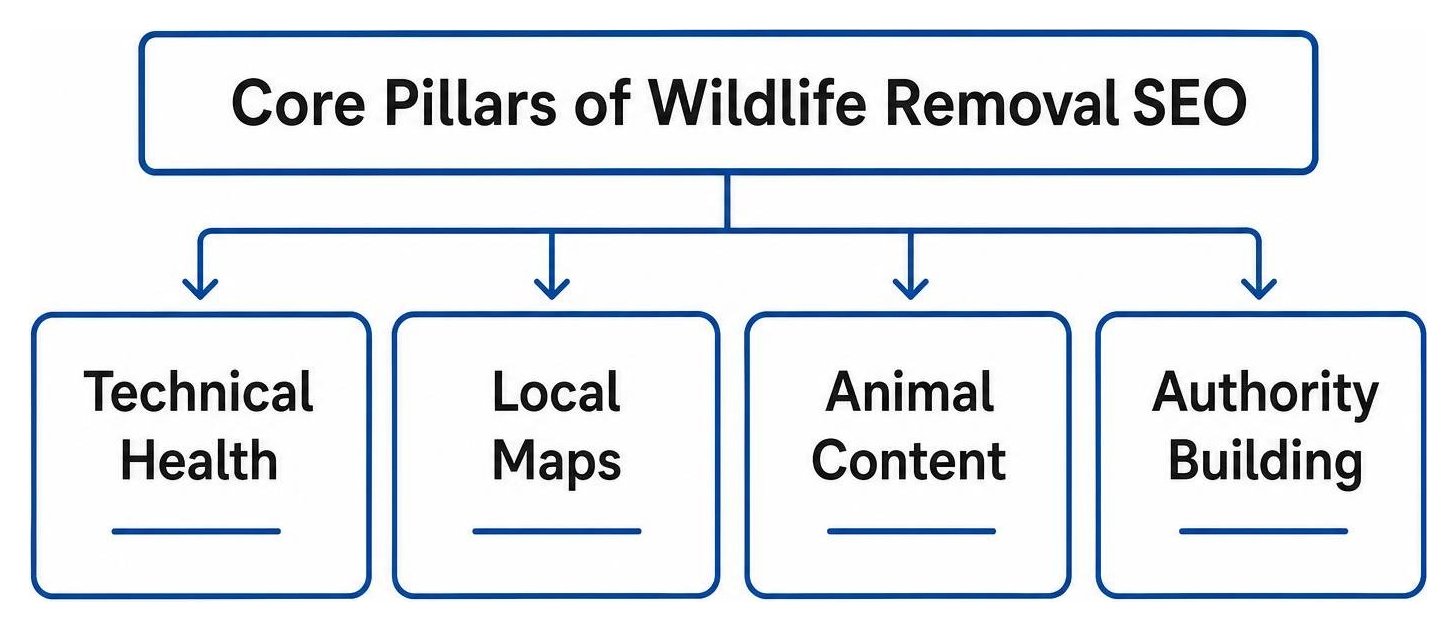
Building a dominant local presence requires aligning four essential pillars:
- Verified Google Business Profile: Accurate primary categories, complete service descriptions, and regular review generation.
- Targeted Animal Content: Dedicated landing pages for specific species, entry points, and structural repairs.
- Flawless Technical Architecture: Rapid mobile loading speeds, crawlable site navigation, and proper schema markup.
- Authoritative Digital Citations: Consistent Name, Address, and Phone (NAP) data across recognized industry and local business directories.
Applying a proven pest control route local SEO strategy allows trapping companies to capture emergency calls while steadily increasing overall conversion rates.
How Does Organic SEO for Animal Trappers Build ROI Over Time?
Organic SEO builds compounding returns by securing permanent digital real estate that generates exclusive inbound phone calls without per-click fees. While paid search ads provide temporary traffic that vanishes when budgets stop, high-ranking organic pages continue generating qualified leads month after month.
Wildlife removal keywords often carry combined monthly search volumes exceeding 115,000 queries nationwide. With paid pay-per-click costs continually rising, organic optimization delivers an average return on investment of 9.2x compared to paid advertising. A well-managed SEO strategy routinely improves qualified leads by 20% or more, allowing established operators to generate 50 to 75 organic leads each month.
| SEO Timeline Stage | Typical Ranking Progress | Expected Business Impact | Estimated Lead Growth |
|---|---|---|---|
| Months 1–3 | Initial indexing recovery, baseline keyword tracking on pages 2–4 | Technical errors resolved, improved crawl efficiency | +10% to +20% inbound calls |
| Months 4–8 | Primary emergency and species keywords reach Page 1 | Substantial increase in high-intent calls, reduced ad reliance | +100% to +200% traffic growth |
| Months 6–12+ | Map pack dominance and top positions across multiple service areas | Sustainable, compounding lead flow; maximum organic ROI | +200% to +380% traffic growth |
Because 75% of search engine traffic stays on the first page of results, moving from deeper pages to top positions unlocks rapid revenue expansion for nuisance wildlife businesses.
What Keywords and Animal-Specific Content Drive High-Intent Trapping Calls?
High-intent trapping calls come from specific, problem-oriented search terms rather than generic industry phrases. Homeowners rarely search for broad terms when dealing with an active pest issue; instead, they query specific species, damage locations, and removal methods.
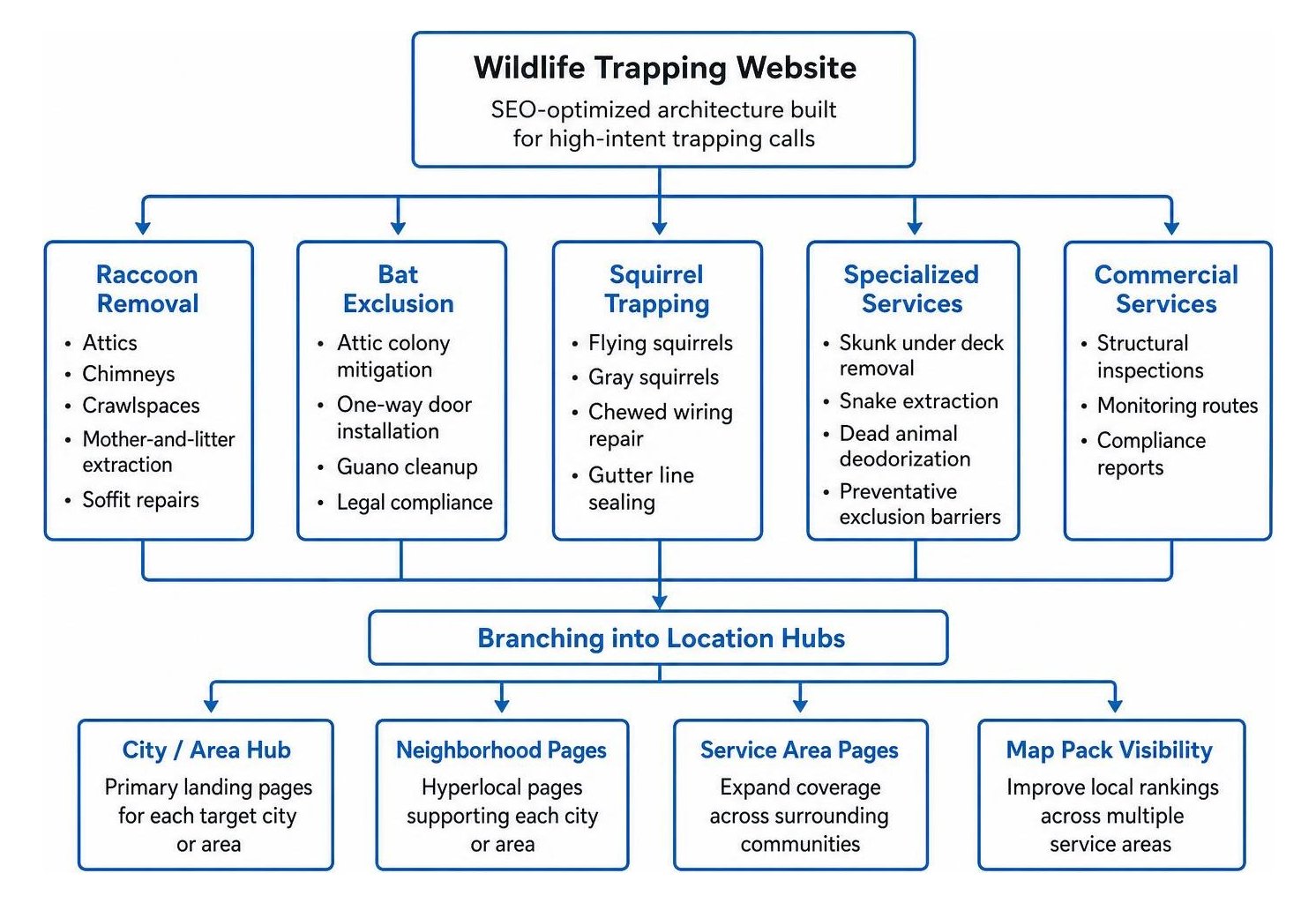
Targeting queries with clear emergency intent allows your pages to match exact consumer searches. Effective content structures separate services by species, entry points, and restoration needs:
- Raccoon Removal: Attics, chimneys, crawlspaces, mother-and-litter extraction, and soffit repairs.
- Bat Exclusion: Attic colony mitigation, safe one-way door installation, guano cleanup, and legal compliance.
- Squirrel Trapping: Flying squirrels, gray squirrels, chewed wiring repair, and gutter line sealing.
- Specialized Services: Skunk under deck removal, snake extraction, dead animal deodorization, and preventative exclusion barriers.
Highlighting humane wildlife trapping and relocation methods builds trust with residential homeowners. Showing real job photos of sealed roof vents, custom chimney caps, and attic sanitization proves practical field experience.
Furthermore, creating commercial service pages that detail structural inspections, regular monitoring routes, and compliance reports attracts lucrative property management and warehouse accounts.
How Can Wildlife Trappers Maximize Map Pack Visibility Across Multiple Service Areas?
Trappers maximize local map visibility by maintaining consistent business data, selecting accurate categories, and establishing geographic content clusters for every surrounding community served.
Around 80% of local searchers choose a service provider within a 10 to 20-mile radius. Capturing these searches requires following standard guidelines to improve your local ranking on Google by emphasizing relevance, distance, and prominent business signals.
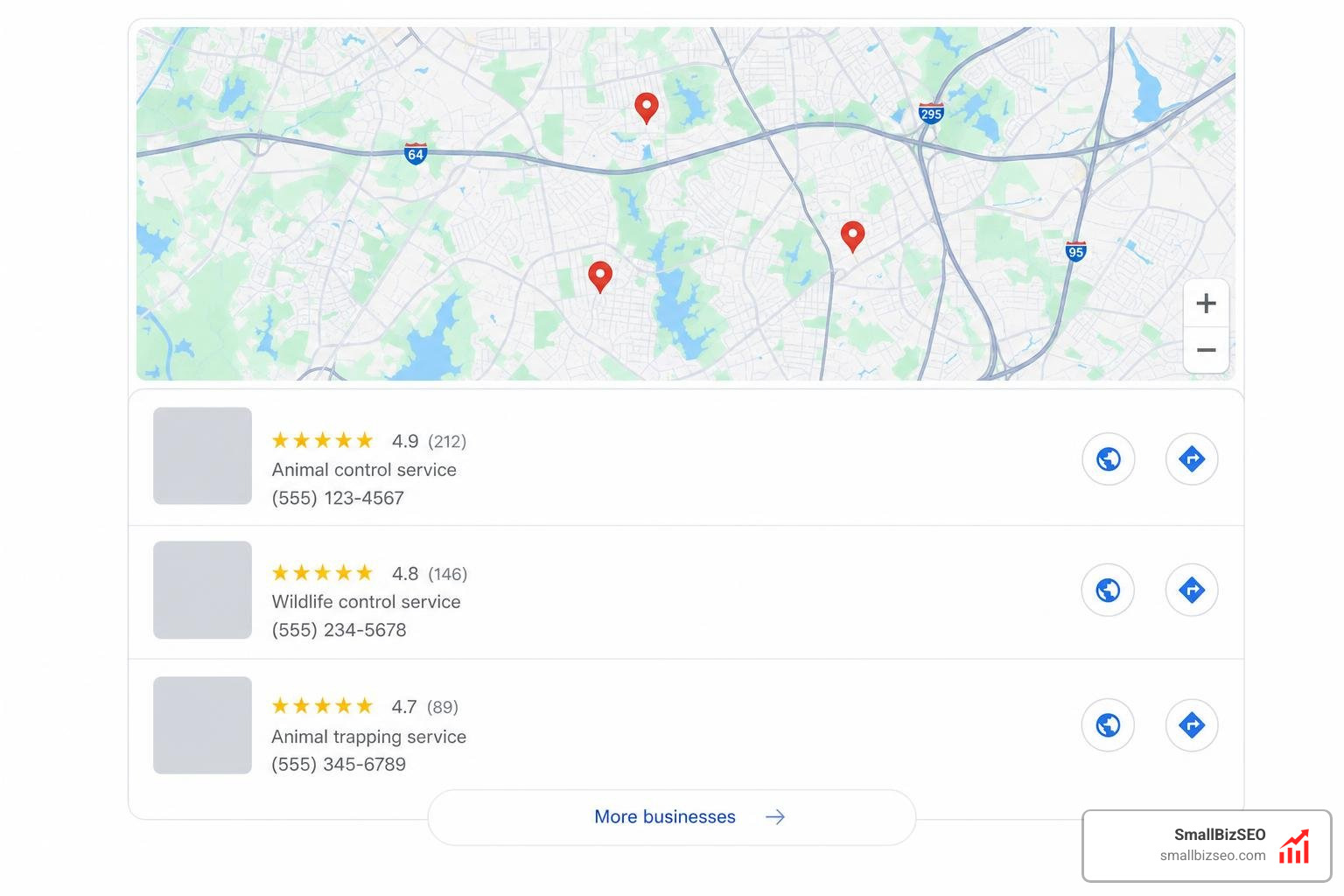
Operators can expand their reach beyond a single shop address by implementing key localization tactics:
- Optimize Primary Categories: Set your primary Google Business Profile category to "Animal Control Service" and add secondary categories like "Pest Control Service."
- Generate Review Velocity: Actively collect customer reviews mentioning the specific animal removed and the neighborhood serviced, then respond to every review.
- Build Geo-Targeted Service Pages: Create dedicated pages for each surrounding town featuring local landmarks, regional wildlife pressures, and genuine job photos.
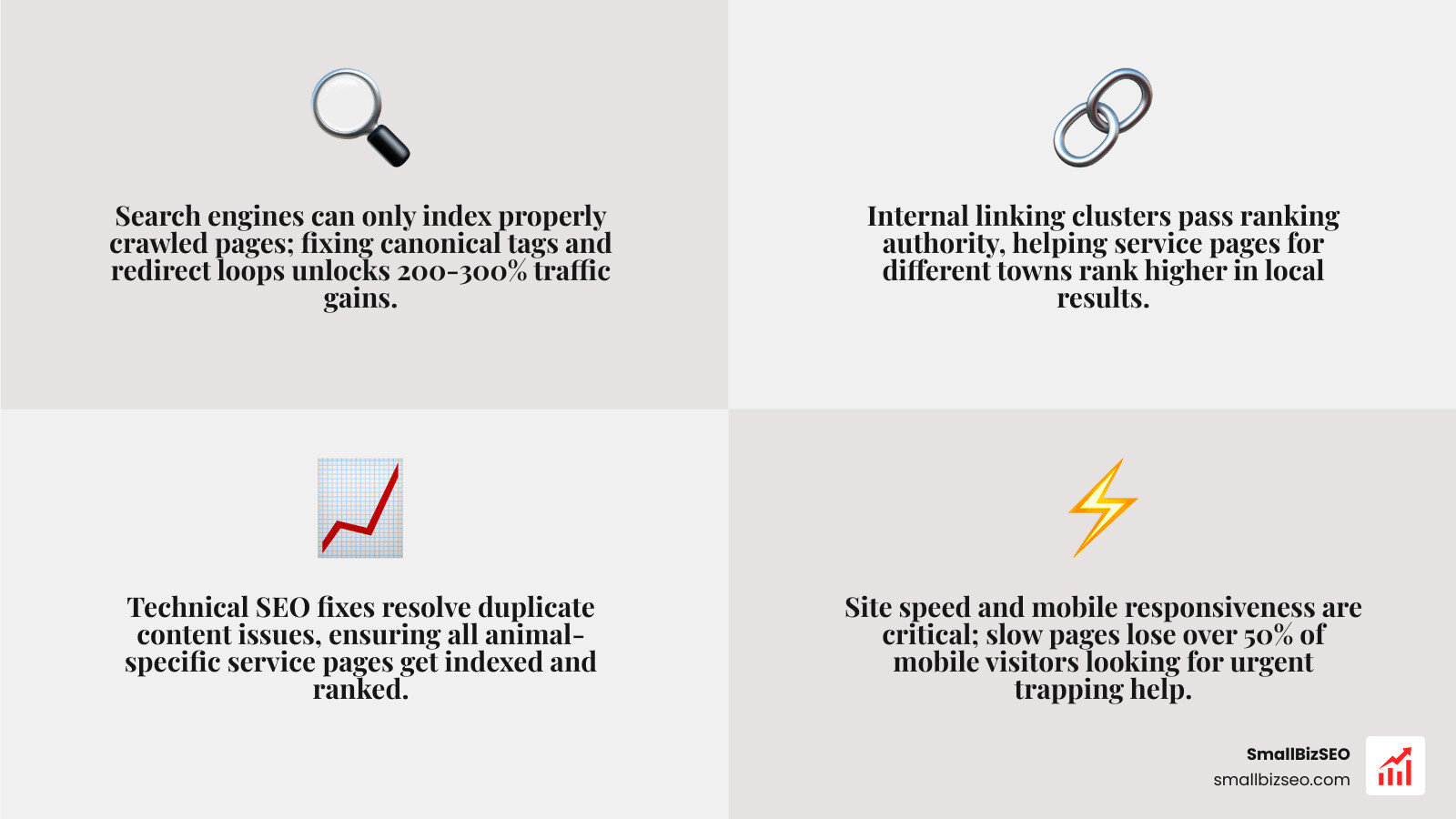
- Implement Geographic Content Clusters: Interlink nearby city pages back to primary service hubs to pass ranking authority throughout the site structure.
By applying techniques to outrank nearby competitors and expanding local SEO map visibility, wildlife operators can rank across multiple surrounding towns without maintaining physical satellite facilities in each location.
Technical Execution, Link Building, and Common Pitfalls to Avoid
Strong technical website health ensures search engines crawl, index, and rank your content without barriers. Even well-written service pages fail to generate calls if search bots cannot access them or if search engines filter them out as duplicate content.
Establishing an authoritative local SEO foundation requires ongoing technical audits, healthy site performance, and targeted industry link building.
How Do Technical Crawl Fixes and Local Authority Boost Indexation?
Technical crawl fixes resolve the hidden server and URL errors that prevent search bots from indexing your full website footprint. In many wildlife industry websites, duplicate service pages or crawl bottlenecks cause search engines to index only a small fraction of available pages.
Fixing canonical tags, eliminating crawl redirect loops, and optimizing indexing requests can restore full indexation across an entire website, unlocking 200% to 300% increases in organic traffic.
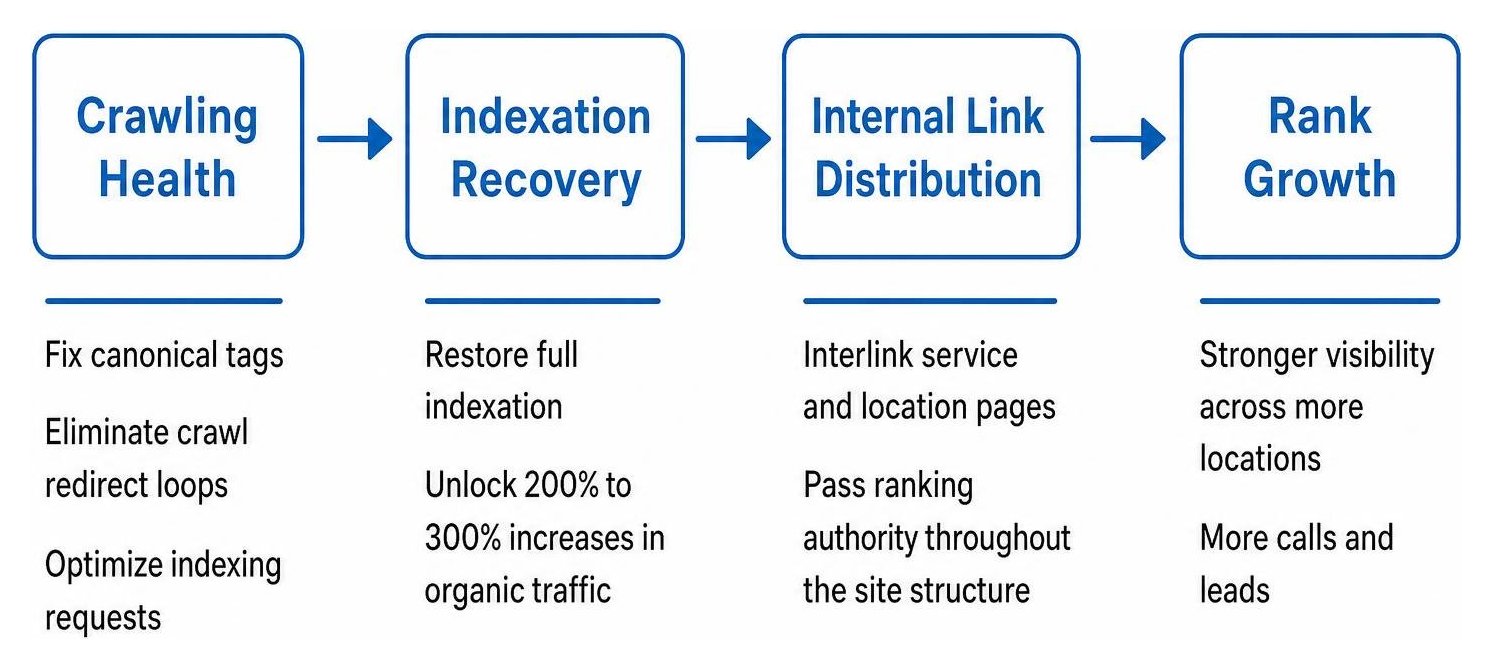
To support technical crawl health, build domain authority through relevant digital citations and backlinks:
- Industry Directories: List your business on verified nuisance wildlife control associations, pest management directories, and home services networks.
- Local Community Citations: Maintain identical NAP details across regional chambers of commerce, Better Business Bureau listings, and local business hubs.
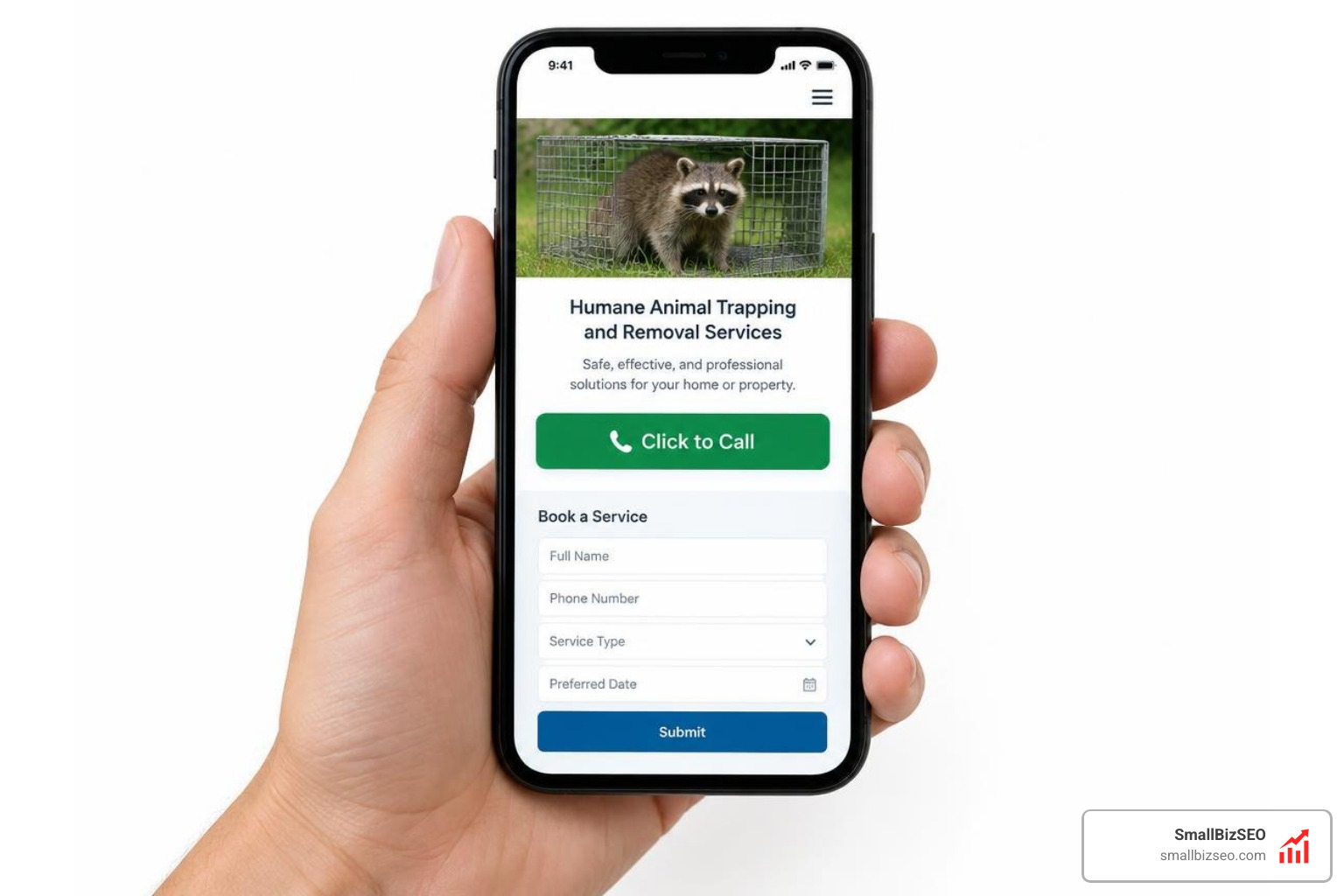
- Site Performance & Speed: Ensure lightning-fast page loading speeds on mobile devices. With 9 out of 10 business websites failing mobile optimization benchmarks, a mobile-ready, click-to-call website captures emergency trapping leads before competitors can react.
What Common Mistakes Undermine SEO for Animal Trappers and How Can You Prevent Them?
The most frequent mistakes in wildlife control SEO involve thin location pages, keyword stuffing, neglecting local reviews, and deploying unverified doorway pages. Creating hundreds of identical city pages with only the city name swapped triggers search engine spam filters and prevents pages from ranking.
Prevent these pitfalls with structured, quality-focused practices:
- Avoid Doorway Templates: Write distinct, helpful copy for every city served, incorporating specific wildlife behaviors, local roof construction styles, and real service photos.
- Never Stuff Keywords: Write natural, informative sentences for property owners rather than repeating search phrases excessively.
- Fix Broken Call Tracking: Ensure dynamic phone tracking numbers pass standard NAP consistency signals so local search listings remain strong.
- Actively Manage Customer Reviews: Never let negative feedback sit without a constructive, professional response outlining your commitment to customer satisfaction.
Take Command of Your Local Wildlife Trapping Market
Winning the organic search race in your local market requires a dependable framework combining technical site health, comprehensive animal-specific content, and verified local authority. By addressing high-urgency homeowner questions and maintaining an accessible, mobile-optimized site, your trapping business can secure steady, exclusive calls across every season.
Explore our dedicated home services SEO packages to scale your service routes, or schedule a comprehensive SEO visibility audit with our team at SmallBizSEO today to turn your website into a powerful customer generation engine.