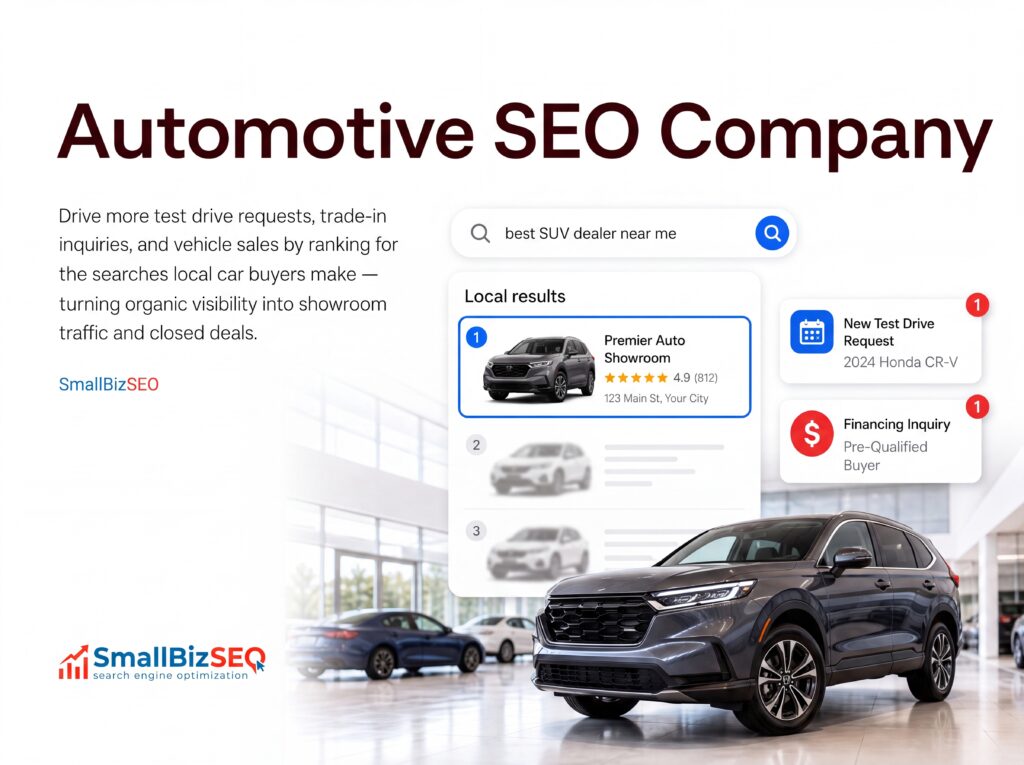
Give vehicle buyers, service customers and rental shoppers different paths to the information they need.
A vehicle detail page, a workshop appointment form and a rental availability search serve different purposes even when they belong to the same automotive brand. We organize an automotive SEO strategy around those business models first. This overview connects the right page types, evidence and customer actions without assuming that every automotive company sells cars, repairs vehicles, supplies parts and rents a fleet.
Search intent & content
Choose the search journey that matches the offering
The business model determines the content plan. A useful automotive website makes the actual departments and services clear rather than sending every visitor to one generic contact form.
Vehicle sales and inventory discovery
Connect stock categories, model research and individual vehicle pages through a coherent inventory structure. Buyers need accurate item details and an inquiry route that retains the vehicle context, not a workshop-style appointment request.
Example searchlocal vehicle inventory search
Workshop and specialist service bookings
Organize actual repair, maintenance or specialist services around supported vehicles and the booking process. Distinguish customers requesting a known task from those describing a concern, with assessment kept within the service provider’s workflow.
Example searchvehicle service appointment
Parts and product inquiries
Where parts are sold, explain the catalog and identification process, including how customers ask about a component for their vehicle. Keep stock, orderable items and compatibility questions distinct from a promise of immediate supply.
Example searchautomotive parts availability inquiry
Rental and fleet conversations
Give rental bookings and business fleet inquiries the routes their actual scope requires. Dates, vehicle classes and pickup details differ from a purchase decision, while fleet buyers may need a separate commercial discussion.
Example searchvehicle rental or fleet inquiry
Website priorities
Build useful pages around real customer decisions
Build around departments, not a keyword list
Map the actual sales, service, parts or rental operation before creating pages. A multi-department business needs clear boundaries, while a specialist should not acquire unrelated pages merely to look comprehensive.
Match evidence to the transaction
Vehicle sales need genuine stock details; workshop pages need real service scope; rentals need accurate locations and terms. One set of generic automotive photographs cannot substantiate all three models.
Review inventory and system relationships
Where a website uses stock or other data feeds, examine the published information and page lifecycle. The content strategy should work with the actual systems rather than promise a particular integration or instantaneous search update.
Separate measurement by customer action
Review vehicle inquiries, service requests and rental contacts independently where configured. Their commercial meaning differs, so combining every call or form into a single automotive lead total can obscure what needs improvement.
Our approach
A practical plan for your website
We begin by identifying the automotive business model and the departments genuinely present. Then we map page types, data sources and customer actions, using focused industry pages where they add detail rather than duplicating a repair-shop strategy across the sector.
Review the foundations
Check crawlability, existing pages, customer needs, and the services your business actually offers.
Map services to demand
Connect customer questions to useful service pages and supporting content without duplicating search intent.
Build, measure, improve
Publish useful pages and refine them using search visibility and separately configured inquiry analytics.
- The site structure reflects actual automotive departments and business models.
- Stock and service information comes from accurate business-controlled sources.
- Each inquiry retains the vehicle, service or rental context relevant to it.
- SEO work is clearly distinguished from the automotive services the client provides.
Frequently asked questions
Questions about your industry SEO strategy
Is automotive SEO just local SEO for repair shops?
No. Automotive businesses can sell vehicles, provide specialist services, supply parts or arrange rentals. Each model needs a different content structure and conversion path based on its actual offering.
How should a business with sales and service organize its site?
Give inventory shoppers and workshop customers distinct navigation and contact routes, then connect them where useful. A sales inquiry should retain the vehicle details, while a service request needs the relevant task and vehicle information.
Should every automotive business publish every vehicle-service page?
No. The strategy should reflect what the company actually does. A focused specialist site can be more useful than a broad collection of pages that suggests unrelated departments or capabilities.
How do we measure whether SEO is helping?
Use Google Search Console for search visibility and page performance. Measure calls, inquiries, and lead quality separately through analytics and intake tracking where configured.
Can you guarantee rankings or new customers?
No. We focus on the work within our control: technical foundations, useful content, clear navigation, and measurement. Search outcomes depend on competition and other factors.
Build a clearer path from search to inquiry
Tell us how your automotive business operates and what customers come to it for. We can build a search strategy around the right inventory, service, product or rental journey.
Search rankings & AI visibility — AI SEO / AEO
- Google AI Mode
- ChatGPT
- Claude
- Gemini
- Perplexity


Related services & strategies