Step-by-Step Guide to SEO for Cemeteries & Memorial Parks

How can families find your cemetery or memorial park online?
SEO for cemeteries & memorial parks should help visitors complete a clear task: make immediate arrangements, plan ahead, or visit and locate a grave. Put verified contact details, office hours, grounds access information, entrance directions, and service information where people can find them quickly.
A helpful site distinguishes between immediate arrangements, advance planning, and visiting or finding a grave. Each path should offer only information the cemetery or memorial park has verified, along with a clear route to the appropriate office, form, or contact person.
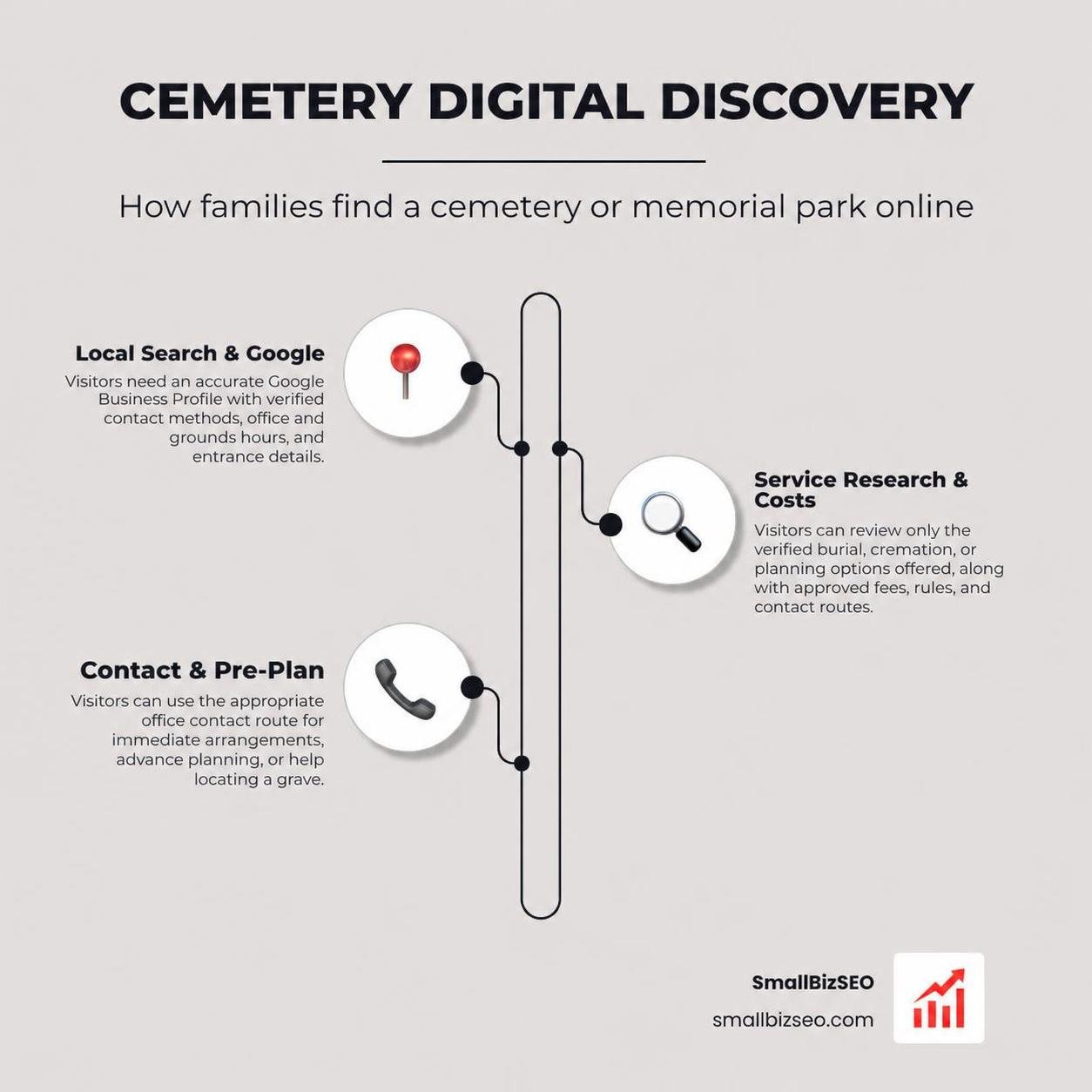
Clear structure and accurate content make this information easier to maintain. SmallBizSEO’s local SEO guidance can help teams organize location pages and ongoing updates without turning a sensitive topic into a sales pitch.
Core Pillars of SEO for Cemeteries & Memorial Parks
A cemetery or memorial park website should make accurate, practical information easy to locate. Start with current business details, clear visitor guidance, and content that explains only the services and options the organization actually offers.
Local search information should be consistent across the website and Google Business Profile. Accurate names, contact methods, office hours, grounds hours, and entrance directions help visitors confirm the basics before they reach out.
Why Is Local Search and Google Business Profile Optimization Crucial for Cemeteries?
A well-maintained Google Business Profile can give visitors a quick way to check essential information. Use categories that accurately describe the property, and review the profile whenever contact details, access instructions, or operating hours change.
To keep local information useful:
- Confirm the basics: Keep the name, phone number, website, and approved contact route consistent.
- Separate office and grounds information: Explain when the office is available and when visitors may access the grounds. Do not imply that either is always open.
- Clarify arrival details: Include the appropriate entrance, parking guidance, and accessibility information that staff have verified.
- Use respectful visuals: Do not publish identifiable mourners or readable grave inscriptions without permission.
- Review service descriptions: List burial, cremation memorialization, green burial, or other options only when they are currently offered and verified.
Use a practical Google Business Profile field guide to review the fields visitors rely on most. Treat the profile as a maintained source of information, not a substitute for clear pages on the cemetery or memorial park website.
How Should a Cemetery Website Serve Different Visitor Tasks?
The clearest content groups information by what a visitor needs to do, rather than by assumptions about how they feel or how quickly they will decide.
| Visitor task | Accurate information to provide | Clear contact route |
|---|---|---|
| Immediate arrangements | Confirmed contact methods, office availability, the next step, and only the services currently offered | A prominent office phone number, contact form, or other approved response route |
| Advance planning | Verified options, fees or pricing information where approved, rules, documentation requirements, and questions to discuss with staff | A planning inquiry form or request to speak with the appropriate office team |
| Visiting or finding a grave | Grounds access information, the correct entrance, accessibility notes, visitor rules, and a process for location assistance | A visitor information page and a route to request help from the office |
This task-based approach helps families and visitors find a relevant next step without pressure, scarcity language, or assumptions about personal circumstances. Keep all stated options, fees, rules, and response methods aligned with the cemetery’s current policies.
What On-Page and Technical Factors Drive Visibility?
Technical SEO should support clear, maintainable information. Organize pages around the questions visitors ask, and update the content when the organization changes an offered service, a rule, or a contact process.
Apply these technical and on-page practices:
- Clear titles and descriptions: Describe the page’s topic and practical value in plain language rather than relying on a fixed character count.
- Logical page structure: Use useful headings, internal links, and a navigation path that helps visitors reach planning, visitor, and contact information.
- Mobile usability: Compress and size images appropriately, test key contact routes on a phone, and address performance issues found in real user or site data.
- Accurate structured data: Use organization or local-business markup only for facts the organization can support. Use
Eventschema only for an actual public event with verified details. - Review regulated information carefully: The FTC Funeral Rule may apply to some funeral providers, but it is not automatically a rule for every cemetery or memorial park. Confirm applicability based on the organization’s actual offerings and jurisdiction, with qualified professional review where needed.
- Maintain crawl paths: Keep the sitemap, canonical URLs, and internal links current so important visitor information remains discoverable.
Advanced Content, Reputation, and Link Strategies for Memorial Grounds
Content and outreach should add useful, verified information for families and visitors. Focus on questions the cemetery or memorial park can answer accurately, then maintain those pages as offerings, rules, or contact processes change.
How Can Memorial Parks Adapt Content for Cremation and Green Burial Trends?
Visitors may look for cremation memorialization, green burial, or traditional burial information, but a website should describe only the options the specific organization currently offers.
When an option is offered and verified, a dedicated page can explain:
- Burial and memorial options: The available spaces, markers, or memorialization choices.
- Cremation memorialization: Options such as niches, gardens, or other placements, if available.
- Green burial: The organization’s actual policies and practices, if it offers this option.
- Fees, rules, and next steps: Approved pricing information, visitor or placement rules, and how to contact the appropriate office for questions.
Use plain language, identify what is verified, and avoid implying availability, religious affiliation, or benefits that the cemetery has not confirmed.
How Should Cemeteries Manage Sensitive Online Reviews and Community Partnerships?
Online reviews can help prospective visitors understand a property’s public reputation, but review requests and responses should remain voluntary, tactful, and privacy-conscious.
Invite feedback only through an appropriate, consent-based process. Do not offer incentives, filter feedback, or set a fixed schedule tied to a family’s circumstances. Public replies should be brief and respectful, and should never reveal private family information.
Earned outreach works best when it points people to information that is genuinely useful, such as verified visitor guidance, preservation resources, public-event details, or educational materials. Coordinate any partnership content with the organizations involved, and do not use images of identifiable mourners or readable grave inscriptions without permission.
How Do You Track SEO Performance and Avoid Common Pitfalls?
Use Google Search Console and website analytics to understand which pages and queries bring visitors to the site. Review the data alongside staff feedback to identify unanswered questions, confusing navigation, and pages that need an accuracy check.
Avoid these common cemetery SEO mistakes:
- Outdated visitor information: Office hours, grounds access, entrance details, and contact routes should be checked regularly.
- Unverified service claims: Do not describe options, fees, rules, availability, or affiliations that staff have not approved.
- Pressure-driven language: Avoid scarcity, urgency, or wording that treats a sensitive situation as a conversion tactic.
- Generic or copied pages: Give each page a clear purpose and use information that reflects the organization’s actual procedures.
SmallBizSEO provides ongoing technical SEO, content planning, and earned-outreach support for small-business websites. Teams that need help maintaining accurate, useful content can explore SEO service options or book a conversation.
Serving Families with Digital Dignity and Visibility
A modern cemetery website should give people a calm, practical way to find verified information and the right contact route. By maintaining accurate profiles, task-based pages, and respectful content, cemetery and memorial park teams can improve the usefulness of their online presence without overpromising outcomes.